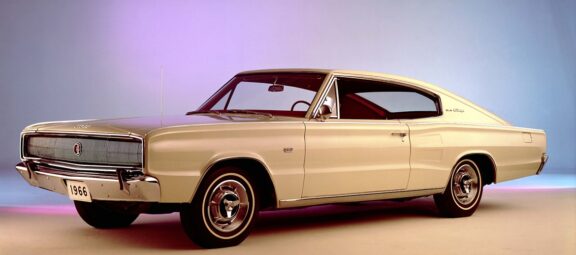
60 Years of the Dodge Charger – GEN I: 1966-67
THE FIRST GENERATION 1966-67
Where has the time gone? If it’s a big block or HEMI® engine-powered Charger, very quickly. In this multi-part series only on DodgeGarage, we’ll do a deep dive on America’s favorite mid-size, stylish intermediate that offered buyers a myriad engine options from a fuel-sipping Slant Six to a muscular 426 HEMI V8. The Charger struck a chord with enthusiasts due to its styling and performance, while enduring over ten US Presidential Administrations and adapting to the ever-changing consumer tastes and habits. Yes, the Charger has changed massively since it first burst into the scene in 1966, but for the last six decades, the DNA is still there with some mojo thrown in that lets you never forget what a cool car you’re driving.
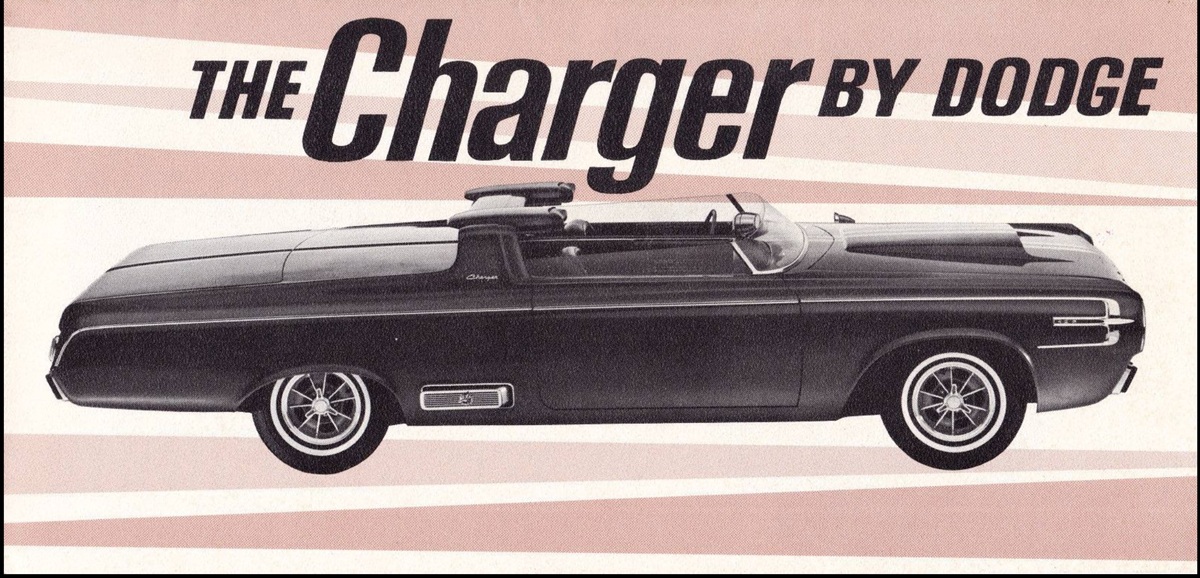
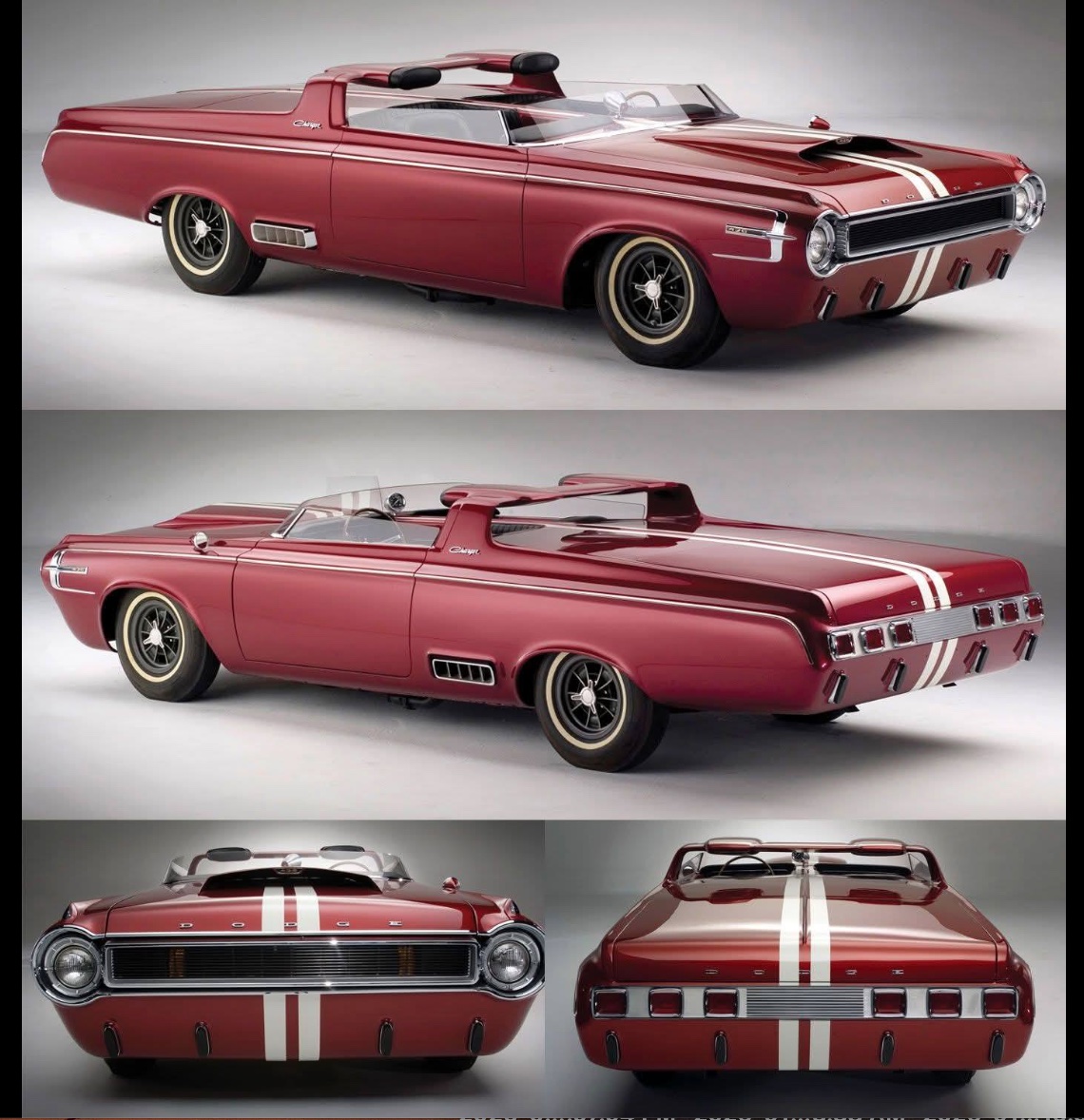
The name ‘Charger’ can trace its roots back before it came into production. The name was used on the 1964 concept that was made as a roadster. It was to be used as a marketing vehicle to announce the new 426 HEMI engine for that year, but for many reasons, a more mundane 426 Street Wedge or 383 ended up being installed. The 1964 Charger Roadster concept, based off the Dodge Polara, got a lot of attention for Dodge and was a great marketing tool to highlight Chrysler’s styling, engineering excellence and advances within the industry. While the Charger concept was considered a ‘teaser’, it did offer a glimpse of where Dodge was heading to make a splash in the growing personalized performance/luxury market that GM was already gaining market share in with its Buick Riviera and Pontiac Grand Prix.
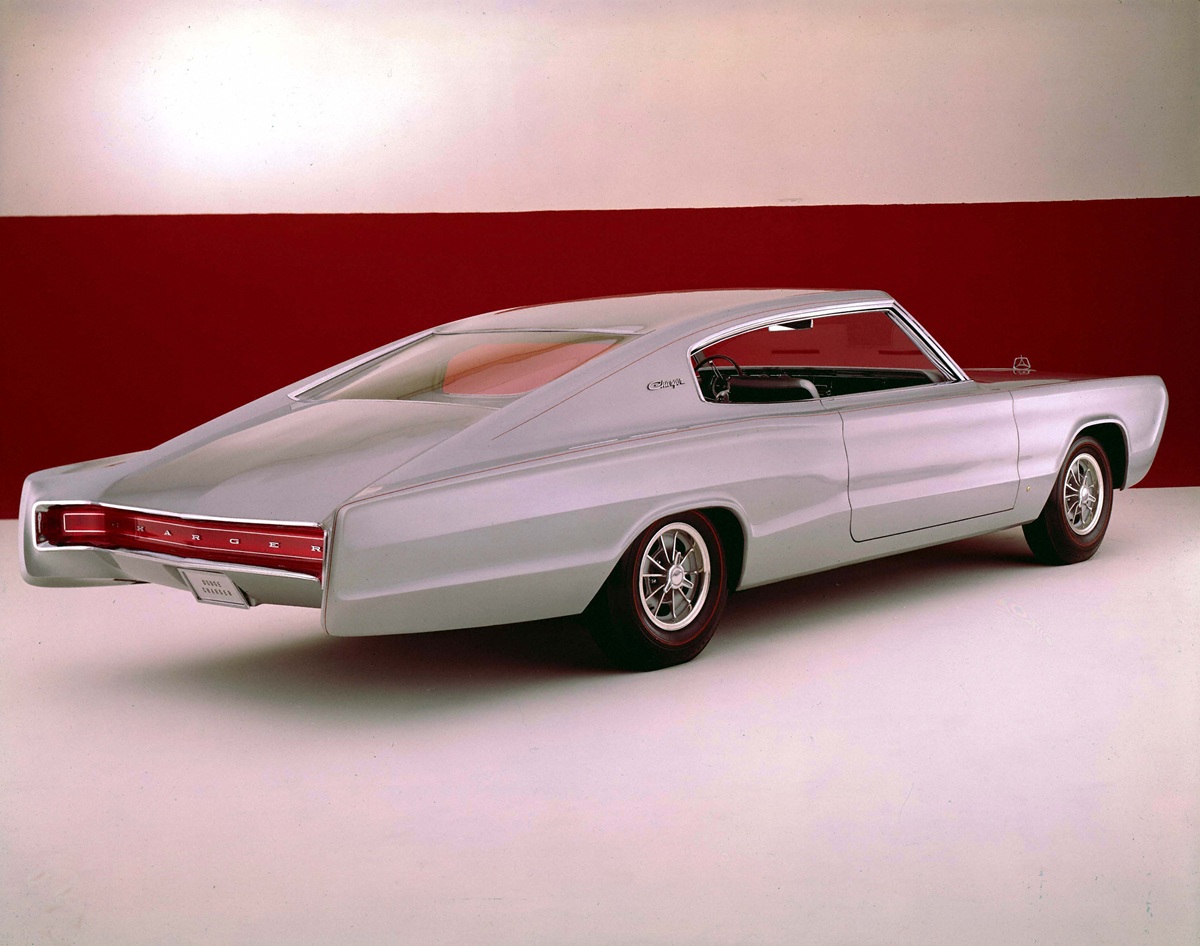
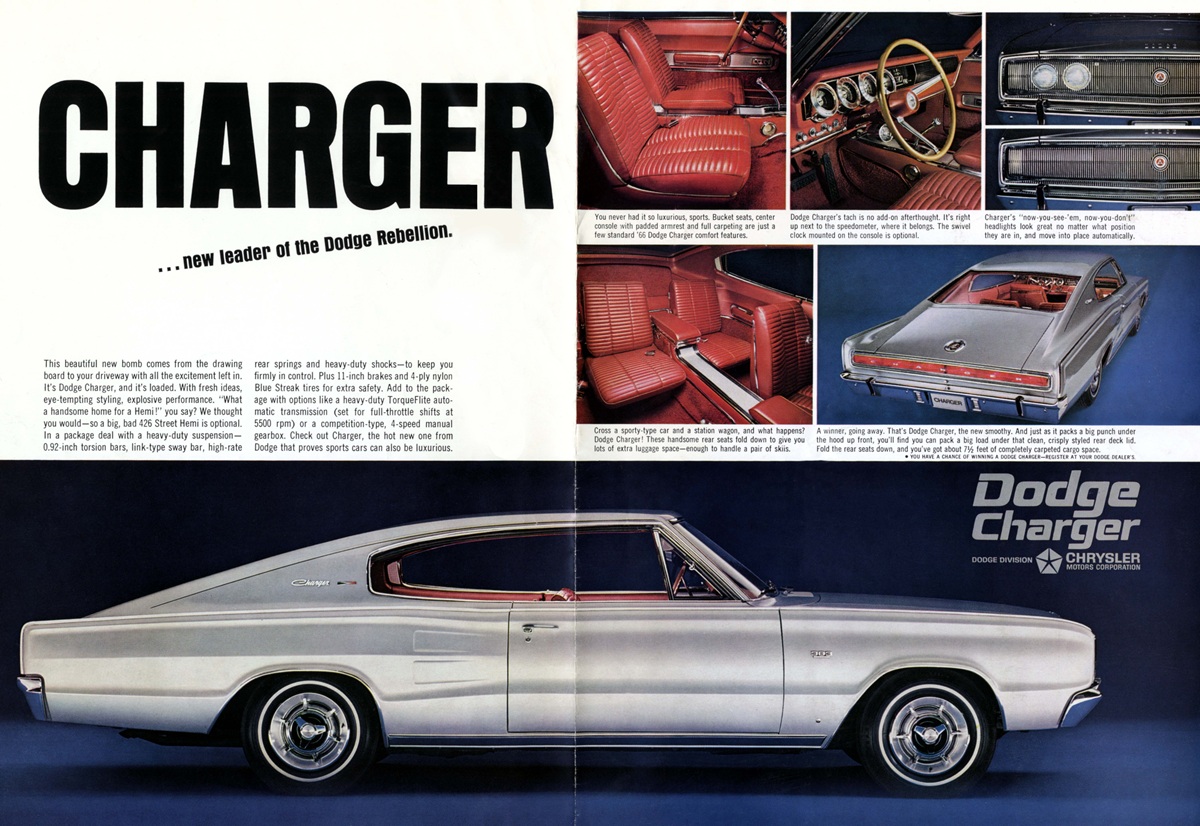
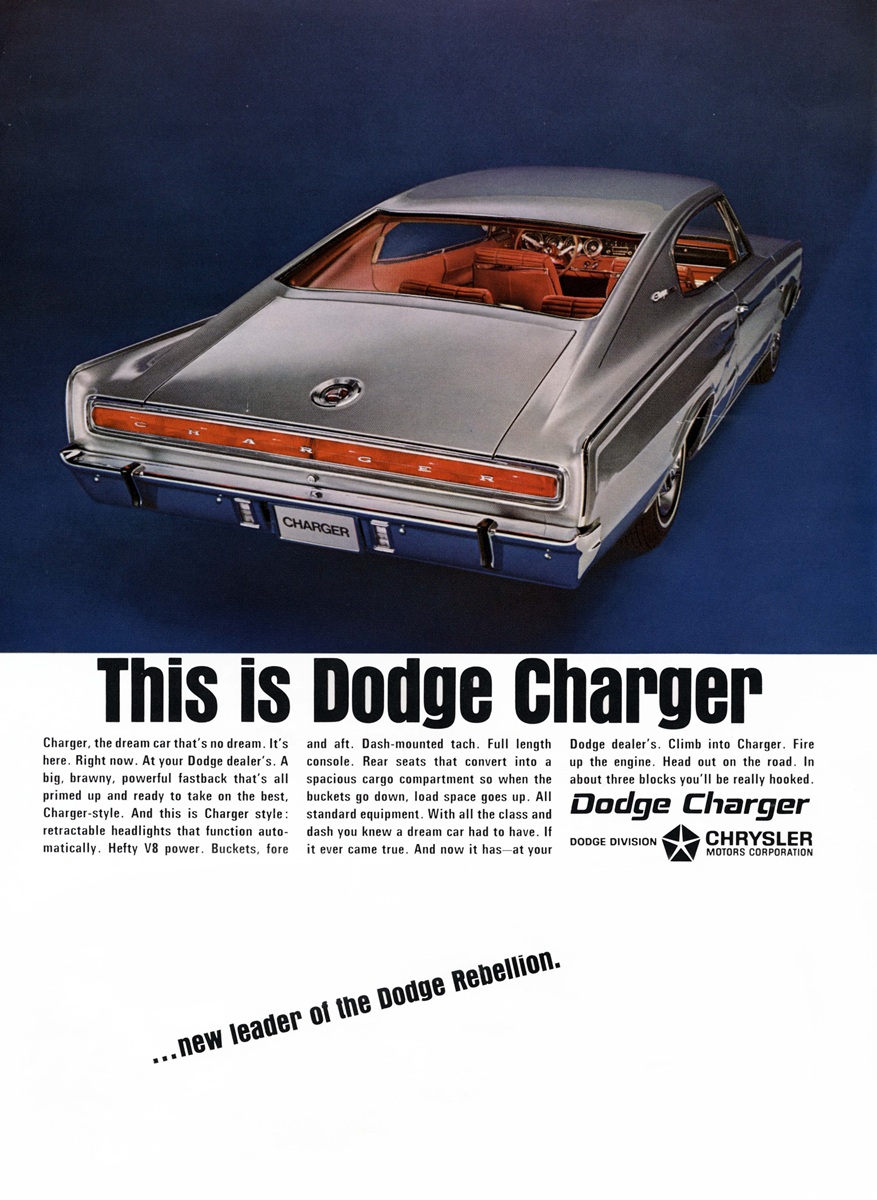
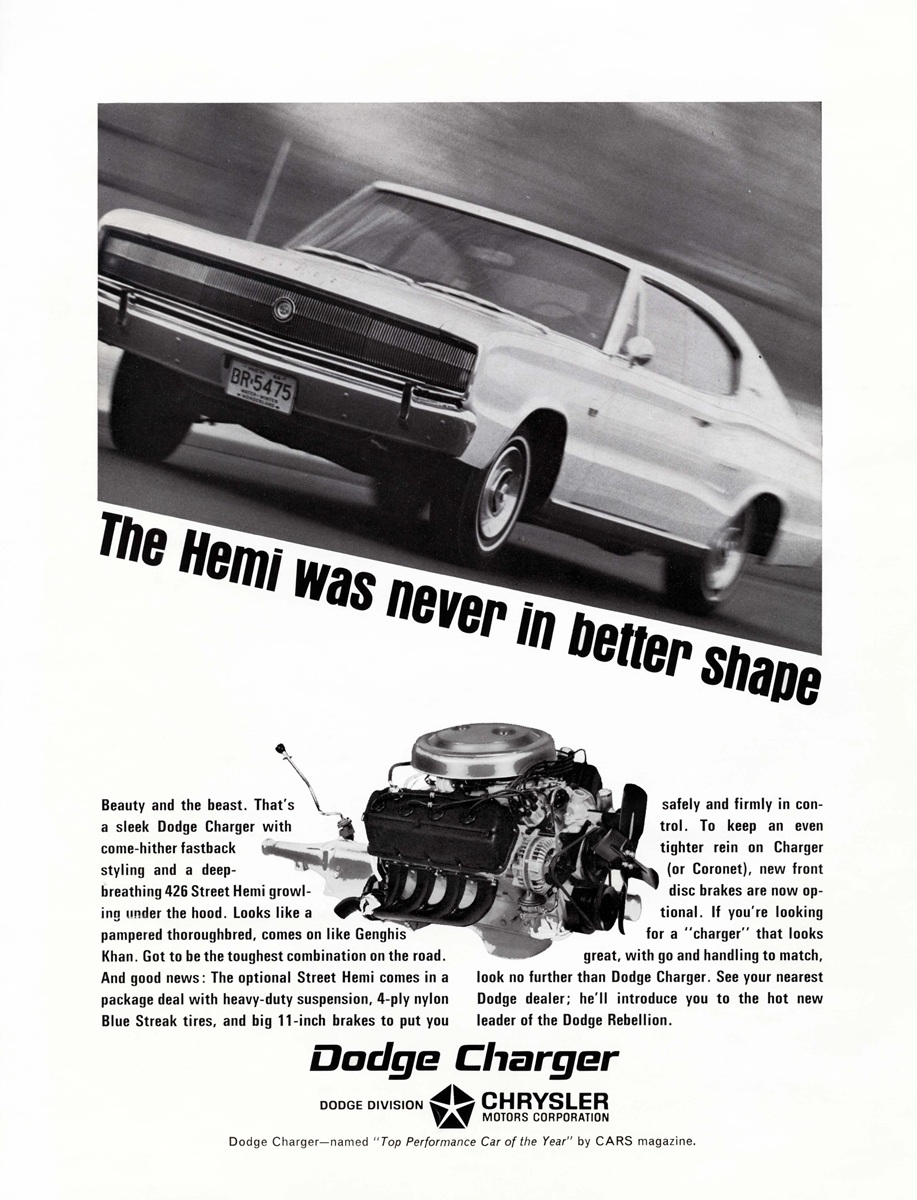
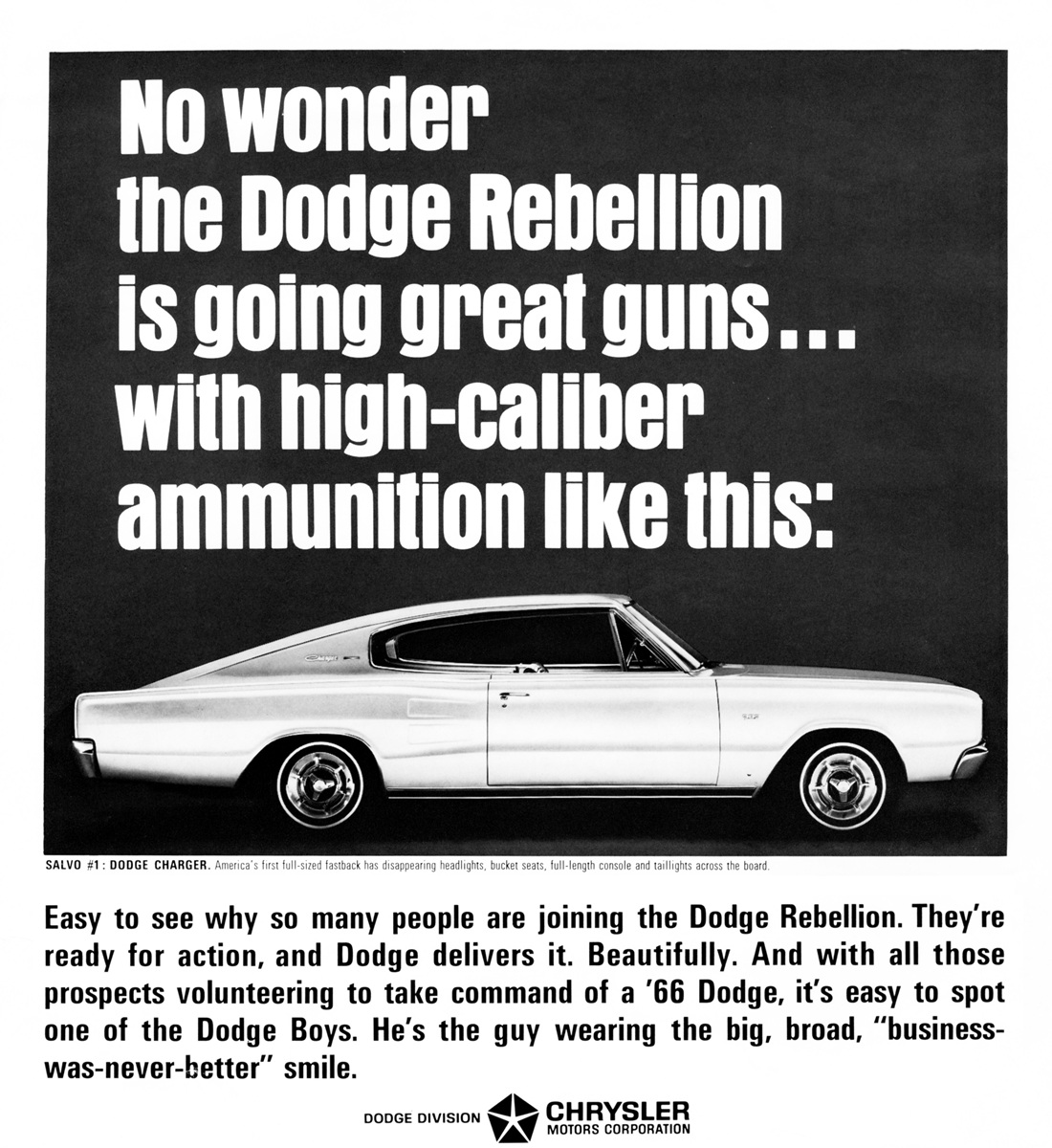
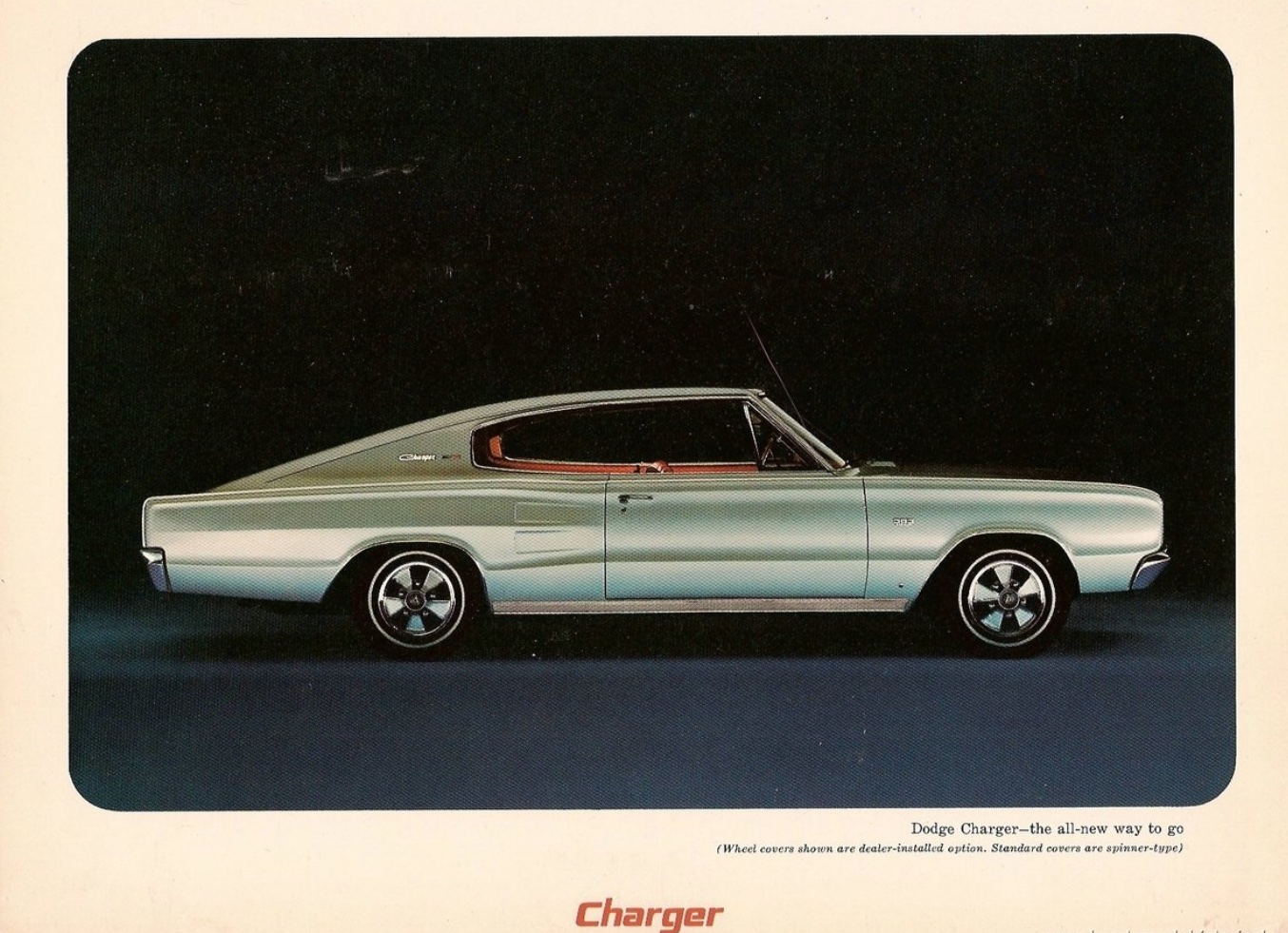
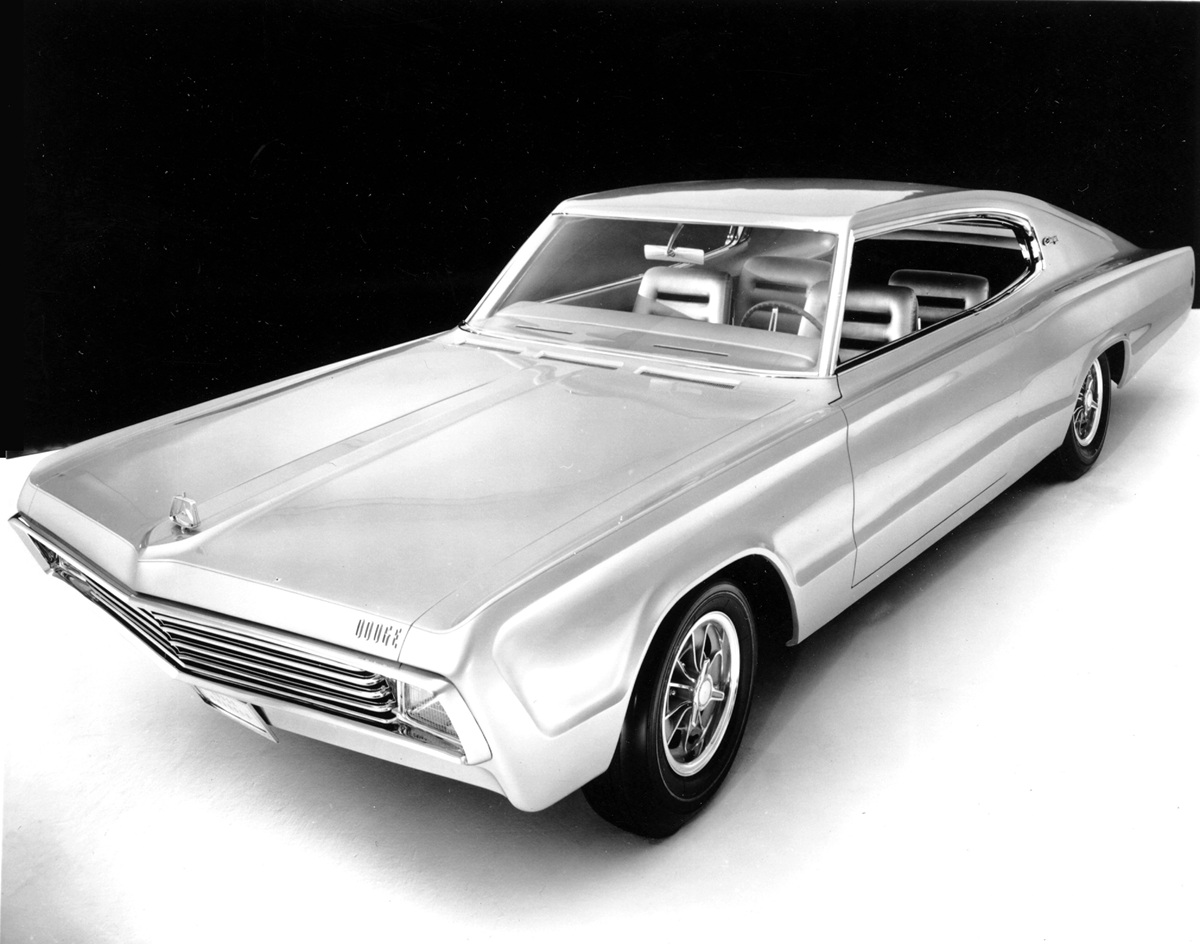
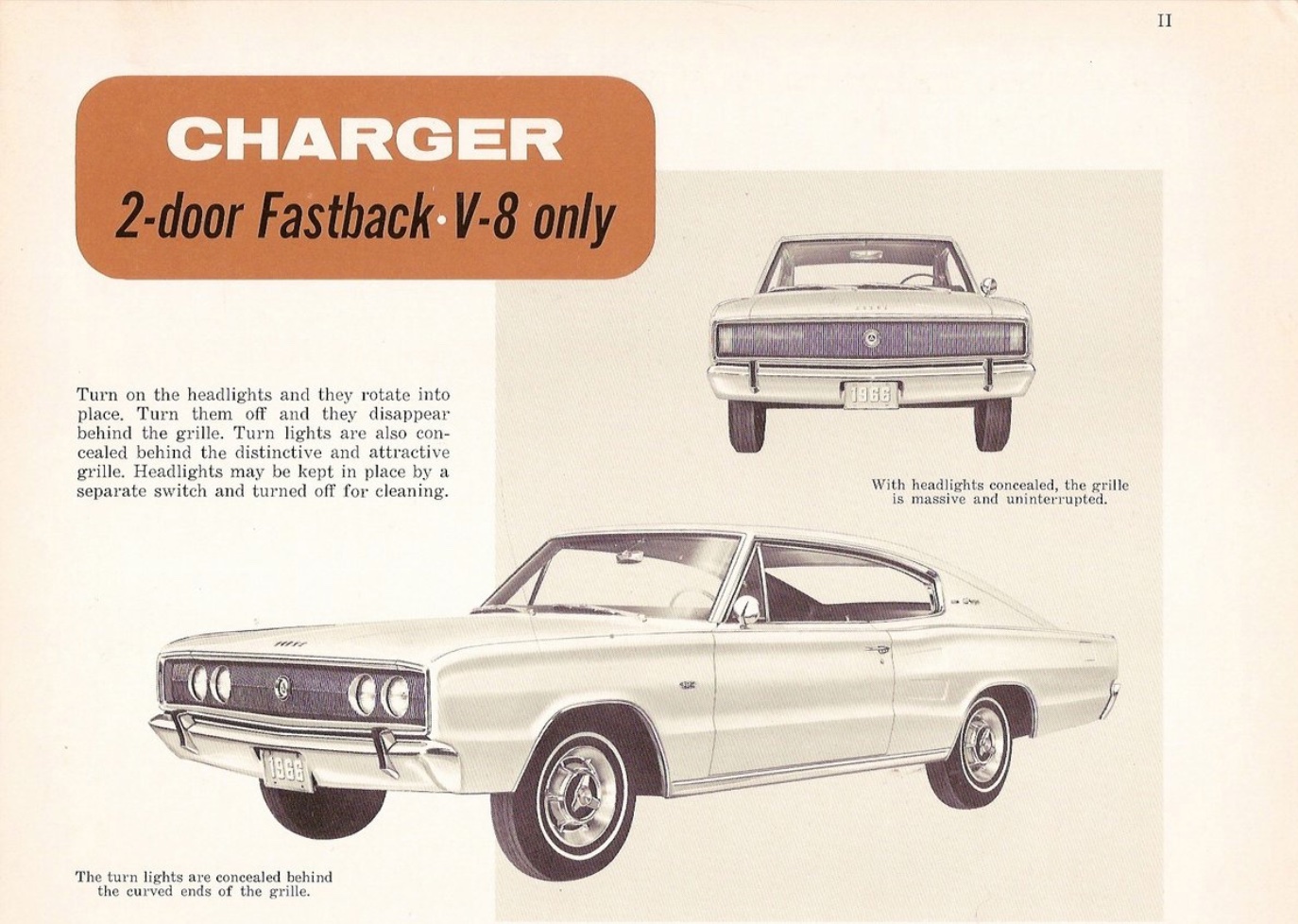
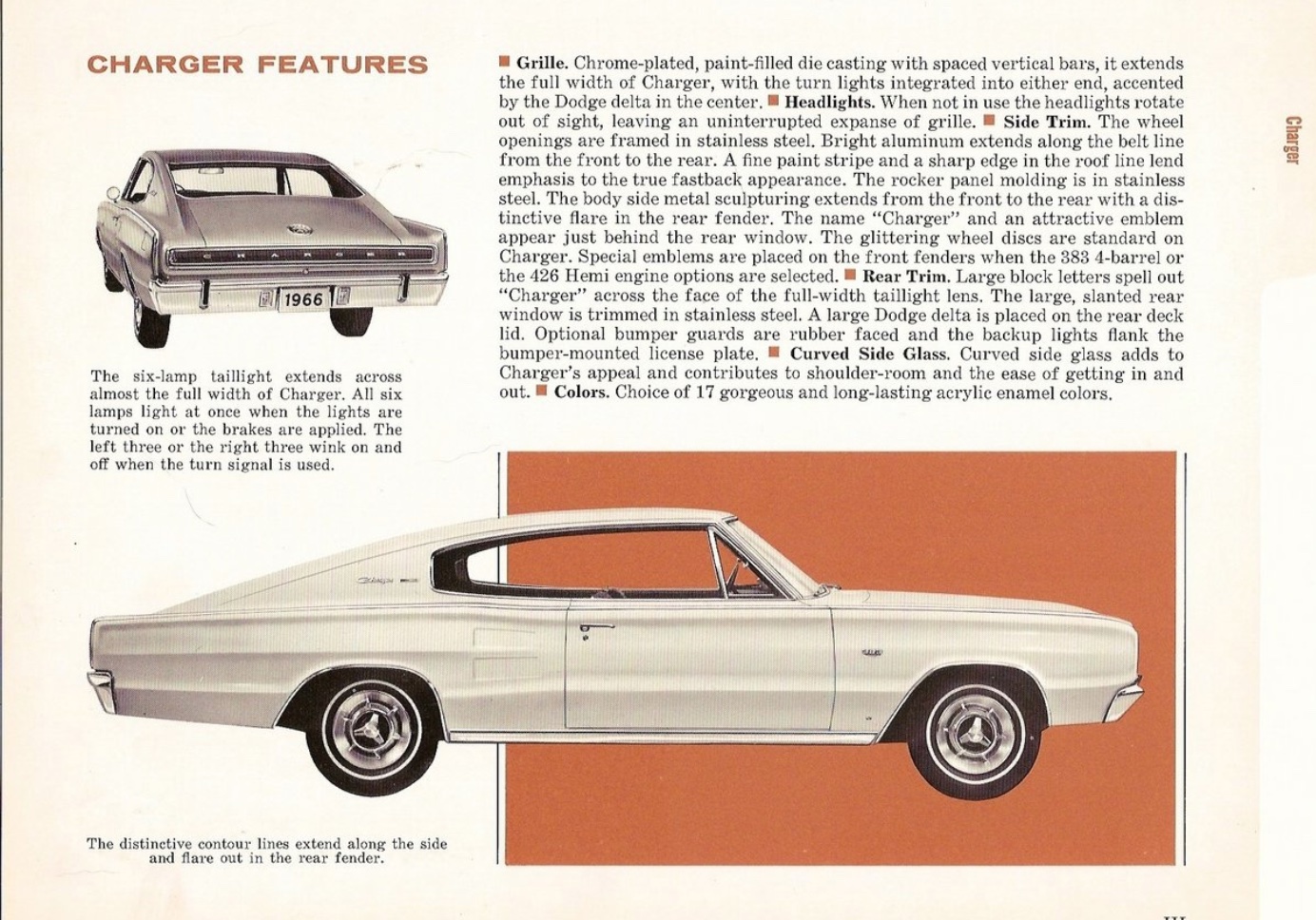
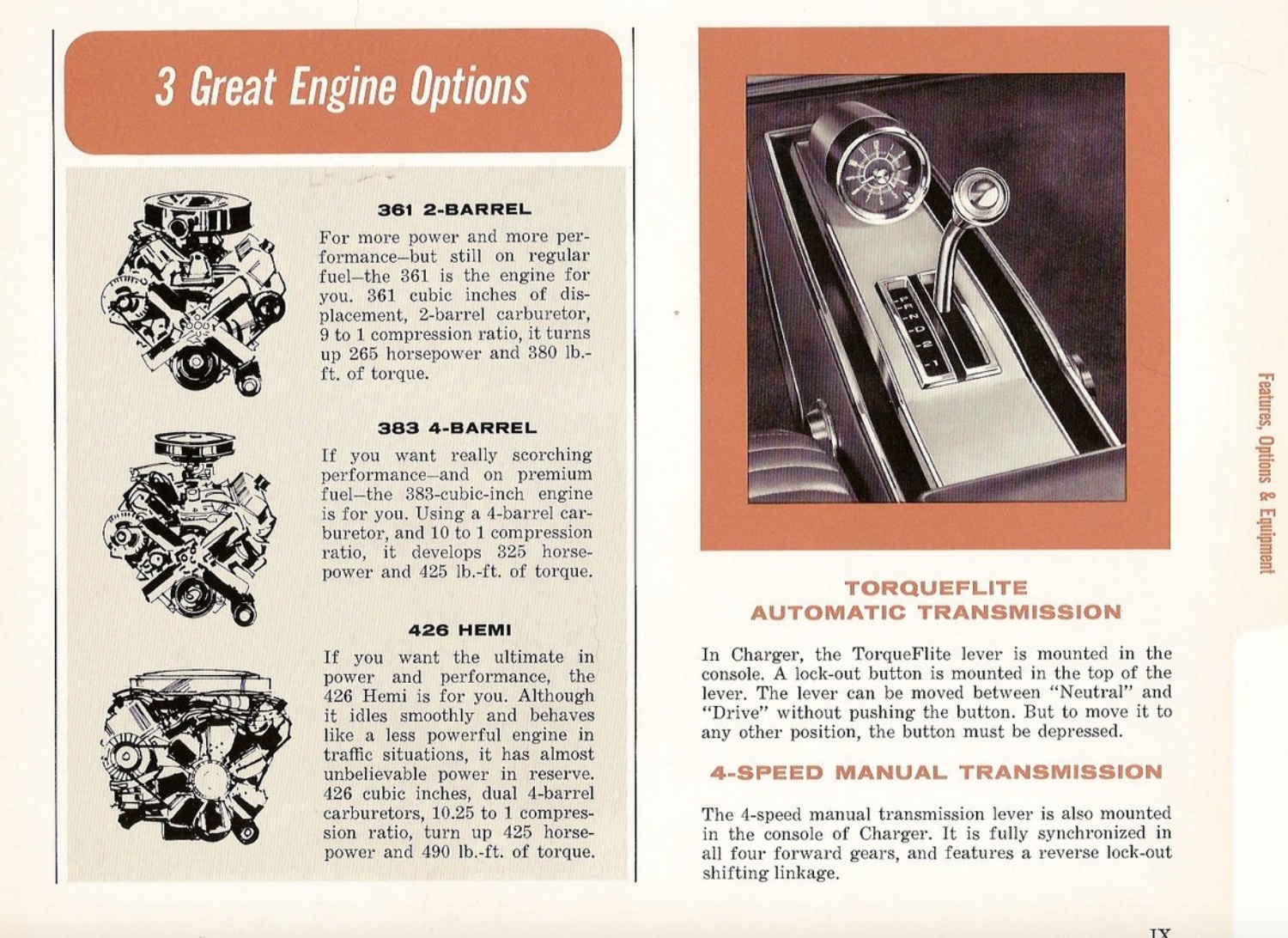
The next concept to wear the Charger nameplate was created in 1965. Called ‘Charger II,’ it debuted in early 1965 at the Chicago Auto Show. The goal of the Charger II was to gauge and arouse consumer interest in extreme fastback designs, unique styling features and market potential for a mid-size sporty car. On the outside, the Charger II concept styling features found themselves compared to the production 1966 Charger. Things like the impressive roof arc, rear window silhouette, slender side rails, unique front grille, concealed headlamp design and broad single taillight assembly that ran the width of the car gave the new Charger an unmistakable look. On the inside, a full-length interior console with four sporty bucket seats, an instrument panel with four large round gauges using an innovative ‘electroluminescent’ lighting and a massive rear compartment that allowed trunk access from inside the car. It could accommodate furnishings from a small apartment to surfboards. Under the hood, engine options for the new Charger ranged from the standard fuel-sipping 318 two-barrel making 230 horsepower, to the mighty 426 Street HEMI V8 pumping our 425 horsepower. In between, a 361 two-barrel and a 383 four-barrel were available to fill the void between economy and pure tire-shredding muscle.
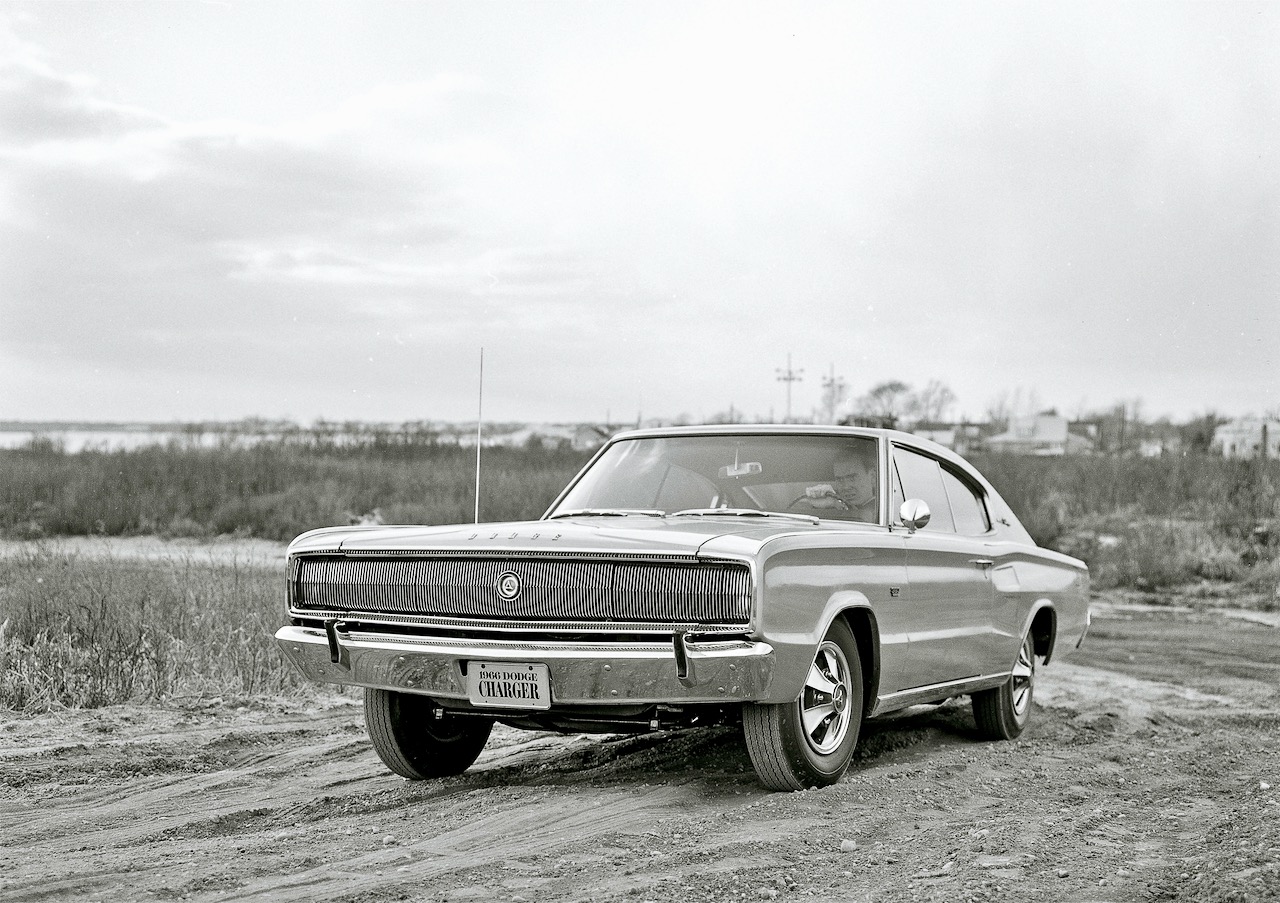
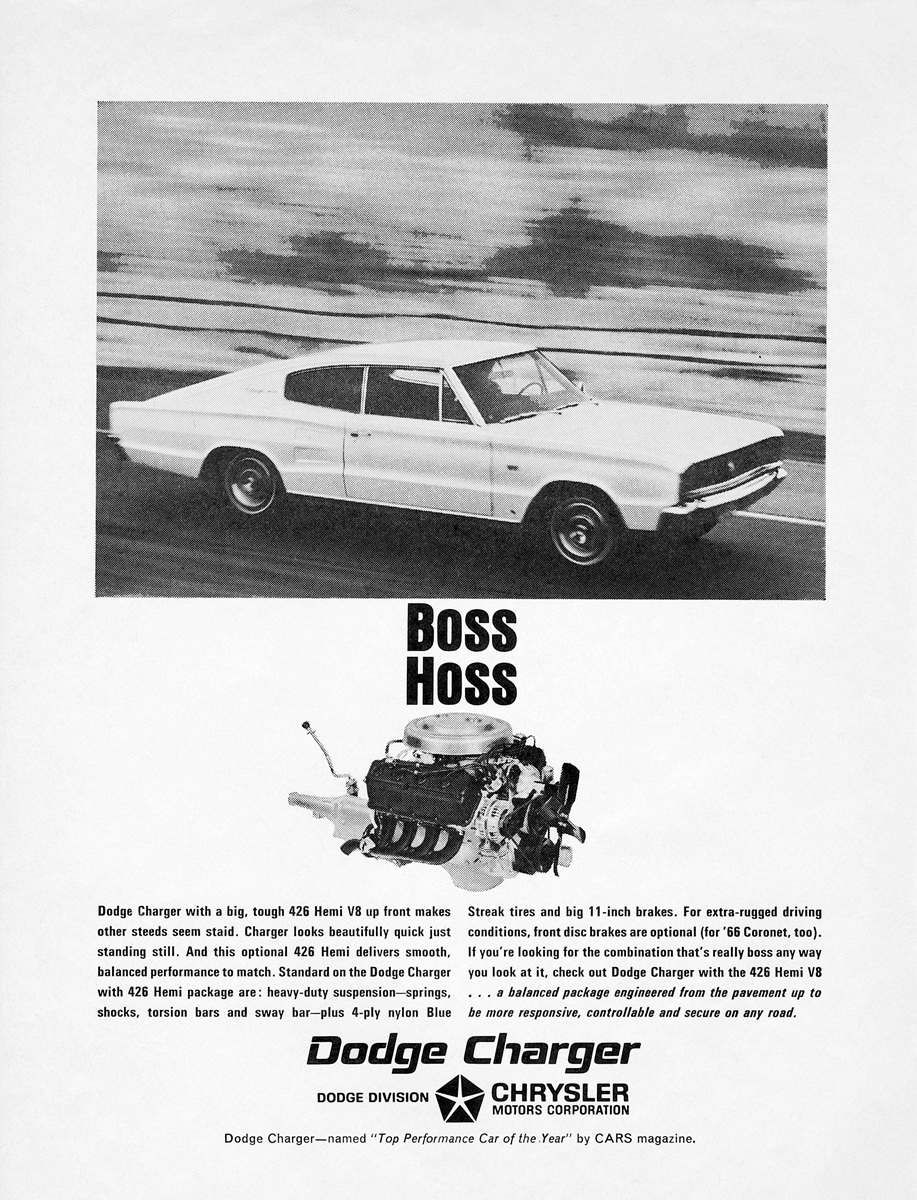
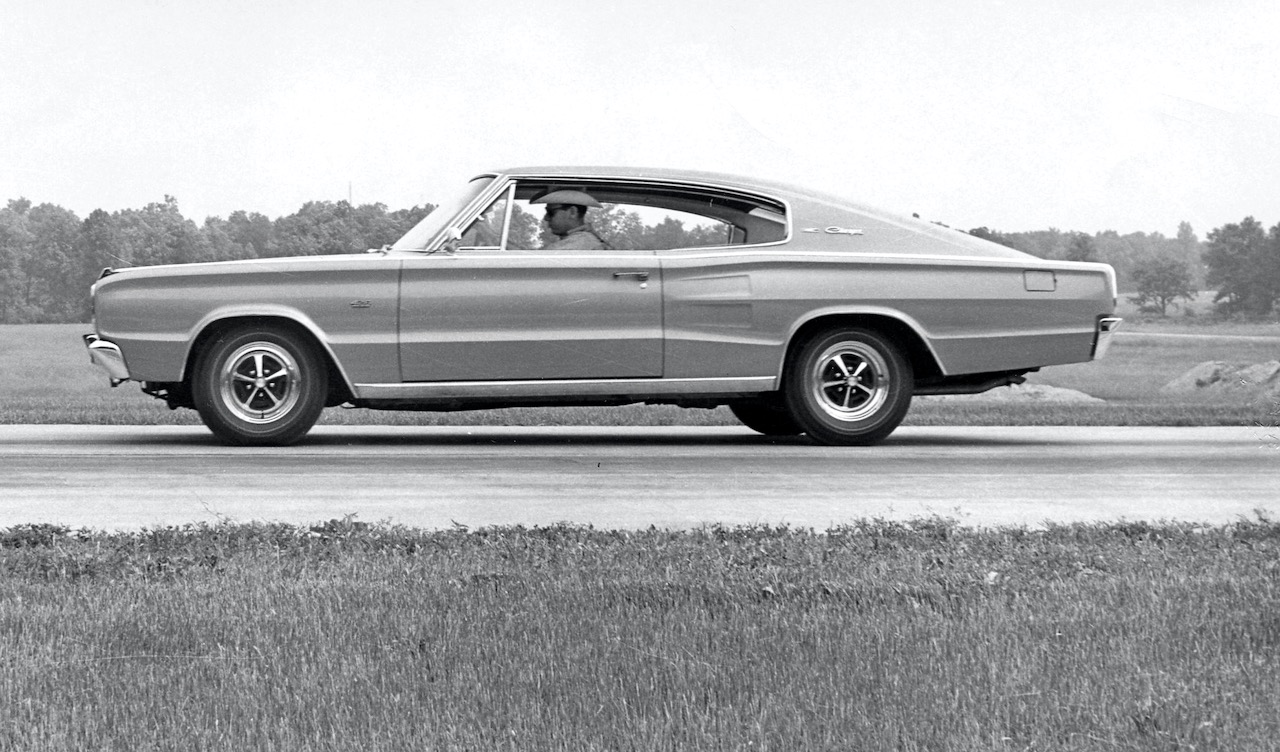
Regardless, the Charger was born in an era when style was hypercritical. Dodge leveraged a lot of cash and resources creating the 1966 Charger. The first production units were unveiled to the media in the late summer of 1965. Journalists from across the country gathered at Chrysler’s Proving Grounds in Chelsea, Michigan, for the Dodge Long-Lead Media Event. In attendance was Martyn Schorr, an automotive writer for Hi-Performance CARS magazine from the East Coast. Marty, a passionate car enthusiast, had the honor of driving the Dodge Max Wedge ‘RAMCHARGERS’ show car through the streets of New York a year earlier. Marty still recalls the moment he laid eyes on the new Charger. “I really liked the idea of a larger, fastback car, and thought it made a great-looking mid-size car that was sportier, streamlined, and I loved the clean front end. Besides the obvious great choice of powertrains, I thought the interior was the best in class for the industry. Absolutely loved the bucket seat layout, great dash. I was such a big fan that it became Hi-Performance CARS magazine’s Top Performance Car of the Year.”
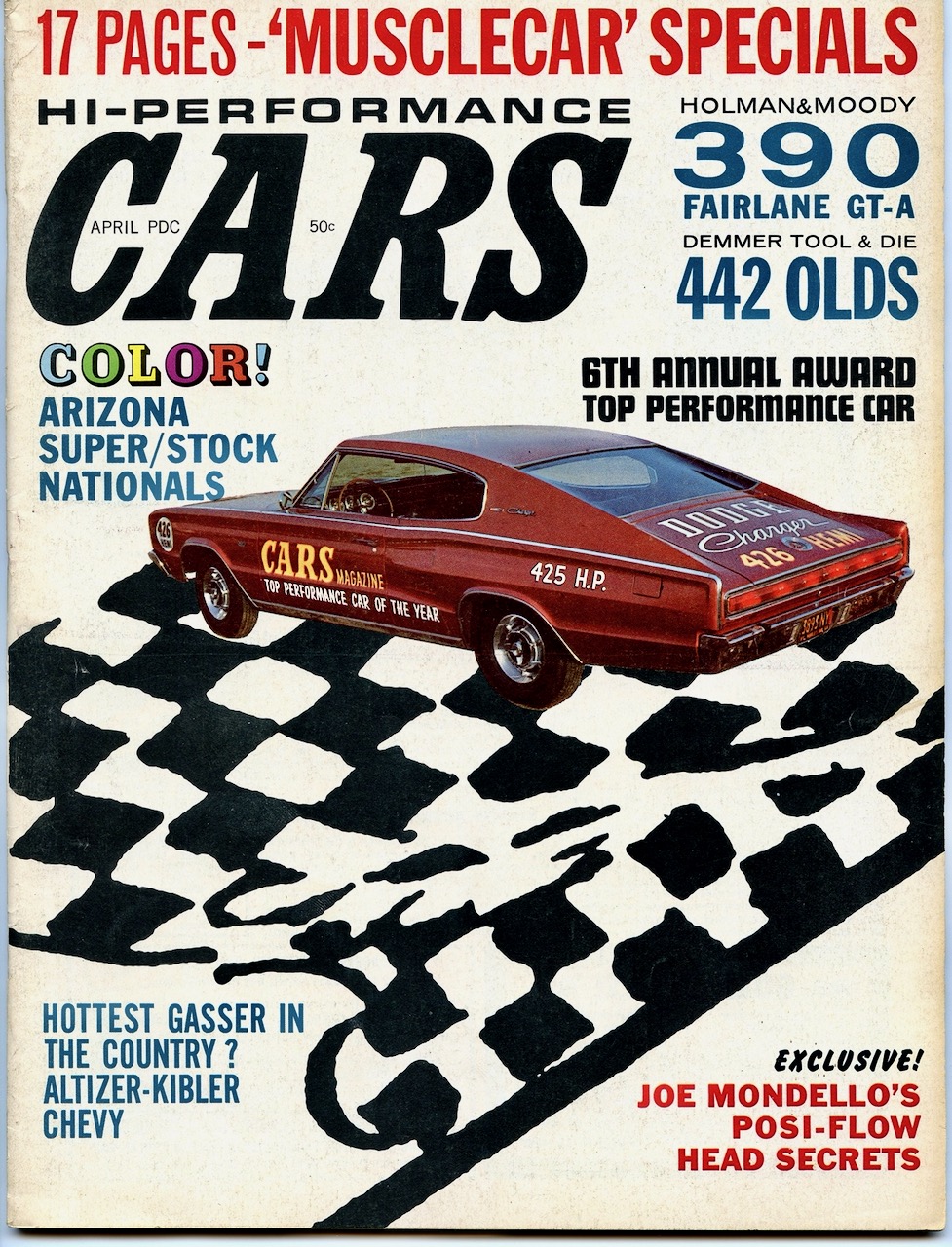
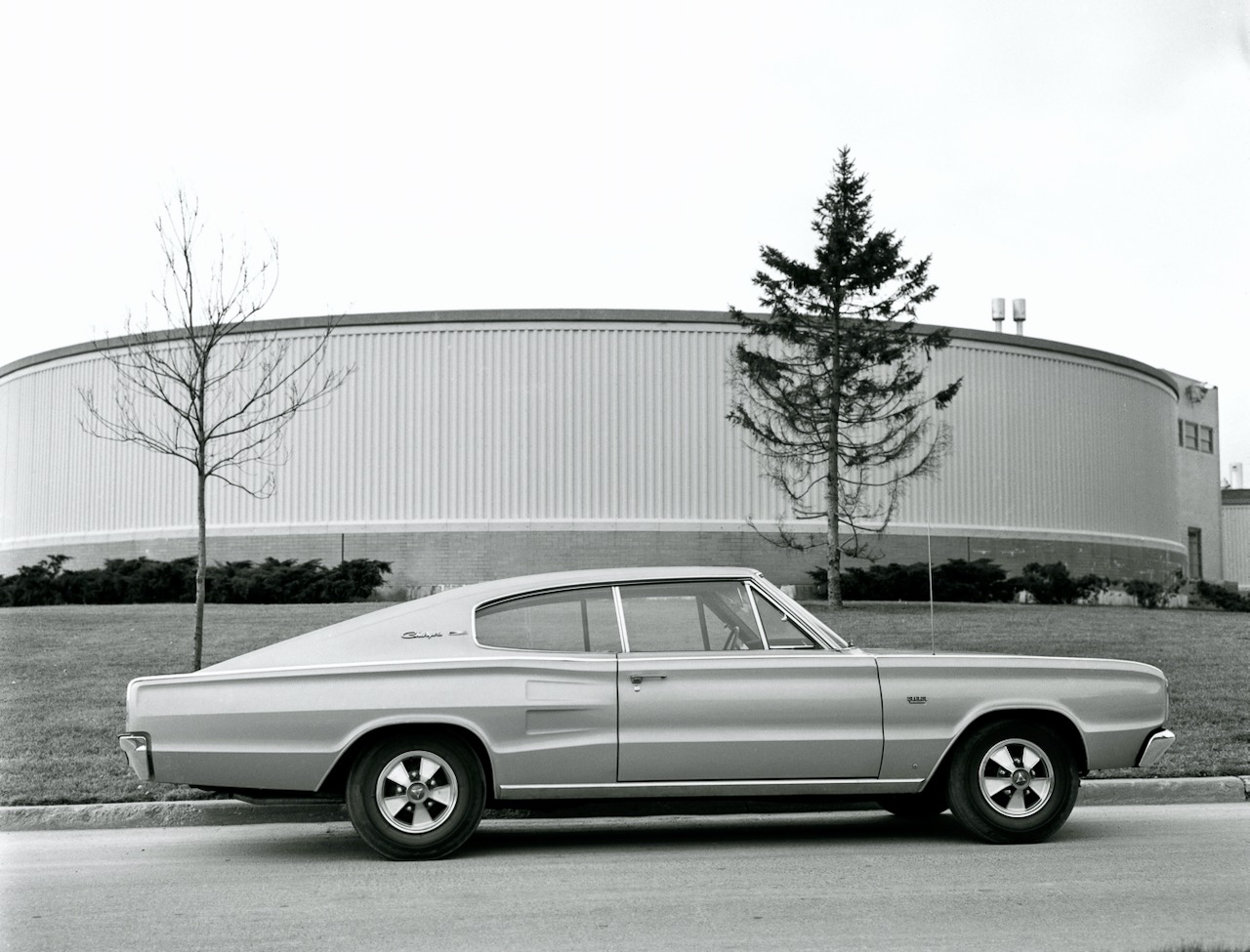
The overall impression that Marty and other magazine staffers came away with was very positive when they got behind the wheel of the new 1966 Charger, and here’s what they said back in the day. “We evaluated a number of candidates for Hi-Performance CARS Magazine 1966 Top Performance Car of the Year honors. Citing Street HEMI availability and unique, four-place fastback styling, Managing Editor Fred Mackerodt and I chose the all-new Dodge Charger. When you combine the 426 Street HEMI’s impressive horsepower and torque with the engineered suspension and handling package, you end up with one of the most roadable middleweights in production. We both had a 426 Street HEMI and 383 four-barrel Chargers at the Chelsea Proving Ground and lived for a couple of weeks with a ‘Poly Silver’ color prototype Street HEMI with 383 badging. My personal favorites were the automatic Street HEMI model and a 383 four-speed version rated at 325 horsepower. With cheater slicks, the Street HEMI will propel a Charger to 60 mph in approximately 5 seconds and trip the quarter-mile clocks in the high-13s at speeds close to 108 mph.”
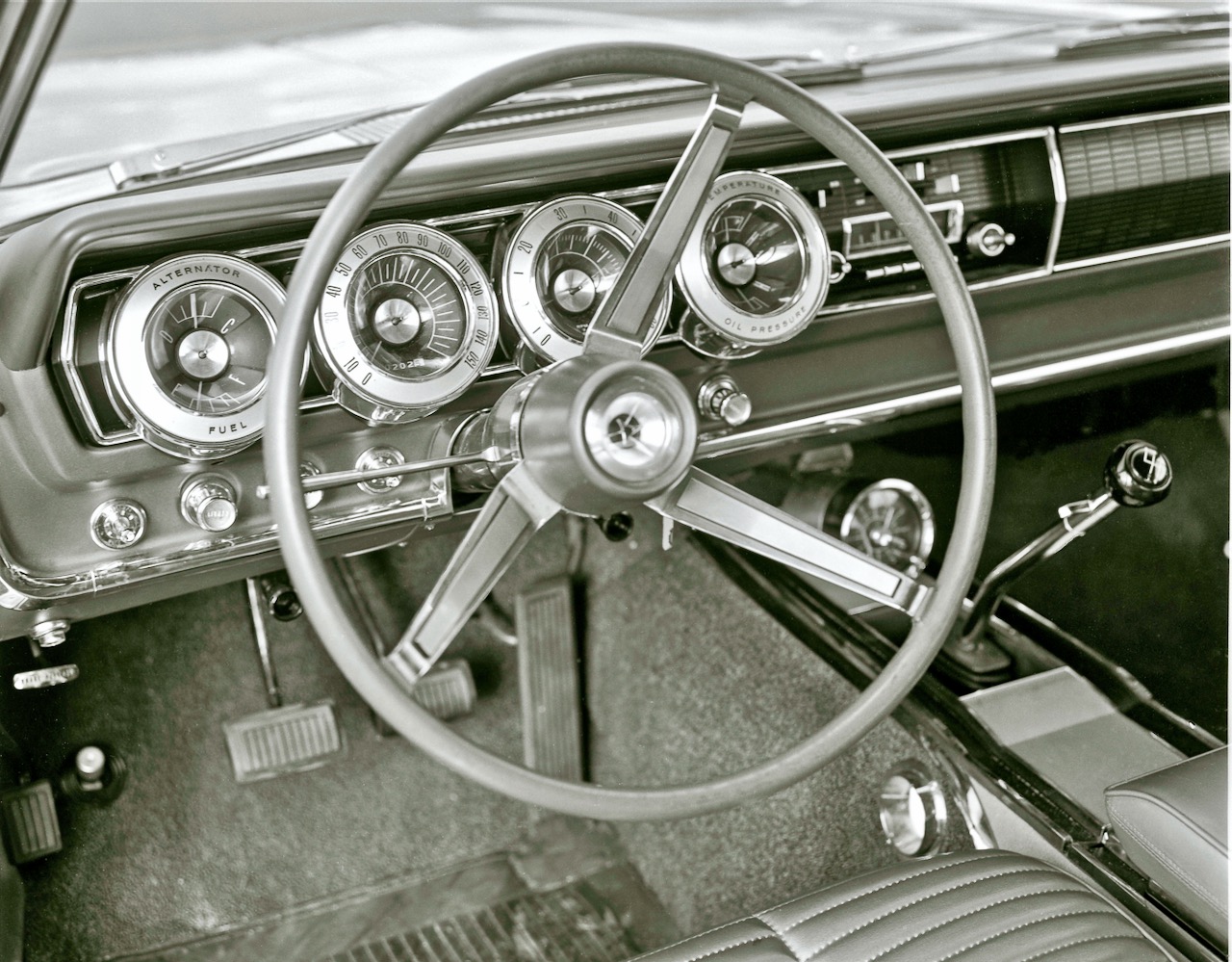
Marty and his fellow writers were just as enamored with the Charger’s interior. “In addition to its performance and styling, we really loved the Charger’s interior. There are four matching vinyl-covered contoured buckets, many yards of carpet and vinyl trim, and the neatest set of gauges we have ever laid our eyes on. With the rear seats folded flat, the rear armrest flipped over to pad the console and the storage panel dropped, it looks as though the Charger is a rolling billboard for a carpeting company, as there’s carpeting from the backs of the front buckets to the rear bumper. Surfing anybody?”
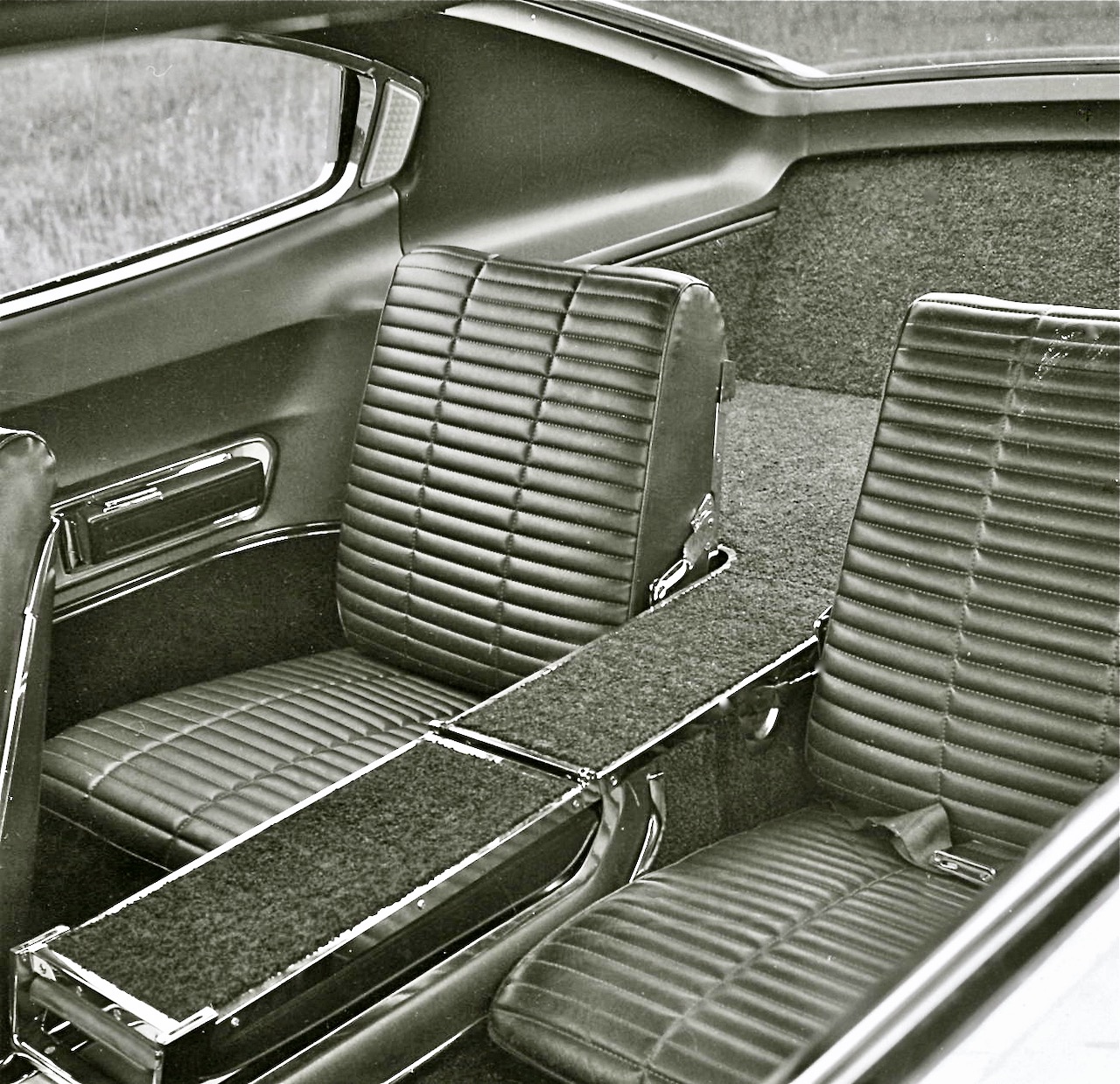
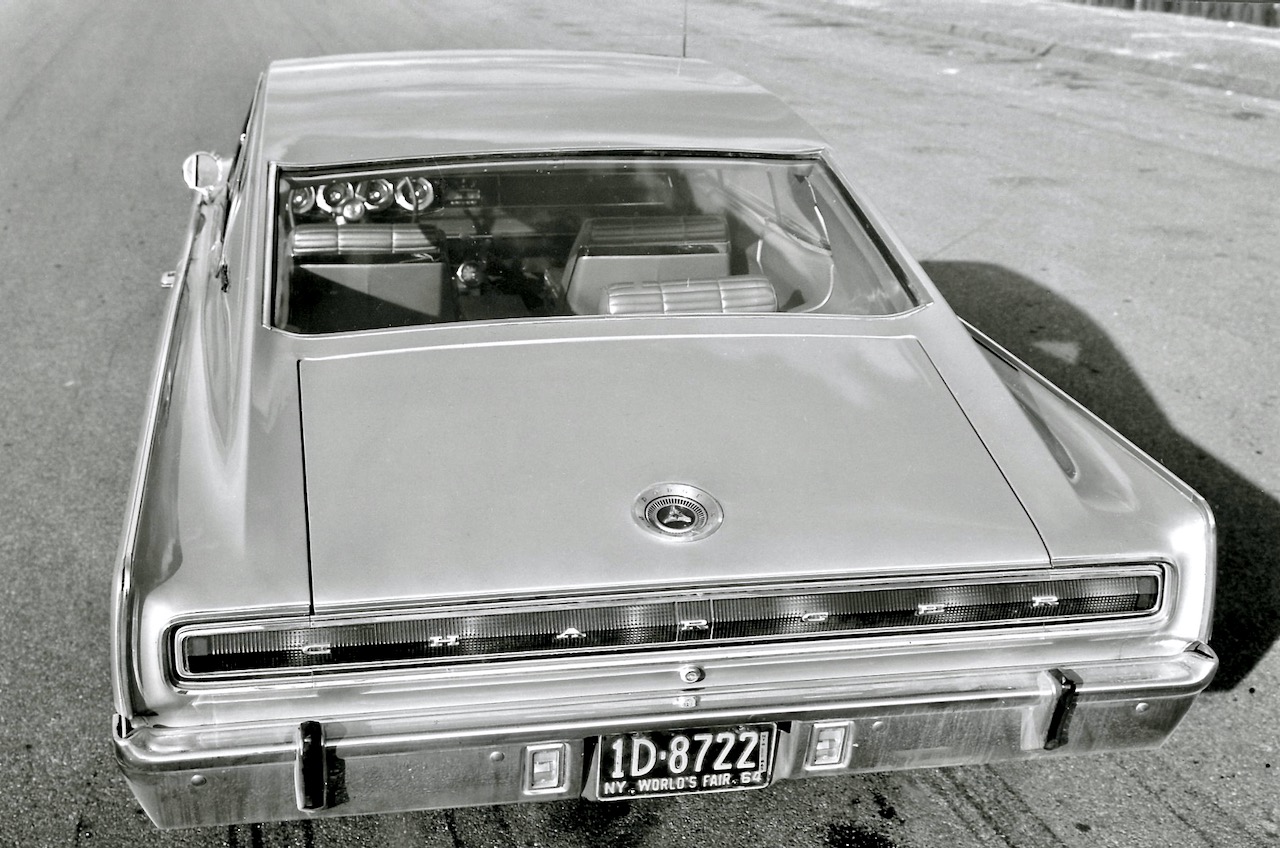
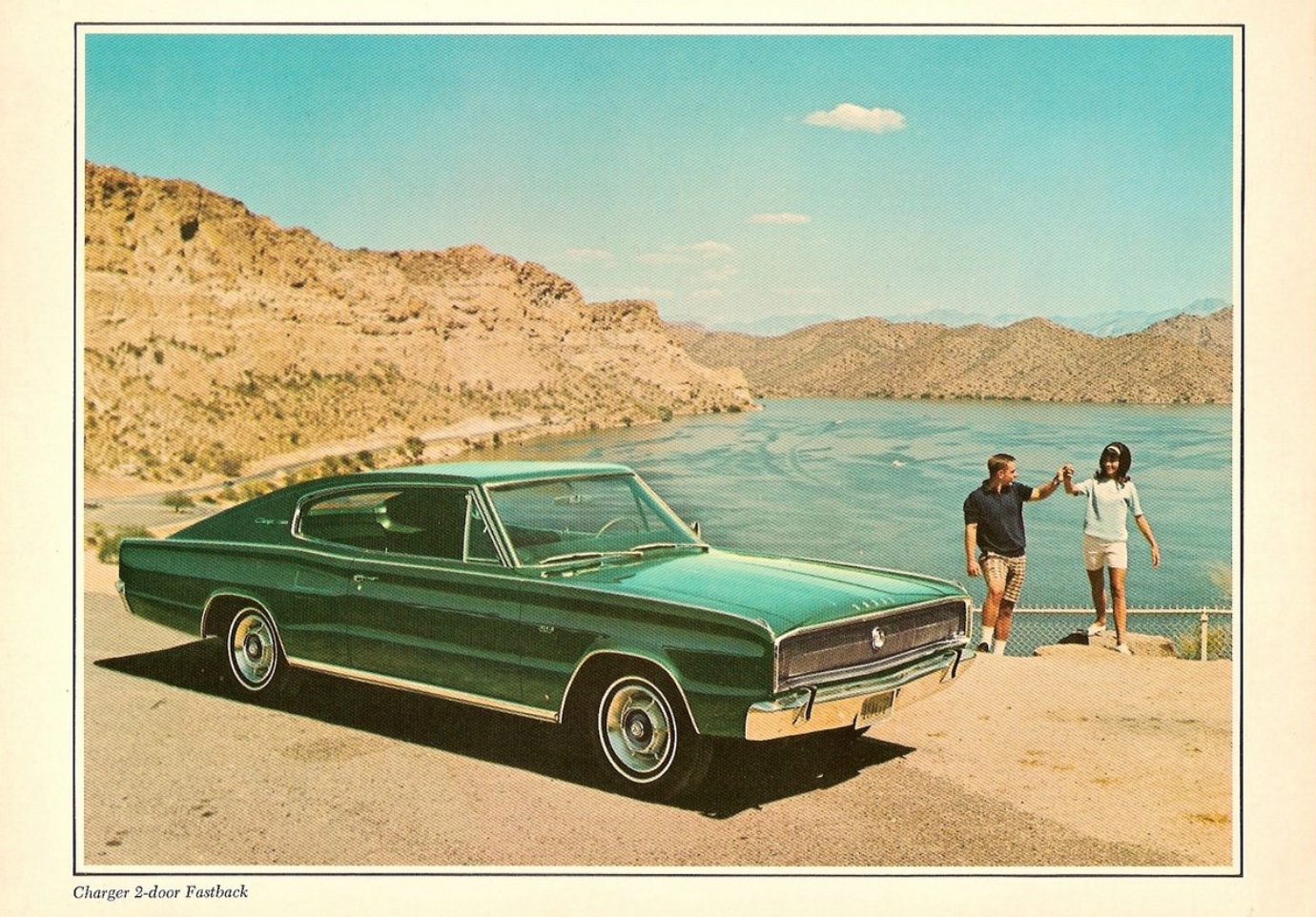
What a looker the 1966 Charger was. It’s unmistakable fastback design, fully rotating hideaway headlights, full-width taillights that looked like an afterburner, space age looking interior seating with a full-length center console that provided passengers with all bucket seating,’ The dash was also futuristic as the gauges were lit up with an ‘electroluminescence’ system rather than traditional bulbs. It could be compared to being on the command deck of the Starship Enterprise and looking out onto the vast unknown galaxies.
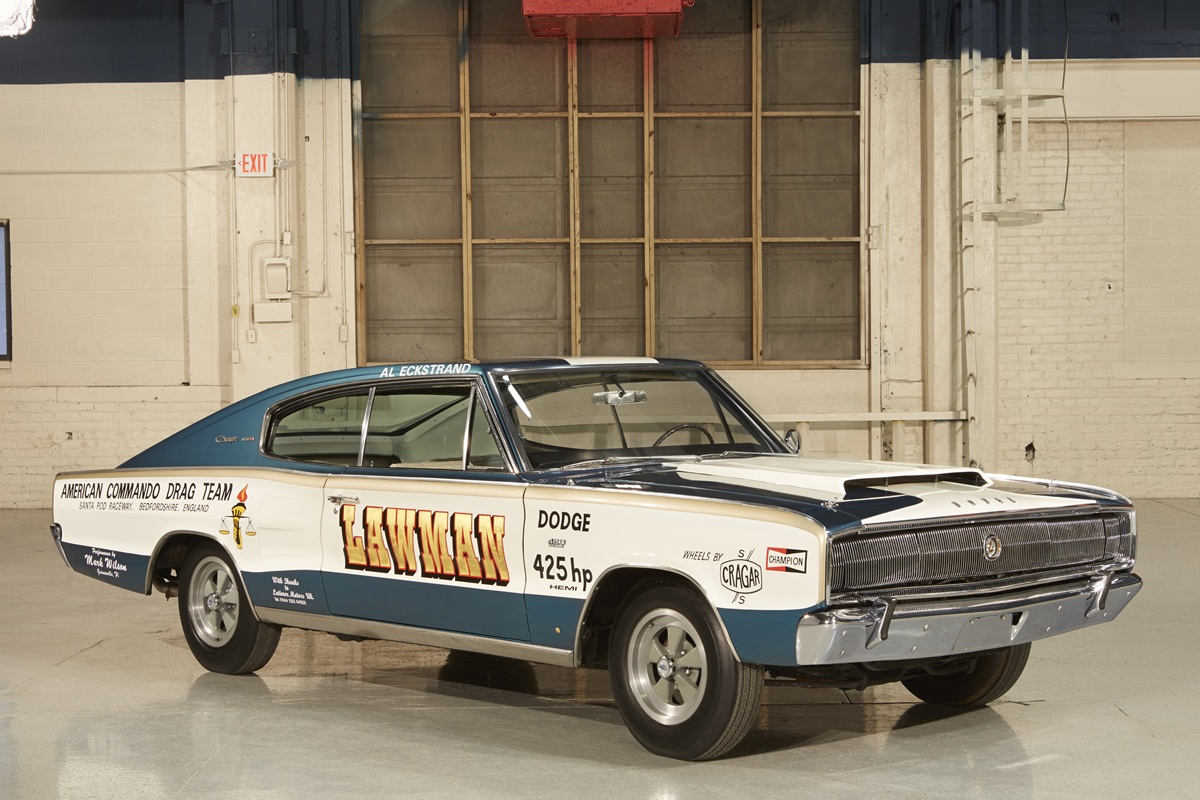
Along with the latest innovations and great reviews from the motoring press, the Charger was also Dodge’s weapon of choice in the NASCAR wars. With the HEMI engine now available in a production car for 1966, it was now legal to run on NASCAR tracks, run roughshod over the factory Ford and Mercury teams, and the few remaining Chevy racers. Despite the Charger’s fastback styling, it really didn’t produce the results Dodge wanted, as Richard Petty’s boxy and sedate-looking Plymouth Belvedere sedan was having better results on the high-speed ovals than the swoopy Charger.
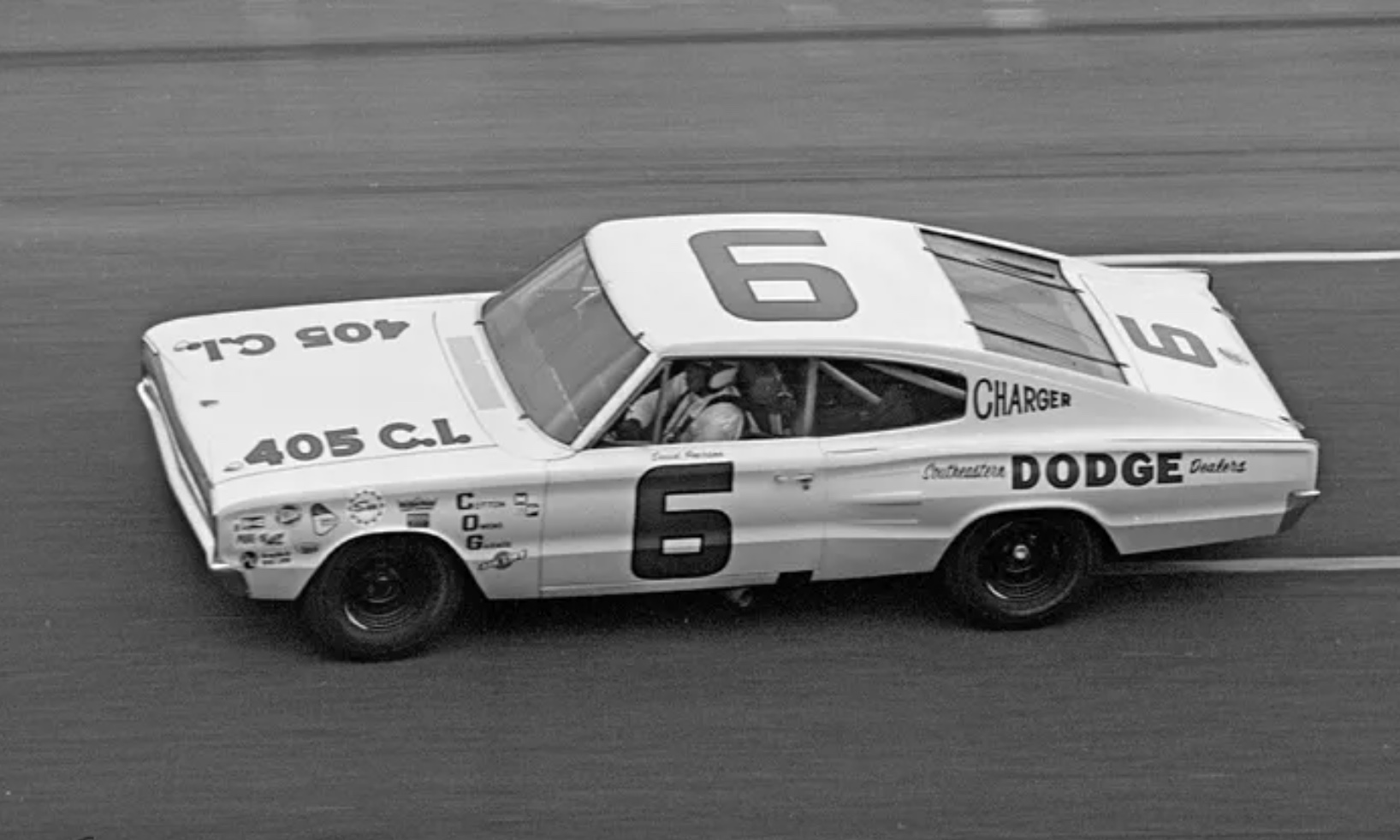
Regardless, the first-generation Charger has been valued among Mopar® enthusiasts. It was the first to kick off this historic nameplate that, through the decades, stopped traffic, became a movie star, won racing championships and became an icon of American Pop Culture. In part two, we’ll get into the Second Generation Charger (1968-1970), but in the meantime, here’s a look at the one that started it all.
0 Comments