From Hustle Stuff to Direct Connection – Part 1
While many may argue about who created the first mass-produced muscle car, a feud that has been ongoing since the early 1960s, there’s no doubt that Chrysler was all in when it came to offering factory-engineered performance parts. Even before the advent of the Max Wedge machines in 1962 and the 426 HEMI® behemoths in 1964, Chrysler’s engineers created special ‘Service Packages’ for many of their engines beginning in the late 1950s. These usually included higher-lift, longer-duration camshafts, along with special valve springs to handle the increased engine speeds. From a marketing implementation standpoint, it was rather crude as these packages would be communicated to Chrysler/Plymouth/Dodge dealers via a tech/news bulletin sent to the attention of the parts/service manager, which was usually buried in stacks of Technical Service Bulletins.
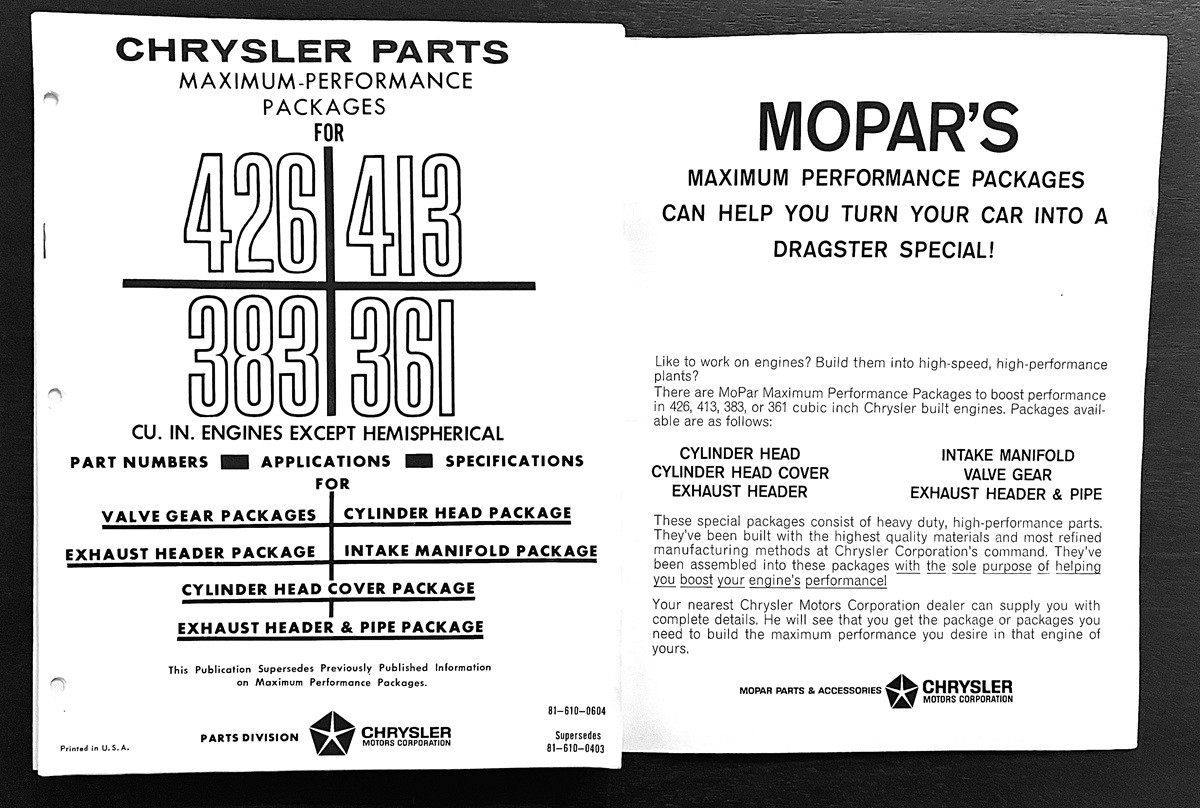
When the 1962 413 Max Wedge began running roughshod over the competition at drag strips, Chrysler knew the competition would not sit still. By 1963, the Max Wedge grew to 426 cubic-inches and by mid-year, Chrysler’s engineers working in the race group developed aluminum sheet metal for the Dodge and Plymouth intermediates. These included fenders, hood, hood scoop and other bits to reduce the car’s weight. Once again, these items were added into the growing performance parts portfolio primarily for racers competing in the NHRA and AHRA Super Stock races. With a Chrysler part number associated with these unique parts, it made them ‘legal’ in the eyes of the drag racing sanctioning bodies.
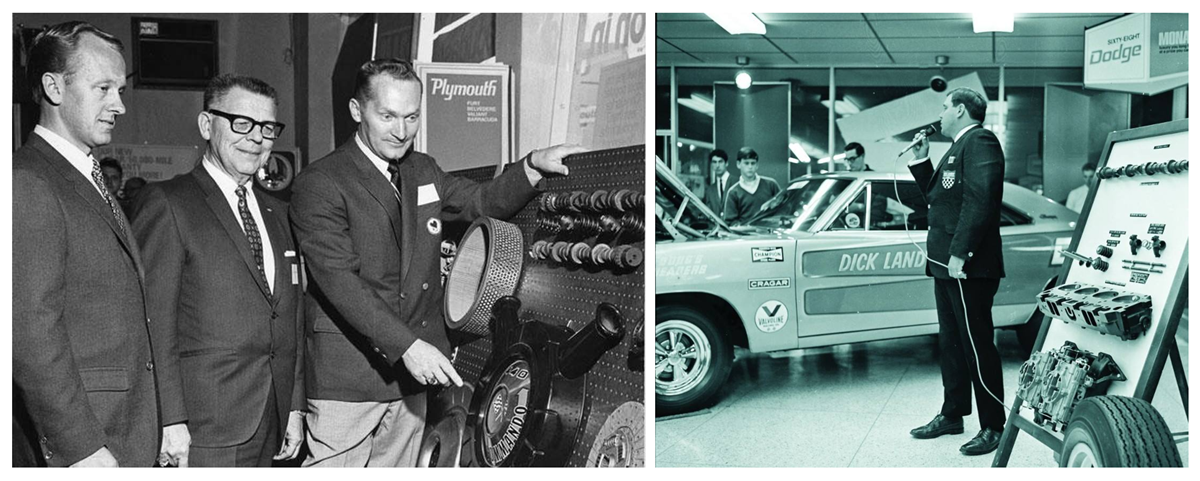
With the introduction of the 426 Race HEMI engine and eventually the 426 Street HEMI engine by 1966, the muscle car movement had ramped up. Every Detroit automaker was hyper-focused on capturing the young consumers, and Chrysler went after this huge market segment with a vengeance. With the introduction of the Dodge Coronet R/T and Plymouth GTX in 1967, the die was set. Sox & Martin and Dick Landy were directed by their sponsor, Chrysler Corporation, to get out of the ‘Funny Car’ business and race in the Super Stock category as these cars bore more resemblance to productions car. As per their contract, both Sox & Martin and Dick Landy were conducting Supercar Performance Clinics at dealerships across the country. Along with showcasing the latest Plymouth and Dodge muscle cars, the team also promoted drag racing driving techniques to improve ETs. But there was another element, discussing performance parts designed to make Mopar® vehicles even faster. Each dealership clinic included performance parts display boards that included intake manifolds, carburetors, camshafts, shifters and more. While the technical tips came right from the factory performance engineers working with Chrysler racers, the intake manifold, camshaft and even headers sold through the Chrysler Performance Parts Program were the same piece used on Sox & Martins and Dick Landy’s HEMI engine and Wedge-powered Super Stockers.
By 1968, Chrysler’s Performance Parts offerings had grown massively. Not only from their factory-engineered product offerings developed over the years of racing Super Stock with their highly competitive Wedge and HEMI engines, but also their collaboration with major aftermarket parts companies such as Racer Brown Camshafts, Isky Camshafts, Edelbrock Intake Manifolds, Holley Carburetors, Hooker Headers and other heavy hitters. What Chrysler needed was a way to bundle up all these ‘Go-Fast Goodies’ in a cohesive consumer marketing program that would go beyond just the dealers and reach the end-user, consumers looking for even more performance from their Mopar vehicles.
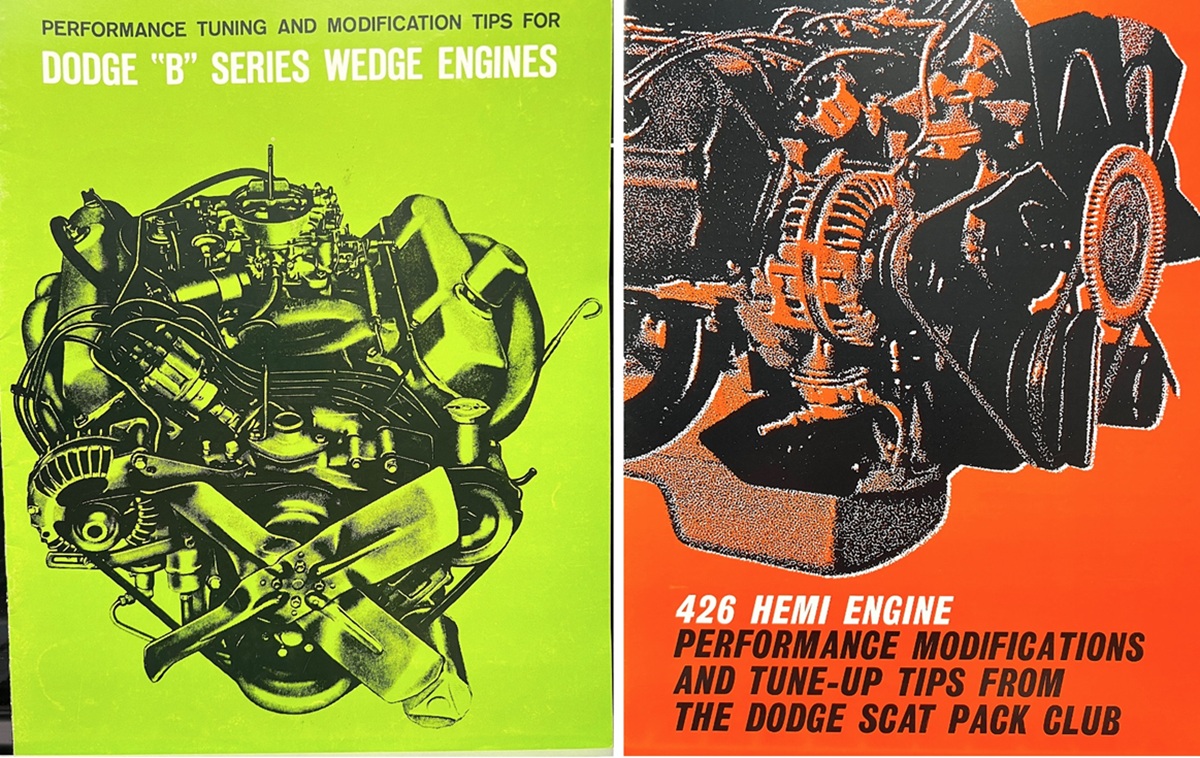
While some of this info was listed in the Sox & Martin and Dick Landy Supercar Clinic brochures they handed out at clinics, it didn’t have massive distribution to really launch the program. The parts marketing was left up to the racers to help promote, but it fell short. A competitor’s main goal is to go faster than the guy in the next lane, not promote camshafts, carburetors, headers, torque convertors, gauges, fluids and other items. At the conclusion of each Supercar Clinic and when the race team’s ramp trucks rolled out of the dealership, Sox & Martin, Dick Landy and other factory-backed racers were focused on defeating the competition. This was one of the factors for Chrysler to finally get serious on a major performance parts program.
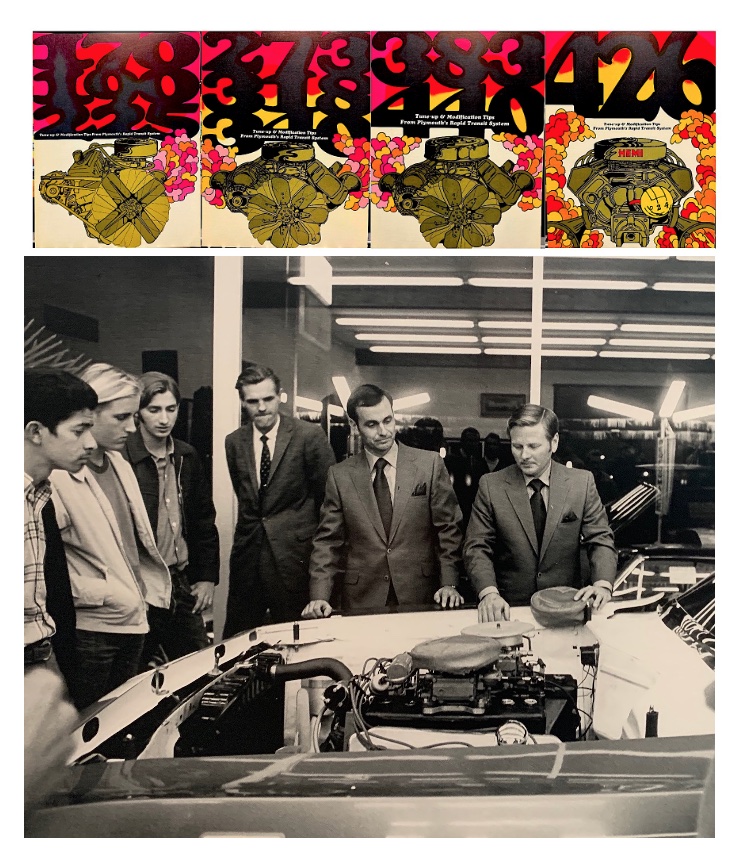
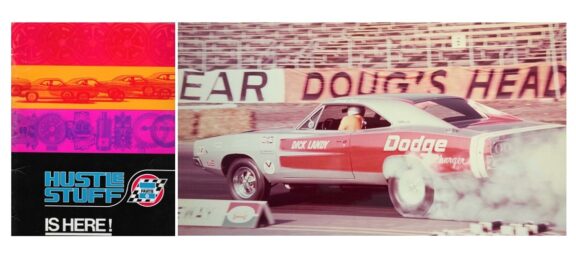
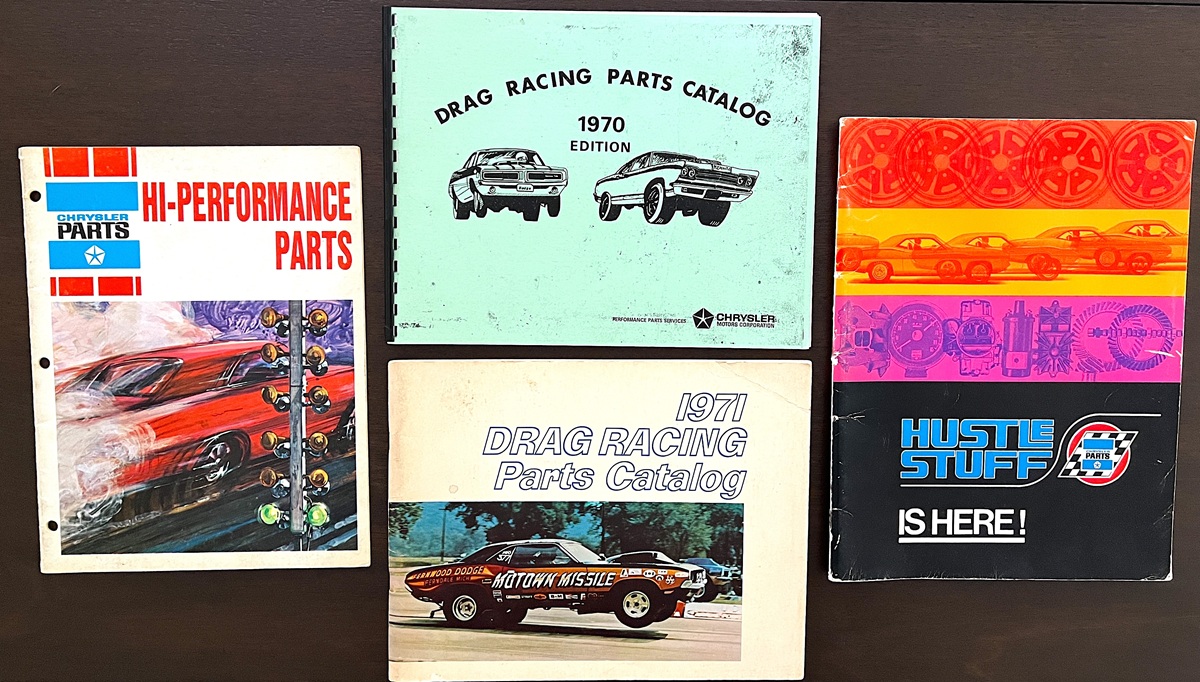
With the years of technical information, race track data and strategic alliances with the major movers in the high-performance aftermarket parts industry, and lessons learned from the past, Chrysler launched the ‘Hustle Stuff’ parts program in late 1969. The Hustle Stuff initiative was promoted and marketed to both Chrysler/Plymouth/Dodge dealers and consumers. The catalog product listings were more comprehensive, pictures and illustrations were improved, and Hustle Stuff provided shoppers with a better shopping experience. With strong sales of muscle cars, Hustle Stuff complemented the high-performance hardware in the showroom under the Plymouth Rapid Transit and Dodge Scat Pack banners. Now, savvy dealers could provide their customers with performance parts for their new Road Runners, Super Bees, ’Cudas, Challengers, Chargers and other muscle cars. Hustle Stuff would become the performance parts template not only for the Mopar Direct Connection program, but the dedicated Chevrolet and Ford Performance Parts programs that were still many years away.
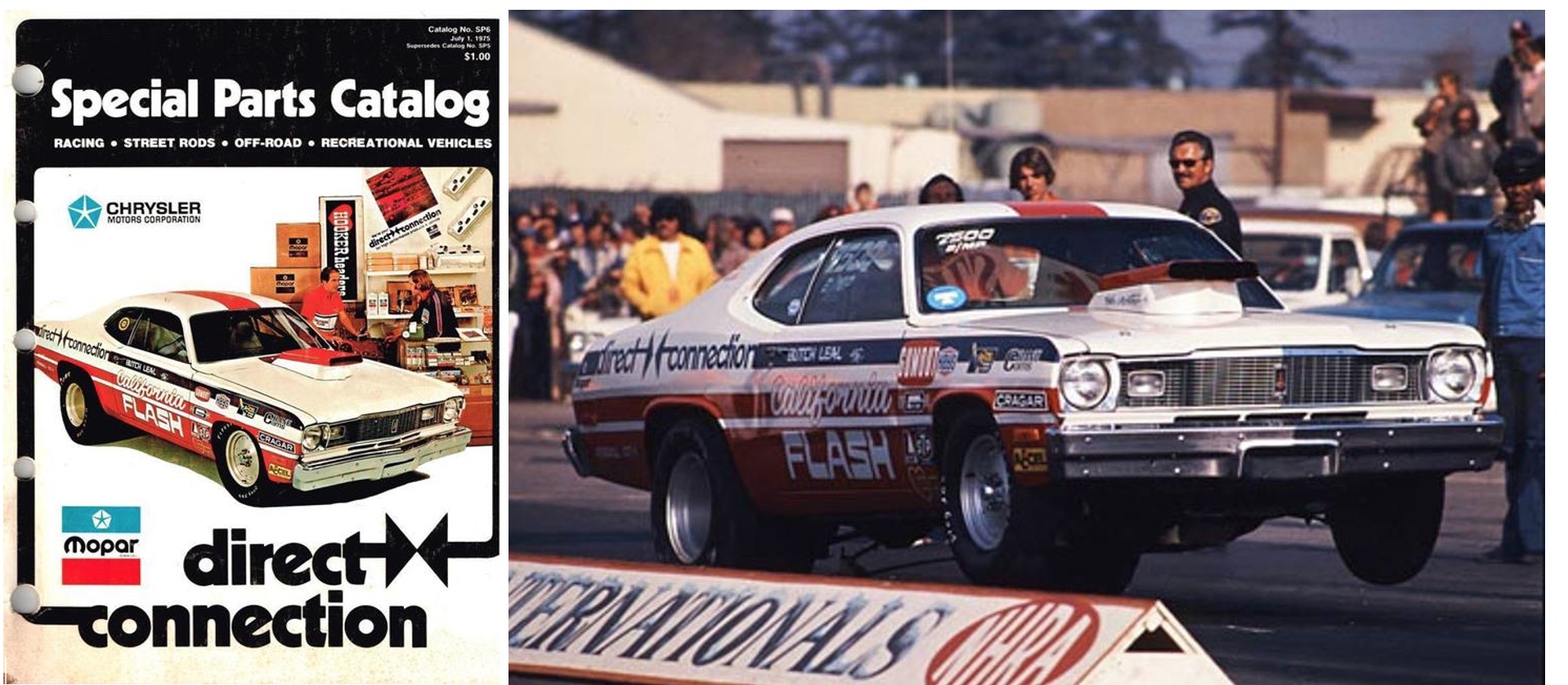
Chrysler’s Hustle Stuff program was the cutting edge of marketing factory performance products. It proved that with the right recipe of knowledge and go-fast parts, one can shrink time and distance in their drag car or muscle machine!
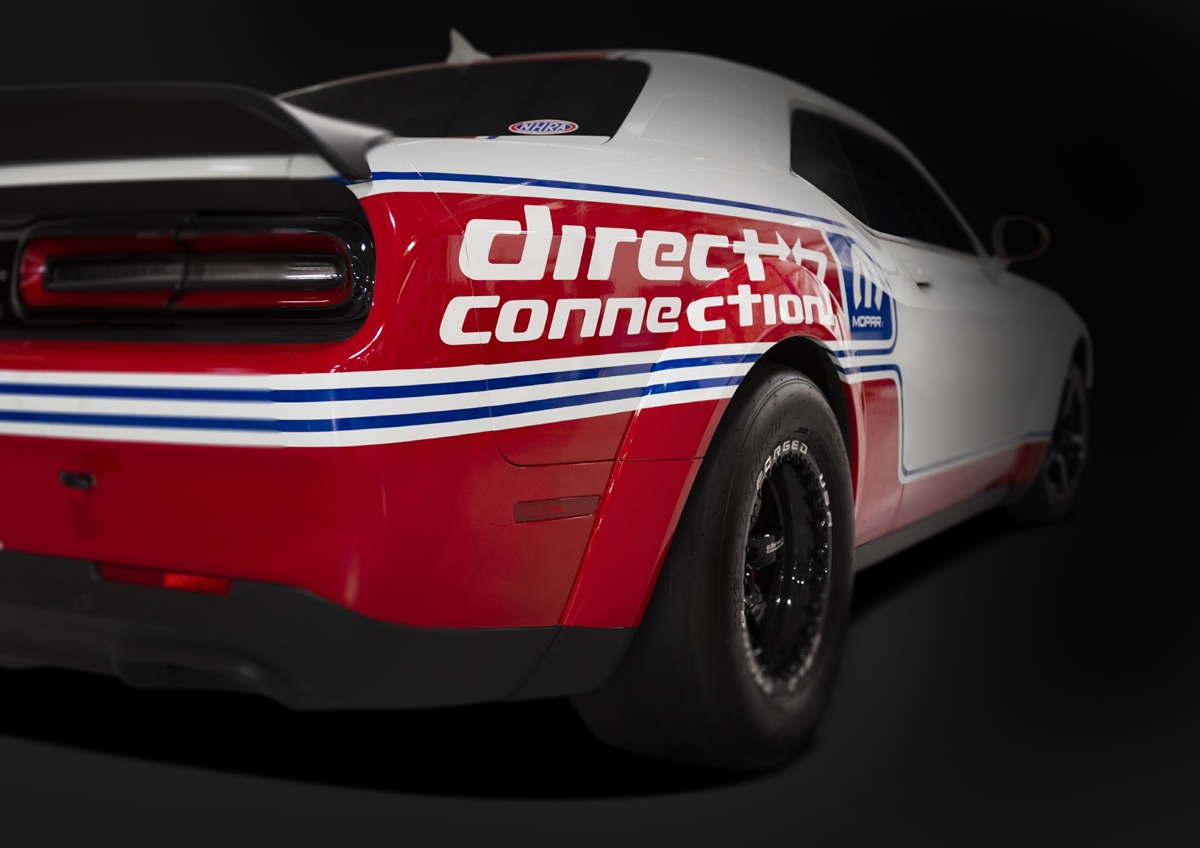
In part two, we’ll examine the rise, fall and rebirth of Mopar’s iconic Direct Connection parts program and it once again became the standard of the industry!
0 Comments