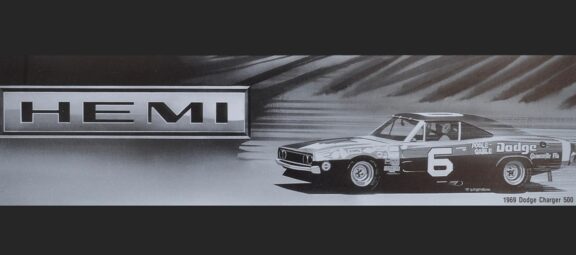
Mopar®’s Role in NASCAR’s Early Era
Stock car racing traces its roots back to the 1940s, when production cars straight from the showroom floor were raced on the sandy beaches of Daytona, Florida. As the sport grew, the thrilling action captured the hearts of fans across the country. Many of the early drivers developed their skills behind the wheel while running moonshine, where speed and precision driving were essential to avoid capture.
NASCAR – the National Association for Stock Car Auto Racing – was born in December 1947, when Bill France organized a meeting at a small motel in Daytona Beach. Just a month later, in January 1948, NASCAR sanctioned its first official race.
For Chrysler fans, a significant milestone came on August 12, 1951, when Tommy Thompson of Louisville, Kentucky, drove his #40 1951 Chrysler New Yorker to victory at Michigan’s Motor City 250, besting a field of 59 cars. Then in 1954, Lee Petty dominated the season in the “San Juan Motors” 1954 Chrysler New Yorker Deluxe, securing seven wins and 17 additional top-five finishes – enough to clinch the NASCAR Championship.
That same year, Brewster Shaw added to Chrysler’s growing reputation by piloting a stock 1954 Chrysler sedan to a top speed of 118.11 mph on the sands of Daytona. His win at the NASCAR National Speed Trials helped reinforce the public perception that Chrysler built factory-fast cars capable of competing – and winning – right off the lot.
BIG CHRYSLER 300s
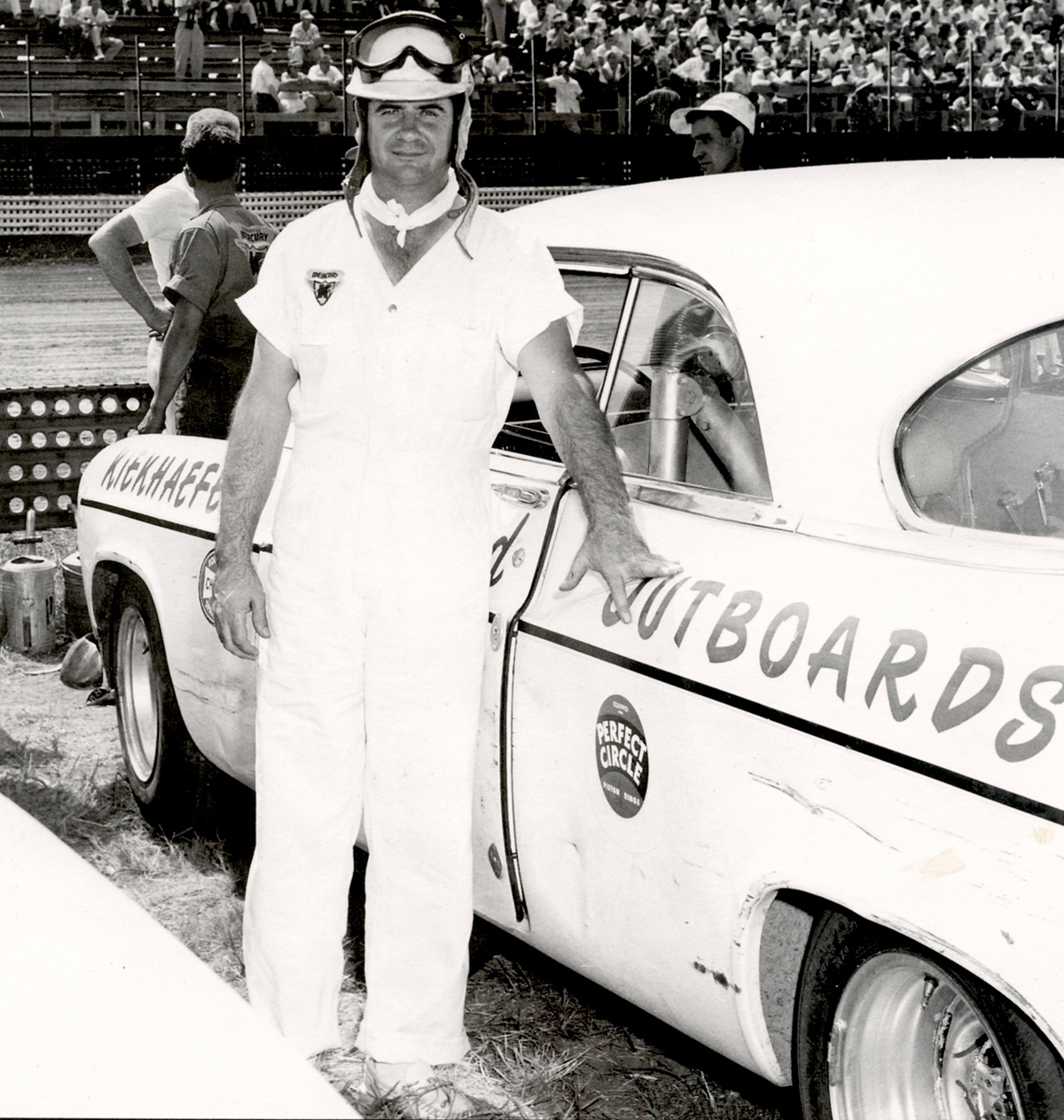
Pictured here is Elzie Wylie “Buck” Baker with one of the legendary Carl Keikhaefer-prepared Chrysler 300s. Keikhaefer, founder of Mercury Outboard Motors in Fond du Lac, Wisconsin, was an engineering genius and a relentless perfectionist. No expense was spared in his 1955–1956 NASCAR efforts. That investment paid off – his team, featuring standout drivers like Tim Flock, captured an astounding 52 victories and two Grand National Championships over those two seasons. Another of his drivers, Frank Mundy, drove a Chrysler to the 1955 AAA Championship.
Beyond the checkered flags, Keikhaefer’s dominance helped prove to the public just how powerful and capable the Chrysler HEMI® engines truly were. However, as a wealthy “Yankee” millionaire from Wisconsin entering a sport largely populated by Southern drivers racing on tight budgets, Keikhaefer wasn’t exactly welcomed with open arms. Still, his relentless drive for perfection and attention to detail showcased exactly what the original Chrysler 300 “Letter Series” cars could do when unleashed on the track.
WEDGE POWER
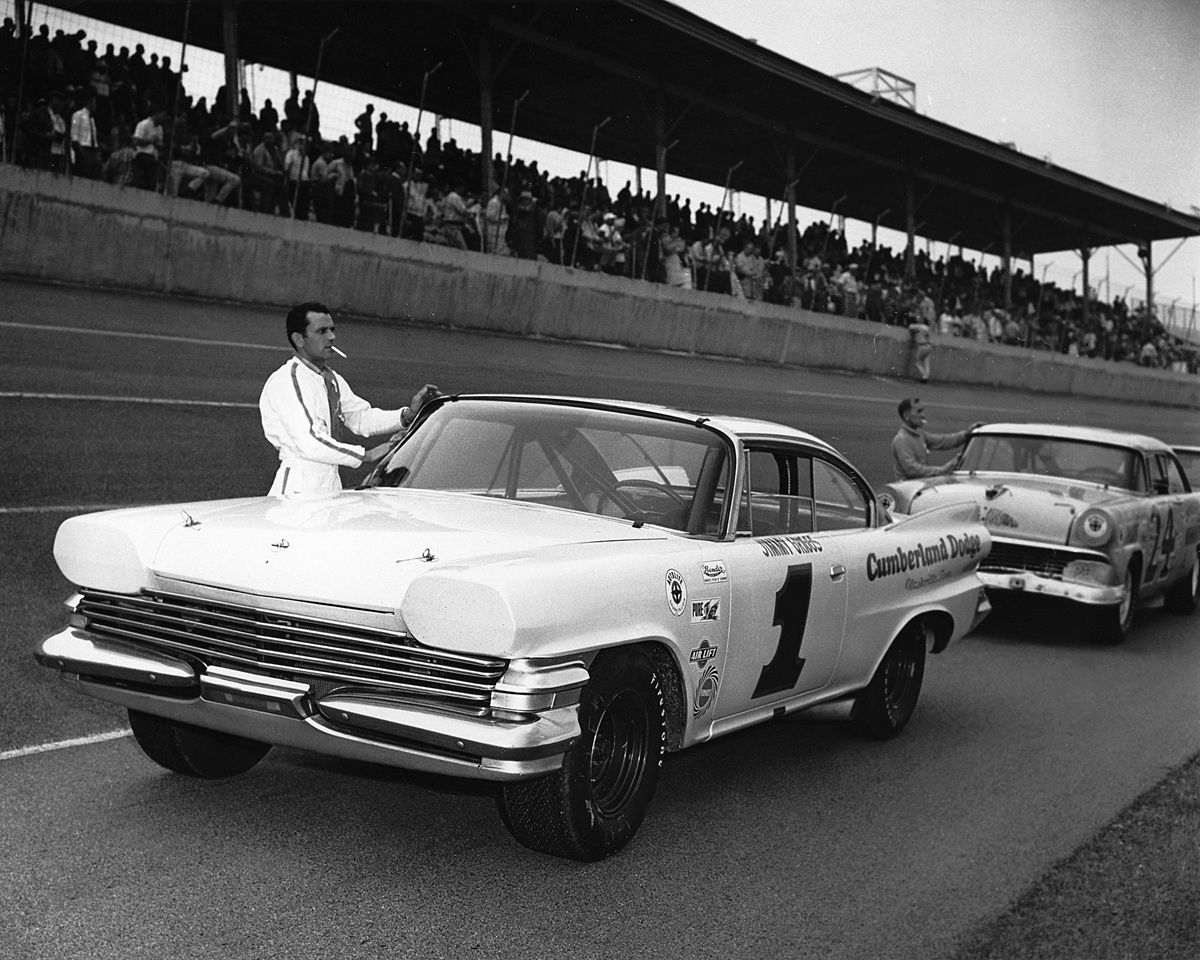
This 1960 Dodge, owned by Robert Cheek and driven by Jimmy Griggs, competed in the NASCAR Modified-Sportsman Series at Daytona in 1965. One standout feature: a custom tubular grille added for a more aggressive look.
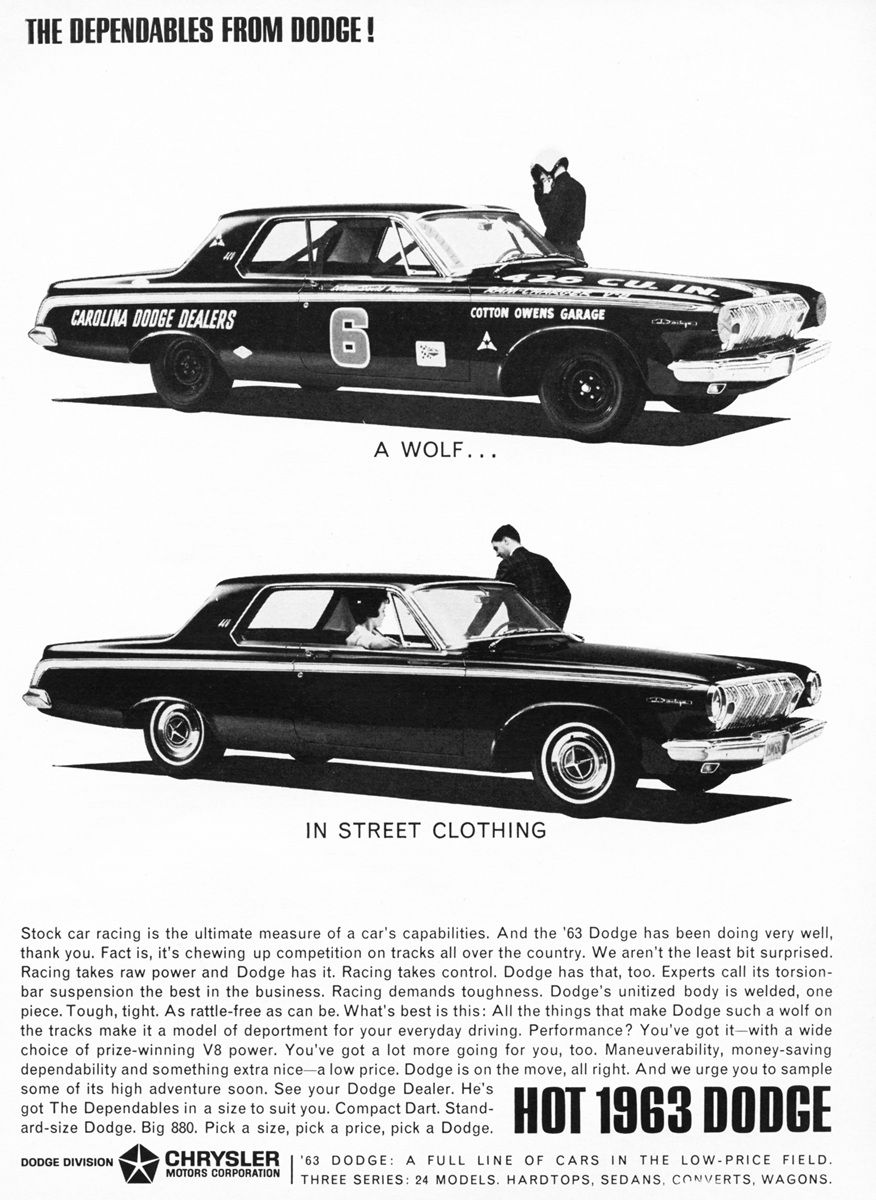
Dodge’s advertising agency had a bold approach to promoting the 1963 models, stating:
“Stock car racing is the ultimate measure of a car’s capabilities. And the ’63 Dodge has been doing very well, thank you. Fact is, it’s chewing up competition on tracks all over the country.”
What most people didn’t know – except for those deep inside Dodge’s engine development shop – was that an entirely new powerplant was already in the works. One that would soon elevate Mopar® performance to a whole new level on race tracks nationwide.
HEMI ENGINE ARRIVES
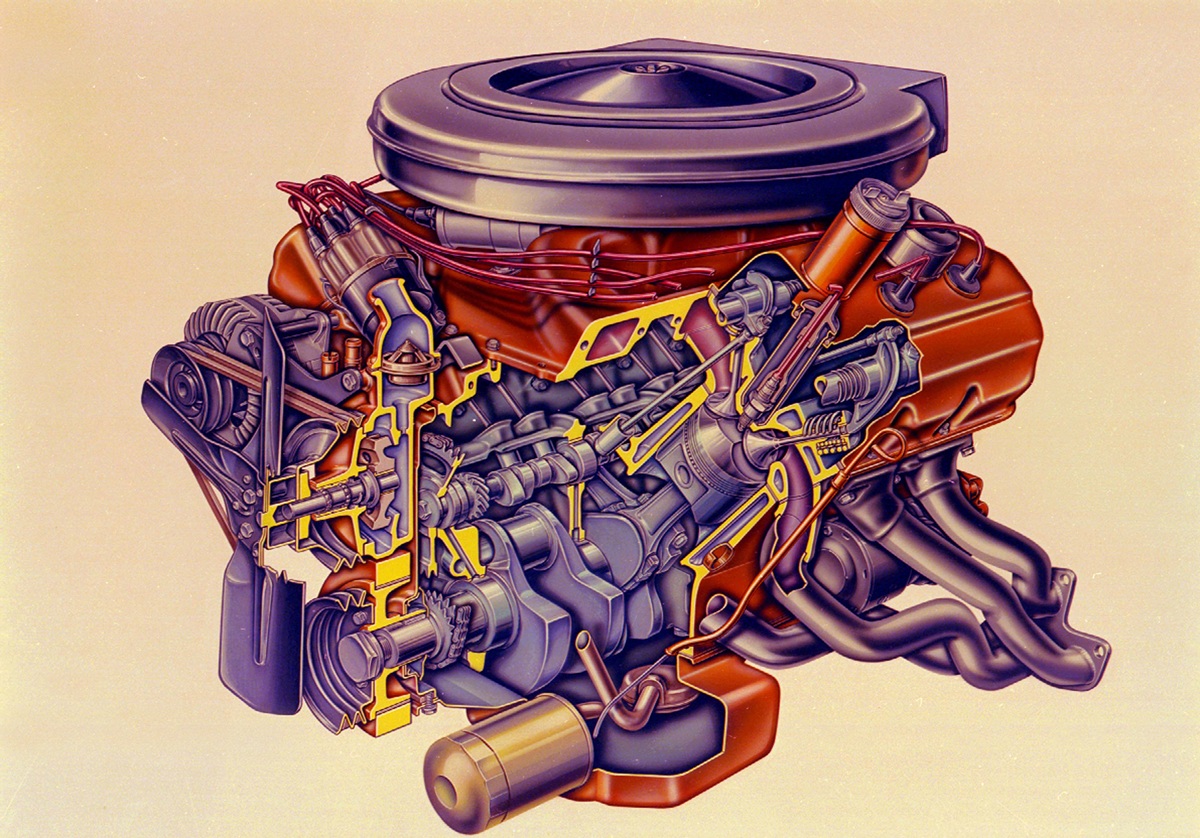
There’s no question that when the Gen II HEMI engine was released at the 1964 Daytona 500, it rocked the world of Stock Car Racing! It provided everything needed for Dodge and Plymouth racers to win! We previously covered the design and development and race results of this masterpiece powerplant.
RONNEY HOUSEHOLDER
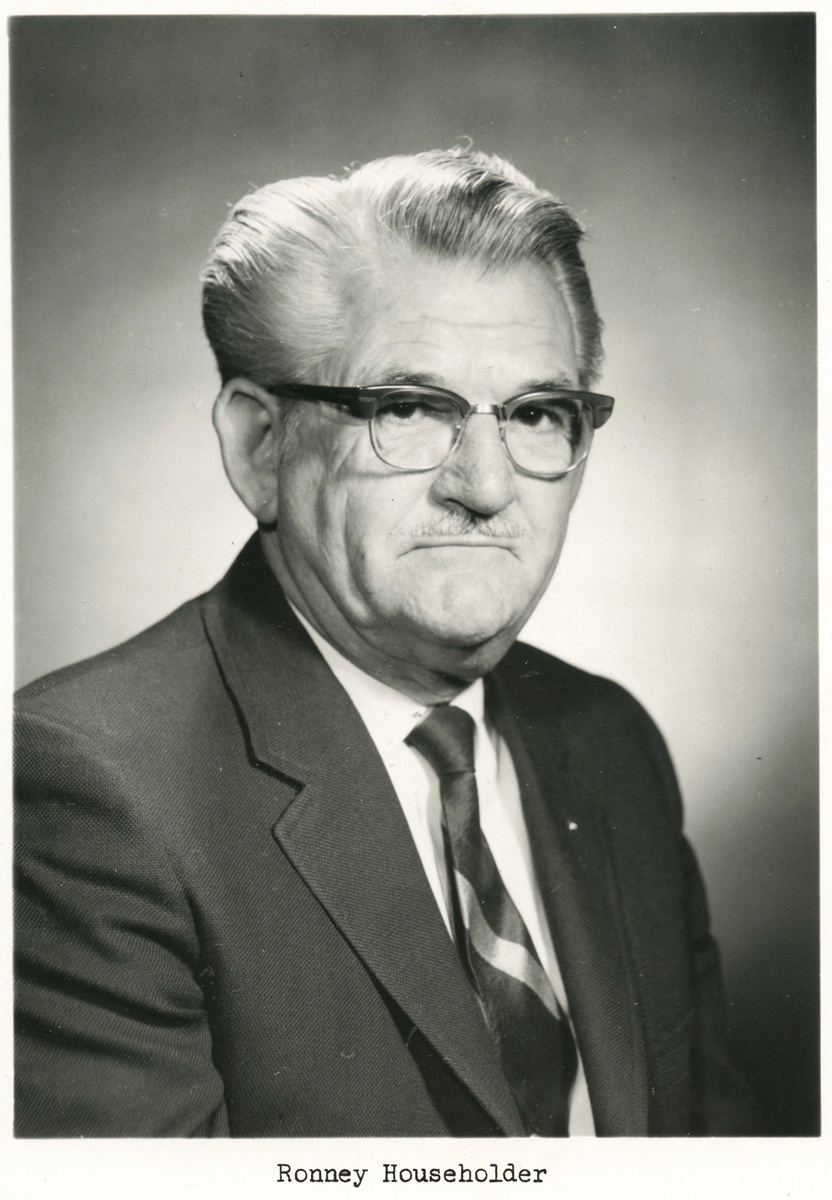
Ronney Householder was a tough, no-nonsense racer who brought grit and engineering smarts to Chrysler when he joined in 1955. By 1964, he had risen to become the Mopar Racing Team Manager, overseeing Dodge and Plymouth’s factory-backed stock car racing efforts. With an engineering background from the University of Southern California, Householder had a deep, technical understanding of racing – and he used it to push Mopar to the front of the pack.
Officially titled F.R. Householder, Manager, Circuit High Performance Competition, he was a hands-on leader known for his uncompromising standards. Nothing happened in Mopar’s racing program without his say-so. He was, quite simply, tough as nails.
Under Householder’s leadership, Mopar enjoyed one of the most dominant eras in motorsports history:
- Richard Petty won the NASCAR Championship in 1964, 1967 and 1971 driving Plymouths.
- David Pearson captured the 1966 NASCAR Championship in a Dodge.
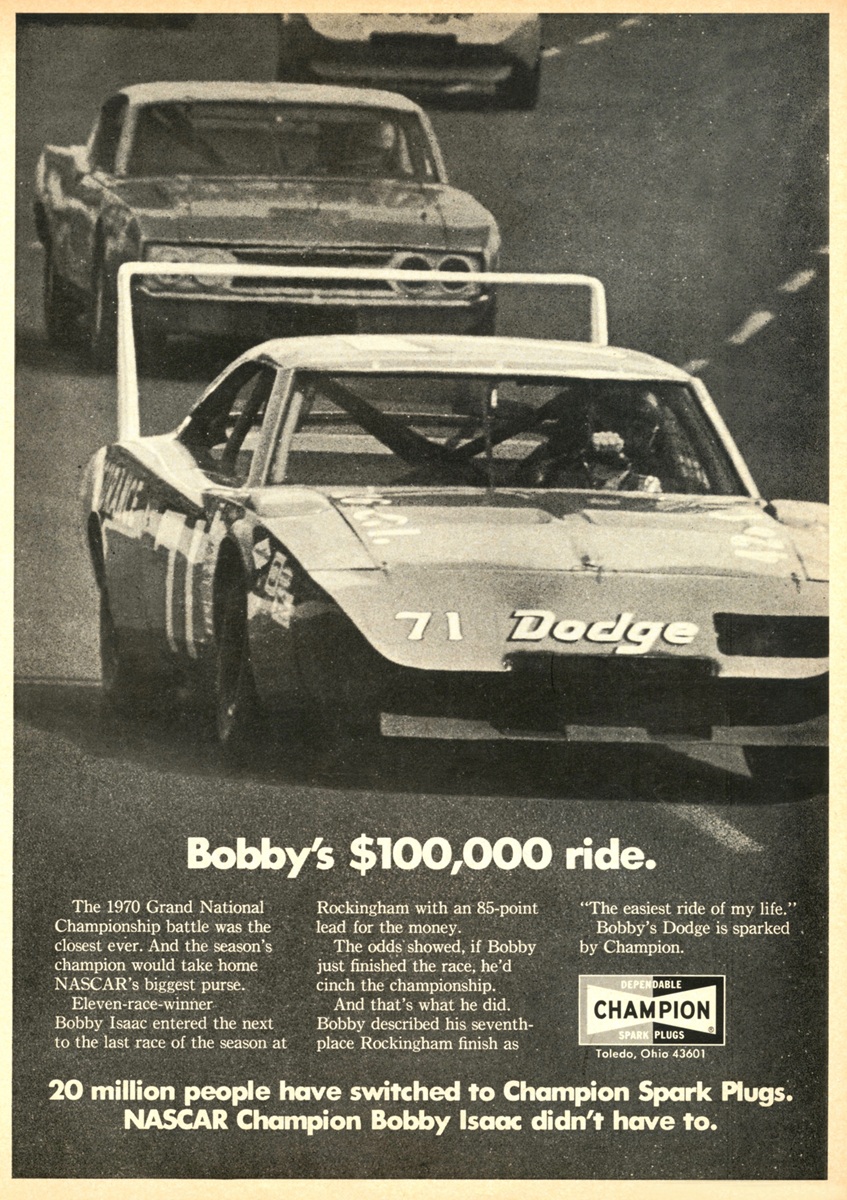
- Bobby Isaac won the 1970 NASCAR Championship behind the wheel of a Dodge.
Beyond NASCAR, Mopar’s success continued across multiple series:
- USAC Stock Car Series Champions from 1965–1970
- IMCA Titles from 1965–1971
- ARCA Championships in 1966–67 and 1970–71
Householder passed away in 1972, but his impact on Mopar’s racing legacy is undeniable. He was the driving force behind Dodge and Plymouth’s domination on the track during that golden era of American motorsports.
DODGE ROCK STAR DRIVER: DAVID PEARSON
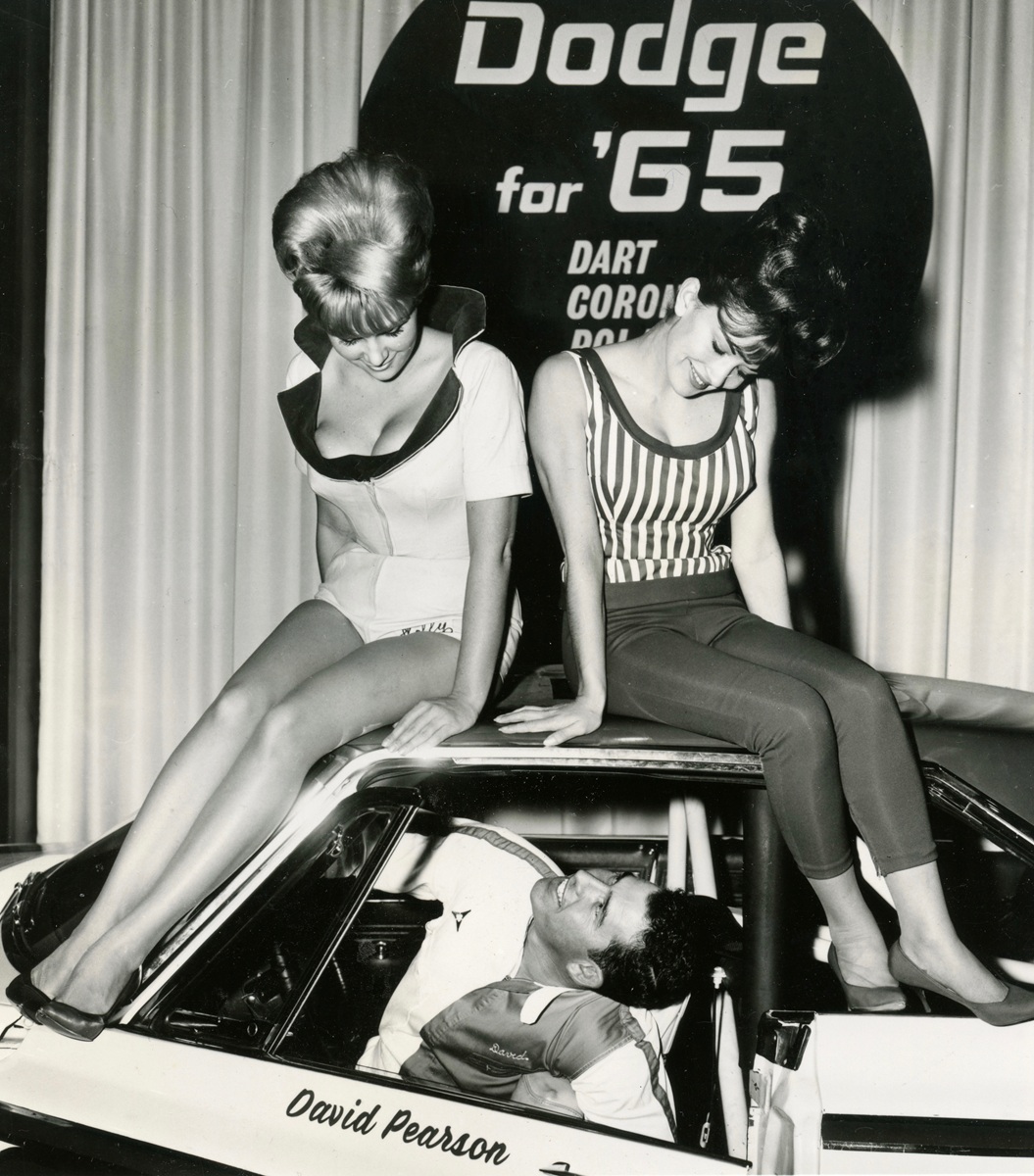
In this Dodge publicity photo, driver David Pearson is seen behind the wheel of a 1965 Dodge Coronet at the Detroit Auto Show – the very car he would use to dominate classic short dirt tracks.
Pearson wasn’t just good – he was a threat on any surface. As Richard Petty famously told Sports Illustrated in 1998:
“David Pearson could beat you on the dirt, he could beat you on pavement, he could beat you on a road course, he could beat you on a short track or he could beat you on a superspeedway. I never felt as bad losing to David as I did some of the others because I knew just how good he was.”
Pearson’s 1964 season was a breakout year: he won eight major races and earned 12 pole positions, solidifying his place as one of the fiercest competitors in the sport.
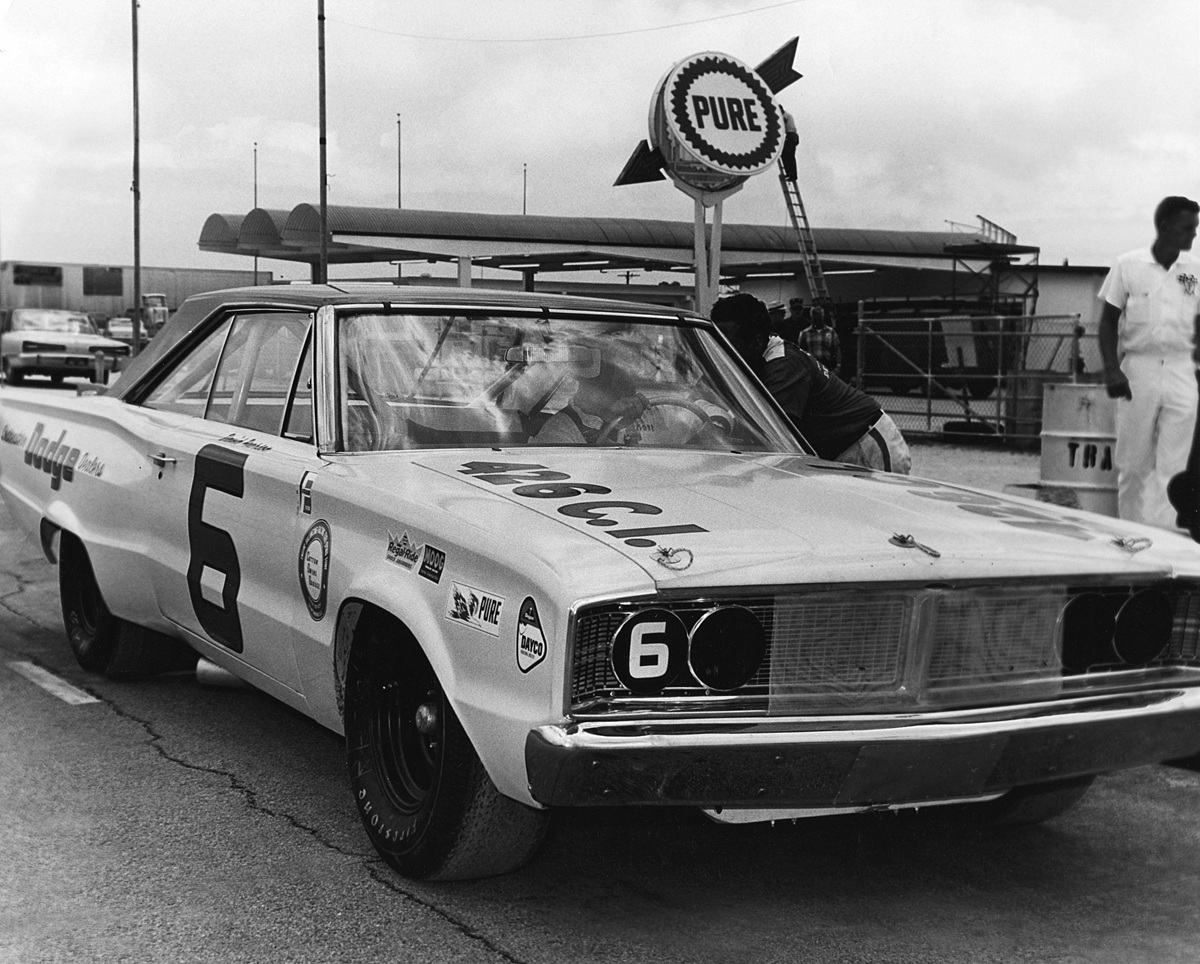
In 1966, David Pearson piloted the Cotton Owens-prepared Dodge Coronet, and later that season, the newly introduced fastback Dodge Charger. Together, they were a force to be reckoned with. Pearson racked up an impressive 15 wins, 26 top-five finishes and 33 top-ten finishes, ultimately securing the 1966 NASCAR Championship behind the wheel of Owens-built Dodges.
Cotton Owens’ garage was a hub of elite talent during this era. In addition to Pearson, the roster included racing legends like Buddy Baker, Bobby Isaac, Bobby Allison, Darel Dieringer, Ray Hendrick and Sam McQuagg. Even Mario Andretti joined the team for the 1966 Daytona 500, driving a Cotton Owens-prepped Dodge.
It was a golden age for Mopar racing – and Cotton Owens was right at the center of it.
RIDE WITH THE WINNER
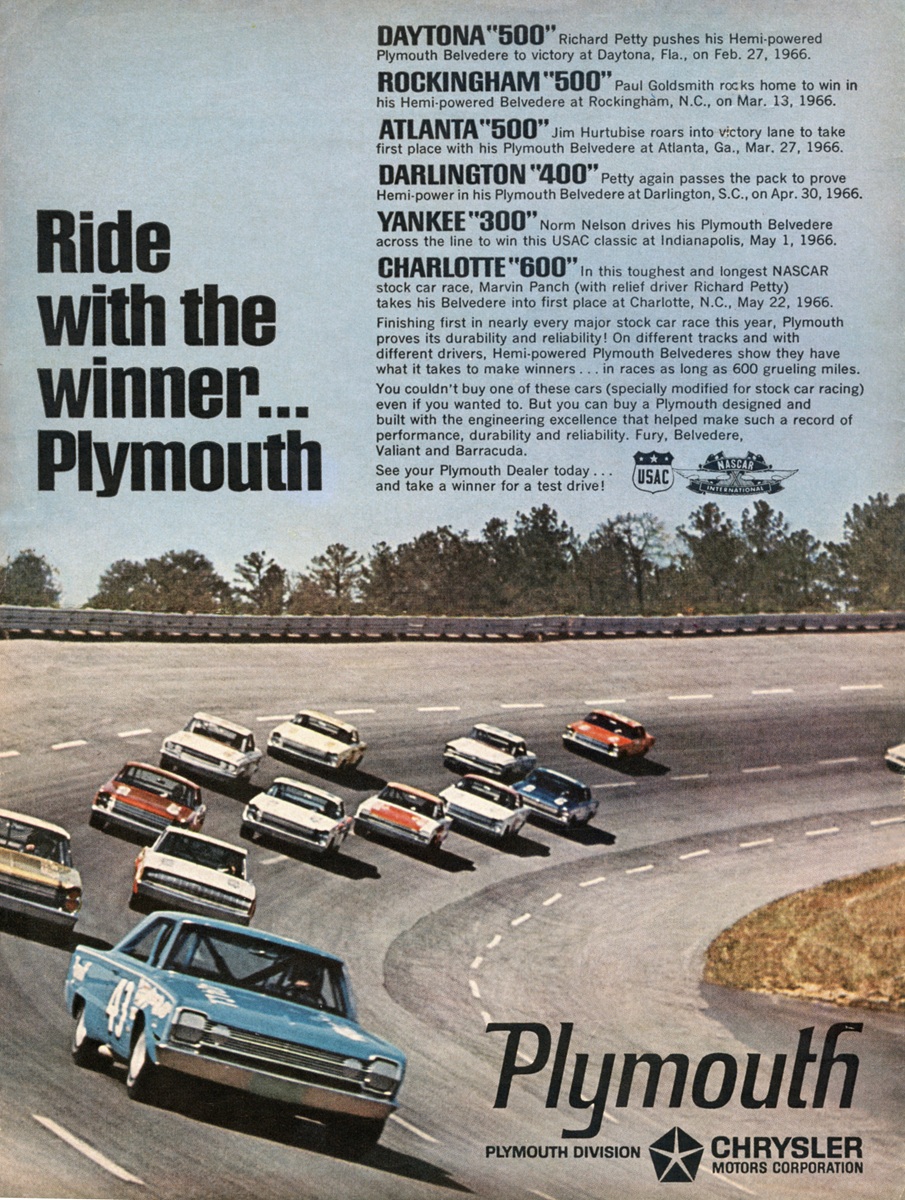
In mid-1966, Plymouth ran a bold magazine ad in top car enthusiast publications, showcasing the brand’s success on the NASCAR and USAC circuits. The ad highlighted wins by Richard Petty, Paul Goldsmith, Jim Hurtubise, Norm Nelson and Marvin Panch – a star-studded lineup that proved Plymouth’s racing pedigree.
The ad’s headline said it all:
“You couldn’t buy one of these cars (specially modified for stock car racing) even if you wanted to. But you can buy a Plymouth designed and built with the engineering excellence that helped make such a record of performance, durability and reliability. See your Plymouth Dealer today… and take a winner for a test drive!”
It was a perfect example of Detroit’s marketing mantra at the time:
Race on Sunday, Sell on Monday.
COTTON OWENS DODGE
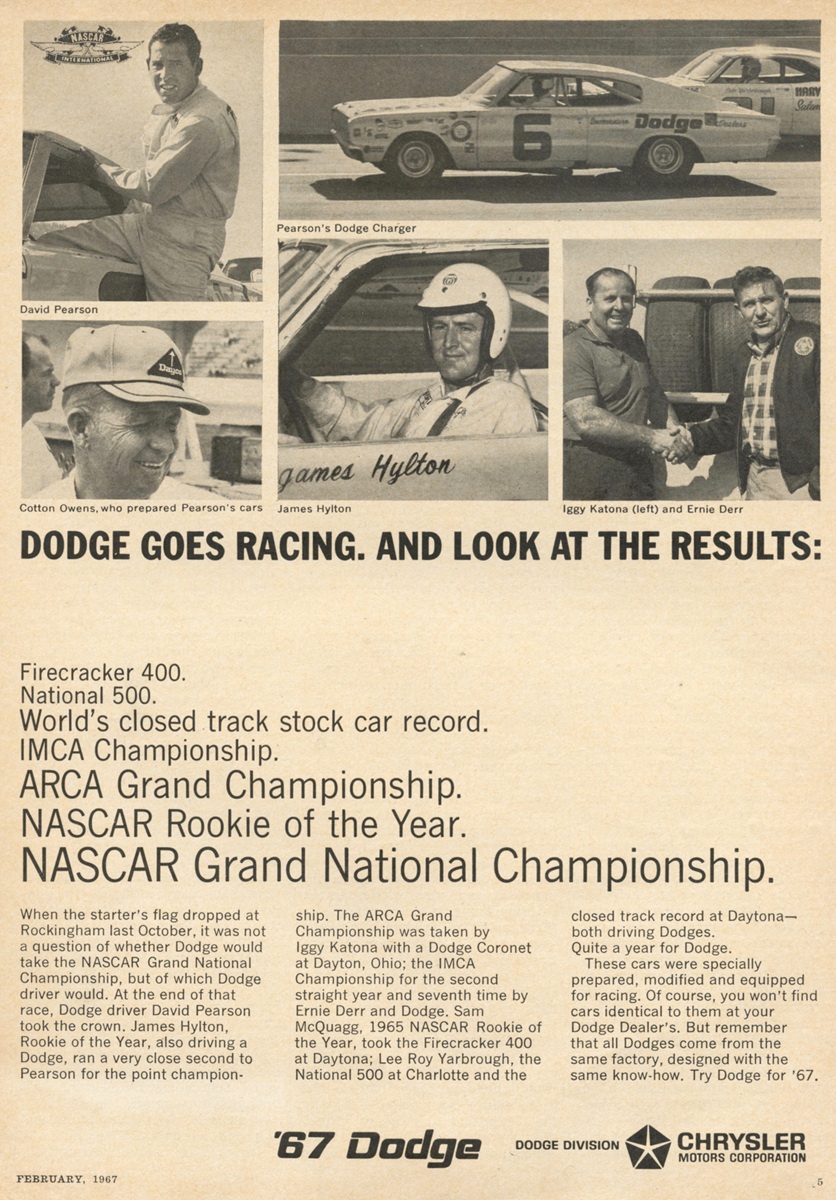
In February 1967, Dodge ran a powerful ad celebrating its performance in the 1966 NASCAR Grand National Championship. The brand proudly highlighted David Pearson’s championship win behind the wheel of a factory-backed fastback Dodge Charger, built and fielded by legendary team owner Cotton Owens.
Right behind him in the points standings? James Hylton, an independent racer who finished a remarkable second in his first full season. Unlike Pearson, Hylton ran on a shoestring budget. He purchased a used 1965 Dodge Coronet – also from Owens – and made the most of what he had. No factory support. No major sponsors. Just grit, determination and a Dodge that refused to quit.
The ad served as more than just a celebration of a championship. It was a statement: whether factory-backed or fully independent, Dodge builds racecars that win.
CHALLENGES FOR 1968
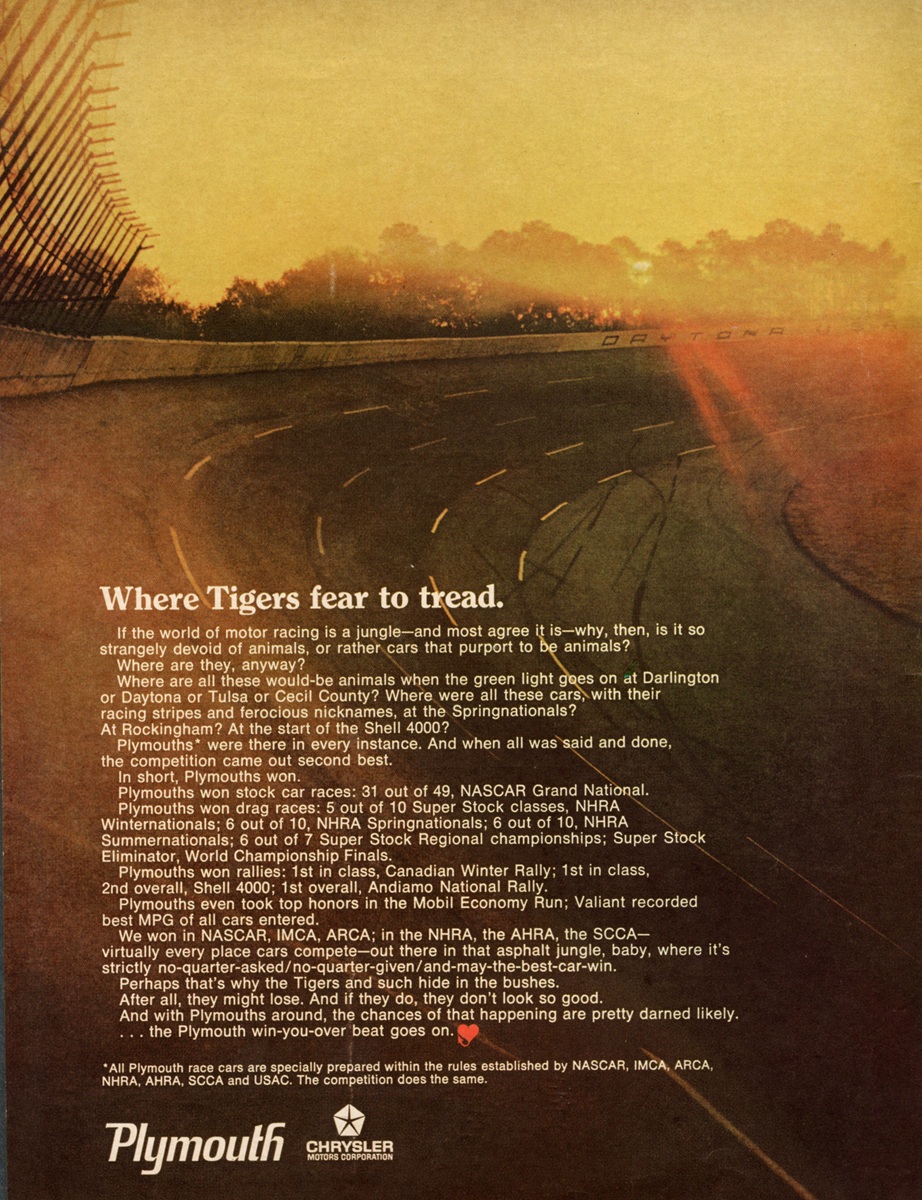
In early 1968, Plymouth released a striking advertisement that stood out by what it didn’t show – no cars, just a dramatic corner shot of Daytona International Speedway. The headline read: “Where Tigers fear to tread.”
The ad wasn’t just about stock car dominance. It cast a wider net, touting Plymouth’s presence in NASCAR, drag racing, SCCA sports car competition and even the Mobil Economy Run, where efficiency – not speed – was the goal. The message was clear: Plymouth was engineered to perform across every motorsport discipline.
But while the ad talked a big game, reality told a more complicated story. Richard Petty, Plymouth’s star NASCAR driver, didn’t have a stellar season in ’68. Behind the scenes, tensions were growing. A reported disagreement between Ronney Householder and the Petty family ultimately led to a major shift. In 1969, Richard Petty made headlines by switching camps – leaving Plymouth to race for Ford.
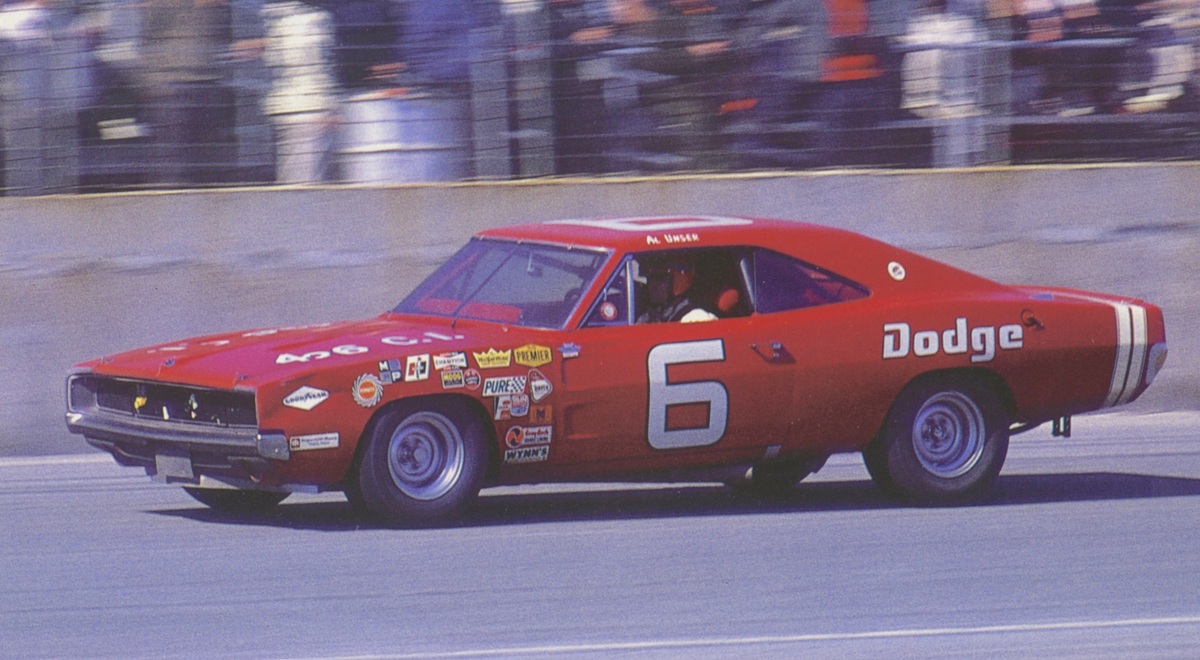
In the 1968 Daytona 500, Al Unser drove a Dodge Charger fielded by Cotton Owens, bringing the car home in a solid 4th-place finish. At the time, the Ford and Mercury fastbacks had a clear aerodynamic edge – their sleeker profiles were better suited for the high-speed banking of Daytona.
However, Dodge responded quickly. By the final quarter of 1968, the brand addressed those aerodynamic shortcomings with the introduction of the Charger 500. This updated model featured a flush-mounted grille and a revised rear window (backlite) design, both aimed at reducing drag and boosting performance on superspeedways.
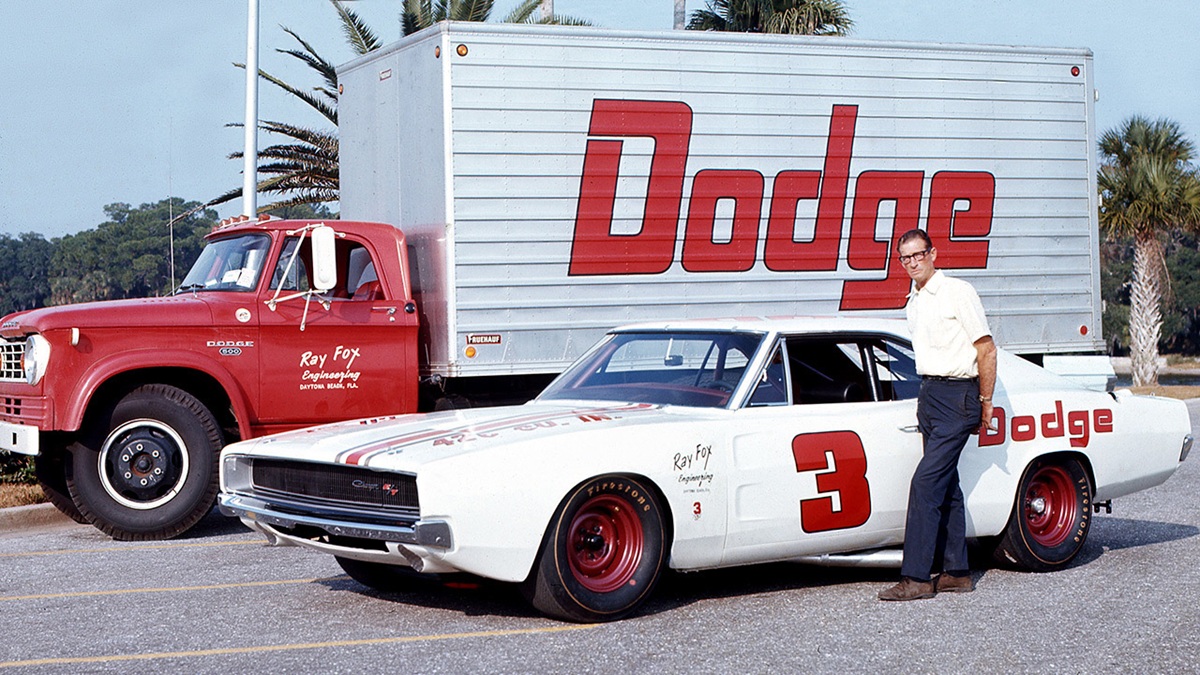
Raymond Fox (car owner) and his #3 Dodge Charger, driven by Buddy Baker. This car won the World 600 that year at Charlotte Motor Speedway.
WINGS TO THE RESCUE
The 1969 debut of the Dodge Charger Daytona marked a turning point in NASCAR history. With its wind-cheating nose cone and towering rear wing, the Daytona was engineered for one thing: superspeedway domination. The following year, Plymouth answered with the 1970 Superbird, bringing the same radical aerodynamics to its own racing platform.
Paired with legendary HEMI engine power, these winged Mopar vehicles became the ultimate superspeedway machines – delivering blistering speed, unmatched stability and a legacy that still turns heads today.
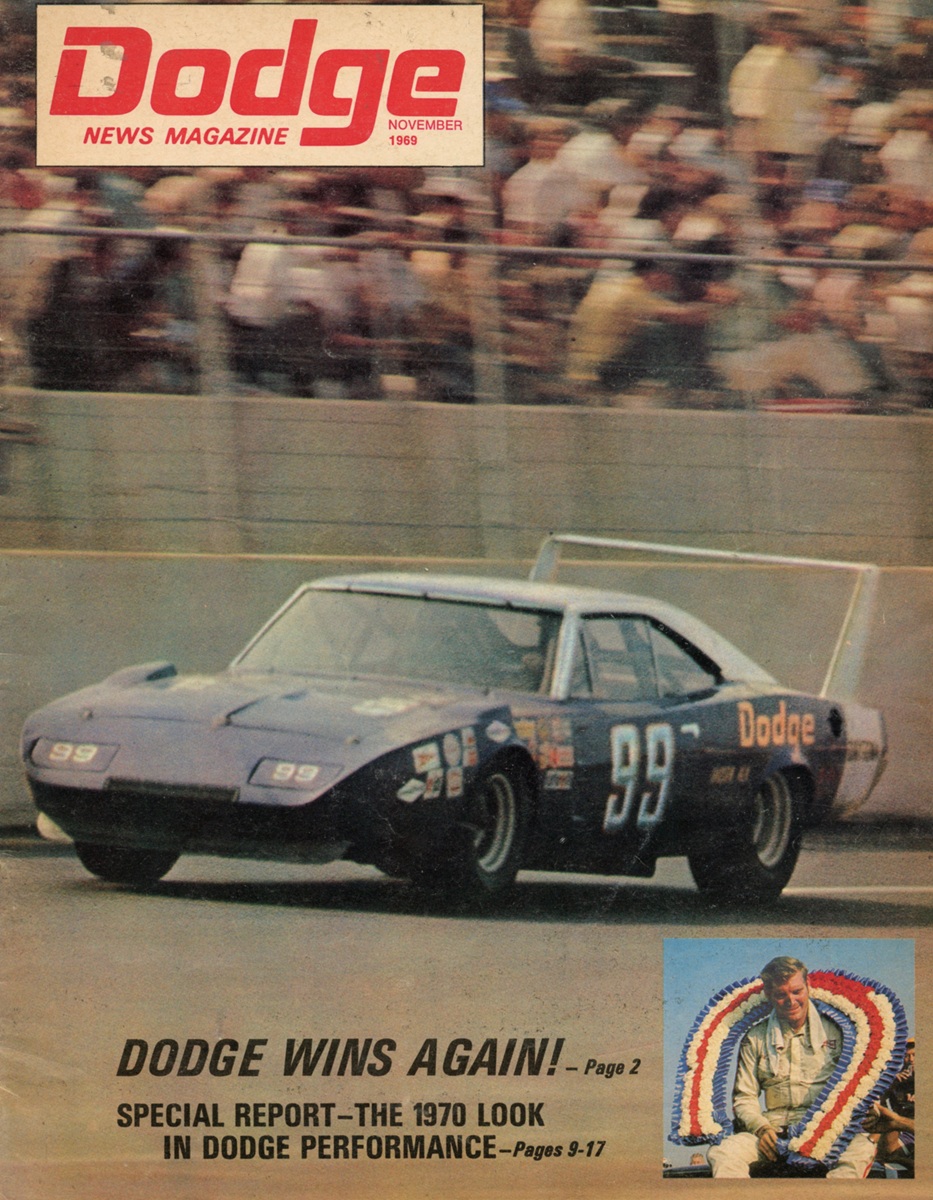
The November 1969 issue of Dodge News Magazine featured a striking cover shot of the #99 Dodge Charger Daytona, driven by Richard Brickhouse to victory at the inaugural Talladega 500. Topping speeds of 195+ mph, the Daytona made a bold statement – not just in design, but in performance.
Inside, Dodge proudly highlighted its 1969 racing season results, showcasing the brand’s dominance across multiple sanctioning bodies:
- NASCAR: 28 Wins
- USAC: 10 Wins
- ARCA: 15 Wins
- IMCA: 4 Wins
- Total: 57 Wins
From short tracks to superspeedways, Dodge proved it had the engineering, power and determination to win – anywhere, anytime.
1970 DAYTONA 500 WIN
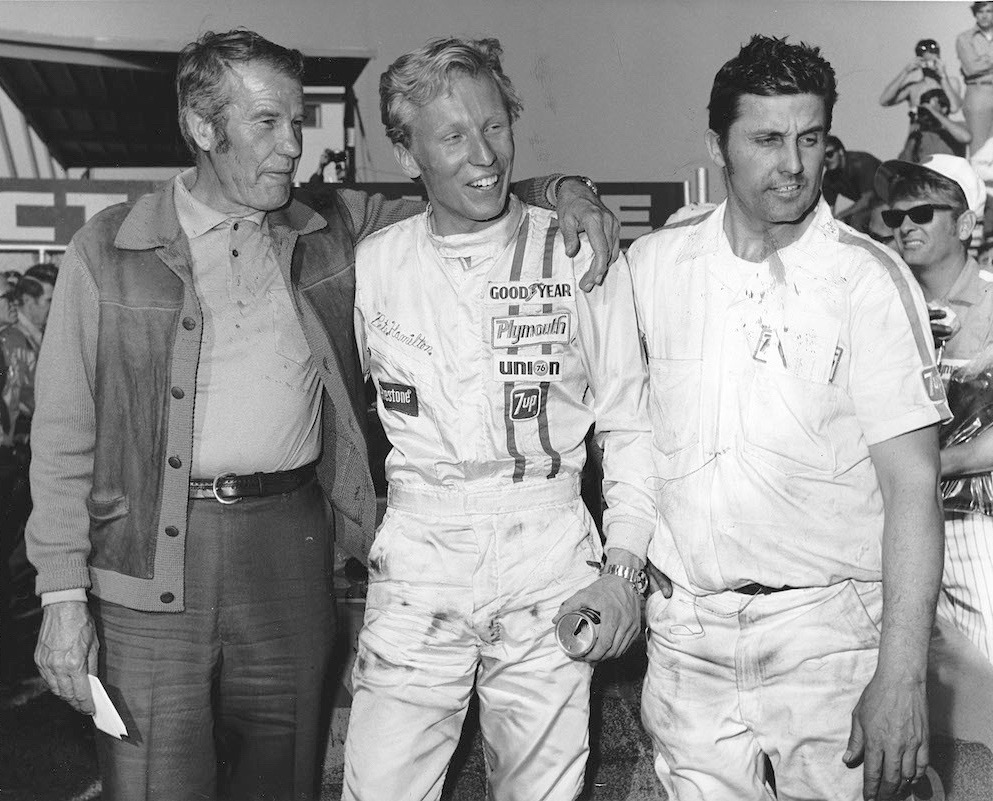
In the Winner’s Circle at the 1970 Daytona 500, Lee Petty (left) celebrates alongside rookie sensation Pete Hamilton (center) and master engine builder Maurice Petty. The victory marked a major moment – not just for the Plymouth Superbird, but for the triumphant return of Petty Enterprises to the Chrysler fold.
Based in Level Cross, North Carolina, Petty Enterprises played a pivotal role in Chrysler Corporation’s dominance in NASCAR over the decades. Their iconic “Petty Blue” machines became legends on the track.
200.447 MPH
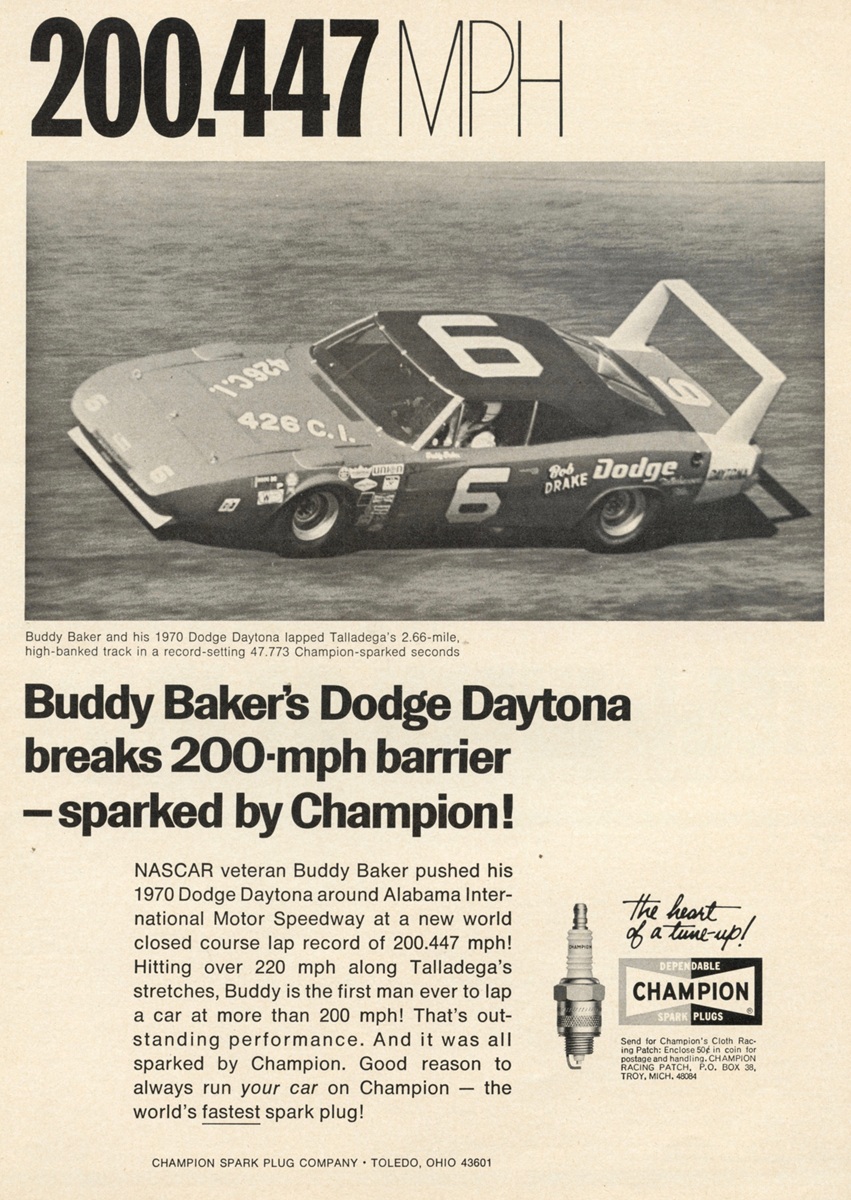
On March 24, 1970, Buddy Baker etched his name into the record books by becoming the first driver to break the 200-mph barrier on a NASCAR superspeedway. Behind the wheel of a Dodge Charger Daytona, Baker averaged 200.447 mph around the high-banked 2.66-mile Talladega Superspeedway, a feat so groundbreaking it was celebrated in a Champion Spark Plug national magazine ad.
“The car and I were one,” Baker later said. “I could not believe how stable the car was on the track. I never left the bottom lane.”
While the Talladega run was the first official public achievement, it wasn’t the absolute fastest a Daytona had gone. In the summer of 1969, Baker tested the “DC-93” prototype Daytona on Chrysler’s 4.75-mile Chelsea Proving Grounds in Michigan, reportedly pushing past 205 mph – a glimpse into the raw aerodynamic potential of Dodge’s winged warrior.
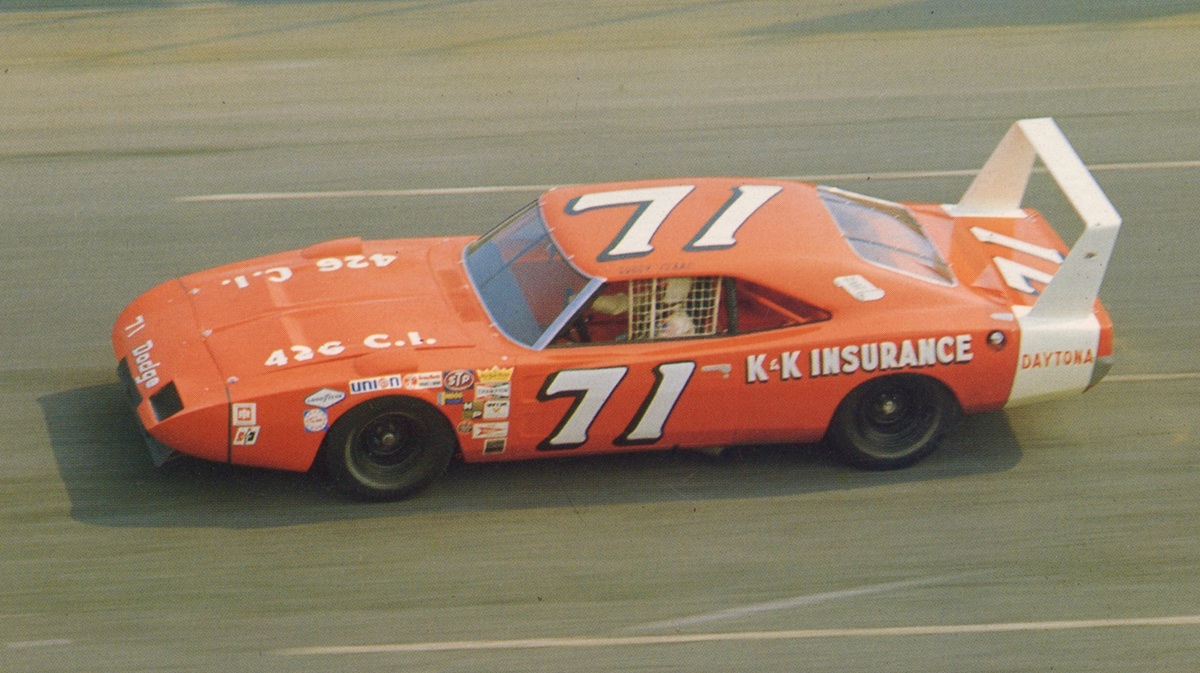
Driving the iconic #71 K&K Insurance Dodge Daytona, Bobby Isaac claimed the 1970 NASCAR Grand National Championship, cementing his place in stock car history. Owned by Nord Krauskopf, the K&K team’s red winged Dodge wasn’t just fast – it was legendary.
In September 1971, Isaac and the Daytona headed to the Bonneville Salt Flats, where they set an astounding 28 world speed records, including a flying mile at 216.945 mph and a flying kilometer at 217.368 mph.
Earlier, in competition at Talladega in 1970, the car clocked 201.104 mph – a NASCAR qualifying record that would stand unmatched until 1983. With its bold aero design and HEMI engine power, the K&K Daytona wasn’t just a racecar – it was a statement.
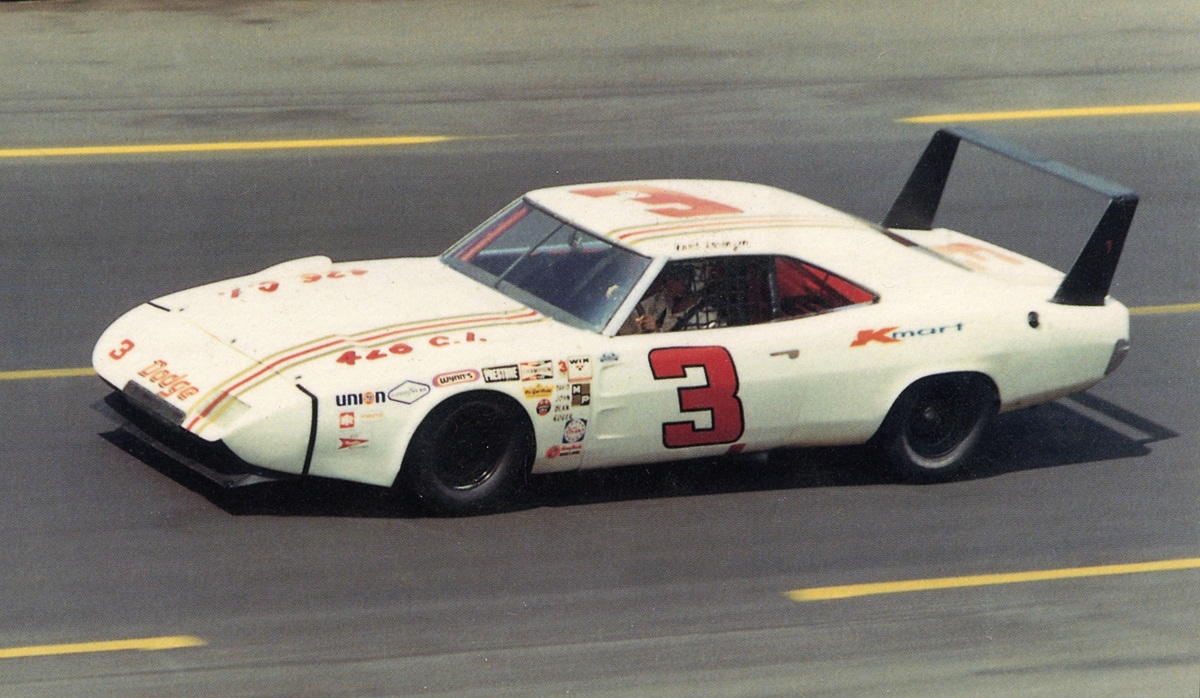
It was October 11, 1970 at the National 500 race at Charlotte Motor Speedway that marked the debut of Kmart as a NASCAR sponsor and the chosen car was the Fred Lorenzen #3 Ray Fox Dodge Daytona, where he placed third in the final standings.
SMALL BLOCK WING CAR
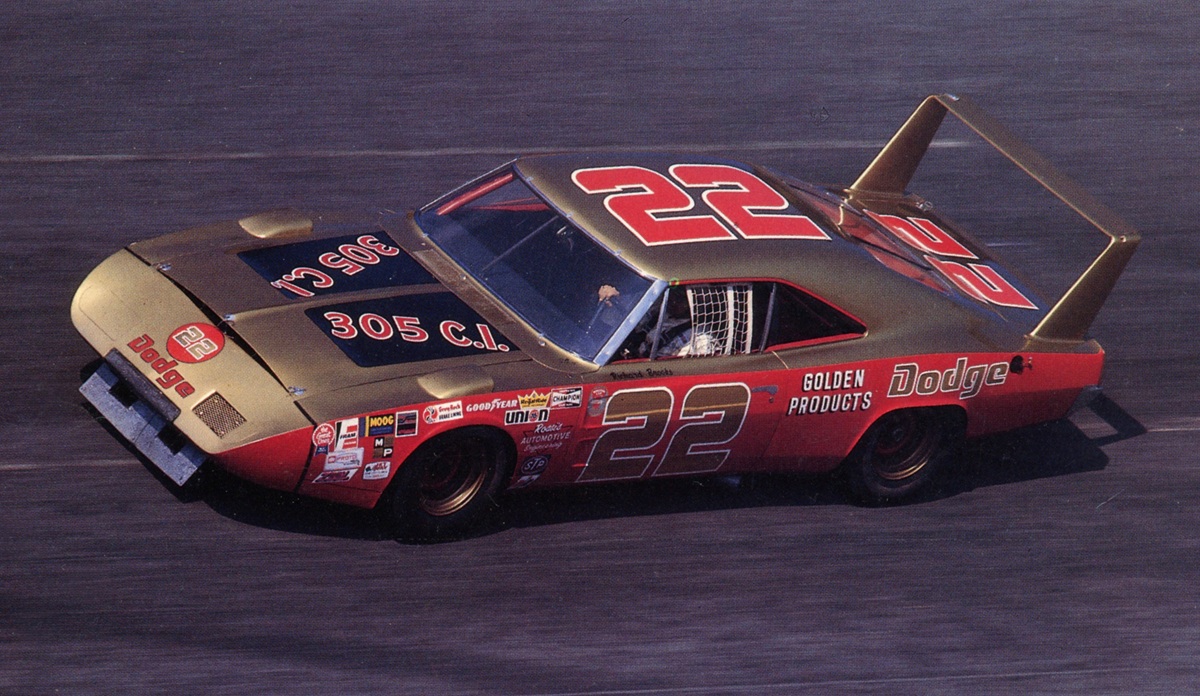
On Sunday, February 14, 1971, Richard Brooks piloted a Dodge Charger Daytona to an 8th-place finish in the Daytona 500 – a notable achievement considering the engine under the hood. With NASCAR banning the HEMI engine in winged cars for the 1971 season, Brooks’ car was powered by a 305-cubic-inch small-block Mopar, the maximum displacement allowed by the new rules.
Built by Keith Black Racing Engines, the motor started as a 340 block, then de-stroked to meet the 305-cid limit. Though lacking the horsepower of its big-block rivals, the engine was a high-revving screamer that held its own in the draft and briefly led the race. Unfortunately, a slide on track cost Brooks valuable time and ultimately took him out of contention for a higher finish.
In an interview with author Frank Moriarty, Brooks recounted the intense experience behind the wheel:
“I got a really good line through turns one and two… I looked down and it was turning about 9,800 RPM halfway down the straightaway! I just couldn’t keep my eyes off the tach! I was watching it and at the same time wanting to get my foot out of it. You’re just thinking of the thing coming apart and cutting you all to pieces – but I got it a little over 10,000 RPM… it sounded funny, but that little sucker sure would run.”
Despite the odds, Brooks and his small-block Daytona proved that innovation, courage and determination could still make headlines – even when horsepower was in short supply.
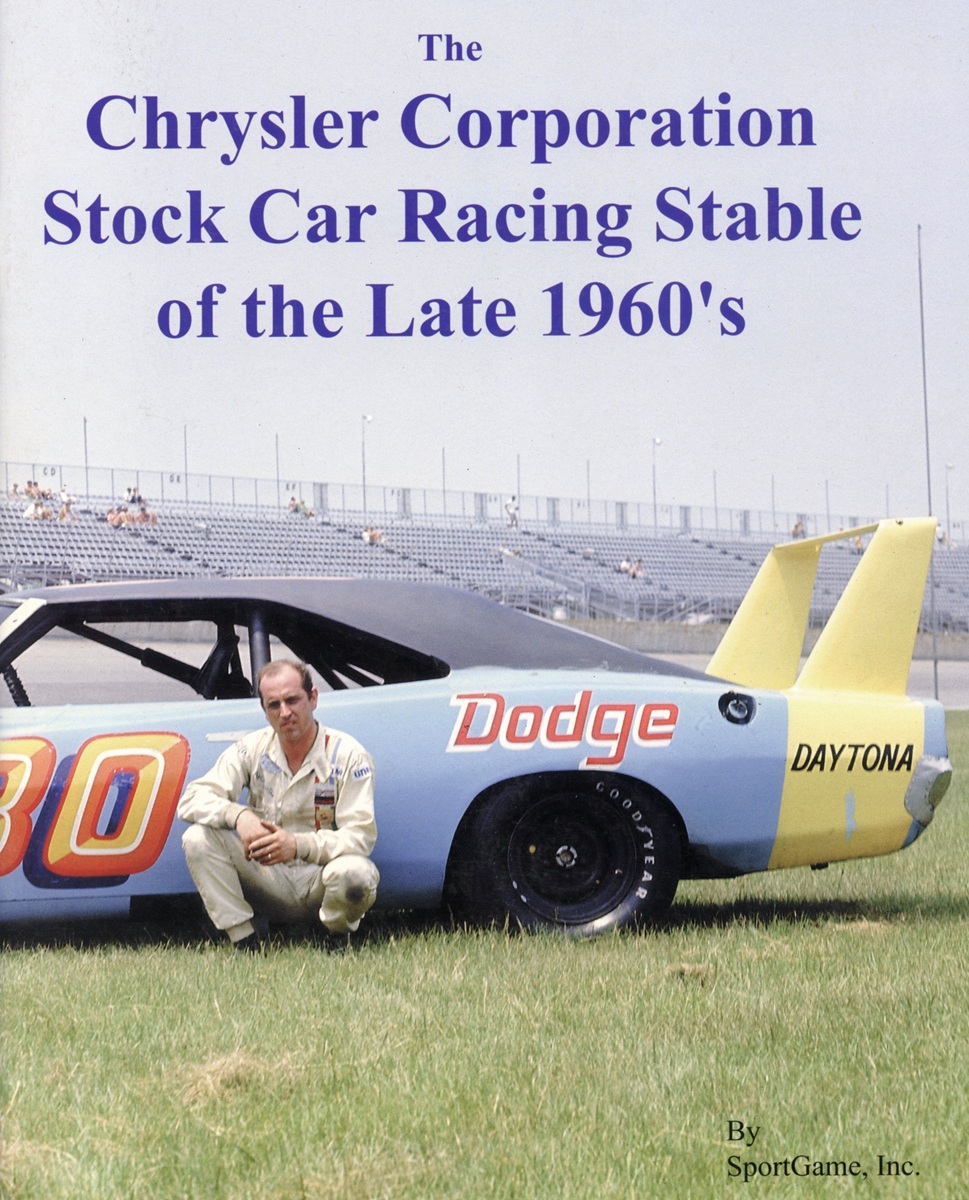
For those looking to take a deeper dive into the golden era of Mopar racing, a highly recommended resource is “The Chrysler Corporation Stock Car Racing Stable of the Late 1960s.” This full-color, 55-page manual, published in 2000 by Sportgame, Inc. (ISBN: 0-9664762-1-2), covers it all – from the Dodge Charger Daytona, Plymouth Superbird and Charger 500, to the factory-backed Mopar efforts stretching back to the 1966 season.
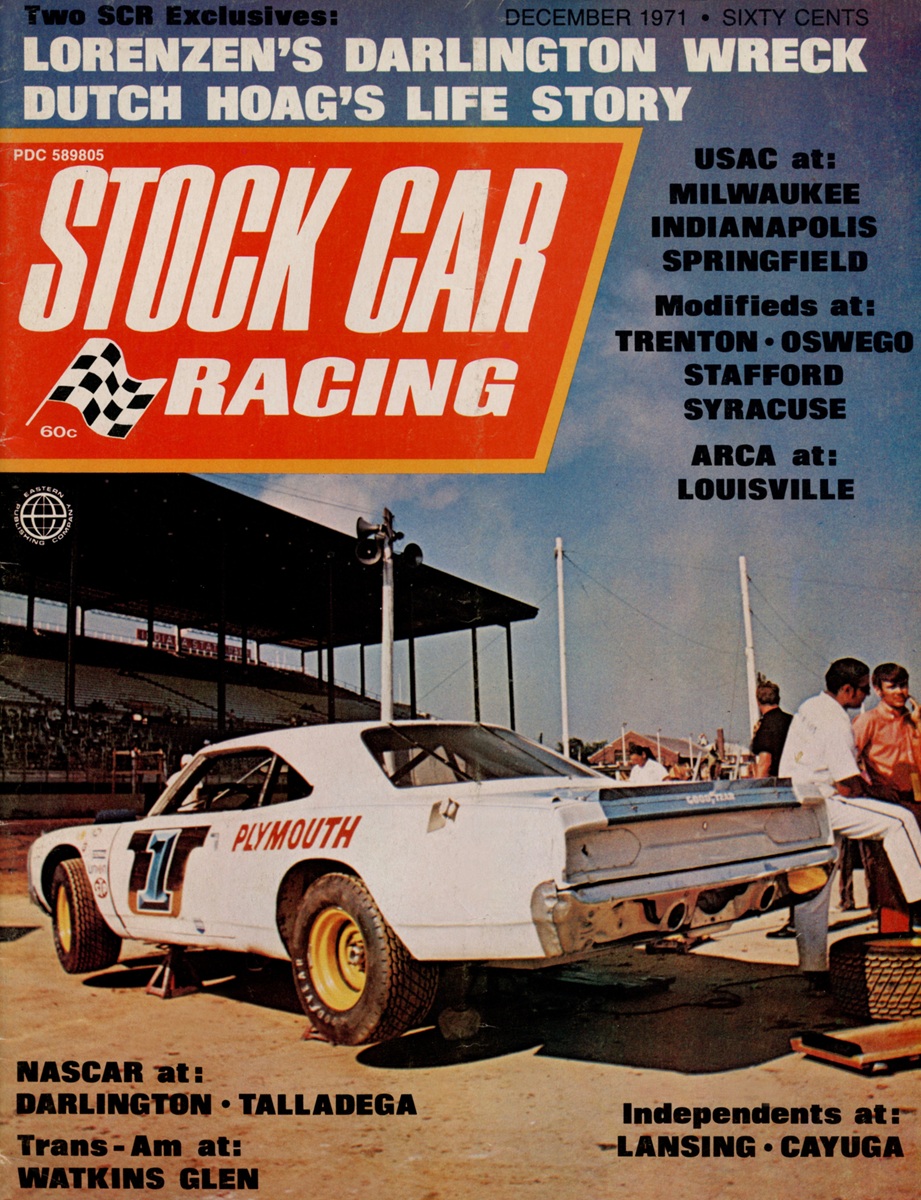
One standout personality from this era was USAC standout Roger McCluskey, known for his aggressive, no-nonsense driving style. A loyal Mopar racer, McCluskey piloted his 1970 Plymouth Road Runner to back-to-back USAC Stock Car Championships in 1969 and 1970. His Road Runner even earned the cover of Stock Car Racing Magazine’s December 1971 issue, capturing the essence of Dodge and Plymouth’s stock car dominance.
NASCAR 1971
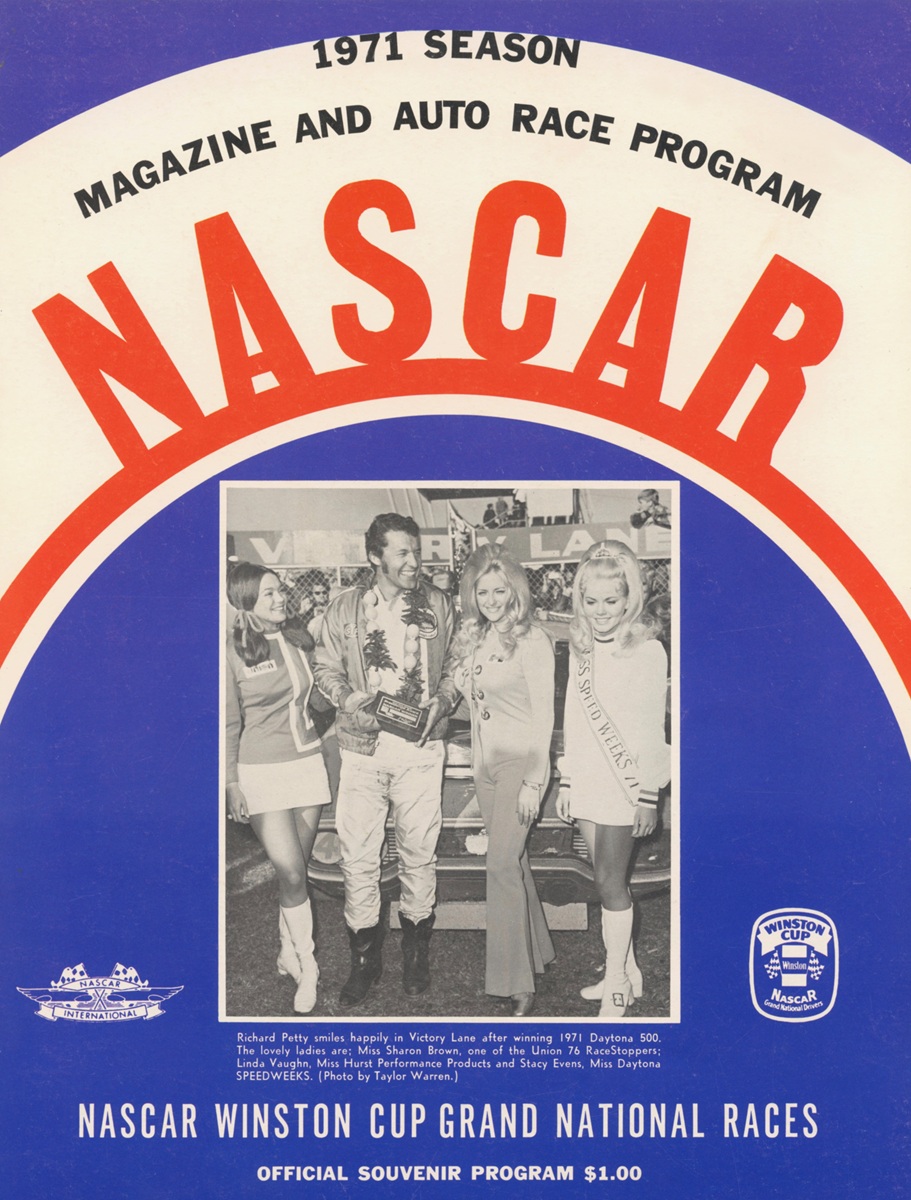
While teammate Pete Hamilton had claimed the 1970 Daytona 500, it was Richard Petty who returned to the top step in 1971, driving his #43 Plymouth Belvedere-bodied racecar to victory in that year’s Daytona 500.
The 1971 season also marked a turning point for the sport, as R.J. Reynolds introduced their Winston brand, launching the newly named NASCAR Winston Cup Series. Petty didn’t just win the Daytona 500 – he dominated the season, going on to capture the inaugural Winston Cup Championship and further cementing his legacy as “The King.”
CHARGER BODY TO THE VERY END
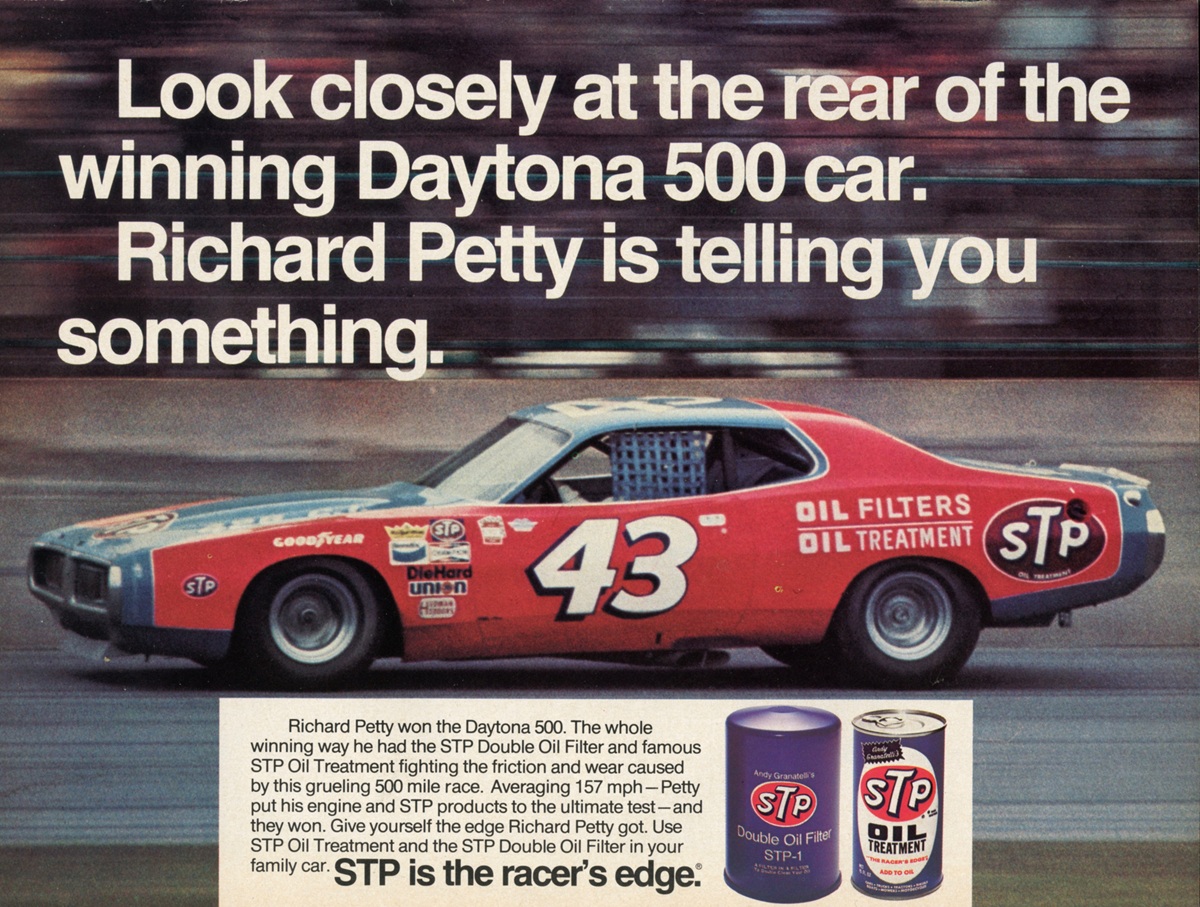
The 1971–1974 Dodge Charger body style proved to be one of the most aerodynamically efficient shapes of its time, especially on high-banked superspeedways. That sleek profile is exactly why Richard Petty made the switch from the Plymouth Road Runner to Dodge sheet metal. With minor updates – such as the revised quarter windows in 1973–74 – Petty stuck with the Charger as long as NASCAR regulations allowed.
Unfortunately, the 1975 Charger redesign lacked the racing-friendly aerodynamics of its predecessor. NASCAR rules prohibited teams from using outdated body styles for too long, but Petty managed to keep running his preferred 1974 Charger until its final race at Riverside in 1978. After that, the body was officially ruled ineligible. Petty later remarked that the 1971–74 Charger was his all-time favorite racecar.
He briefly tried the 1978 Dodge Magnum, but its bulky body shape proved uncompetitive. The Dodge Aspen, though smaller and more nimble, had a wheelbase too short to meet NASCAR requirements. With no viable Chrysler-bodied option left, Petty made the difficult decision to switch to General Motors – a move that effectively marked the end of Chrysler’s winning era in NASCAR.
DODGE MAGNUM: A BIT TOO MUCH BULK
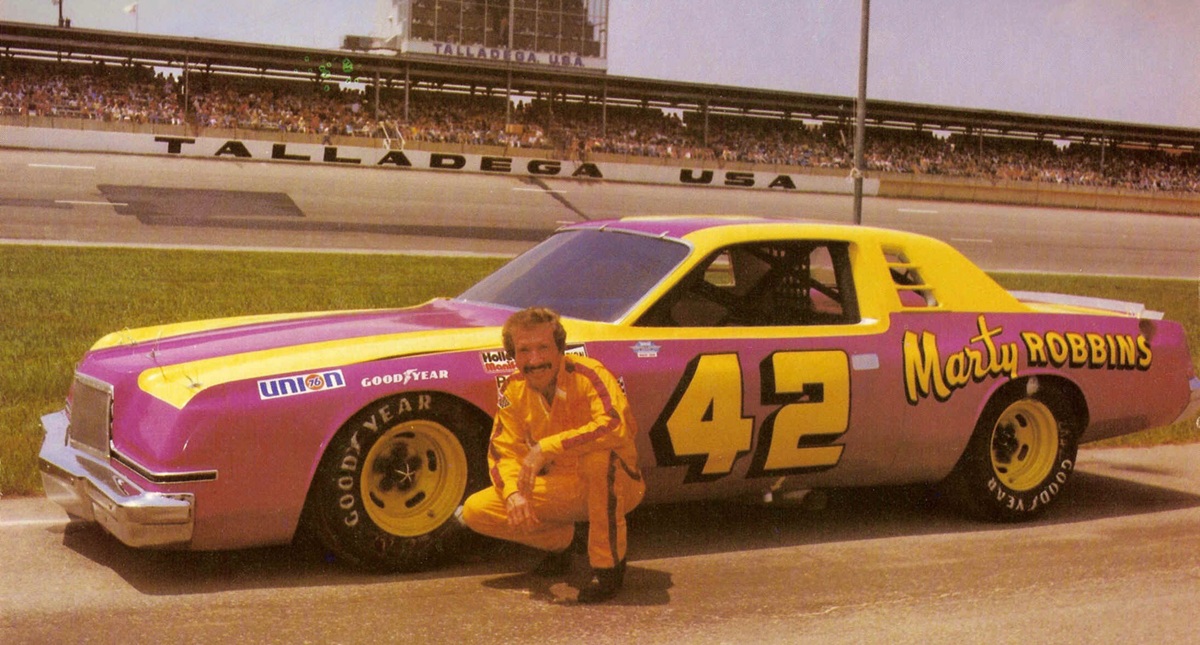
Best known for his country hit “El Paso,” Marty Robbins also earned a reputation in a very different arena – as “The Singer with the Heavy Foot.” A dedicated Mopar racer, Robbins competed in 35 NASCAR Cup Series races over a 16-year career, earning six top-ten finishes and one top-five. But stats don’t tell the whole story.
Robbins raced for the thrill, and in one unforgettable moment at Talladega in 1972, he made it clear. Though he qualified legally, Robbins knowingly ran his HEMI engine-powered Mopar without a restrictor plate during the race – fully aware it was against the rules. Why? In his words, he just wanted to know what it felt like to run with the front pack and even pass Richard Petty, if only for a few laps. And he did.
Over the years, Robbins raced both Plymouths and Dodge Chargers, always loyal to the Mopar badge. His final racecar was a 1978 Dodge Magnum, built by legendary team owner Cotton Owens. While the Magnum’s bulky shape limited its aerodynamic performance, Robbins ran the car proudly through the end of the 1980 season.
More than just a singer or a driver, Marty Robbins was a true enthusiast – a man who chased speed for the sheer love of it.
NEXT TIME: RAM DIVISION ENTERS THE 2026 SCENE
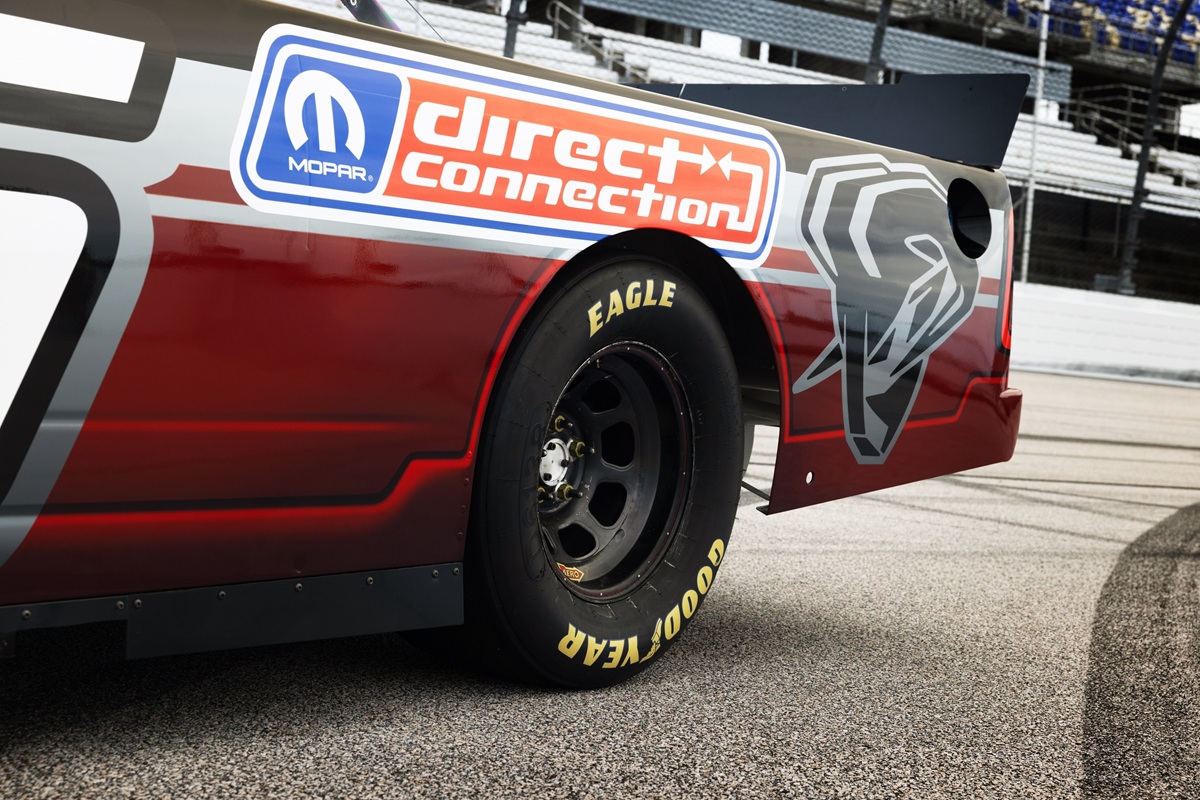
Mopar fans have a lot to look forward to for the 2026 racing season as it was announced the Ram Truck Division will be competing with Kaulig Racing, five factory-back trucks in the Craftsmen Truck Series!
Author: James Maxwell
0 Comments