Mopar’s® 440-Cubic-Inch Big Block: An Iron Fist in a Velvet Glove – Part 1
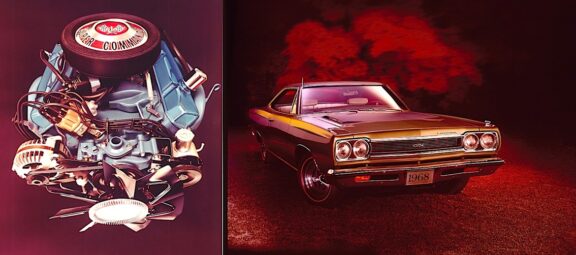
Mopar® has developed an arsenal of powerful V8 engines over the past 65 years. The power plants have cemented their place in automotive history and in our culture. While the mighty 426 HEMI® engine gets all the accolades for changing the racing landscape since 1964, the 426 Max Wedge comes in a very close second for giving the Chevy and Ford racers a taste of what was on the horizon. But there’s another engine that was not only designed, engineered and created to motivate massive fleets of Chrysler Imperials, New Yorkers, Newports and other family haulers, but also an array of Dodge and Plymouth muscle cars. Born in 1966 under the shadow of the just released 426 Street HEMI, the 440 would evolved into a powerhouse as it morphed very quickly into the Magnum and Super Commando muscular versions. Designed with wonderful street managers and not to be a warranty burden to dealers and consumers, the 440 was an instant hit among performance car buyers looking to put the smack down on the multitude of muscle cars like the Pontiac GTO, Chevelle SS396, Olds 442, Mercury Cyclones and other Brand X machines. The 426 HEMI engine may have ruled NHRA’s drag strips and NASCAR’s high-bank tracks, but the impromptu stoplight street skirmishes were dominated by Mopar’s mighty 440-cubic-inch big block bruiser throughout the late 1960s and well into the 1970s.
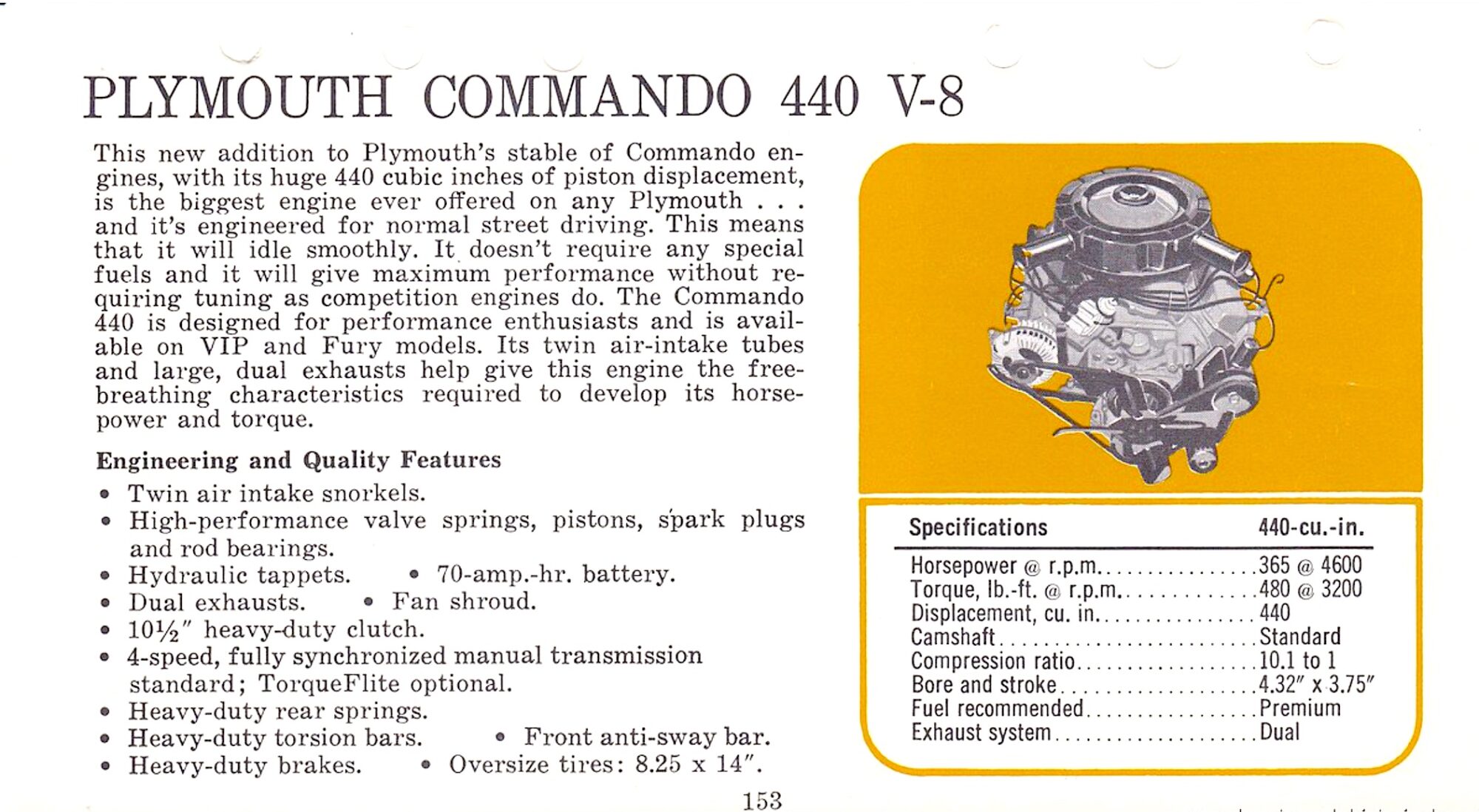
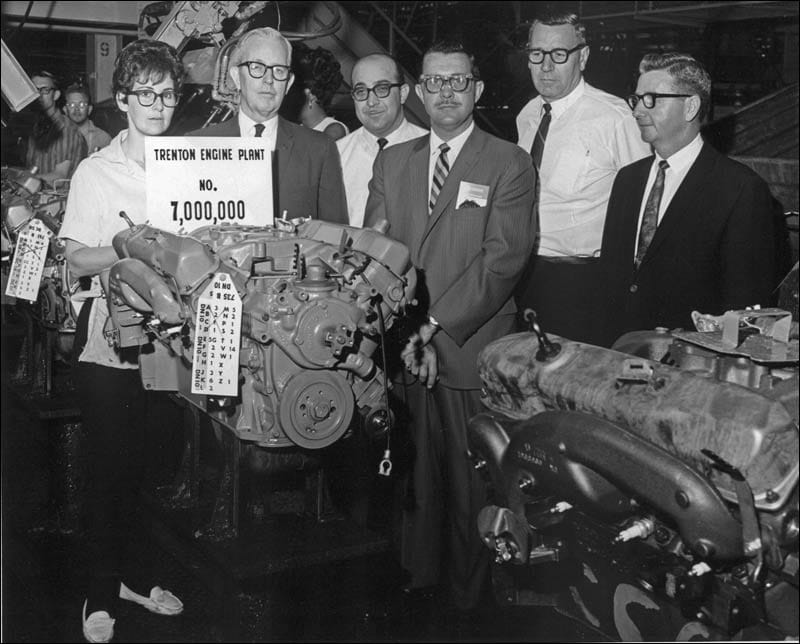
Introduced for the 1966 Model Year, the 440-cubic-inch found its home first in the corporation’s full-size car line. The 440 was the natural progression of the regular bread and butter (non-Max Wedge) 413 passenger car engine. Since the 413 engine had a bore size of 4.190 inches and a stroke of 3.75 inches, it was easy to increase Chrysler’s existing “RB” (Raised Block) engine architecture up to 440 cubic inches by just bumping up the bore size to 4.320 inches. Everything else basically remained the same regarding tooling that included no revisions to the “RB” block’s deep skirt design. In its standard form, the 440 made 350 horsepower and was standard in the Chrysler New Yorker. However, the high-performance version was rated at 365 horsepower and 480 lb.-ft. of stump pulling torque. The bump in horsepower came from a dual snorkel air cleaner and dual exhaust that increased breathing for the big 440. It was branded “TNT” for Chrysler New Yorker/300, and “Commando” for Plymouth Fury/VIP models. For some odd reason, the new warmed-up 440 didn’t have a performance moniker when installed in the Dodge Monaco/Polara, but that changed the following year.
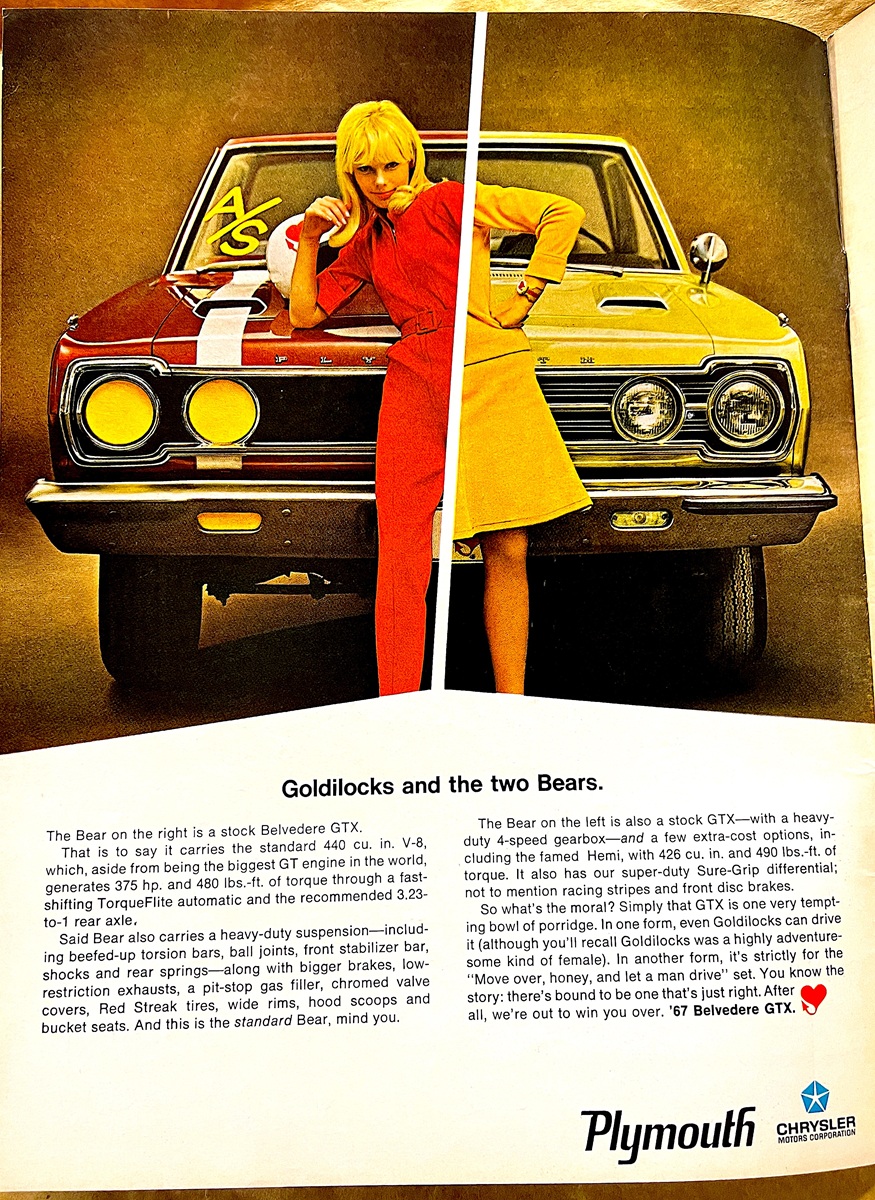
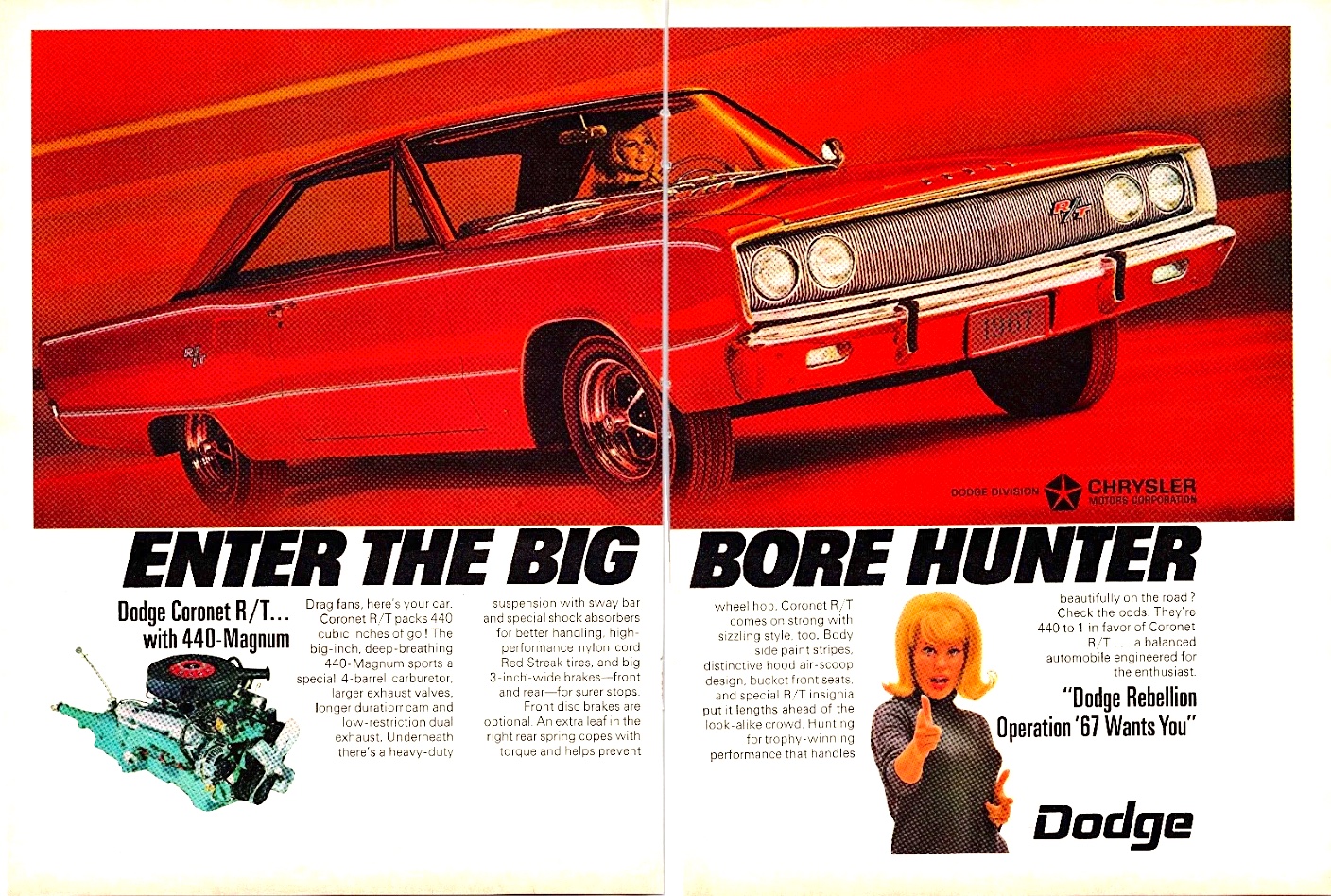
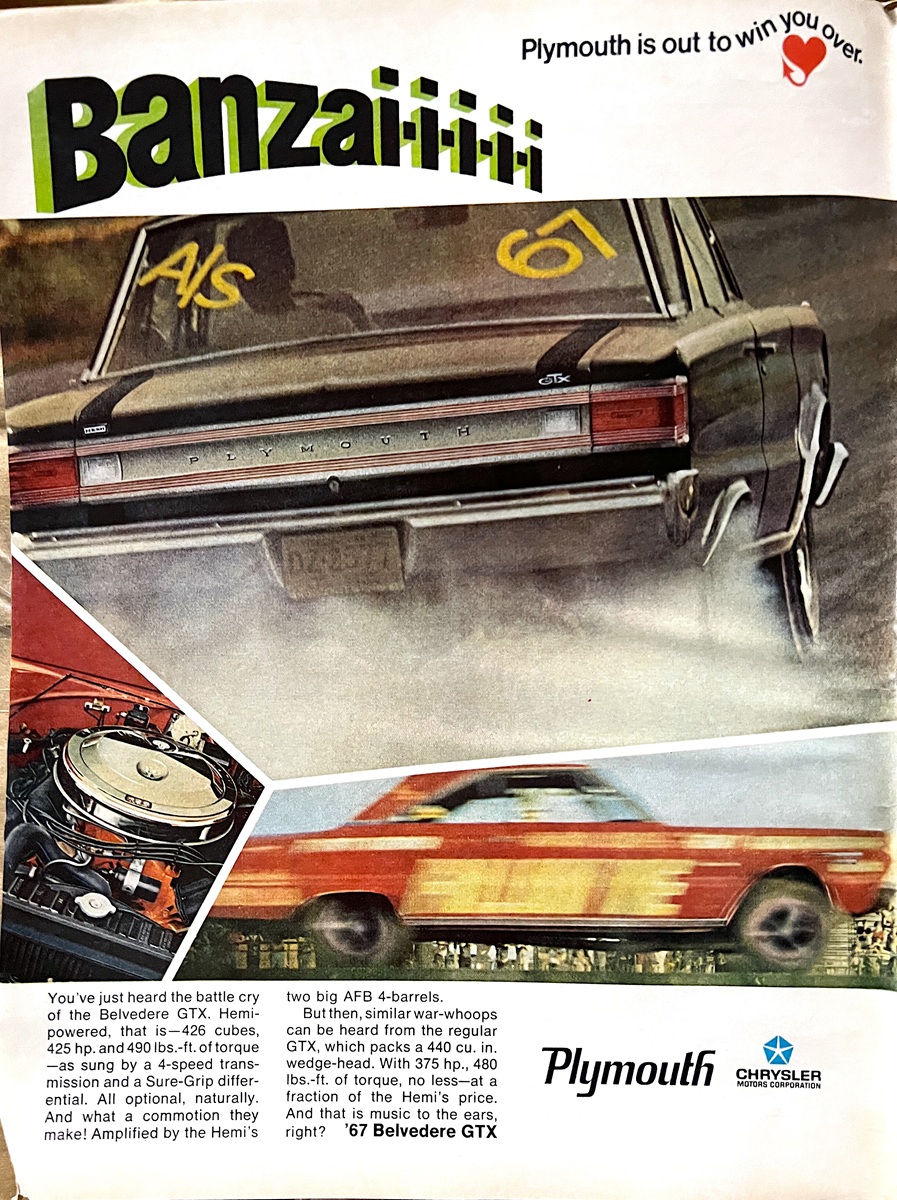
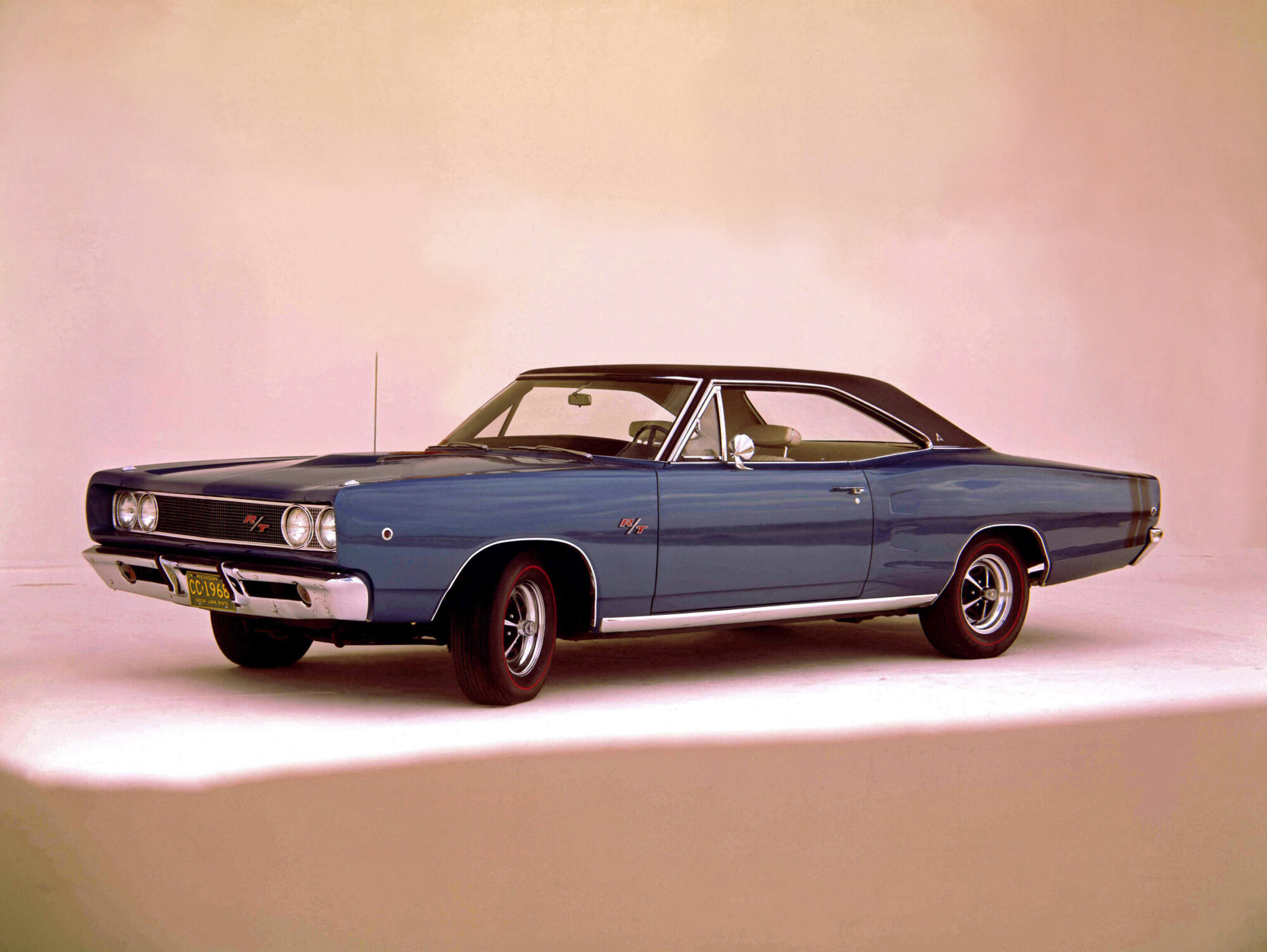
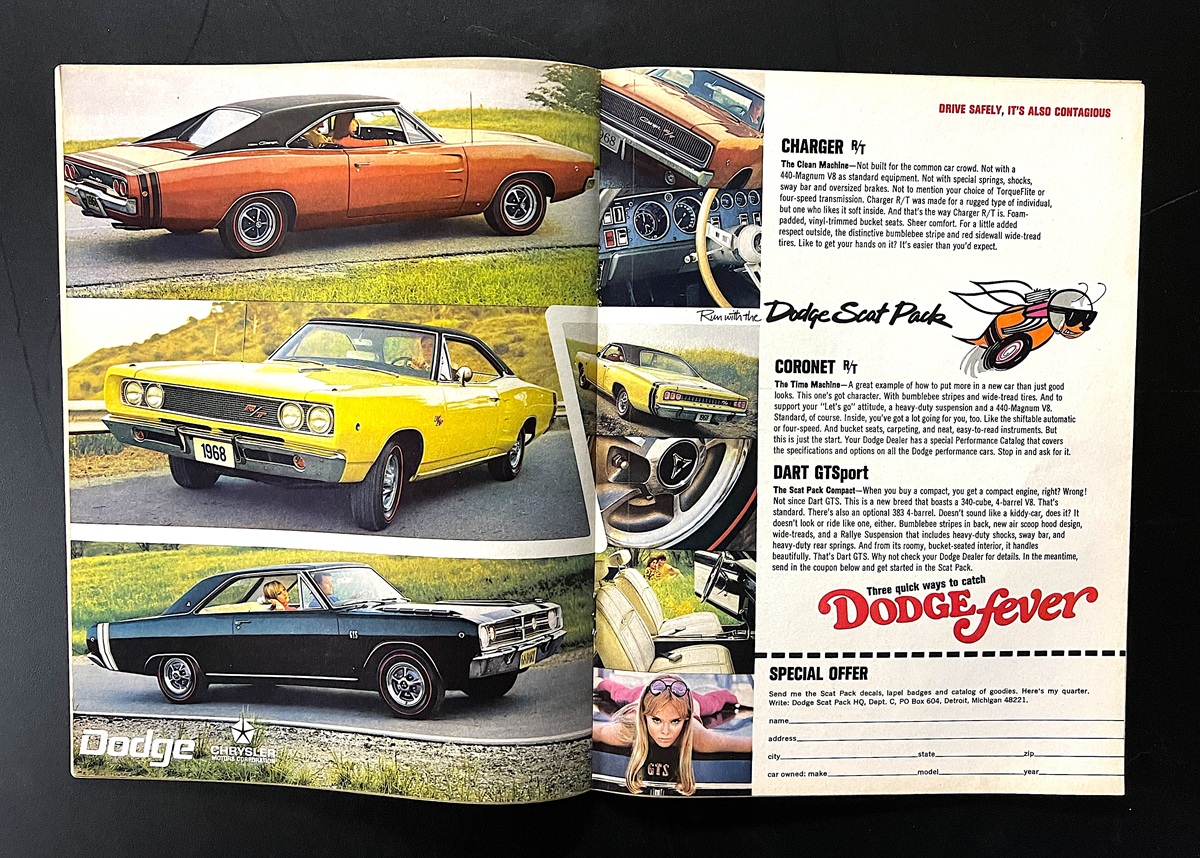
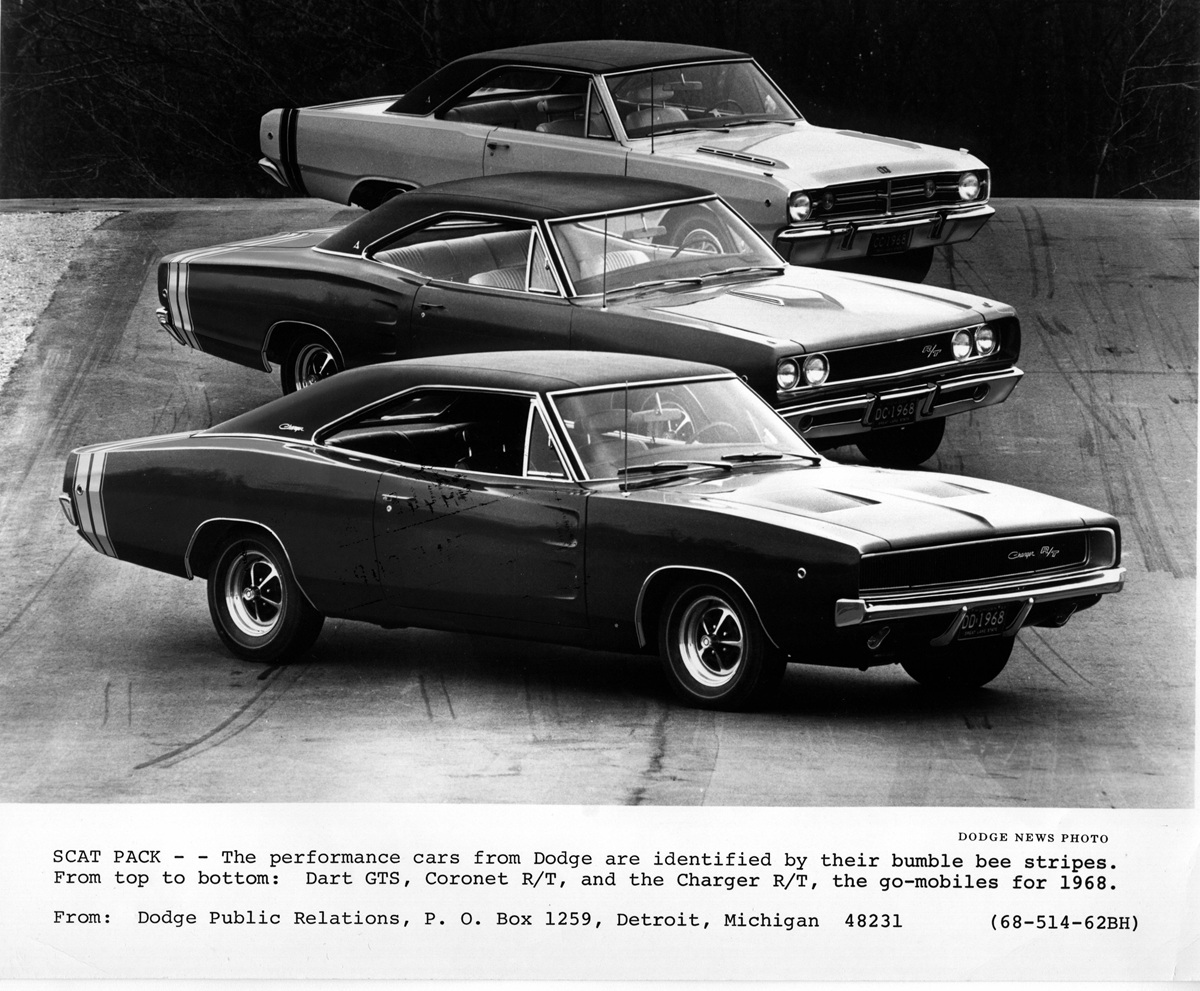
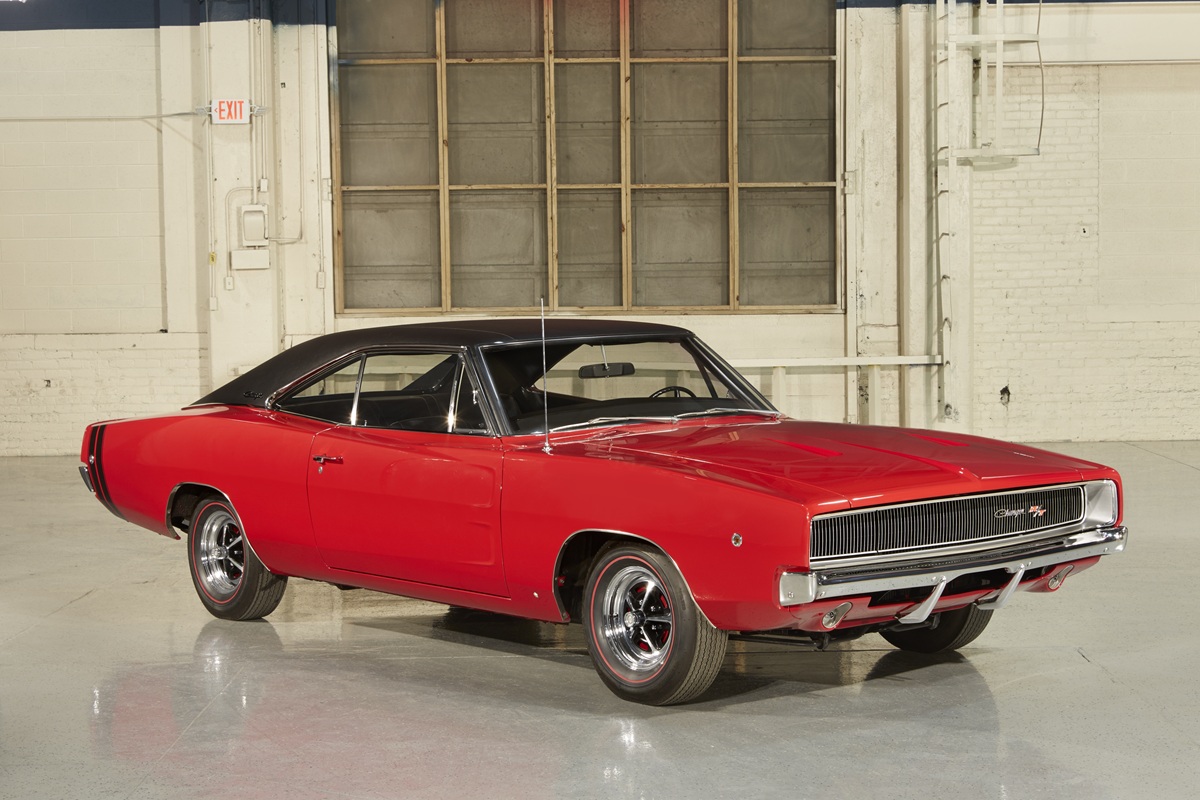
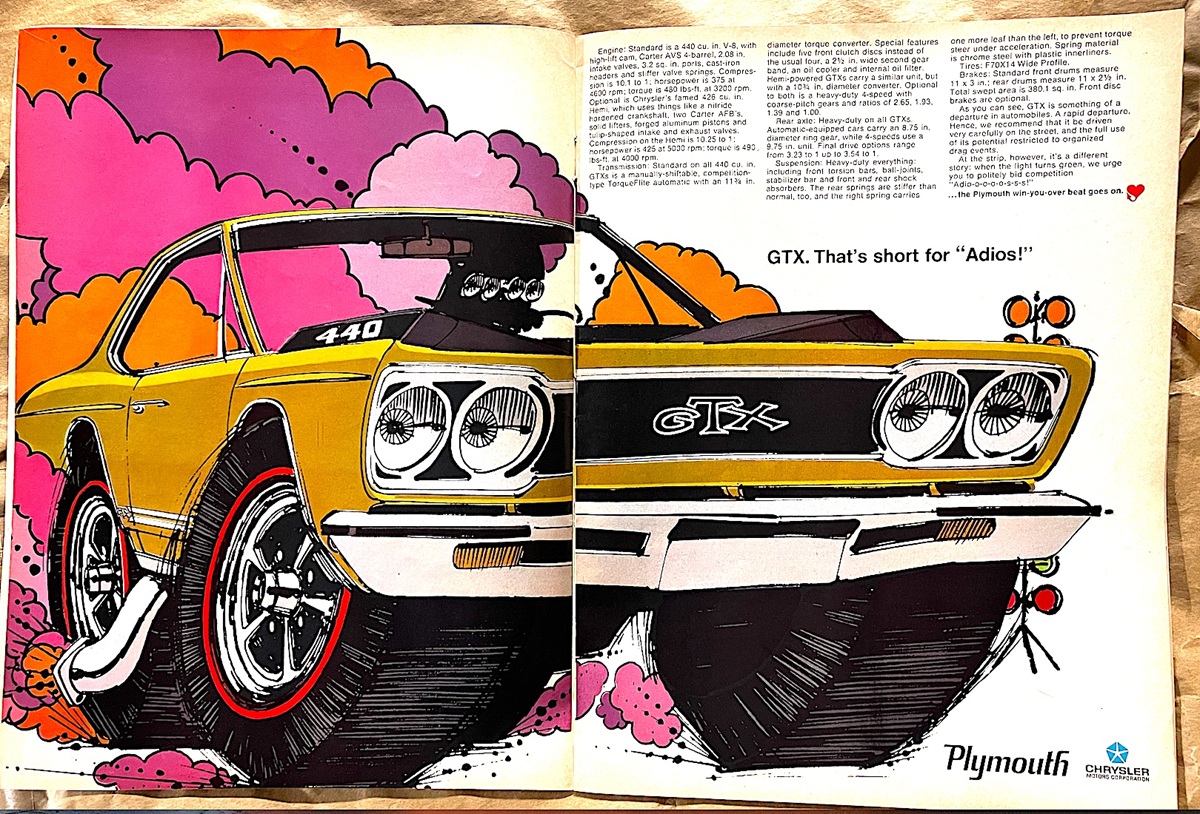
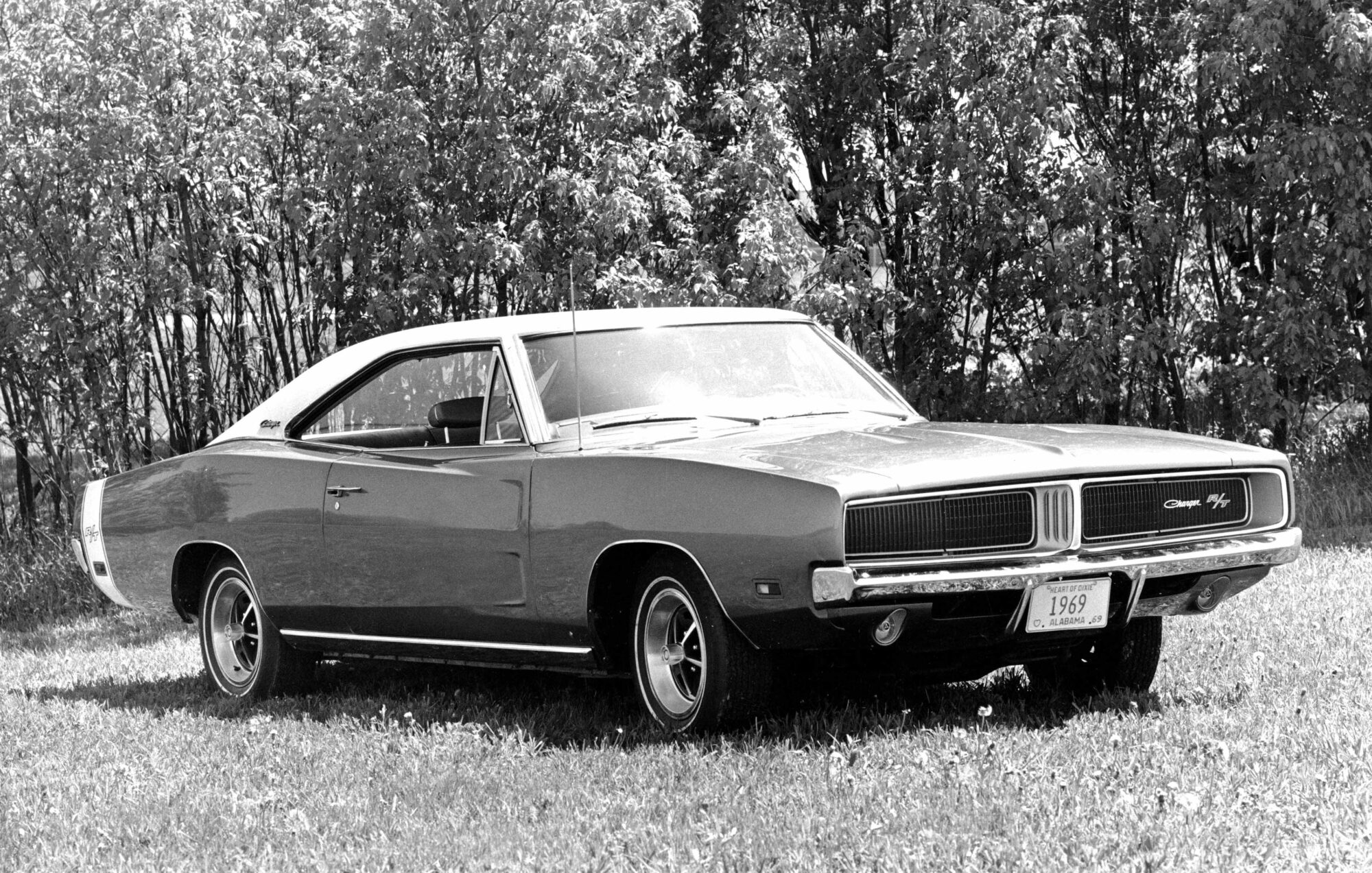
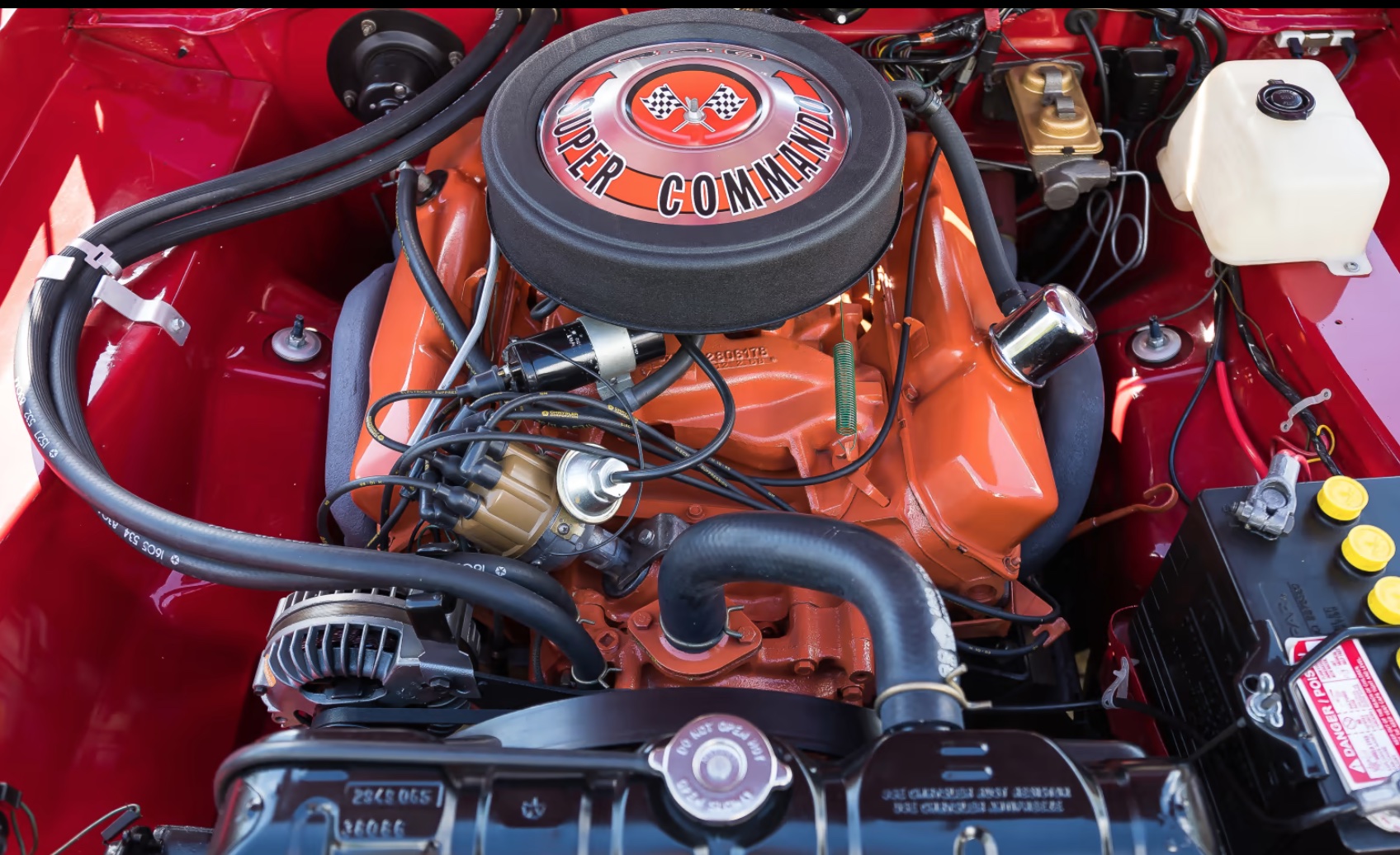
For 1967, significant changes were in store to bump up the 440’s horsepower. This was achieved with a hotter camshaft with increased lift and duration, low restriction exhaust manifolds and bigger exhaust valves. The engine was now branded “Magnum” for Dodge products, “Super Commando” on Plymouth, while “TNT” remained for Chrysler. This coincided with Chrysler finally developing performance muscle cars for the Dodge and Plymouth intermediates. Now the 440 Magnum/Super Commando was standard equipment in the new Dodge Coronet R/T and Plymouth Belvedere GTX. GM had this ludicrous mandate during the 1960s that limited engine displacements to 400 cubic inches or less on its intermediates and pony cars (there were few exceptions) during the 1960s. And Ford’s performance offerings like the Fairlane/Torino and Mercury’s Montego/Cyclone still came up short with their frail 390 and 428 powerplants to Mopar’s massive 440 powerhouse. In a stroke of marketing genius, Chrysler’s advertising agencies capitalized on this and took full advantage with inspiring, colorful ads and imaginative copywriting for both the R/T and GTX.
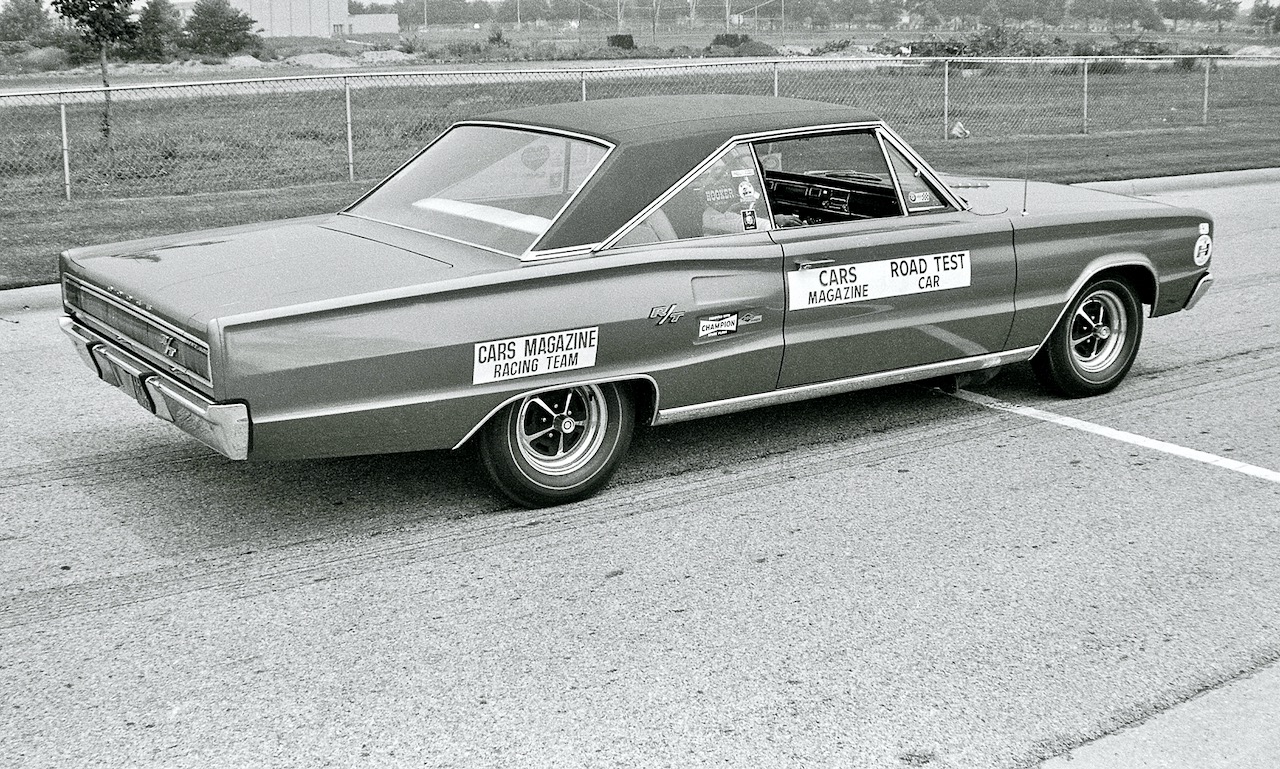
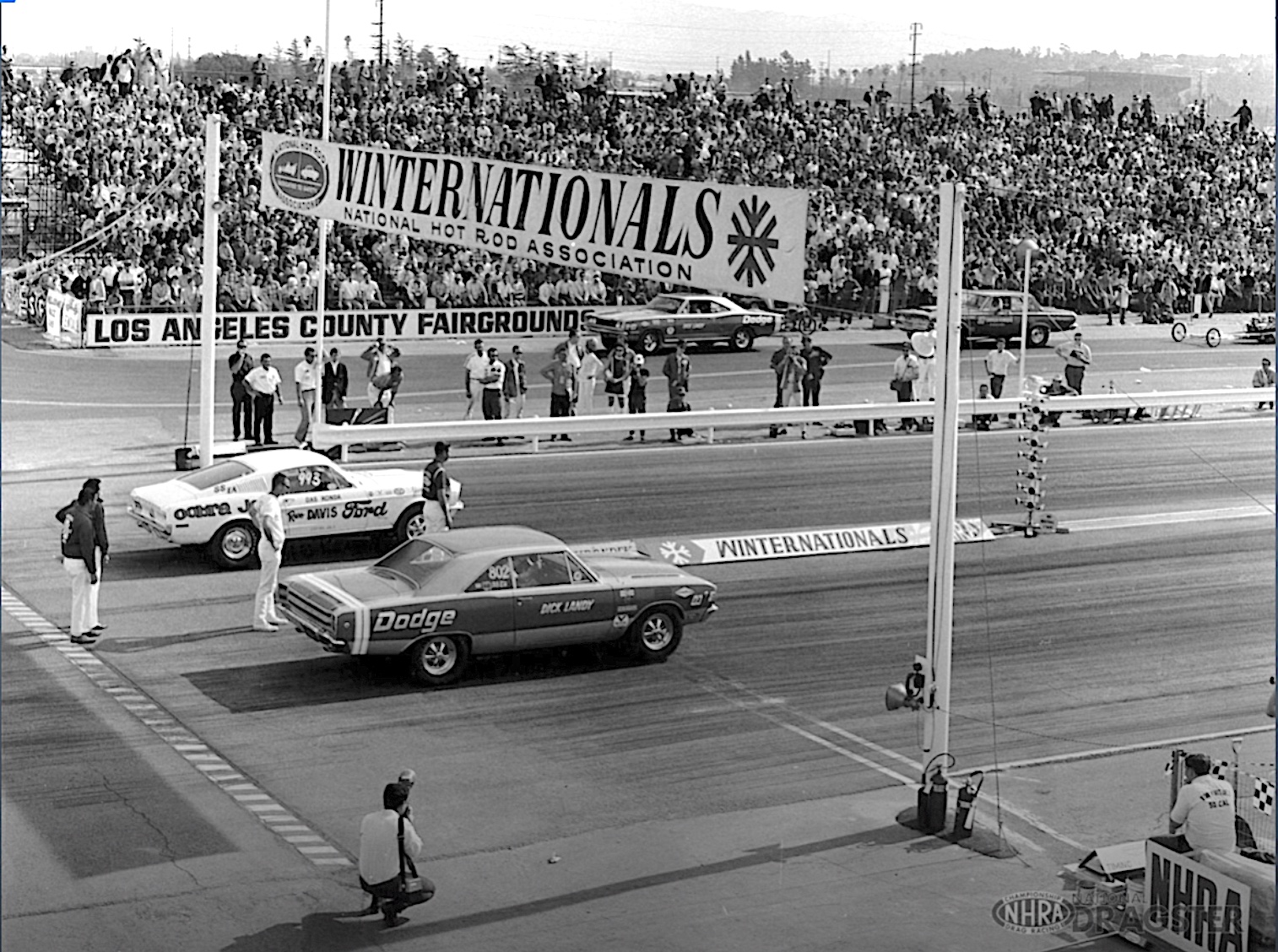
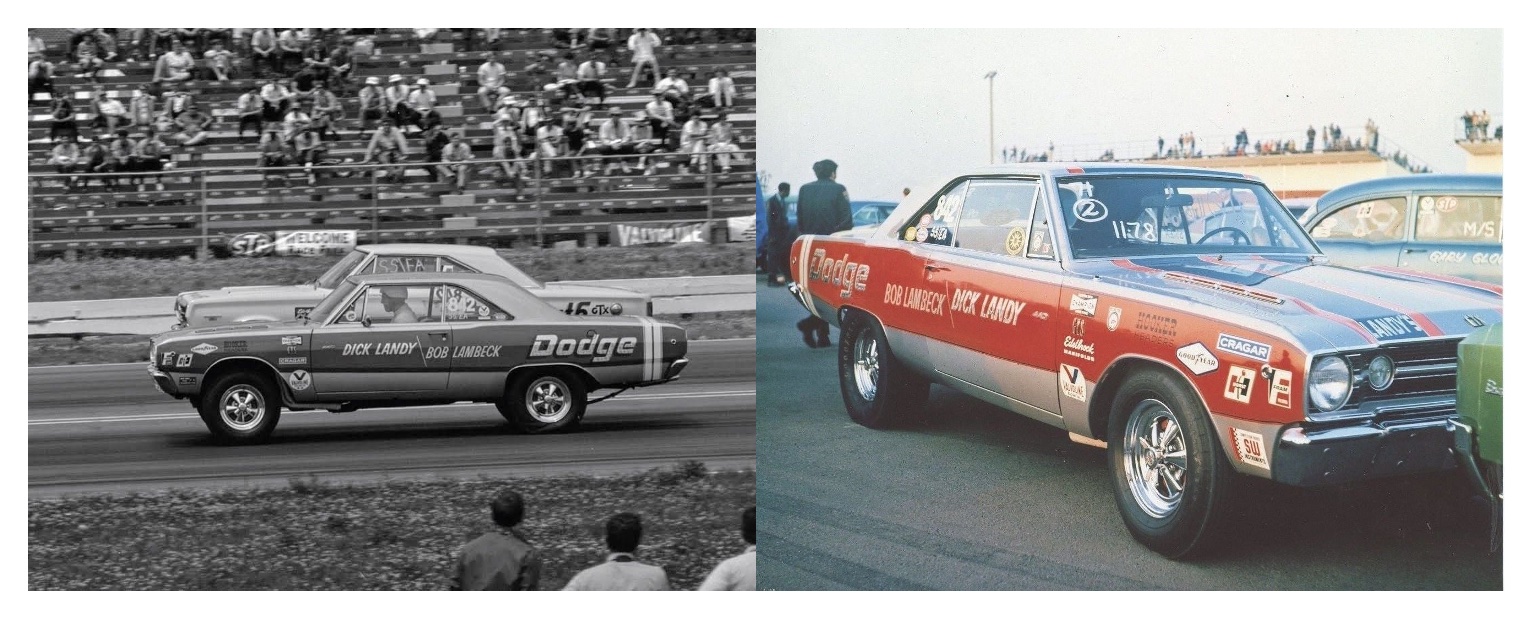
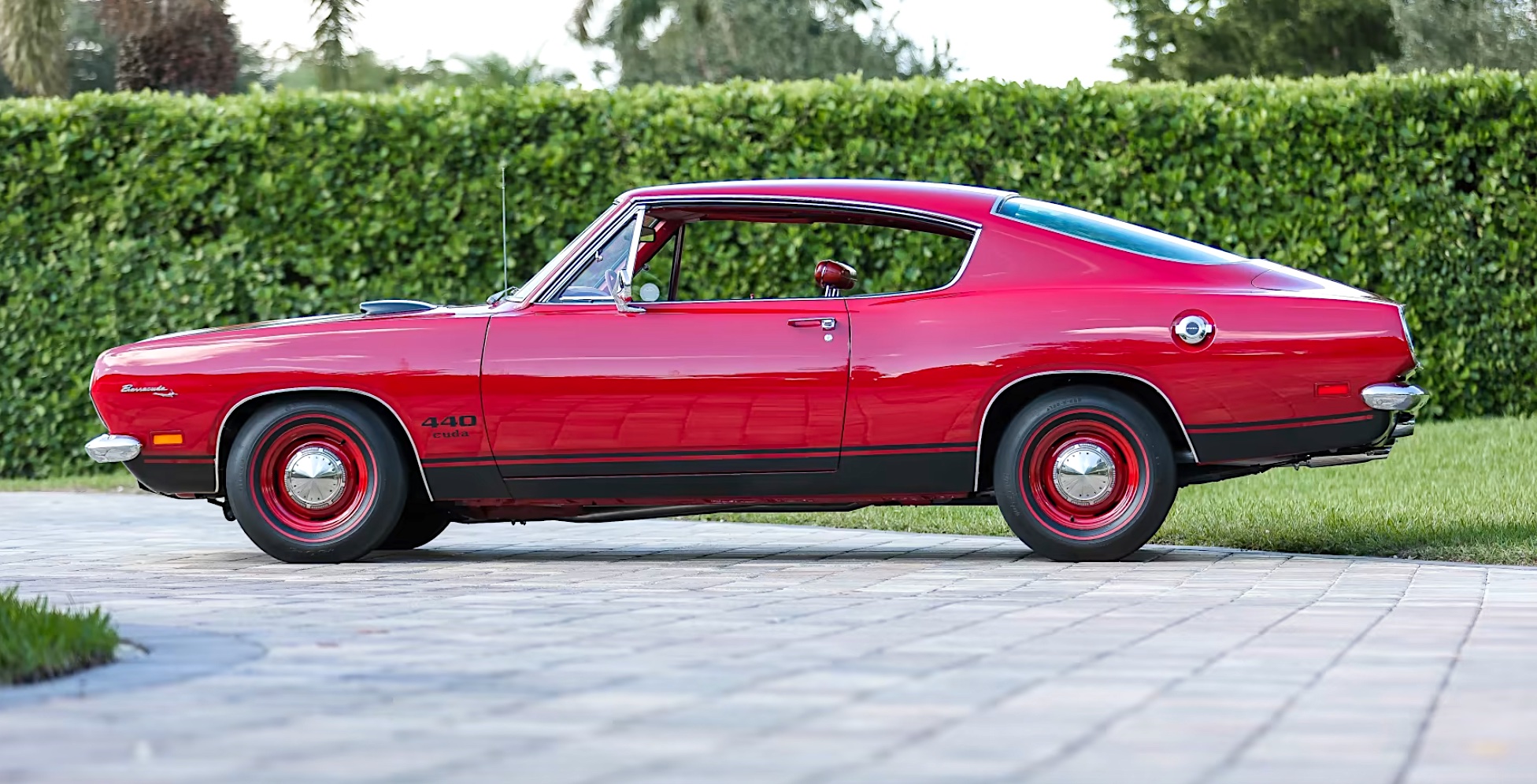
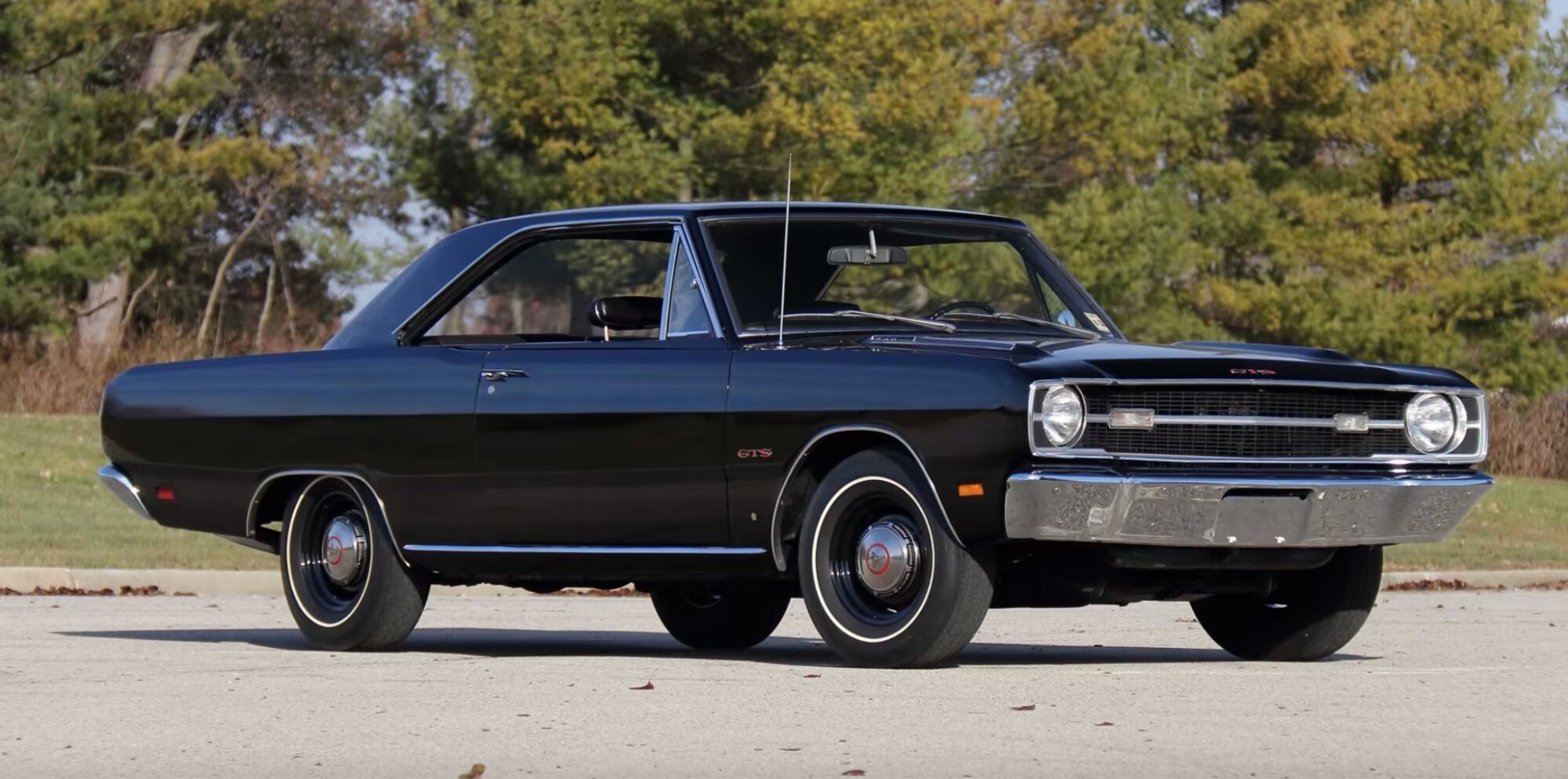
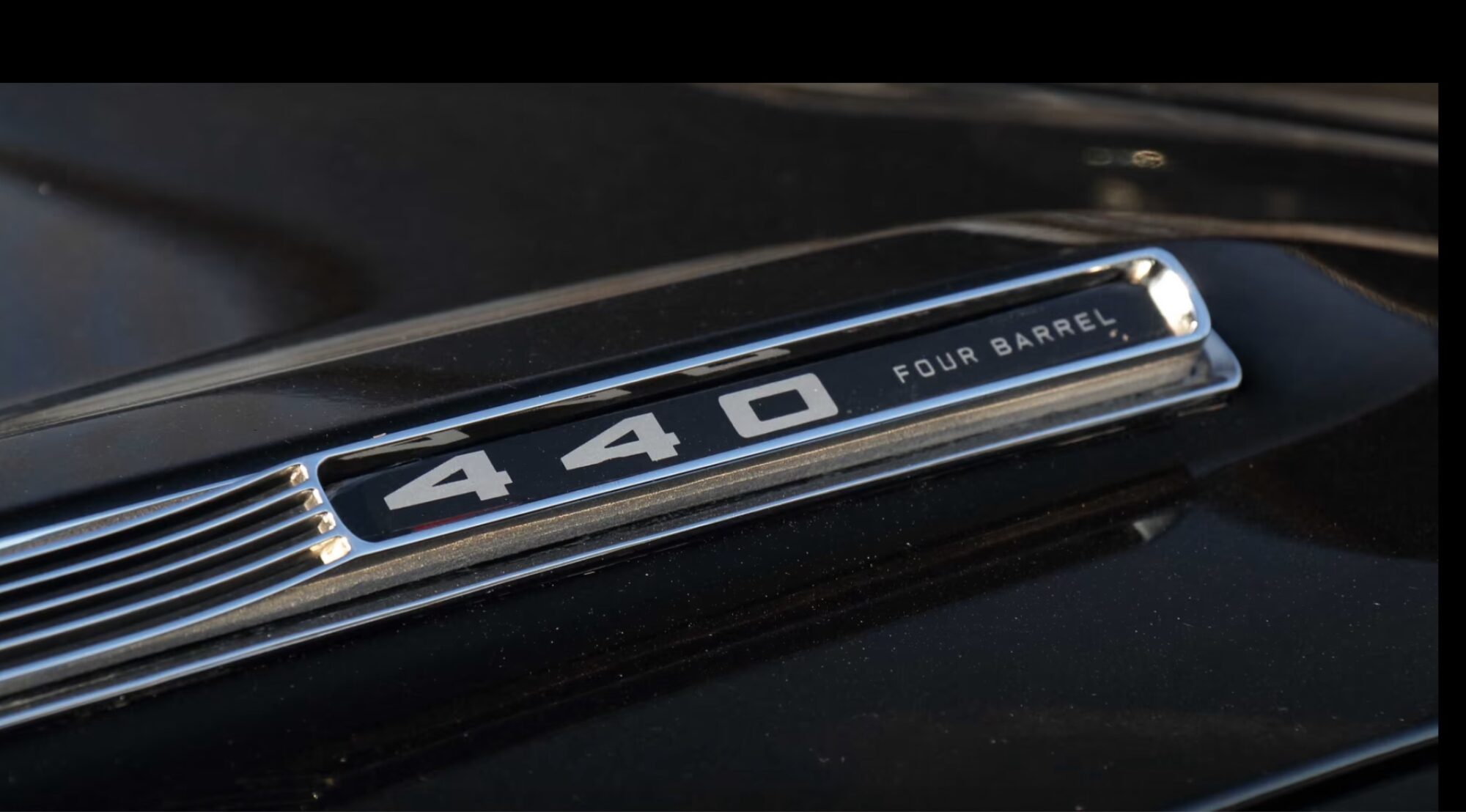
Now that the die was set, Chrysler was far from over in fortifying their already formidable 440 for even more power. In 1968, there was a total revamp of the Dodge and Plymouth B-body intermediates, and two brand-new nameplates were introduced. The Road Runner and Super Bee. Their base engine was a fortified version of the 383-cubic-inch “B” engine that got some goodies such as the camshaft, exhaust manifolds, windage tray and other items that bumped the horsepower from 320 to 335. 1968 also saw the introduction of the Clean Air Bill that put an emphasis on automakers to reduce tailpipe emissions. Both the 383 and 440 now went with an “Open Chamber”-style cylinder head for cleaner burn, but the performance and airflow were not affected. Main streets, avenues and drive-in restaurants, were overtaken with swarms of Super Bees and flocks of Road Runners the next few years as these two affordable muscle cars struck a chord with young buyers. Chrysler even got creative and worked with Hurst Performance Research in Madison Heights, MI, to install the 440 Magnum in a limited run of Dodge Dart GTS models. This was done to thwart the onslaught of Ford’s 428 Cobra Jet Mustangs looking to dominate in the Super Stock “E” class at the 1968 NHRA Winternationals. Dodge racers Dick Landy and fellow teammate Bob Lambeck successfully campaigned one of these big block compacts with great success. The magic formula for stuffing a 440 big block into the Chrysler’s A-body Barracuda and Dart platform would continue for the 1969 model year, but in greater quantity.
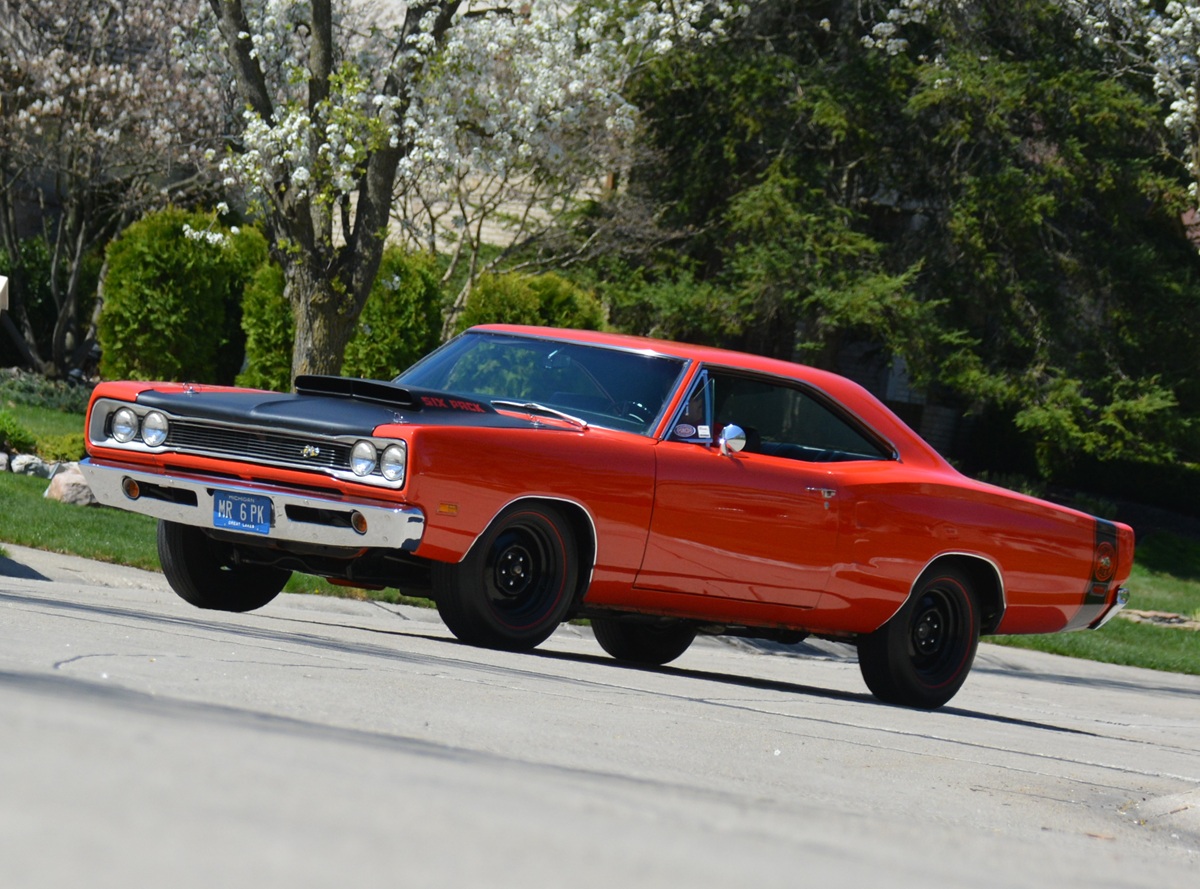
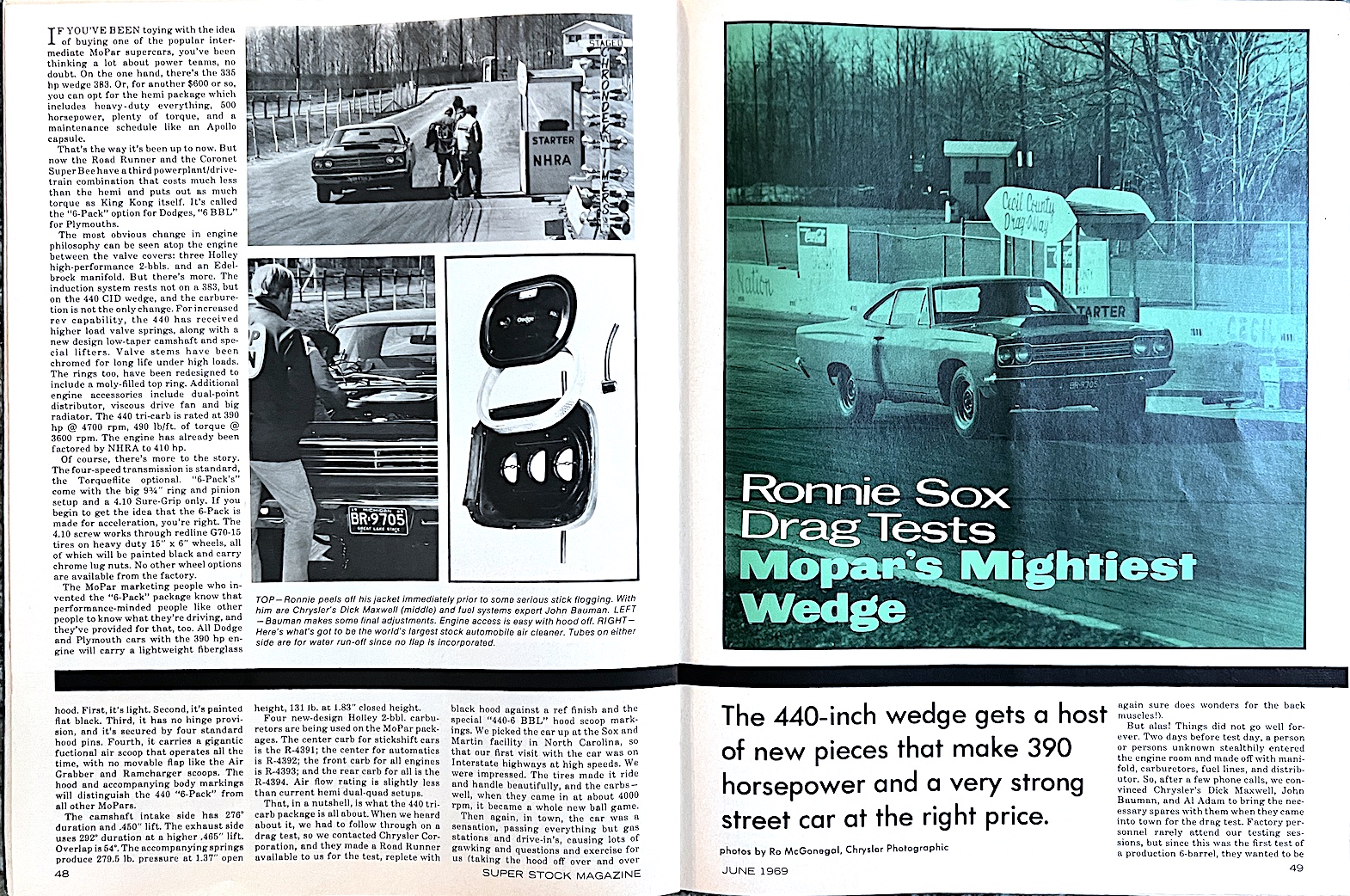
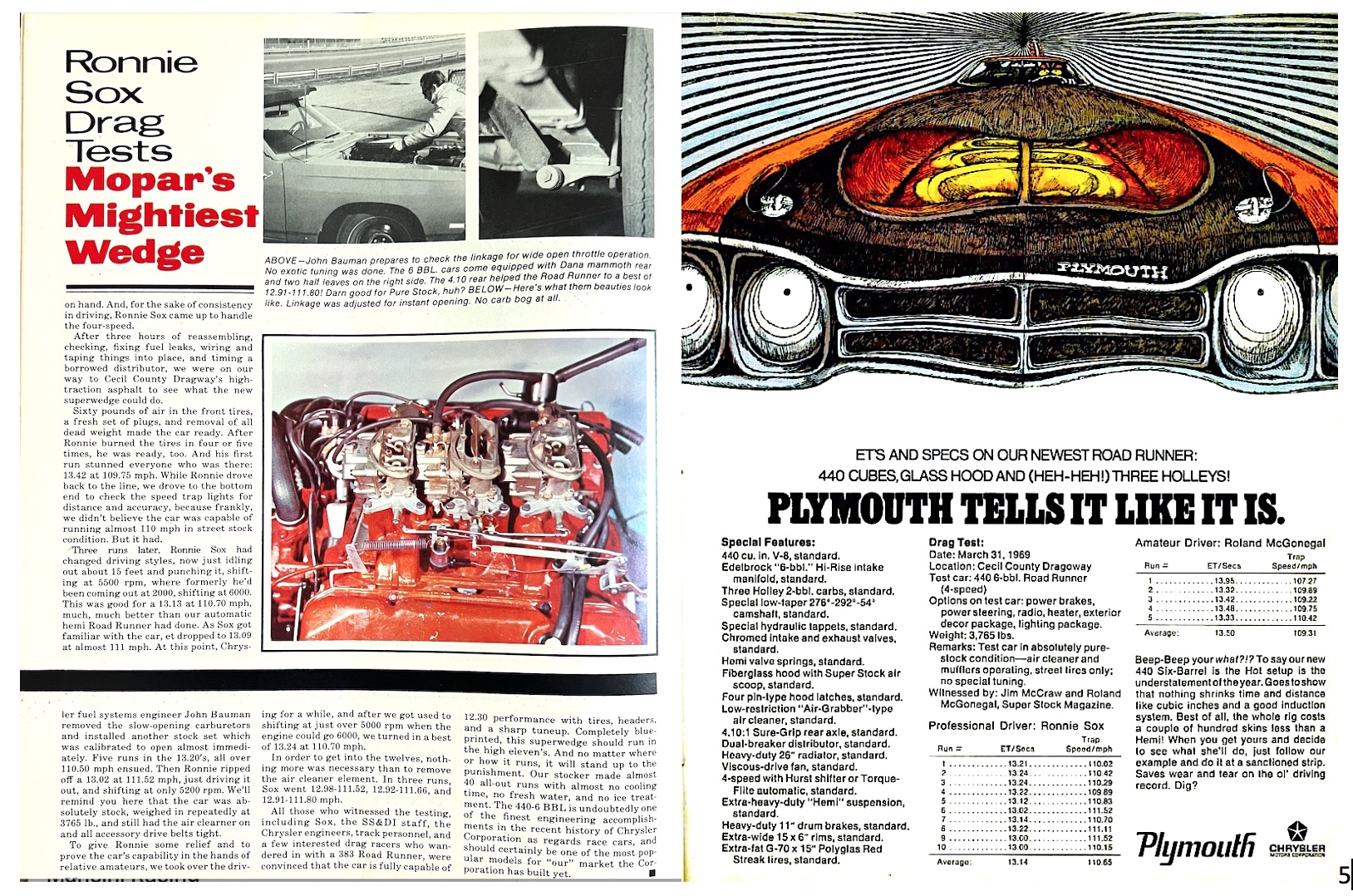
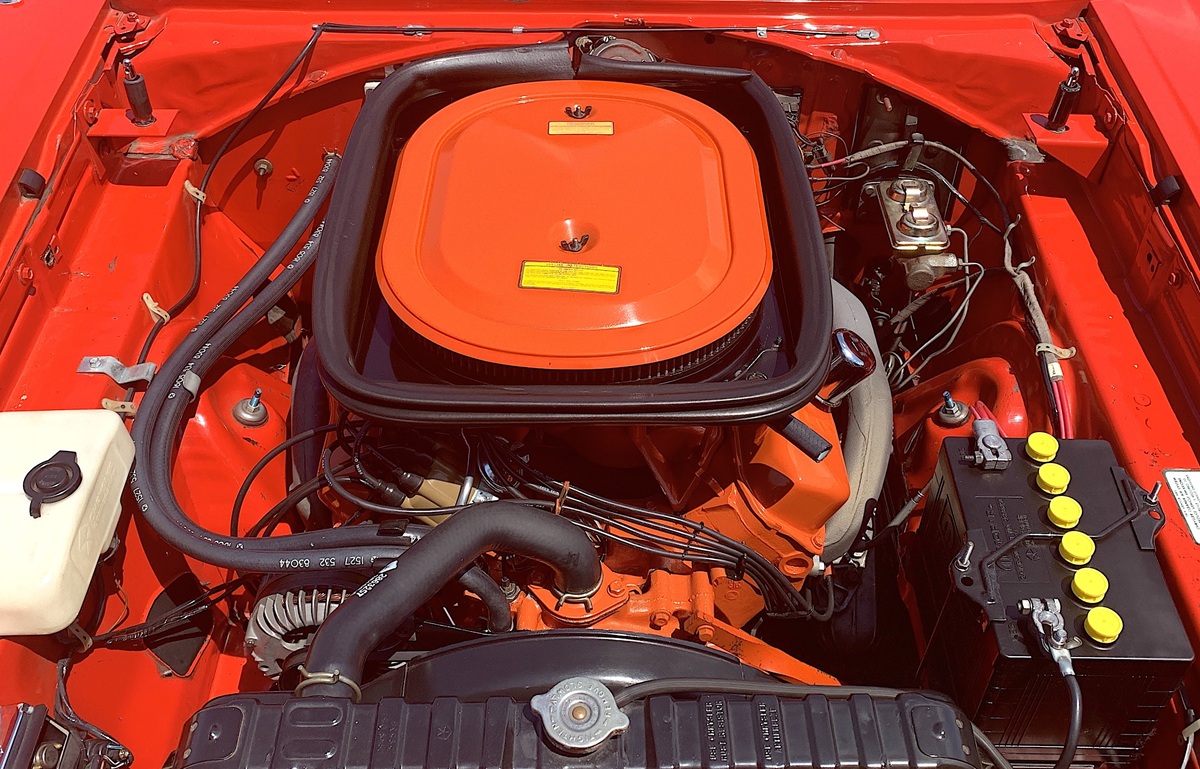
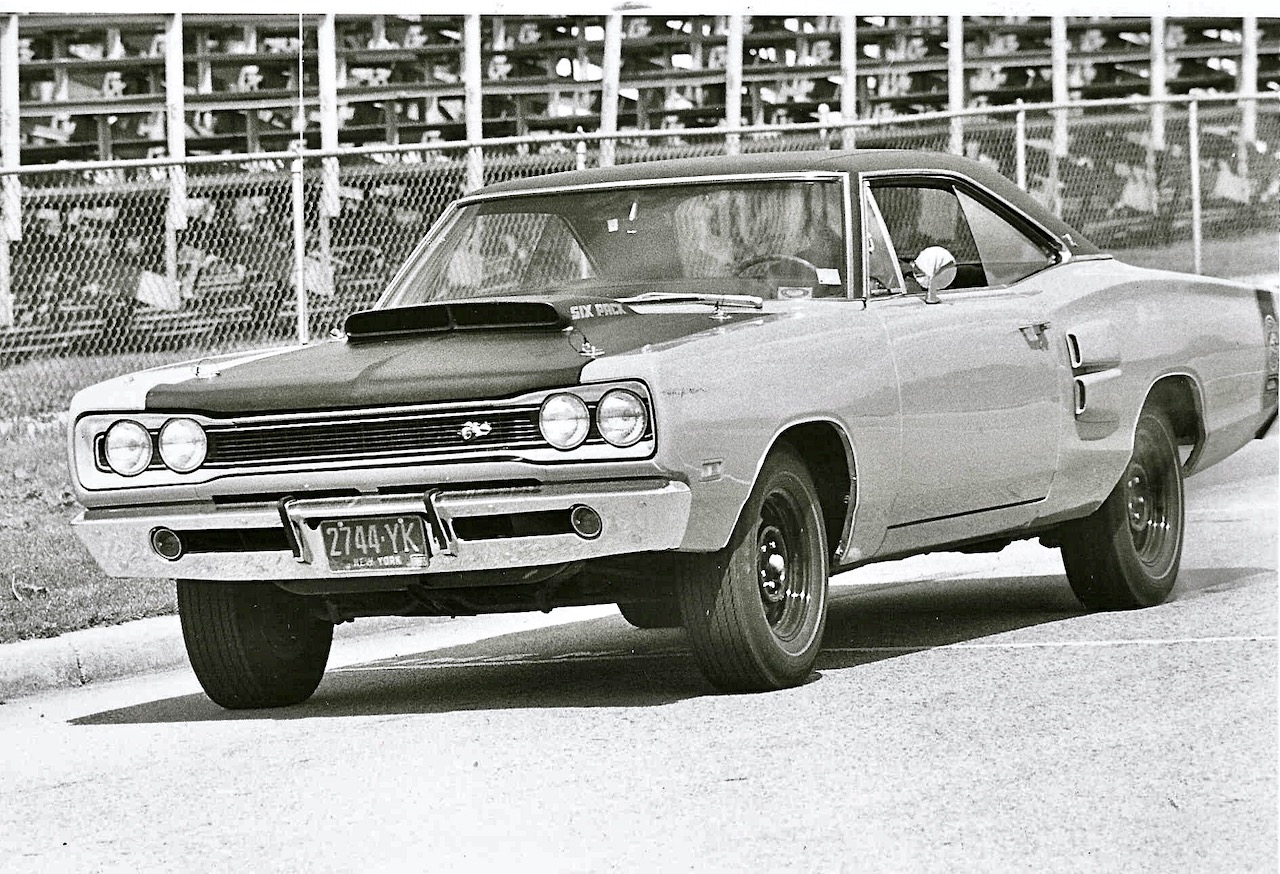
Back on the streets and local drag strips, the competition was ramping up their muscle car portfolio going into 1969. Chrysler wanted to stay one step ahead, and image, along with street creds, meant everything. While the 383-powered Super Bees and Road Runners could hold their own in some instances, they were still easy prey for the potent 375-horsepower Chevelle SS396 and Ram Air IV GTOs. Chrysler’s marketing and engineers came up with a perfect weapon to combat the enemy: the 440 Six Pack Super Bee and 440 Six Barrel Road Runner. Introduced in the spring of 1969, it offered HEMI-like performance at a much reduced cost. With three Holley two-barrel carburetors mounted on an aluminum Edelbrock intake manifold, the 440 produced 390 horsepower while still maintaining great driving manners for daily commutes. With their unmistakable flat black fiberglass liftoff hood, bare black steel wheels, these cars looked the part of a serious street racer. Magazine road tests had a 440 Six Barrel Road Runner running high 12 to low 13-second quarter-mile elapsed times, and the package instantly earned “supercar” status.
As the 1960s began to fade into the 1970s, the 440 still burned bright but only for a short period. Government regulations, increasing insurance premiums and the oil embargo would speed this mighty engine’s demise and expiration date. In part two, we’ll do another deep dive on how the 440 almost survived the decade of the 1970s. In the meantime, feast your eyes on these cool images of the powerful 440 V8 and the cars it powered during the late 1960s.
0 Comments