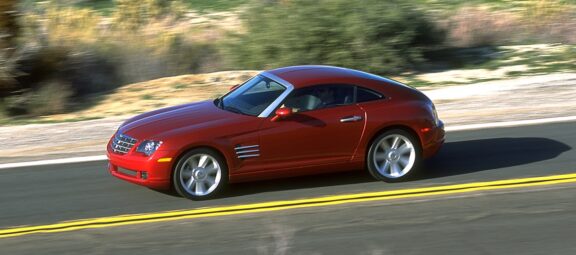
The Forgotten Chrysler Sports Car
When the Chrysler Crossfire first burst onto the scene as a concept car, it caught the world by storm as it was highly praised by international publications, including “Best Exterior of the Year”, plus a great deal of interest in the car as it was “the first child of the merger of Chrysler and Daimler. Some of the catchphrases used for the sporty two-seater were “Route 66 meets the Autobahn”, “gorgeous American design with disciplined pizzazz” and “it has a unique, almost sculptural design.”
Autoweek Magazine stated the car “offered a lot for the money, from its powerful and proven 3.2-liter V6 to its remarkably smooth handling to its supercar-level stopping power.”
The name Crossfire was conceived during the development of the vehicle’s distinctive character line which moves precisely and rapidly from front to rear. The character line “crosses” to a negative formation from a positive formation as it travels quickly from the hood through the rear fenders. Chrysler-designed and Karmann-built body.
“Chrysler Crossfire is the sports coupe of the future,” was what the then-Chrysler Group president and CEO Dieter Zetsche had expressed about the car. “It’s an American dream machine come true. Following the footsteps of Dodge Viper and Chrysler PR Cruiser, it’s a great concept-to-reality story that combines head-turning design with world class engineering.”
Advertising copy read: “50% American Imagination, 50% German Precision and 100% Passion!”
GREAT HANDLING
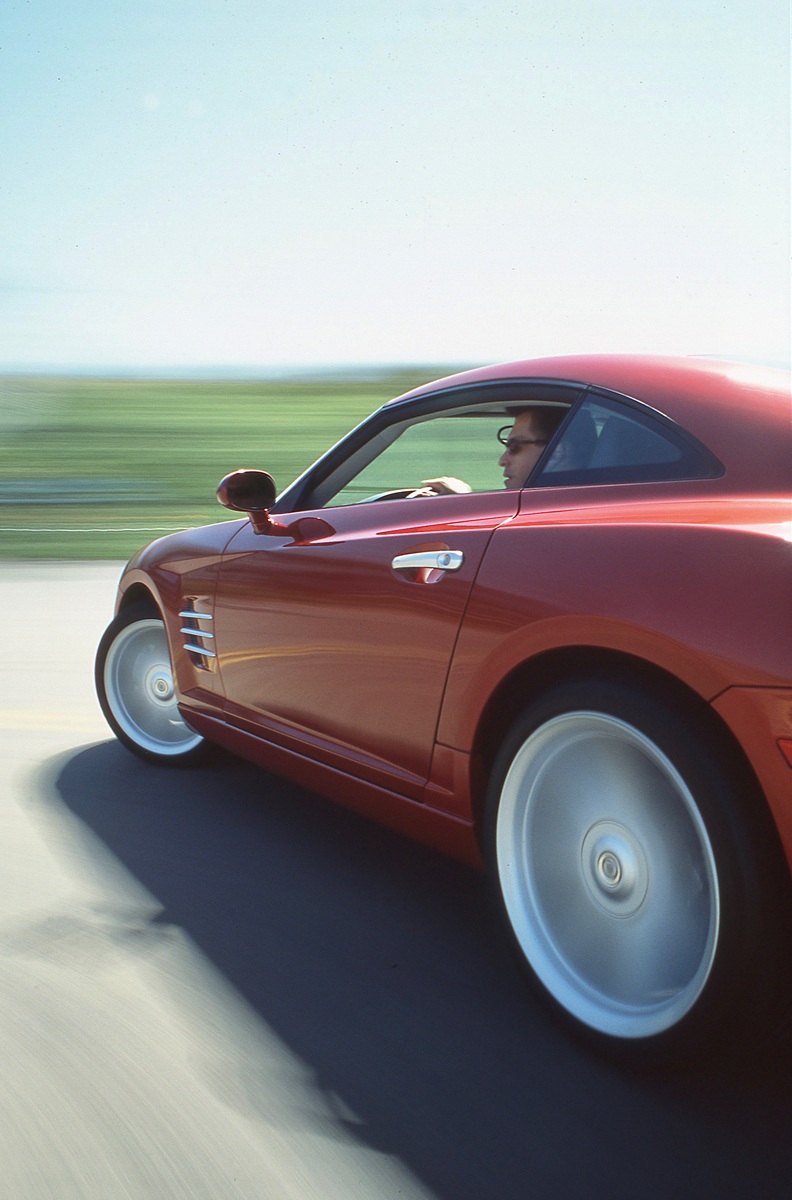
Crossfire uses the R170 chassis platform from then-partner Mercedes-Benz and cornering is impressive – big sticky low-profile Michelin rubber helps it hug the curves!
BOAT TAIL REAR STYLING
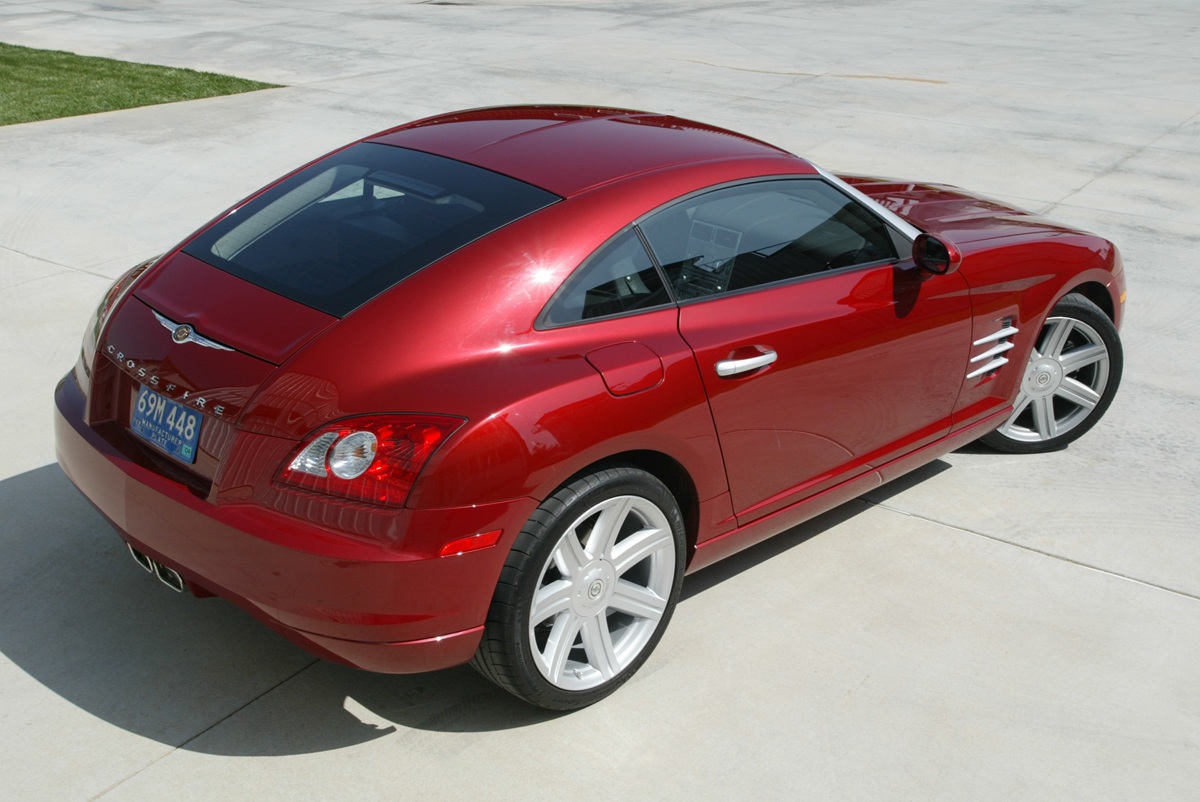
The tail is formed as the edges of the roof converge into the teardrop shape, which positions the rear fenders to flare out over the rear wheels.
3.2-LITER 18-VALVE V6 POWER
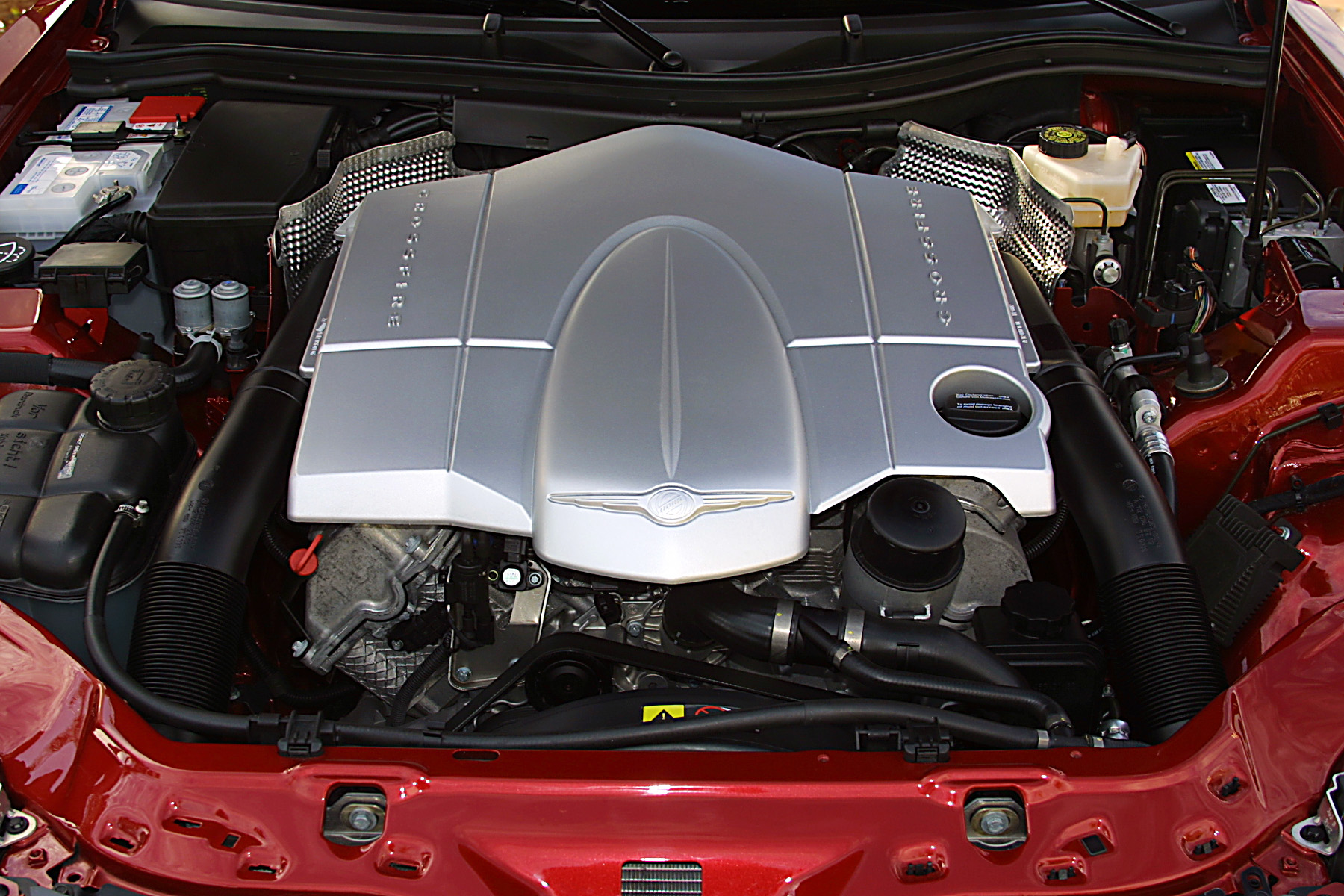
The 215-horsepower SOHC V6 is of 18-valve design, and produced 229 ft-lb of torque. Roller rocker arms, sequential multi-port fuel injection. A six-speed manual or five-speed electronically-controlled automatic were the available transmissions.
INTERIOR HIGHLIGHTS
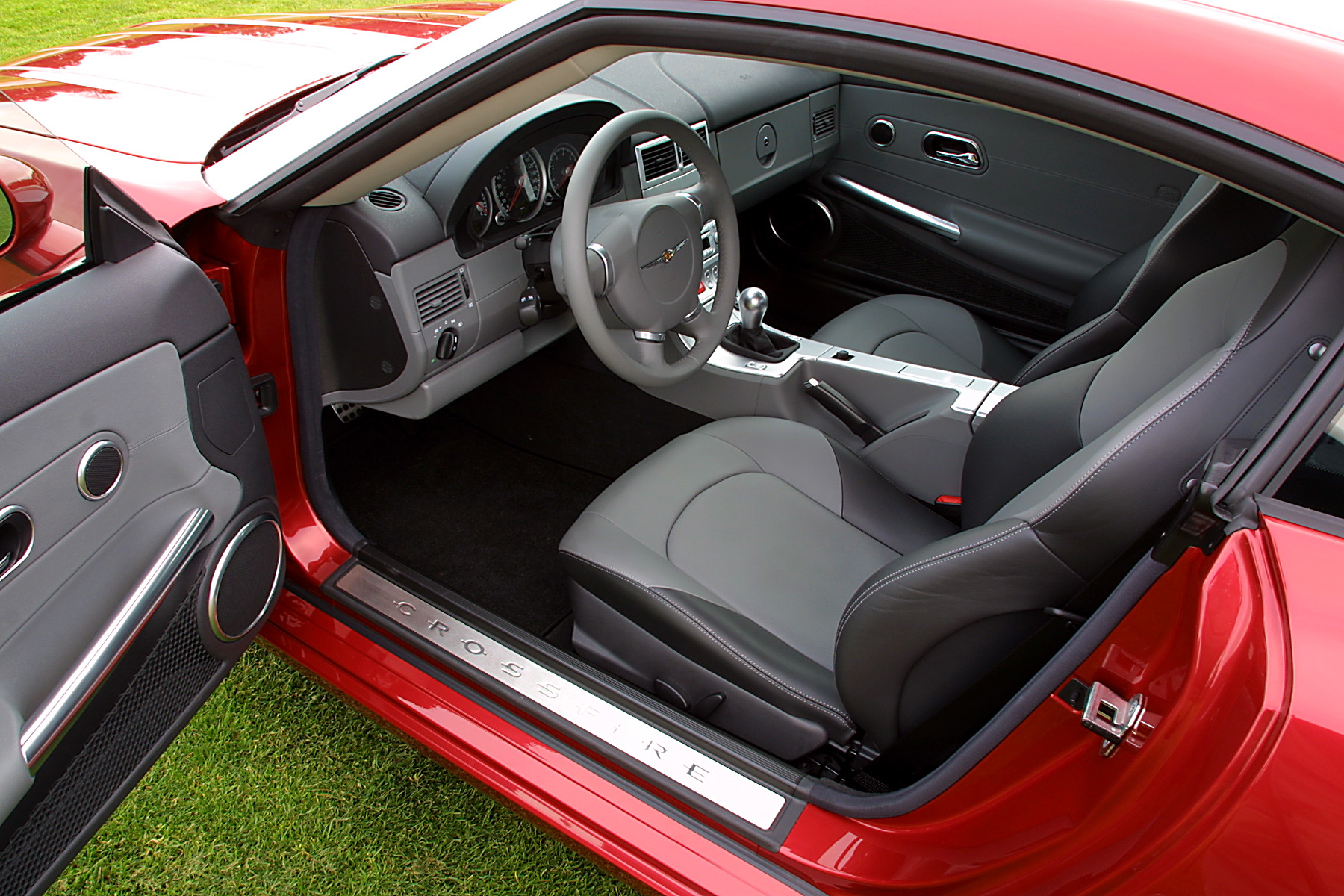
“We wanted to give the driver that special feeling of being inside the cockpit of something very serious, serious and protective,” is how Trevor Creed, then-Chrysler’s senior VP of Design, described it. “With a high beltline, you sit deep within the car.” A manual telescoping steering column is used, the seats are electronically adjustable and the pedals are manually adjustable for position.
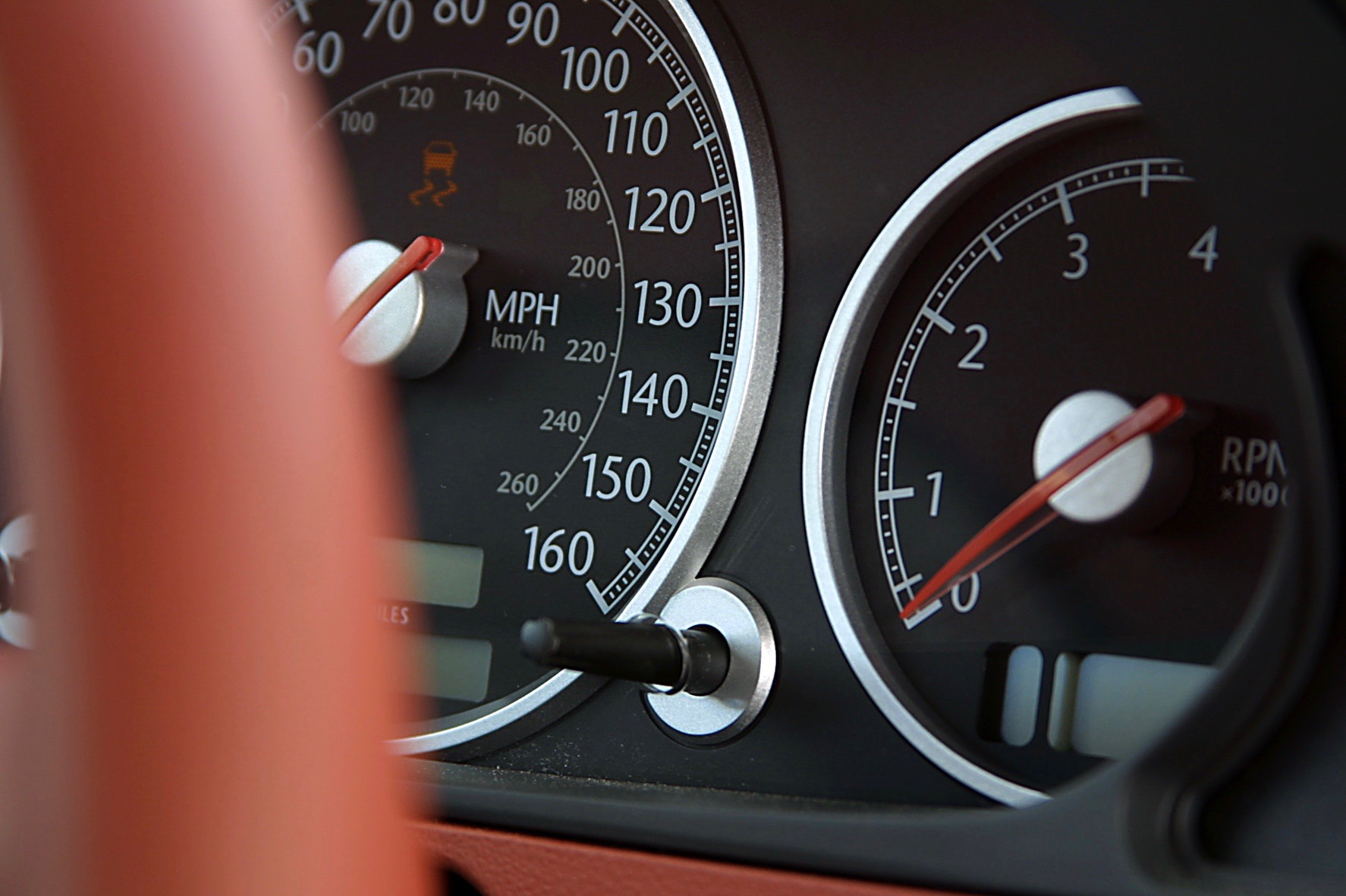
The gauges have white-on-black faces with metallic bezels ad chrome trim rings. The 160-mph speedometer may have been a bit of wishful thinking with the V6 power output of 215 ponies.
CENTER CONSOLE STACK
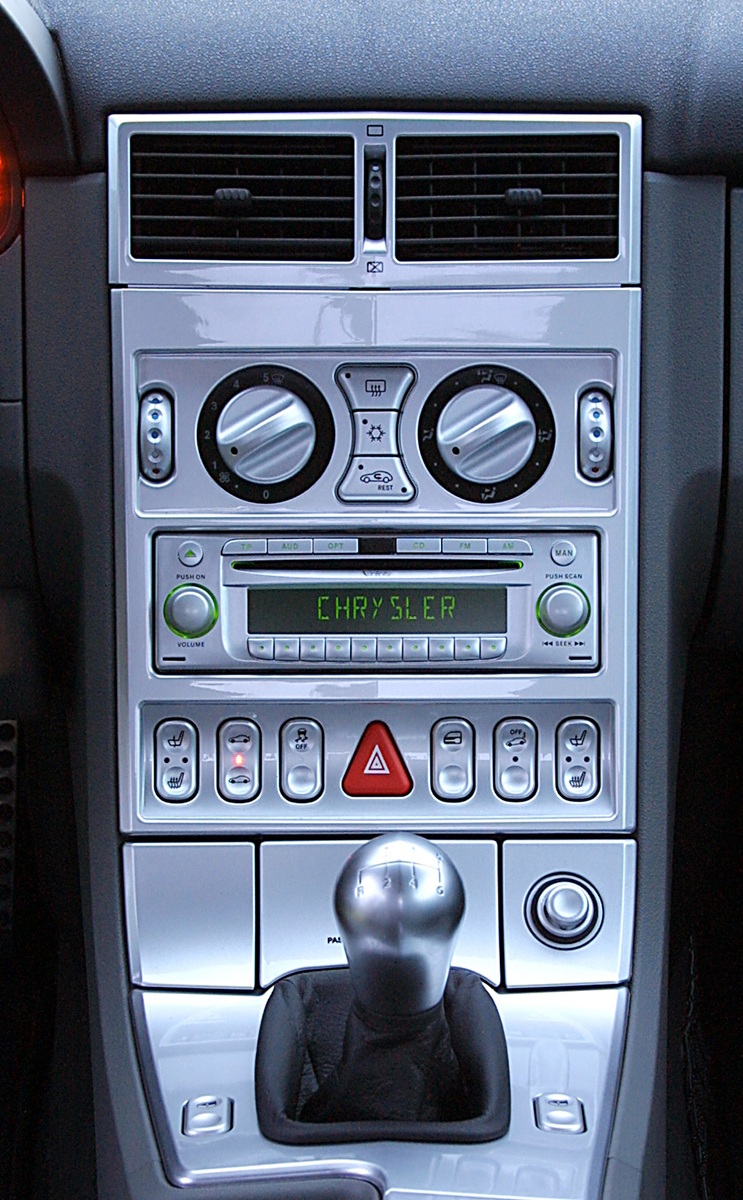
A Becker-sourced AM/FM/CD stereo system was a standard feature.
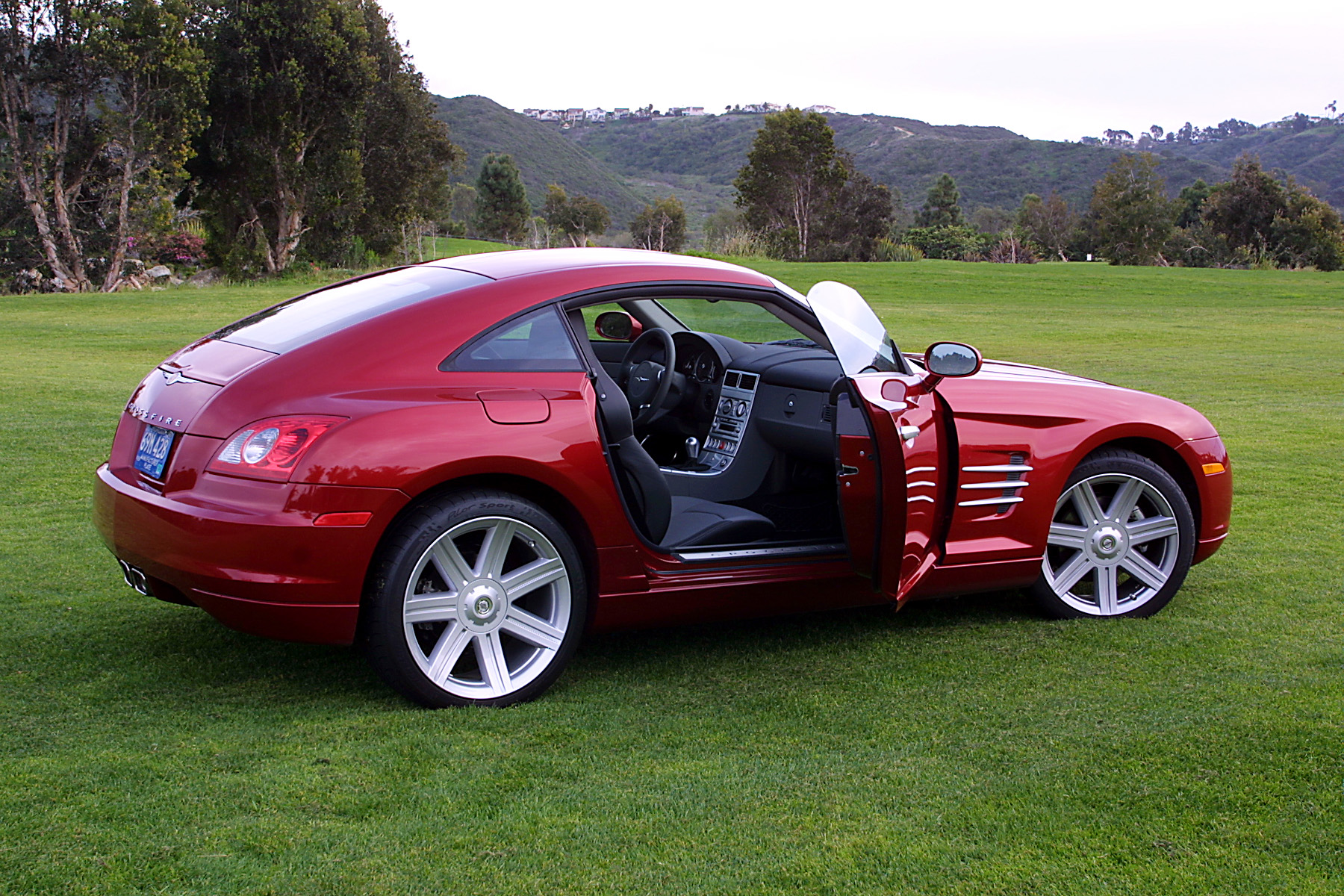
Design elements and overall construction was that of “refined” and “plush” rather than a bare-bones racer look, after all it was a Chrysler-branded car.
CANYON CARVER
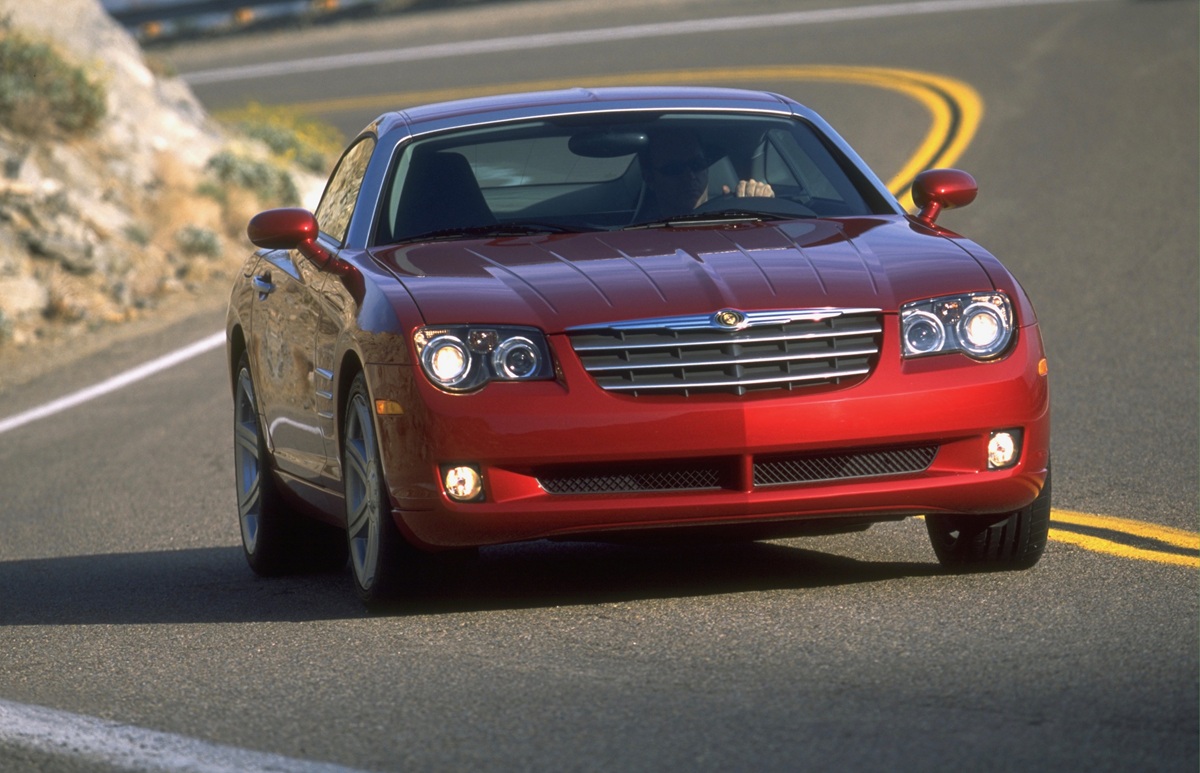
Cornering capabilities come from A-arm front coil spring suspension with gas-charged shocks, and in the rear, independent five-link suspension incorporating coil springs with gas-charged shocks. Four-wheel anti-lock disc brakes (300 x 28 mm front, 278 x 9 mm rear) and all-speed traction control was standard equipment. Front and rear stabilizing bars, power steering. 3,000-pound shipping weight, 68.9 inches wide, with an overall height of 50.7 inches. Wide and low to the ground!
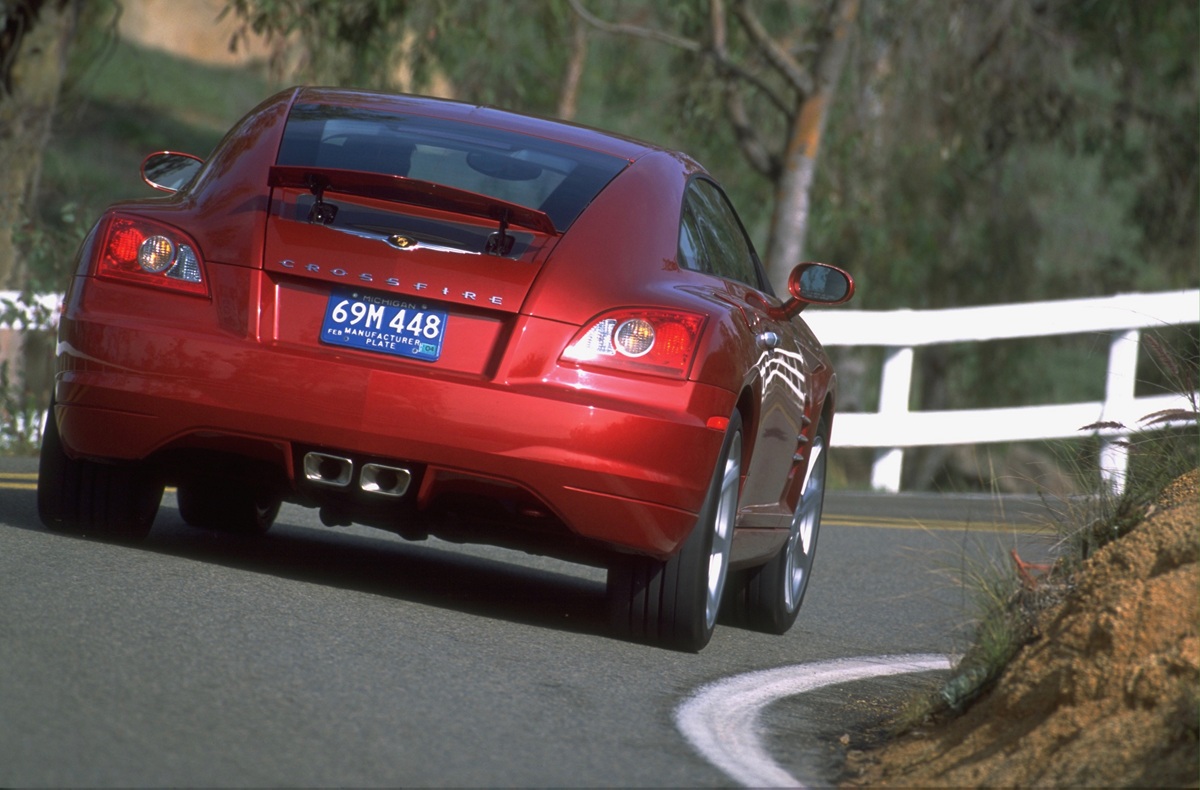
The rear spoiler is speed-activated, raising up at the designated speed of 50 mph.
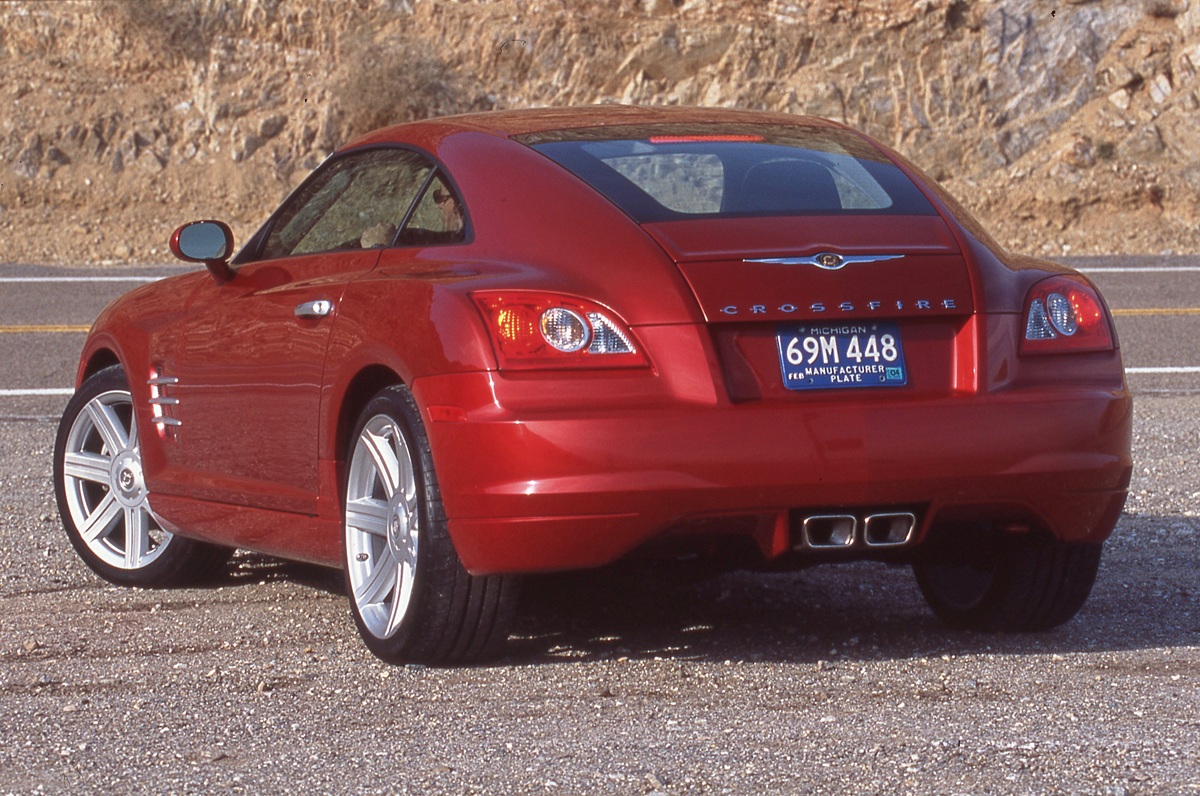
Crossfire rides on 18-inch x 7.5-inch front and 19-inch x 9-inch rear wheels, giving the car a poised stance. 225/40ZR18 (front) and 255/35ZR19 (rear) Michelin Pilot Sport 2 rubber is used.
CARGO SPACE
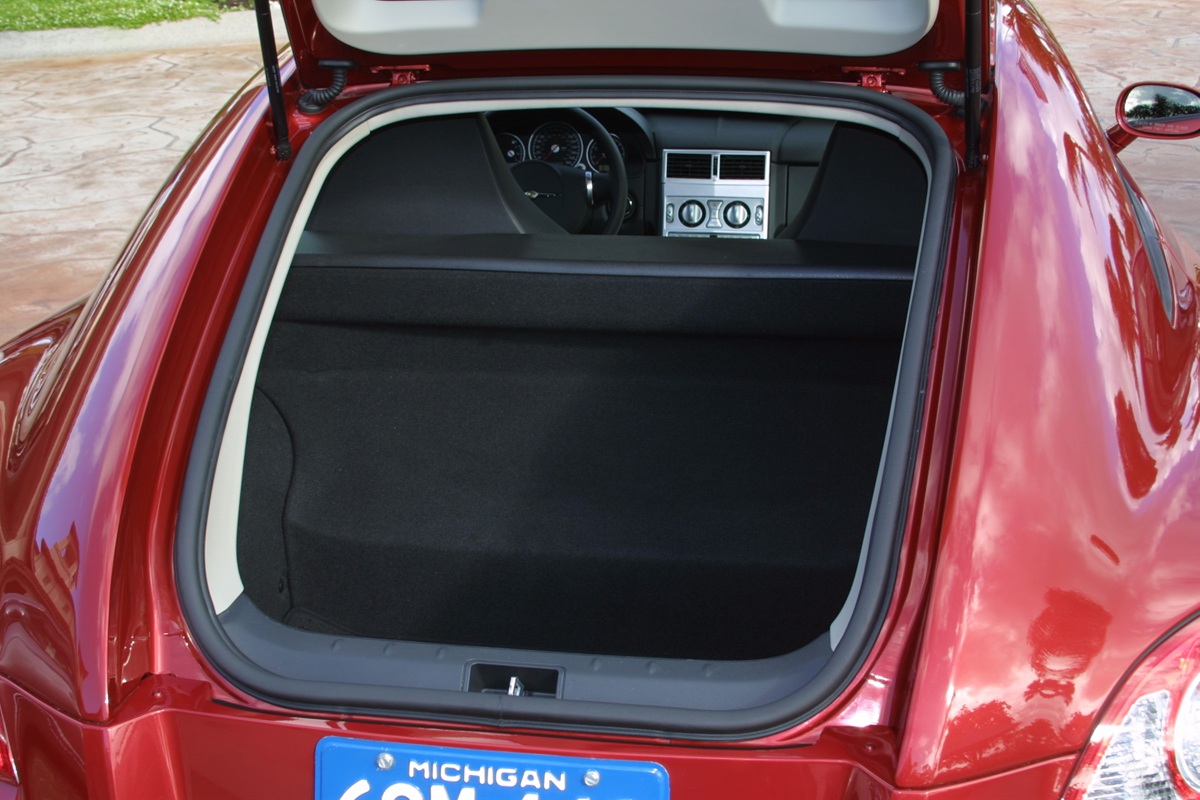
Not a lot! Enough room for very few items. Crossfire, like most other sports cars, was not designed to offer a large amount cargo space.
STYLING ACCENTS
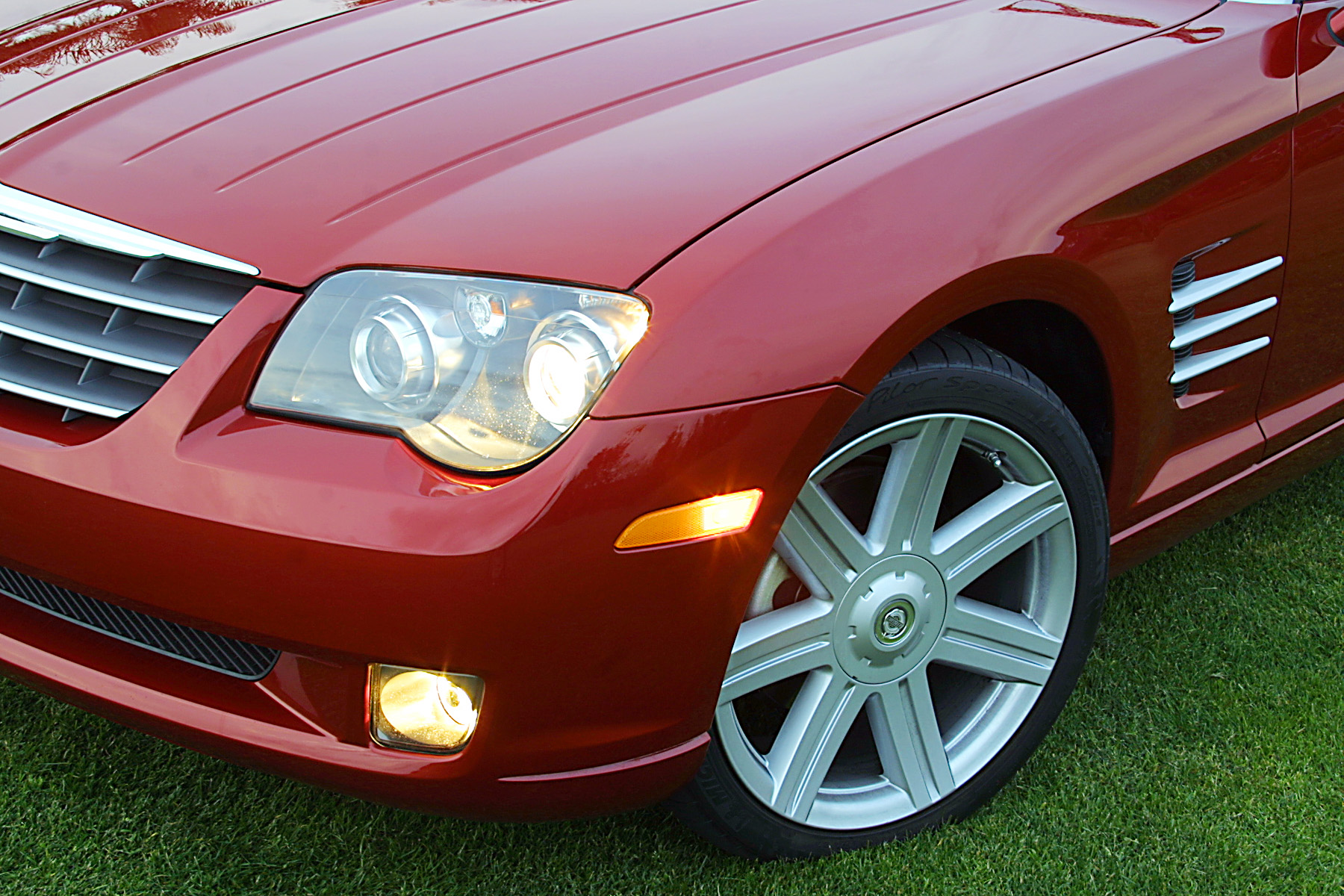
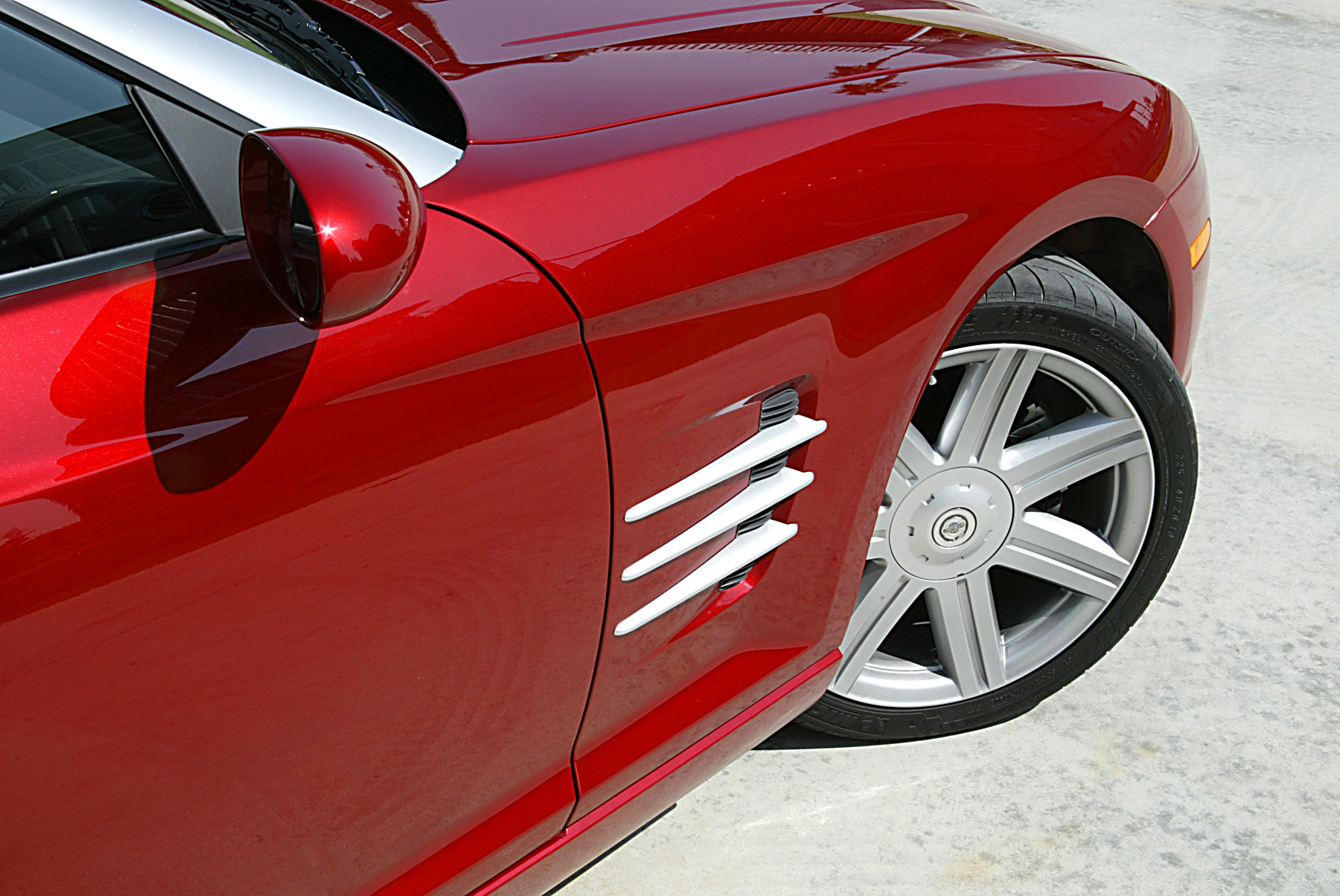
The sculptured hood prominently showcased Chrysler’s new signature winged badge which spans the entire upper width of the chromed grille. Headlights have double circular elements within and carve into the front fascia. Side simulated extractors provide a performance car flavor.
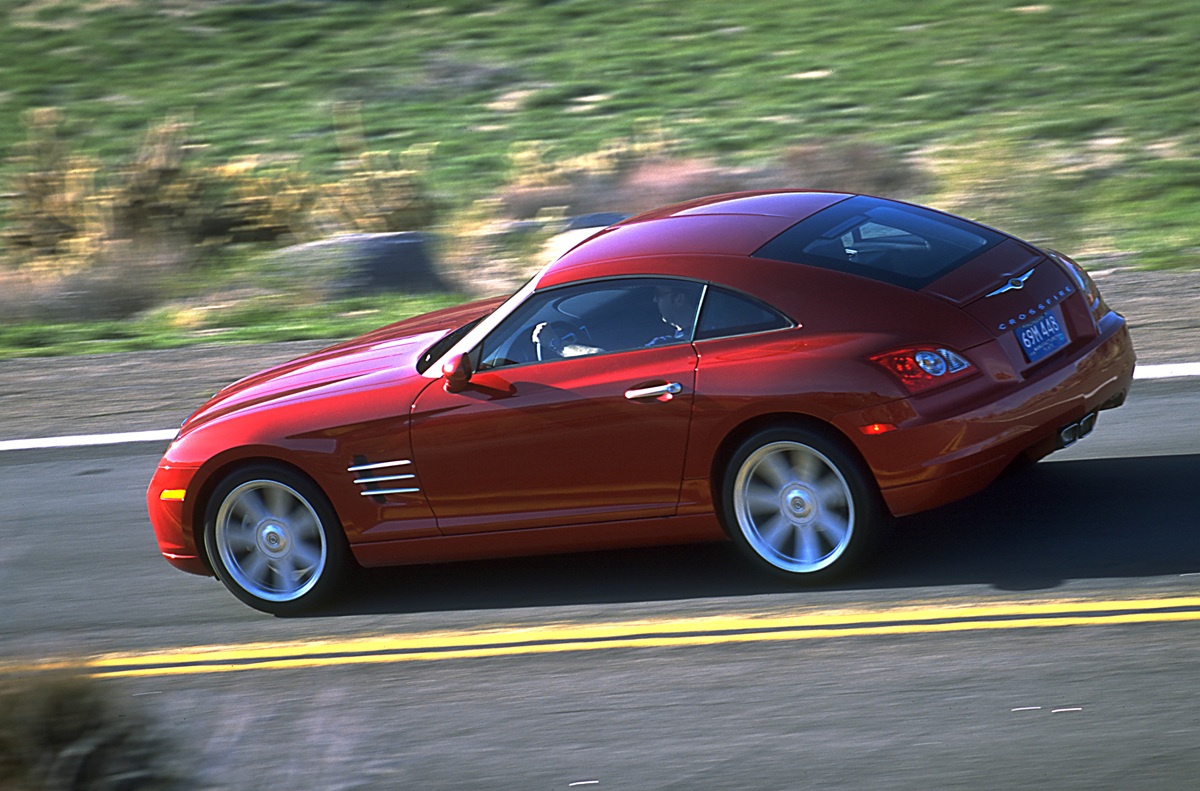
The boat tail rear body design emphasizes the rear wheels and wide fenders, which was a new direction for the Chrysler brand.
CENTER EXHAUST
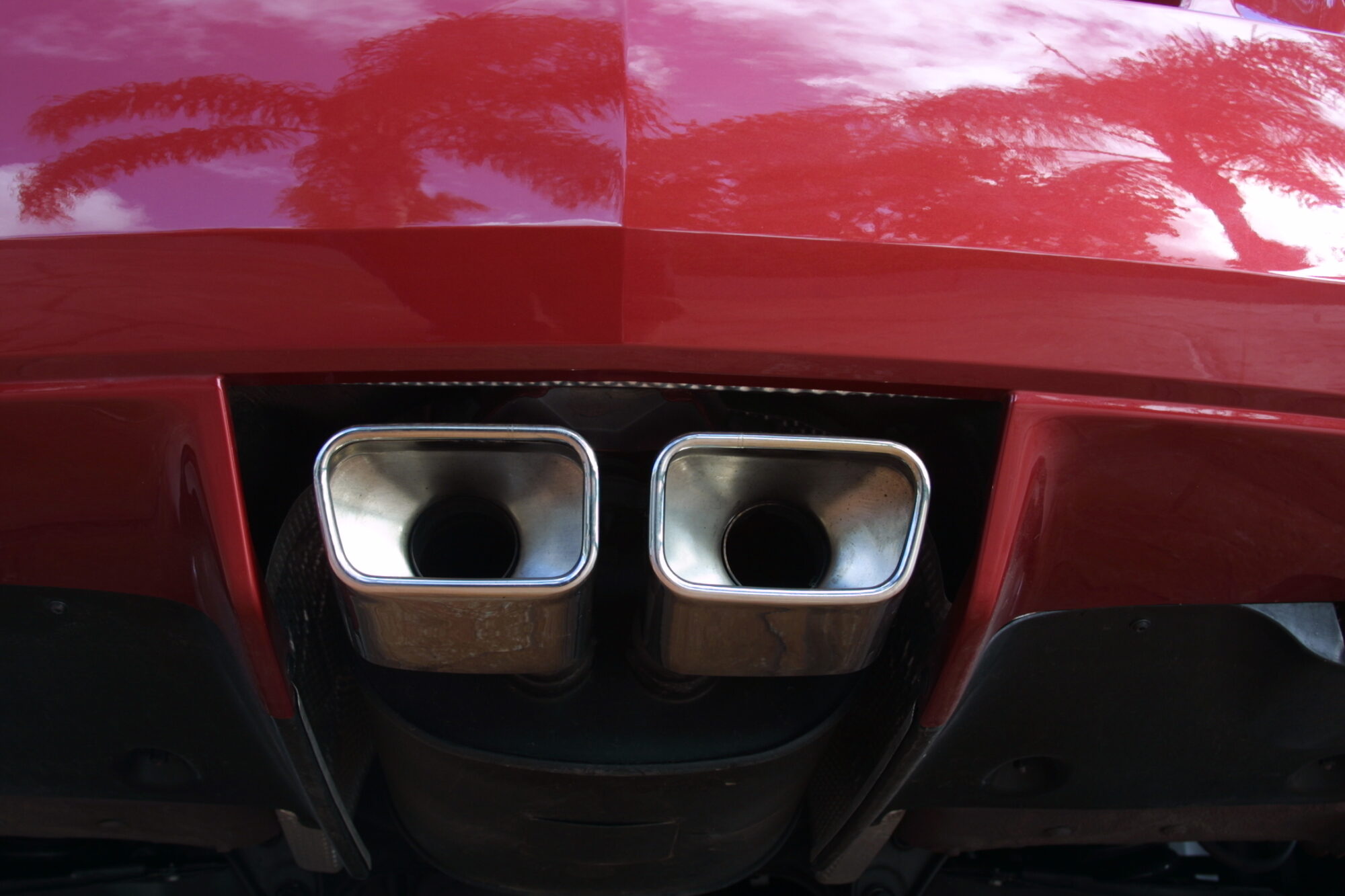
The twin center exhaust was one of the design themes of the original concept car had it did survive the transition to production car.
HELLFIRE?
Its already been established that the Chrysler Crossfire engine compartment will accommodate the Gen III HEMI® engine, and it certainly would be conceivable for a builder to incorporate an SRT® Hellcat version for greatly increased power and performance … creating a “Hellfire” Chrysler two-place true high-performance sports car!
Author: James Maxwell
0 Comments