From Push Buttons to Paddle Shifters
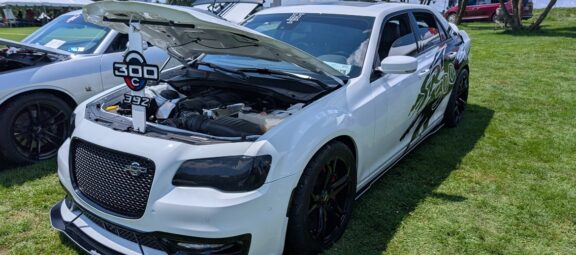
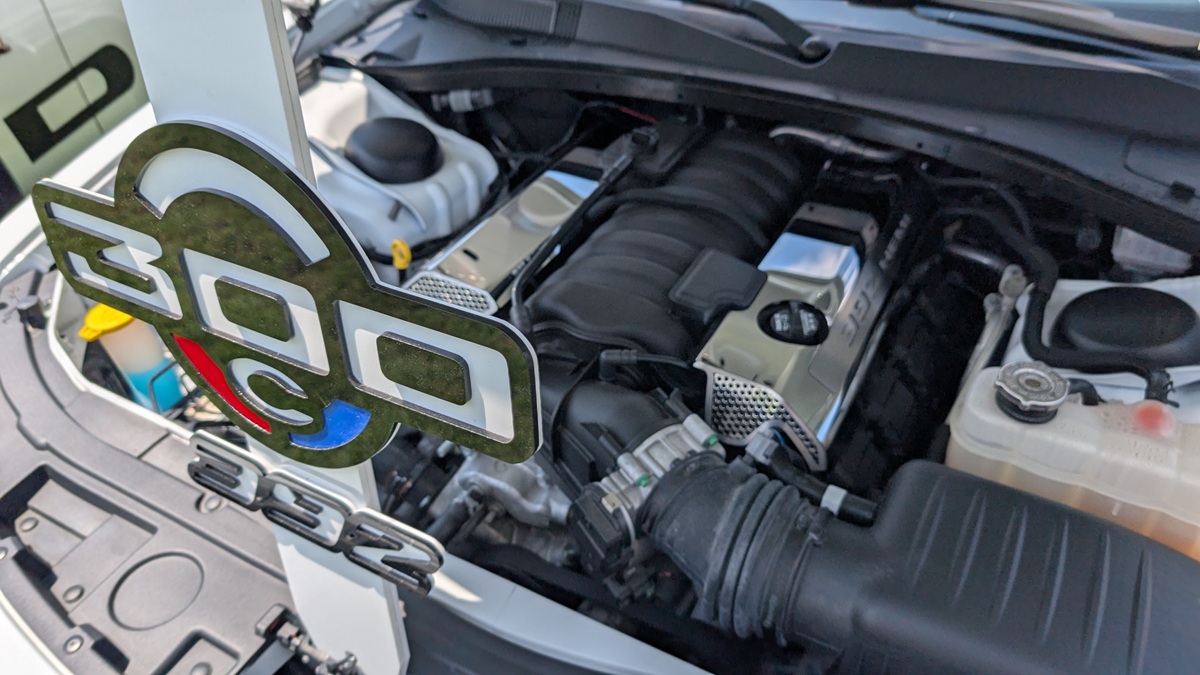
Walking around the stunning grounds of the Pittsburgh Vintage Grand Prix, I stumbled upon what can only be explained as automotive folklore made real – a 392-powered Chrysler 300. Not a Challenger. Not a Charger. A 300. It has a 392 under the hood and the ZF 8-speed transmission from the factory. I know, I know. You could order one from your dealer of choice. But they only made 2,200, and I have only seen two in the wild! And yes, the eight-speed is an absolute game-changer!

“It’s basically a unicorn,” I tell Frank as I settle into the driver’s seat. “You just don’t find these.”
Frank grins knowingly. He’s aware. Oh, is he aware.
The 300 has always been Chrysler’s swan – elegant, powerful and criminally underappreciated in the muscle car conversation. While Challengers and Chargers grabbed headlines and Instagram likes, the 300 quietly went about its business of being the most comfortable way to embarrass unsuspecting sports cars at stoplights. Frank understood this truth long before most enthusiasts caught on.
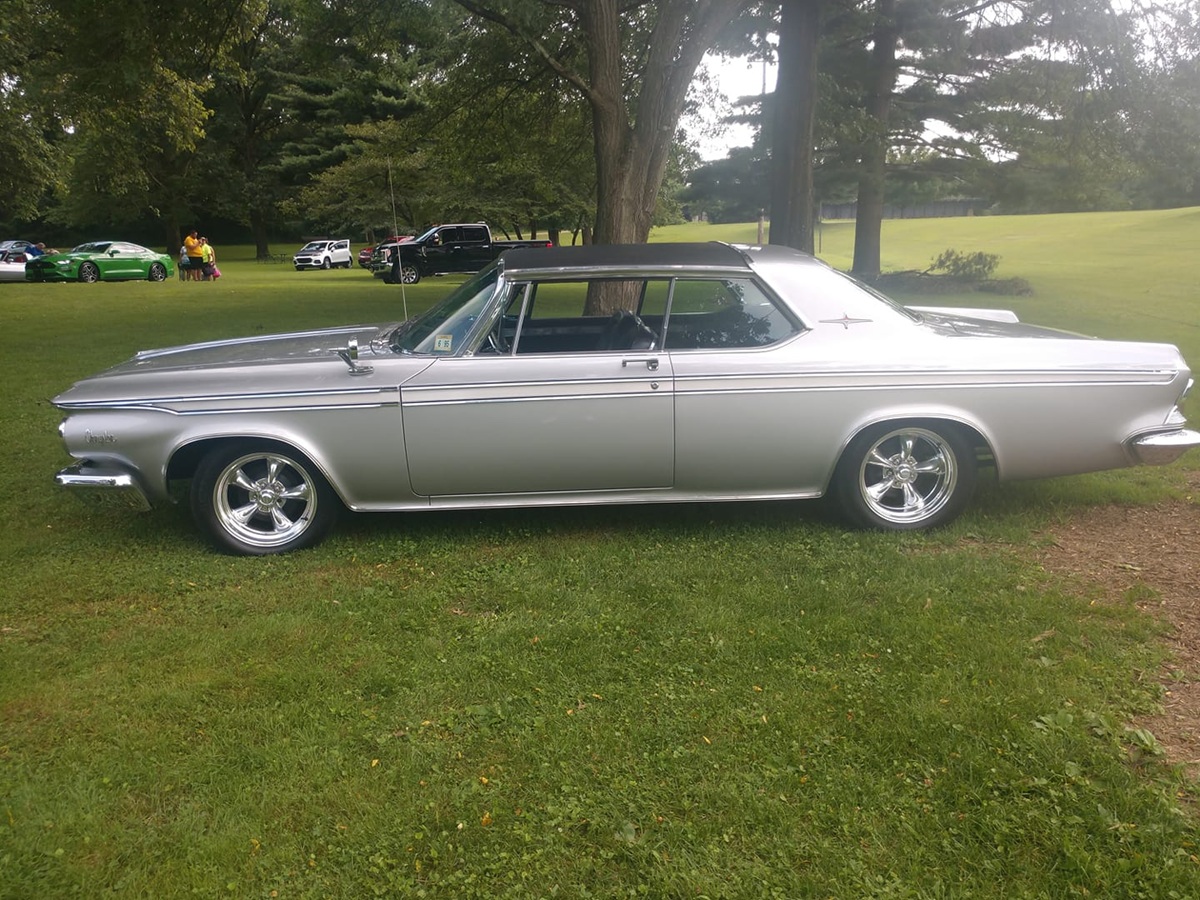
“I have a ’64 300 Silver Edition,” Frank explains, “and most of my friends all have old Challengers that we go around in. When the Challengers came out, they got new Challengers.” He pauses for effect. “Well, I wanted a 300 because I was prone to the 300, so I waited.”
Patience, as they say, is a virtue. And when Chrysler finally answered Frank’s prayers by dropping a 392 into the 300 platform, he didn’t hesitate. The logical next step in his personal 300 timeline had arrived, and Frank was ready.
Born in 1964 – the same year as his Silver Edition 300 – Frank has collected Dodges, Plymouths and Chryslers spanning multiple decades. He’s owned ’69 Charger R/Ts and chased examples from various eras, but that ’64 300 holds a special place in his garage and his heart. It’s a stunning example with a 383 two-barrel, TorqueFlite push-button transmission and 3.23 gears. Nothing flashy, nothing radical – just honest, beautiful American steel from an era when Chrysler built cars with the structural integrity of bank vaults.
“There is probably twice the steel in the ’64 that’s in the new car,” I joke, tapping the dashboard of his modern 300. I was fortunate to spend A LOT of time behind the wheel of the 300 at the SRT® track experience back in the day. There may have been some plotting and scheming about driving this car back to Alabama.
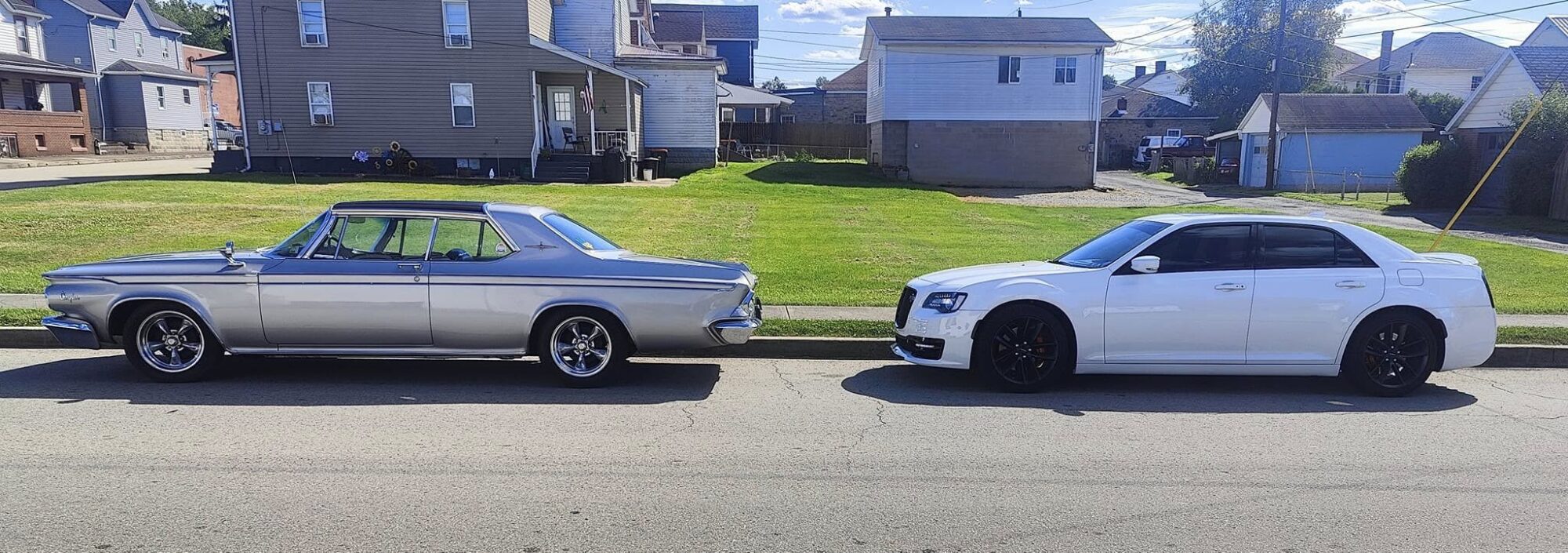
The ’64 remains mostly stock, save for 17-inch wheels that give it a slightly more contemporary stance without destroying the period-correct vibe. A doctor in Florida originally owned it before selling it to a drag racer, who eventually passed it along to someone in North Carolina. Six years ago, Frank spotted it and made his move. He’s been driving it ever since, racking up serious miles, including a 900-mile adventure over one weekend to Mopar® Fest up in Canada.
But here’s where Frank’s story gets interesting. While his buddies were all jumping into new Challengers and Chargers, Frank stuck to his guns. He waited for Chrysler to build what he really wanted – a modern interpretation of his beloved 300 with enough horsepower to make it worthy of the nameplate’s heritage.
When this limited edition finally arrived, Frank pounced. “I figured I had to have one,” he says.
And who could blame him? The 300 represented something rare in modern automotive culture: restraint meeting rebellion. It was the gentleman’s muscle car, the business suit that could run a 12-second quarter-mile, the four-door that could humble plenty of two-door heroes. I once overheard Ralph Gilles say, “If James Bond drove a Chrysler, it would be the 300.”
I’ve driven everything with an SRT badge across race tracks and country roads, and I’ll freely admit the 300 holds a special place in my heart. It’s sprung and damped differently than the Challenger and Charger – a little softer, more refined, not quite as tail-happy. It’s the thinking person’s muscle car, and Frank gets it completely.
“Do you play with it, or do you show it?” I ask.
“I do both,” Frank replies immediately.
Perfect answer!
His modern 300 isn’t some garage queen collecting dust under a cover. Frank has personalized it with a careful eye, making it distinctly his while maintaining the car’s clean aesthetic that defines it. He’s swapped the fuel rail covers, installed a Hellcat hood (because of course he did), and fitted aggressive rubber: 275/40s on 9.5-inch fronts and 305/35s on 10.5-inch rears. The ground effects kit, rear diffuser, graphics and rear visor complete the exterior transformation. But it’s the rear window louvers that really catch my eye. I don’t remember seeing them on a modern 300, a throwback styling element that ties directly to Frank’s beloved ’64.
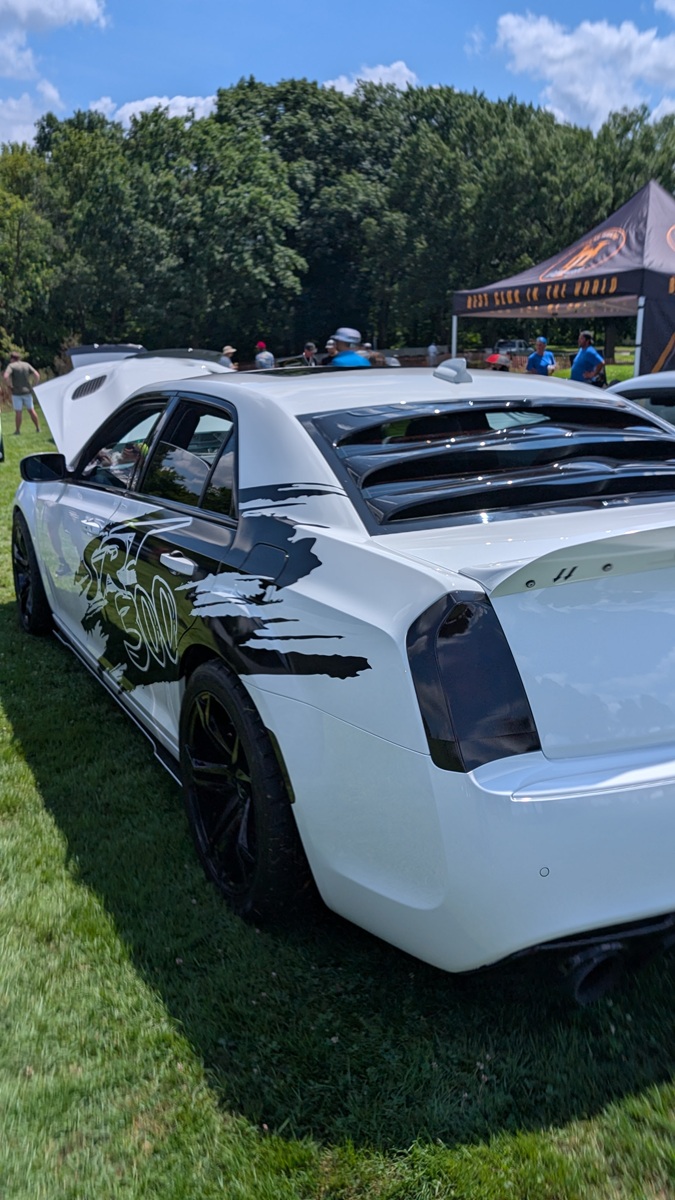
“Our club president has louvers on his Challenger, and I liked it,” Frank explains. “I had them on my Sundance before, and when I saw them available for the 300, I was like, ‘I’m doing it to be different from everybody else.'”
There it is again – that commitment to standing apart from the crowd while honoring the past. The louvers connect the 61-year timeline between his two 300s, a visual bridge across Chrysler’s evolution from massive C-bodies to modern muscle.
“The louvers were already gloss black, which majority of the accents on this car is all gloss black,” Frank continues. “So that’s why I went with the gloss rims and the graphics on the side.”
Everything has a reason. Everything connects to everything else. This isn’t random bolt-on syndrome; it’s thoughtful curation.
The only complaint Frank voices – and it’s minor – concerns the shifter. “I wish it had the shifters like the old SRT8, I would have been a bit happier,” he admits, “but I’ve gotten used to it.”
Frank’s dream hasn’t fully manifested yet, though. At a car show in West Virginia, he spotted a white 1957 300C – the first year of the 300 letter series – and immediately saw the potential for the ultimate collection: the first, the middle and the last – three generations of 300, spanning Chrysler’s flagship lineage from beginning to present.
“If I had the money, I would have the first year, middle one and the last one made,” Frank says. “Maybe that’s down the road.”
Call it a future endeavor. Call it a long-term goal. But seeing Frank’s patience and his commitment to the 300 platform, I wouldn’t bet against him completing that trio eventually.
Frank’s dedication to the 300 serves as a reminder that performance and style take many forms. The 300 has always been the alternative route, the road less traveled, the choice that makes other enthusiasts do a double-take and say, “Wait, that has how much horsepower?”
Frank has been answering that question for several decades, from push-button TorqueFlites to paddle-shifting eight-speeds, from 383 cubic inches to 392 cubic inches, from C-body elegance to LX-platform aggression. The nameplate changed, the technology evolved, the world moved forward – but Frank’s appreciation for what the 300 represents never wavered.
“I like your style,” I tell him as we wrap up our conversation.
Frank nods. He knows. He’s always known.
Some enthusiasts chase horsepower. Others chase rarity. Frank? He chased something more personal – a lineage of cars that spoke to him across decades, a nameplate that represented everything he valued about Mopar engineering. In doing so, he built a collection that bridges eras and proves that staying true to your vision, even when everyone around you zigs toward Challengers and Chargers, can create something truly special.
The 300 Club may be small, but with members like Frank, it’s definitely worth considering membership.
0 Comments