Celebrating Dodge//Mopar® Milestones in NHRA’s Past 75 Years – Part 2: The Sizzling ’70s
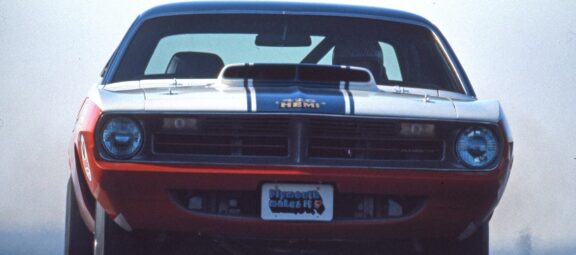
As the National Hot Rod Association (NHRA) entered the 1970s, its presence continued to grow. By 1970, their national event schedule had almost doubled, from four major races in 1969 to seven for 1970. Known as the “Super Season”, NHRA added more events with one being the final race of the year, dubbed the Hot Wheels “Supernationals”, held at the massive Ontario Motor Speedway, east of Los Angeles. 1970 also marked the introduction of a new class, Pro Stock. Chrysler’s 426 HEMI® engine dominated the first two years of Pro Stock before finally getting reeled in by the NHRA management enforcing stricter rules aimed at handicapping this mighty engine. Regardless of the car, class or engine, Mopar® racers would continue their winning ways throughout the 1970s and forever change NHRA history.
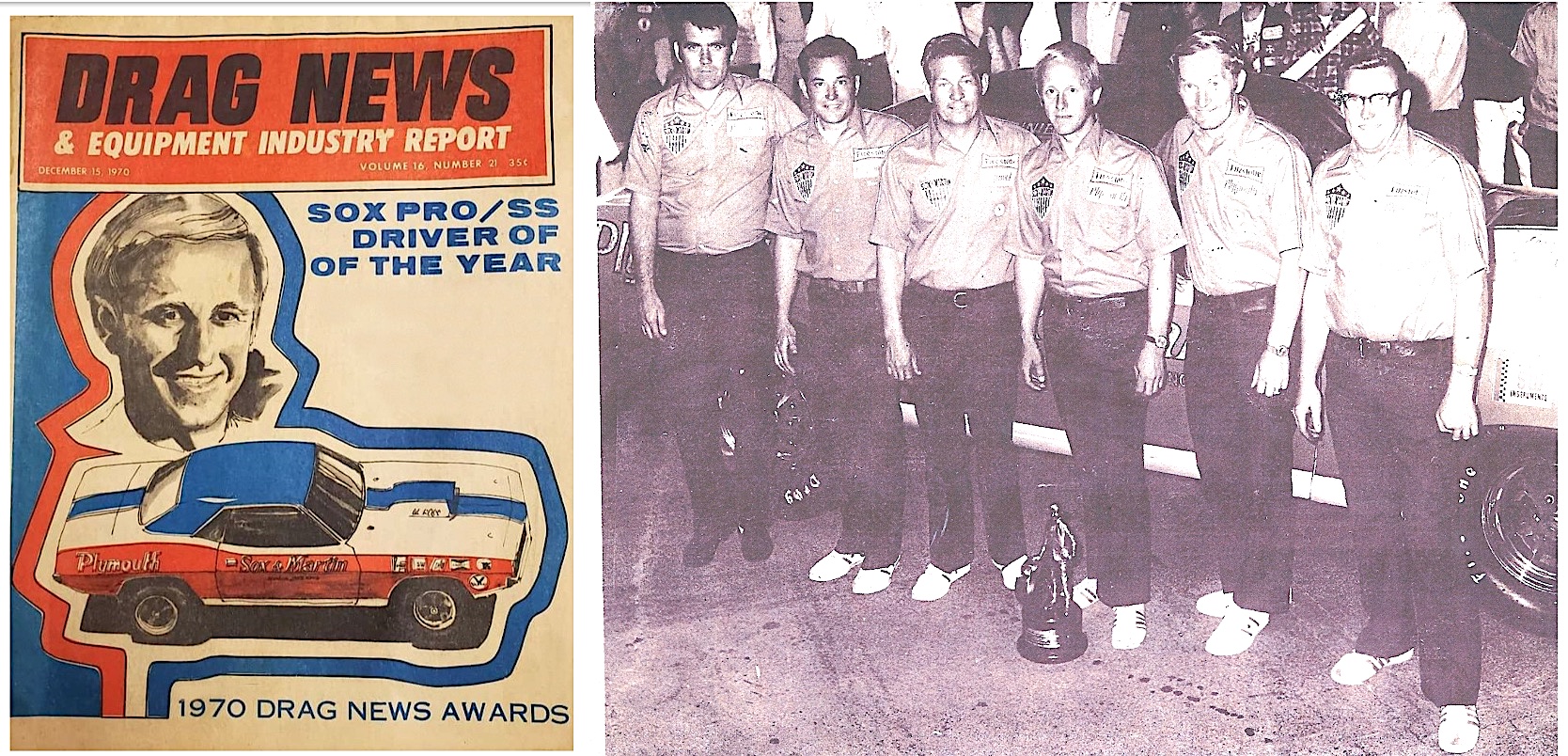
Despite stumbling at the first two races of the 1970 season, Sox & Martin came back with a vengeance and steamrolled the competition to claim the first-ever NHRA Pro Stock World Championship. With hot shoe driver Ronnie Sox, team manager Buddy Martin, and master engine builder Jake King, the team picked up right where they left off in 1969, winning races and championships. So dominant was Sox & Martin in 1970, NHRA would eventually change the points system, but also the rules governing HEMI engine-powered Pro Stockers. Despite this, Sox & Martin’s popularity continued well after the team officially disbanded at the end of the 1970s.
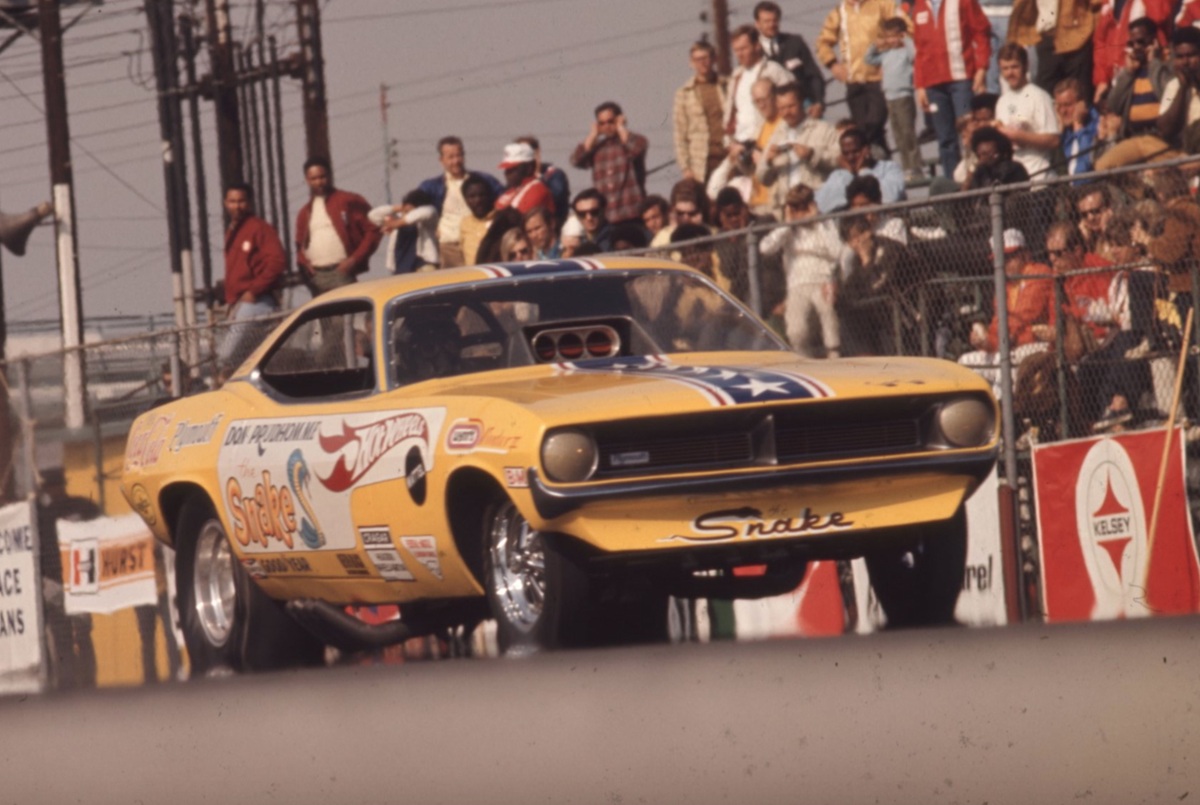
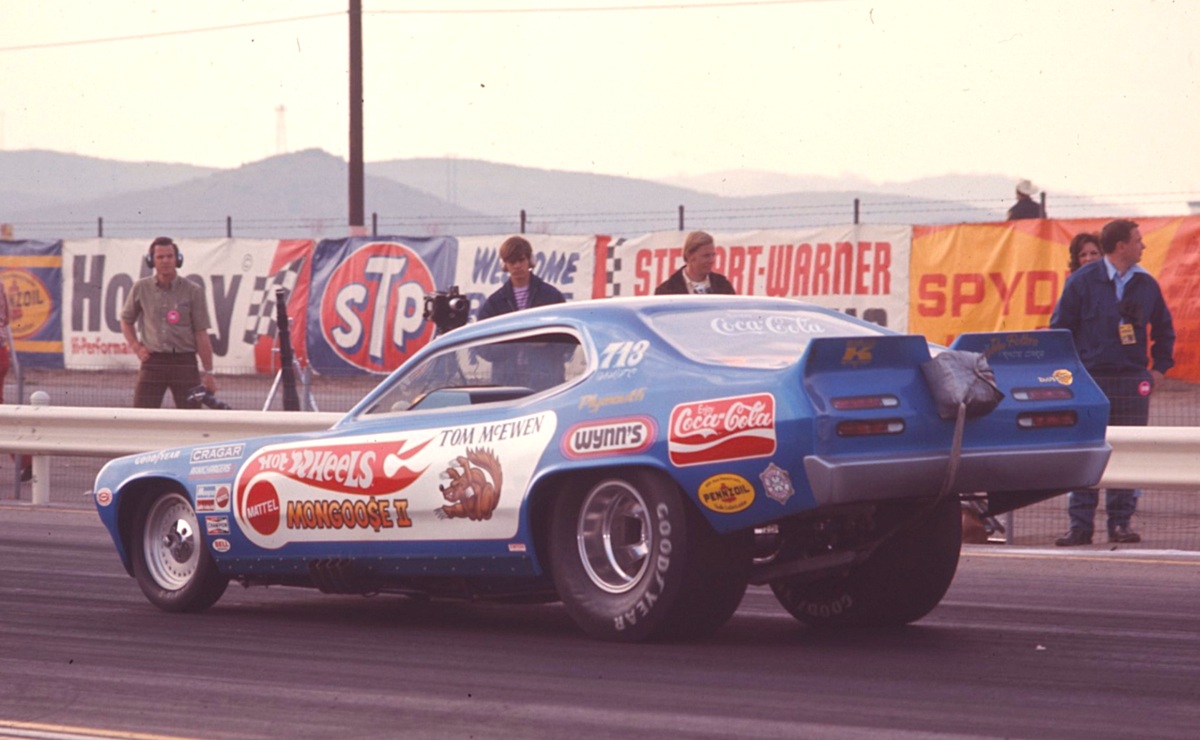
Toy maker Mattel increased its drag racing footprint in 1970 by extending its Hot Wheels sponsorship to Funny Cars. The larger body offered more space for branding than the skinny Top Fuel Dragsters, and Hot Wheels was ready to step it up. By partnering with Don “The Snake” Prudhomme’s Plymouth Barracuda and Tom “The Mongoose” McEwen’s Plymouth Duster, the Hot Wheels name became more widely known. Prudhomme and McEwen may have been friends off the track, but they became rivals once their helmets went on and their supercharged HEMI engines fired up. Throughout the early 1970s, Prudhomme and McEwen traveled the country competing at all the major NHRA events while “Snake and Mongoose” Hot Wheels toy sets went flying off the shelves and into the hands of youngsters. It was a perfect fit and set that benchmark for more major corporations to get involved in drag racing.
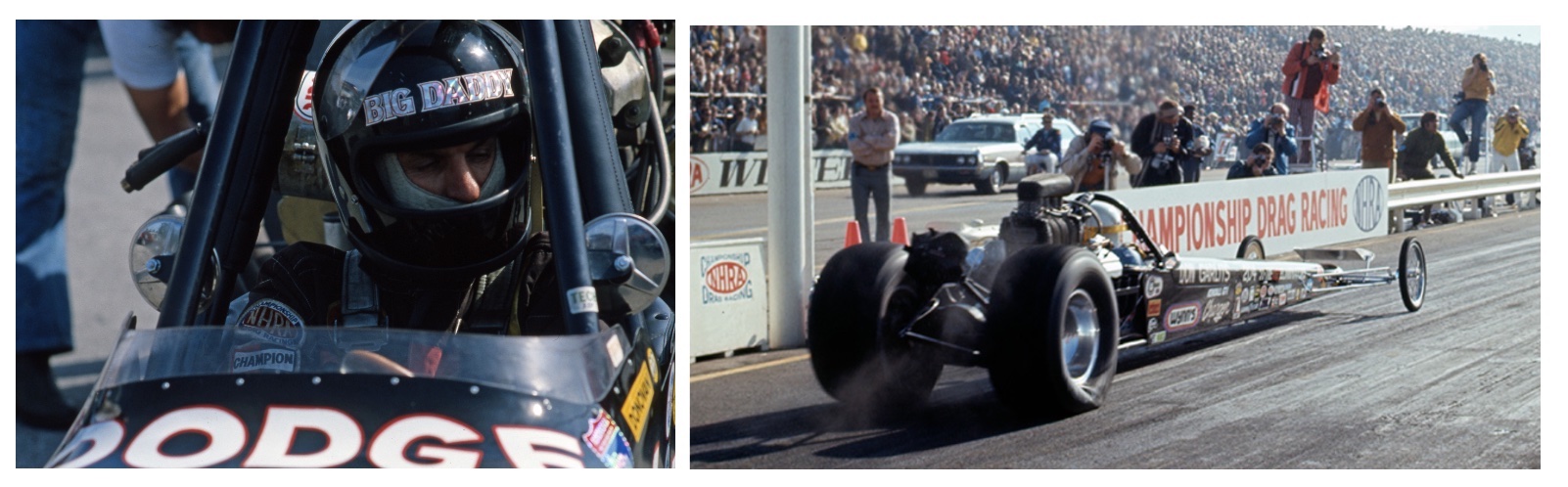
After suffering a near-fatal clutch explosion in the front engine in his 1970 “Swamp Rat 13” dragster at Lions Drag Strip, “Big Daddy” Don Garlits had a groundbreaking idea. While in the hospital with part of his right foot severed, Garlits had the idea to create the rear-engine dragster. It would handle better and be safer for drivers during an era of many crashes and accidents. Dubbed “Swamp Rat 14”, Garlits debuted his “revolutionary” rear engine HEMI-powered dragster at the 1971 NHRA Winternationals. While the rest of the Top Fuel field was packed with traditional front-engine dragsters, Garlits picked them off one-by-one. Within two years, every Top Fuel dragster had the engine behind the driver.
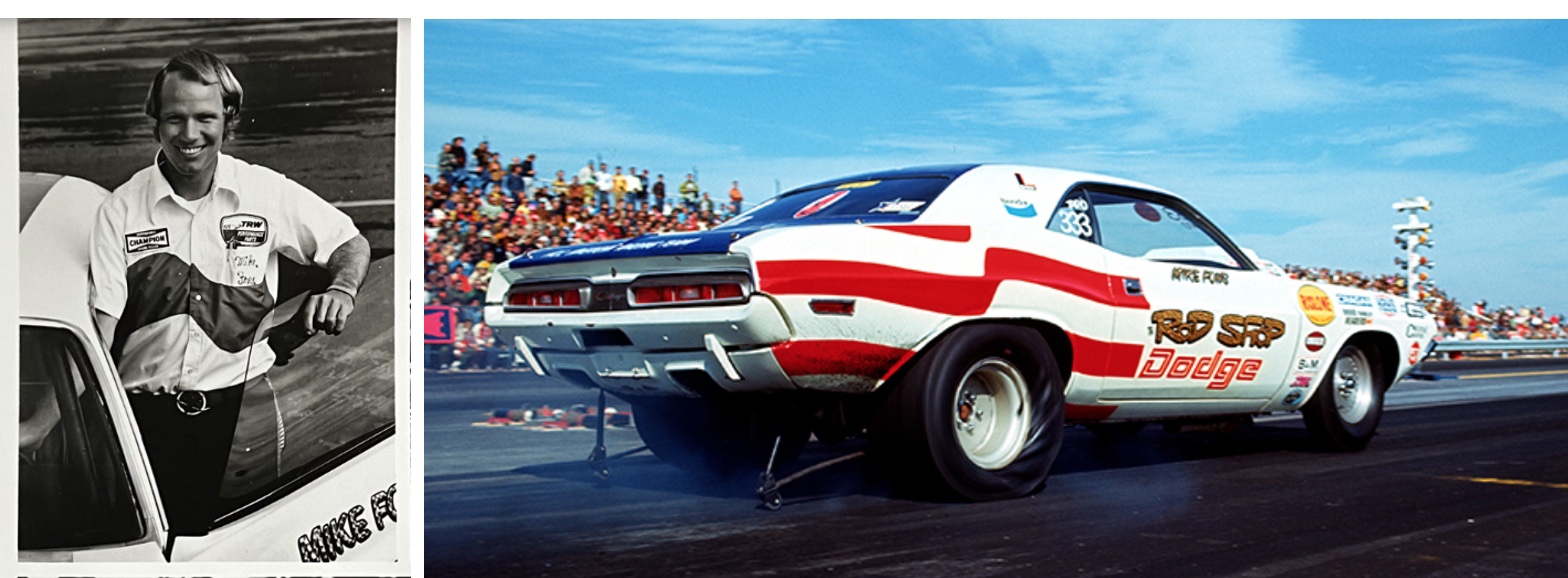
In a hard-fought season that showcased the Sox & Martin dominance in Pro Stock, team driver Ronnie Sox would not be crowned the World Champion. Despite Sox winning six of eight Pro Stock races in 1971, NHRA wanted to add more drama to their Pro classes. NHRA had now made it a “winner take all” format during their World Finals in Amarillo. The Challenger of Mike Fons was a very advanced racecar for the time with all the then-current technology. During eliminations, Fons stomped through a field of fast Pro Stockers that included Butch Leal, Ronnie Sox and Herb McCandless, where Fons ran a 10.05 to McCandless’ 10.40 in the finals. Fons would be crowned NHRA Pro Stock World Champion for 1971, but that victory ended the HEMI engine’s dominance in Pro Stock for decades.
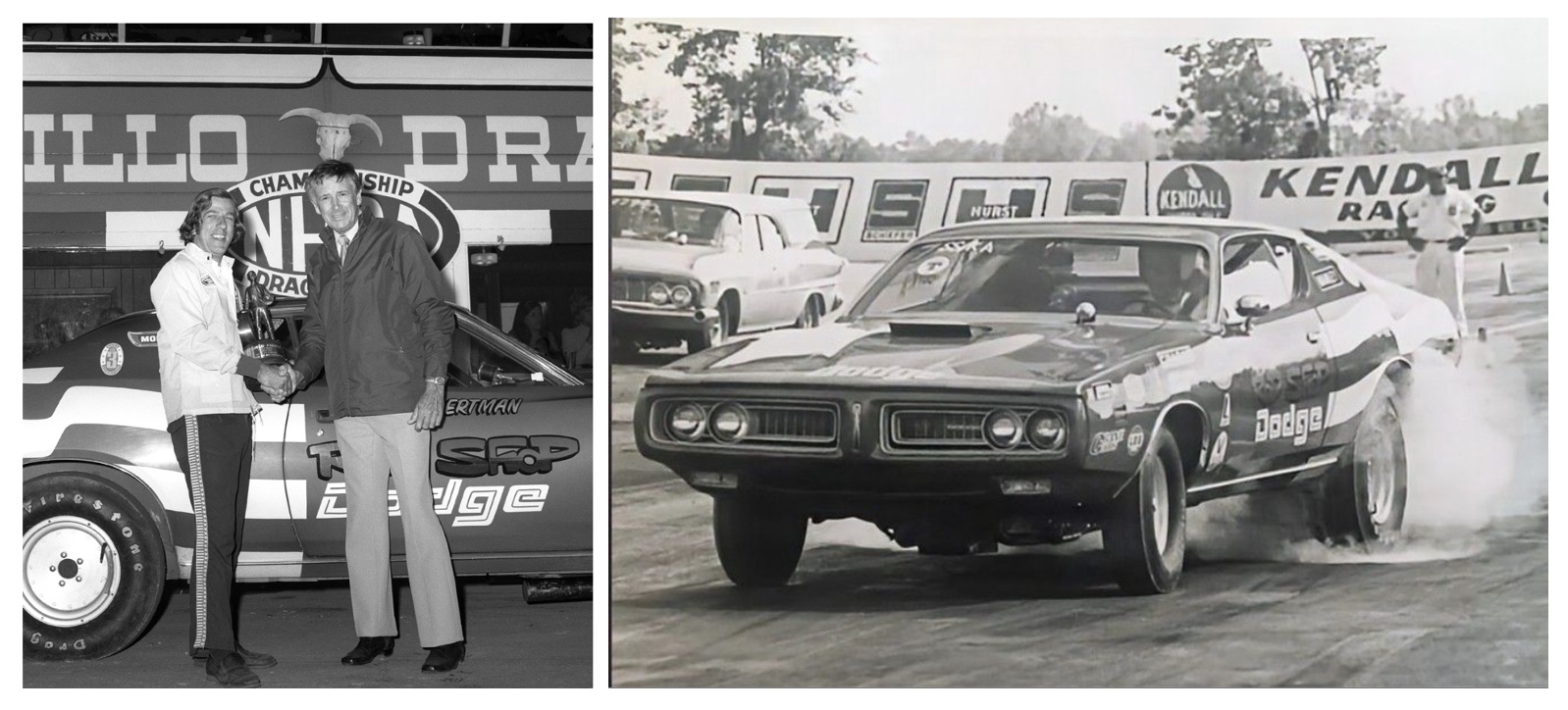
While a staunch competitor in the NHRA Stock Eliminator class and multi-time event winner in Dodge racecars, Dave Bortman’s class-winning 1971 Charger got bumped in Super Stock for the 1972 season. With minor engine upgrades to the 383 Magnum V8, Bortman’s Charger picked up where it left off. Bortman would win numerous divisional and national event races before winning the 1972 NHRA World Finals in Amarillo, thus securing the 1972 Super Stock World Championship for Dodge. Bortman would later replace his Charger with a tricked out 1971 Super Stock 383 Challenger and be one of the many faces of Mopar’s Direct Connection program during the mid-1970s.
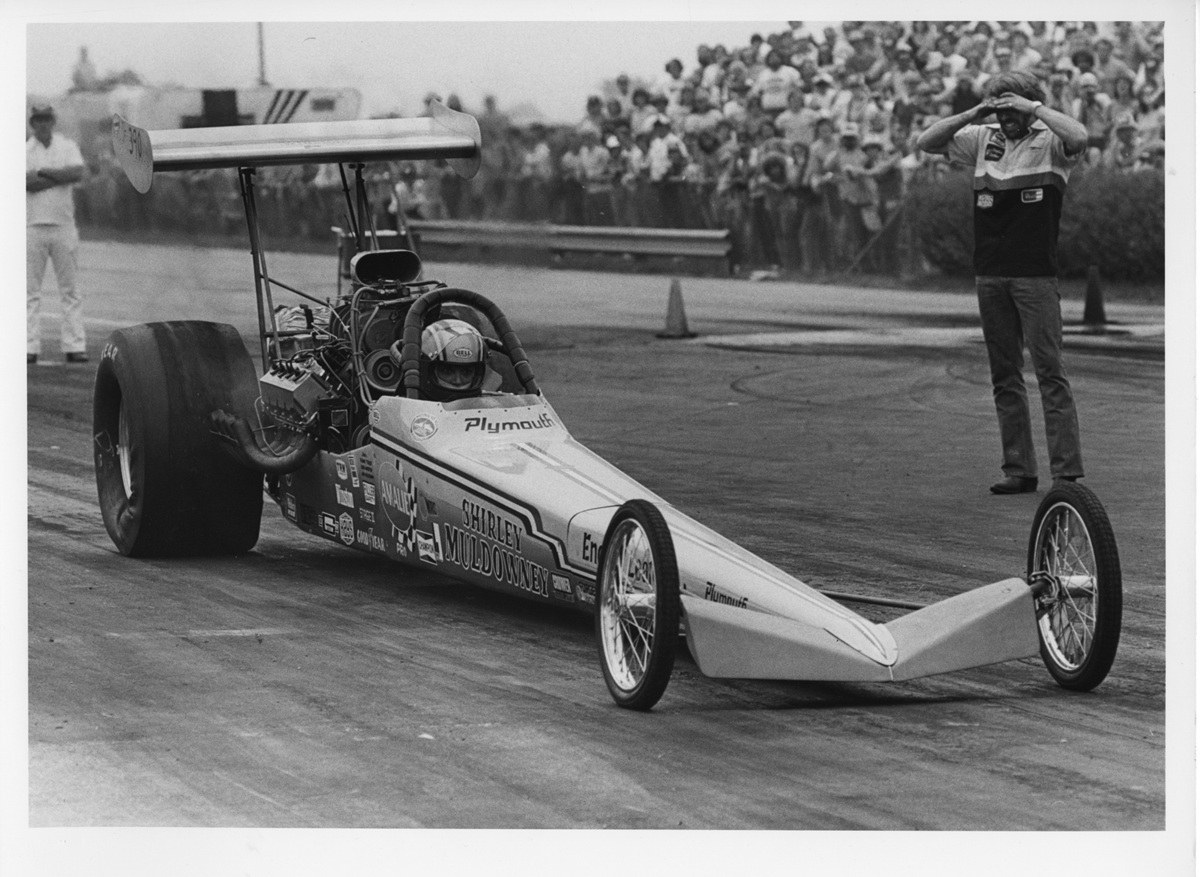
With the support of Chrysler’s Dodge, Plymouth and Direct Connection brands, Shirley Muldowney became the first female professional class national event winner. It was her breakthrough triumph in Top Fuel at the 1976 Springnationals in Columbus, Ohio, that changed the sport. No longer was Muldowney looked upon as a novelty, she outdrove and outmuscled the established drivers and teams in Top Fuel. Now her competition and fans viewed her with total respect and admiration. To show the racing world it was no fluke, Shirley Muldowney wasted no time claiming her next major accomplishment as she took home the NHRA Top Fuel World Champion title in 1977. With three straight wins that included Columbus, Englishtown and Montreal, her points total was more than 16 rounds ahead of her nearest competitor. Muldowney was a pioneer and a role model to the numerous female Top Fuel racers competing today, including Dodge’s own Leah Pruett.
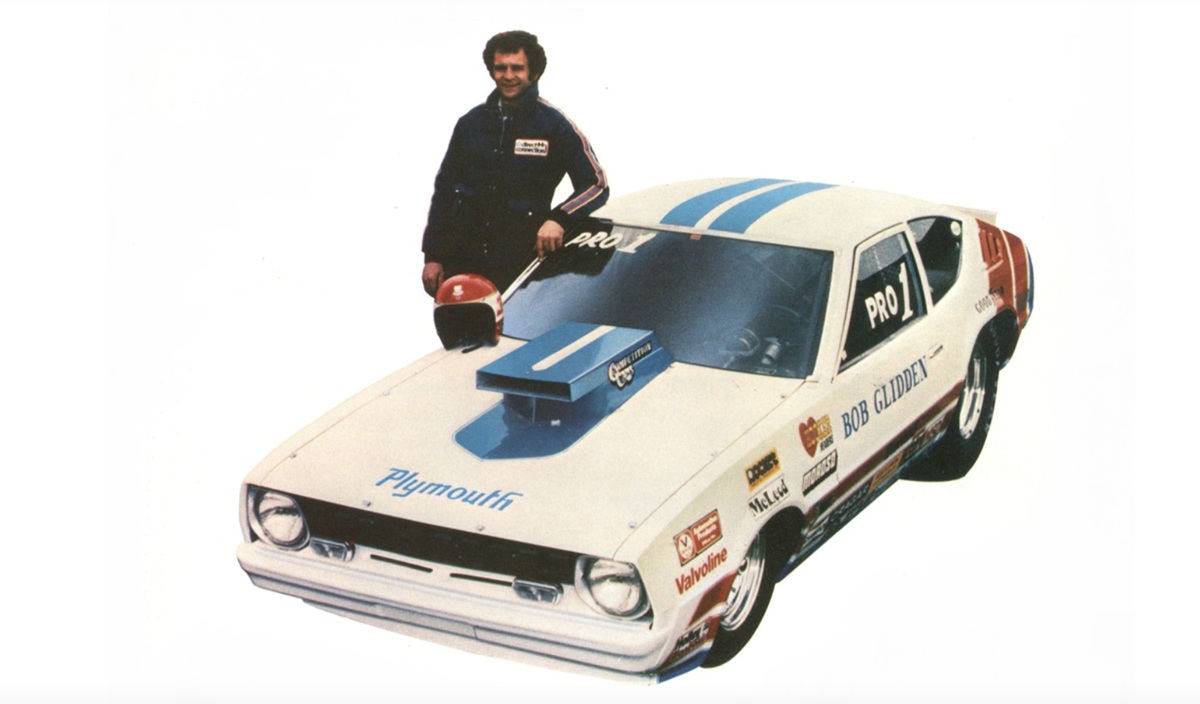
Longtime Ford racer Bob Glidden stepped out of the comfort of the Blue Oval and into the Mopar Direct Connection camp for 1979. His weapon was a Don Hardy-built Plymouth Arrow Pro Stocker powered by a small block displacing around 314 cubic inches that took advantage of the NHRA Pro Stock weight breaks. Bolted in the Arrow was a high-winding engine with Direct Connection’s new W-2 cylinder heads. Back then, NHRA’s Pro Stock rules favored lower displacement engines over the massive Chrysler HEMI and Chevy big block. Mopar wanted to show the drag racing community how strong their small block engine was and Glidden was the racer to do that. Built with Direct Connection parts, Glidden’s Plymouth Arrow wasted no time beating the competition and won seven NHRA national events in 1979. Glidden’s Arrow won the Winternationals, Gatornationals, Cajun Nationals, Springnationals, Grandnationals, U.S. Nationals and the World Finals. Despite the success, the marriage between Mopar and Glidden was short lived as he went back to Ford in 1980.
NHRA had grown in the 1970s, but for Chrysler, major budget cutbacks for their drag racing programs were coming for the 1980s. In the next chapter, we’ll look at the struggles and the highpoints in the new era defined by Reaganomics, the collapse of the Soviet Union and the start of the digital age.
0 Comments