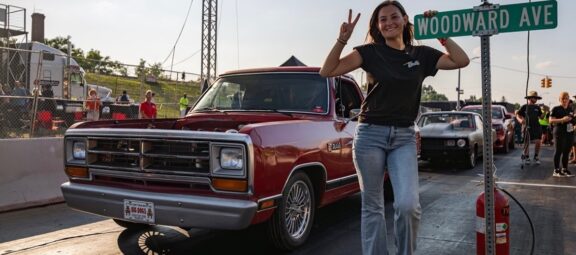
Born to Build, Called to Race
Some people find cars. Morgan Evans never had to look. Born into a family where engines were always running and something was always being built, she grew up at Orlando Speed World, strapped into a car seat while her dad occasionally put his foot down just enough to make her giggle. The first words out of her mouth, as the family tells it? “Go faster.”
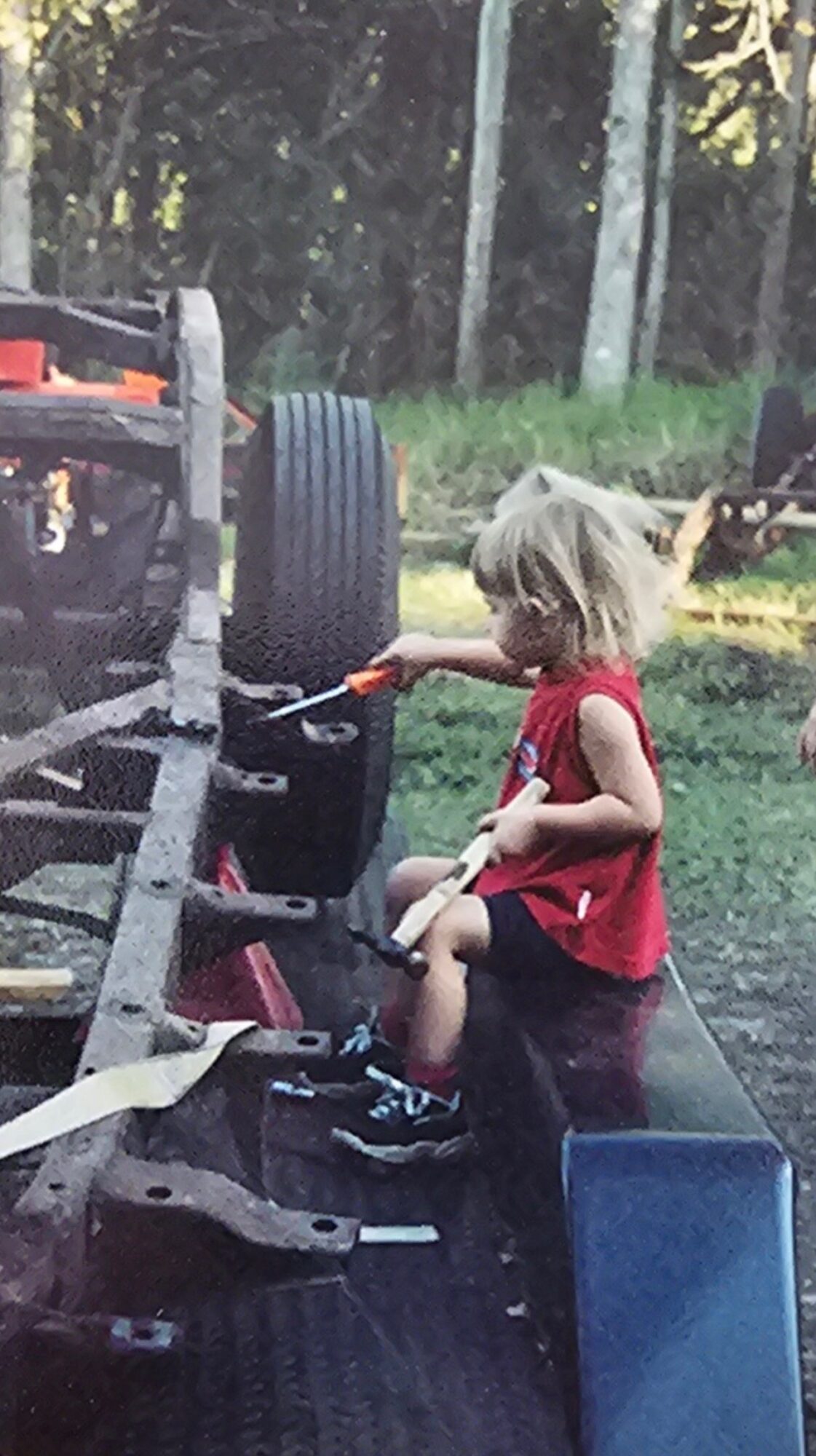
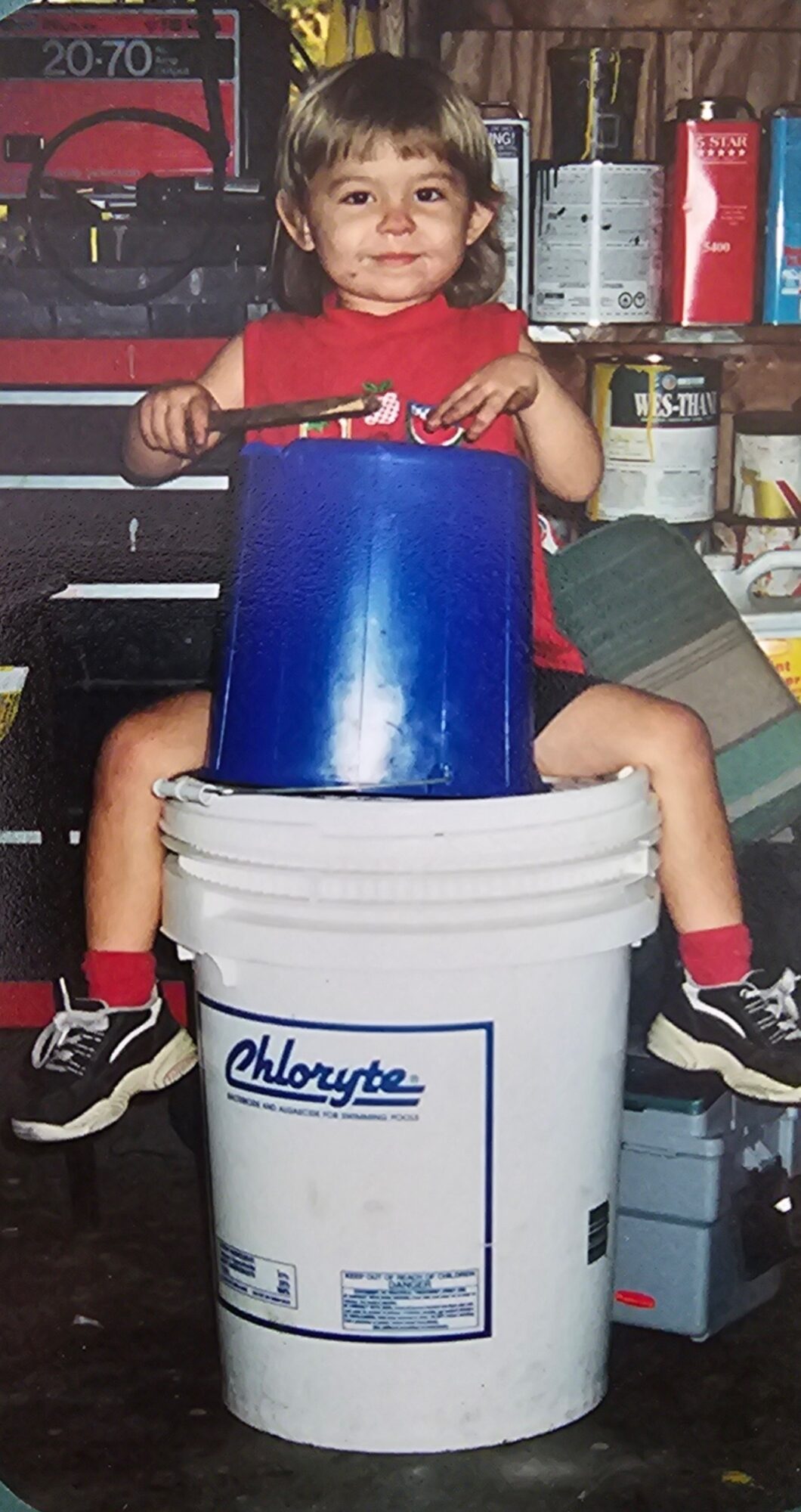
“I was pretty much doomed from the start,” Evans says with a laugh. “My dad, my mom, my grandpa on both sides – everybody had pretty much every kind of vehicle you could think of. They were always building something, always racing. I grew up at the track. It’s just in my blood.”
That blood runs deep. In the late 1990s and early 2000s, a young Morgan, somewhere between 4 and 6 years old, was tagging along with her family to weekly Wednesday night car meets at a local burger joint. The parking lot was a rolling car show, and the surrounding streets were alive with people enjoying their cars and bench racing. For a kid already hardwired for horsepower, it was sensory overload in the best possible way.
“It was mind-blowing for me as a kid,” she recalls. “People were doing burnouts, having fun. It was just a very cool environment to grow up in.”
Her very first project car, she admits with endearing honesty, was a Japanese sport compact. “I learned a bunch of lessons with that car.” That experience, and the education in forced-induction platforms that came with it, would prove surprisingly useful down the road. But first, there was content to create.
About five or six years ago, Evans started building a social media presence around a different import build. A rear-wheel-drive platform running its factory four-cylinder tuned to roughly 700 horsepower. “Building and tuning are things that always came naturally to me,” she explains. “Even when I was younger with little disposable cameras, I always wanted to document vehicles I was building.” She started with photos on Instagram, and when Reels launched, she posted a simple time-lapse of a starter swap. It blew up. The content creation snowball was rolling.
Here’s where Morgan Evans’ story takes a turn that even she didn’t see coming.
By 2024, she had built her Instagram following to around 75,000. She and her fiancé, Jason, had swapped engines between their 240s; she took his VK56 Titan V8, and he took her KA, as Jason had gotten back into drag racing and eventually ran eights with his car. Morgan served as his crew chief, soaking up every detail of how a drag strip works, how to get a car to launch hard and straight consistently, and how a pass down the drag strip comes together. She knew the process inside and out. But… she just couldn’t bring herself to do it.
“I was always too scared to rip that Band-Aid off,” she admits. “I’d been around racing my entire life. I knew what to do. But the fear of actually getting up there myself, there’s a lot of pressure, a lot going on. I just couldn’t do it.”
Then, she received a message: “Hey, what’s your phone number? Someone I know at Dodge has an opportunity they want to talk to you about.” Evans thought she’d been hacked. She had no Mopar® content. No Dodge affiliation. Nothing that screamed “Call this person about a factory crate engine program.” Despite all of that, her contact info was passed on, and when Dodge called, the offer was staggering: they wanted her to be among the first builders to receive the new Hurricane inline-six platform for Roadkill Nights 2024.
“It was a once-in-a-lifetime phone call,” Morgan says. “And I recognized it in the moment. I was like, I gotta figure it out.”
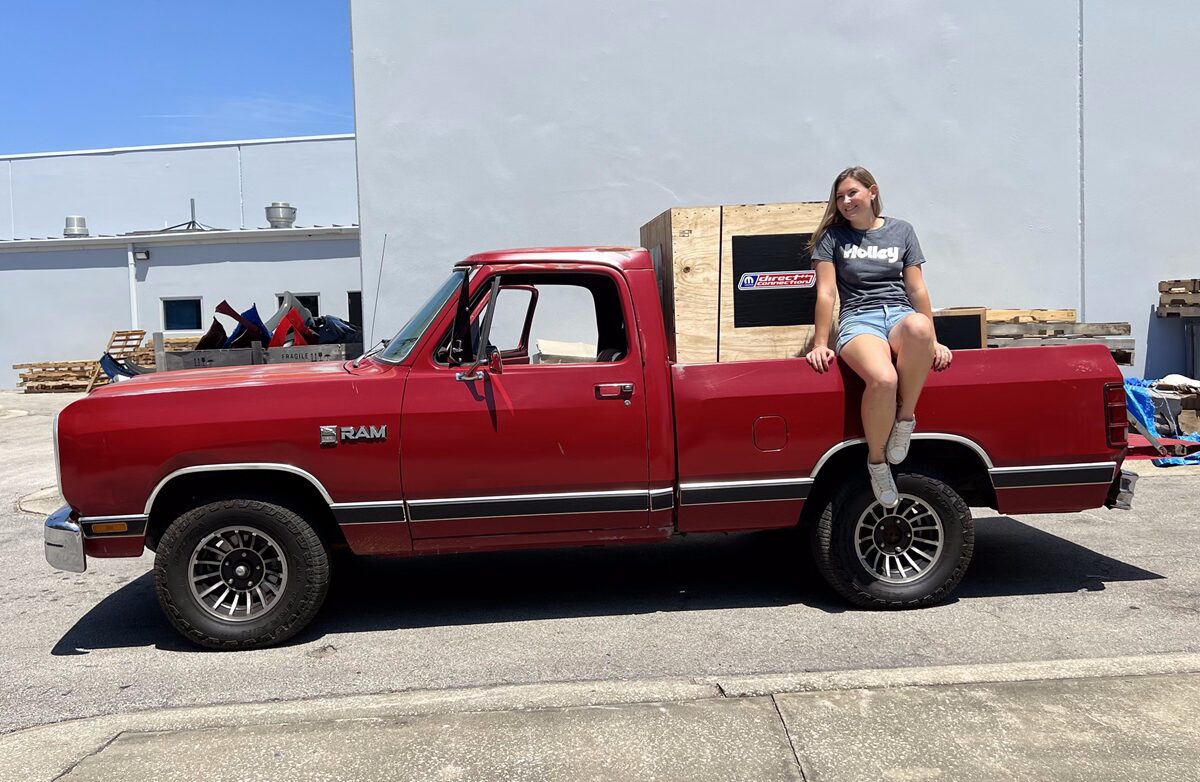
Morgan and Jason had already been wanting to build a D-series pickup. Old trucks are their thing, square bodies, OBS trucks, the kind of iron that reminds you where American muscle started. So when Dodge called, they knew exactly what to drop the Hurricane into. It was time to get serious with a D150!
The Hurricane, it turns out, is not a tiny engine. It was physically larger than they expected. Thankfully, a full-size pickup gave them room to work. Every bit of fabrication, motor mounts, transmission mounts and the full front-to-back integration was done in-house. The trans tunnel got “massaged” with a hammer. The truck itself stayed remarkably close to stock, and they built the whole thing in approximately 47 days.
The package from Dodge included the Hurricane engine, a transmission and a MoTeC ECU with a custom harness, necessary because the factory ECU couldn’t support the dual direct-injection setup. For that first year, the MoTeC unit was locked. Dodge handled the tuning, bumping output from the factory’s roughly 550 flywheel horsepower to approximately 620. Evans couldn’t touch the tune. She just had to drive.
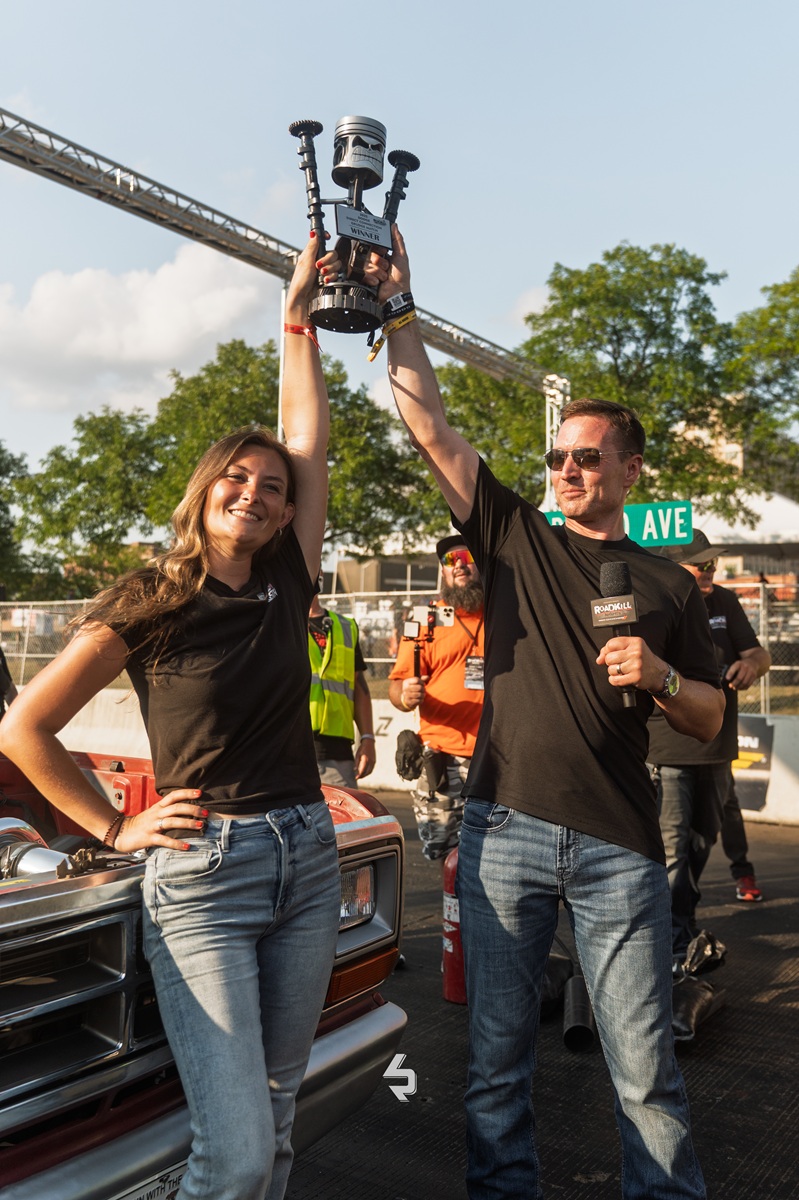
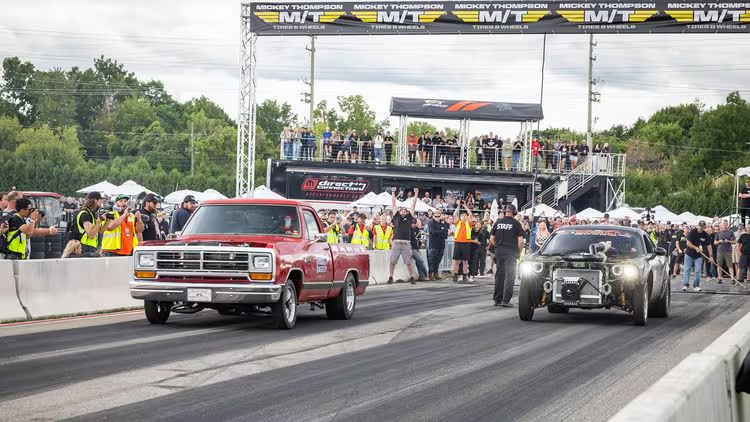
The numbers tell a story of relentless evolution. When Evans first took the D150 to the track with its original 318, it ran a 19.70-something in the quarter-mile. Completely stock, completely slow, completely fine for a starting point. With the Hurricane in locked-tune form, the truck clicked off a best of 10.11 at 131 mph. Impressive for a full-size pickup. But Evans and Jason were just getting started. Rolling up to Roadkill and winning your first time out is a rather solid way to kick things off on the drag strip!
When Dodge invited them back for Roadkill Nights 2025 and unlocked the MoTeC ECU, the real fun began. The modifications are surprisingly focused: they converted to a single Precision 6870 turbo, modified the top tank of the stock intercooler for a single charge pipe and spent countless hours on the dyno tuning the MoTeC. The factory intercooler, intake and fuel system remain. The rev limiter sits at 6,800 RPM, and Evans doesn’t see any reason to spin the Hurricane higher, “Discretion is the better part of engine longevity,” she says.
The chassis is equally straightforward: split mono-leaf springs, a Panhard bar, quality shocks and coilovers up front, and an upgraded cage for safety as speeds climbed. No back-halving. No exotic suspension geometry. Just a leaf-spring truck that hooks and goes straight pass after pass.
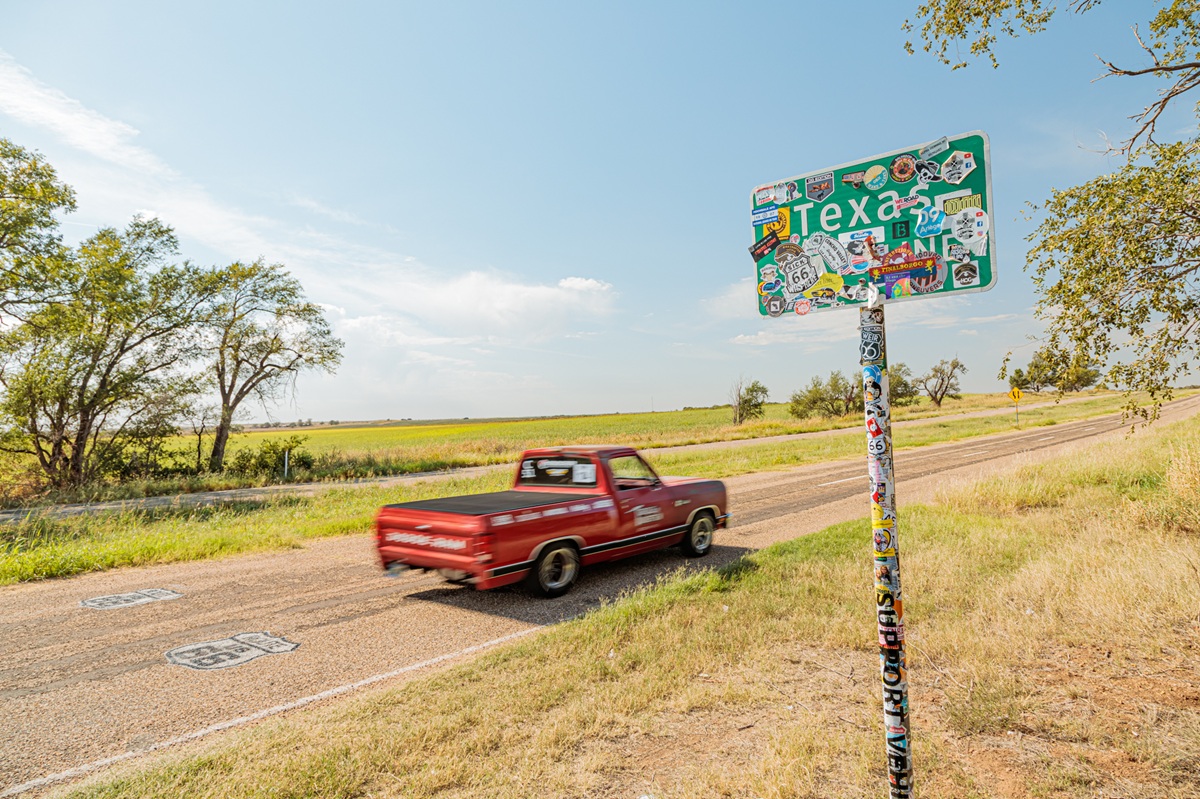
The result? Eight-second quarter-mile passes in a full-size Dodge D150 pickup truck. In two years, Evans more than cut the truck’s original ET in half. She also won Roadkill Nights a second time, and the truck now has nearly 9,000 miles on it from drag-and-drive events across the country.
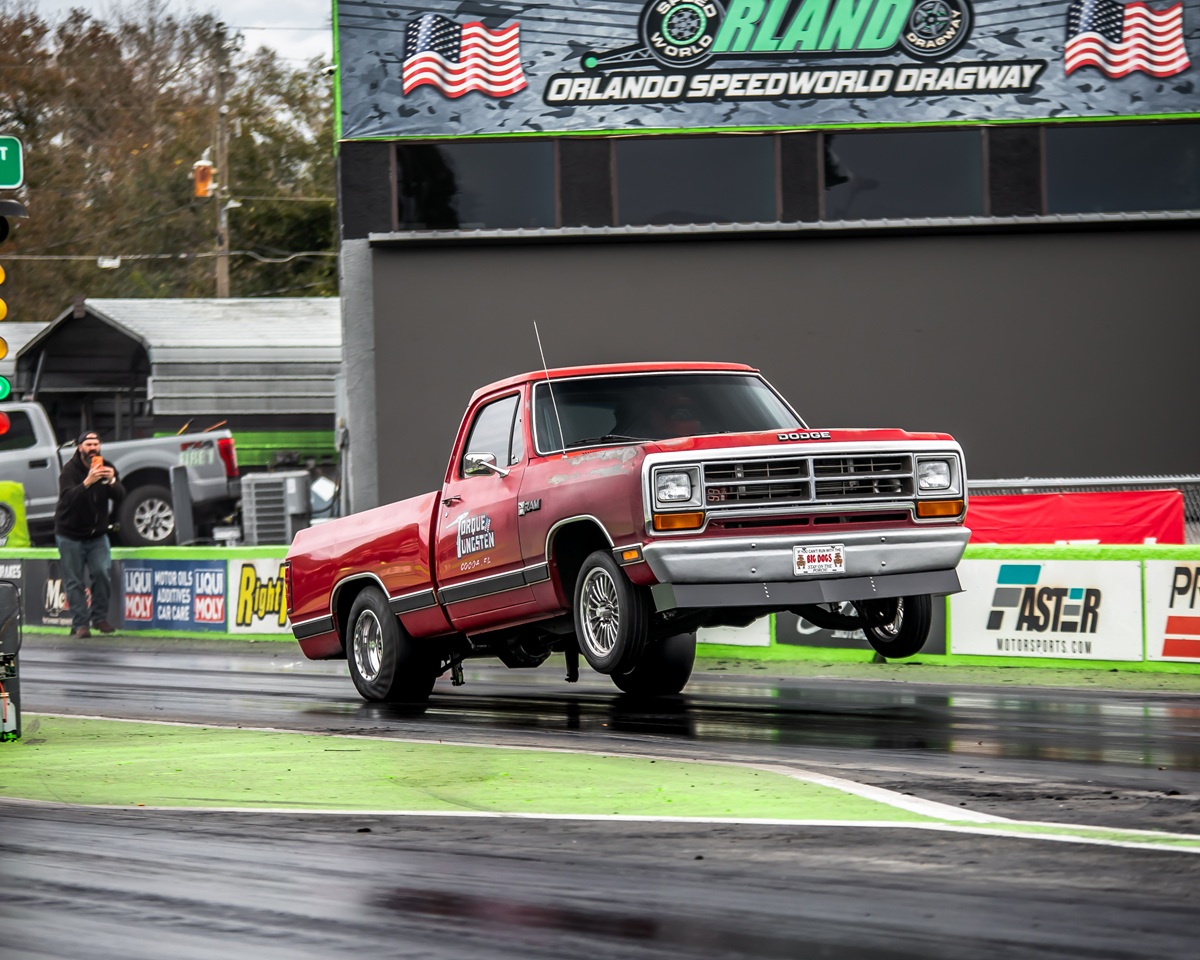
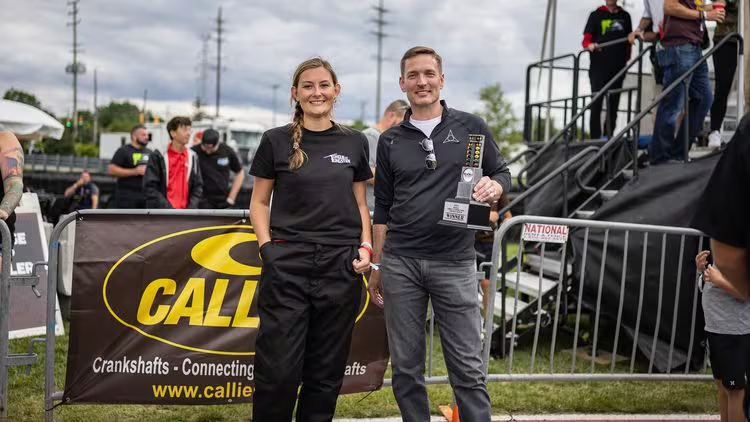
Evans’ path into the Dodge Badassador program was as unconventional as the rest of her story. She was in the middle of building the D150 for her second Roadkill Nights appearance and couldn’t break away from the commitment. After winning Roadkill Nights 2025, Dodge called her directly and asked her to join. By that point, she’d already proven what she and the Hurricane could do.
Evans knows where the limits are, or at least where they start to appear. Pushing a full-size pickup truck past 850 horsepower means fighting aerodynamics that were never designed for high speeds. The gains become exponentially harder. Shaving tenths off your ET gets infinitely more difficult the faster you go and requires huge leaps in power and risk.
But she’s not done. She believes deeply in the Hurricane platform and sees herself and Jason as pioneers charting new territory for this engine’s deserved place in the aftermarket. They came from a four-cylinder turbo background before falling in love with V8s, so the inline-six Hurricane feels like the perfect convergence of both worlds.
“A lot of people are skeptical about the Hurricane because it’s not a HEMI®,” Evans acknowledges. “But I want to get out there and show people its potential. Inline sixes are notoriously capable of making solid HP and are reliable. This platform is incredibly capable. We’re paving the way, and that’s exciting.”
When asked where she sees all of this going, Evans pauses. Not because she doesn’t know, but because the trajectory has already outpaced anything she could have imagined. Three years ago, she was too anxious to make a pass. Now she routinely runs eights in a vintage Dodge pickup on tracks across the country, builds content for a growing audience and represents one of the most storied brands in American performance.
“I just want to keep on the same path,” she says. “This is a dream for both of us. I’ll keep racing. I’ll keep pushing the truck. We’ll probably find those limits. But that’s all part of the fun.”
She laughs, then adds the kind of quiet realization that only comes from someone still catching up to the life they did not see coming: “I’ve evolved as the truck has evolved. If you’d asked me three years ago if I thought I’d be where I am today, I would have said no way.”
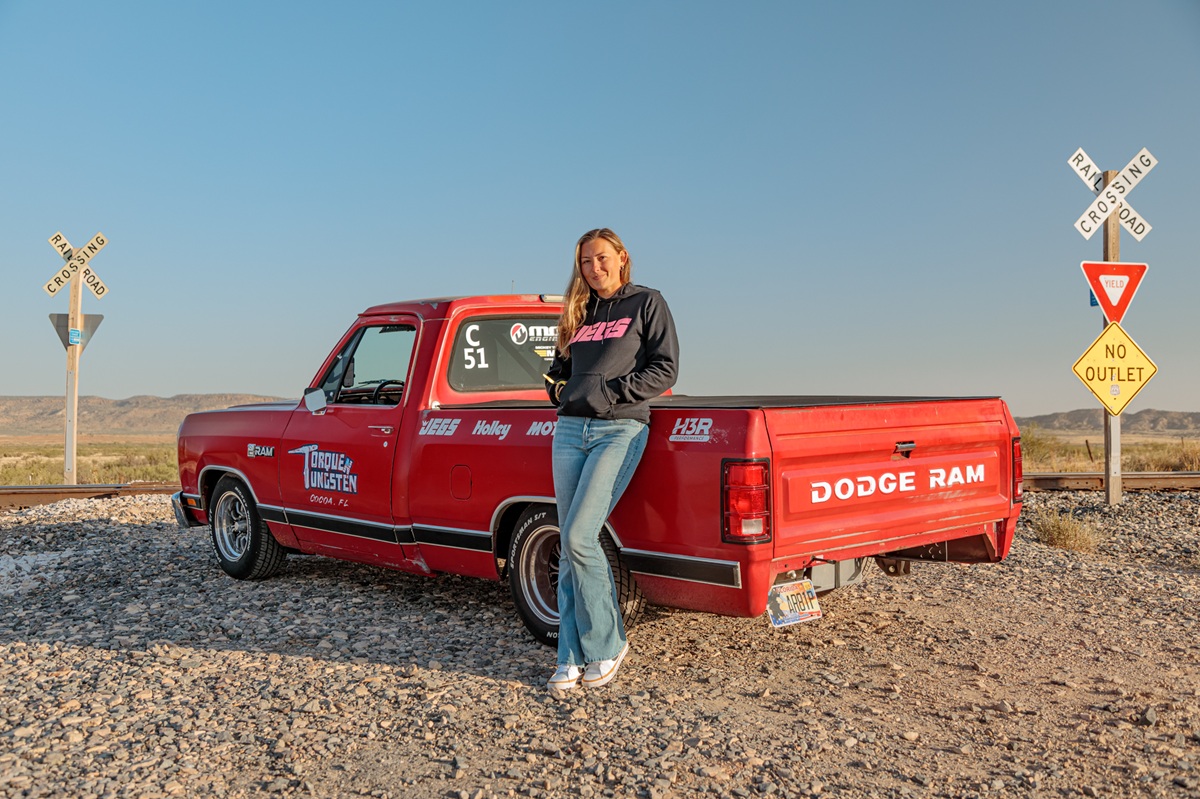
No way, indeed. But here she is, born into the life, built for the moment and just getting started!
0 Comments