The Story of Dodge Creating the New 1970 Challenger
It was September 23, 1969, when Dodge dealerships across the country released their new Challenger line to the public, a “pony car” for the 1970 model year. This car was built to compete with the large number already on the market from other car manufacturers, Mustang, Camaro, Firebird, Cougar, Javelin. Inside the Chrysler Corporation board room, these cars, which were known as “compact specialty cars,” were the hot topic! The division wanted in on the post car action. During late 1966, when all the sales projections were being calculated, it seemed as though the future was very bright for Dodge to jump into this field.
Dodge designers used the Mercury Cougar as a comparison model during the early clay mock-up stages, as this new-sized Dodge was to be positioned in the marketplace as an up-market vehicle in the pony car category. By the time the Dodge car was to come to light to compete with the others, the pony car was already into its second generation (larger ’67 Mustang) and even early on, the designers knew there had to be room for the biggest of the Mopar® engines, the 440 and the 426 HEMI® engines.
WIDE DESIGN
“The big block in the E-body was required to be competitive from an image standpoint,” recalled Robert Cahill, who was high up in the performance division of the corporation. “But also because we were pursuing performance in every car line.”
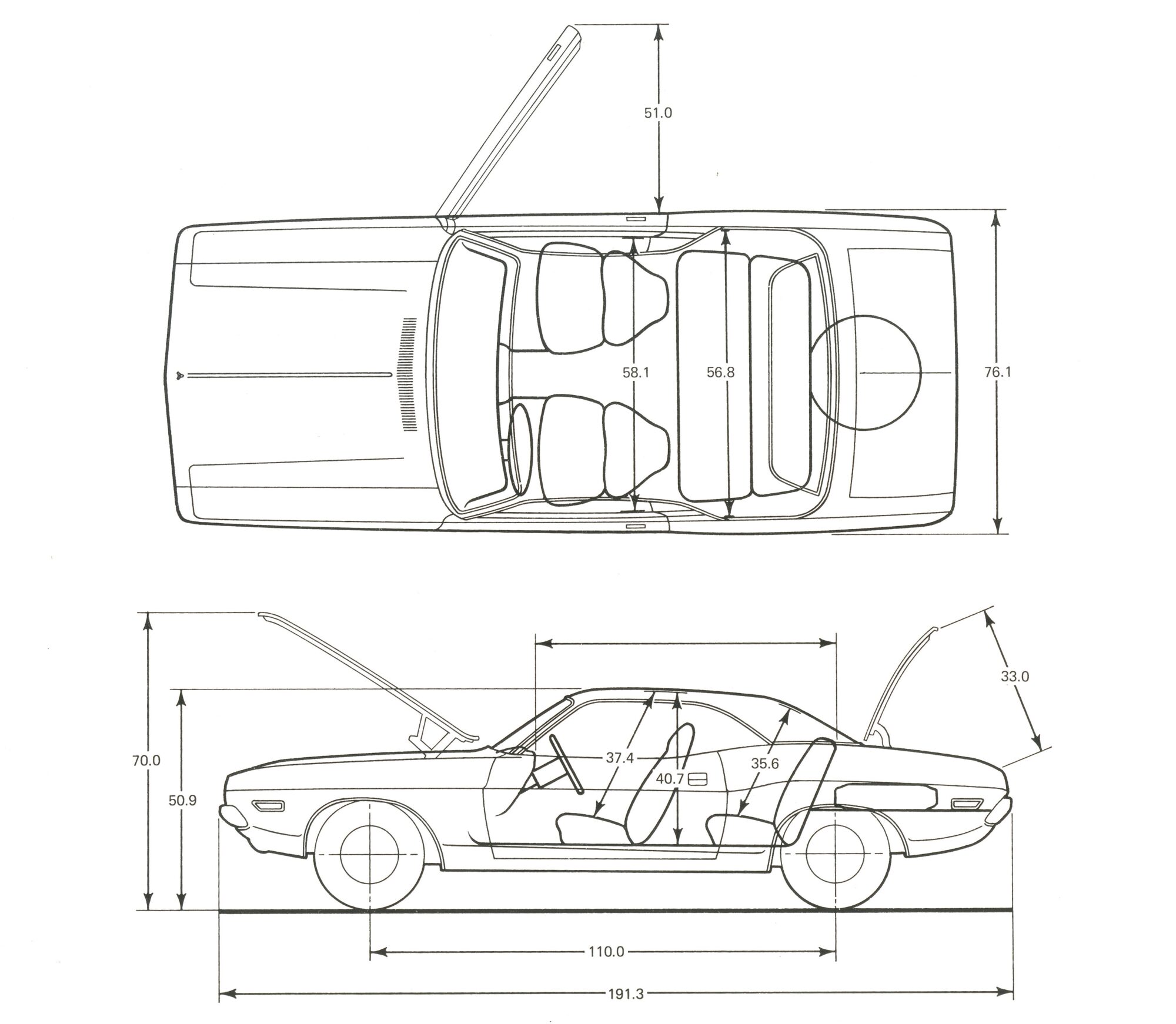
There were big plans for this new machine in Highland Park; however, there was not a budget for a completely new platform to be used front to rear. With that restriction, the Dodge pony car was to incorporate the B-body “engine box” which could fit any engine. Wheelbase was set at 110 inches and the Coronet/Charger rear suspension layout was used. “We didn’t want the risk the car being perceived as a derivative of a compact car,” said Dodge Exterior Studio boss Chuck Mitchell. The compact Dart had an 111-inch wheelbase and B-body cars were 117 inches, meaning the new Challenger clearly had a never-been-seen-before size from Dodge, and new underpinnings for this new E-body platform were designed to conform to the wide front subframe and new wheelbase.
Chrysler’s top styling boss was Elwood Engle at the time and he liked the Dodge styling studio’s long, low look that had been the starting base for the new car. The Dodge stylists had a free hand to do what they were doing. Long hood, short deck were the proportions. However, during the clay modeling of the car, there was a certain sticking point that came up with the various outer skin design themes that were proposed. Somehow the sides of the car were not coming along as desired. Even though the A-pillar posts and critical packaging dimensions were established, something else was needed.
STYLED CHARACTER LINE
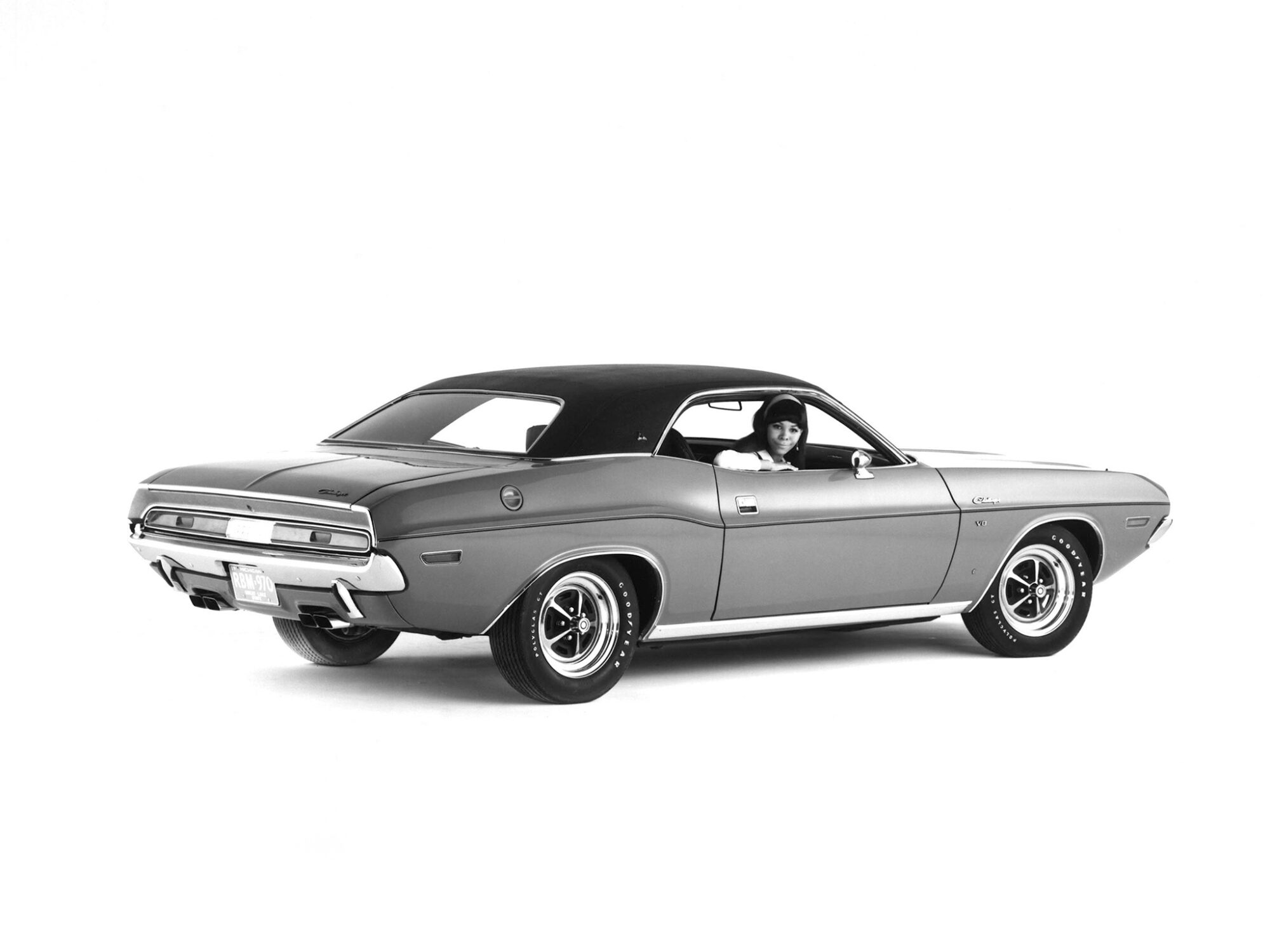
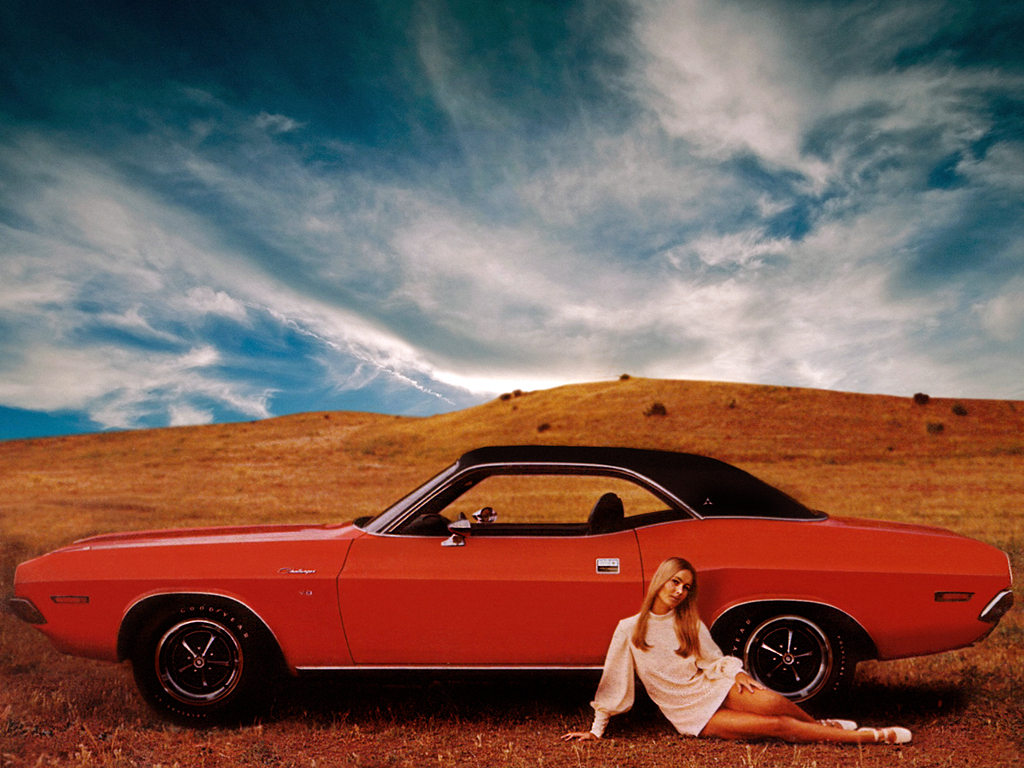
“I recognized the studio was having trouble,” recalled Dodge Design Studio boss Bob Brownlie. “It was my habit to keep a number of ideas in my hip pocket for such occasions. One weekend, I created sketches of what I thought would be the design theme for the new car. On Monday, I got one of our modelers to rough the idea in, and Elwood loved it. The car needed a long line front to rear. The kick-up aft of the door emphasizes the rear view.” The bodyside character line and with the manner that it raises up and over the rear wheel openings, echoes the profile of the upper beltline of the car. This simple but striking addition was something then, and now, that is seen as a true work of art by Dodge Challenger admirers. The finished design included the metalwork that saw the flaring out of the character line, slightly widening the car, which added a pleasant sculptured design ingredient.
CREATIVELY SHAPED SHEET METAL
A styling trick took place on the lower sides of the body, a way to create the illusion that helped make the car look smaller, hiding the mass of the car. The sheet metal was formed to “tuck in” starting below the center area of the sides, below the character line, and continuing to the rocker panel. This tucking in was done on the front overhang, between the wheel openings, and lower rear quarter panels. No matter what angle the car is viewed from, the effect takes place.
DISTINCTIVE FRONT END
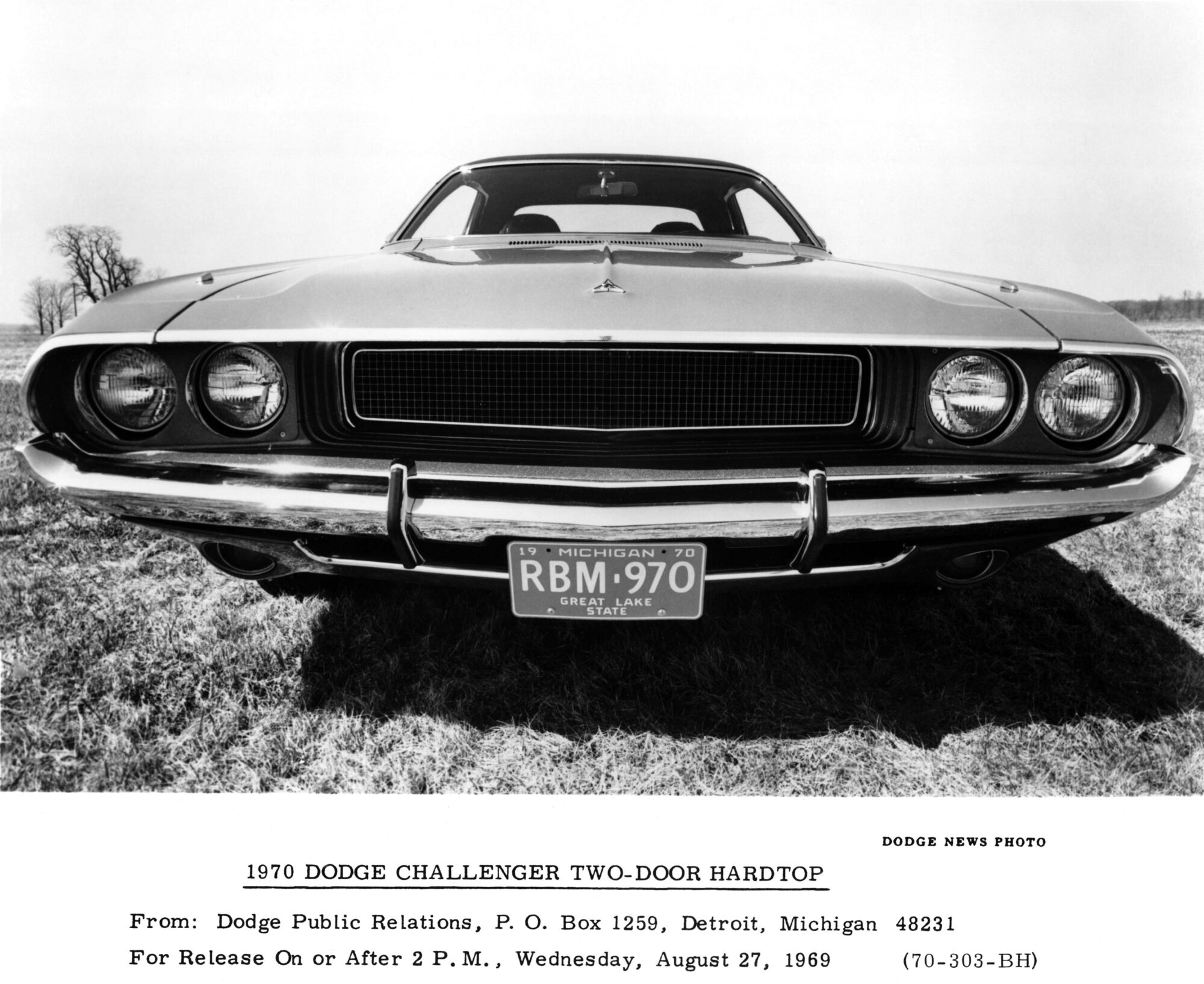
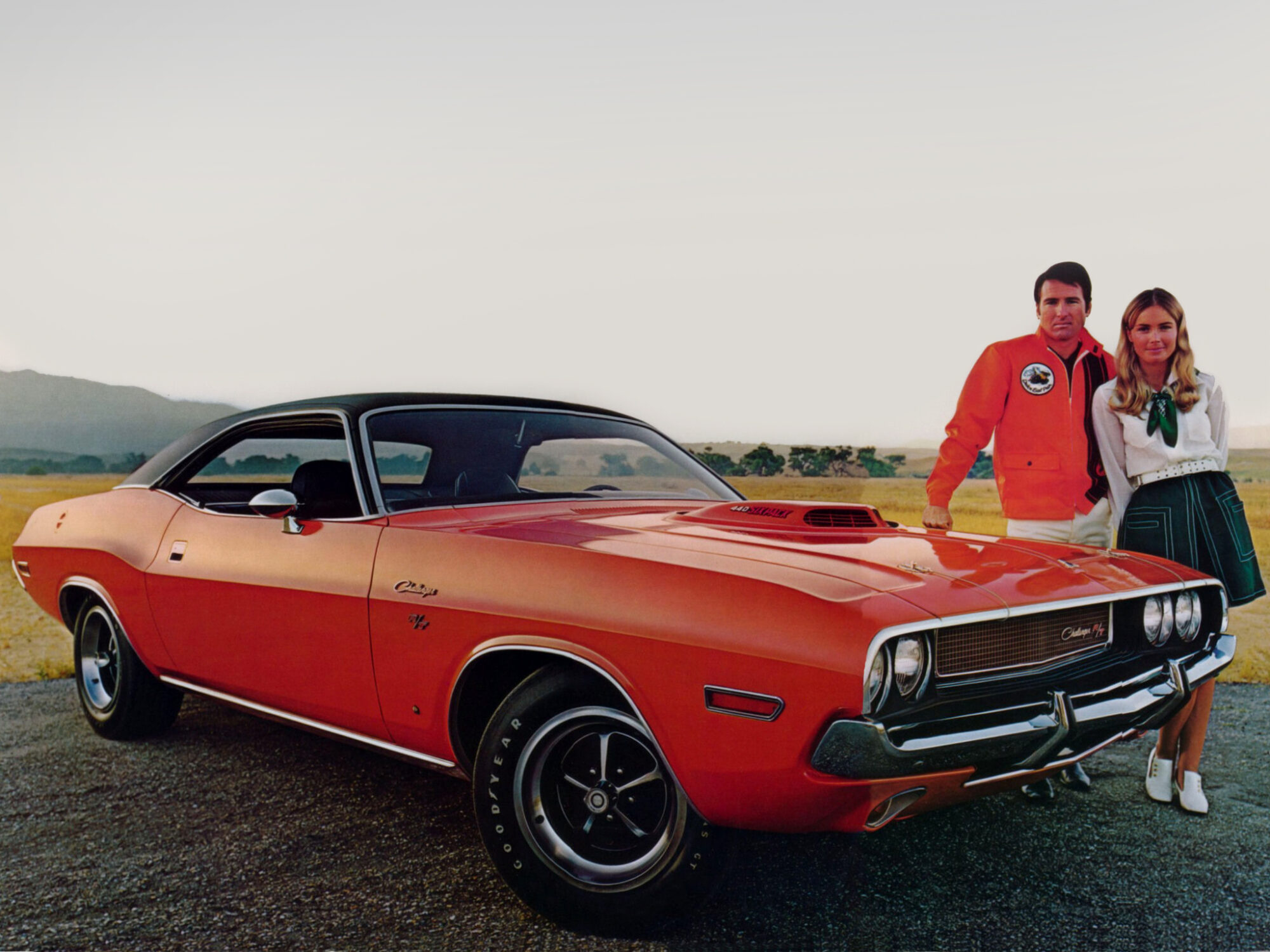
Up front dual headlights were deeply recessed into a cavity where the grille opening was centrally positioned. Dodge studio designer Carl Cameron described it: “The use of smaller quad lamps allowed the front end to be kept low, accentuating the ‘intake’ effect. Engineering saw the size of the actual grille opening as a problem.”
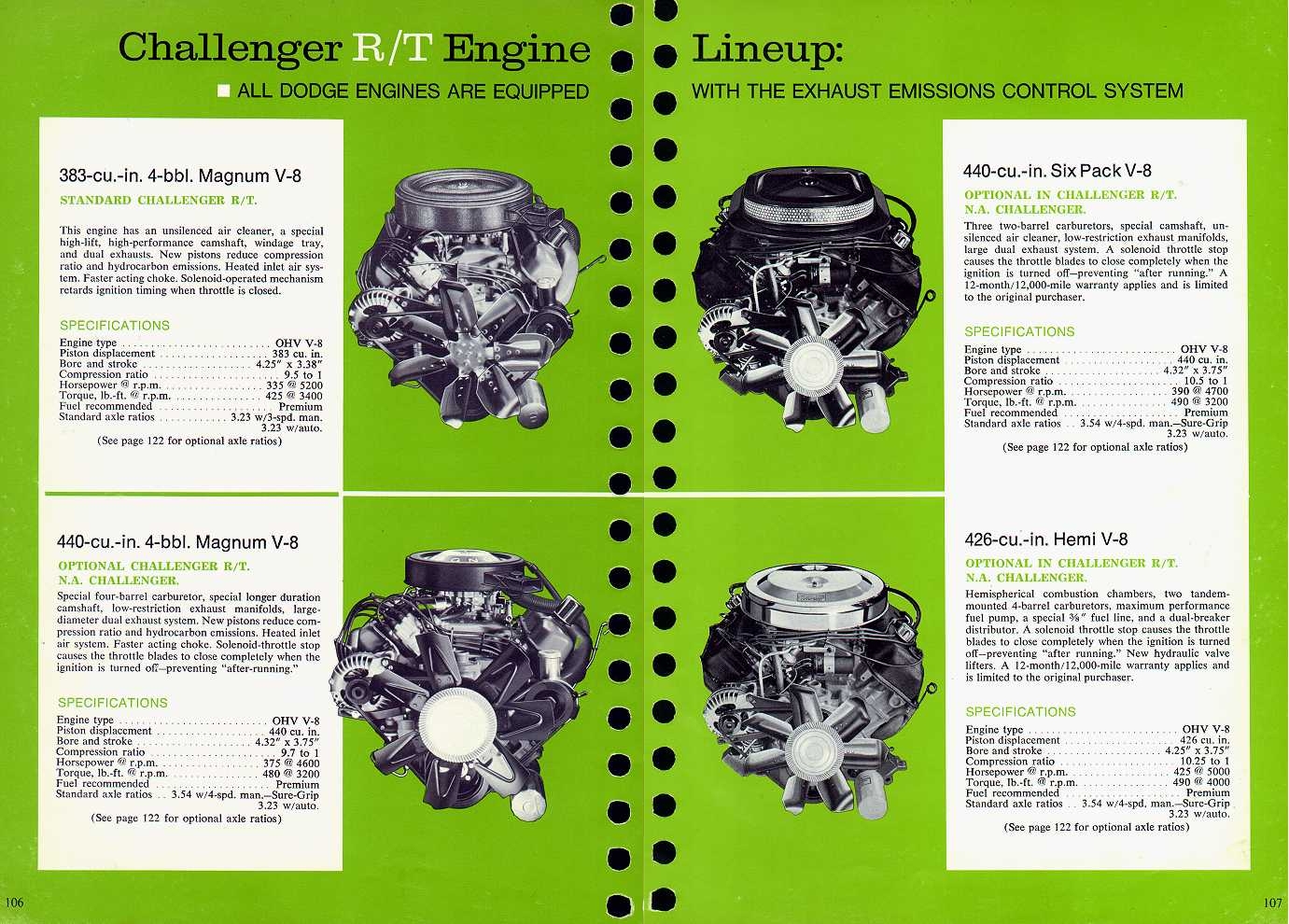
The big engines, 383s, 440s and HEMI, required a certain amount of air to enter the radiator fins for proper cooling and Cameron had to think quickly how to keep his small-sized grille opening in the program without it getting axed. As it turned out, when he looked up to the ceiling where the light fixtures were placed in the Dodge Design Studio he saw the solution!
“I found the overhead lighting grilles met the cooling opening requirements. Their 1/2-inch depth prevented the see-through problem,” he said. “This was the way to prevent the engine’s radiator fins, hood latch hardware and wiring harnesses from being seen. An aluminum extrusion was formed around the egg crate grille to produce the finished effect.”
TAIL DESIGN
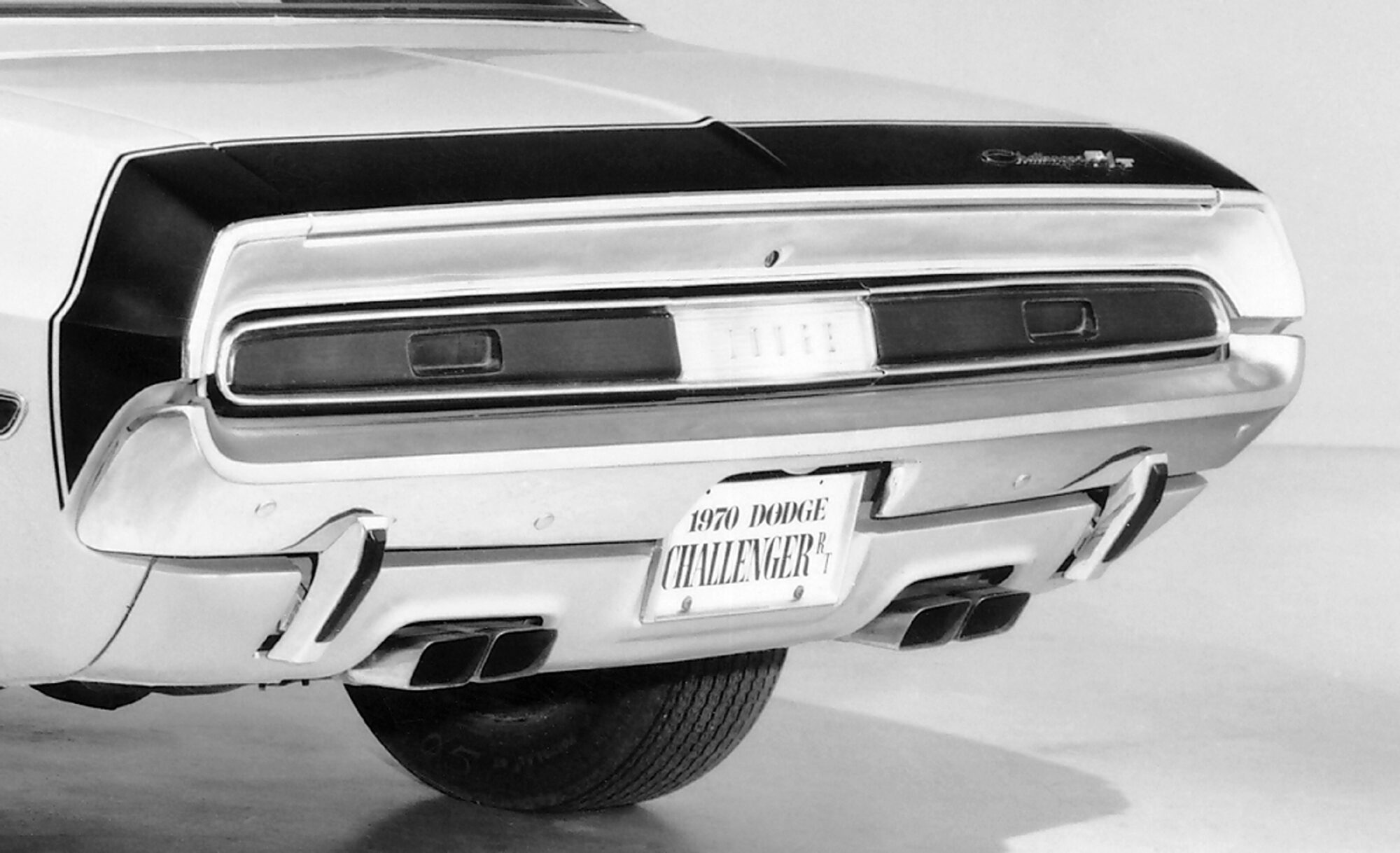
The rear of the Challenger featured a recessed area locating large taillamps with center located reverse light in the middle, featuring D-O-D-G-E letters. A tightly fitted bumper featuring lower bumperettes and license plate was positioned mid-way up into the bumper. With the decklid tapering downward into the rear portion of the car, it reduced the overall visual size of the rear of the car to the eye. R/T models received special exhaust tips. “Everyone was doing round tips,” recalled Bill Brownlie. “And they did not compliment the car. The rectangular outlets made the car appear lower.”
INTERIOR
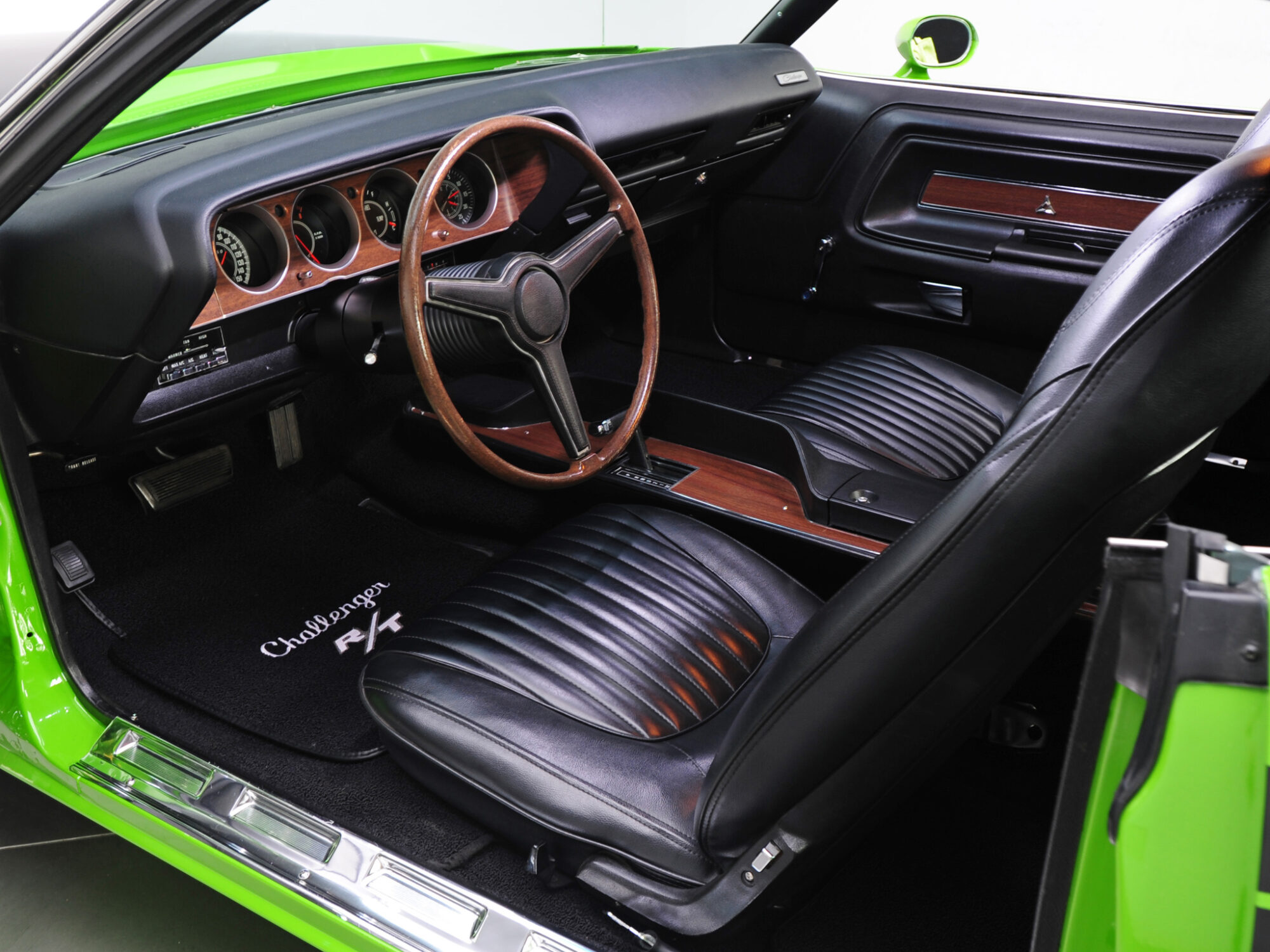
A futuristic interior was designed for the car, looking nothing like a Dart or Coronet or full-size Dodge. The driver-oriented dash featured four large bezels for speedometer and gauges, energy-absorbing steering column with accordion-themed covering, ignition switch moved to the steering column and deeply sculptured molded door panels. The bucket seats sat low, and overall a very “sports car” interior atmosphere.
SEXY SIDE PROFILE
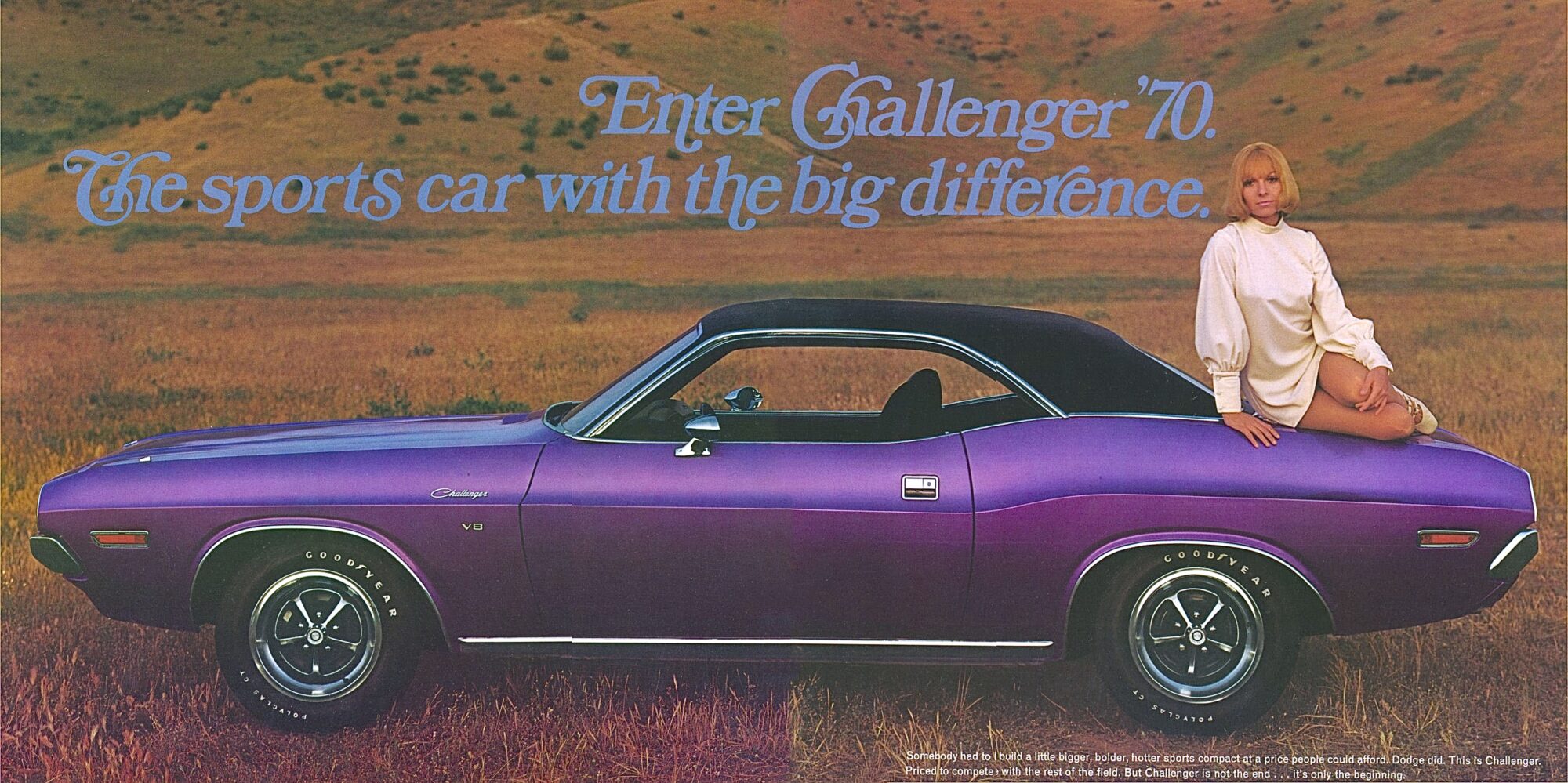
Flush door handles, ventless side glass and hidden wipers all contributed to the clean appearance of the Challenger, and the steeply raked windshield adds to the aerodynamic profile.
DESIGN OVERVIEW
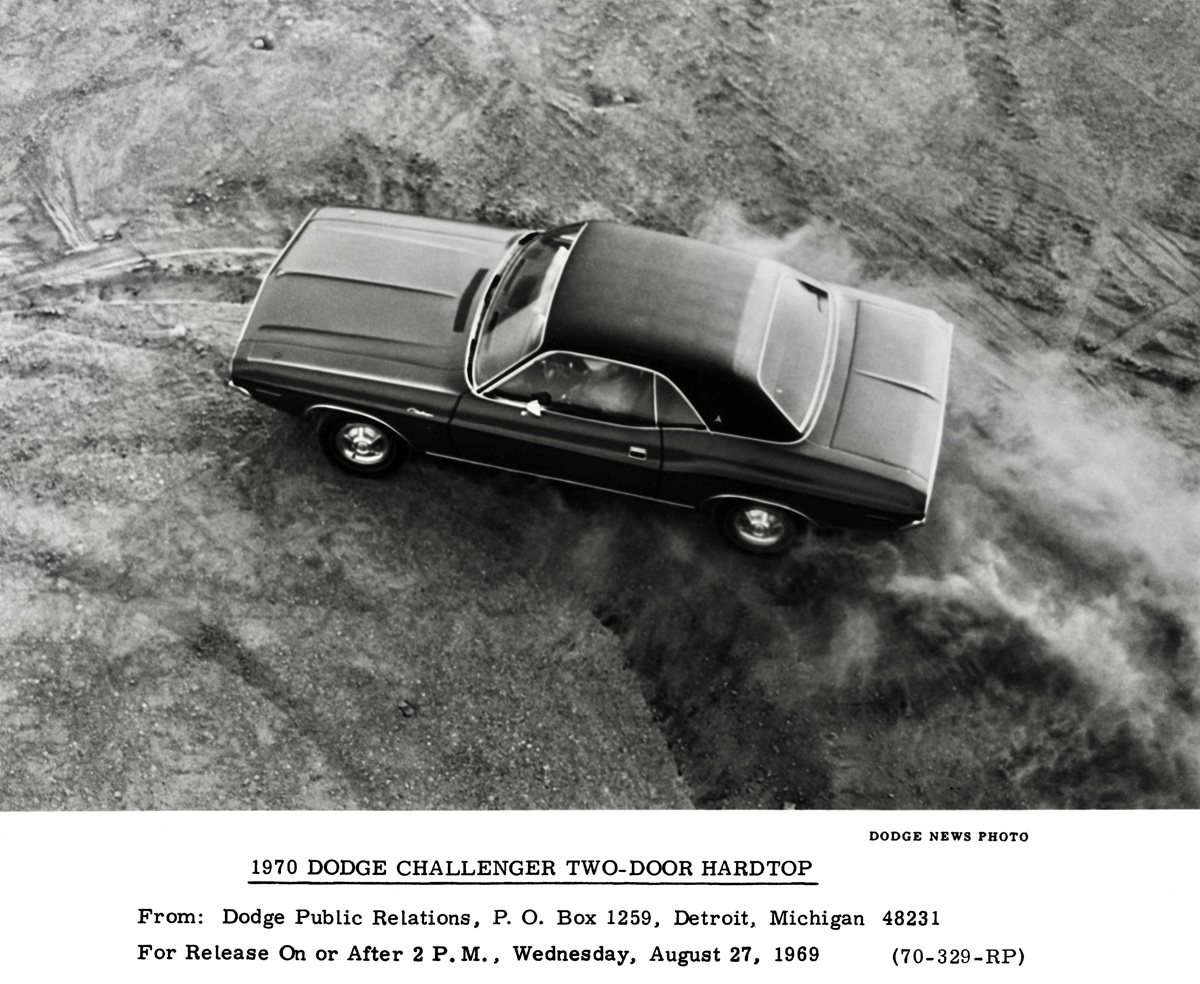
“Design is creating illusions, and a lot of work was spent on hiding the car’s actual size. From the side view, the front of the long, low hood, rear of roof and rear of deck lid all utilize a styled chamfer to foreshadow the image of the car,” said Bill Brownlie, Dodge’s Studio Chief.
THE FEMALE MARKET POTENTIAL
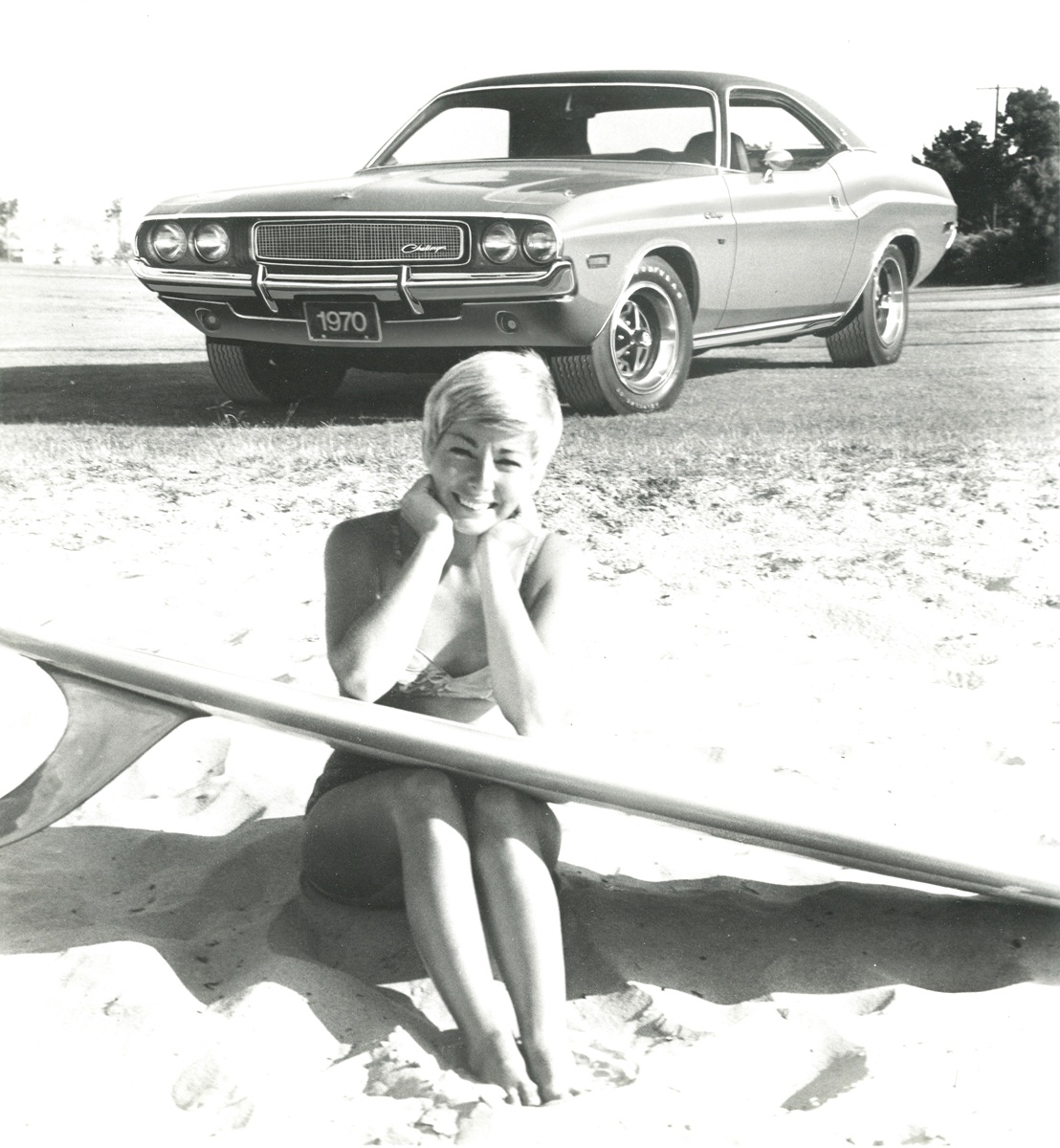
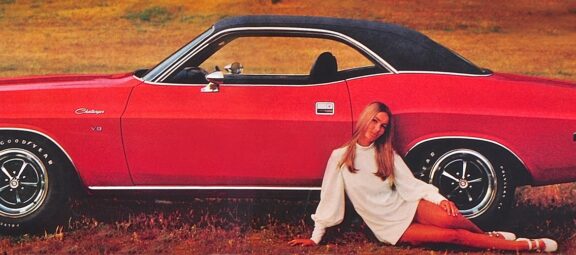
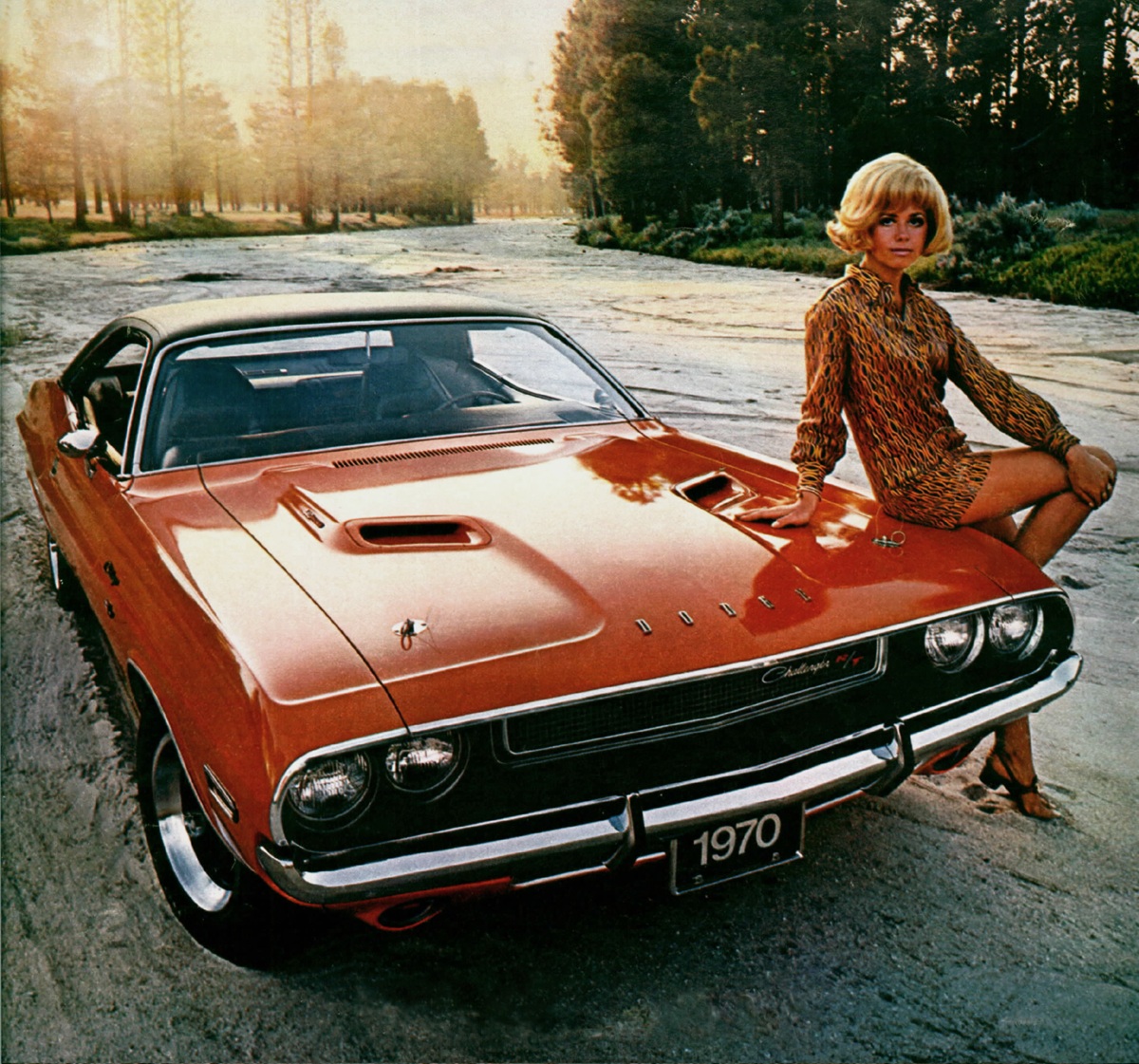
Dodge’s target audience for Challenger buyers wasn’t just limited to horsepower-loving males that wanted to street race up and down Woodward Avenue or Van Nuys Boulevard, it reached out to all! Of course, the advertising agency wasn’t shy about photographing the Dodge Challenger with attractive girls for magazine ads and dealer brochures, however in the case of this promotional image it has a story to be told! 25-year-old Linda Benson (pictured) was Dodge’s “Surfing Consultant” and she, as a California surfer was the first woman to ride Waimea Bay (Hawaiian North Shore), competed for 10 years in the ’60s (winning the West Coast Championships and the US Championships). In 1959, she was the winner of the Makaha International Championships. A true surfing pioneer from Encinitas, CA, with groundbreaking achievements. Besides all that she was the surfing “double” for Annette Funicello in the surfing movies. And she represented Dodge!
CONVERTIBLE
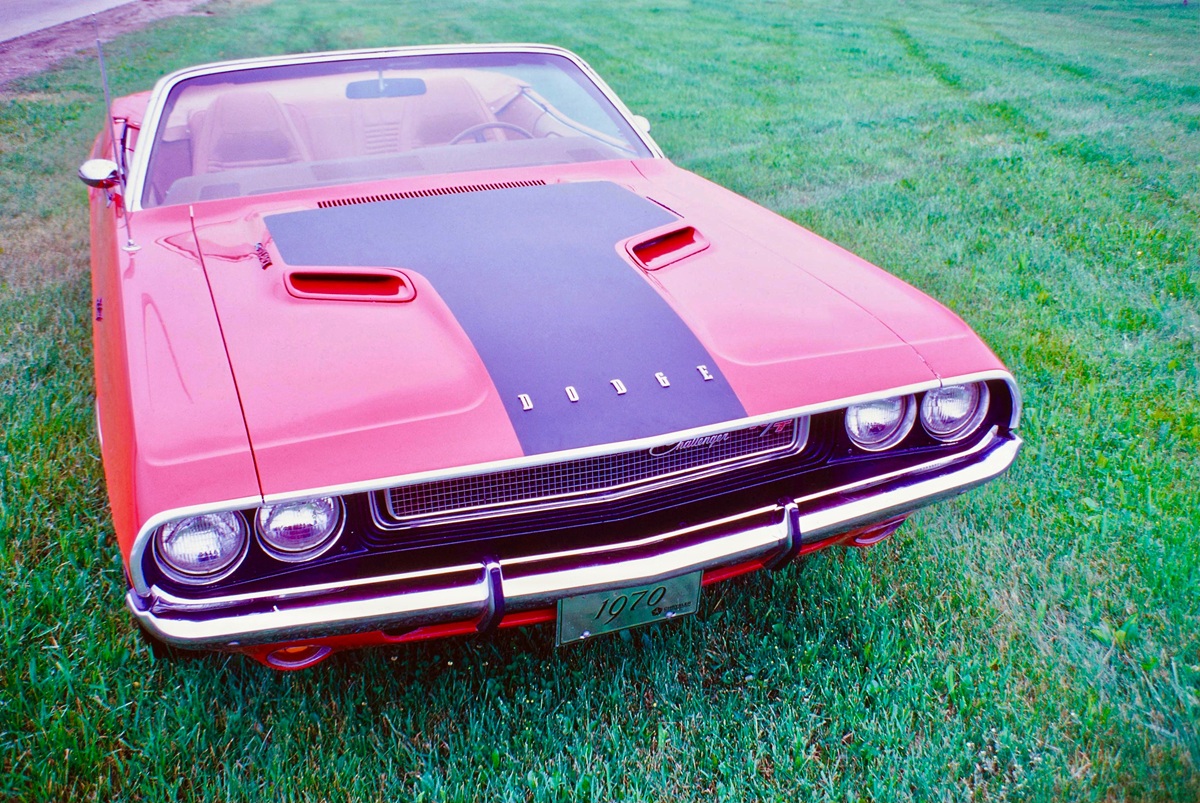
Challenger for 1970 came as a convertible as well, both in a standard version and an “R/T” as shown here with “V21” Black Hood Treatment (performance hood standard on R/T models) and M85 bumper guards.
SPECIAL EDITION
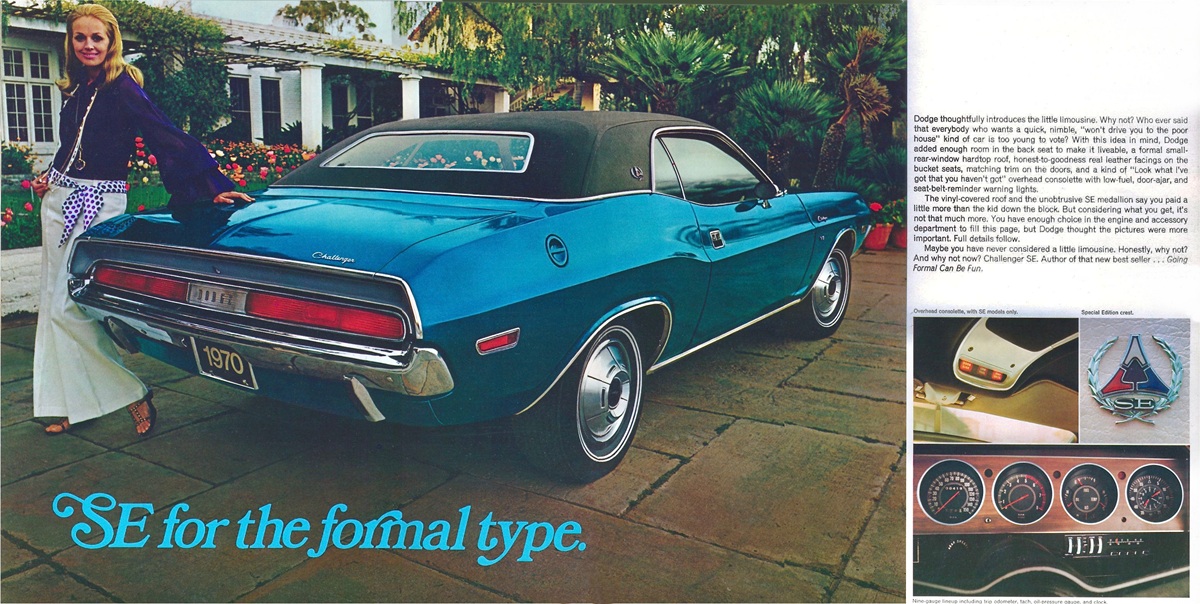
An uplevel “SE” (Special Edition) was an extra-cost option package version that looked like the standard coupe but featured a smaller “formal” rear window, standard vinyl roof, leather facings on the seats and overhead consolette inside complete with built-in warning lights.
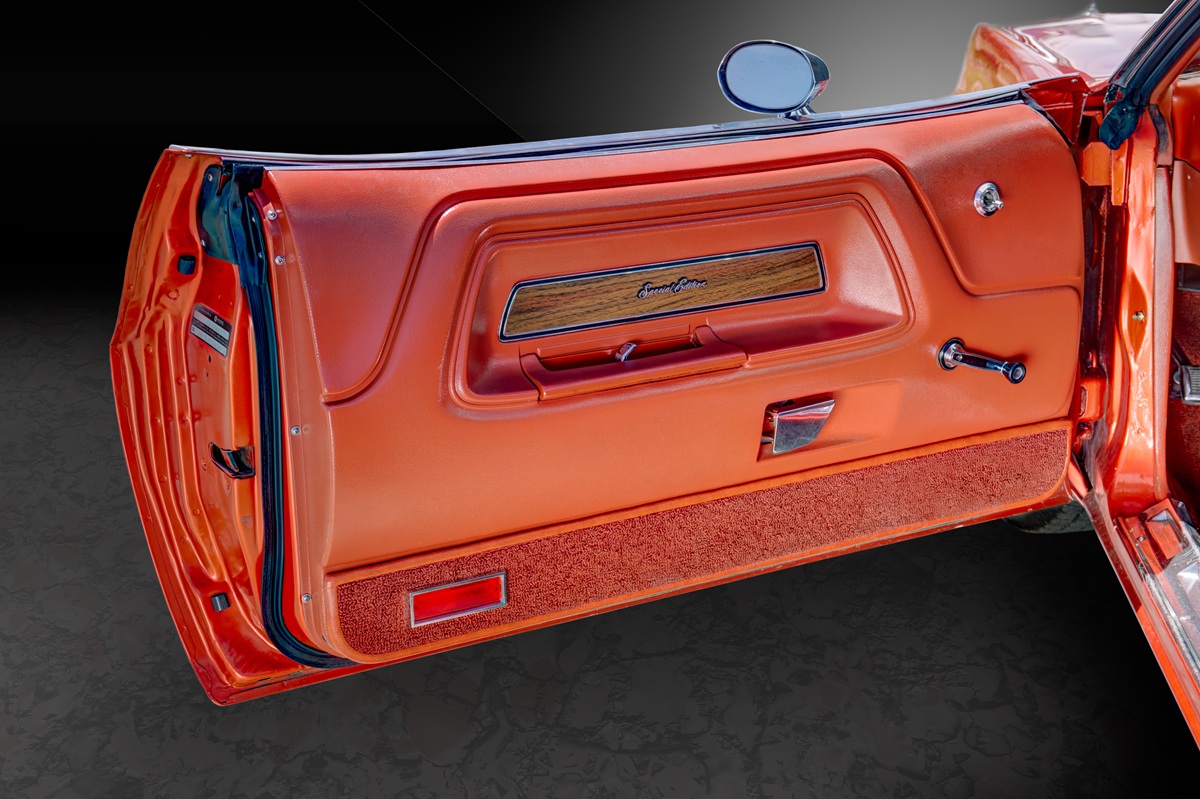
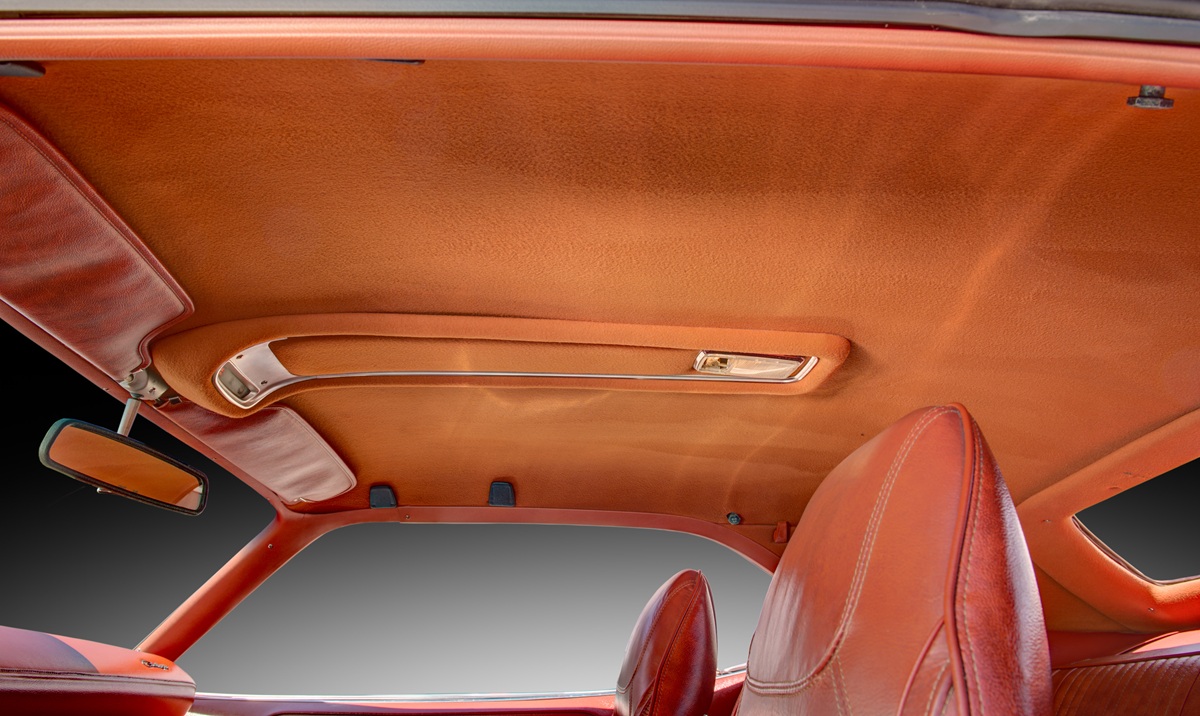
Polypropylene door trim panels with special SE trim, plus overhead consolette (with low-fuel, door-ajar, seat-belt reminder lights) added some class.
X-RAY IMAGE
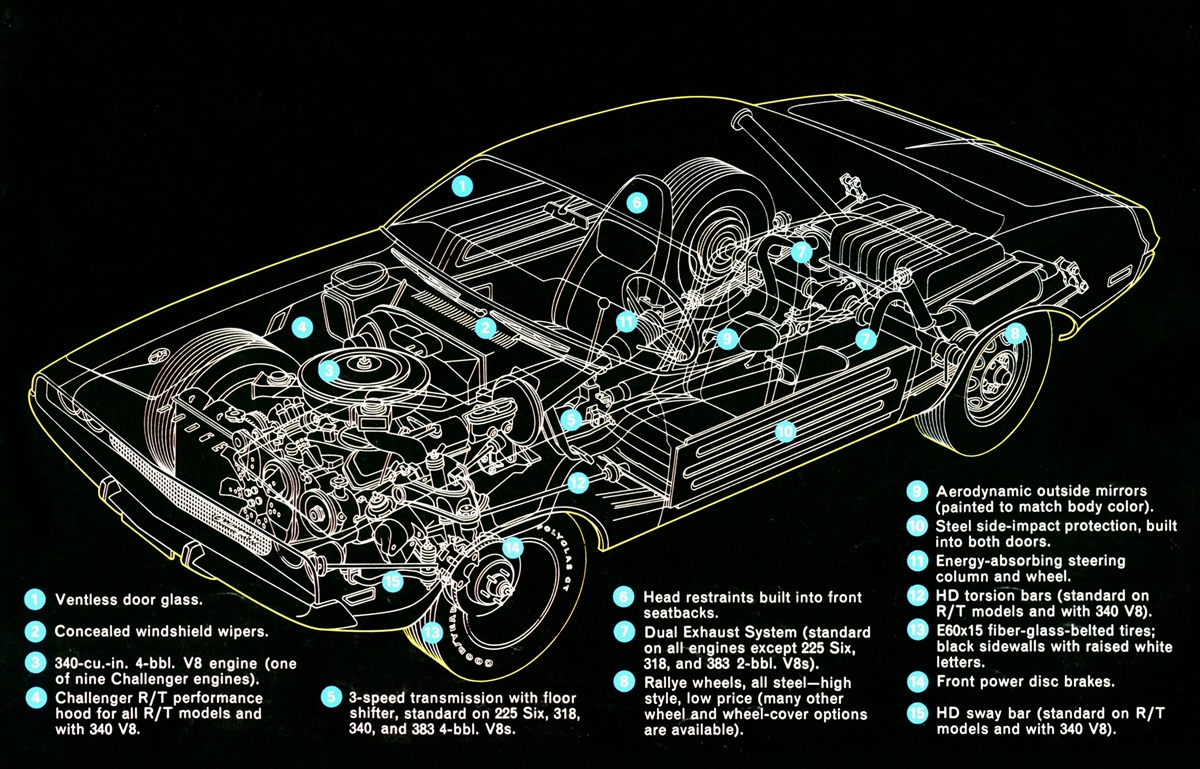
Everything from “Ventless door glass” to “HD sway bar” is highlighted on this detailed drawing showing potential buyers what the new Dodge Challenger has to offer. Included in the new safety equipment was the energy-absorbing steering column and wheel and steel side-impact door protection.
SEE YOUR LOCAL DODGE DEALER
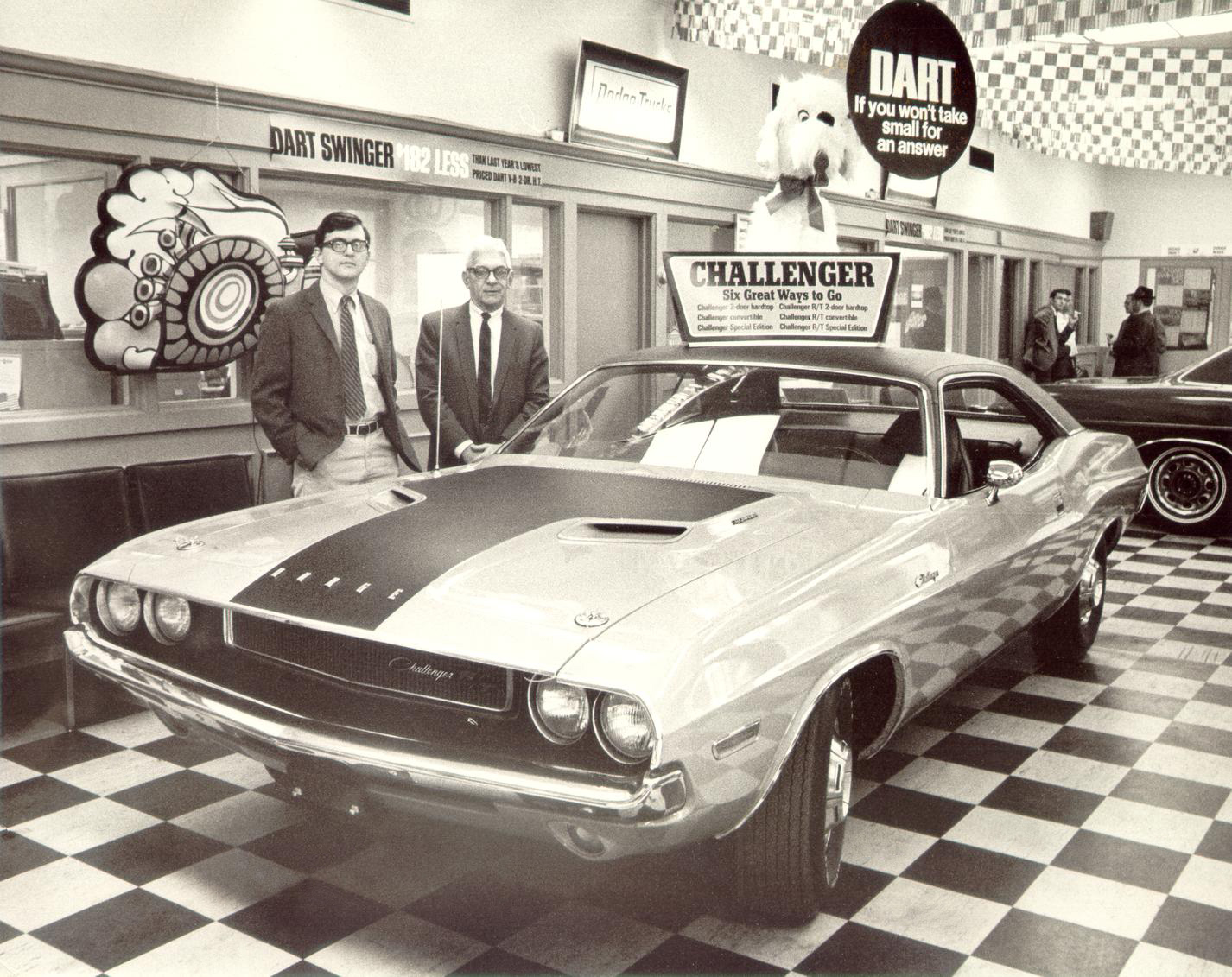
Come on it! We can get you into one of these new Challengers today, there’s six different ways to go: 2-door hardtop, convertible, Special Edition, R/T 2-door hardtop, R/T convertible, R/T Special Edition.
1970 CHALLENGER SALESMAN HANDBOOKS
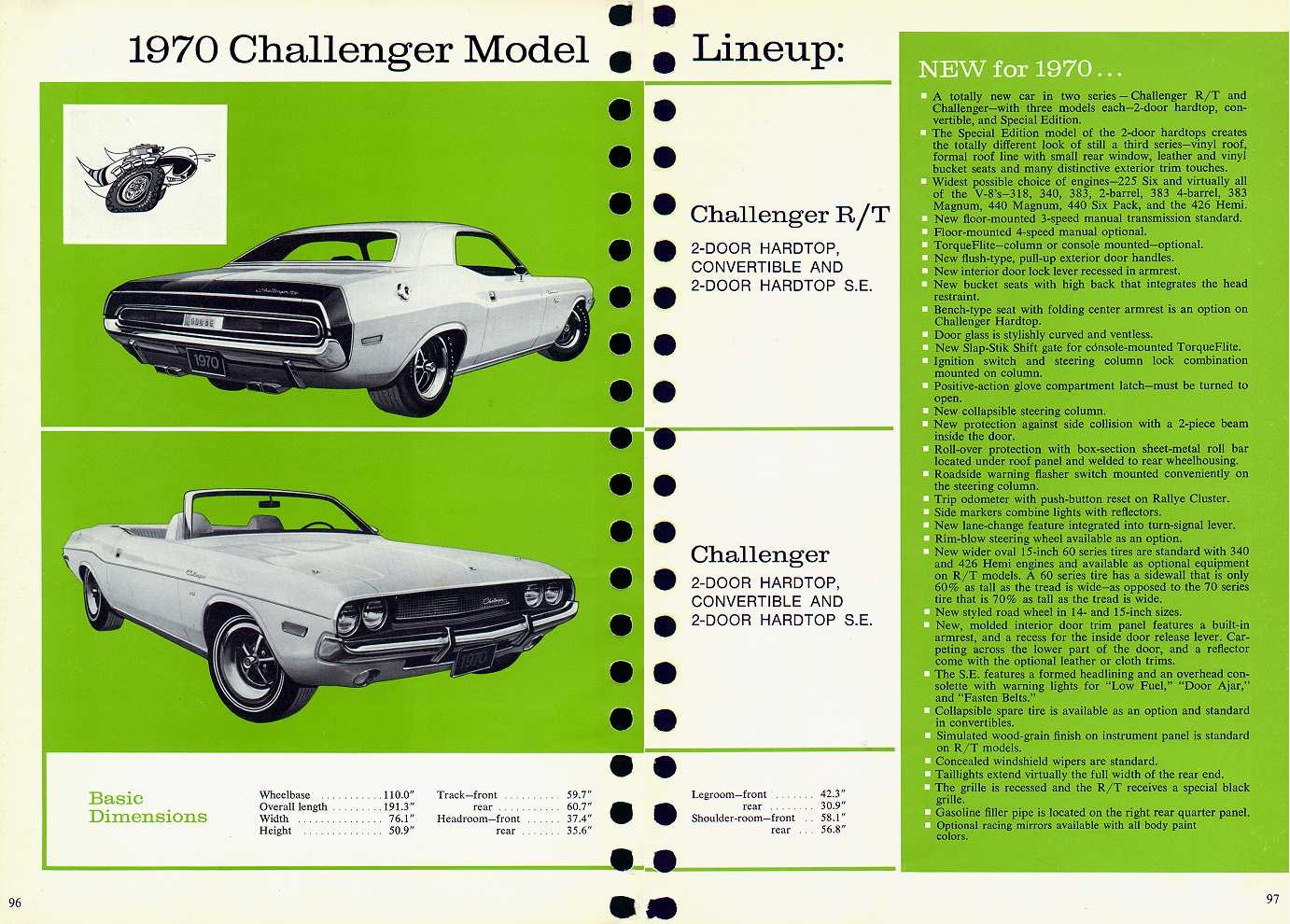
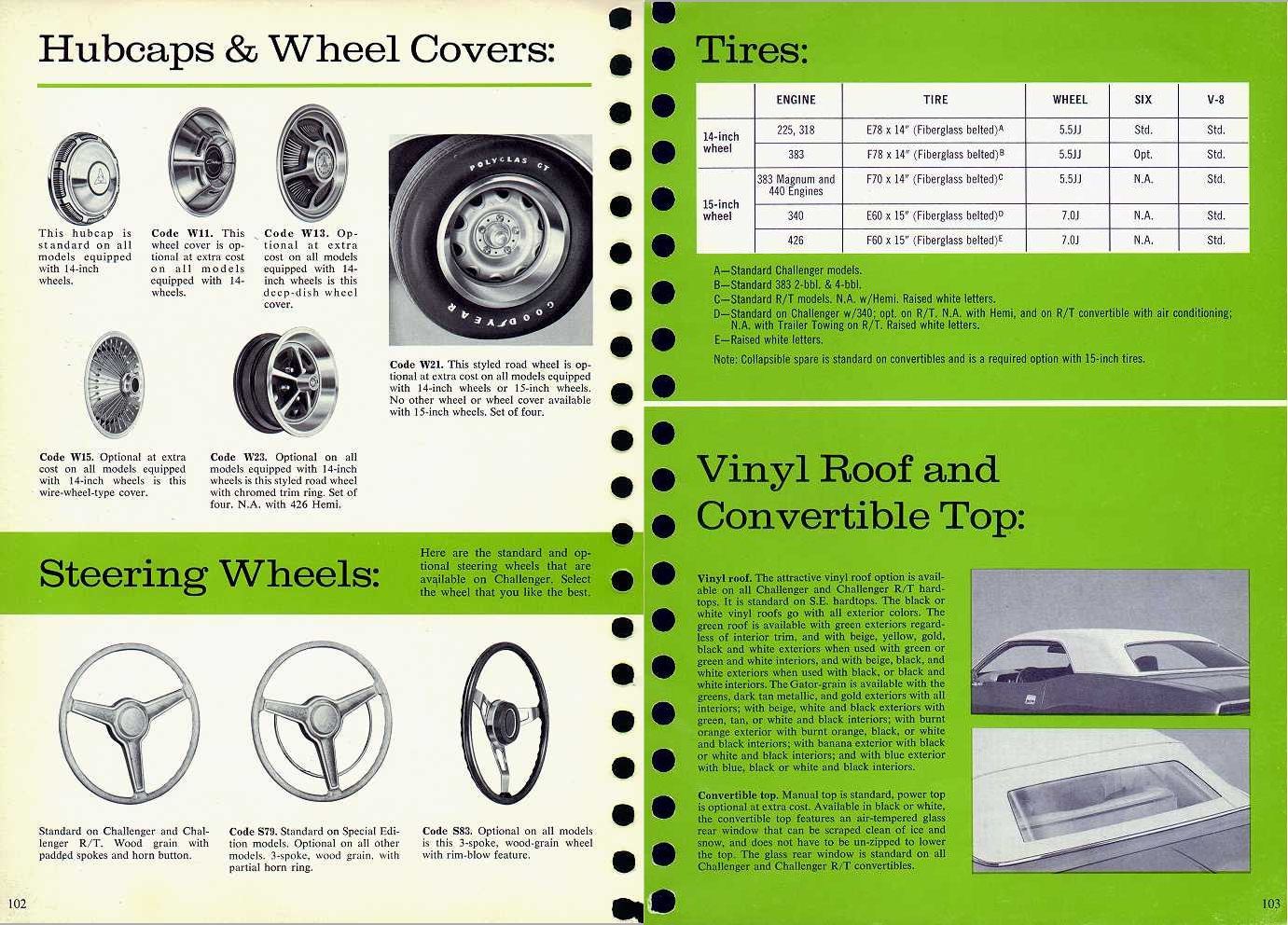
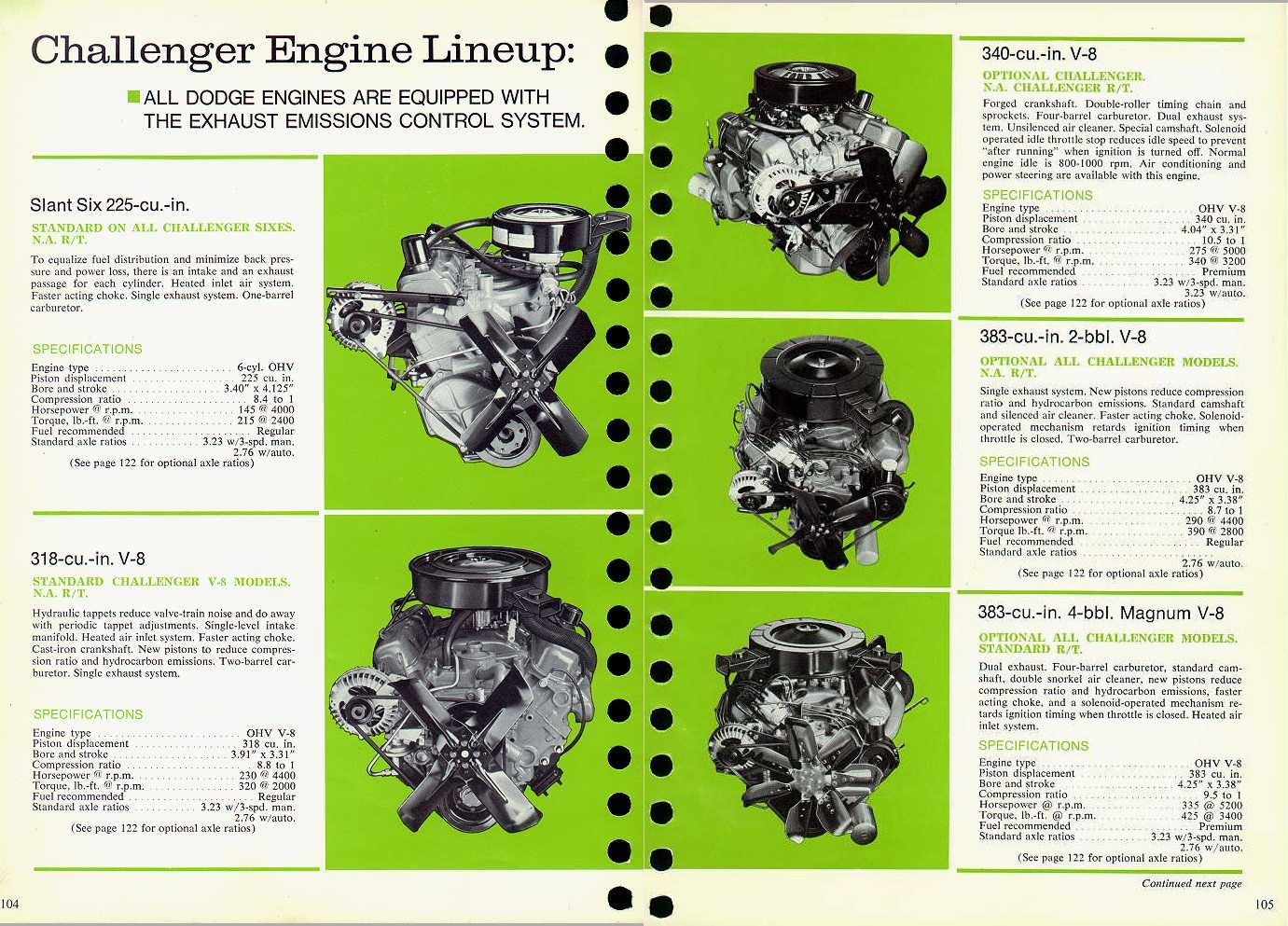
In order to get the dealership sales force up to speed with the all-new Dodge Challenger (that was being promoted and advertised starting in late September 1969), the factory produced detailed Dealership Data Books that highlighted the available options and latest specifications on the new model year vehicles. Salespeople could bone-up on all the Challenger specifics so as a potential customer entered the showroom floor, any questions could be answered.
NEXT UP:
How the new 1970 Challenger was advertised, how the automotive press responded to it, its starring role in the movie Vanishing Point and more!
Author: James Maxwell
0 Comments