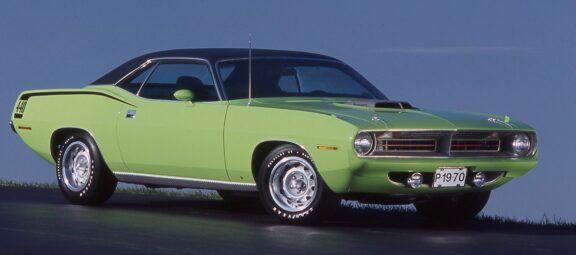
The Fish – A.K.A. 1970 Plymouth ’Cuda 440+6 Shaker
HOLY GRAIL
When it comes to authenticating a Mopar® muscle car, the most reliable method is finding a matching “Broadcast Sheet” that corresponds to the vehicle. Commonly referred to as the Build Sheet, this factory document is critical – it lists the VIN, sequence number, option and trim/molding codes, factory paint codes and all the factory-installed equipment the car had when it rolled off the assembly line.
For this particular vehicle, the Broadcast Sheet was discovered beneath the passenger-side seat springs in the back seat. (Other potential hiding spots include: taped behind the glovebox, beneath or behind a front seat, under the carpet or inside the headliner.)
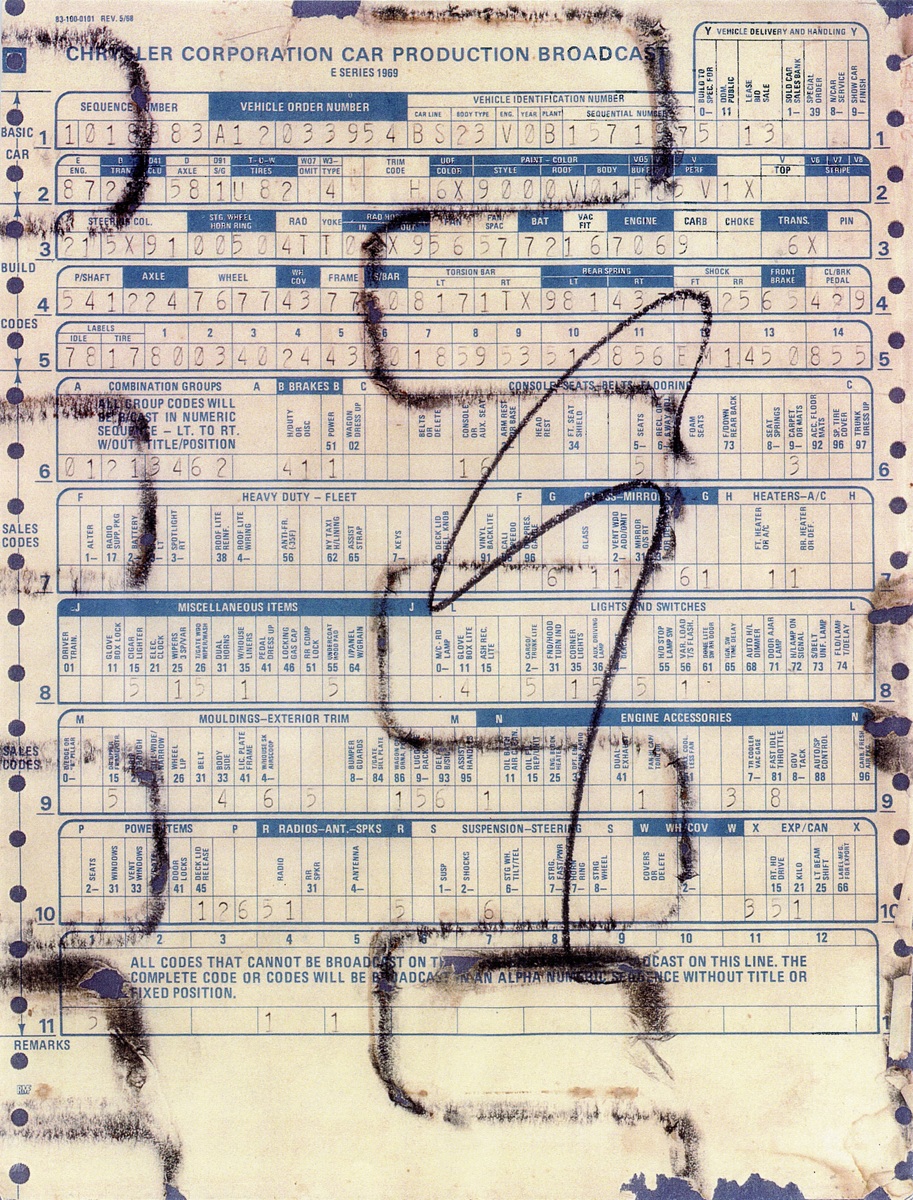
A unique anomaly occurred with this car: when the Broadcast Sheet was found, it had been printed on an older “E” Series 1969 blank (Form Number 83-100-0101, revised 5/68), despite being a 1970 model. This indicated it was an early production unit. It’s yet another example of the “irregularities” that occasionally occurred during Mopar production runs. Although the sheet’s numbers were accurate for the car, it had to be visually transposed onto the correct F-Series (1970 model year) photocopy form for clarity and documentation purposes.
The best part of the discovery? This car is a legitimate 440 Six-Pack (V-code), 4-speed (D21), with a 4.10:1 axle ratio (D58), finished in FJ5 Limelight High Impact Paint with a black vinyl top (V1X). The fender tag further confirmed key factory options: Elastomeric Front Bumper (A21), Super Track Pak (A34) and the Shaker Hood (N96). Scheduled Production Date: October 12, 1969.
IN THE LIMELIGHT
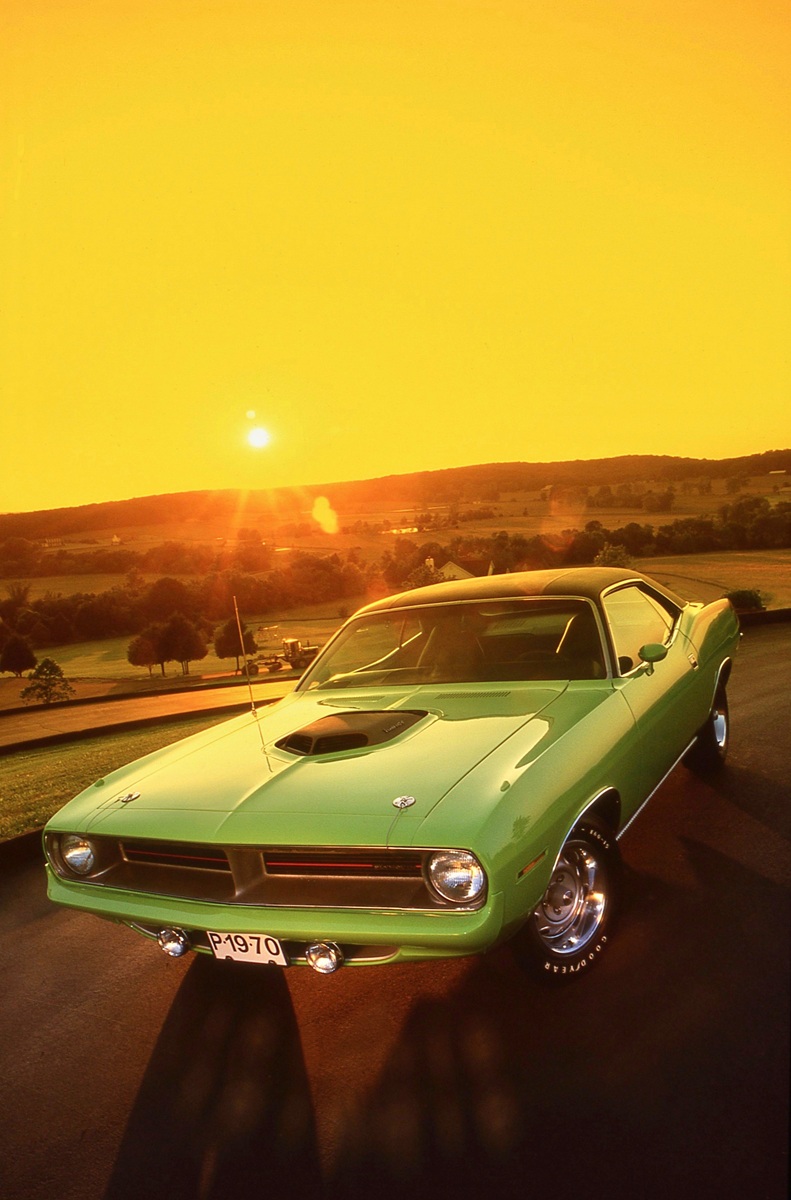
This ’Cuda, when discovered, was a complete, running, all-original car – with its factory body panels intact and the numbers-matching engine still under the hood. A true “survivor” in need of a proper restoration.
Renowned Mopar restoration expert Roger Gibson was chosen to lead the project. Known for his extensive experience in full restorations and expertise in factory-correct paint duplication, Roger brought both precision and authenticity to the job.
Here’s how Roger described the process of applying the Limelight paint:
“The ’Cuda is painted using Sikkens single-stage acrylic urethane, Autocryl. Two coats of Autoclear III finish it off. The paint was sprayed with a Sata Jet 90 gun at 40 psi. I over-reduce the paint using an atomizer and spray the car the way we used to apply lacquer or enamel – several light coats instead of the recommended two or three heavy coats. This technique helps replicate the original orange peel texture found on factory acrylic enamel, especially under the hood and inside the door jambs.
I aim to lay the paint down as close as possible to the final finish and texture we want, minimizing the need for heavy sanding and buffing. Gravity-feed spray guns are critical with modern urethane paints because they’re so thick – older siphon-type guns just don’t lay it down properly.
The color was matched by starting with a crossover formula recommended by Sikkens and adjusting it to match the original shade. For primer, I used Sikkens Colorbuild, which I tinted to replicate the original factory red and gray tones – red for the body panels, and dark gray for the floor pan to mimic the factory dipping process.
Paint match is everything in a proper restoration – whether it’s on the body, the engine or the rear axle housing.”
DESIRABLE V-CODE ENGINE
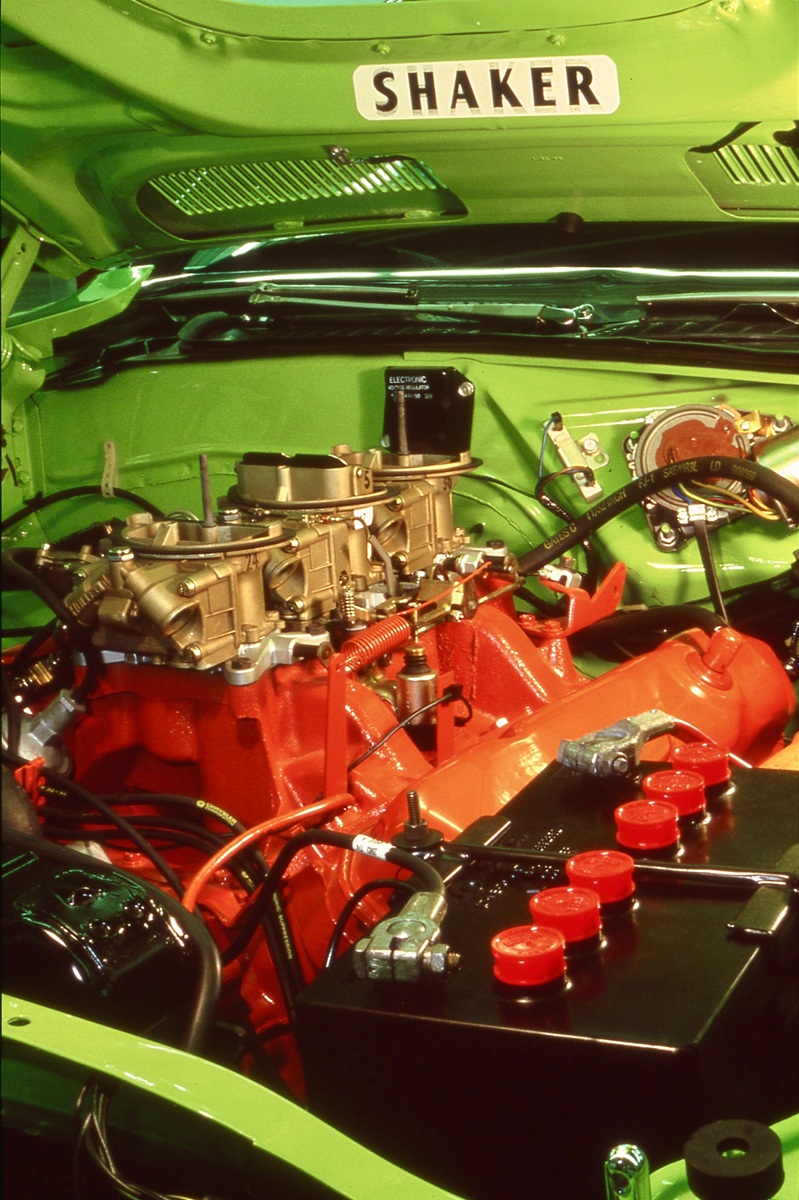
This car came factory-equipped with the legendary 440 Six Barrel engine – designated by the “V-code” in the VIN. Plymouth referred to this high-performance powerplant as the “440 Six Barrel” or “440+6,” while Dodge branded their version the “440 Six Pack.” Regardless of the name, the 1970 model-year version packed serious punch: 10.5:1 compression pistons, 390 horsepower at 4,700 rpm and a tire-twisting 490 lb.-ft. of torque at just 3,200 rpm.
These engines weren’t just about raw power – they were built to handle it. Reinforced with heavy-duty connecting rods and a three-bolt camshaft, they were designed for durability under pressure. And of course, like many of Mopar’s finest, the engine block came dressed in iconic HEMI® Orange straight from the factory.
SHAKER SCOOP
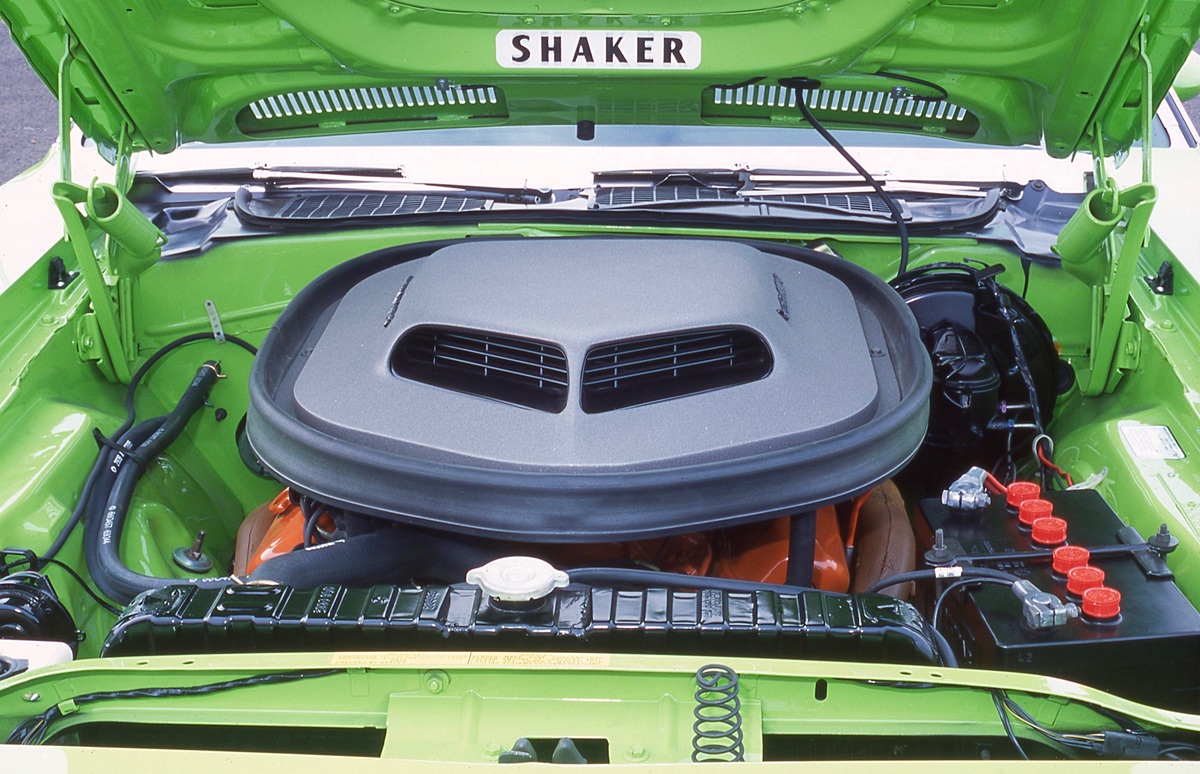
The Shaker hood scoop was cable-operated from a control mounted on the dash and featured a rubber seal that allowed it to mate tightly with the hood. And yes – true to its name – it actually shakes when the engine is running.
The scoop itself was finished in Argent silver, but not just any silver. The paint is a specially blended mix developed by Roger Gibson, based on years of firsthand experience working with low-mileage Shaker-equipped cars from the era. His formulation ensures an authentic, period-correct look down to the finest detail.
BY THE NUMBERS
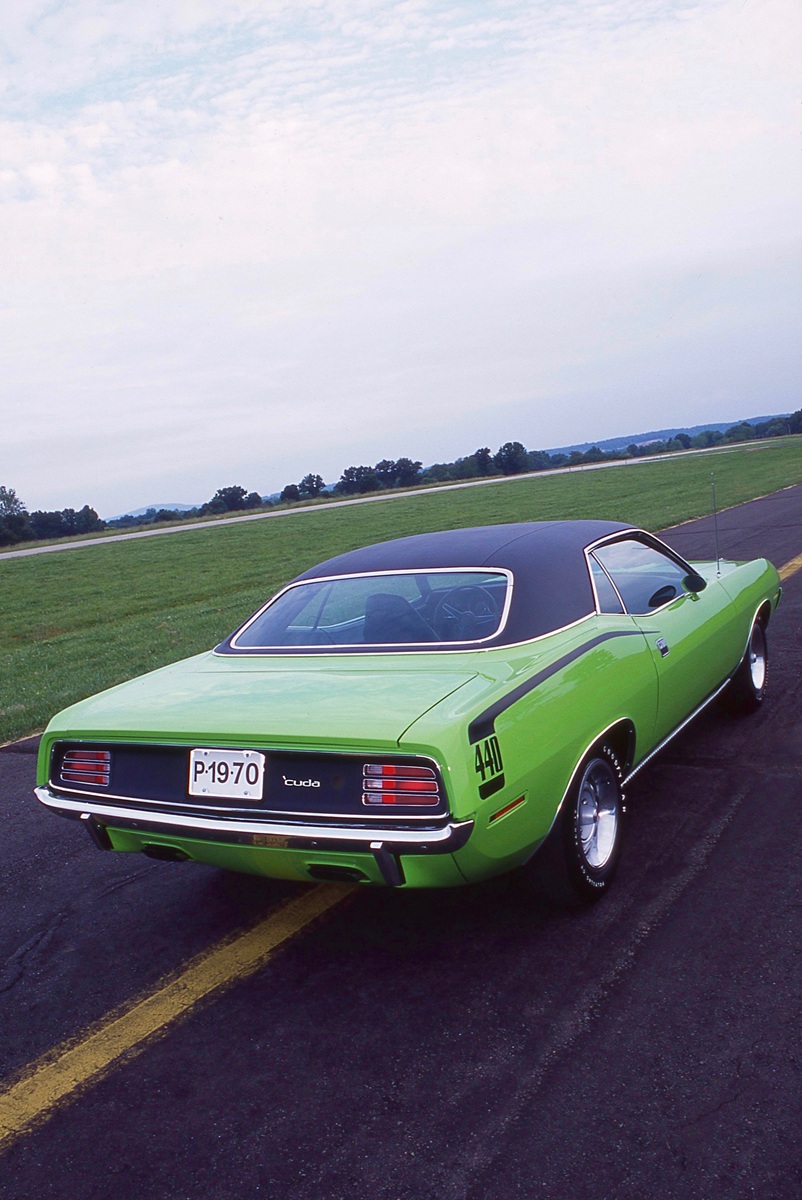
According to factory production records, a total of 16,710 “BS23” 2-door ’Cuda Hardtops were built for the 1970 model year. Of those:
- 2,139 were ordered with the optional “A21” Elastomeric Front Bumper Group
- 1,755 were factory-equipped with the “E87” 440 Six Barrel engine
- 1,069 were painted in “FJ5” Limelight High Impact Paint
- 1,036 received the “N96” Shaker Fresh Air Package
- 902 were “D21” 4-speed manual transmission cars
- 735 units were built with the “A34” Super Track Pak
Crunching all those numbers leads to the bigger question: How many of these cars still exist today – and, like this particular example, still retain their factory-installed engine block, transmission and differential?
INTERIOR
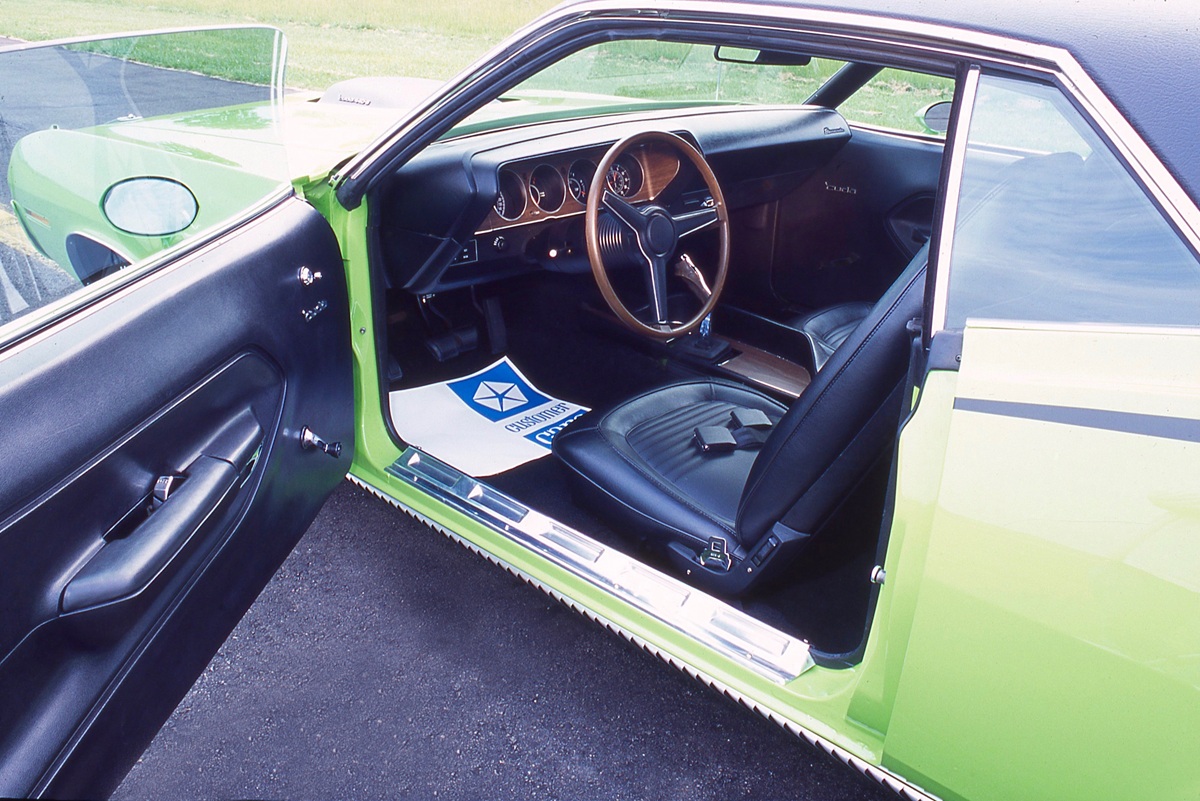
The black interior features high-back bucket seats and woodgrain appliqué on the steering wheel and gauge panel – part of the Rallye Instrument Cluster Group. A Pistol Grip Hurst shifter came standard on all 4-speed manual transmission cars, delivering that unmistakable muscle-era feel.
This example also includes the optional center console and AM/FM Multiplex radio. With its distinctive door panels and forward-thinking dash layout, the E-body interior had a futuristic look that still turns heads today.
W21 RALLYE ROAD WHEELS
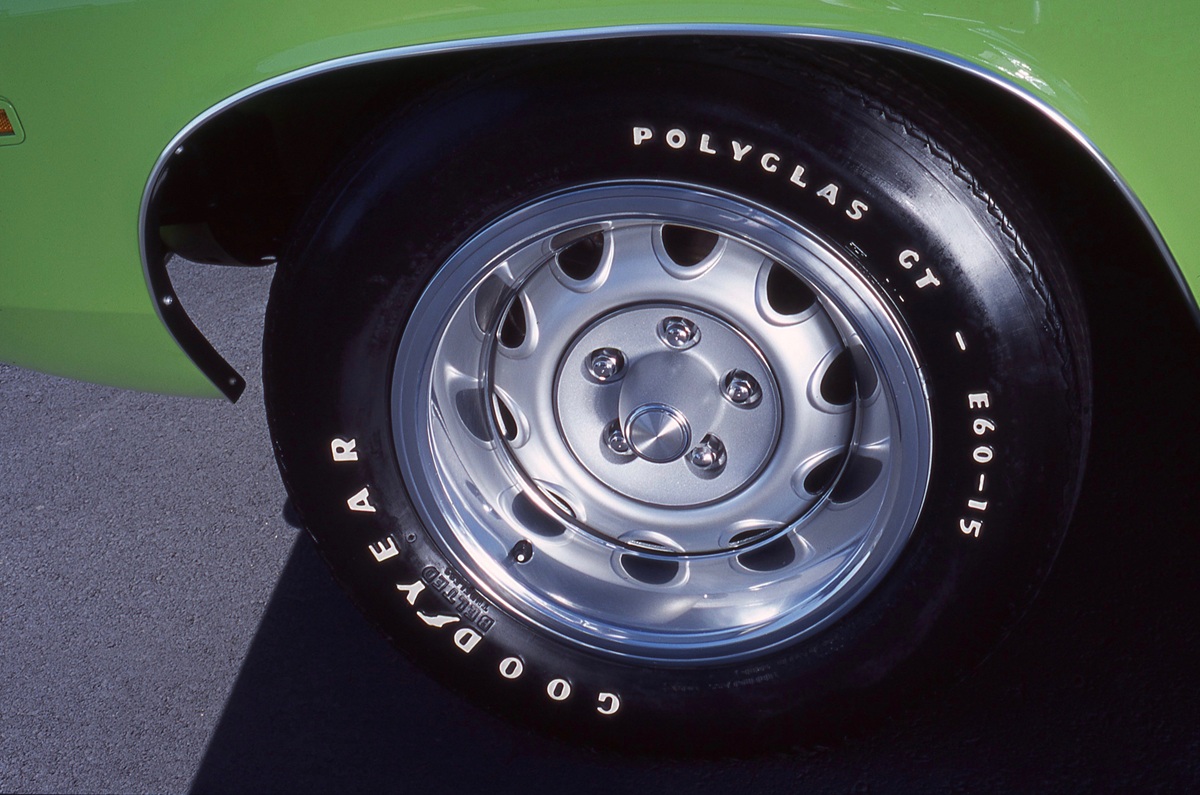
E60 Polyglas Goodyear tires were what the 440-6 ’Cudas came with, and while restoring this car it was learned that all four Rallye wheels had matching date codes of September 14, 1969.
440 MARKINGS
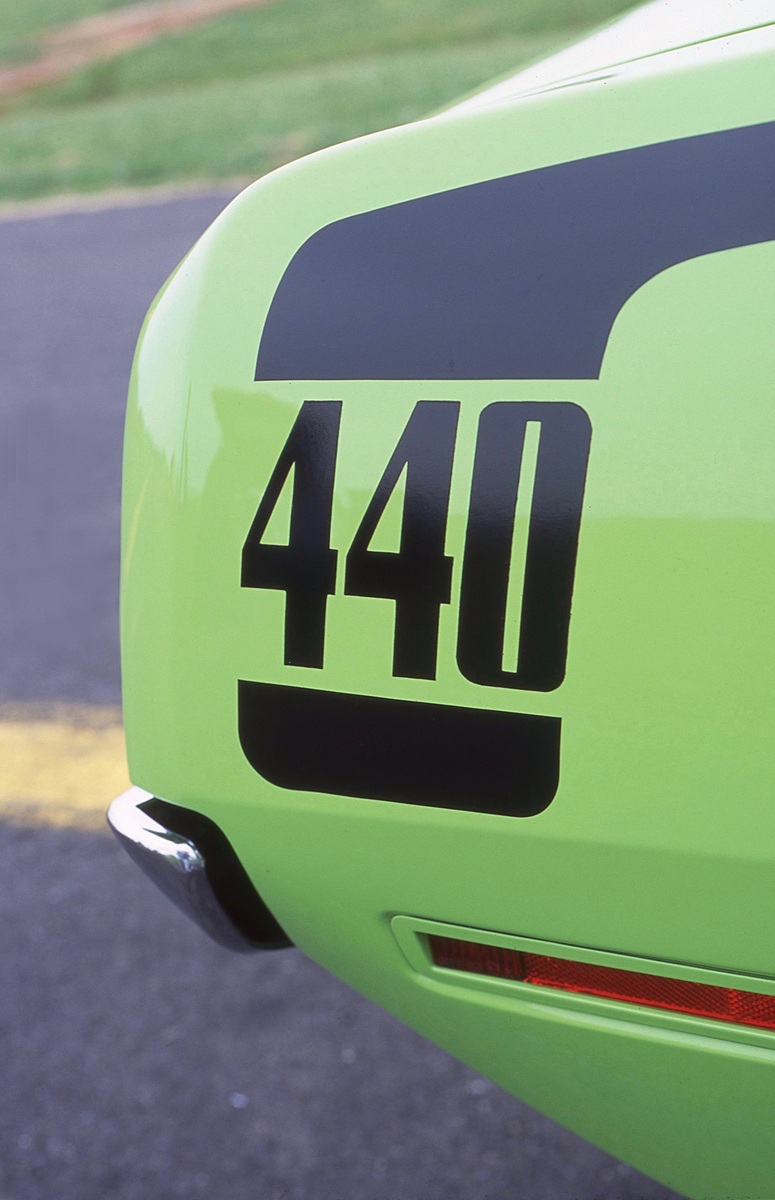
V6X Sport Stripes Black, a $43.10 option. On the street, these were known as “Hockey Stick” stripes.
RONNIE SOX ON THE SIX BARREL
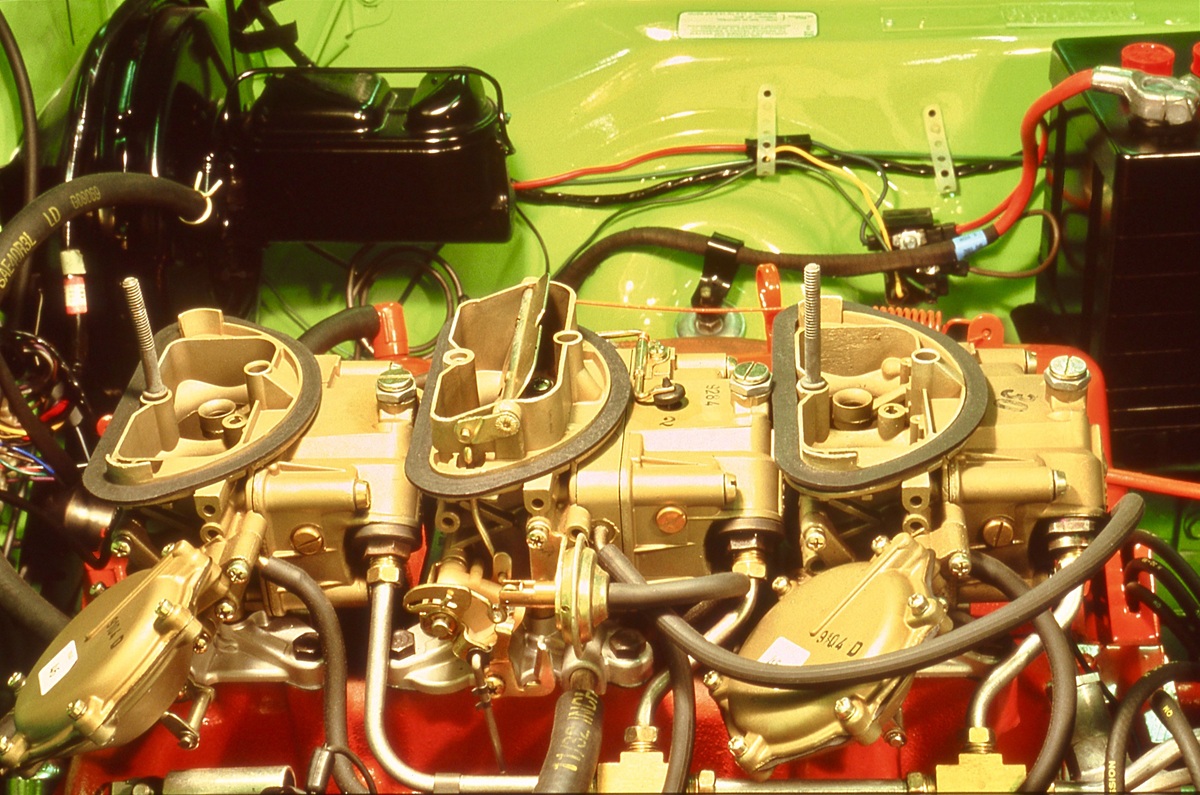
Under the hood, a trio of Holley 2300 Series 2-barrel carburetors delivers a total of 1,350 CFM – 350 from the center carb, and 500 each from the front and rear. It’s a setup that’s both aggressive and surprisingly street-friendly.
When the 1970 models were introduced, Plymouth drag racing legend Ronnie Sox had this to say about the Six Barrel ’Cuda:
“I’m not sure what I’ll be driving this year [on the street]. The Plymouth people gave me an Imperial to use for a while, but I like my Road Runner a lot better. I don’t feel old enough for an Imperial. I’ll probably go for that Six Barrel ’Cuda this year, but it won’t be easy to decide.
The ’Cuda moves! I was really lightin’ them up out there with no wheel hop whatsoever. And it won’t drift on you!
This car looks tough, and it feels tough. I like the way it’s built low to the ground. The aerodynamics are really good – at least it looks like the aerodynamics are good – and it sure felt like it out there on the test track.
We’ll be running the HEMI ’Cuda on the strip, but I think the 440 Six Barrel will be the good one for the street.”
HOW QUICK ARE THESE CARS?
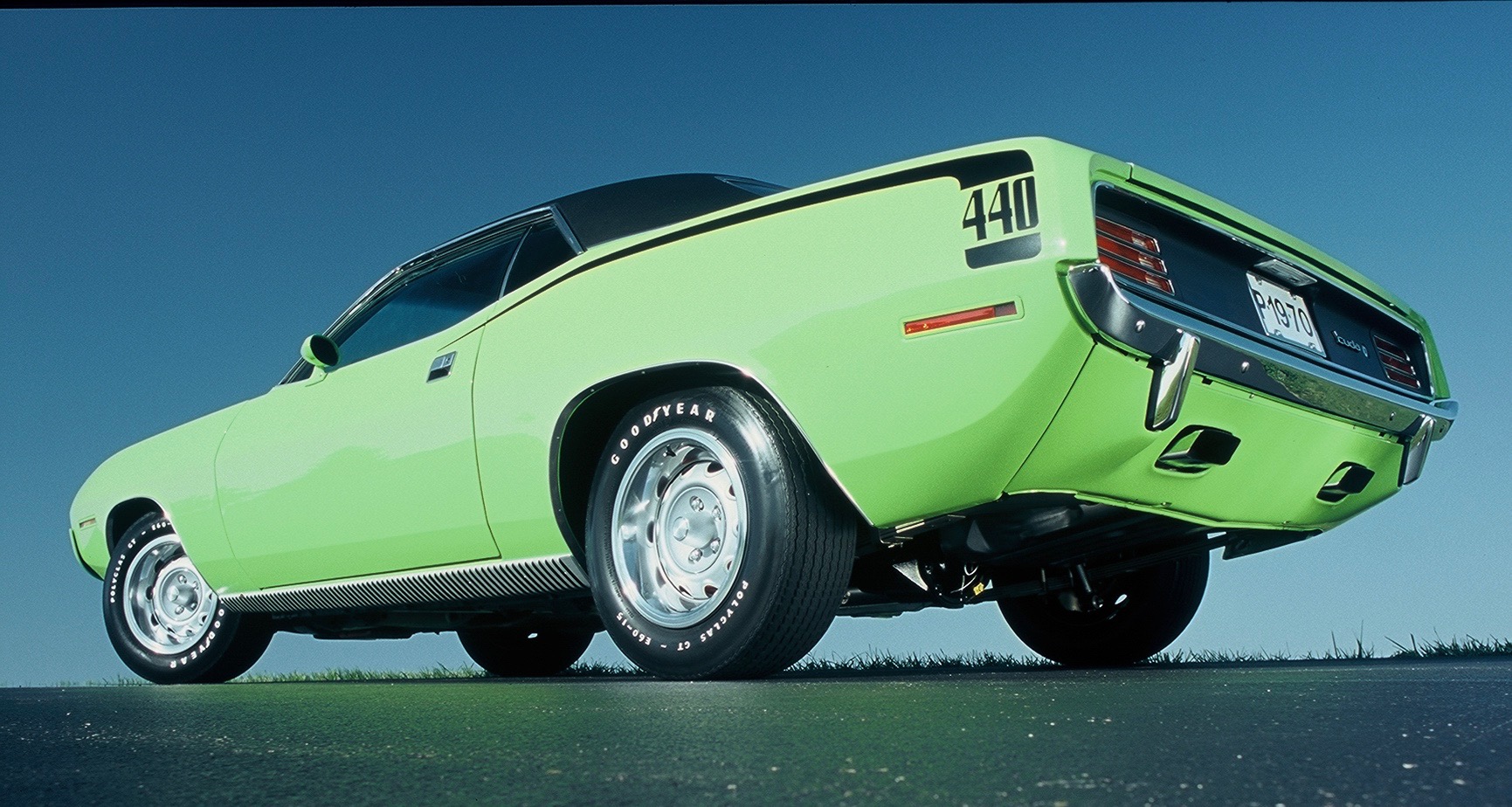
It’s well established that 440+6 ’Cudas were serious street performers – especially when equipped with wider tires for added traction. Even with the limited grip of stock Goodyear rubber, a skilled driver could still post impressive quarter-mile times.
For example, Super Stock & Drag Illustrated recorded a 13.72-second run at 106 mph with a 440 Six Barrel ’Cuda equipped with a 4-speed and 4.10 gears (April 1971). Other magazines achieved similar results with Dodge E-body cars running the same engine setup:
- Rodder and Super Stock (July 1970): 13.65 @ 104 mph
- Popular Hot Rodding (May 1970): 13.69 @ 106 mph
It took a steady hand and some finesse to get the power down, but when driven right, these multi-carb 440s delivered the goods – and then some.
RESTORATION DETAILS
DOUBLE X
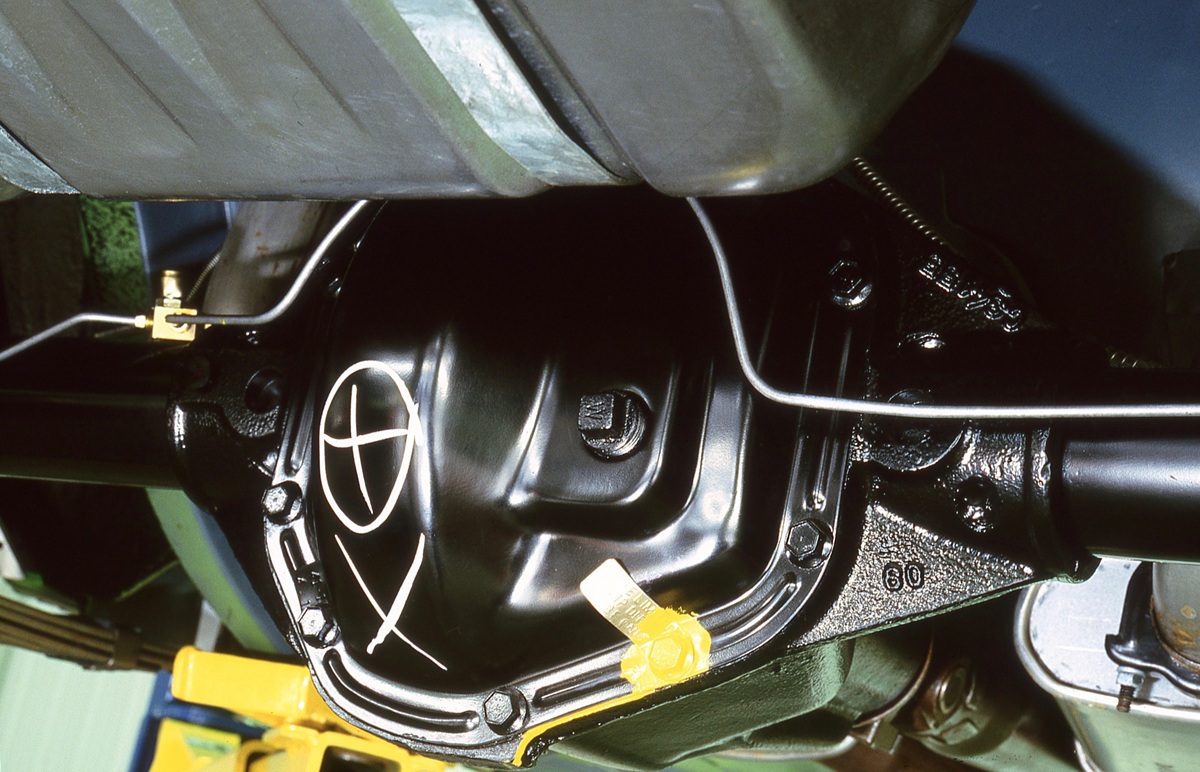
The differential on the ’Cuda is a 4.10 geared Dana 60, “A34” Super Track Pak option. During the restoration process, two separate “X” markings were discovered on the differential cover and reproduced in exact size and shape. Roger Gibson insists on full accuracy!
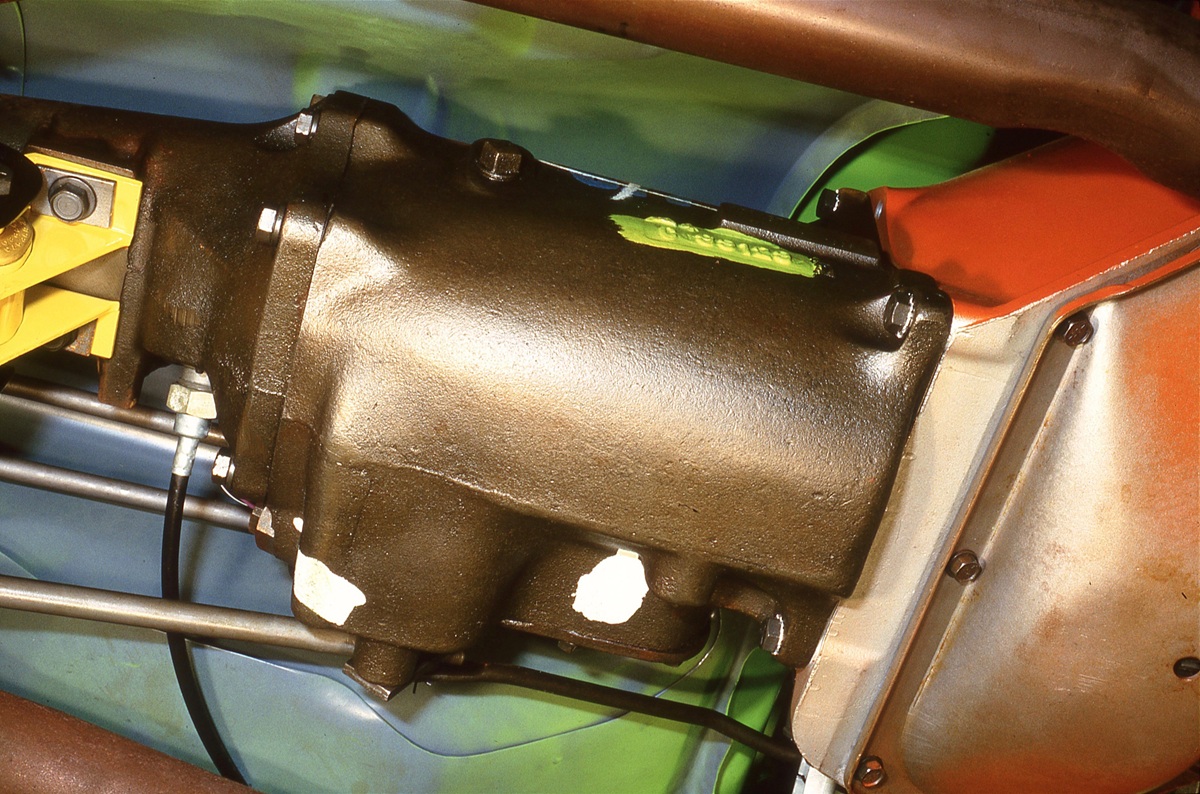
The transmission was also subject to the extreme measures of documented paint dab markings. 440+6 cars got the extra-strong HEMI unit.
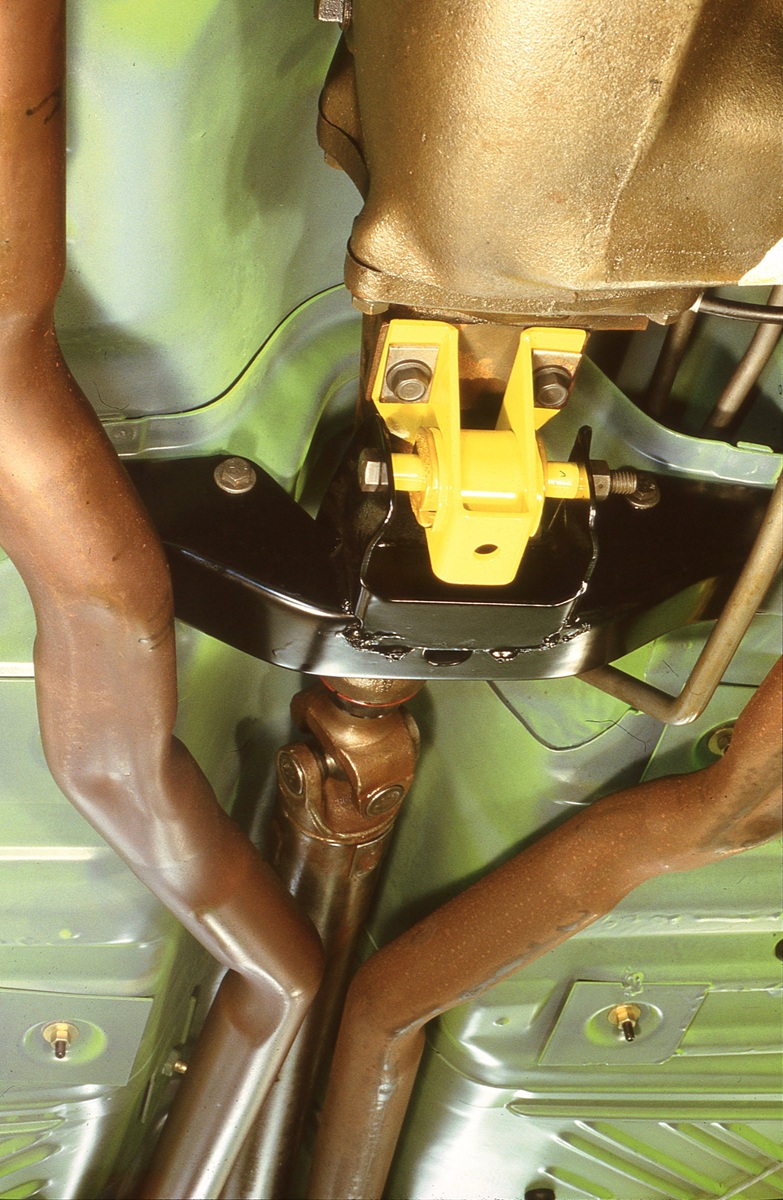
The Bright Yellow transmission mount was a color code for the use of the HEMI 4-Speed. Exhaust pipes show the proper OEM “flats and reliefs” that represent the stock pieces.
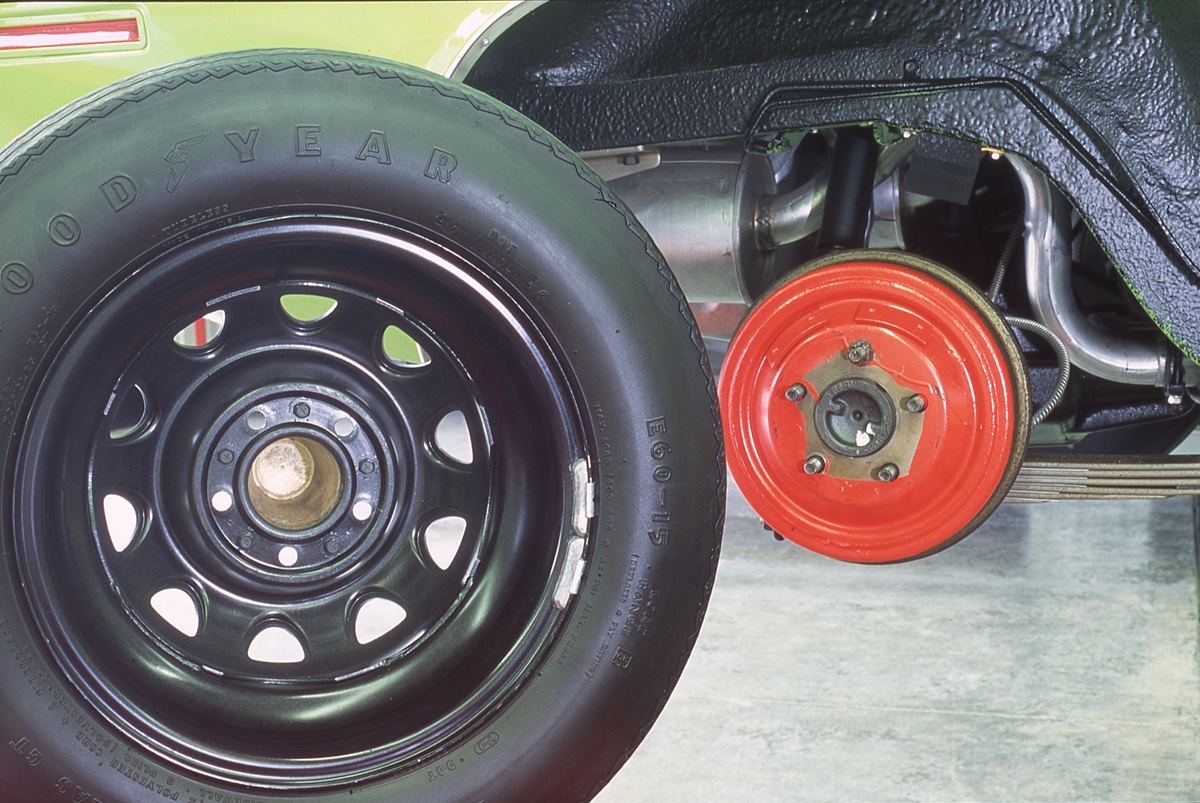
When these cars were built, the production line procedure was to paint the brake drums red, to give a distinctive look as fitted with Rallye wheels. Part of the “Gibson Magic” is to reproduce this hue, including a drip or two just like the day they were originally brush painted.
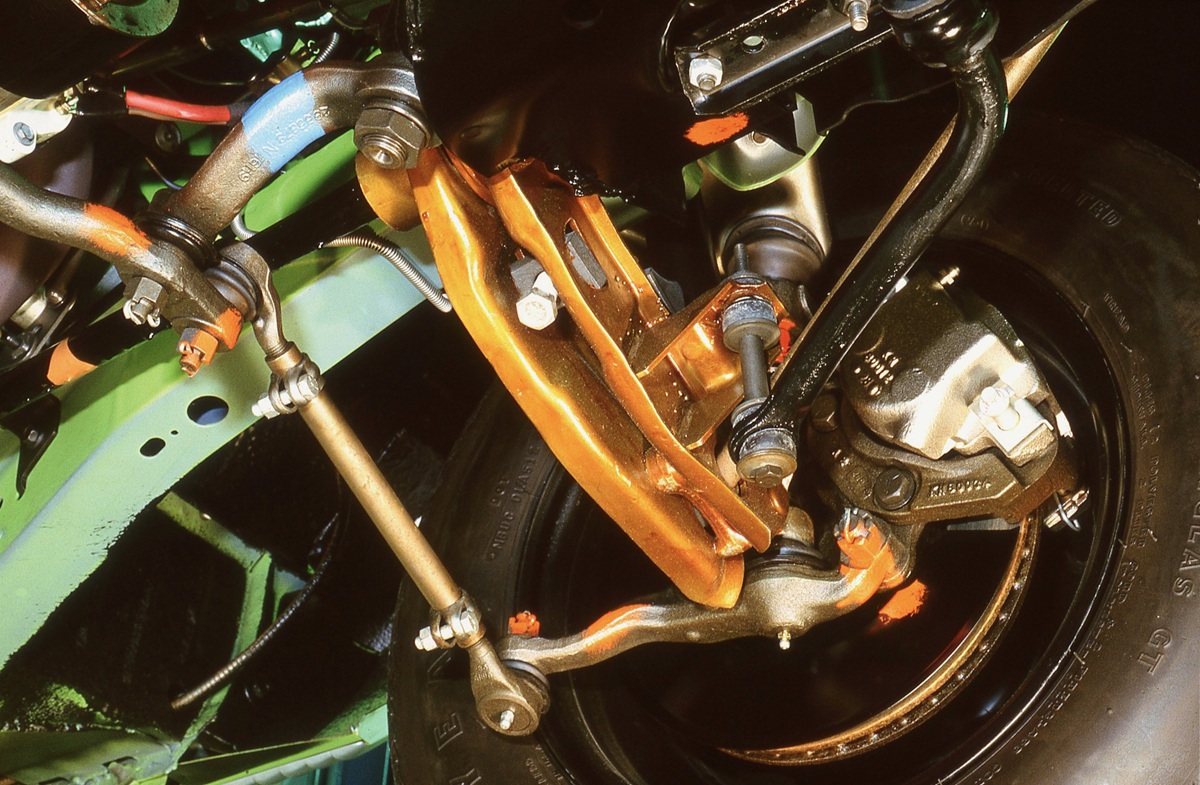
”A34″ cars automatically came with power front disc brakes (11-inch diameter). Note the blue and orange swatches on the steering and suspension components, these were not simply done randomly! Over the years, Roger Gibson has documented numerous color-coding examples on Mopar muscle car production cars, and uses his knowledge when giving his “final touches” on cars such as this ’Cuda.
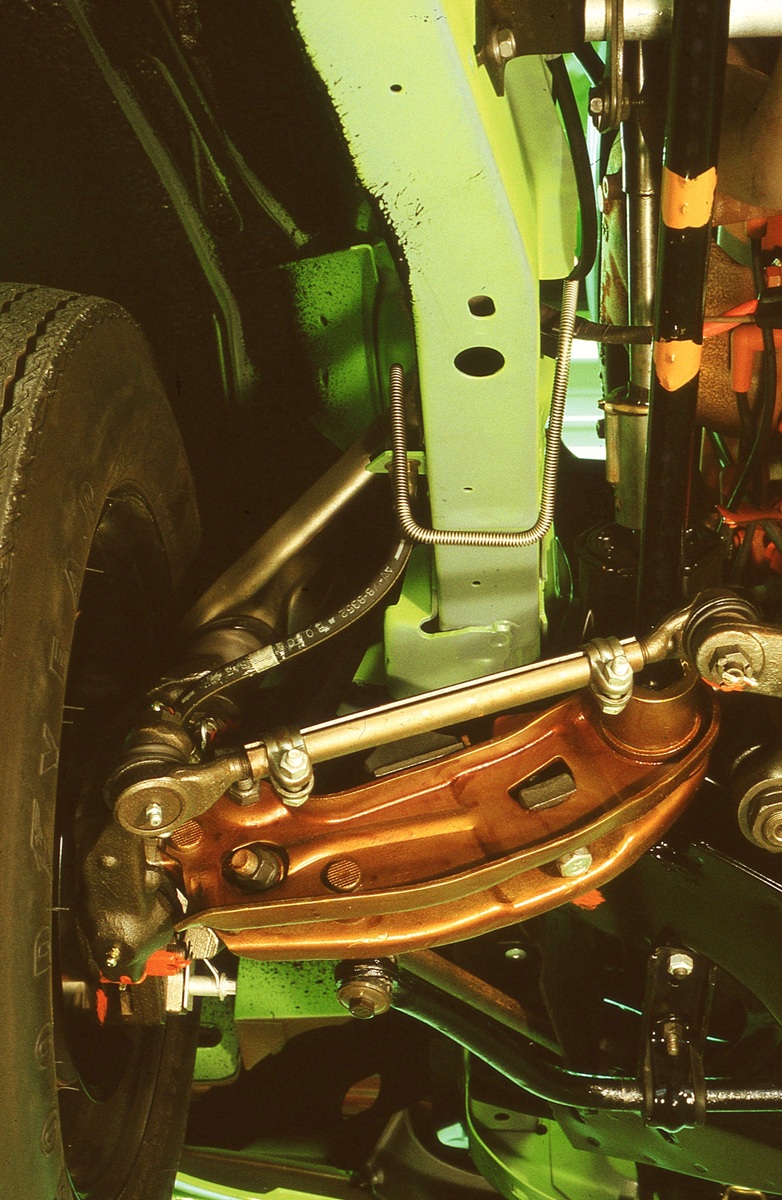
The gold color on the lower control arms is “Cosmoline”, which is a waxy preservative that Chrysler’s vendor dipped them in so to avoid any rusting in storage prior to being installed on the vehicle. Note the spatter on the subframe of the spraying of the undercoating, not done by accident! With extreme photo documentation, that’s exactly how it was applied when the car was being built.
ALI & CHEMICAL IMMERSION
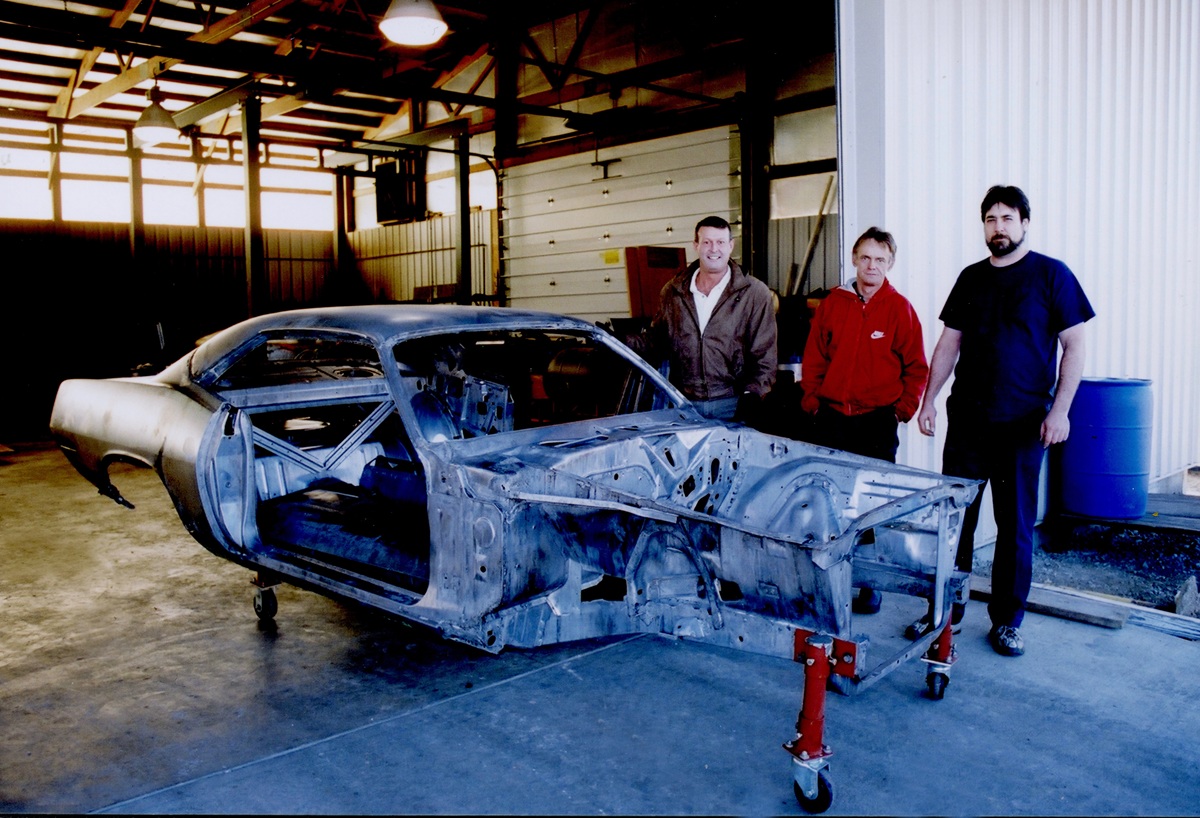
The Barracuda body shell was expertly dipped using the alkaline electrolytic immersion process and it was discovered the car was never in any accidents and all body panels were as it rolled off the assembly line.
ROCK & ALI
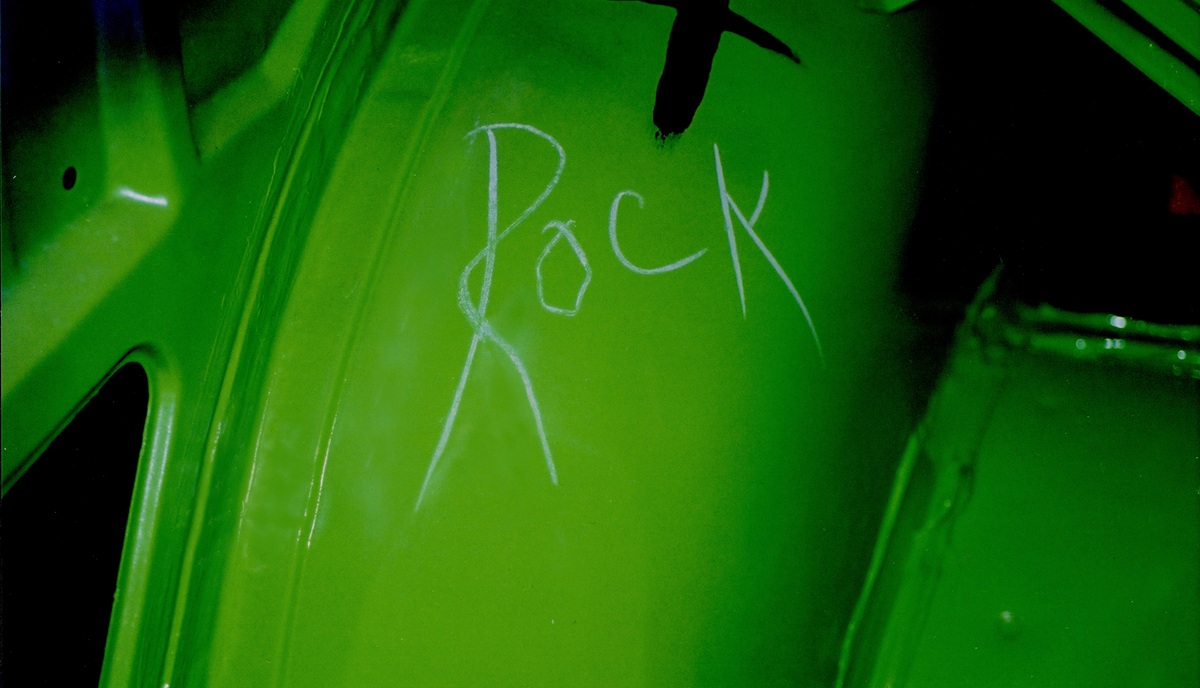
On the passenger-side rear wheel tub, the name “Rock” was found written by hand. It’s believed this ’Cuda may have been selected for a random quality control audit, with “Rock” possibly being the inspector – or perhaps just a line worker who decided to leave their own John Hancock on this uniquely equipped machine. Adding to the mystery, a large hand-written “4” was also found, likely tied to an internal assembly line code.
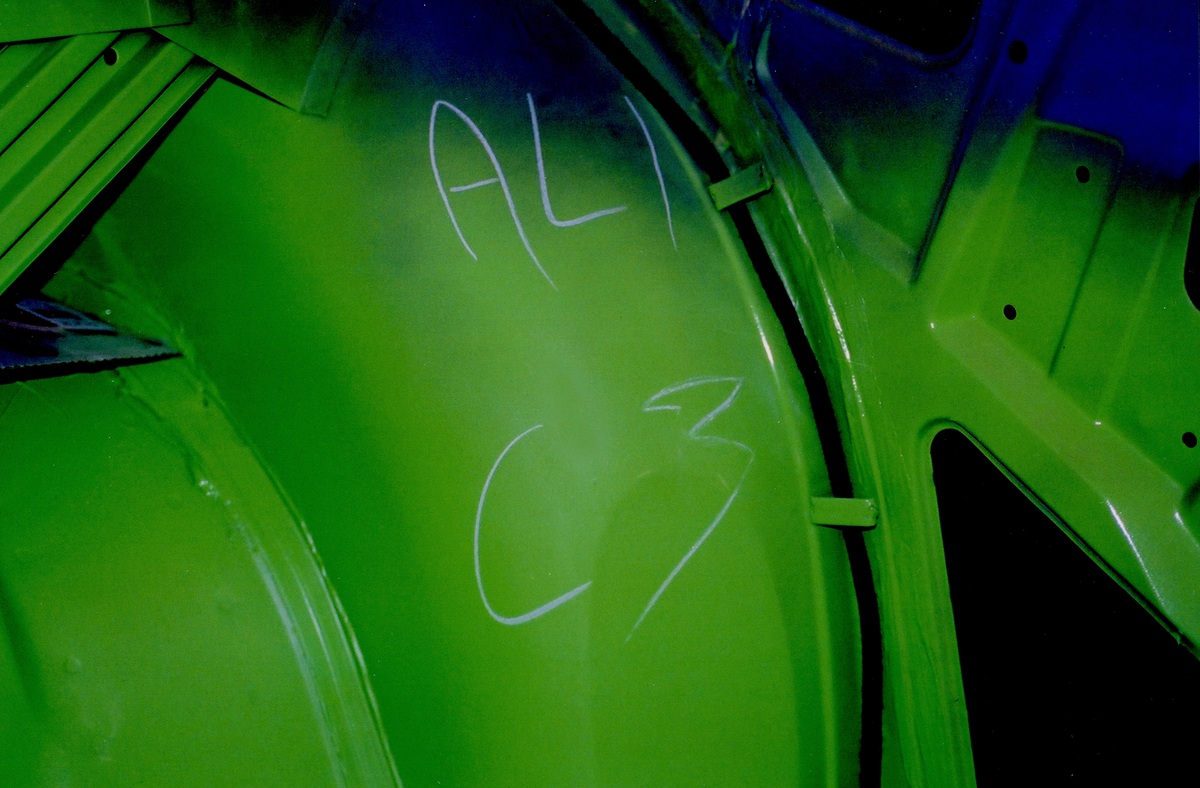
On the driver’s side, additional markings were discovered – “Ali” and “C3” – potentially inspection references, or perhaps just another personal signature from someone working the line. Whether for verification or pride, it’s clear this colorful car caught someone’s attention as it made its way down the assembly line.
DETAILS MATTER
Extensive photography was conducted throughout the car’s disassembly process to serve as a detailed reference during reassembly. This ensured that countless small details were reproduced with precision – exactly as the car was originally assembled at the Hamtramck Assembly Plant, where this ’Cuda was built.
REPRODUCED FIREWALL FACTORY PAINT DRIP
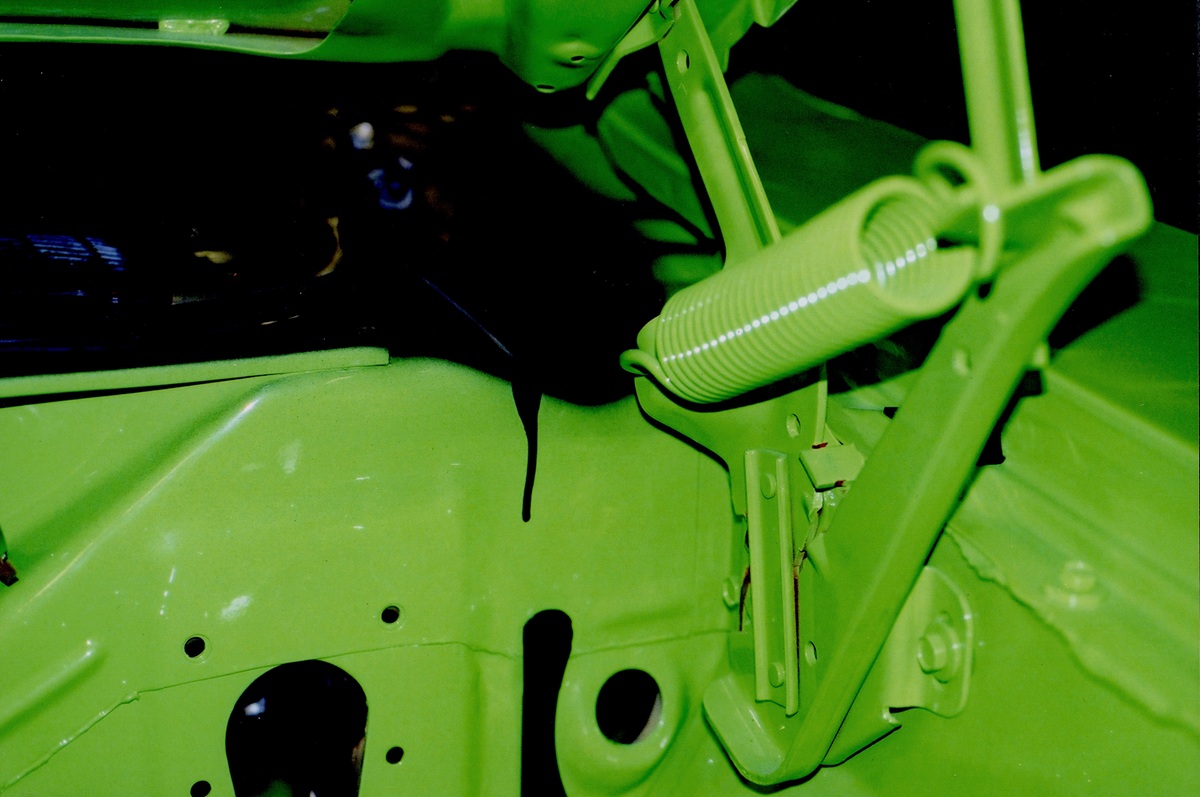
From the factory, the car had a noticeable paint drip on the driver’s side of the upper firewall – a subtle but authentic “DNA” marker of its original build. During the restoration, that paint drip was meticulously recreated to match the exact length and width it had when it first ran down the panel back in late 1969. A true time-warp detail!
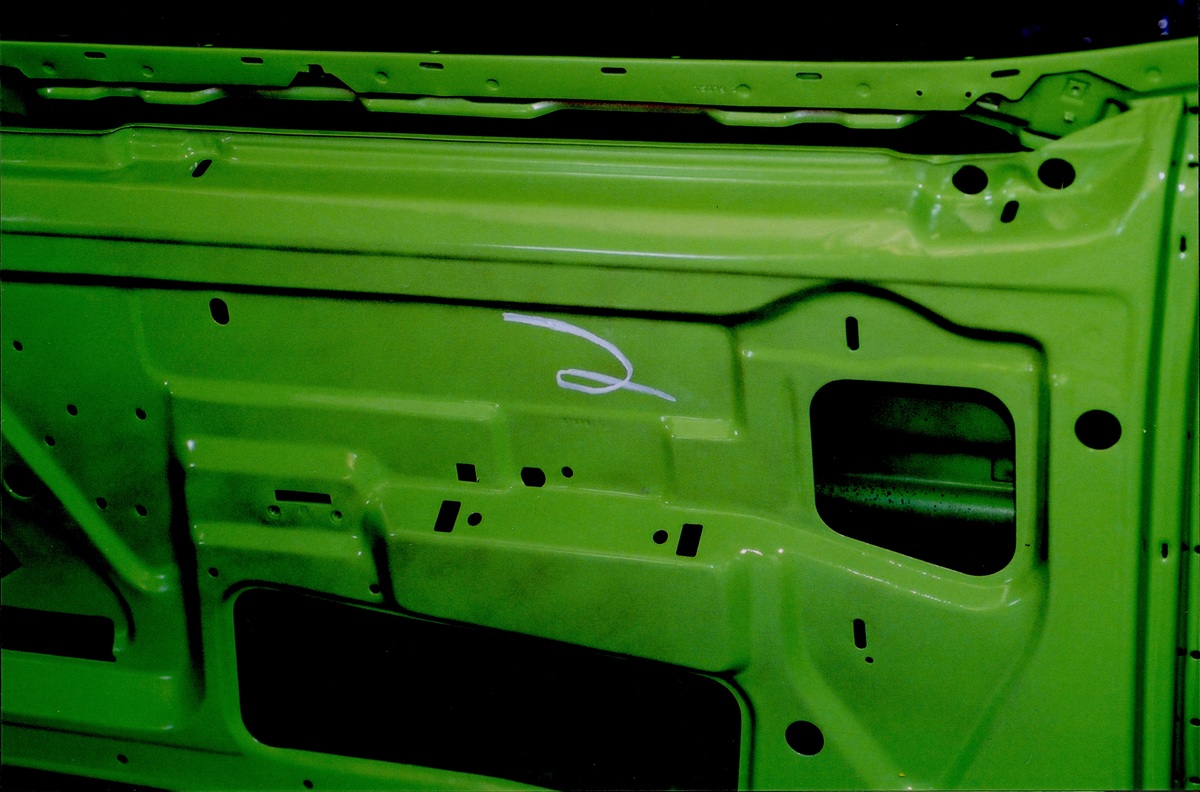
One example of Roger Gibson’s commitment to extreme accuracy during the restoration of this ’Cuda was the hand-marked “2” found inside the passenger-side door during disassembly. After fresh paint was applied, that same marking was faithfully reproduced – despite the fact that it would be completely hidden once the door panel was reinstalled. It’s the kind of detail that may never be seen again, but it remains part of the car’s unique “thumbprint.”
DEALER BROCHURE
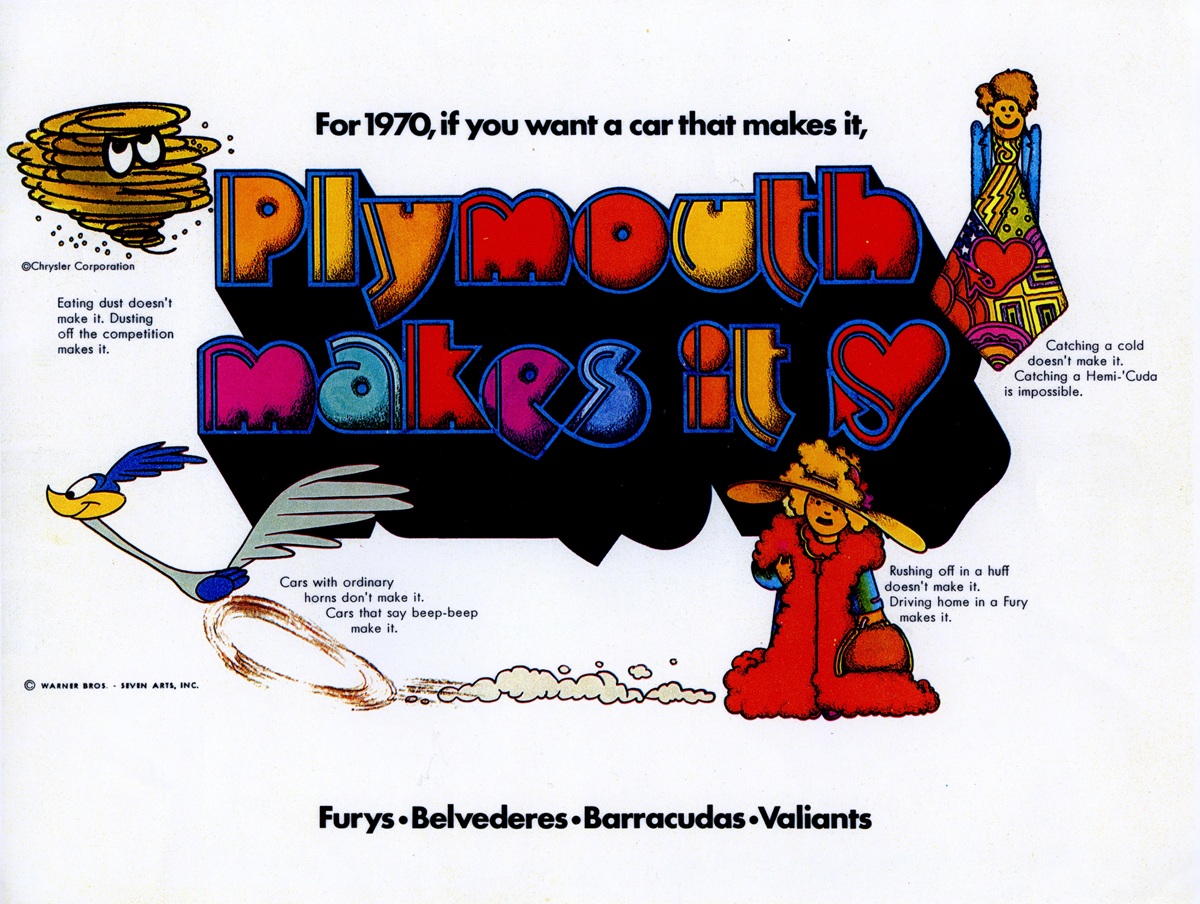
“Plymouth Makes It” was the brand-new marketing message for 1970, with artist Peter Max having been chosen to create his “pop art” style in the graphic designs.
RTS MEMBER
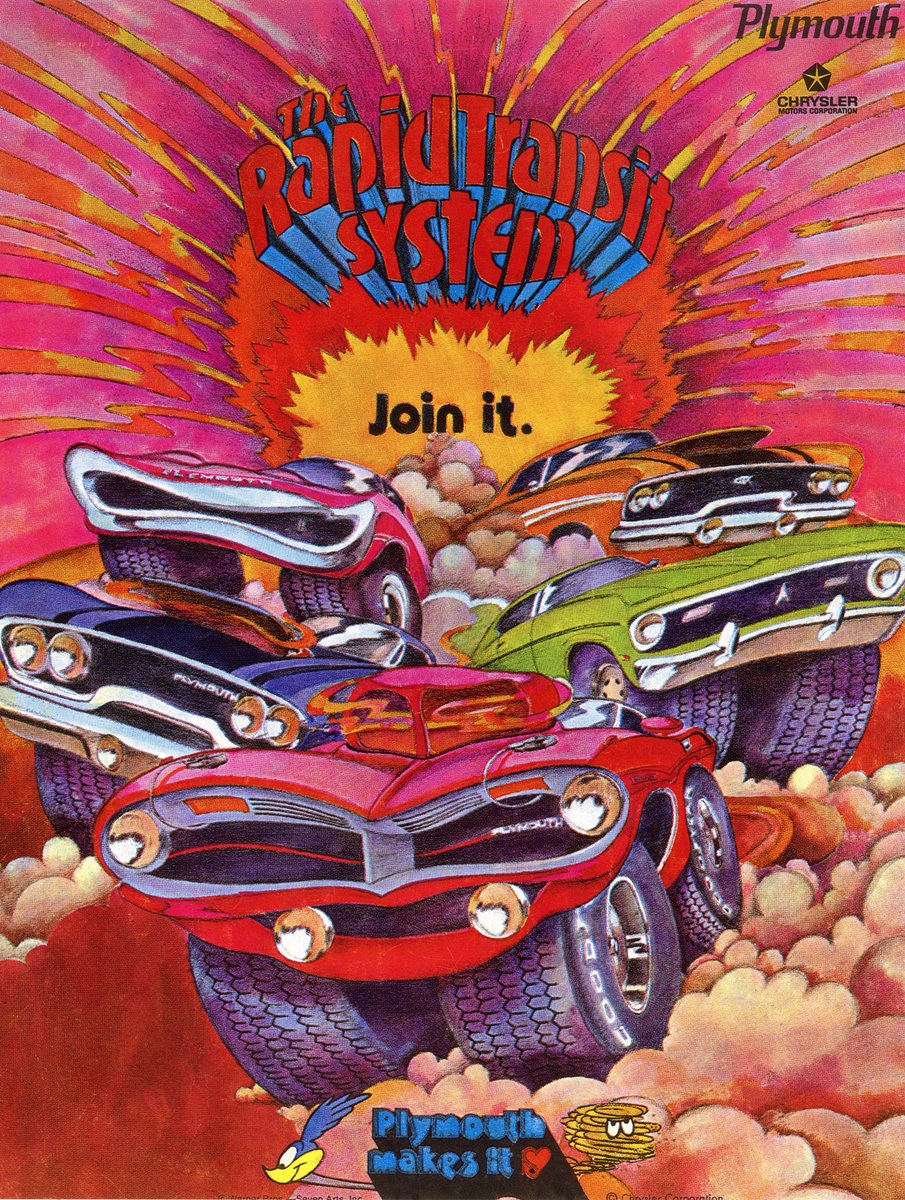
The Plymouth Division’s “Rapid Transit System” advertising campaign featured a lineup of high-performance production vehicles, including the ’Cuda, Duster 340, Road Runner, GTX and Sport Fury GT. Full-page magazine ads showcased bold, vibrant, youth-oriented artwork designed to grab attention – and it did. The campaign became iconic, capturing the spirit of performance and style that defined the era.
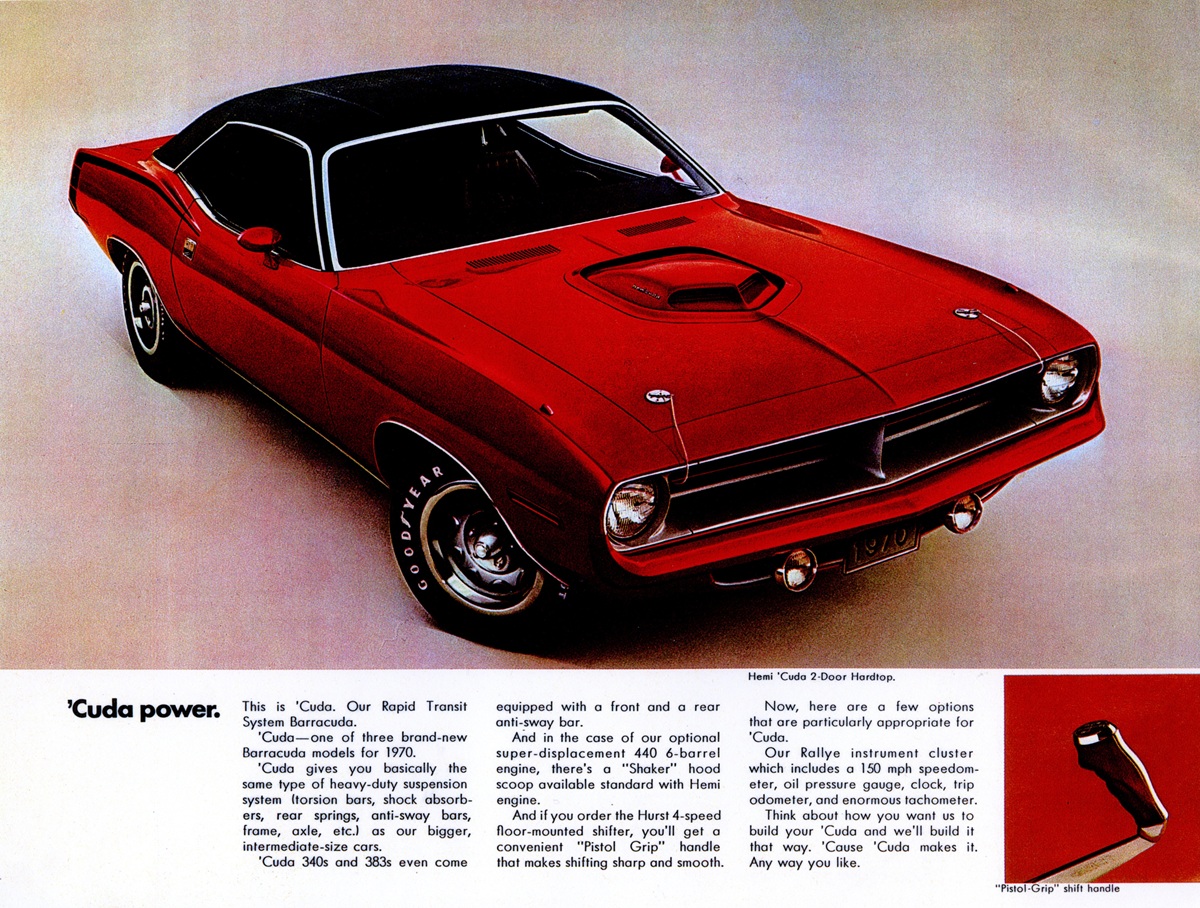
Inside the Plymouth Makes It full-line brochure, this page introduced the ’Cuda to potential buyers, proudly described as “Our Rapid Transit System Barracuda.” The copy highlighted key features and available options, wrapping up with a bold, confident closing line:
“Think about how you want us to build your ’Cuda, and we’ll build it that way. ’Cause ’Cuda makes it. Any way you like.”
MEANING OF “Y13”
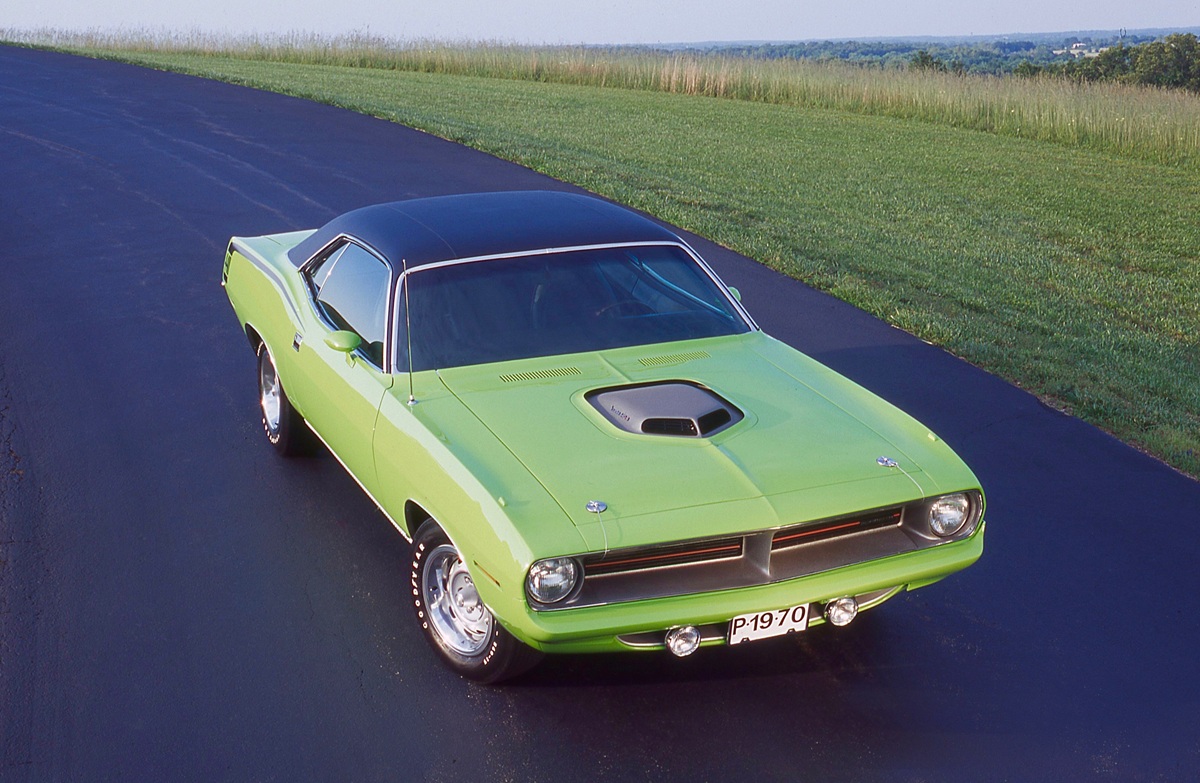
This particular ’Cuda is a “Y13” Dealer Demonstrator car – meaning it was equipped the way it was for a very specific purpose. Of the 1970 ’Cudas built for the U.S. market, only about 685 were ordered by dealers specifically to showcase the model for test drives. The high-performance options on this car – 440+6 powerplant, Shaker hood, 4-speed manual transmission and 4.10:1 rear gears – make it clear that performance was the priority. It was built to impress potential buyers from the moment they hit the throttle.
Author: James Maxwell
0 Comments