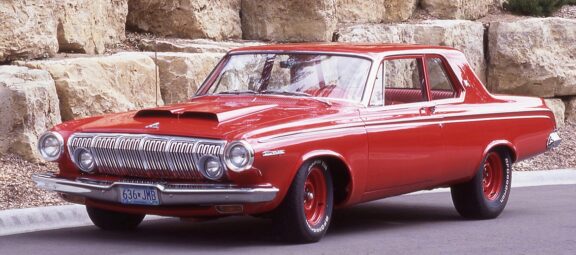
Hot ’63 Dodge
Dodge did a lot in changing their image from a conservative family car maker to a hot performance car maker with the 426-cid “Max Wedge” cars, especially with the release of the newly styled 1963 models. Mopar® racers did very well on both the drag strips and on the streets, and all because of the potent power under the hoods of the 426 cars.
426 MAX WEDGE
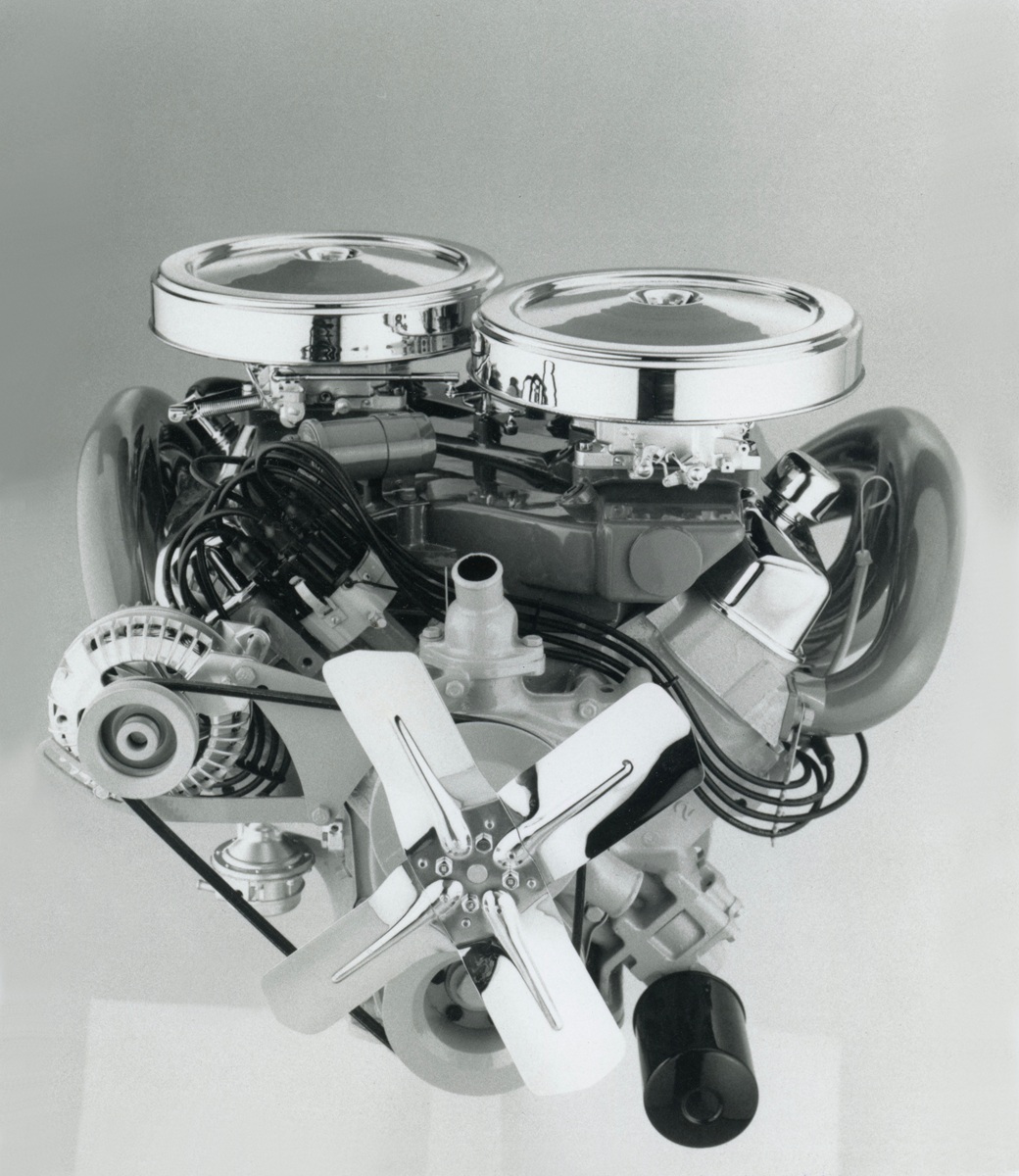
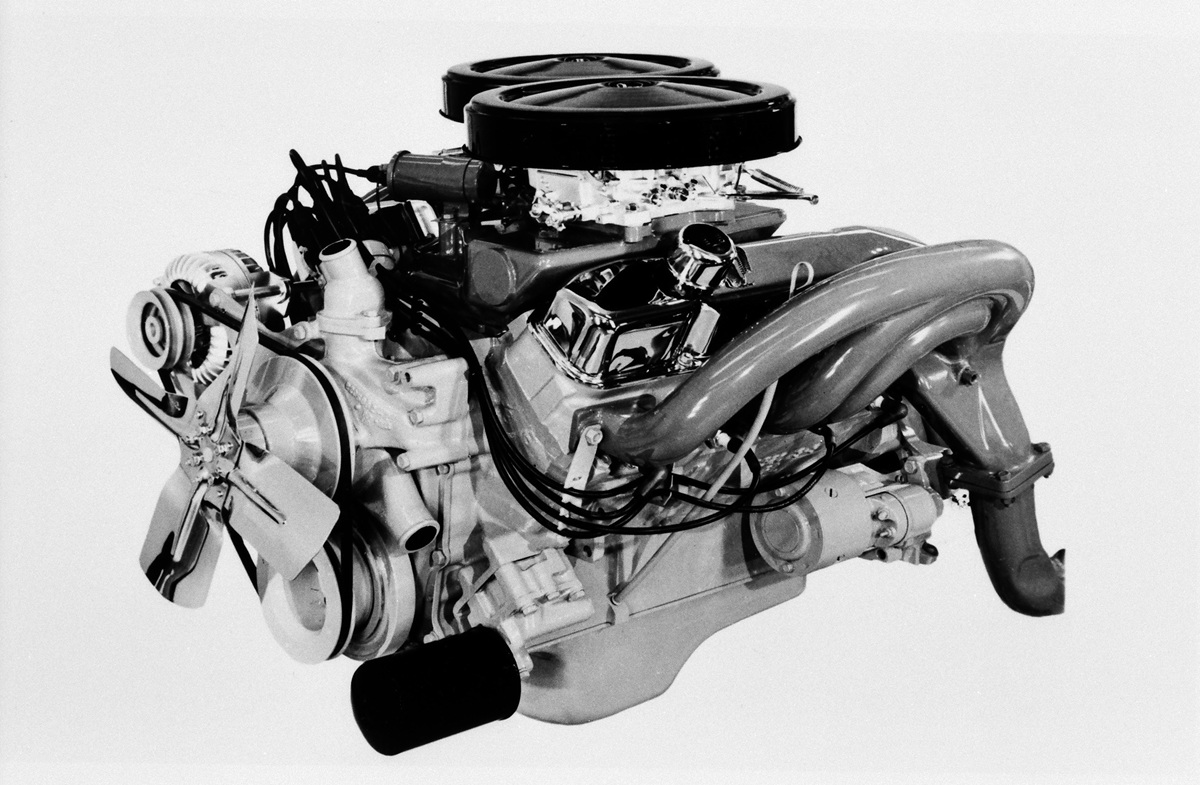
The 1963 version of the “Max Wedge” engine saw the enlargement of 13 cubic inches (from 413 to 426) from the 1962 cars, and that particular increase was in line with the 7-liters (427-cid) limit that the country’s racing organizations had come up with for the car manufacturers. The bore was increased by 1/16th inch with the 3-inch stroke retained from the previous 413. To aid in more volume of fuel into the engine, the 1963 carburetors were larger (Carter #3705 replacing Carter #3447), plus the cylinder heads now were cast with an intake valve relief area.
The cross-ram intake (also known as short ram) remained, as did the large upswept exhaust manifolds. As it was available in 1962 with two versions – one with 11.0:1 compression pistons (rated at 410 horsepower), and a more potent 13.5:1 version (rated at 425 horsepower) – 1963 Max Wedge powerplants continued to be available in both versions. Production engines had black air cleaners while only the engines for display and press photos had chromed air cleaners.
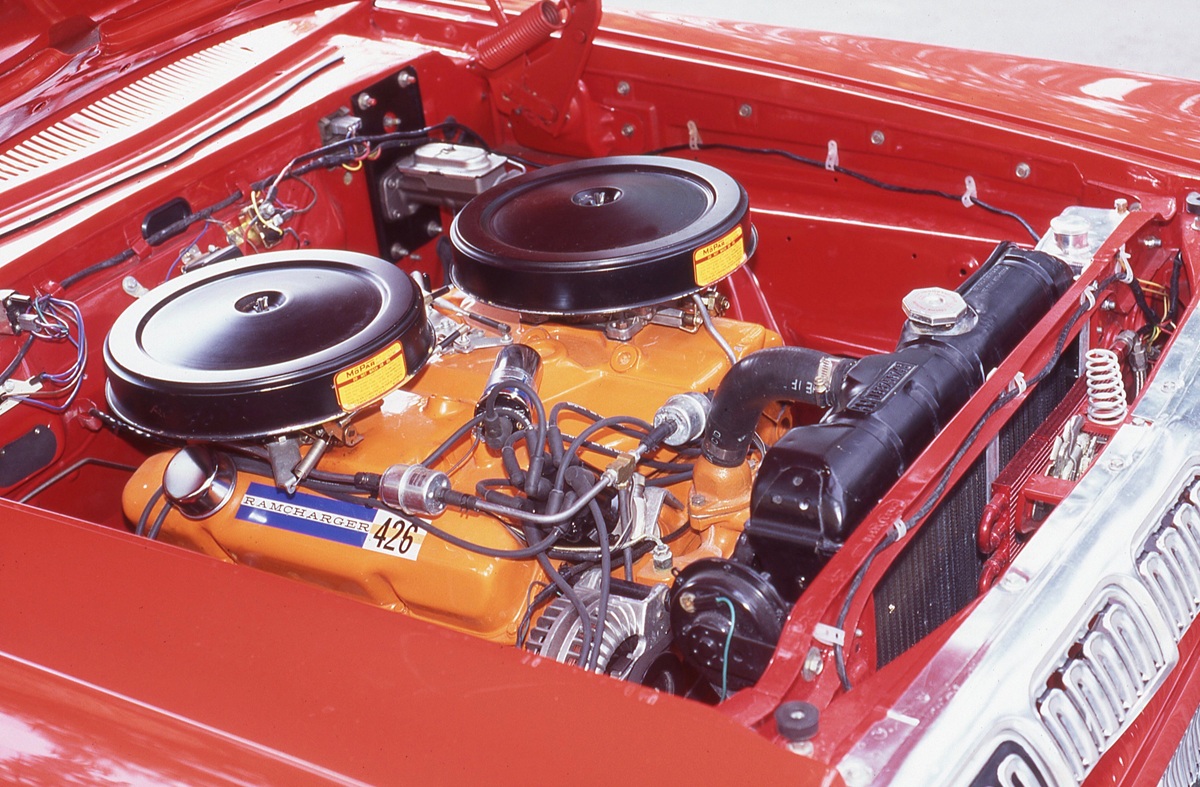
While Dodge’s version of the Max Wedge was labeled with “RAMCHARGER 426” valve cover markings, the sister version from Plymouth had “426 SUPER STOCK” markings. In both cases, they were factory painted in Bright Orange (AKA Omaha Orange) with both air cleaners with Yellow with Red “do not wash or oil” warning stickers.
PRISTINE CONDITION
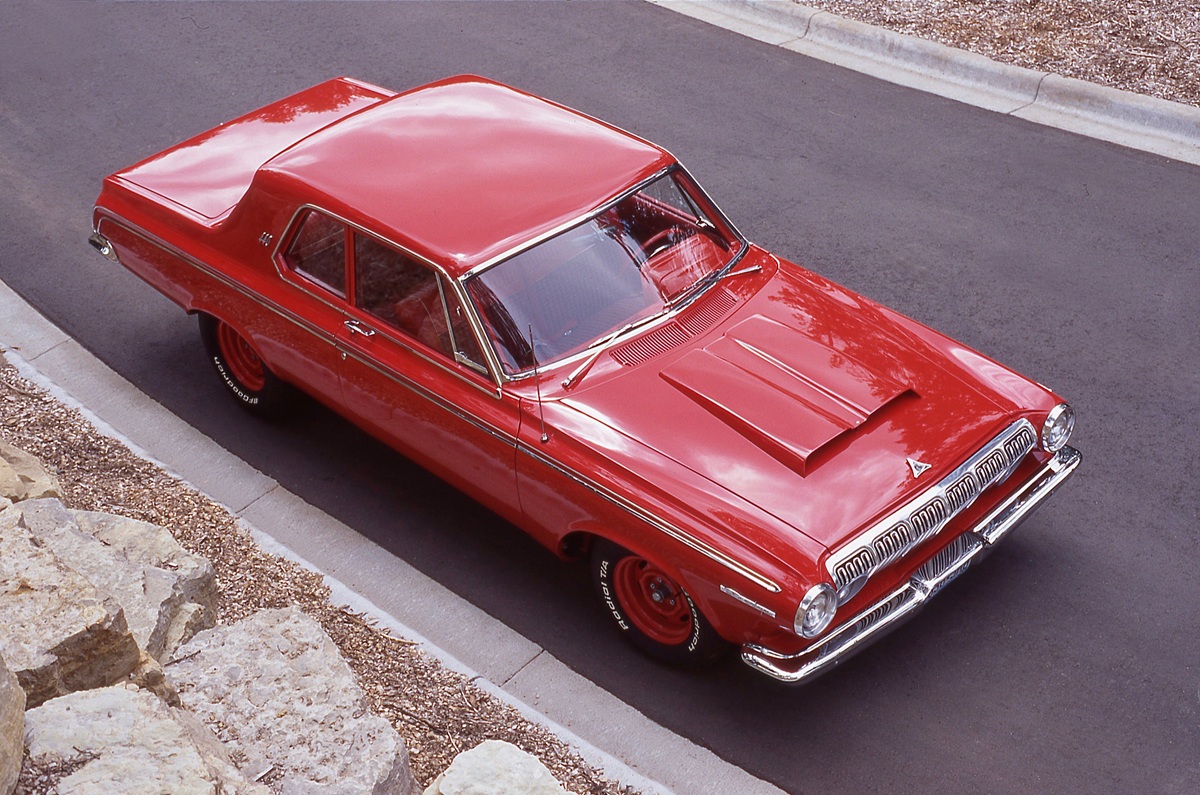
1963 Dodge 330 / 440 / Polara passenger cars rode on a 119-inch wheelbase, unitized body structure and with an overall length of 208.1 inches. Six-section massive grilles were part of the restyling for this model year. Note the large “Fratzog” three-sided triangle emblem on the hood! This particular feature car is a “440” trim model, nothing to do with engine size, it was a mid-range model positioned between the lower-cost “330” and the premium Polara model.
COP CAR WHEELS
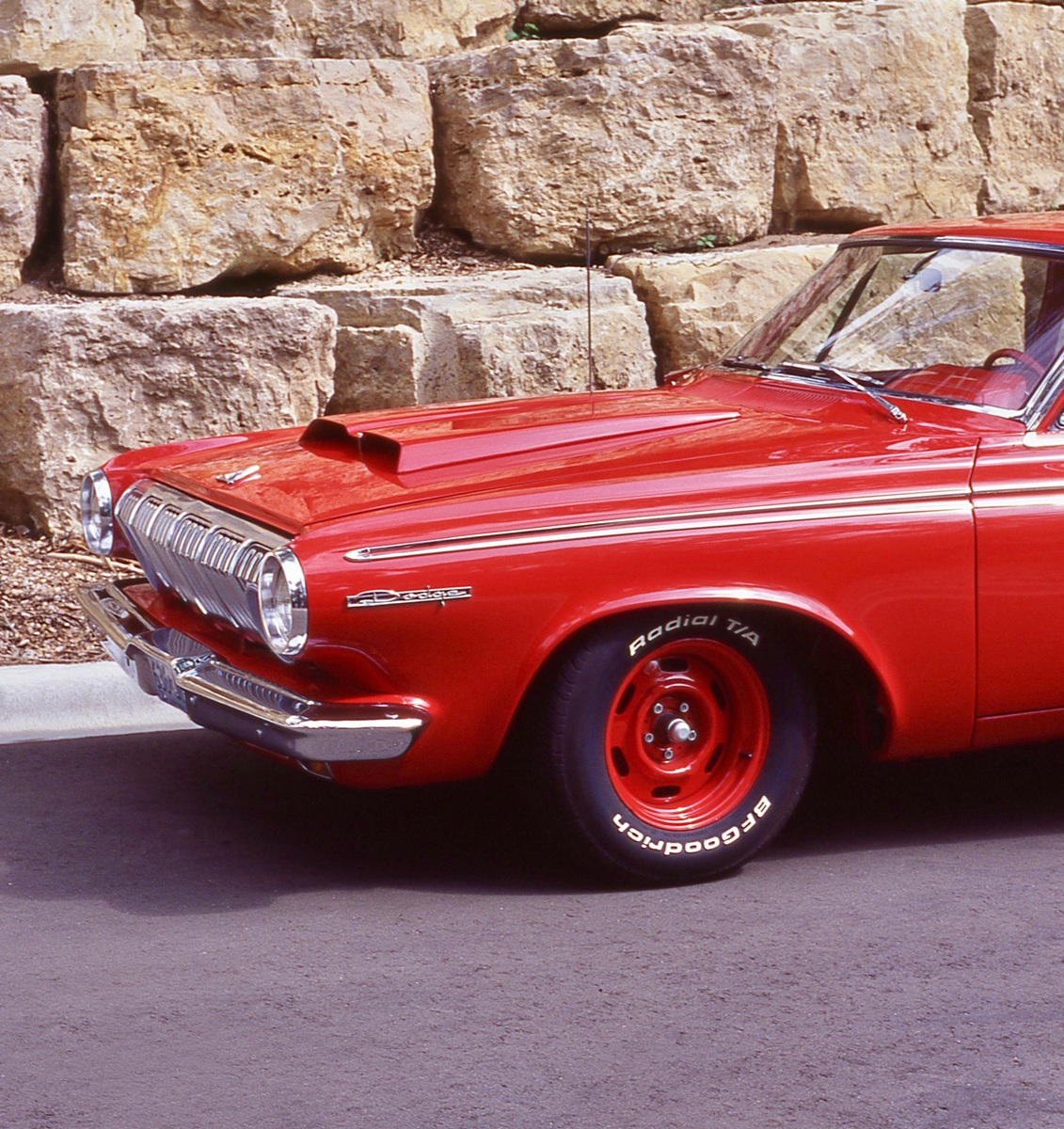
15 x 7-inch 6-slot “cop car” wheels (5 on 4.5-inch bolt circle) were used on this car, a personal preference for the owner and not period correct for the era. These wheels were introduced in the 1970s for Mopar police car and taxi-cab applications, the slots designed to enhance brake cooling. Modern BFG T/A radials were also added.
“POST-CAR”
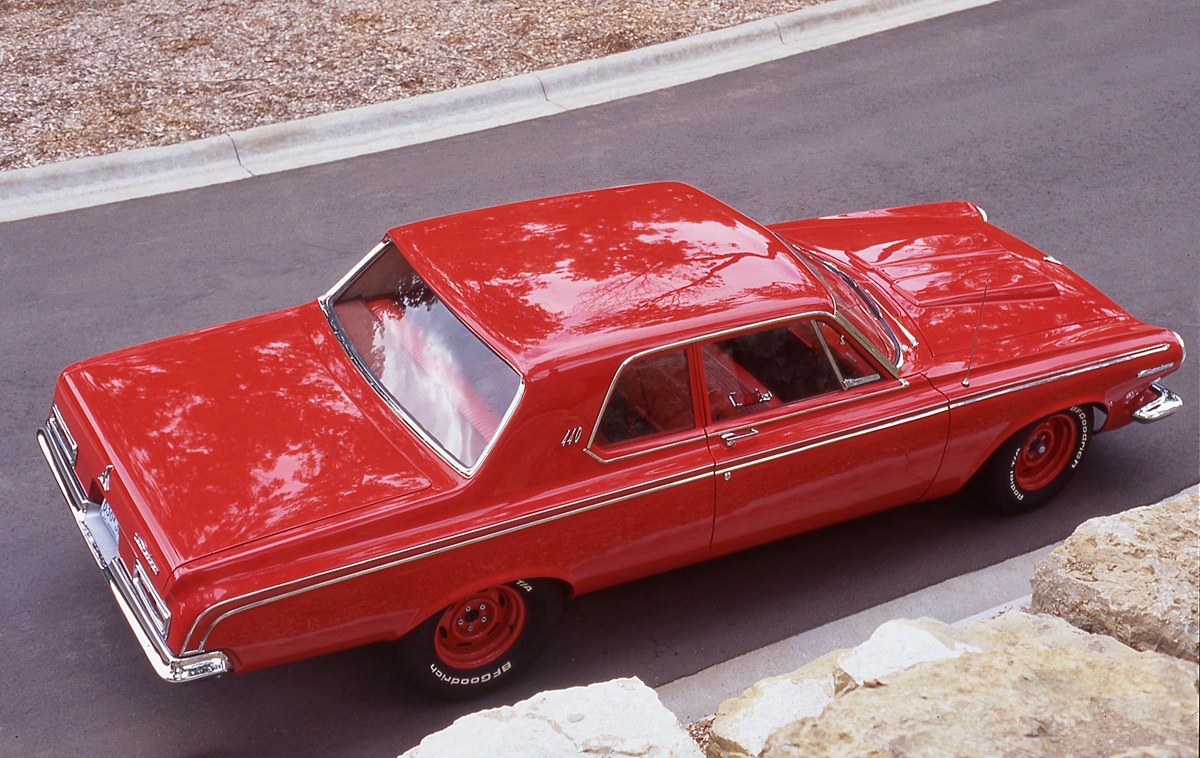
1963 2-door 440 models were available in sedan form, AKA “Post” cars, meaning the door glass was surrounded by metal and rear windows featuring similar metal surroundings, which is called the “C-pillar” of the body structure. These were featured on the lower-cost models. 2-door Hardtops were also available on the 440 models and standard on the Polara Series.
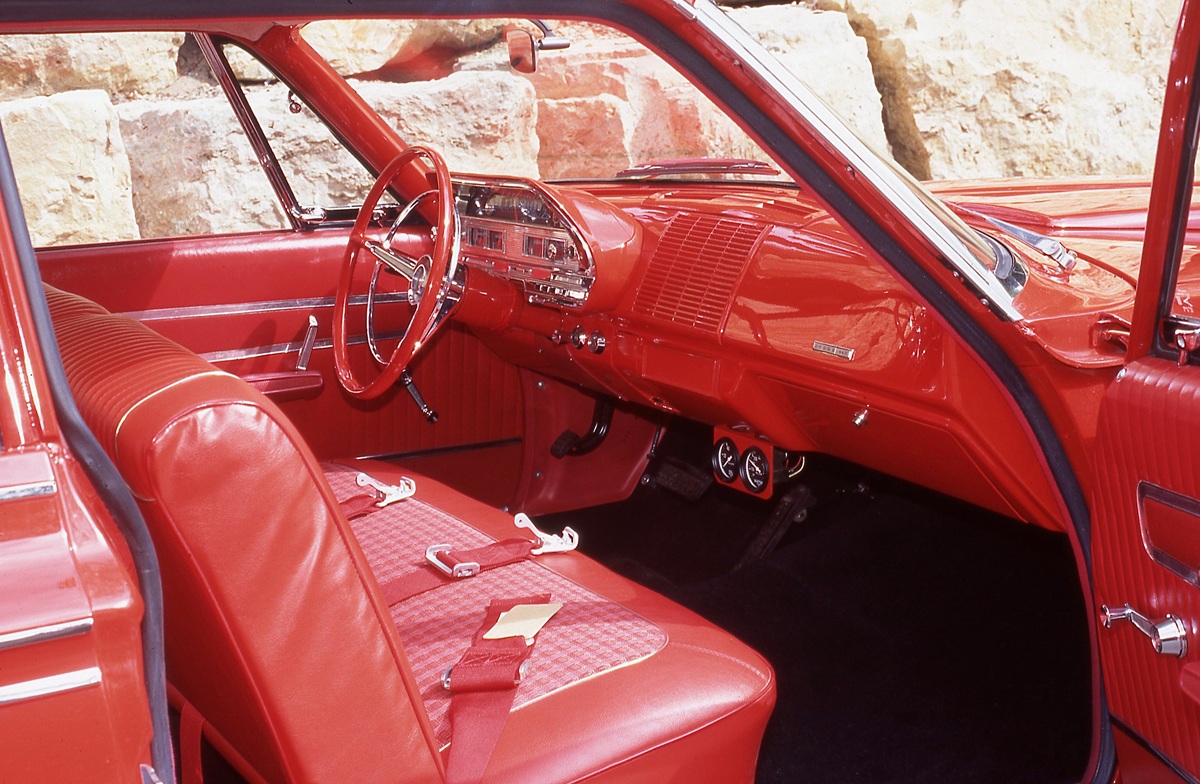
Cloth with vinyl trim was part of the 440 model interiors, along with a carpeted floor, and this car has the push-button operated A-727 TorqueFlite 3-speed automatic transmission. Owner added aftermarket gauges. Lots of Red interior color for certain!
ACTION
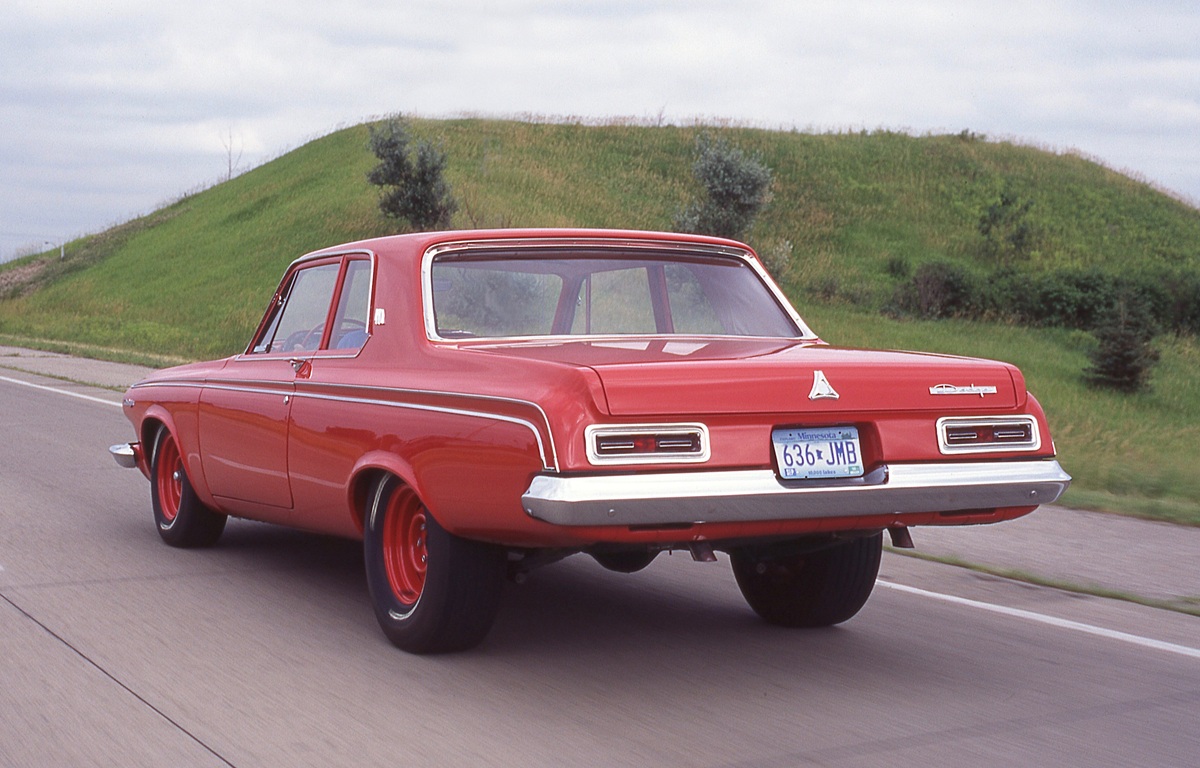
This rear-view action shot exemplifies the lowered front stance, achieved with adjustment of the front torsion bar suspension. These cars were level when manufactured and for drag racing applications oftentimes those racecars had the front torsion bars rather adjusted to raise the front end. The reason was to aid in weight transfer off the starting line for traction.
VERMILION RED
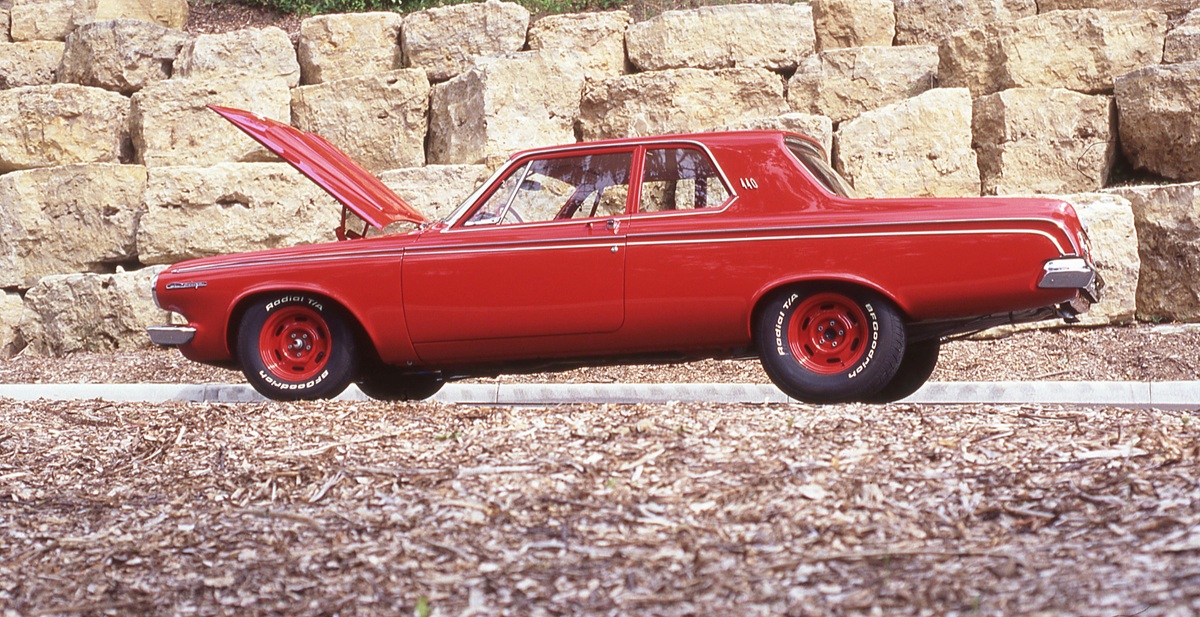
In 1963, Dodge cars that came from the factory in “PP-1” color code were Vermilion Red and this example came in that hue. “Dog dish” cars featured body color wheels, and faithful to that presentation this car with its upgraded modern police car wheels also done in body color.
BATTERY RELOCATION
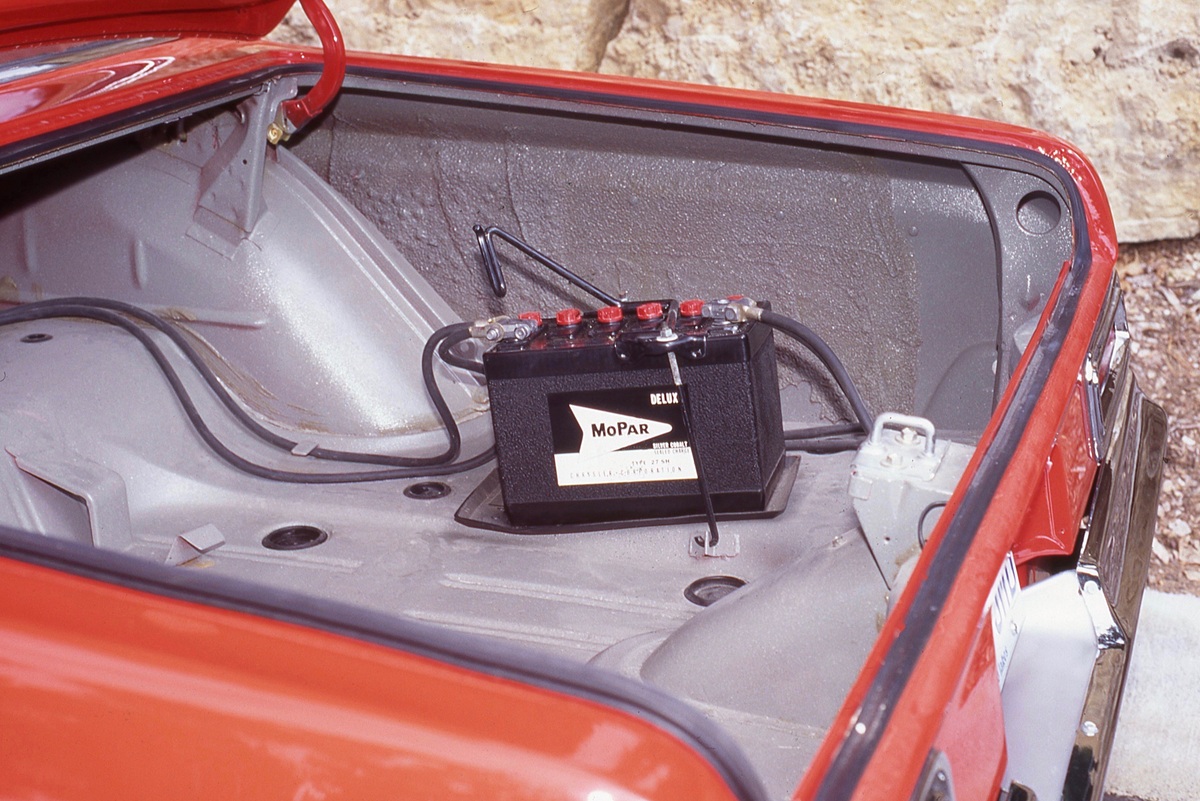
On Max Wedge cars, mounted on the RH-side of the truck floor, a large-capacity Mopar battery was fitted. The Max Wedge cars that had these factory installed were the limited-production “lightweight” cars (with individual vent tubes) that had aluminum front body parts. This car is a steel front car with battery relocation done by the owner.
MAX WEDGE HOOD SCOOP
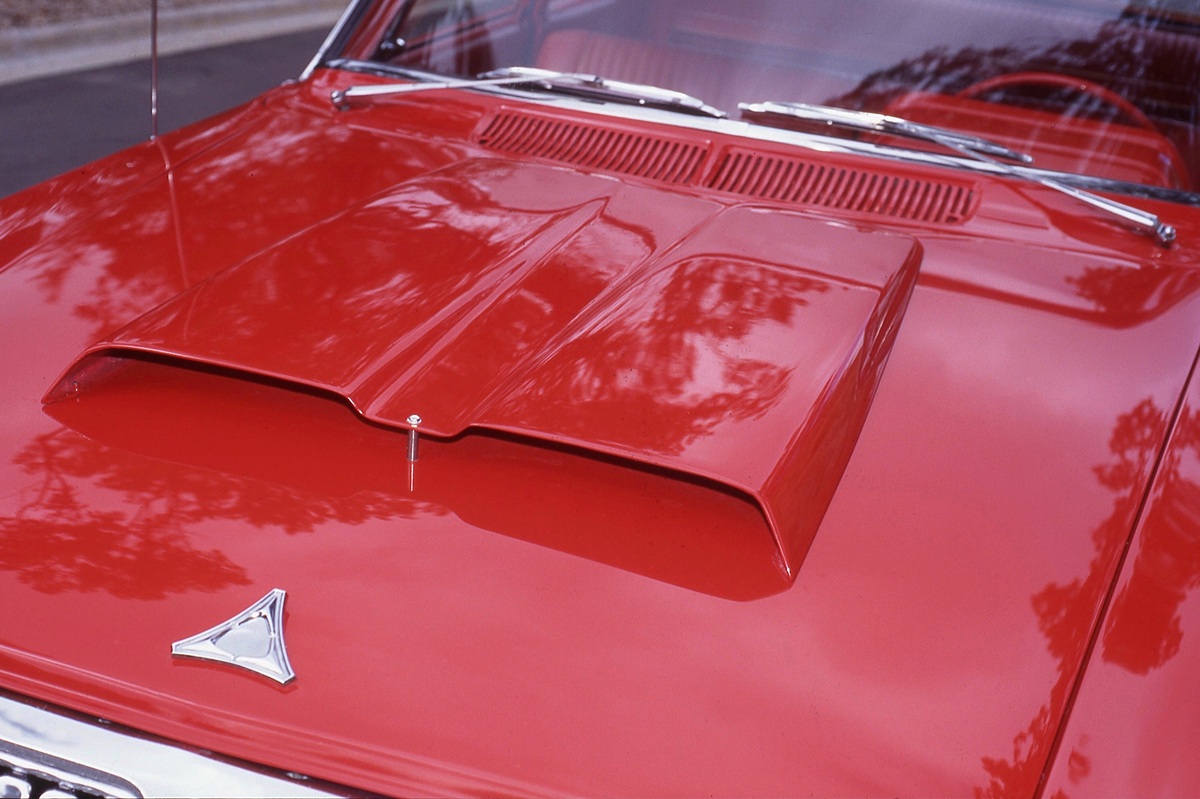
Double-hump hood scoop was a Max Wedge feature on aluminum cars and limited to 330 Models, this was an add-on feature to this car by the owner.
REAR DIFFERENTIAL
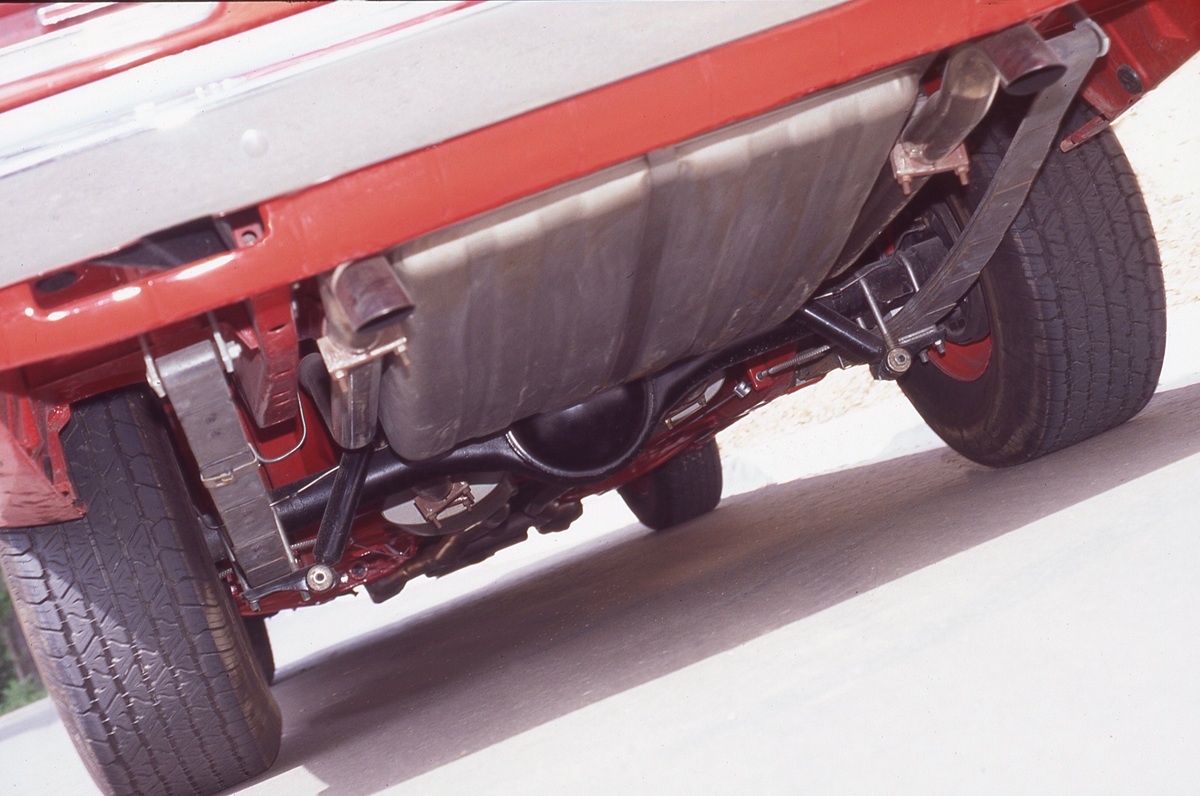
The rear axle on all 1963 B-body cars was the 8 3/4-inch ring gear unit, with Max Wedge cars getting as standard equipment heavy-duty leaf springs and 3.91:1 gearing.
HISTORICAL INFORMATION
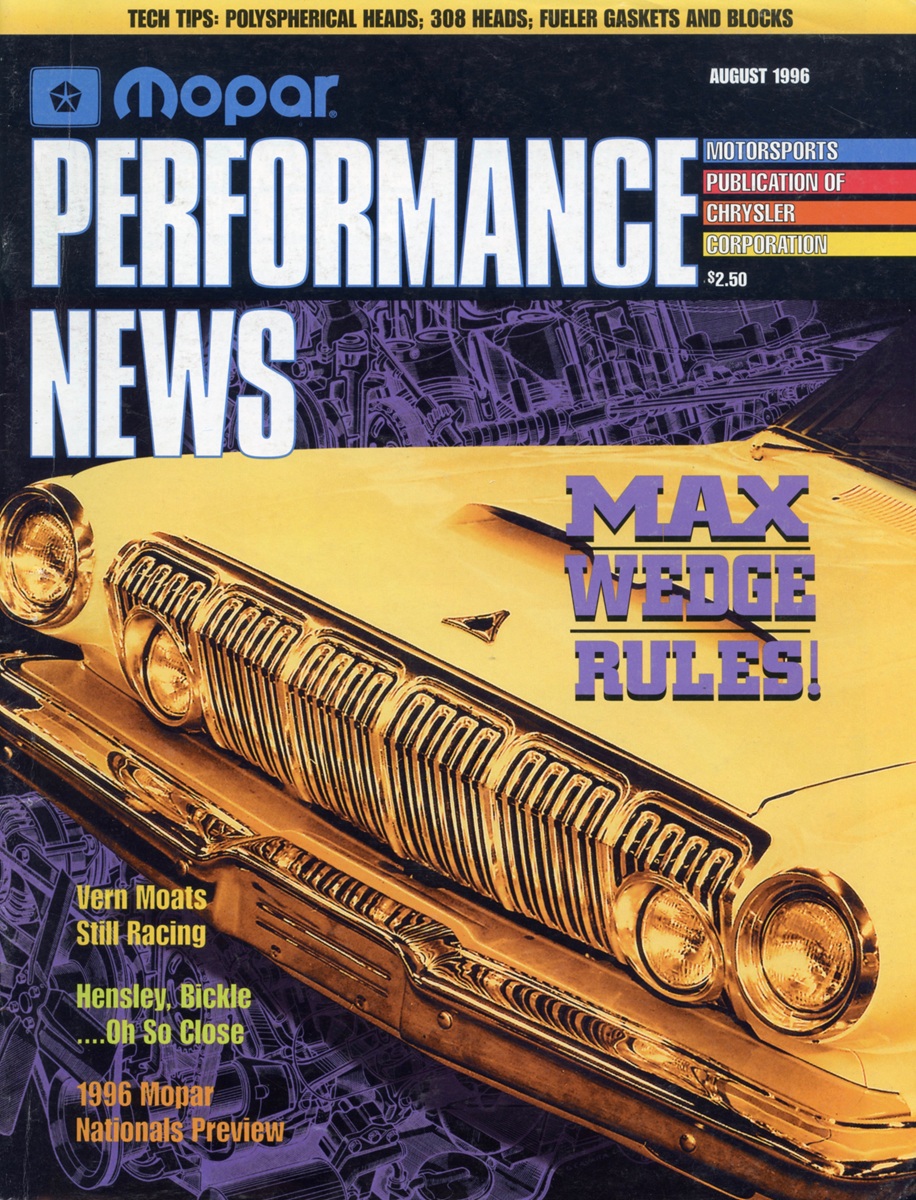
There’s no shortage of accurate historical data on Max Wedge cars from Dodge and Plymouth divisions that has been made available in magazines such as this August 1996 edition of Mopar Performance News. In addition, there are also detailed mentions in vintage consumer “buff books” such as Hot Rod and Car Craft, and Mopar expert Jim Schild penned a Maximum Performance book (published in 2006 by MBI Publishing) with 160 pages of detailed information, illustrated with color and B&W photographs. ISBN#-13:978-0-7603-2192-8
Author: James Maxwell
0 Comments