Extreme Dreams
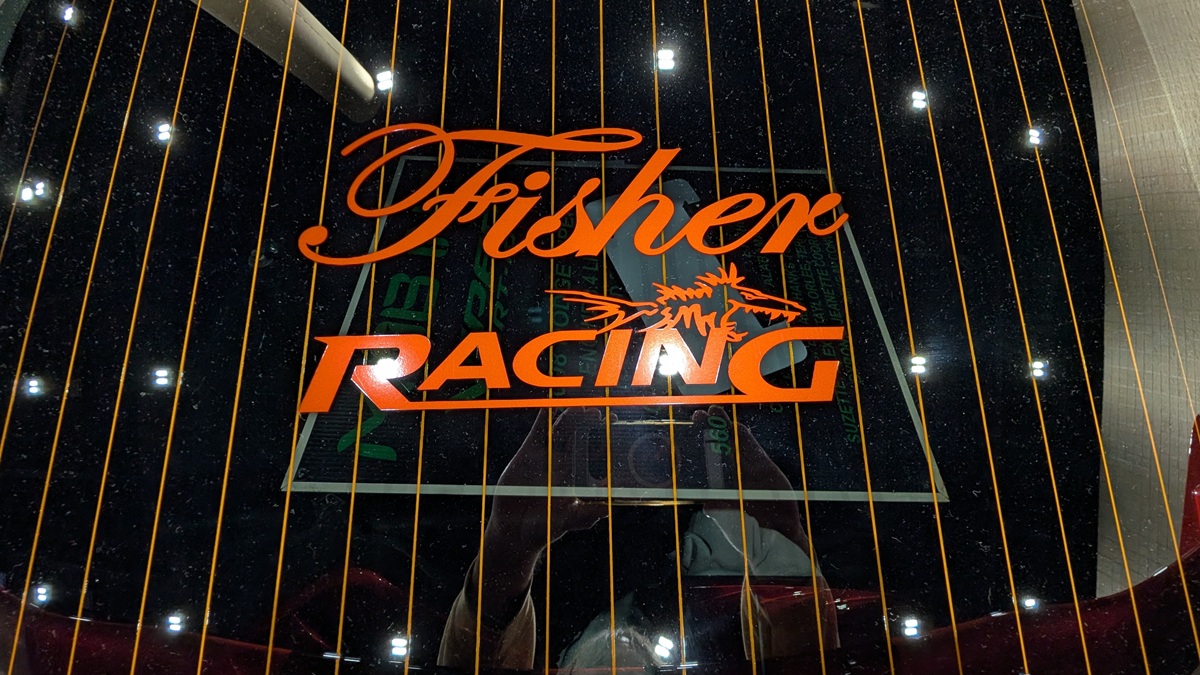
Some automotive enthusiasts discover their passion later in life. Thomas Fisher never had that luxury, or that choice. Growing up in Cleveland, Ohio, his destiny was sealed the moment his father opened the doors to Tom Fisher Racing Enterprises.
“As a young teenager, I would work for my father,” Fisher recalls. “We built funny cars, and pretty much everything we had was Mopar®. My dad was a big HEMI® guy.”
The shop on Rain Avenue in Cleveland wasn’t just successful, it was legendary in Ohio drag racing circles. Tom Fisher Racing Enterprises built an impressive stable of competition vehicles that ran the gamut of quarter-mile warfare. “We had funny cars. We had rails. If it went fast, we built it,” Fisher says. The operation even extended beyond land-based speed, tackling boat motors for clients who needed Mopar power on the water.
For young Thomas, this wasn’t just exposure to high-performance Dodge engineering; it was total immersion. While other kids were doing homework and playing video games, he was learning the difference between a good header design and a great one, understanding how chassis geometry affects weight transfer, and absorbing the culture of Mopar performance at a cellular level.
That foundation stayed with him for decades. The HEMI engine-powered funny cars of his youth planted seeds that would eventually grow into a very specific automotive obsession: the Dodge Viper.
Fisher’s first Viper was a 2008 model in Snake Green, a stunning combination that turned heads everywhere it went. But like so many enthusiasts who’ve made the mistake of selling a car they loved, Fisher found himself plagued by seller’s remorse.
“I sold it, and I kept thinking to myself, why’d I ever sell that car?” he says. “It was absolutely stunning.”
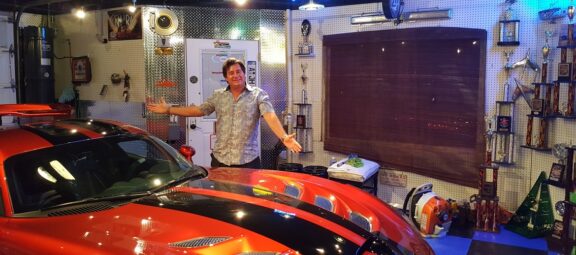
By 2017, that nagging regret had grown into active searching. Fisher started scouring the usual channels, looking for the right Viper to fill the Viper-shaped hole in his garage. Then, Facebook delivered something that made his previous Viper look a little tame by comparison: a 2017 ACR Extreme in Stryker Orange.
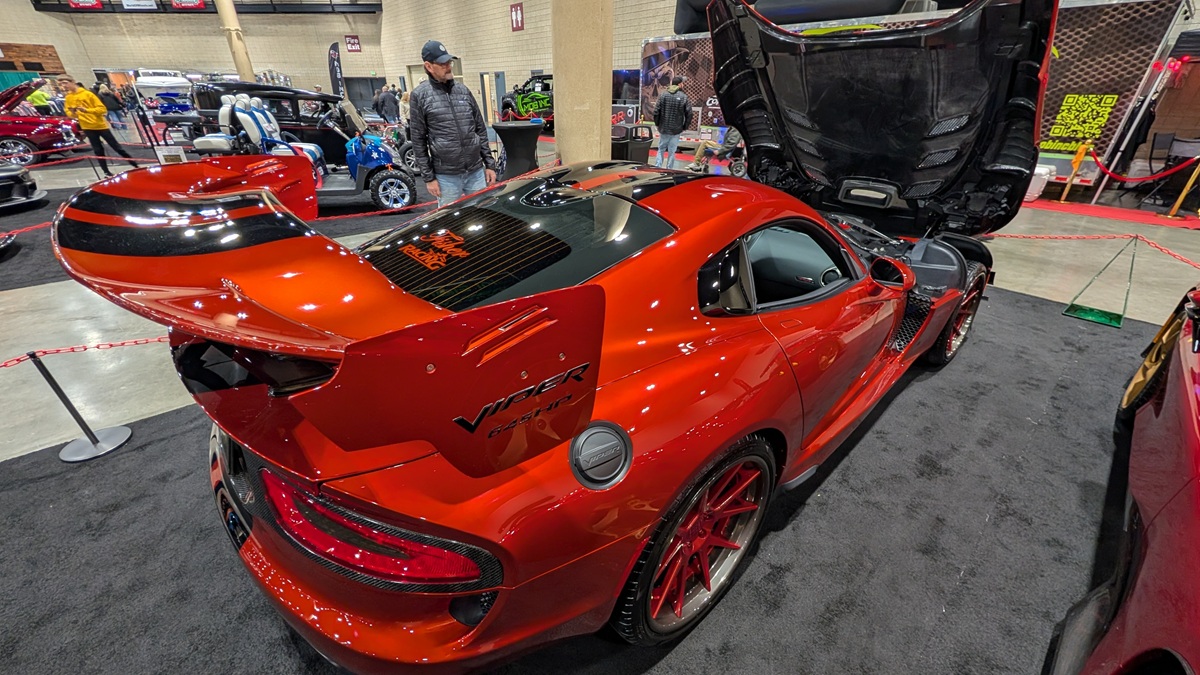
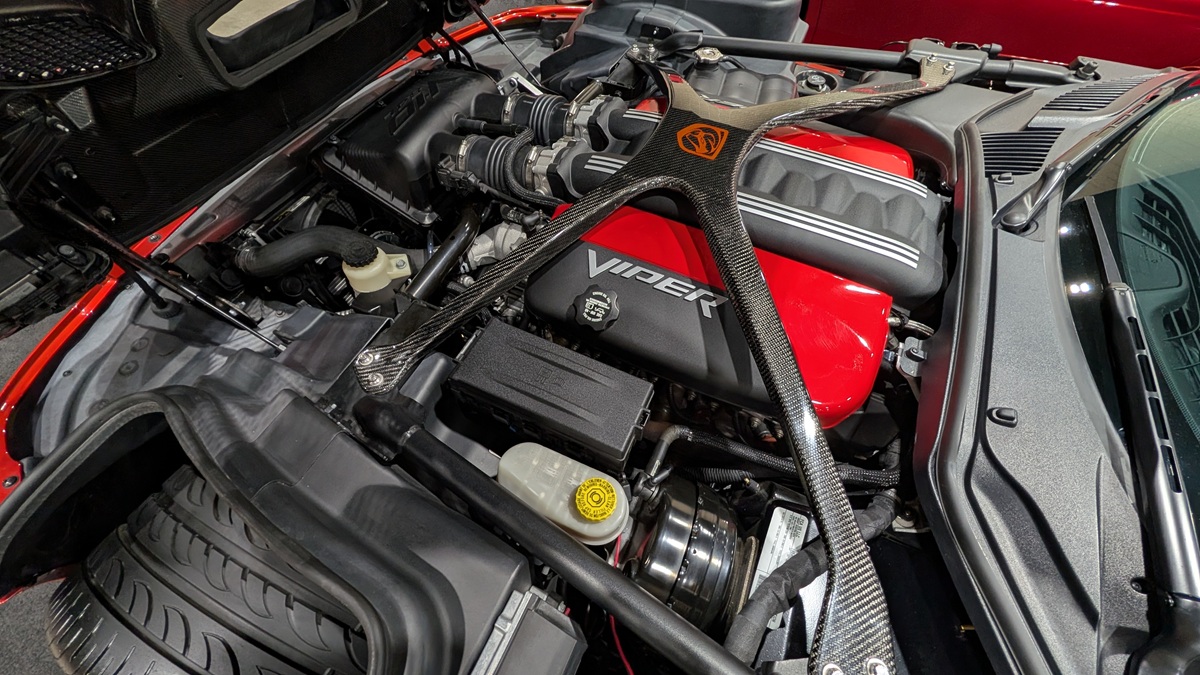
For those unfamiliar with the Viper’s final chapter, the ACR Extreme wasn’t just another trim level, it was Dodge’s ultimate middle finger to the laws of physics and common sense. Raw, unfiltered V10 fury wrapped in the most aggressive aerodynamic package ever fitted to a production car. The ACR Extreme added even more downforce, more carbon fiber and more “you’ve got to be kidding me” elements to an already insane formula.
When Fisher saw this particular car, he knew he had to have it. The seller was located in Paducah, Kentucky, so Fisher made the drive, ready to trailer his prize home to Birmingham.
What happened next could only occur in the Viper community, where these cars inspire such intense emotions that rational decision-making sometimes takes a back seat.
“The day I went to buy it, the gentleman said, ‘I’ll give you a thousand dollars just to go away. I want to keep the car,” Fisher recalls with a laugh. “I said, ‘No, sir, we have a deal. I drove here. We have a deal.'” Fisher and the car rolled down to Alabama, and the Viper-shaped hole in the garage was filled once again.
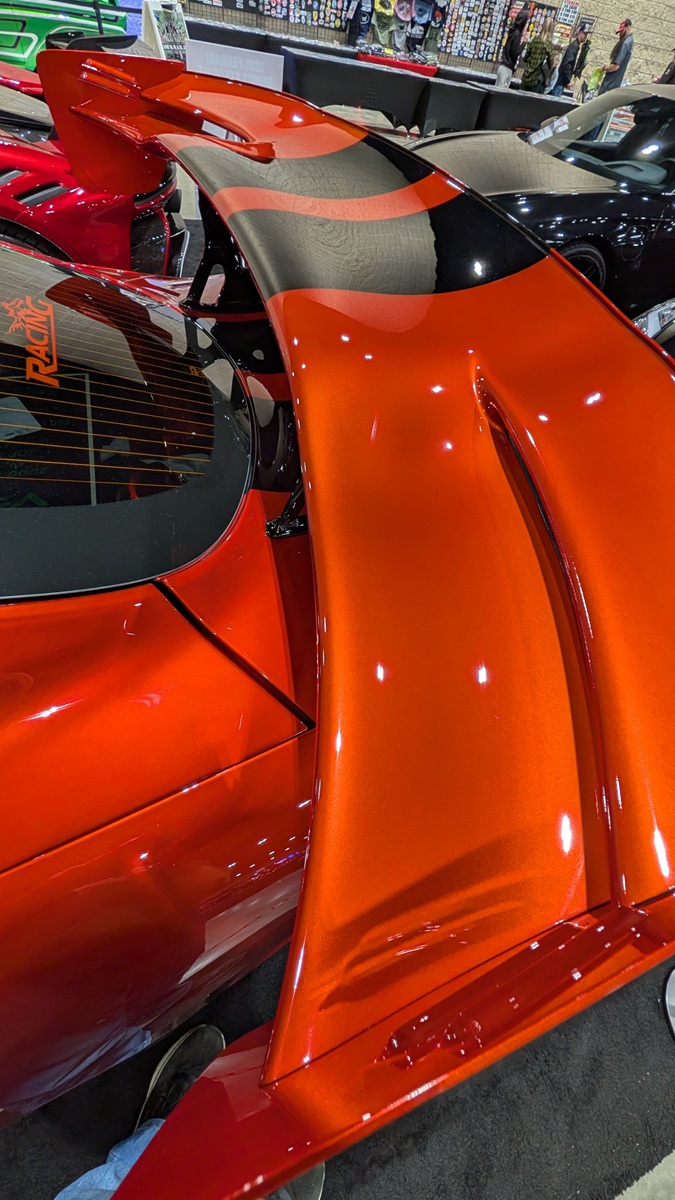
The ACR Extreme doesn’t coddle its driver. The suspension is brutally stiff, “the car rides… like a racecar,” Fisher admits. But that punishing ride quality serves a purpose. At around 90 mph, something magical happens. The massive aerodynamic elements of the Extreme package generate enough downforce to plant the car to the pavement, and suddenly, everything makes sense. At 150 mph, the car generates 1,200+ pounds of downforce! For those who might know much about aerodynamics… that’s A LOT!
“At 90, you can feel the air start pushing the car down,” Fisher explains. “The car comes alive and says, ‘Let’s go.'”
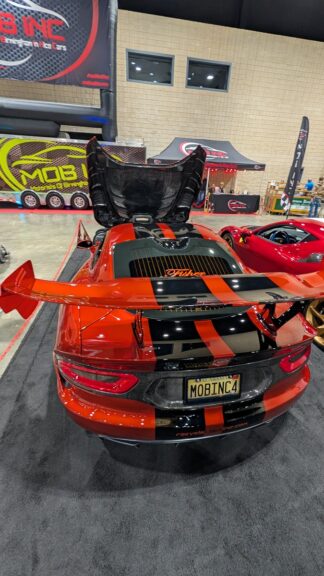
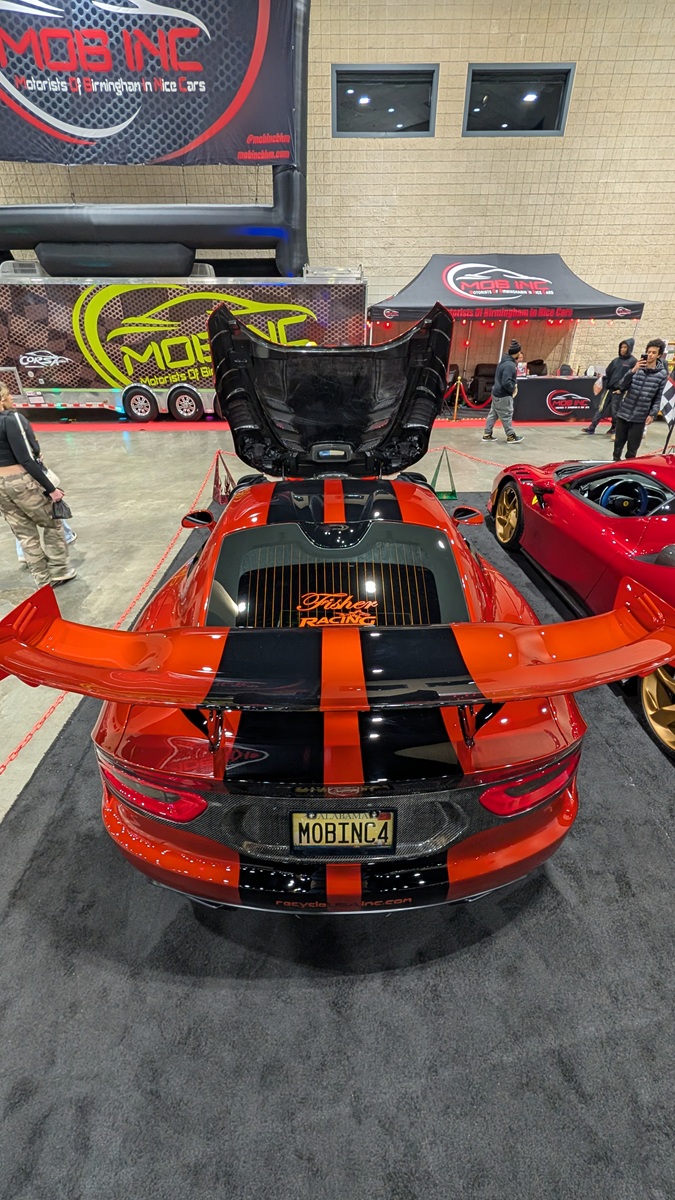
Fisher knew he was buying something special, but he didn’t realize just how special until after the purchase. “When I bought it, there were only three of those ever made with the dual stripes coming down from the back of the car to the front,” he discovered.
Those dual stripes running the length of the car weren’t just aesthetically distinctive; they were incredibly rare. Most Stryker Orange ACRs received different stripe configurations. Of the three dual-striped examples, Fisher learned that one had been converted into a racecar and subsequently destroyed, leaving only two.
The rarity has translated into eye-watering values. “Last week, there was a 2017 Stryker Green ACR for sale at a rather healthy dollar figure.” Fisher says about his car, ”This thing could be worth so much more than anyone imagined right now.”
For a car that was purpose-built for track work, that kind of appreciation creates a painful irony. “I’ve never tracked the car,” Fisher admits. “I very rarely drive it because it’s so rare.”
It’s a dilemma many Viper ACR owners face: these cars were engineered to set lap records and dominate road courses, but their skyrocketing values have turned many into garage queens.
“It doesn’t bother me,” Fisher says of keeping the car off the track. “I’ll just sit in the garage and admire it. Maybe I’ll keep taking it to shows on occasion. One day, my kids can sell it if they want.”
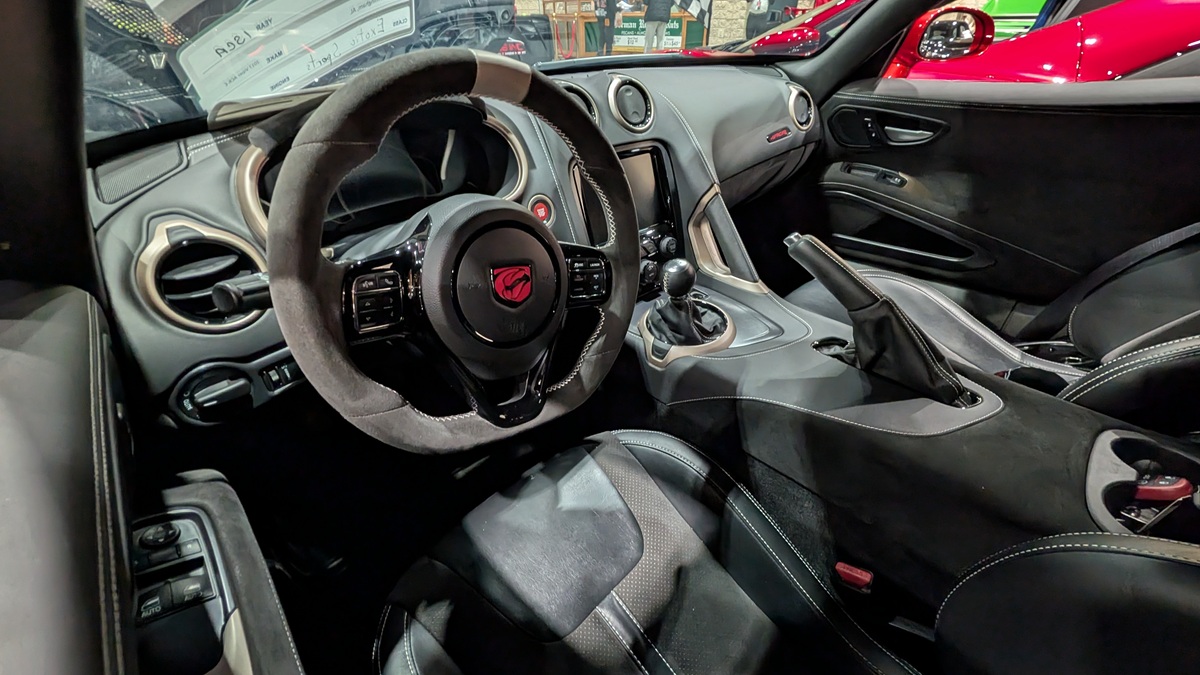
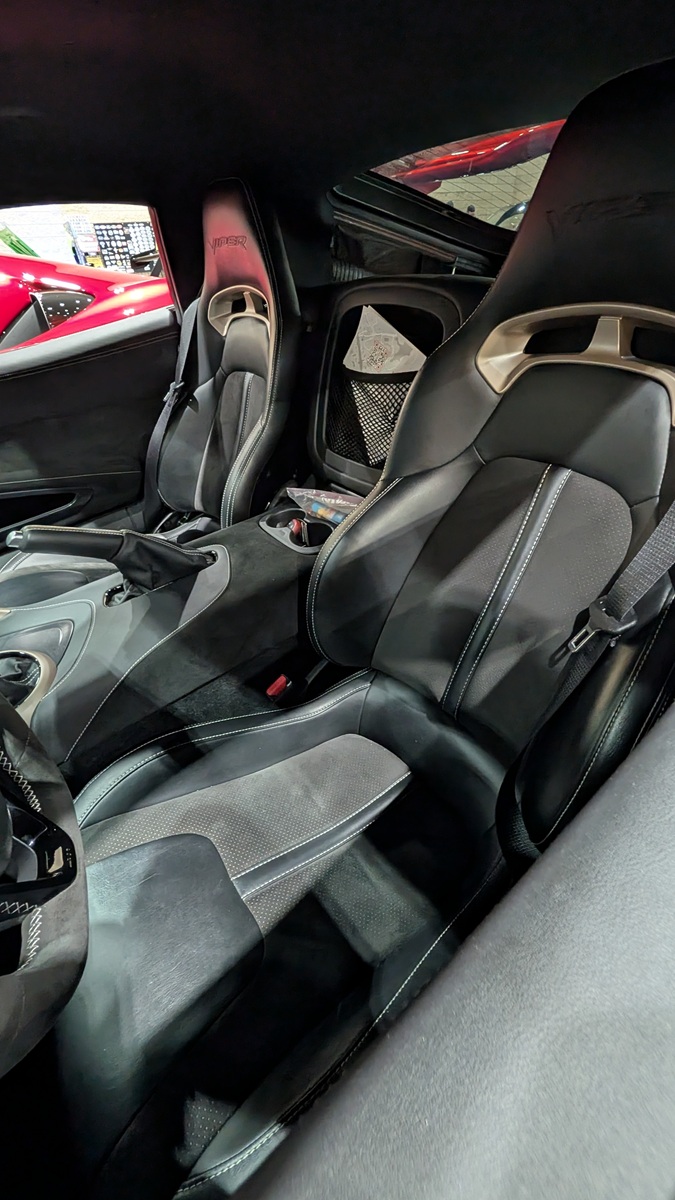
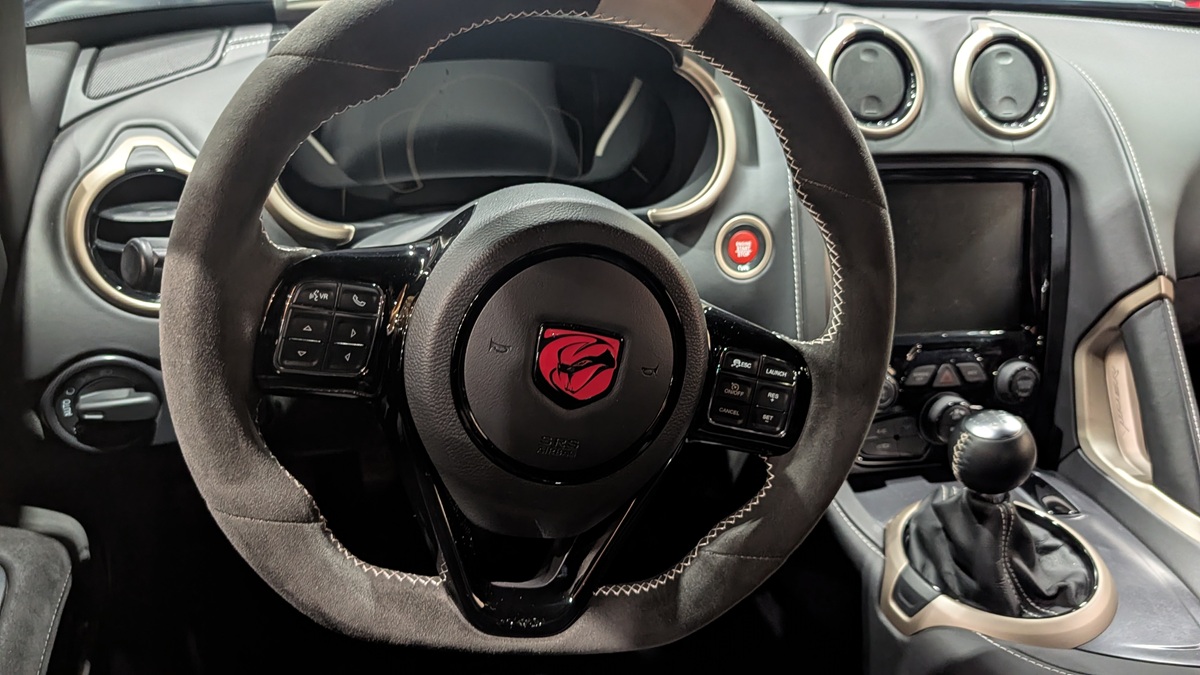
Beyond the rarity of the stripe package, Fisher’s ACR Extreme represents Dodge’s absolute commitment to performance. The carbon fiber aero elements, the massive adjustable wing, every detail serves a single purpose: going faster.
“The lines are just phenomenal on this car,” Fisher says. “The color, the stance, it belongs on a racetrack. It looks like it’s going 200 miles an hour, and it’s not even moving.”
That visual drama attracts attention even when parked next to exotic cars worth millions. Fisher has experienced this firsthand, watching crowds gather around the Viper even when it’s positioned next to far more expensive machinery.
The ACR Extreme’s wing particularly resonates with enthusiasts. “I stopped somewhere to get gas one time, and the guy walks in behind me,” Fisher recalls. “He says, ‘You know, it’s about damn time they made a wing that’s functional on a car.’ That wing fits that car.”
Fisher’s Viper journey reflects the path of many second-generation enthusiasts. The love of cars starts in childhood, gets interrupted by practical concerns, then roars back to life when circumstances allow. The difference is that Fisher’s childhood wasn’t spent at weekend car shows; it was spent building racecars in his father’s shop, learning from a master and absorbing high-performance lessons through years of hands-on work.
That 2008 Snake Green Viper that got away? It led Fisher to something even better: one of the rarest final-edition Vipers ever built, a car that represents the absolute pinnacle of Dodge’s naturally aspirated V10 supercar program.
The young teenager who once built funny cars alongside his father in Cleveland now owns a piece of Dodge history that his father would undoubtedly appreciate, even if it stays parked in the garage more often than anyone would prefer.
Sometimes, the best automotive stories aren’t about the miles driven or lap times achieved. Sometimes they’re about the journey from a race shop on Rain Avenue to a Birmingham garage, and the cars that connect those chapters.
0 Comments