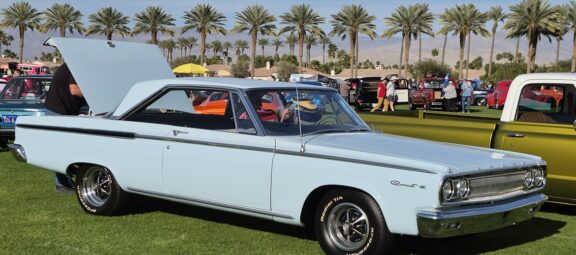
23rd Annual Dr. George Charity Car Show
Each year, there’s a fantastic car event held in Indian Wells, CA, to honor the incredible legacy of Dr. Sebastian George (1943-2002), founder of the Cancer & Blood Institute of Rancho Mirage, who saved people’s lives as a top-notch oncologist. With 1,130 show vehicles on display (included were fine examples of vintage and modern era Mopar® cars!), it’s the place to be in the desert. This region of Southern California has a very active car community, and it is well worth the trip to see the huge selection showcased at the Dr. George Show in the “hot” Coachella Valley!
Boasting over 300 days annually of sunshine, this arid resort region is located in Riverside County. Coachella Valley (Palm Springs, Desert Hot Springs, Palm Desert, La Quinta, Rancho Mirage, Cathedral City, Indian Wells, Indio and town of Coachella) is well known in the winter season by the “snow birds” from Canada and the Midwest. This mega show has all been made possible as a result of the great efforts of the Palm Springs Cruisin’ Association (PSCA), which is Coachella Valley’s long-time Charitable Car Club. Through the years, this event has raised in excess of 1.5 million dollars, all for helping people with cancer.
Here’s a photo selection of the Mopar vehicles, plenty of which featuring HEMI® engines, that caught our eye while attending this latest 2026 rendition.
2500 BLACK WIDOW RAM
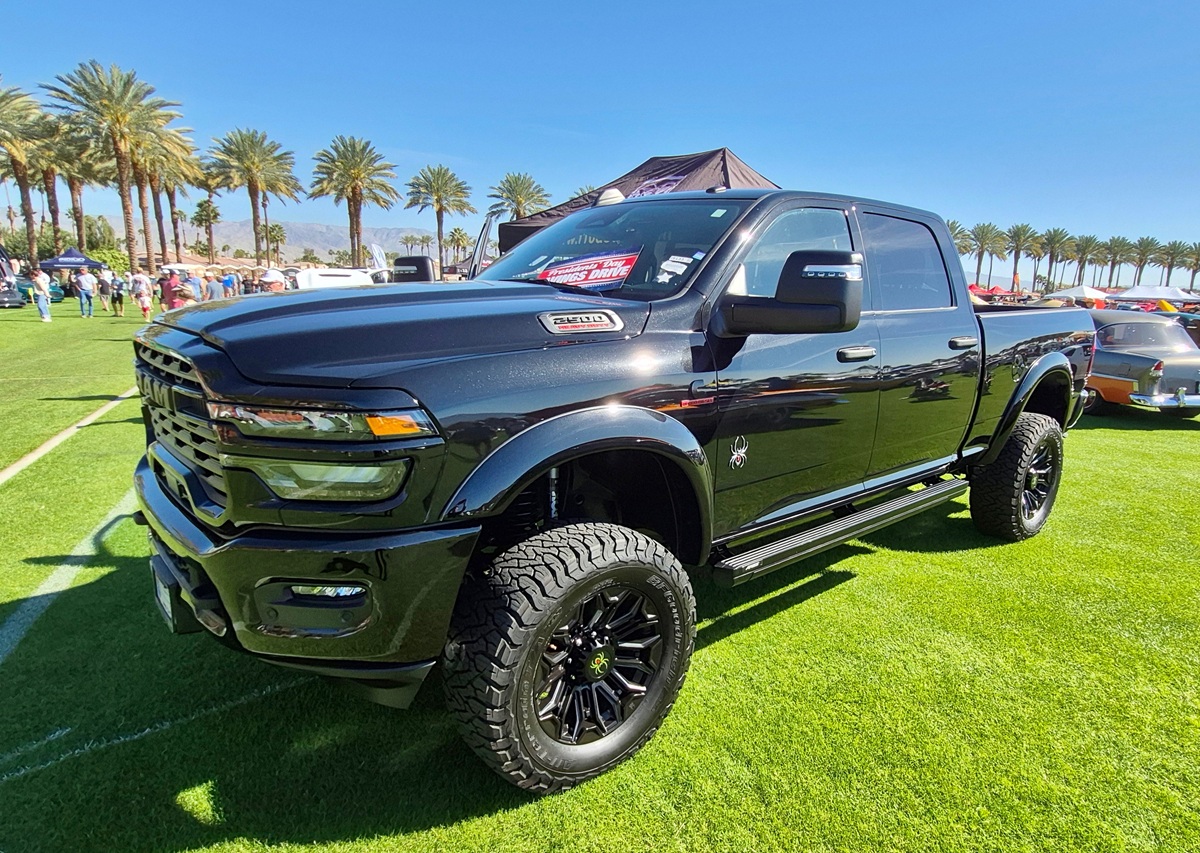
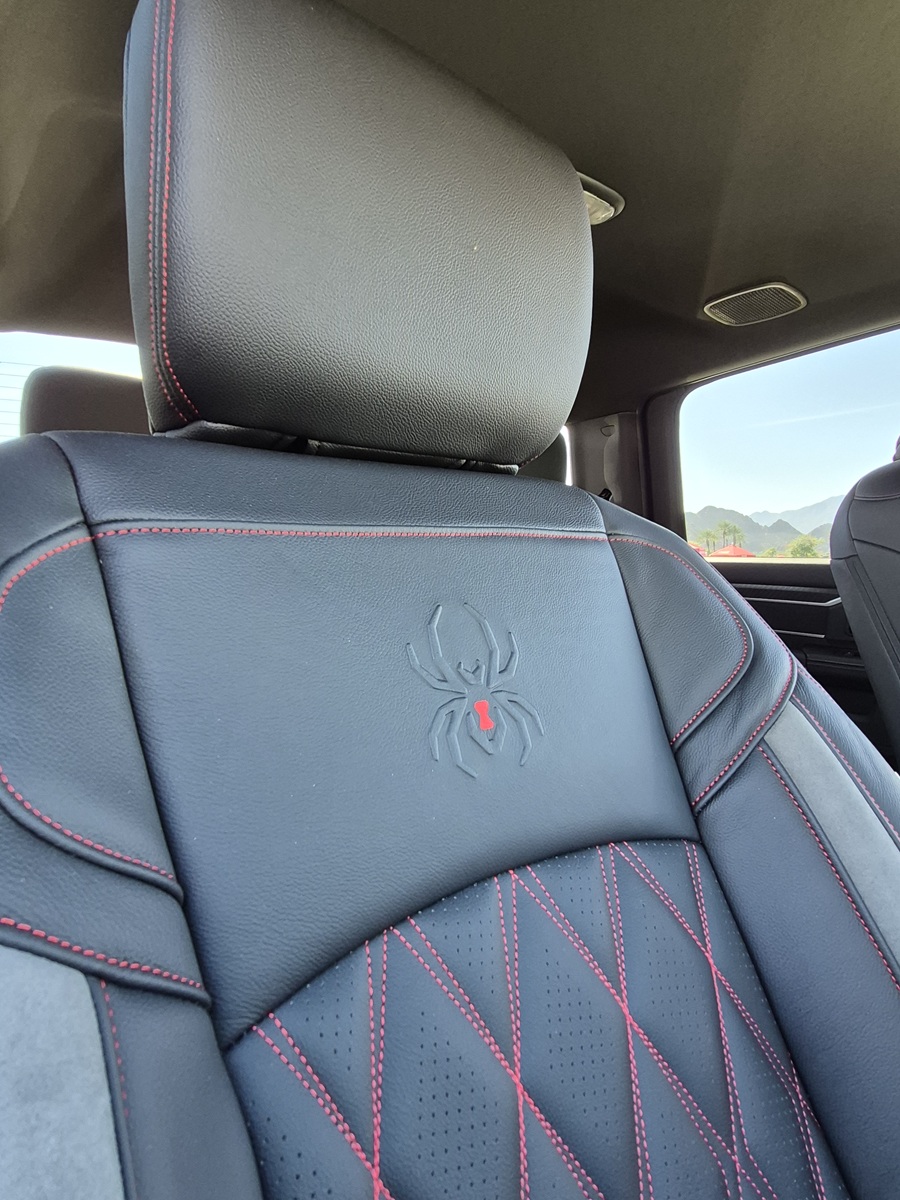
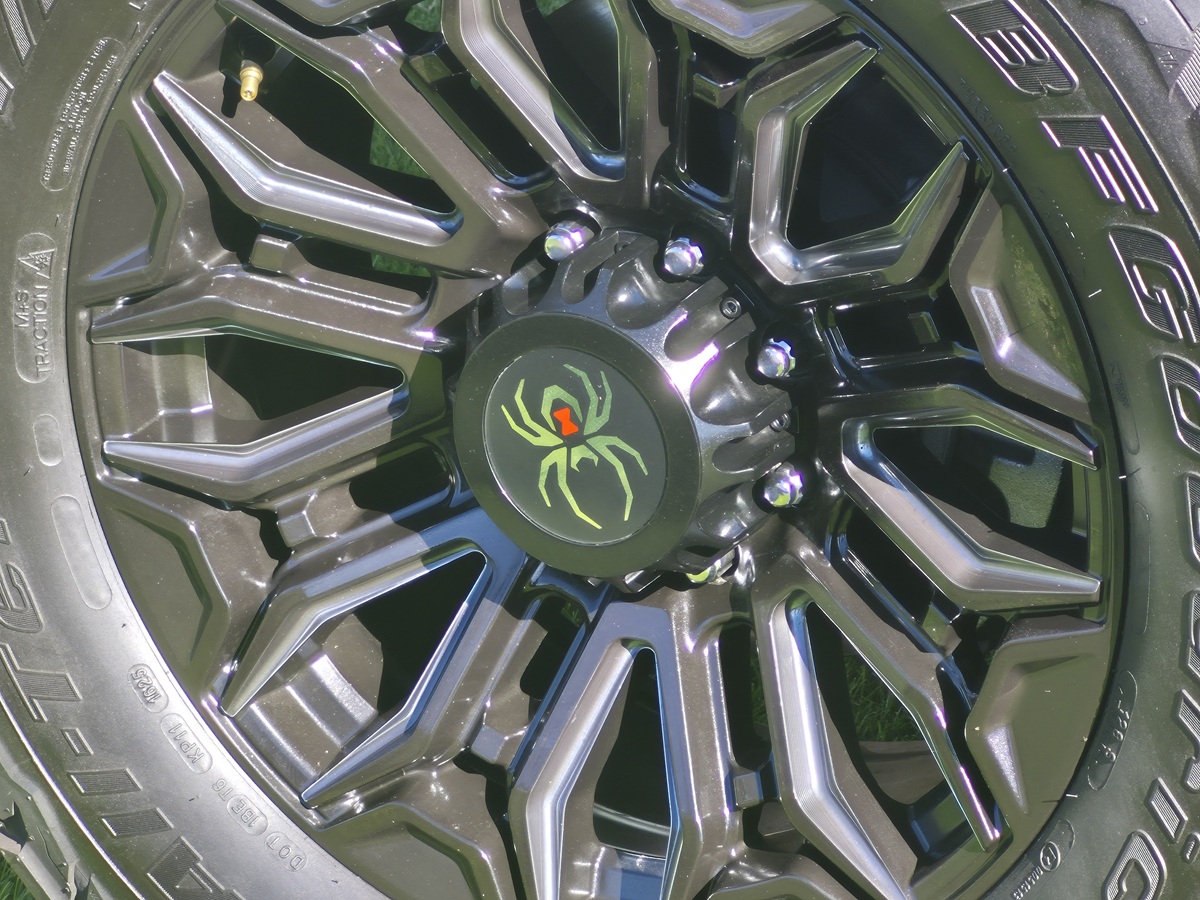
Available from selected authorized dealerships, in this case from nearby Indio, I-10 Chrysler/Dodge/Jeep/Ram, a brand-new 2026 Ram 2500 Black Widow edition. It’s a package truck created by Fox Factory that includes a 5-inch front and rear suspension lift, calibrated-length Fox 2.0 gas shocks, 20-inch wheels wrapped with 35-inch-tall all-terrain tires. Custom seat upholstery, body-color fender flares with Black Widow badging. High and mighty, a stylin’ off-road machine!
MODERN ERA CHALLENGERS
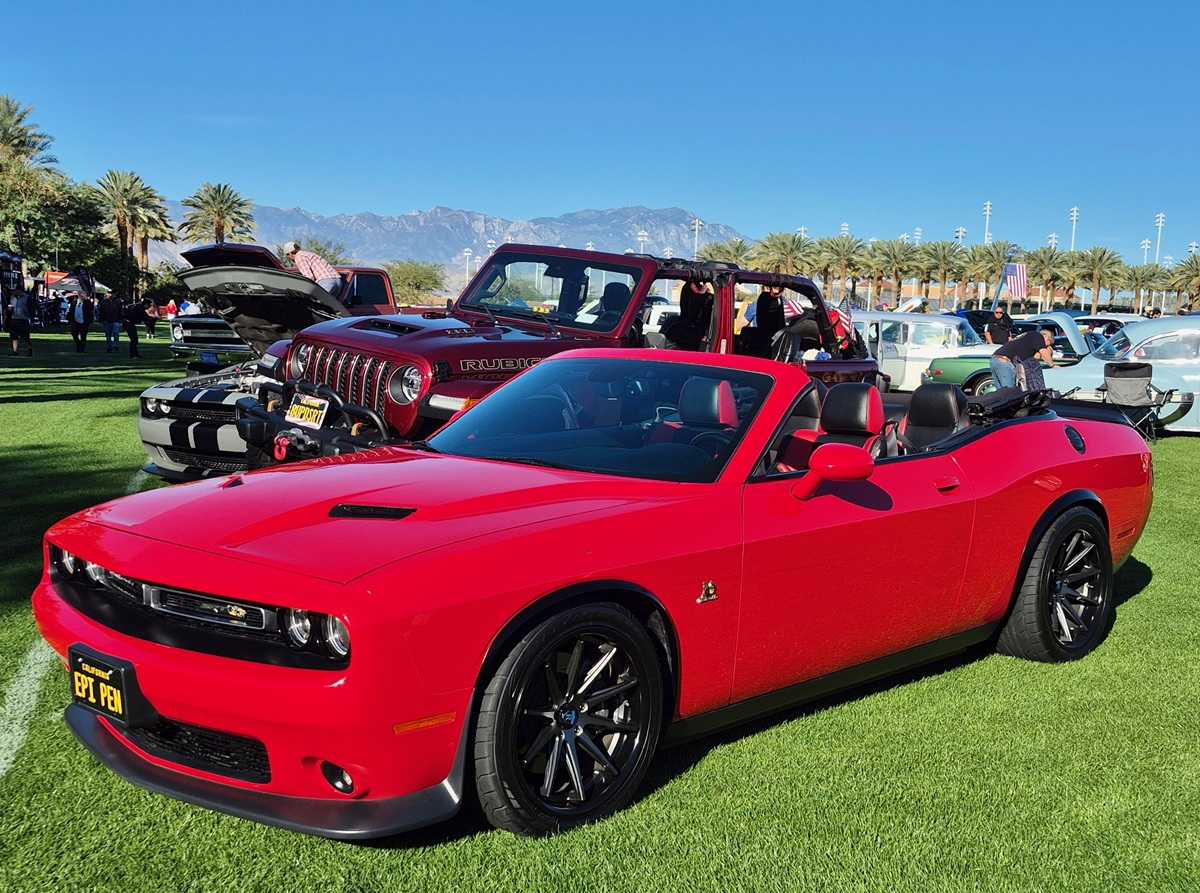
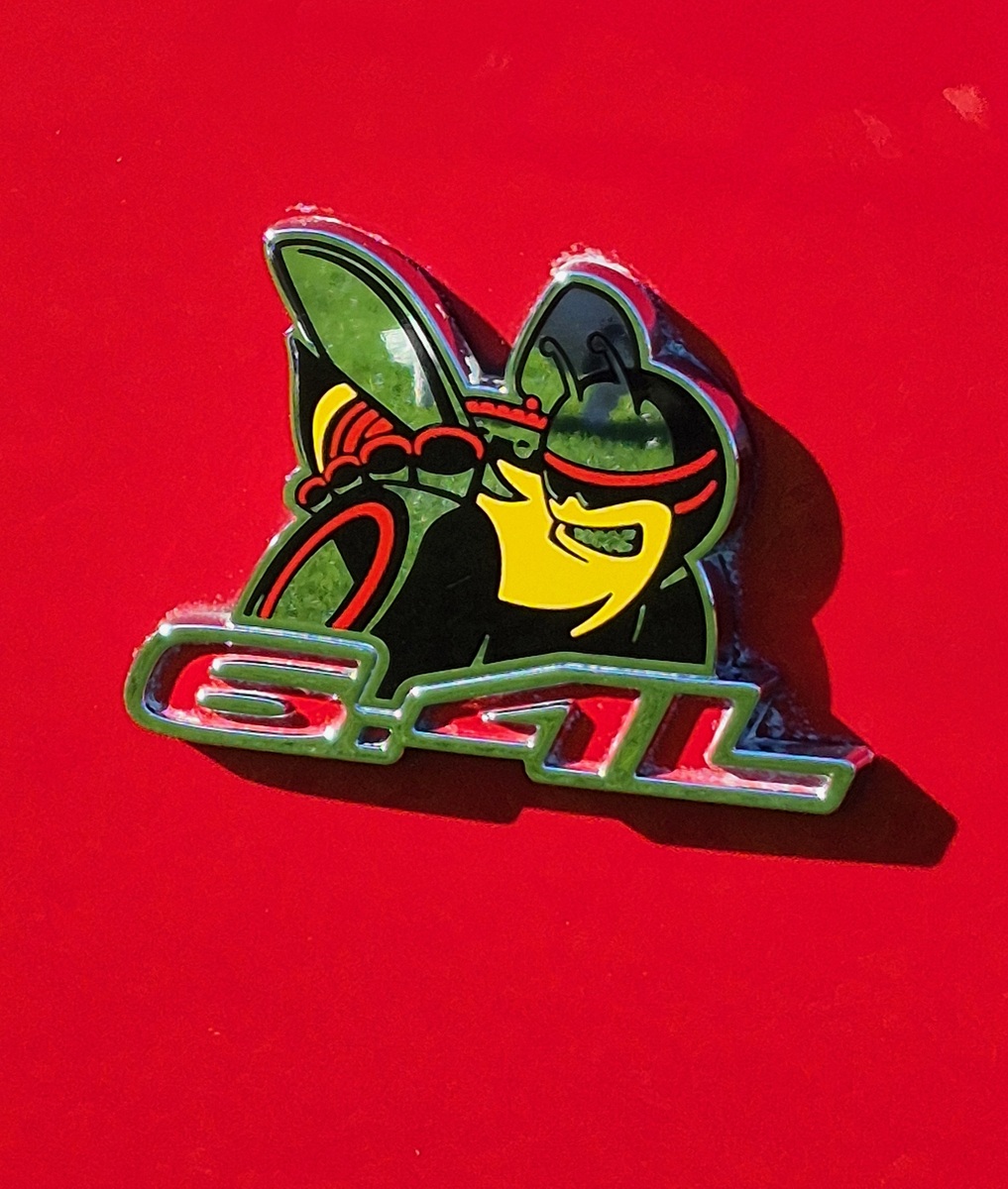
Walking the grounds, there was no shortage of SRT® Hellcat Challengers in attendance! Included in the assortment, a Droptop Challenger (converted at the High Springs, FL, factory), for those who chose to do away with the factory top and feel the wind blowing through their hair!
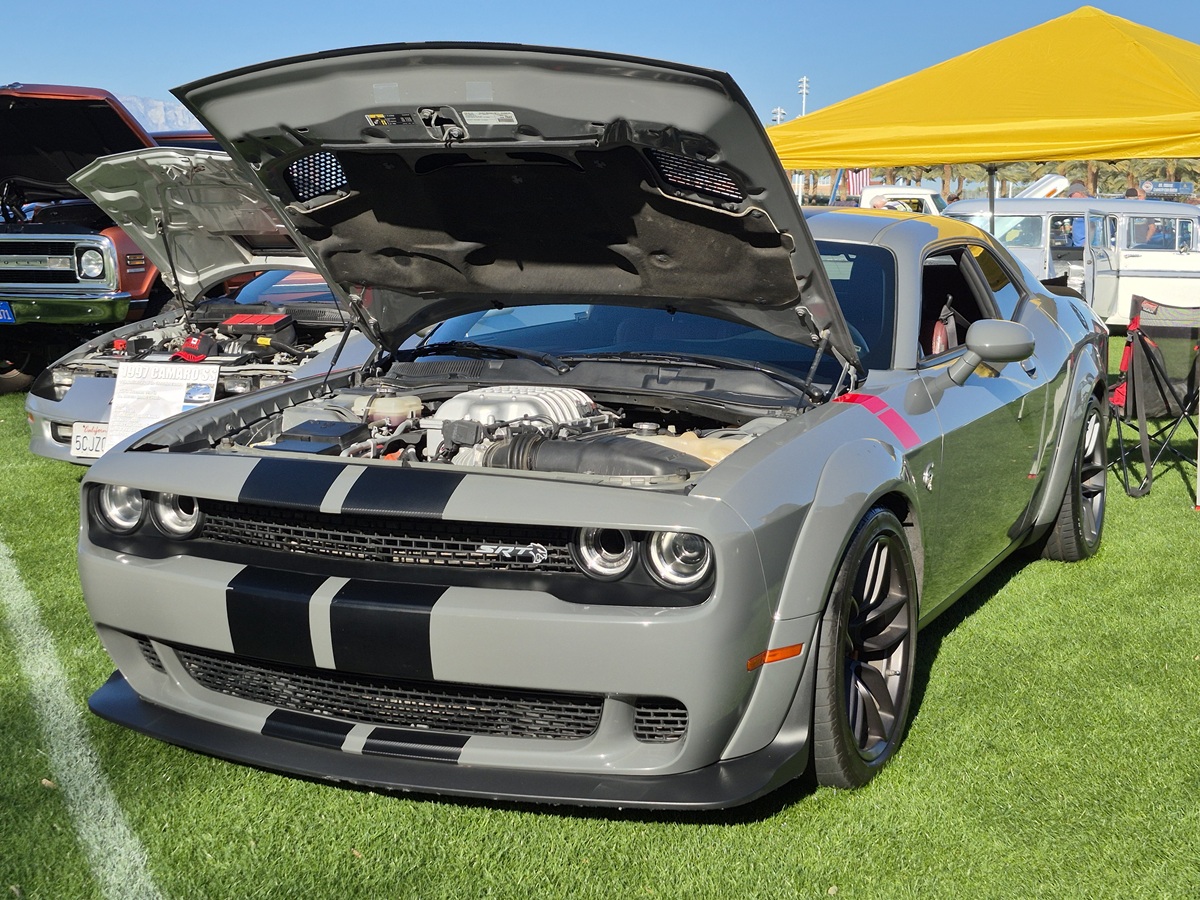
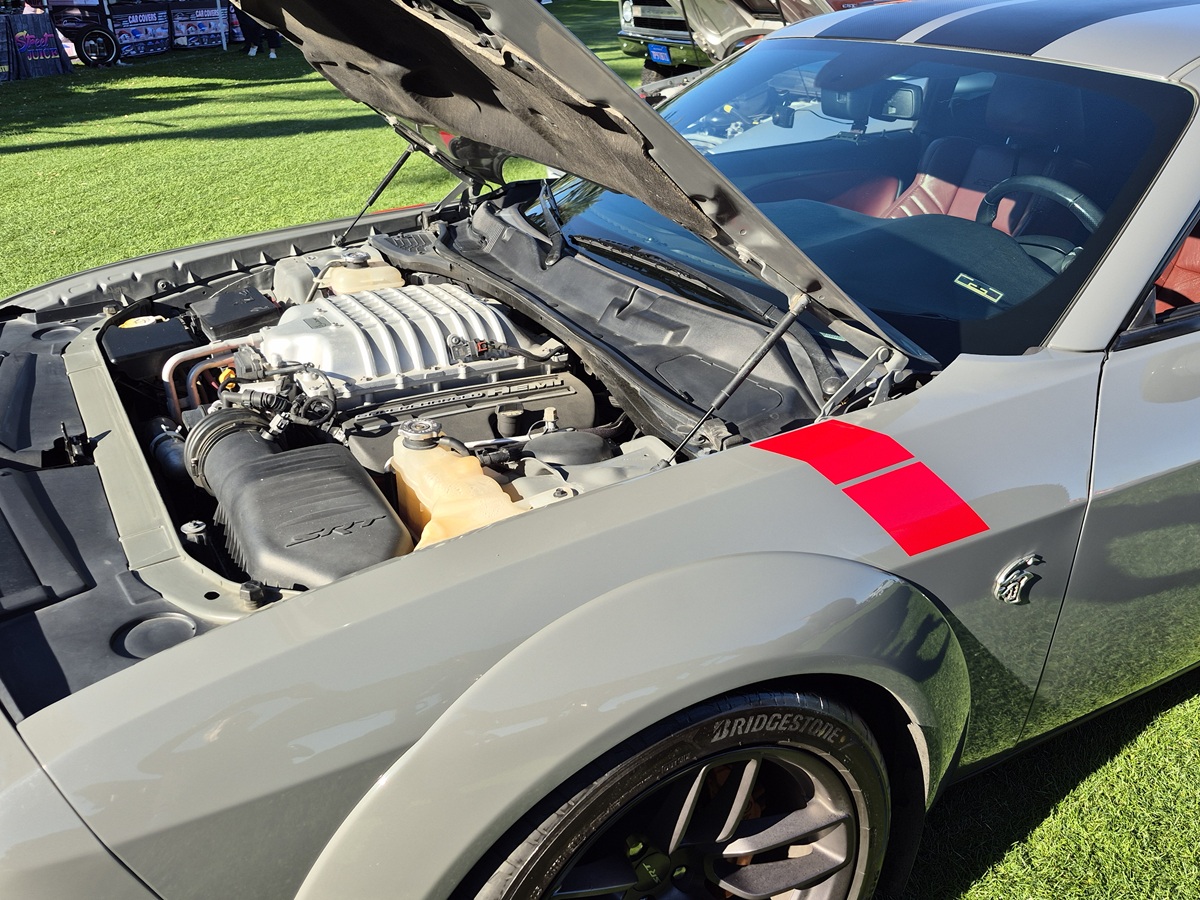
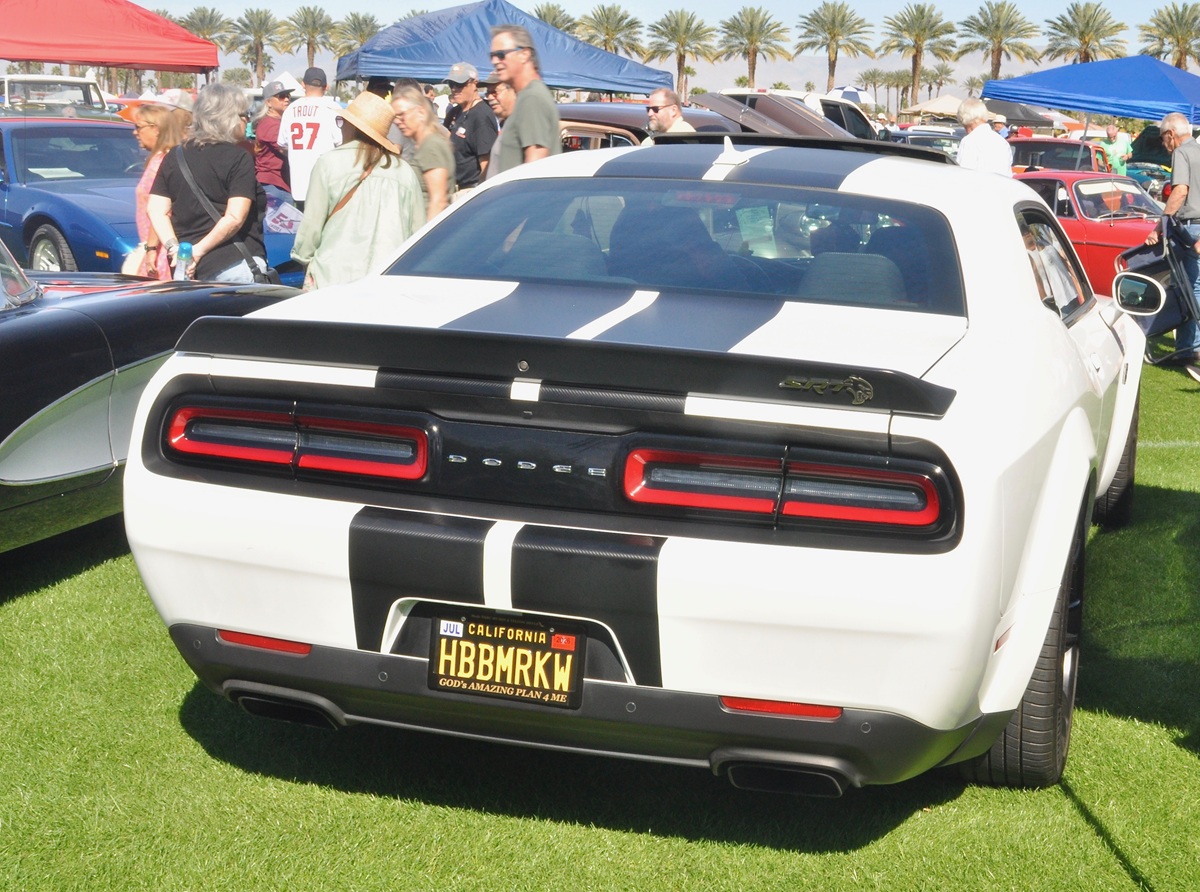
Widebody SRT Hellcats joined in the sunshine of the Indian Wells gathering, and as they rumbled in, onlookers could definitely hear and feel the power of those supercharged GEN III HEMI engines as they idled by and into the parking slot. Modern Mopars respect earned!
PATRIOT AMERICAN MUSCLE
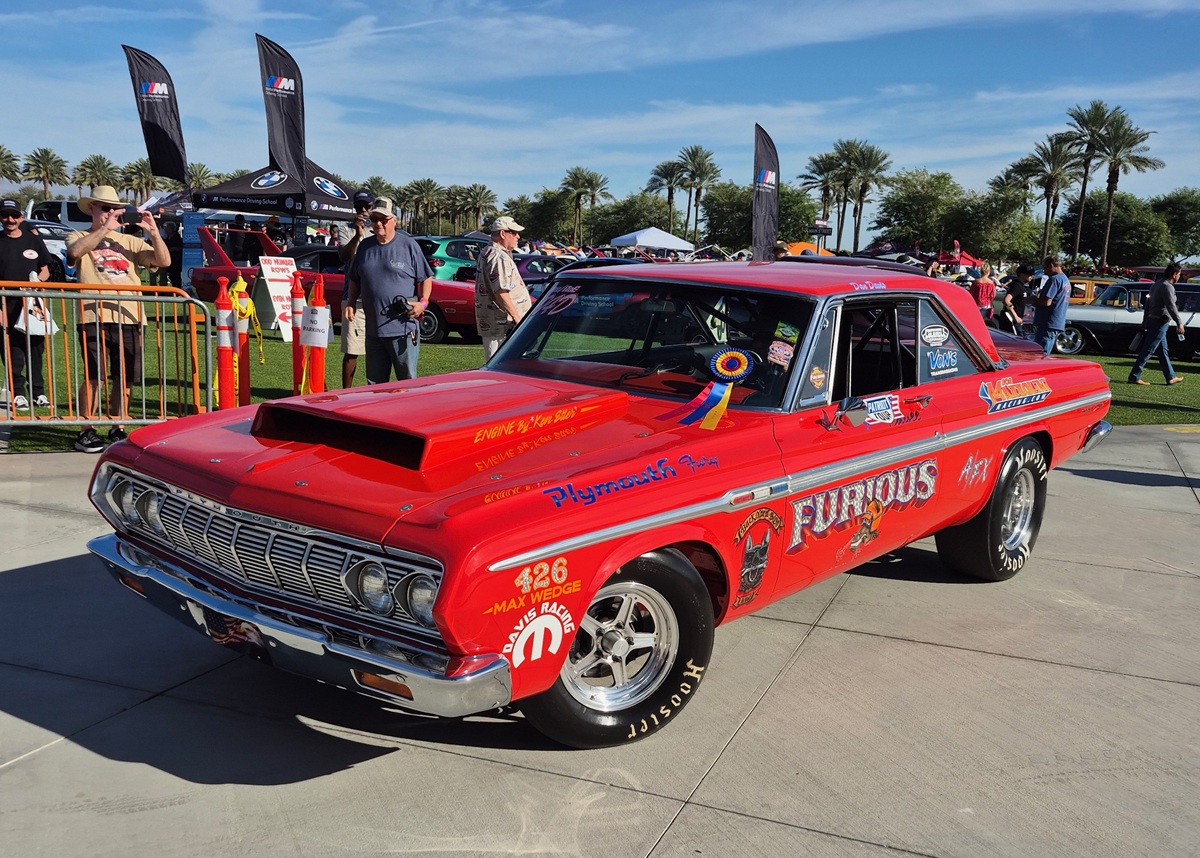
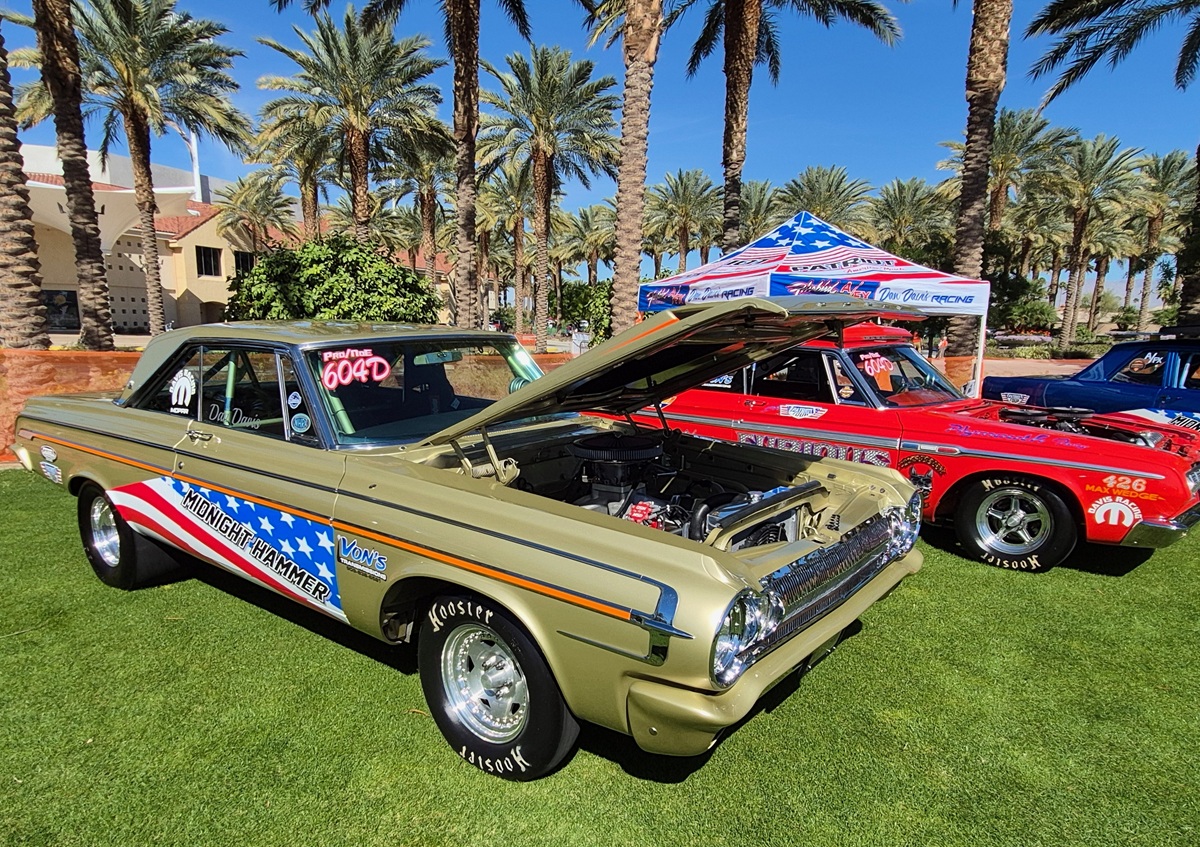
Promoting the 2026 Patriot American Muscle Tour, Davis Racing displayed these classic B-body hardtops at the event! A clean ’64 Plymouth Fury and ’64 Dodge Polara, both of which are regulars at Firebird Raceway (Boise, ID), as well as making appearances at Famoso (Bakersfield, CA), Muscle Cars at the Strip (Las Vegas), plus Barona Drag Strip (San Diego). Hot, wheel-standing vintage Mopar rides!
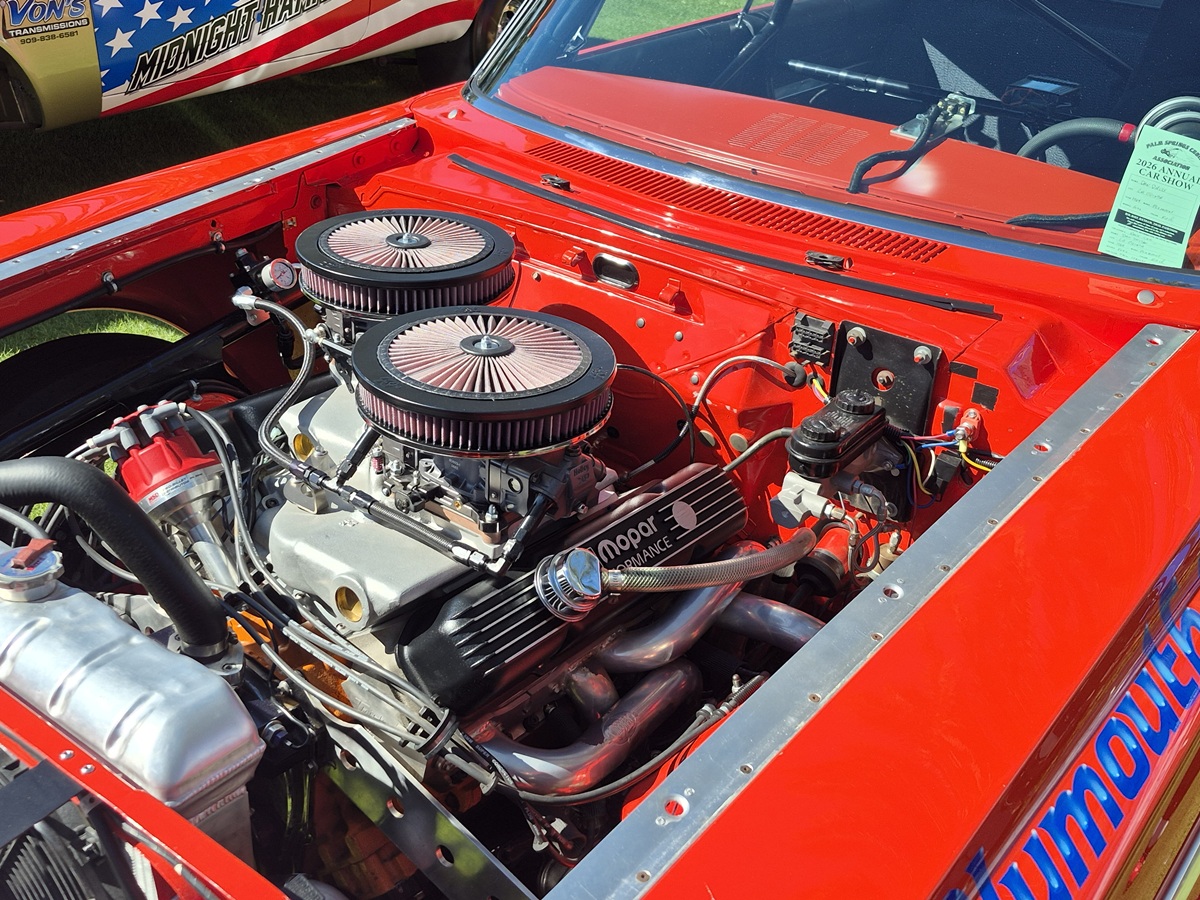
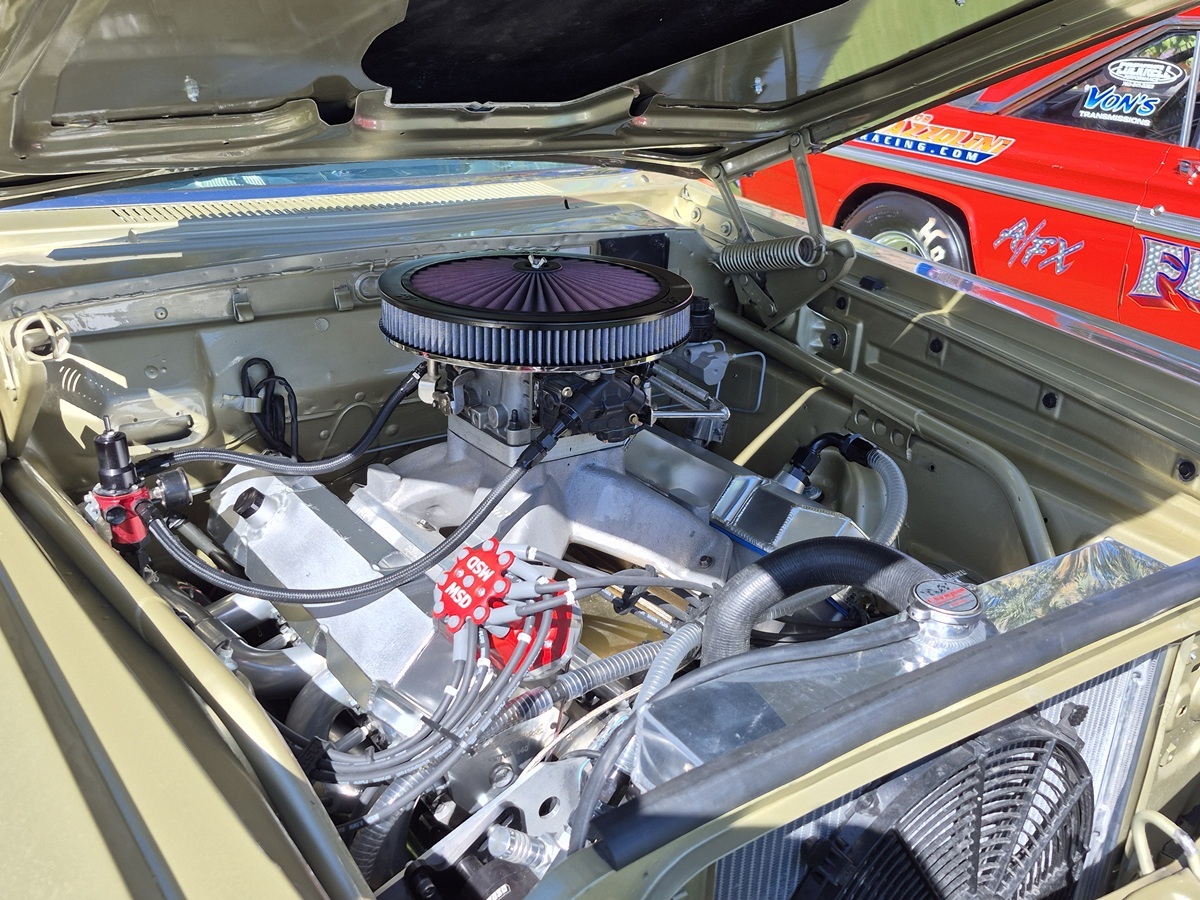
Be it old-school Max Wedge cross-ram or modernized single EFI induction, the Mopar RB powerplants are still extremely potent engines to compete with on the Nostalgia Drag Racing Series, in the A/FX class.
BARRACUDAS MILD TO WILD
1970 340
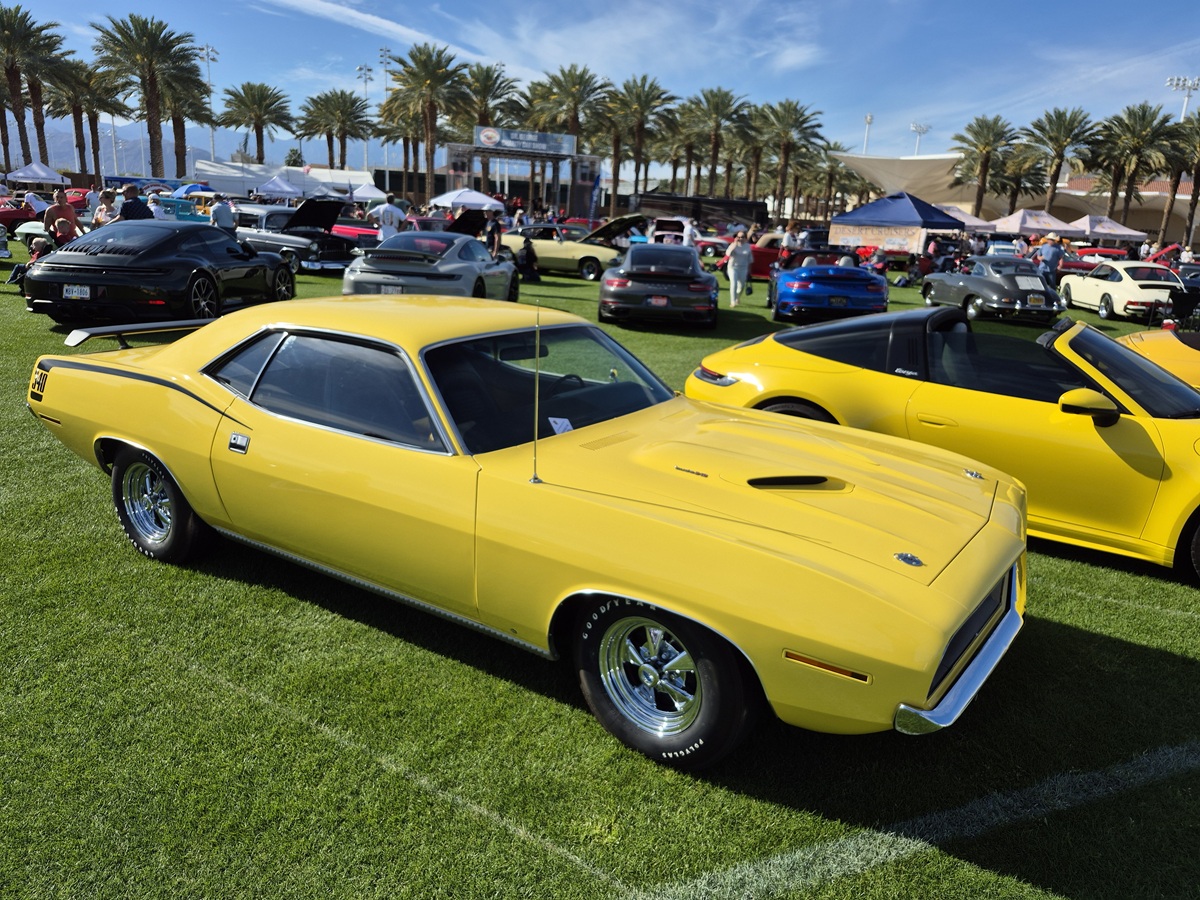
By the time Plymouth came out with their completely restyled E-body Barracuda (as well as the Dodge Challenger) for 1970, the pony car market was already starting to die off. These Mopar pony cars were aggressive to the eye, wider to provide room under the hood for the big blocks and HEMI engines, and with the distinctive long-hood, short-deck profile. The pictured ’Cuda model has the high-revving 340 engine and is presented in High Impact “Lemon Twist” Yellow, with black hockey stick quarter panel stripes. Clean!
1970 AAR
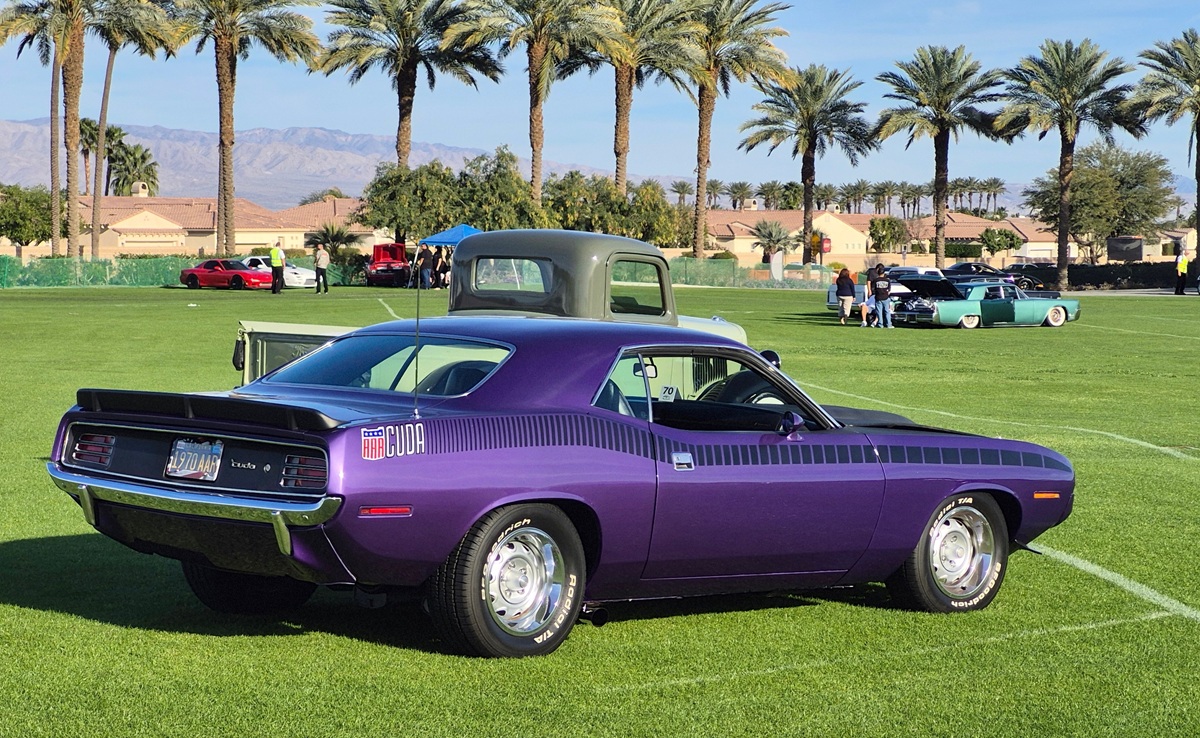
1970 Plymouth “AAR” (All American Racers) ’Cuda in FC7 paint, called “In Violet” by the factory. A total of 2,724 of these special cars (homologated for SCCA Trans-Am competition) were built, equipped with 340-cid six-barrel powerplants with side exhausts. A fiberglass scooped hood, special graphics, rear spoiler and G-60-sized oversize rear tires add to the specialized enhancements. Dan Gurney and Swede Savage drove the actual racecars and Keith Black supplied the power on the racetracks.
STRYKER ’CUDA
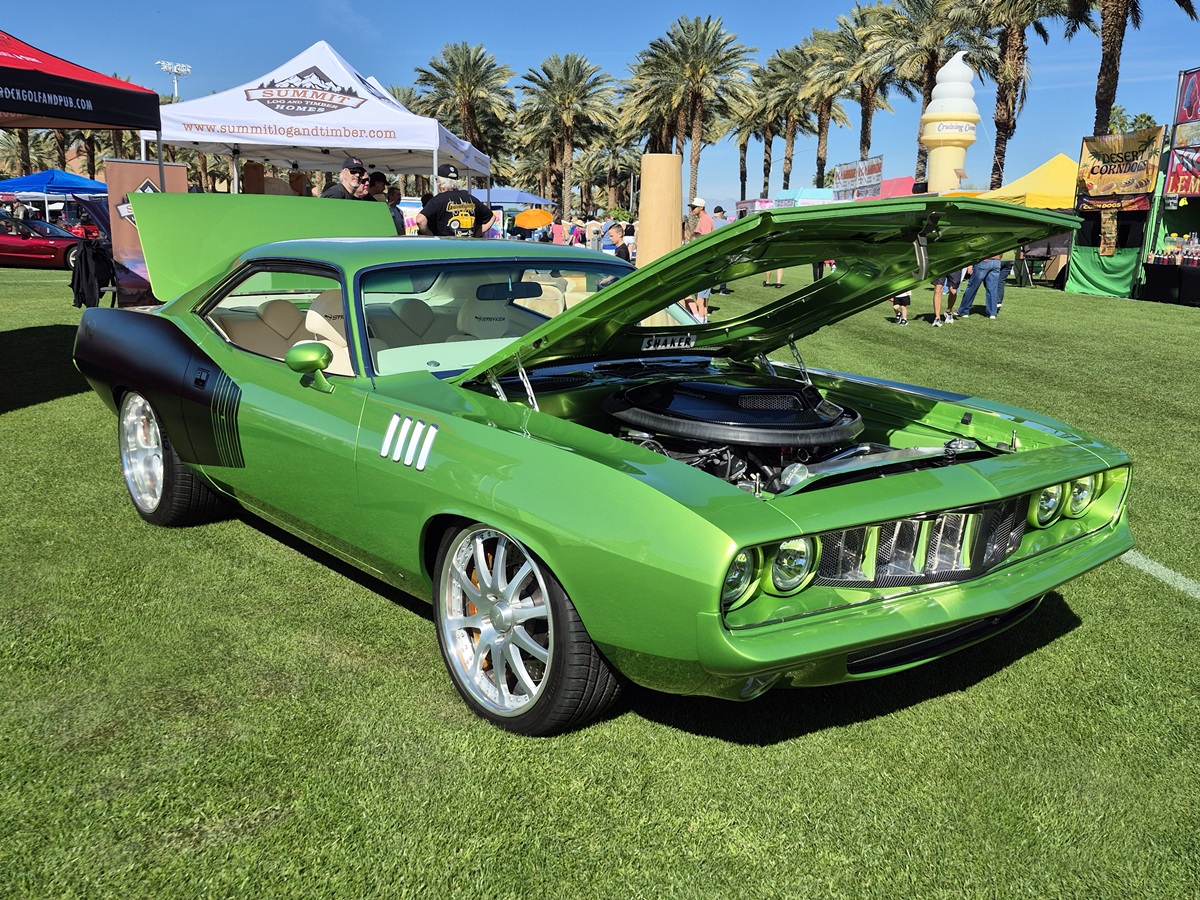
Built by Manns Restoration (Festus, MO), this 1971 Plymouth Barracuda started out as a factory 340 California car, and as seen in the photos, has been transformed into a serious and well-detailed “extreme” street machine! Rolling on 19/20 Rushforth wheels and fitted with reworked suspension, it now sits low and with tight handling capabilities. Striking green paint with black “HEMI billboards” (which are painted on rather than the factory vinyl) is presented in a very professional manner, enhanced with modern features and still retaining an original flavor.
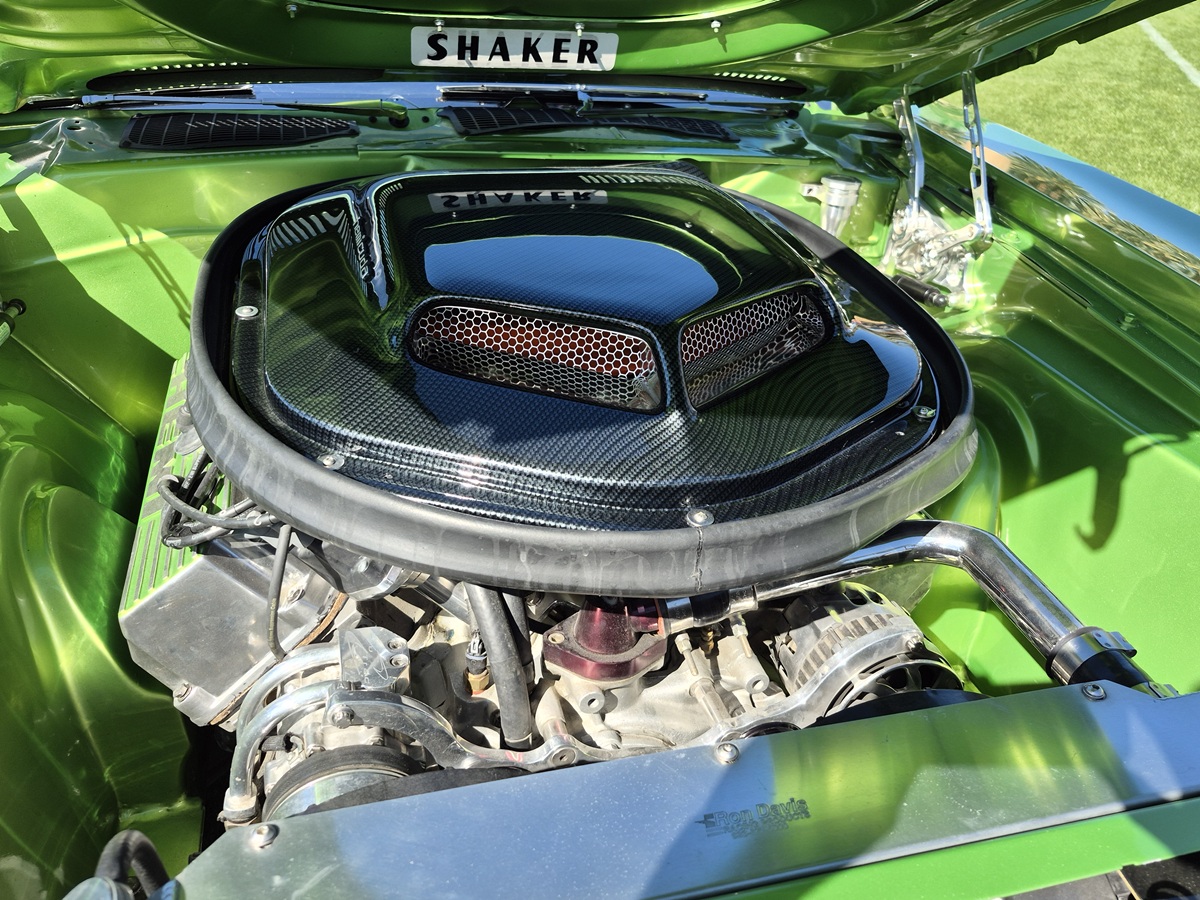
426 HEMI-themed power now producing 555 horsepower with 548 lb-ft torque, topped with a carbon fiber Shaker. Power transferred to the ground via a T56 Magnum 6-speed, backed with a Dana 60 running 4.10:1 gears.
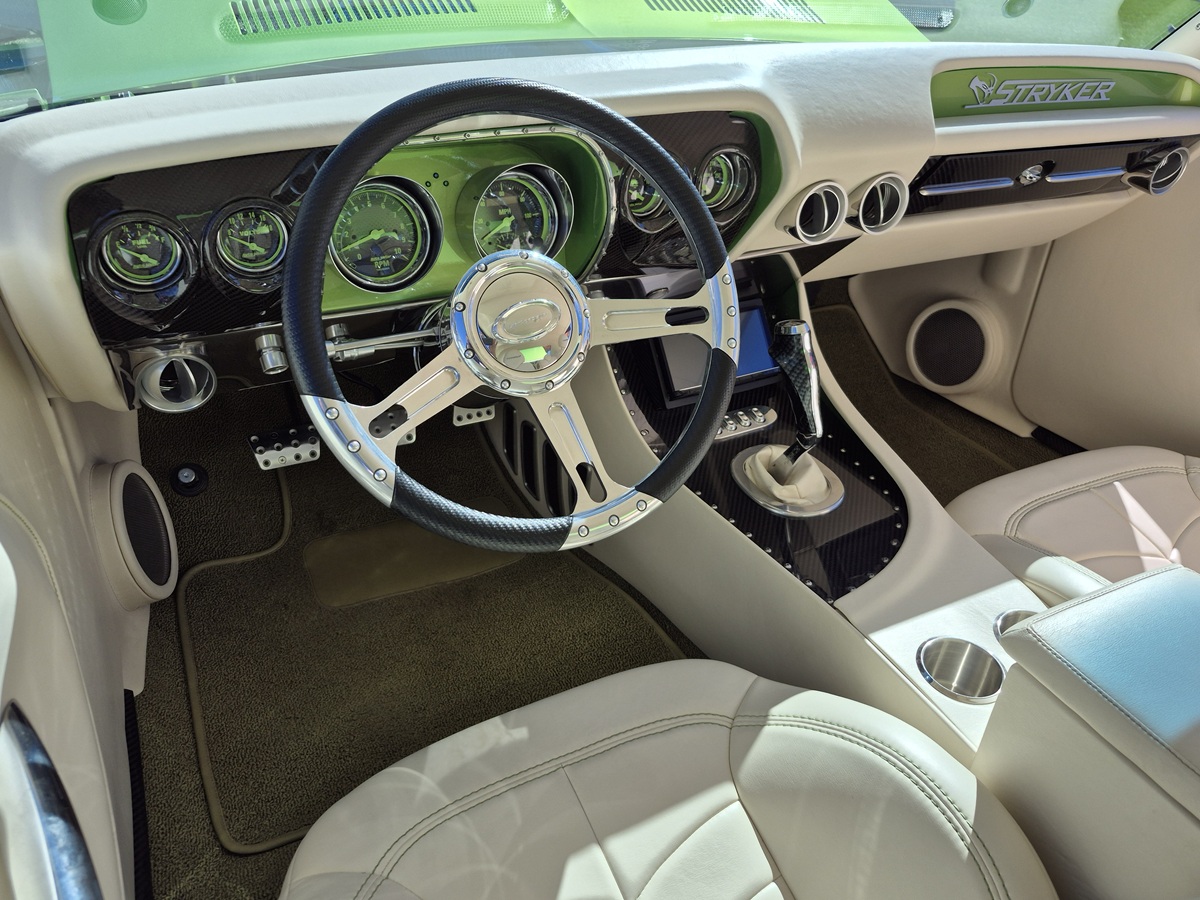
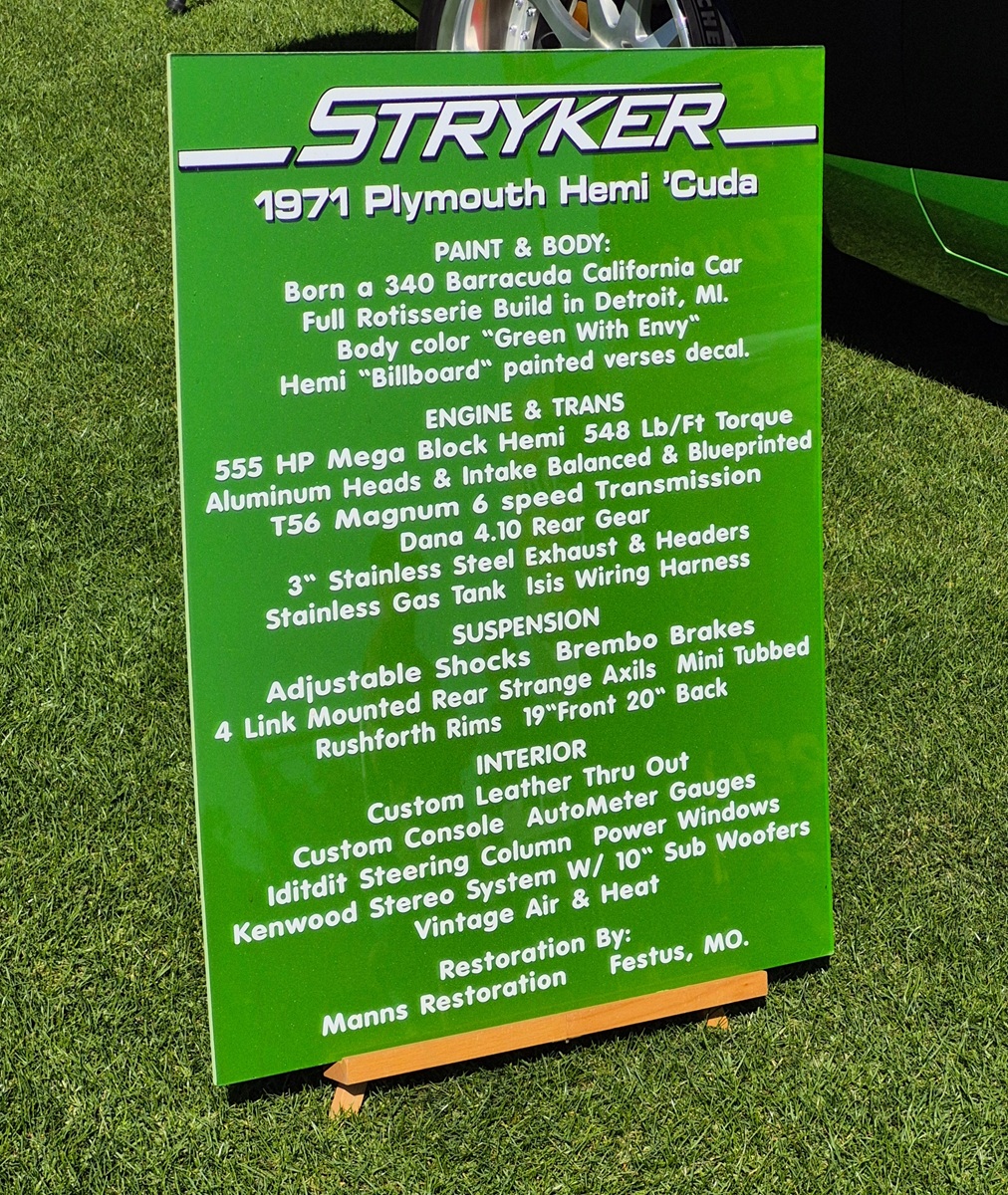
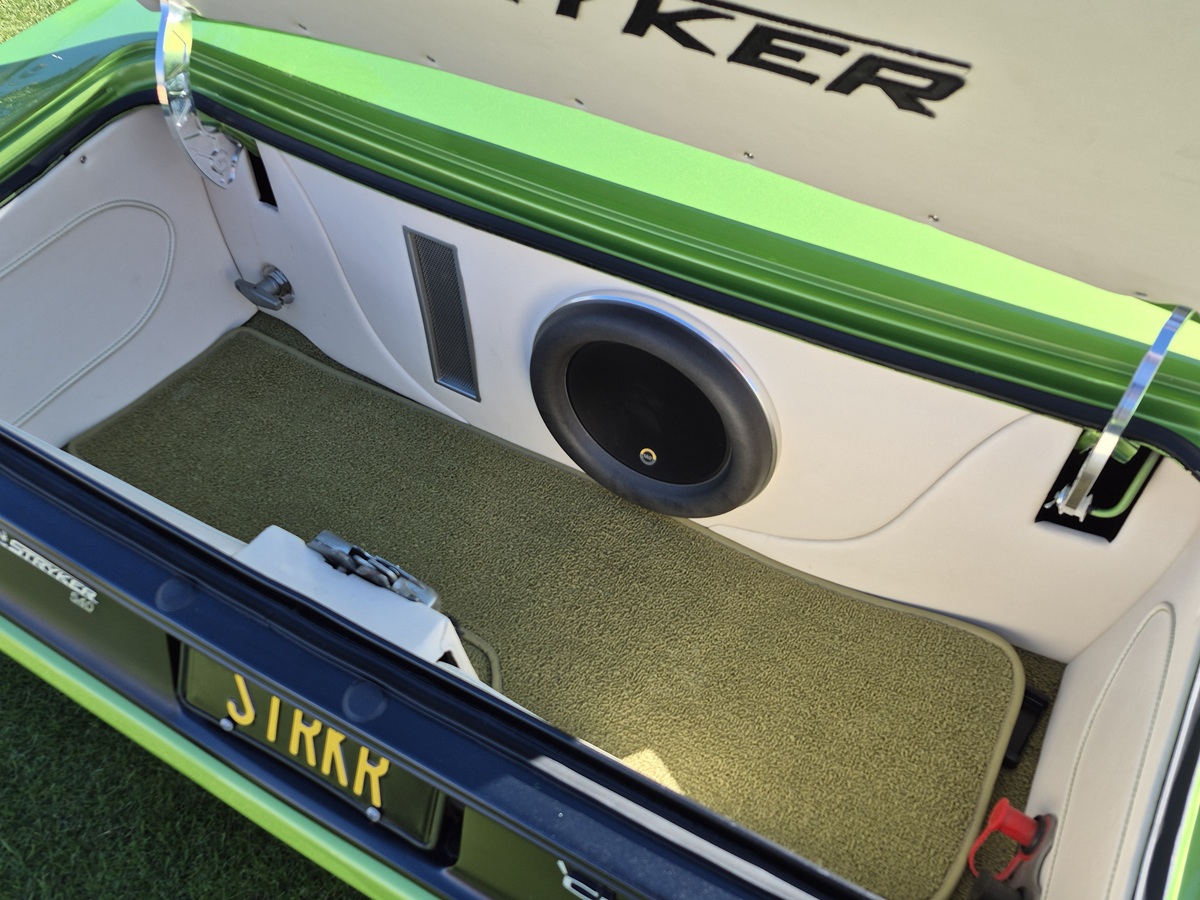
Full custom interior and detailed trunk, sound system and matching upholstery. Major attention to details!
HEMI WAGON
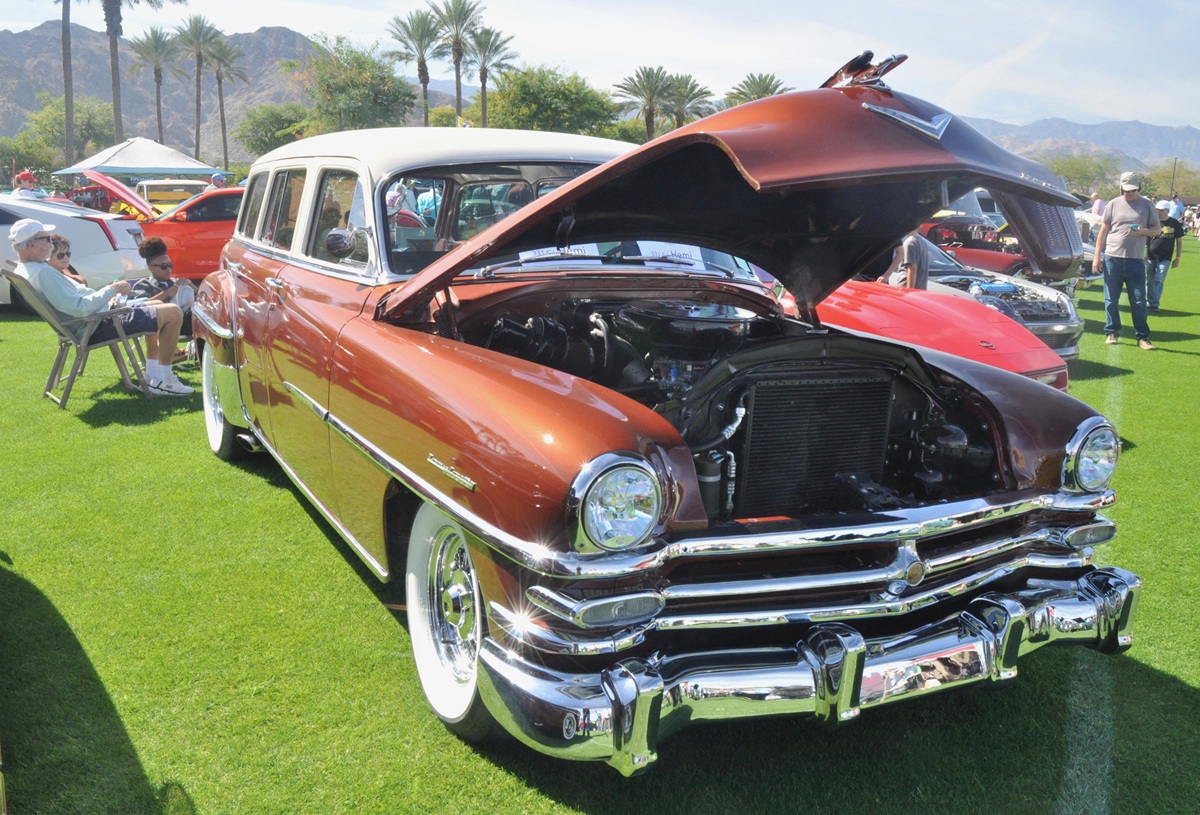
1953 Chrysler New Yorker Town & Country wagon, two-tone paint and runs on a 125.5-inch wheelbase, all were 6-passenger cars. These big wagons cost $3,933.00 when new and with a shipping weight of 4,265 pounds. This rare example is in perfect shape, only 1,399 were produced. Fitted with Kelsey-Hayes wire wheels, a popular factory option. PowerFlite automatic transmission equipped.
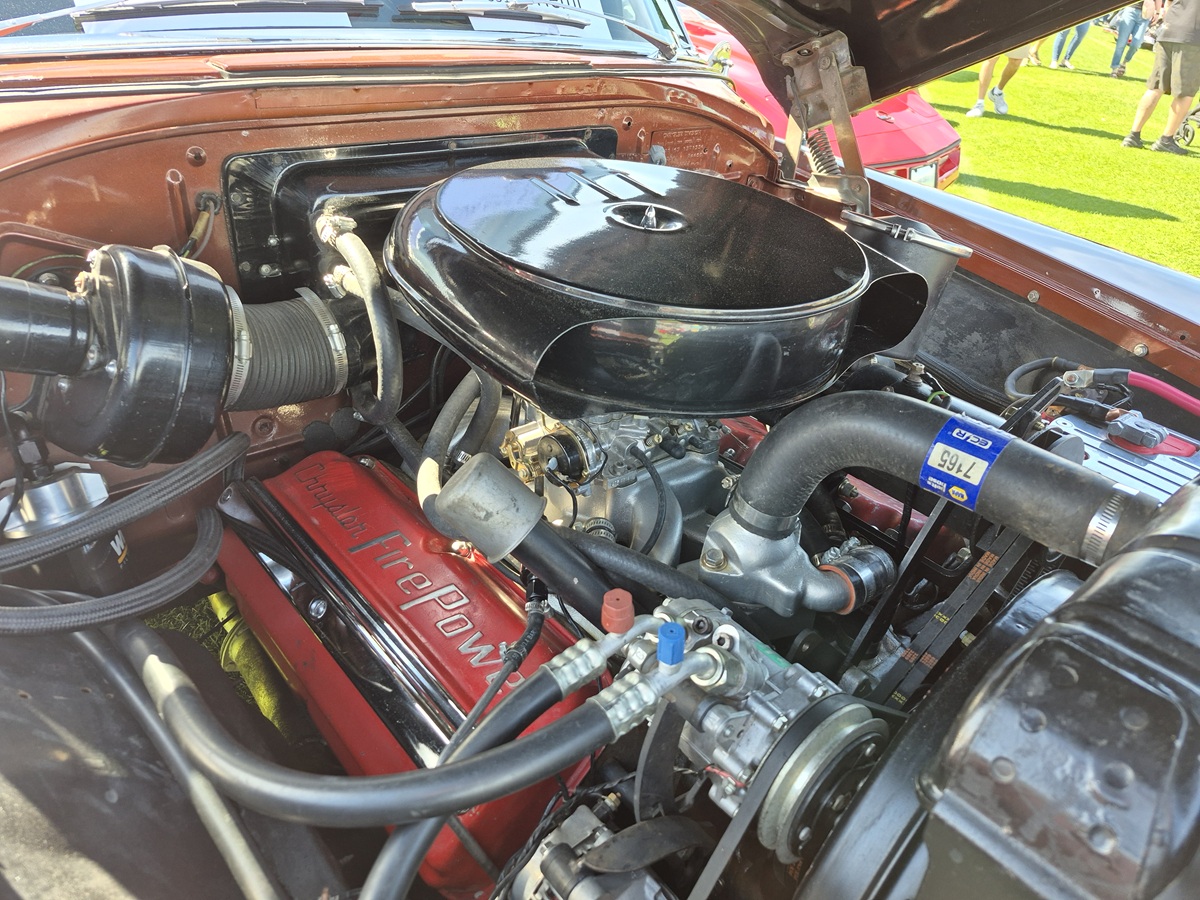
In its third year of production, the 331-cid HEMI engine produced 180 horsepower @ 4,000 rpm, hydraulic valve lifters. Compression ratio 7.5:1, Carter 4-bbl carburetor.
WEDGE WAGON
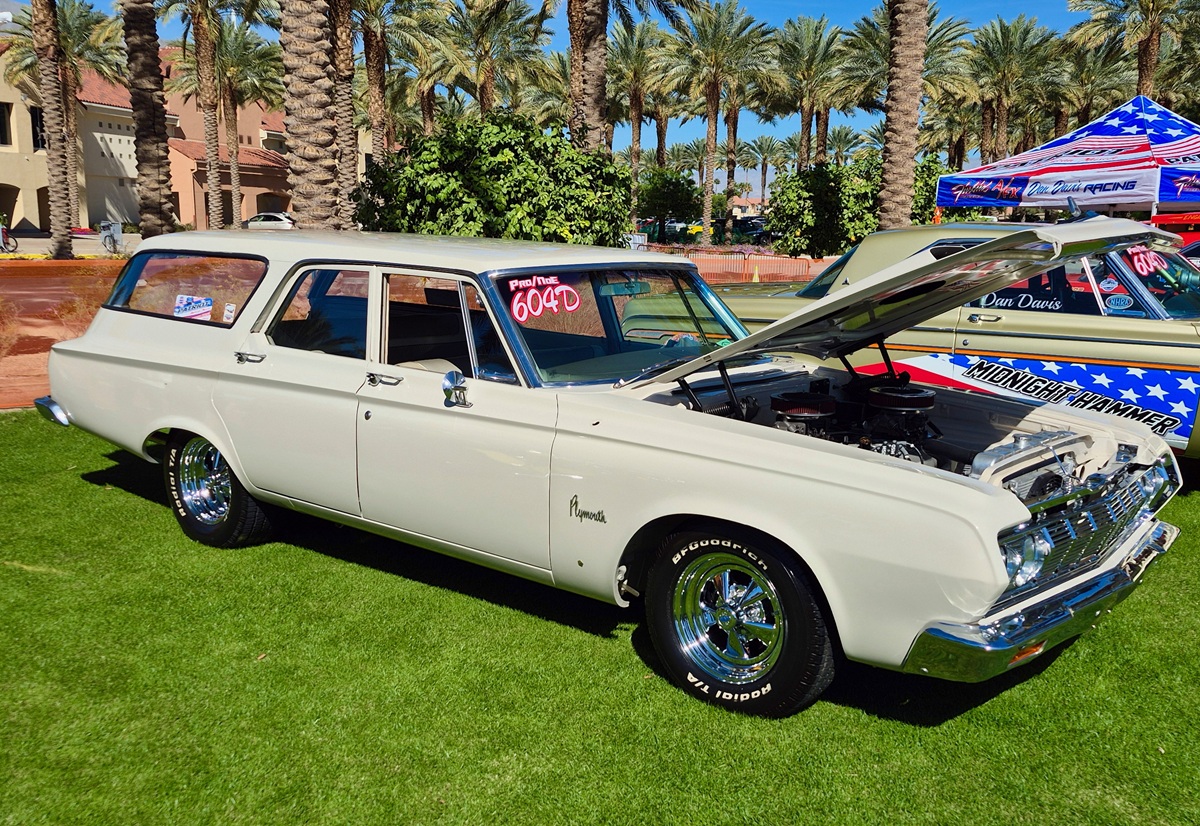
Also from the Davis Racing stable, an immaculate 1964 Plymouth Savoy wagon, a street car equipped with a re-worked Max Wedge engine. Running the standard B-body 116-inch wheelbase, the wagon body style was chosen by some drag racers back in the day because the extra weight of the rear provided for the means of getting improved traction. This example runs BFG T/A street rubber with traditional Cragar S/S wheels.
WDX POWER WAGON
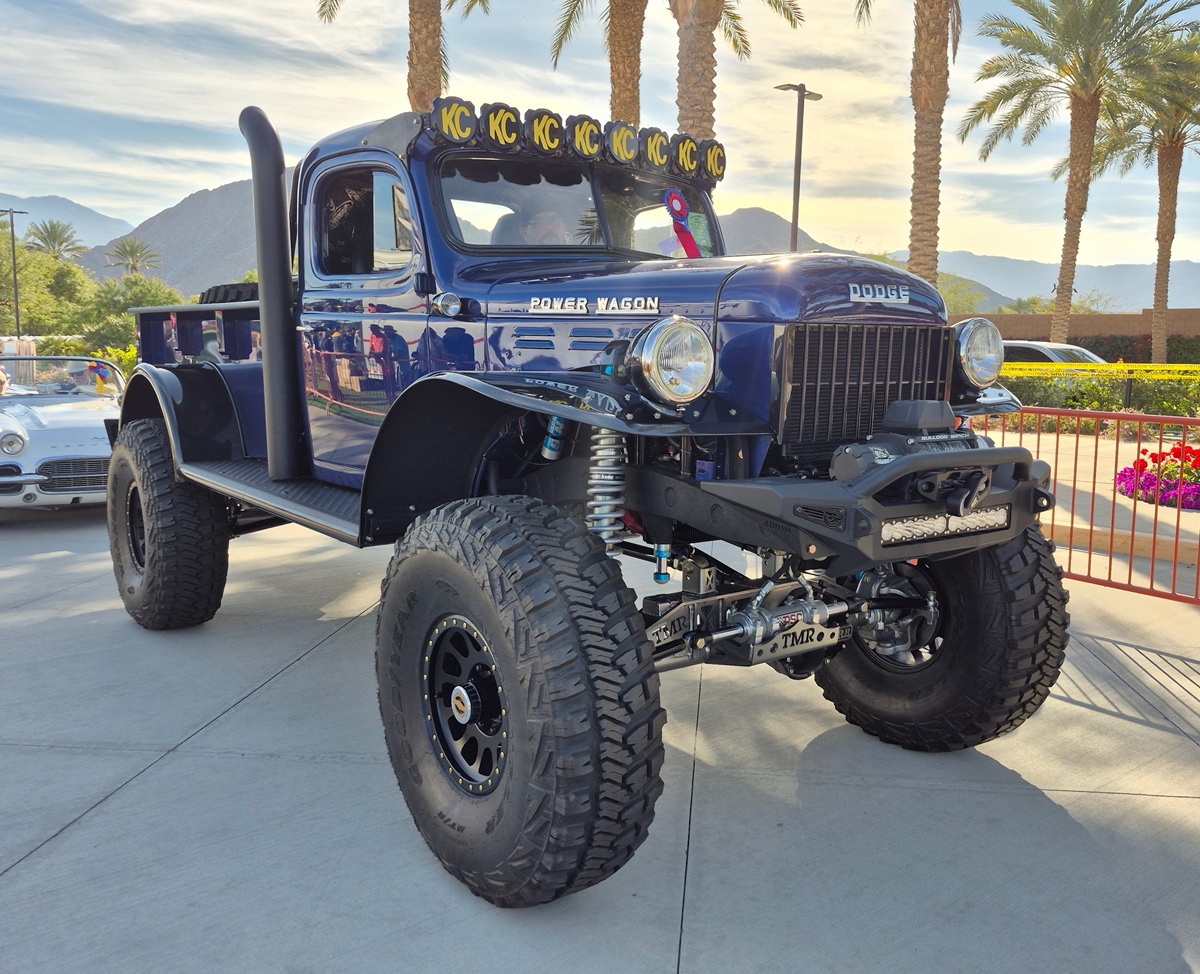
The famous Dodge Power Wagon was introduced in 1946 as a mass-produced civilian adaptation of the World War II 4WD 3/4-ton military trucks. Officially known as model WDX when first produced, over the years they were changed with new model descriptions. The pictured 1950 model has seen extensive suspension and powertrain modifications, and today when people think of these early Power Wagons, oftentimes they relate them to military vehicles, even though they were available to normal, everyday citizens (including ranchers, farmers and industrial users).
413 MAX WEDGE
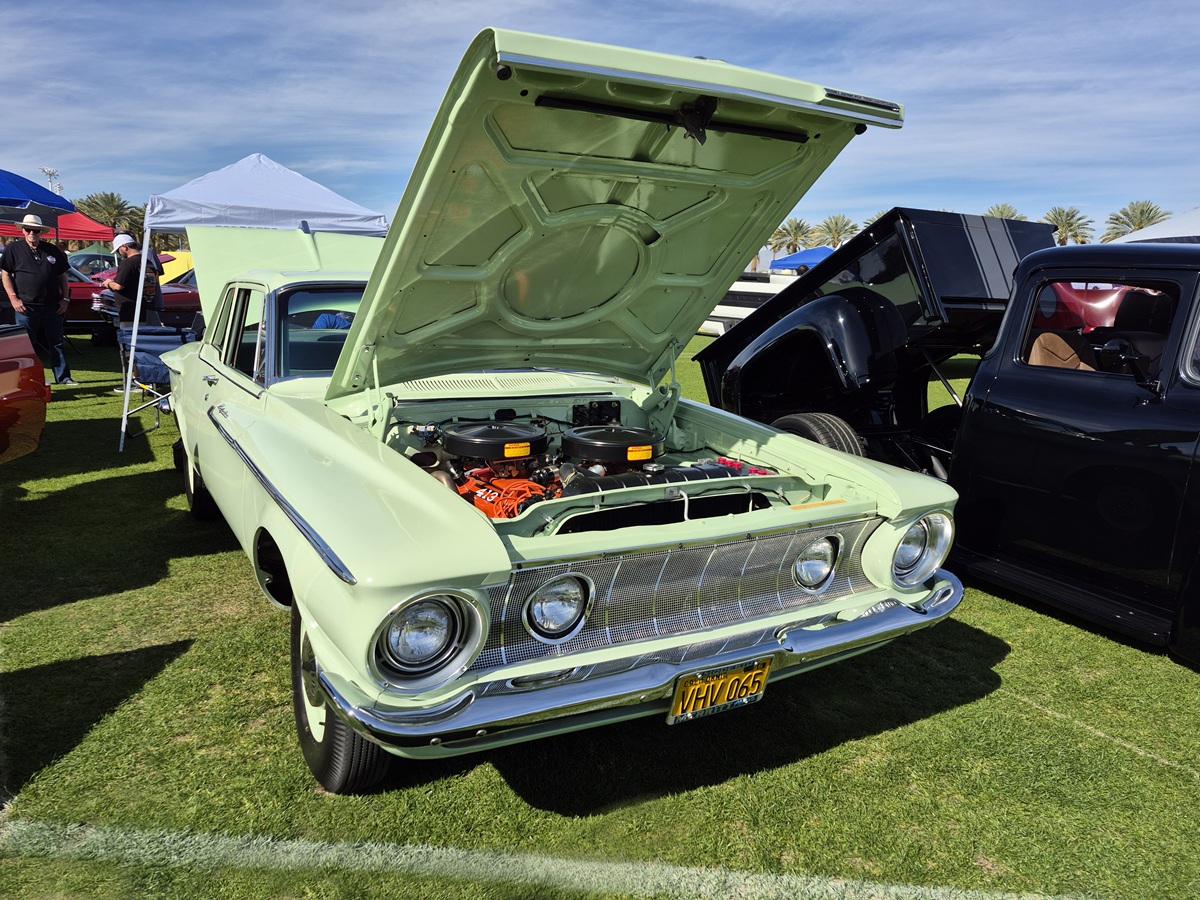
It’s a 1962 Plymouth Belvedere “post” car, AKA two-door sedan. When these all-new “Series SP” models came out in late 1961, they touted that the new design included a one-piece unibody construction, meaning it was now a single welded piece rather than the bolted-on front section from the ’61 cars. Styling was oriented toward the “long hood, short deck” theme; however, combined with the unusual horizontal shapes on the front and rear, along with the slab sides of the center area, it was a sales flop. The design debacle of the ’62 Dodge / Plymouth “downsized” car forced the Chief Stylist Virgil Exner to resign.
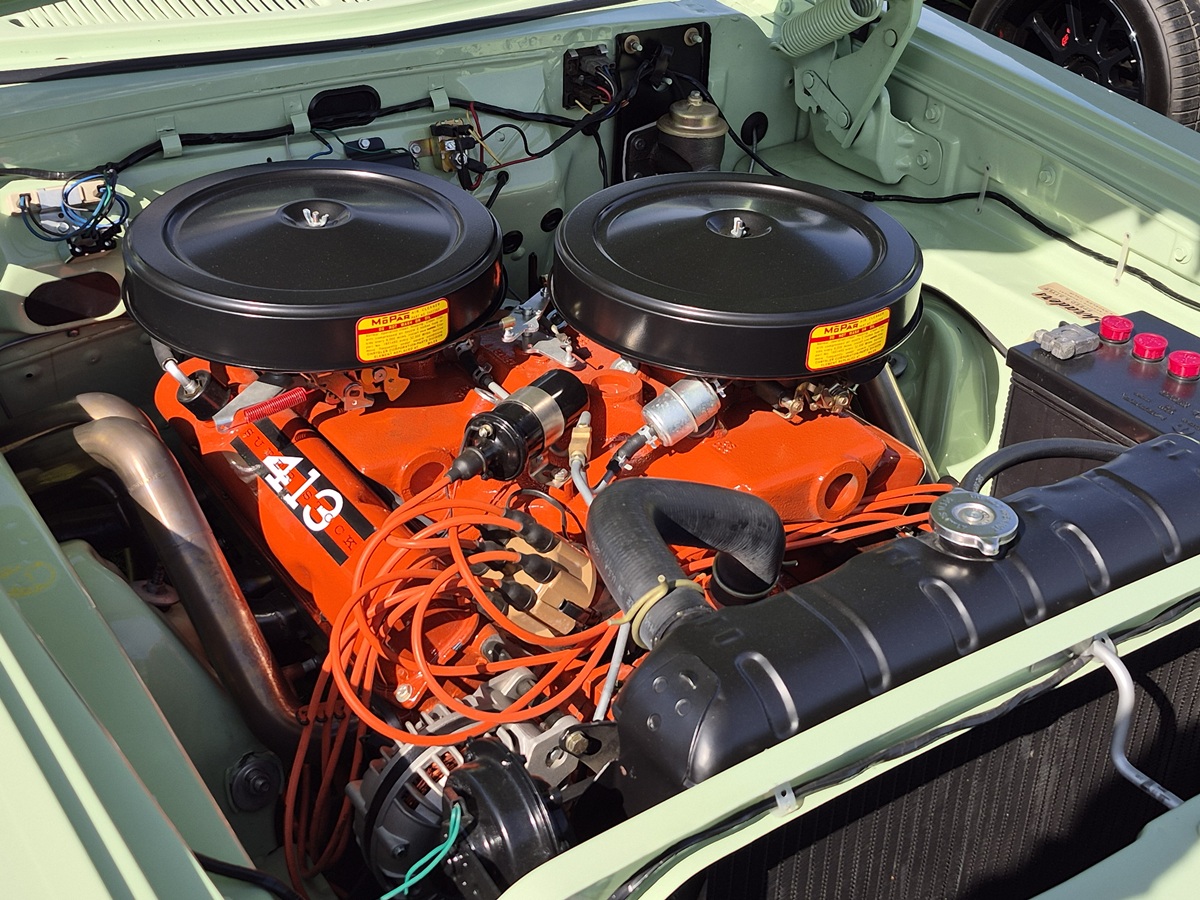
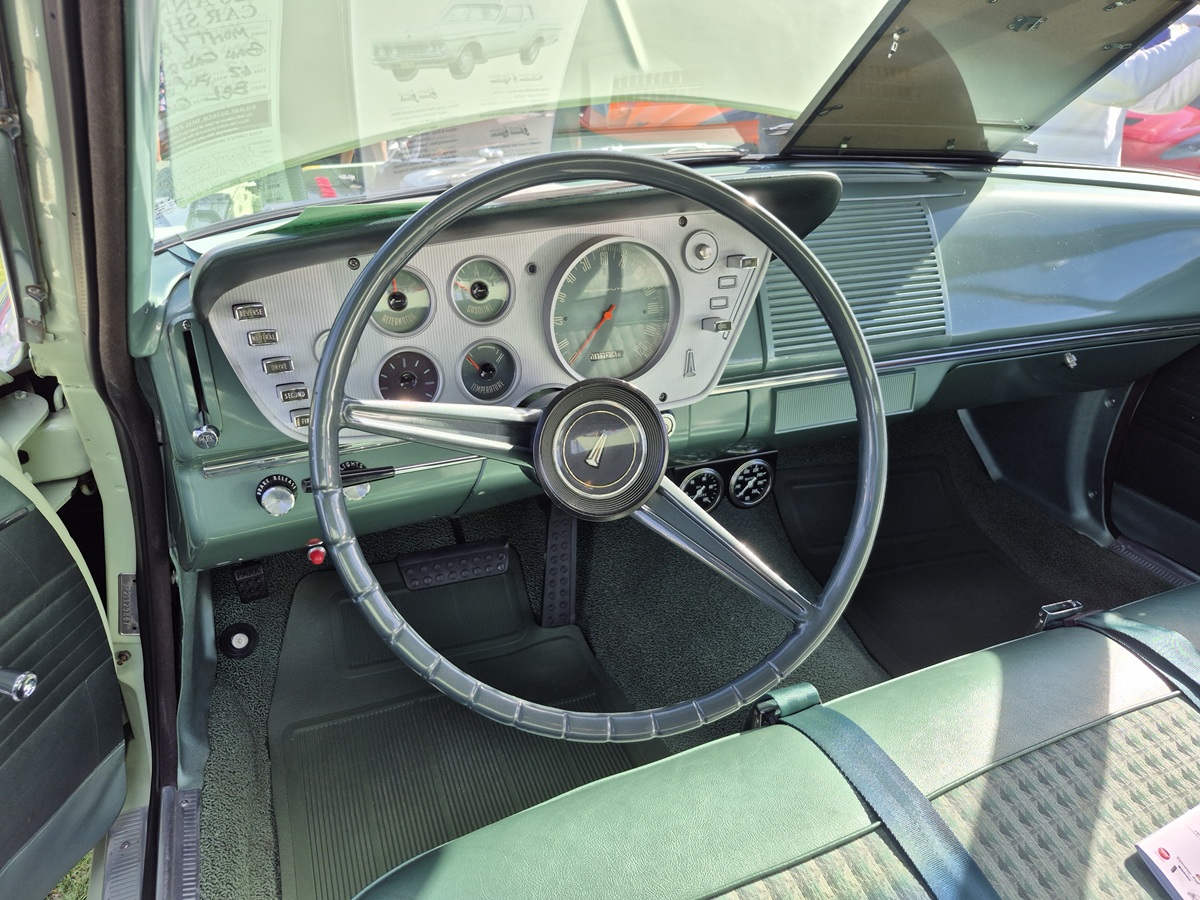
However, thanks to the powerful new-for-1962 413-cid “RB” engine and the Max Wedge cylinder heads, cross-ram induction, these smaller-sized Mopar vehicles were soon proven worthy on the drag strips for all-out performance! The displayed example has a radically modified 413 with numerous upgrades and all the while has a “bone stock” outside appearance. Push-button TorqueFlite (seen on left side of dash panel) 3-speed automatics were the way to go for consistent street and track performance.
This car came as a “no radio” car, note radio block-off plate.
1968 CHARGER R/T
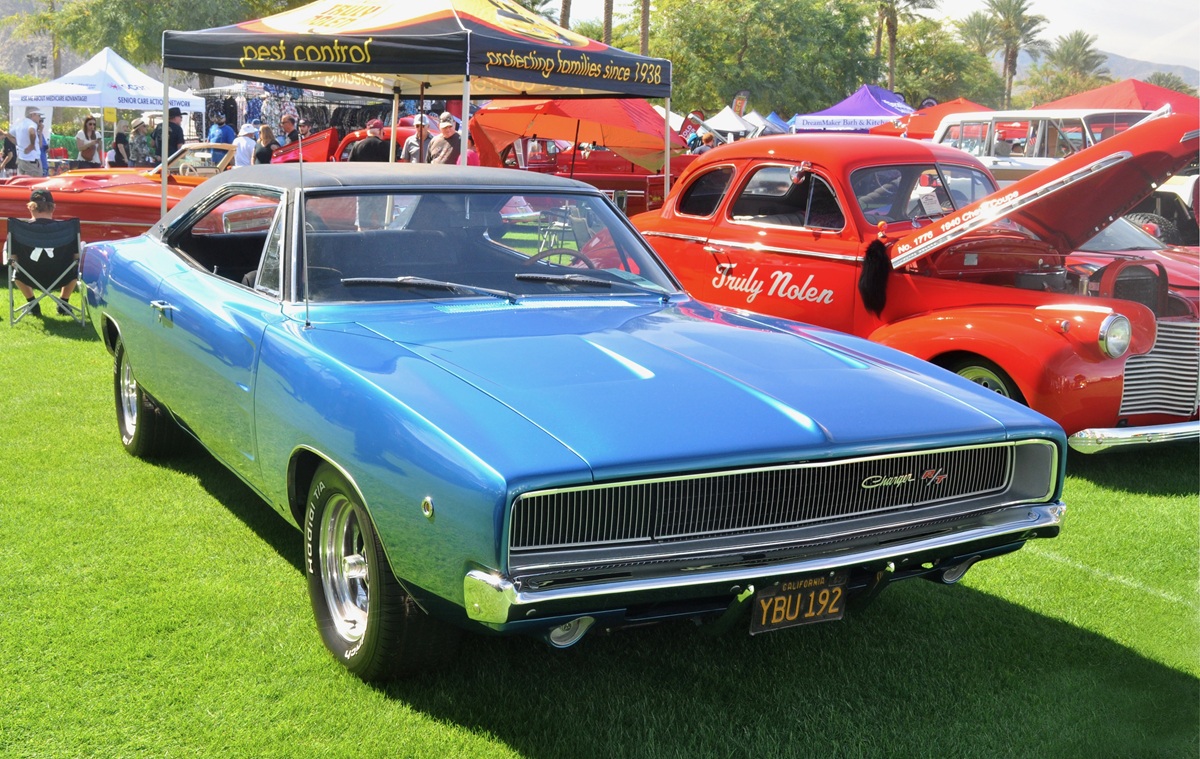
Completely revised for the 1968 model year, the Dodge Charger featured stylish coke-bottle sides, full-width grille with hidden headlamps and unique “flying buttress” rear window design. These visual features all blended together so well that Dodge caught a lot of buyers off guard as now having available on the showroom floor a wild, cool-looking car that was exciting! Add in that “R/T” (Road and Track) models came standard with the 440 Magnum V8 and available 426 HEMI engine option and, well, no wonder sales jumped sharply over the previous 1966-67 models. This basic iconic Charger shape lasted three model years and today are looked upon as having greatly helped the Dodge brand in getting “street cred” with the performance crowd.
LEMON TWIST BIRD
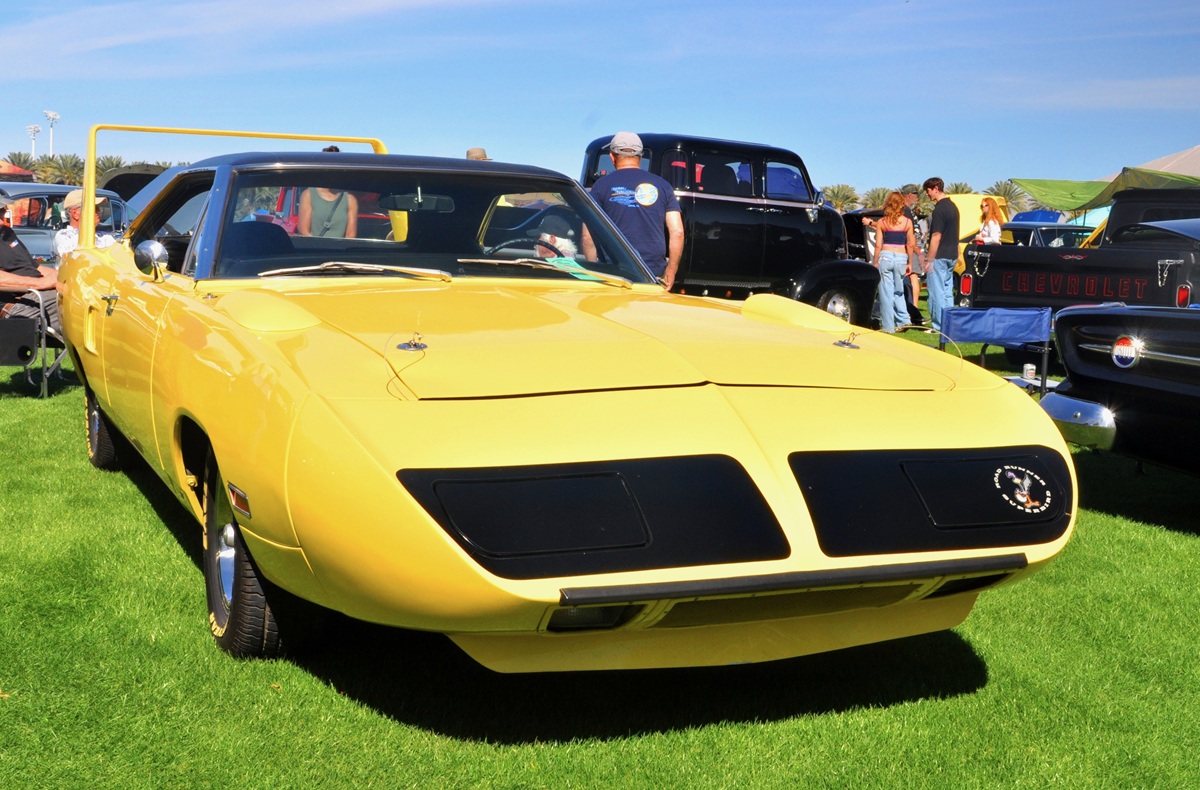
The 1970 Road Runner came available in a very special model: the Superbird! Aerodynamically shaped for NASCAR wars, it was Plymouth’s answer to the 1969 Dodge Daytona. Pictured is a 440-cid equipped version with factory “FY1” Lemon Twist body color. Plymouth created their wing car with special enhancements in the way of a pair of front fenders borrowed from a 1970 Dodge Coronet, a modified Coronet hood, an 18-inch extended front nose cone (with chin spoiler), Fury parking signal lights, re-worked, streamlined (convex) backlight, massive 24-inch-tall rear stabilizer and A-pillar aero-enhancing covers. Superbirds were built at the Chrysler Lynch Road Assembly Plant in Detroit, with finish work completed at the Clairpointe Pre-Production location, located a few miles away. There, the special parts and components supplied by Creative Industries. Total production: 1,935.
Author: James Maxwell
0 Comments