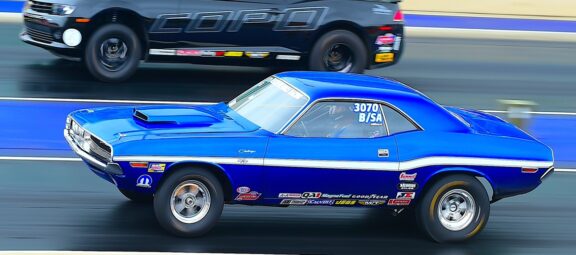
Jeff Kovalik’s Challenger R/T Opens a Six Pack of Hurt on the Competition
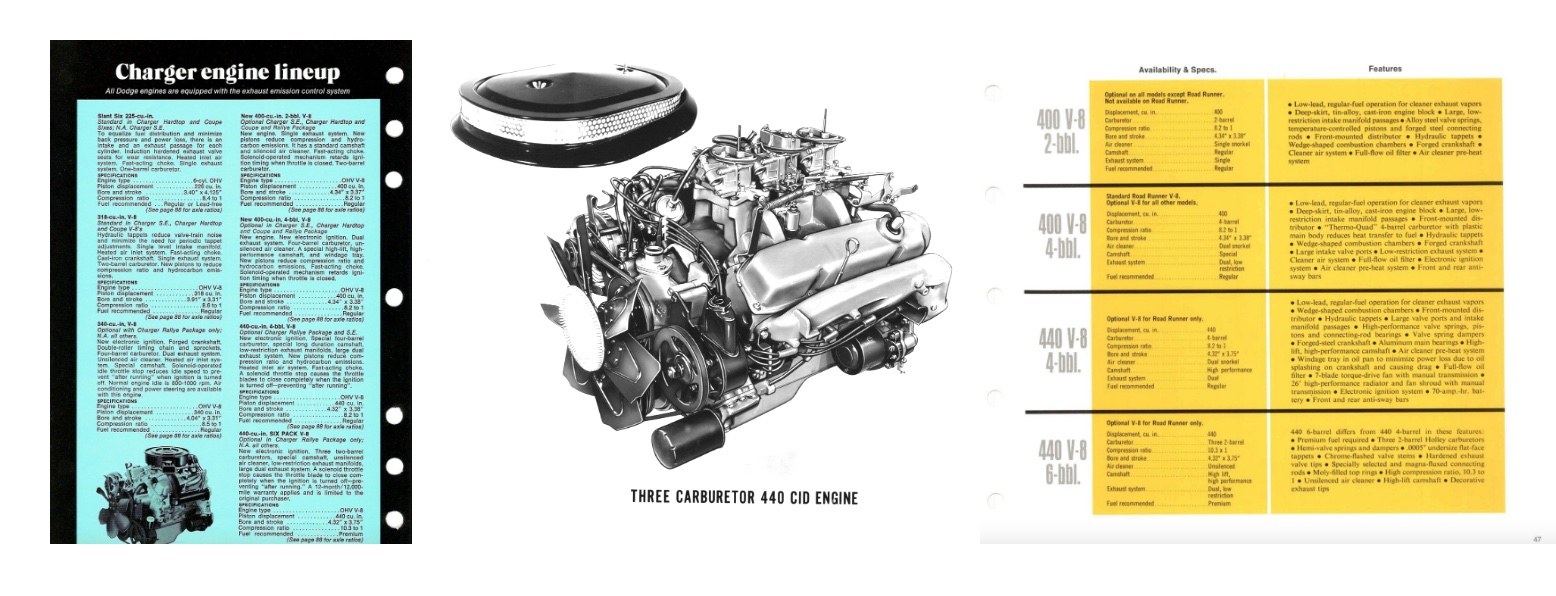
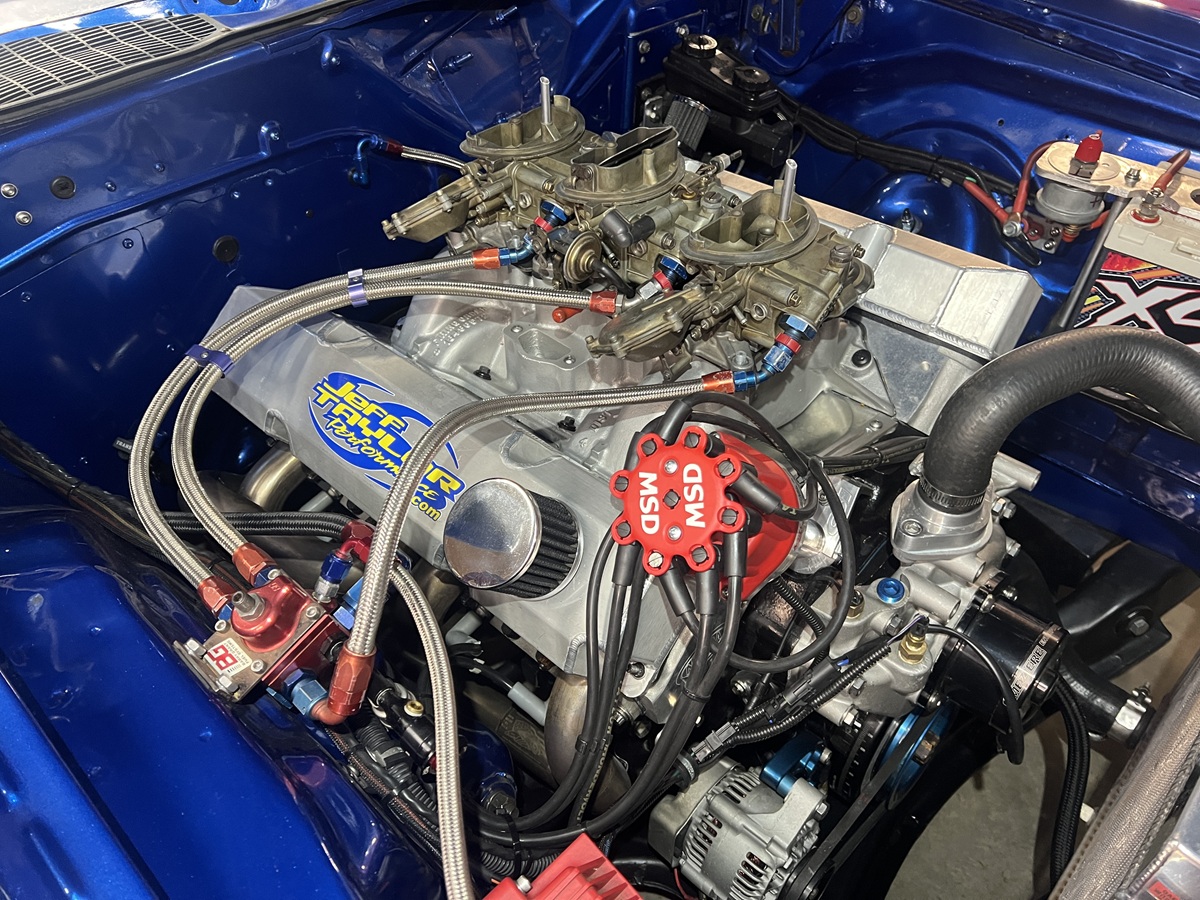
Mopar®’s mighty 440 Six Pack Big Block V8 may have made its debut in the spring of 1969, but don’t let its age fool you. In this era of electronic fuel injection, throttle bodies and computers that change the engine’s fuel curve and ignition timing with a couple of key strokes, Chrysler’s venerable multi-carb big block bruiser can still put the hurt on 21st-century machines. When Chrysler engineers devised this engine package and collaborated with Edelbrock on the special intake manifold that three Holley two-barrel carburetors could bolt on, little did they know enthusiasts would still be racing it for over 50 years. The engine option might have been short-lived as technically it was only available from 1969 to 1971 (although some 1972 Road Runners and Charger Rallyes snuck out of the plant with the 440 Six Pack before the option was officially cancelled), but its legendary status lives on.
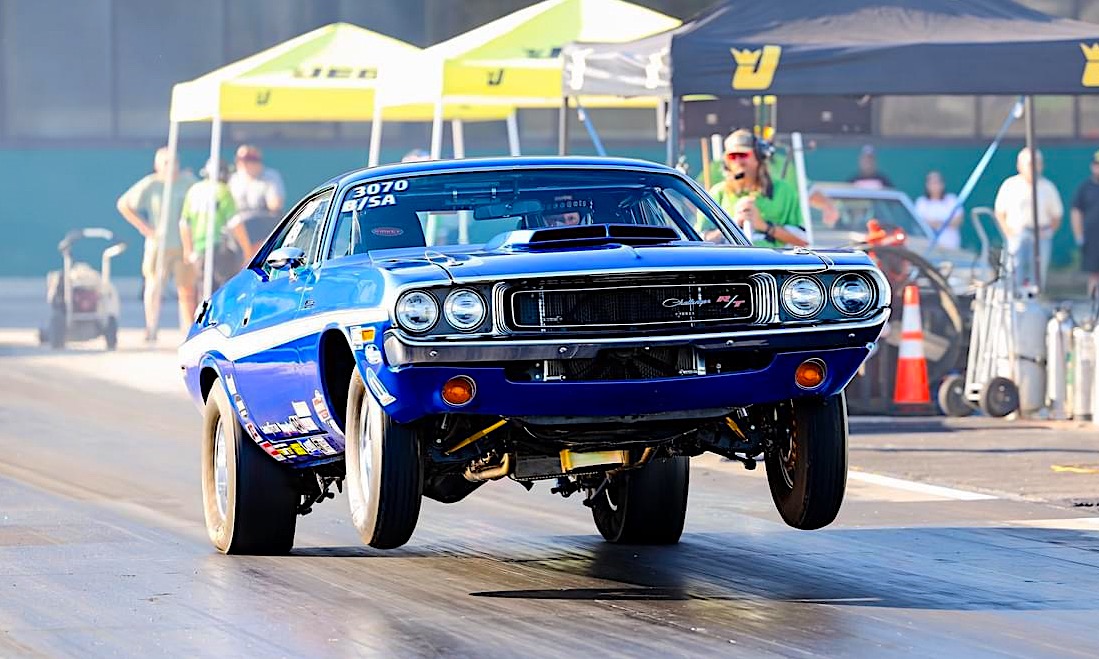
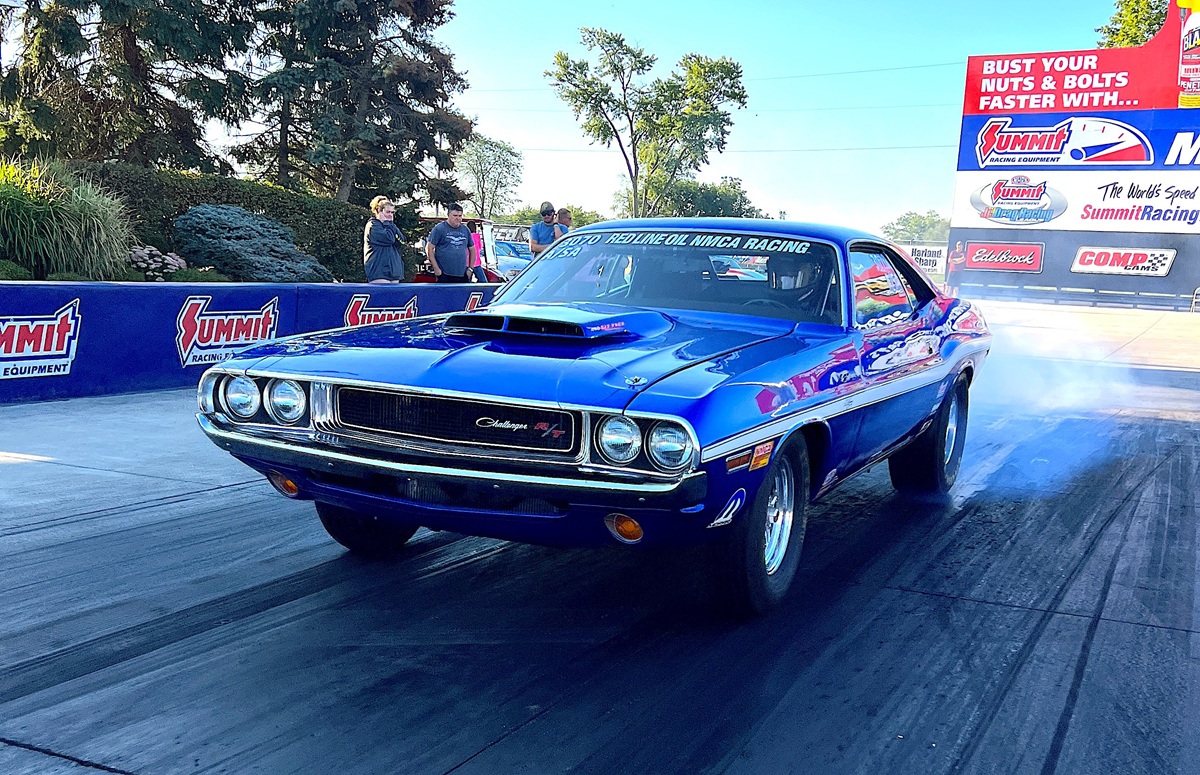
However, so loved, revered and respected among racers and fans, the 440 Six Pack still remains a highly competitive powerplant in both NHRA Stock and Super Stock competition today. That’s probably the reason Jeff Kovalik of Columbus, Ohio, races his 1970 Challenger R/T with a 440 Six Pack. His full-time gig is healthcare property management and he’s responsible for overseeing a million square feet of buildings and all the aspects of maintenance and construction. But on race weekends, Jeff’s smashing the accelerator and cracking open those three Holley carburetors so they can gulp mass quantities of air and chug VP race fuel like a binge drinker. The results are four-foot wheelies and performance in the high-nine- to low-ten-second quarter-mile elapse times. He’s right in the hunt among the other big block predators from Chevy and Ford that run in either NHRA’s Stock Eliminator ‘A’ or ‘B’ Stock Automatic classes. For Jeff, it’s more than just going fast; the Mopar brand has been in his DNA ever since he was a child. “Chrysler products have been in our family for a very long time. As a kid, I always enjoyed going to dealerships in Columbus like Chrysler/Plymouth East or Spitzer Dodge and looking at all the new cars and grabbing up all those sales brochures,” said Jeff. “Growing up as a 1980s kid, I watched all the great TV shows with cool cars, but of course, the best one was the Dukes of Hazzard, nothing could top that epic 1969 Dodge Charger! Beyond that, even at a young age, I knew that Mopars were somewhat unique, and they were not afraid to be different.”
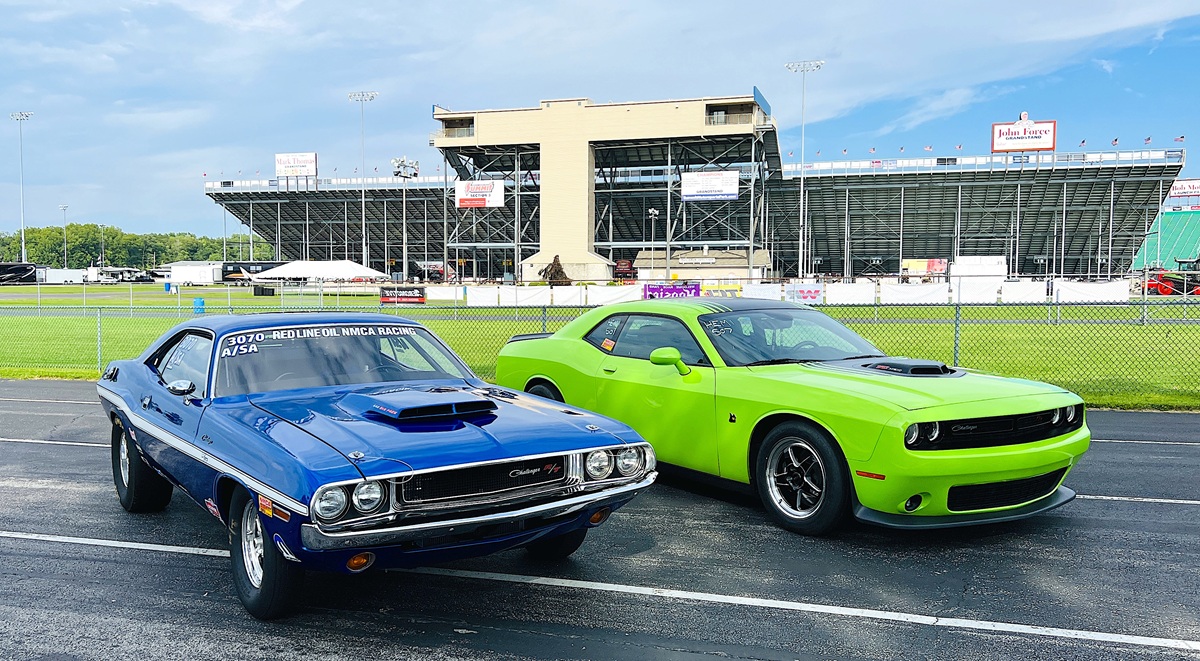
Jeff loved all the cool Mopar vehicles, but Challengers always stood out to him. “It’s a crazy story how I ended up with this car. First of all, when I was just nine years old, I saw my first 1970 Challenger R/T ‘race car’ at the NHRA Springnationals at National Trail Raceway, and from that point, I always wanted one of my own and would draw pictures of them all the time in my notebooks in school,” smiled Jeff. “In 2008, I had the opportunity to purchase the Challenger R/T, the car race today, from a good friend. However, a few weeks prior to him offering it to me, I had bought a brand-new 2009 Challenger R/T, so I didn’t have the money. Luckily, the car stayed in Ohio, and it was purchased by a good friend, Sean Dornan, who races Mopar HEMI® Super Stockers. While sitting in the stands at the 2018 NHRA U.S. Nationals, Sean casually mentioned that he may sell it, and the deal was done. It took a strange ten-year detour, but the car was mine!” When Jeff got the Challenger R/T, it was a non-running ‘roller,’ but it came with all the important parts, such as the block, crankshaft, cylinder heads, camshaft, intake manifold and, of course, those three magical Holley carburetors.
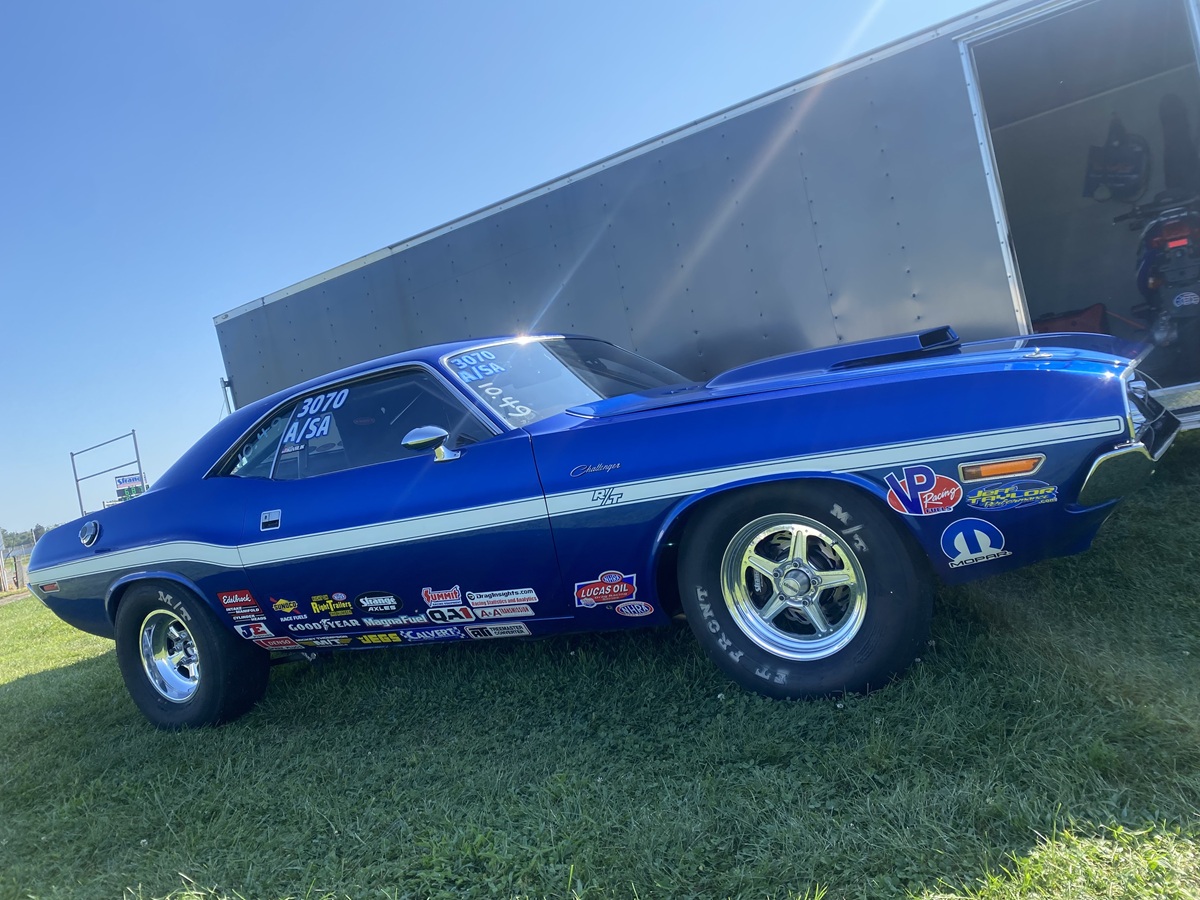
Once Jeff amassed all the parts, the engine building process began. “While I had a good starting point with the engine, there were plenty of new components that needed to be purchased. I wanted to go ‘all-in’ and get all the best parts that the NHRA Rulebook would allow, and I wanted to make as much horsepower as I could! I built the first engine myself, and that was important to me so that I fully understood the level of detail needed and the amount of time it takes to put one of these engines together,” noted Jeff. “I went straight from bracket racing to running in the highly competitive ‘A’ Stock Automatic class, and I had a lot to learn! My first full year in Stock Eliminator was 2020, but I was hooked. The class appeals to me because it’s a game of who can do the most with the least. The modifications are minimal, and I also appreciate the fact that the cars all have to be complete and correct. This means the cars have to look the way they did when new, no missing or incorrect parts. We have to use accepted race fuel, and cannot alter the cylinder heads, intake manifold, carburetors or add additional lift to the camshaft!”
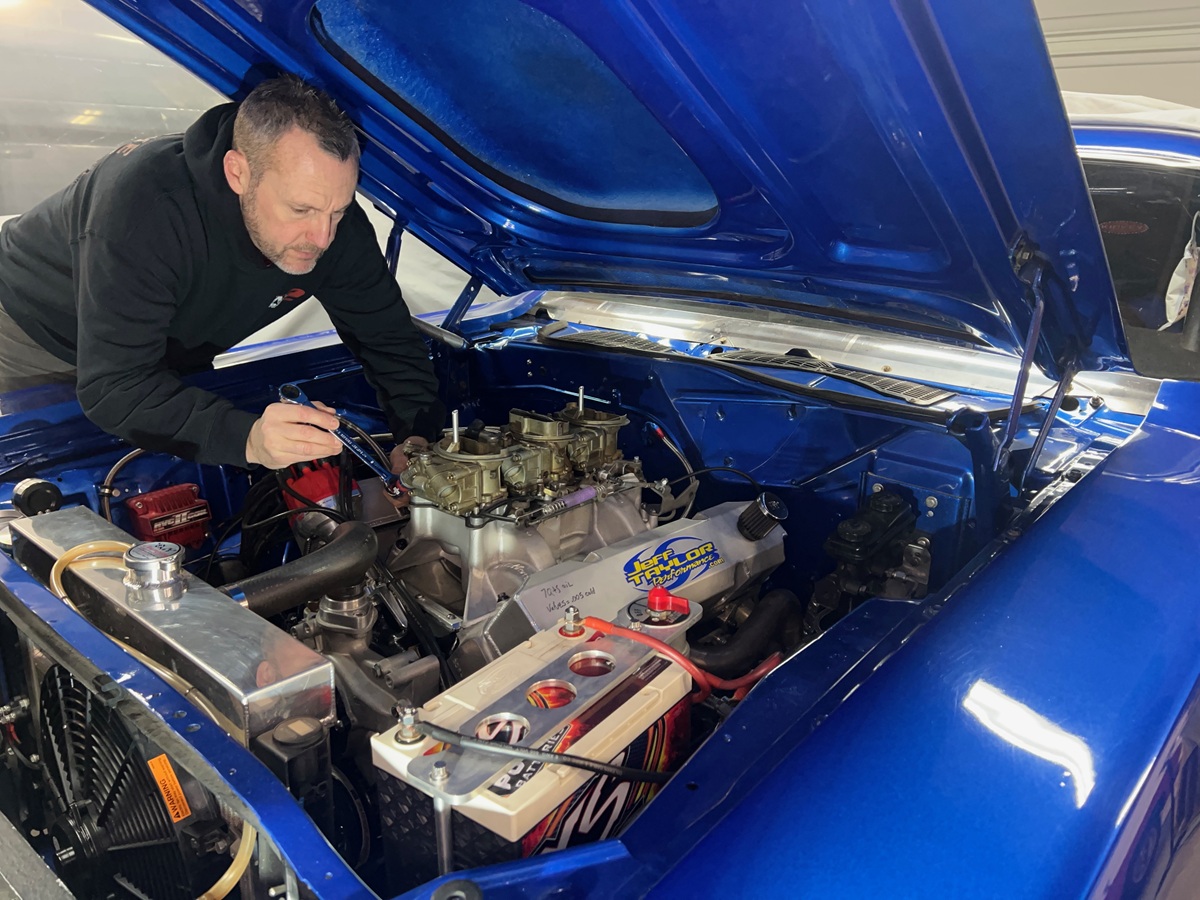
Like many racers, Jeff is not one to share his speed secrets, but he did give a lowdown on what it takes to make his 440 Six Pack Challenger R/T fast and win races. “The current engine was built by Jeff Taylor, and the legendary Don Little prepped the cylinder heads and carburetors. The ‘Proflite’ transmission was originally built by Dave Smith at ProTrans and received some updates in 2024 by Rick Allison at A&A. The rear axle is a bulletproof Strange Engineering S60 with a 4.56 gear ratio. The brakes are from Strange Engineering as well,” stated Jeff. But when pressed about ‘tricks’ Jeff and his engine builder have used, he did share these juicy tidbits. “Camshaft timing is critical along with gearing, friction and weight placement. Camshaft, lifter, valve spring design and materials have also come a long way in the last 10 or so years. Efficiency is everything, no wasted motion or energy! Mechanically, every part on a Stock Eliminator car is scrutinized and made to work as efficiently as possible. The biggest enemy is friction of any kind! These engines don’t make a lot of horsepower, so we have to move the car as quickly as possible. Also, making the three Holley carbs work seamlessly takes a little magic too.”
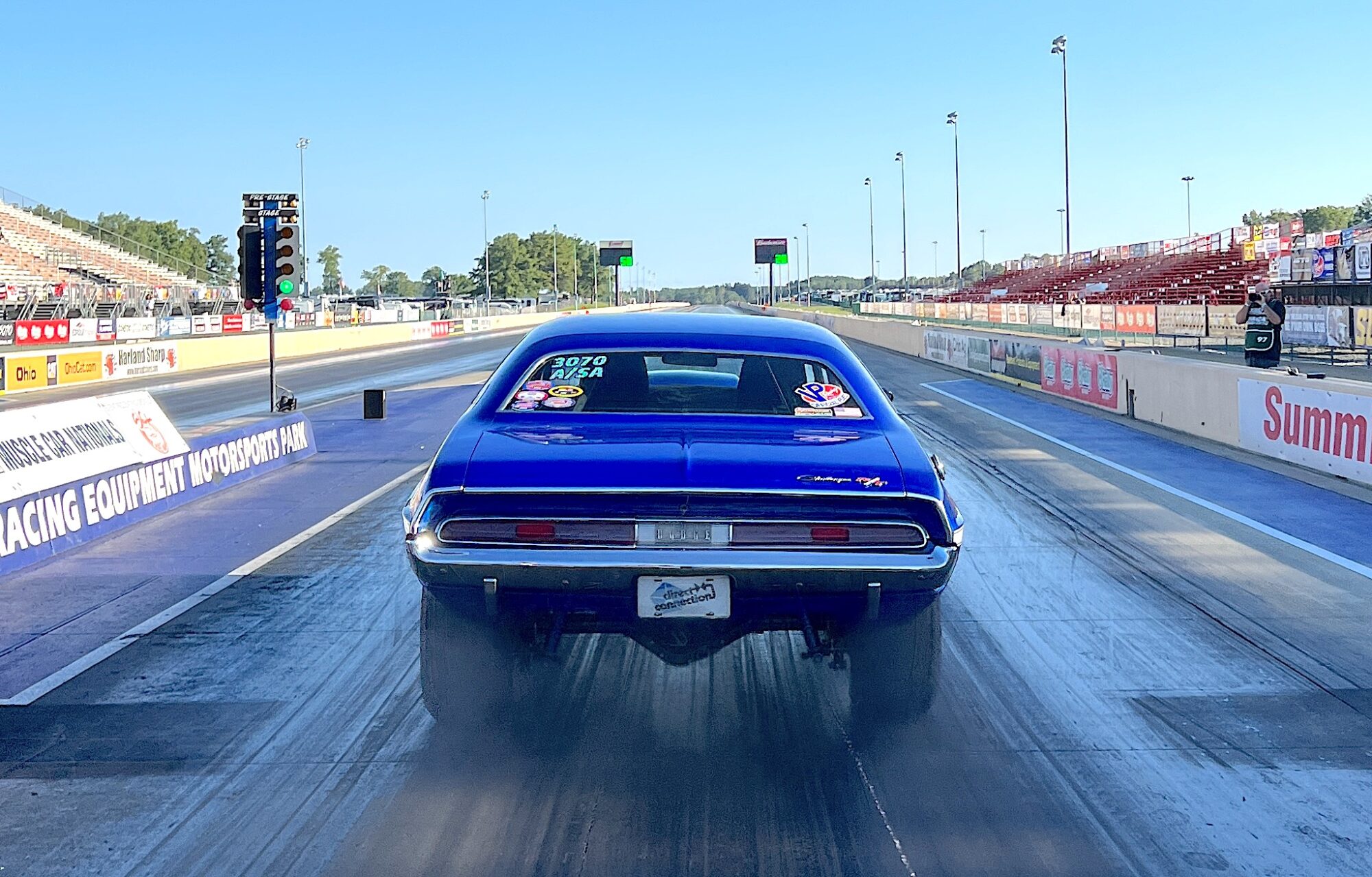
Despite all the tricks, attention to detail and blueprinting, the 440 Six Pack was never designed as a race engine but rather a passenger car engine with great street manners and low warranty costs. Those factors give it a slight handicap over factory ‘race bred’ engines, including its corporate siblings that run in the same classes such as the 413/426 Max Wedge and the mighty 426 Street HEMI. “Unfortunately, the production big block Chrysler ‘906’ cylinder head casting, used on 383/440 engines from 1968 to around 1971, don’t really flow a lot of air. They’re probably the single biggest factor that limits the ability to make a ton of horsepower for this type of racing engine. Since we must maintain the OEM port shapes, location and volumes for the runners and chambers, a good valve job is about all that makes any improvement as far as airflow. The 440 Six Pack intake manifold is okay, but not exactly a model of volumetric efficiency either. The camshaft also limits the performance as we have to run the stock valve lift, which is .450-inch on the intake and .458-inch on the exhaust,” said Jeff. “All that being said, there are other brands whose OEM engine design have significant advantages, which will always be a challenge for the Mopar racers. The 1969 Camaro SS with the 396 big block, 375 horsepower combo, is certainly our biggest nemesis; they are pretty tough to keep up with. We have to rely on the NHRA Tech and Rules Committee to keep all the hundreds of combinations legal and competitive in Stock Eliminator.”
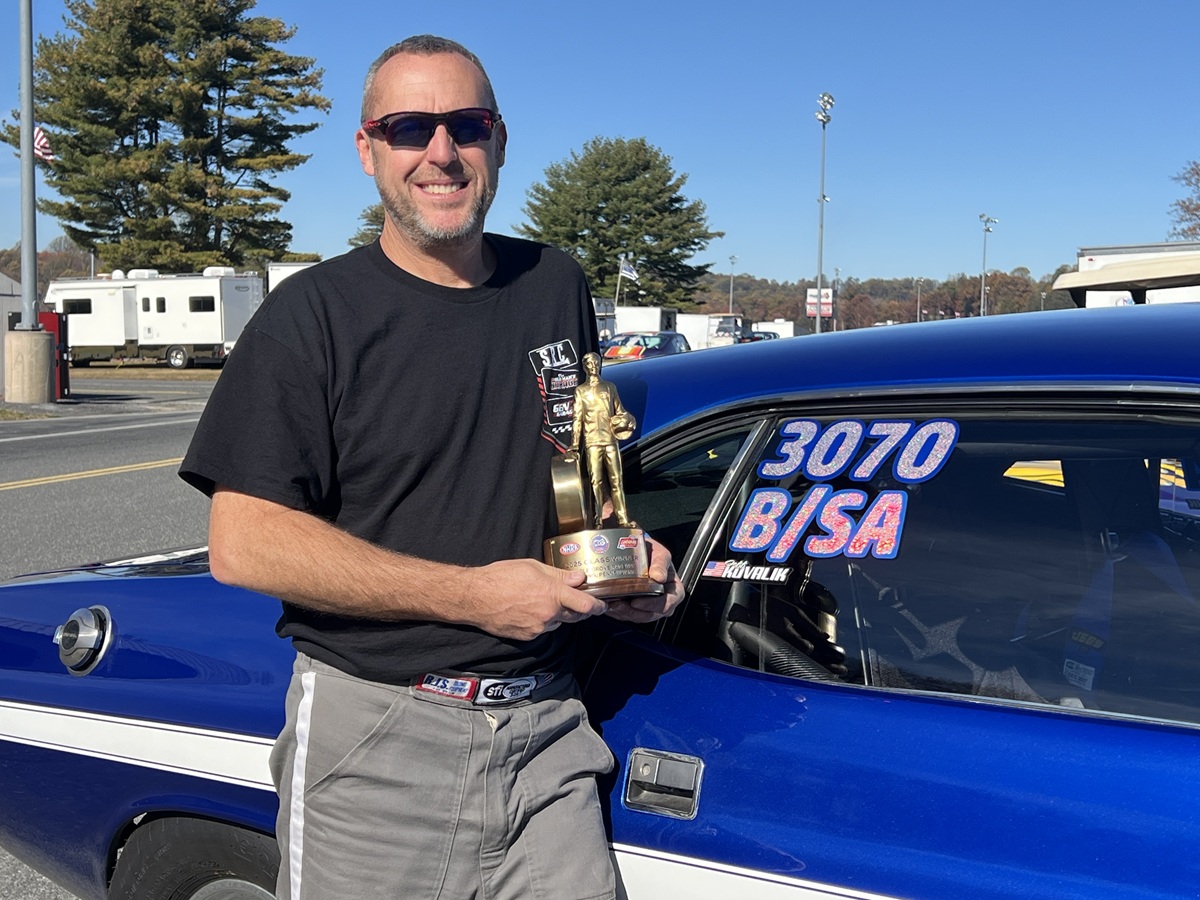
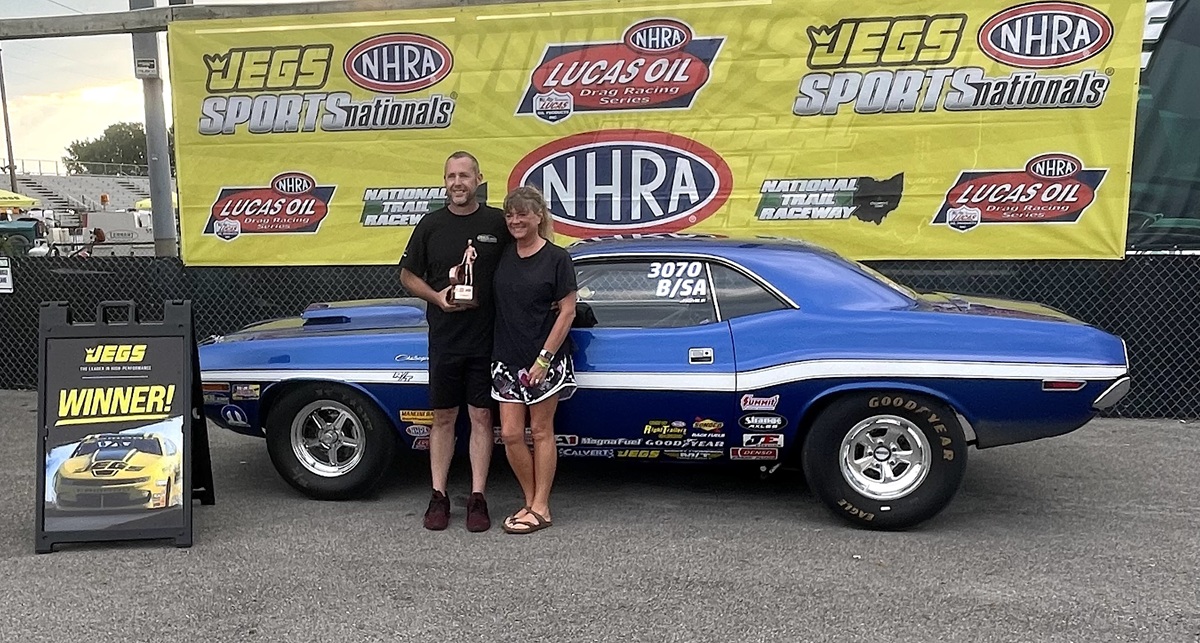
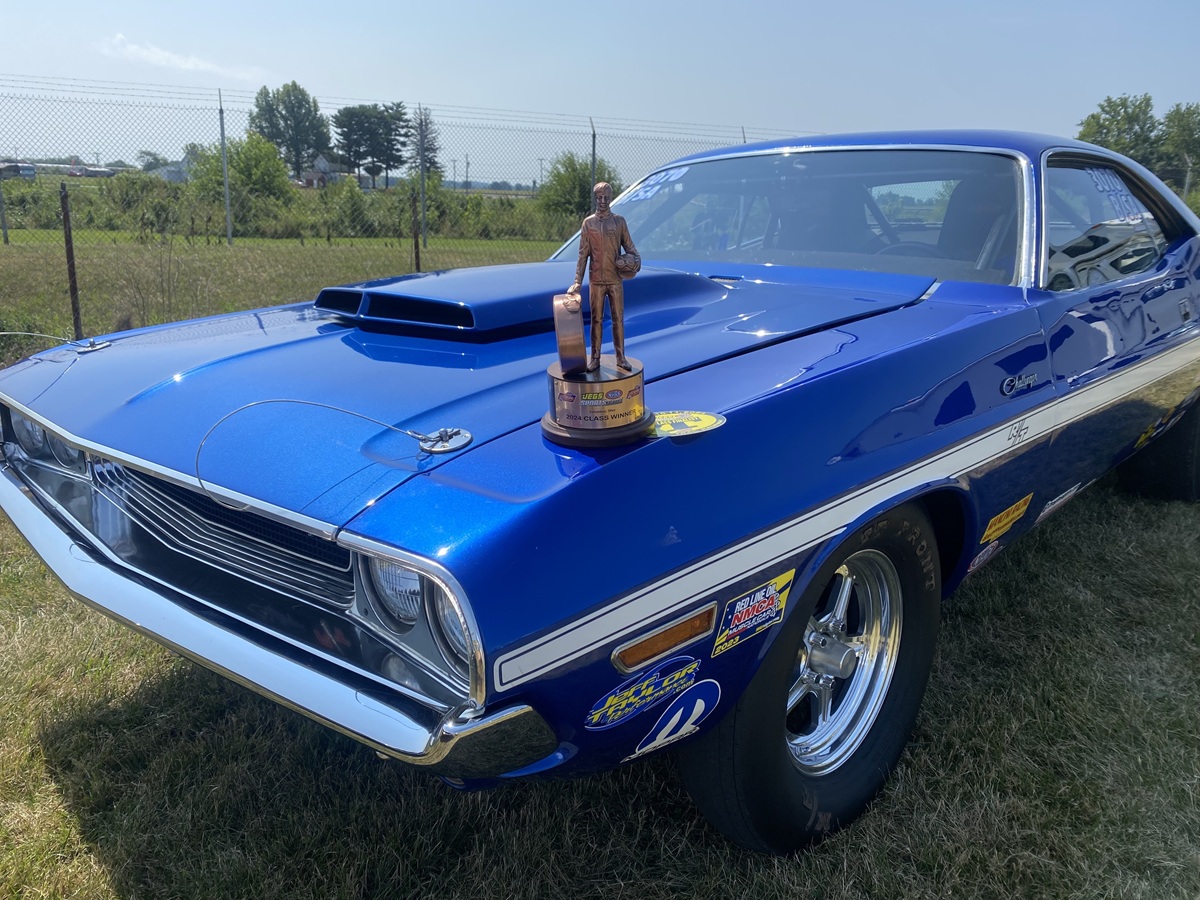
Despite those hurdles, Jeff’s 440 Six Pack Challenger R/T has run a best ET of 9.985 seconds. To put it in perspective, the index in the A-Stock Automatic class in 11.00 seconds. Jeff’s also won a pair of ‘heads-up’ class finals while going deep into the elimination rounds, including a runner-up finish in Stock Eliminator at the 2024 NHRA Dutch Classic. But it takes more than a highly tuned racecar and luck to go rounds and be competitive; it takes strong and good friends, and Jeff has those. “We are a ‘car-family’ for sure, and we support each other and spend a lot of time in the shop working on our projects, which is a blessing. I even dragged my wife into the Mopar family not long after we got married by replacing her Ford SUV with a shiny new Durango, and it’s been Mopars ever since! But my daughter Allison has always been competitive, no matter what she does and building cars and racing fits right in with her personality. When she graduated high school, I surprised her by bringing home the ’70 Challenger, and she was immediately interested in helping me work on it. Allison and her boyfriend Tommy have a successful YouTube page, Gen 2 Garage, where they share all their automotive projects and racing. They race all over the country in a variety of vehicles and a few different types of events, but always drag racing activities. One of our Mopar highlights was the opportunity to build and race the Hurricane-powered Dodge Dakota in 2024 for Dodge’s Roadkill Nights event in Detroit. It was a family affair for sure with a short timeline for the build, and it was an experience we will never forget,” smiled Jeff. “But again, my wife and daughter are my world, without them I could not do this as we spend so many hours with them at the track. No matter how good or bad the day is, my racing family and friends are always there to provide support.”
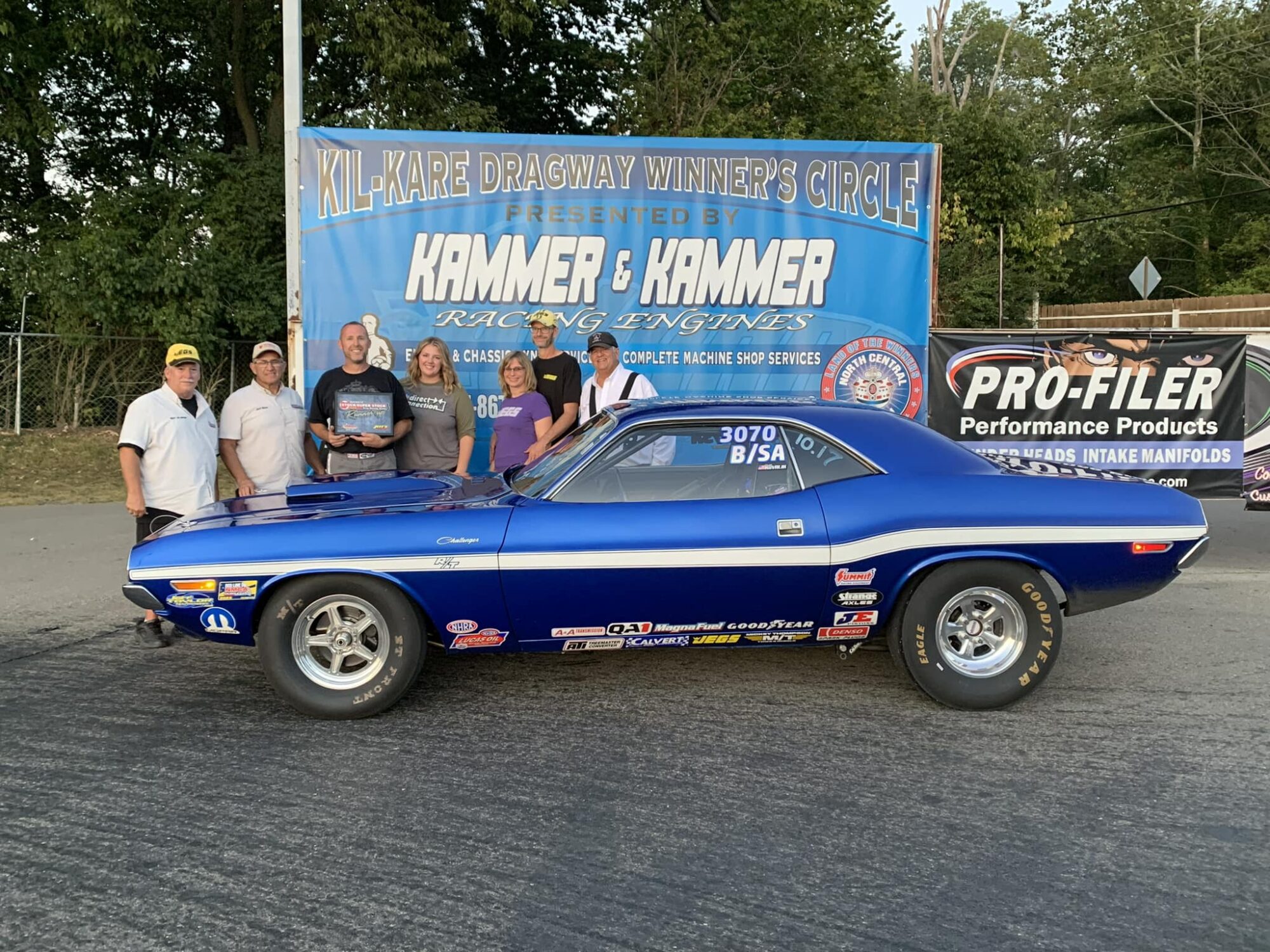
Jeff’s Challenger R/T is locked and loaded for the 2026 drag racing season, and he’s ready again to open up a Six Pack and put the hurt on the competition!
0 Comments