A Road Runner at Last
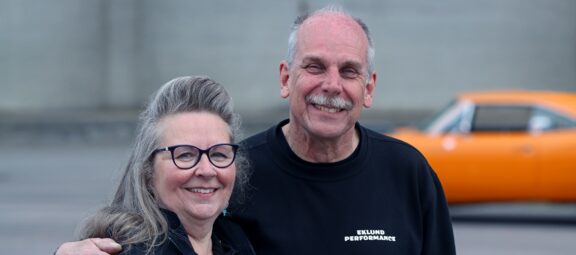
It’s rare to see a couple as tightly knit as Ulf and Gerd Eklund. I’ve met them at countless car shows and other gatherings over the decades, and I can count on one hand the times they’ve been apart. So it feels perfectly natural that they prompt each other during the interview. Not because either needs help – but because they need each other.
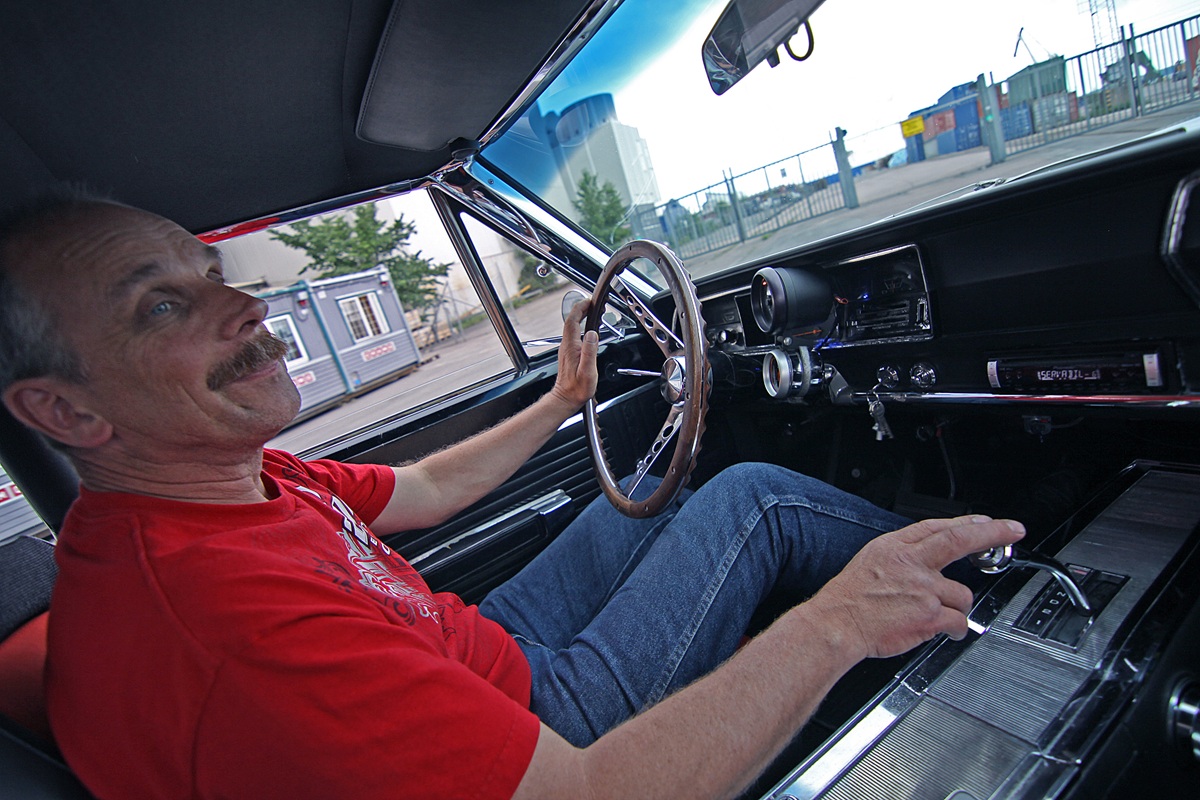
The first time I meet Ulf Eklund, though, he’s flying solo. It’s 2012, in Västerås, southern Sweden – a city located at the heart of the nation’s population, if not its geography. A perfect spot for northern Europe’s largest car meet. Power Big Meet is the event’s name, but I’m mainly there to cover Eklund’s 1967 Plymouth Satellite.
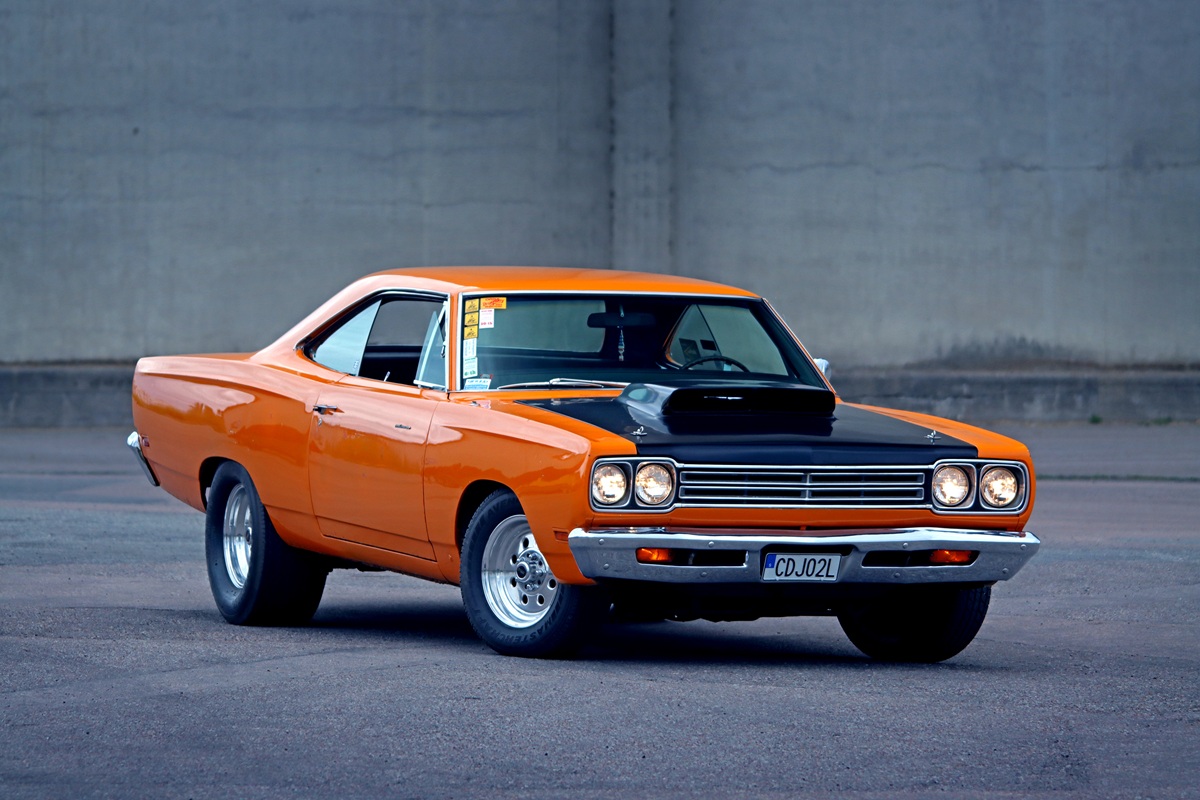
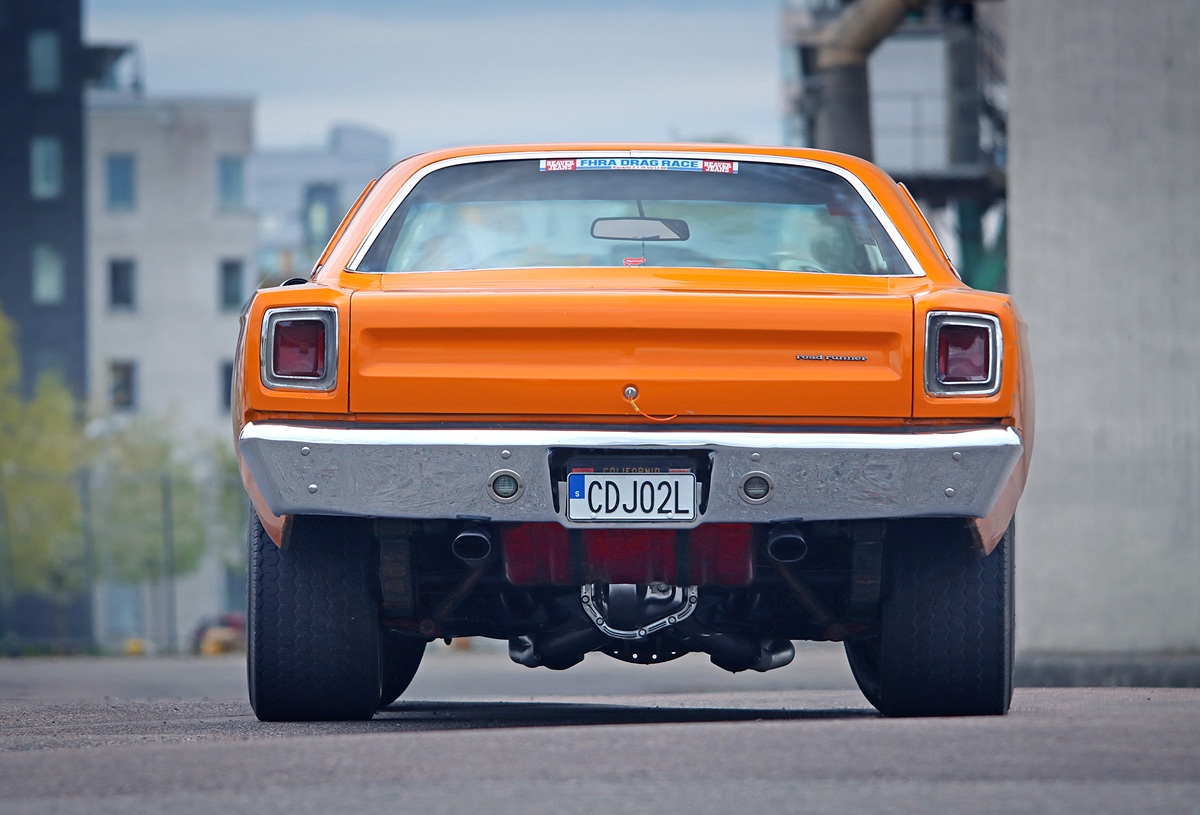
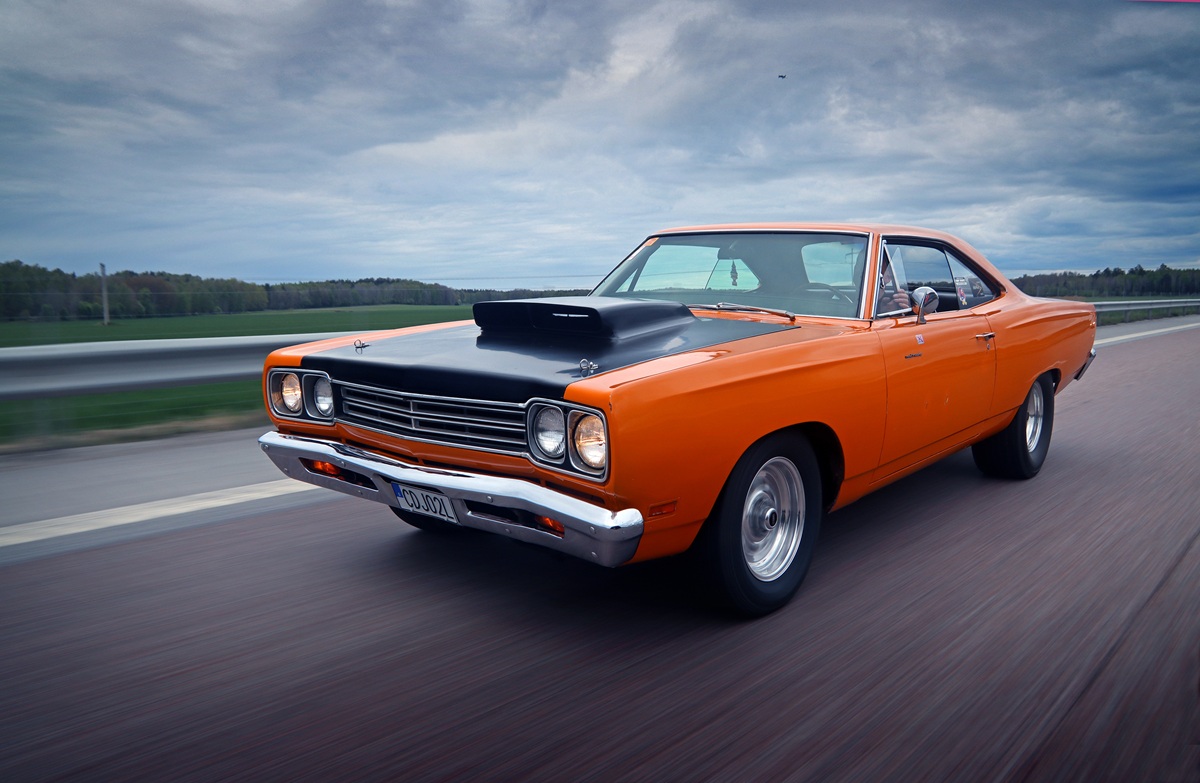
That meeting becomes a lifelong memory. I couldn’t have guessed our paths would cross many times afterward – finally landing here, in the summer of 2025, with Eklund’s dream car: a Plymouth Road Runner.
“A 1969 Road Runner has been high on my wish list for a very long time,” Eklund says. “But there was a time in the 1990s when I swore I wouldn’t have one. Everyone seemed to have one back then.”
Even during that decade, a good Road Runner had already climbed in price. Maybe it was a psychological defense – the thing you long for but can’t have, you eventually distance yourself from. It’s easier that way.
“Yeah, it was really a highlight when I finally got this one,” Eklund says. “I’ve tried to buy this exact Road Runner for at least 20 years. So I’m very happy I finally managed to get it.”
“Happy” is the right word. Yet this story carries both joy and sorrow. The Road Runner once belonged to one of the Eklunds’ closest friends, Micke Jungstedt. Sadly, Jungstedt passed away, in part due to Parkinson’s disease – and that’s also how the car changed hands.
You can hear the loss in Eklund’s voice, intertwined with gratitude, especially when we talk about the car’s color.
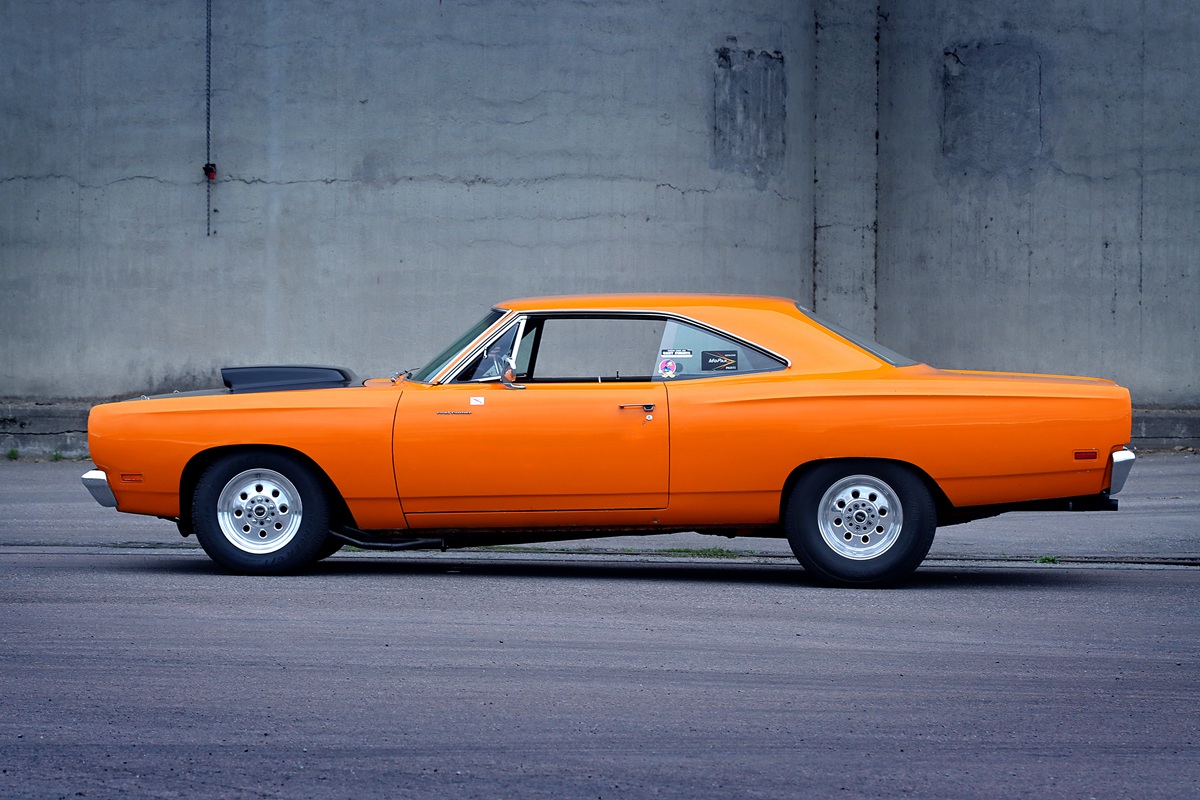
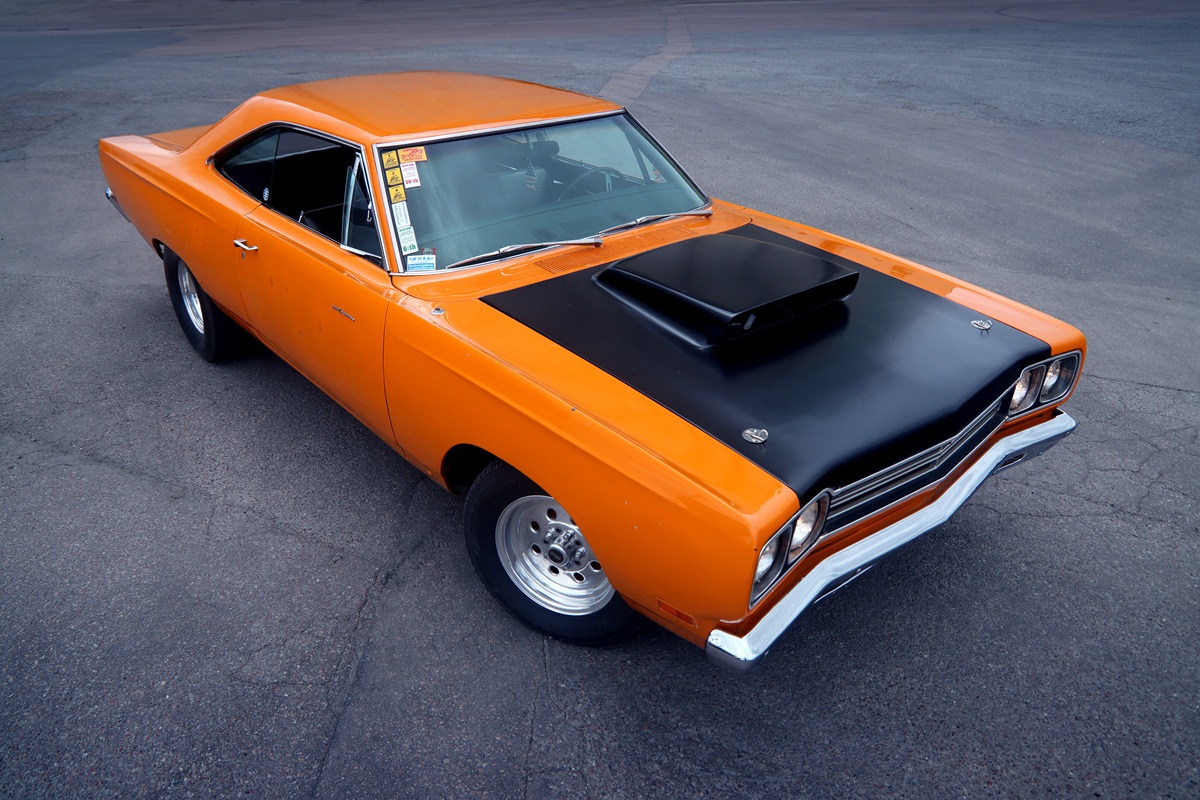
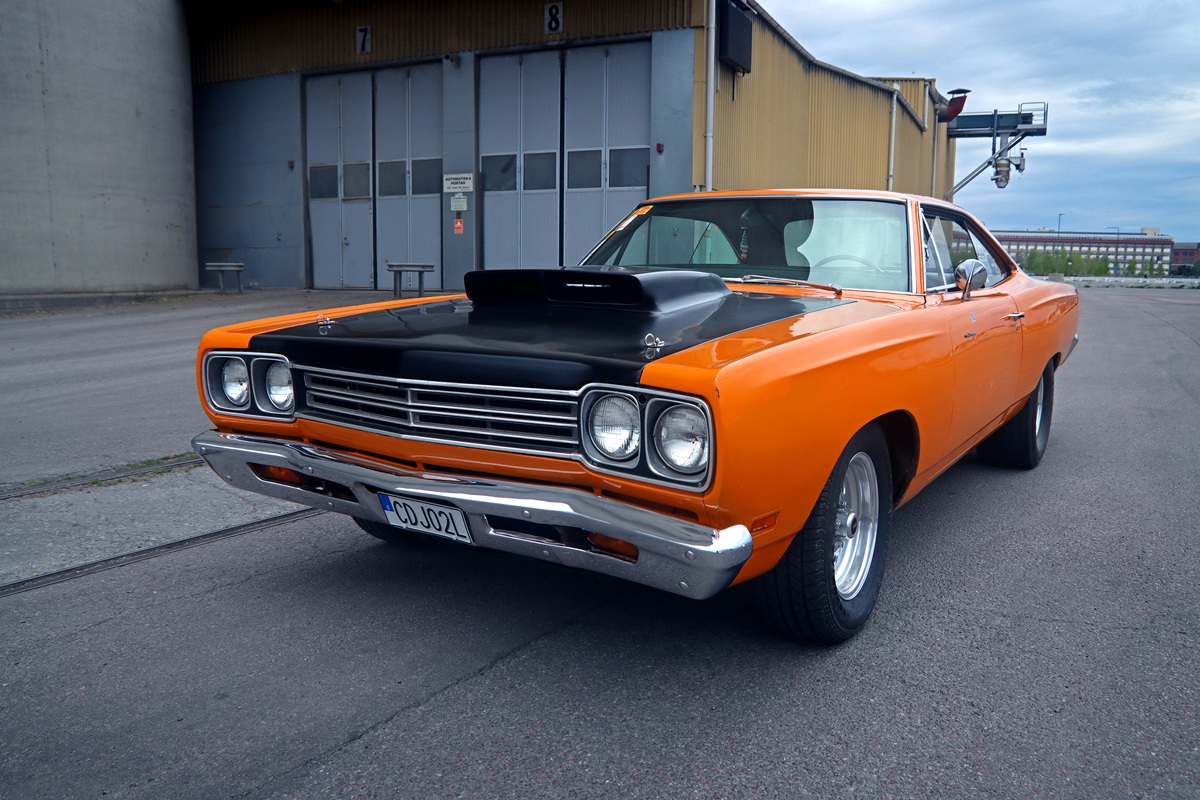
“Yeah, I like the color,” he says. “I plan to keep the car just as it is, to honor Micke. The paint, for example – it’s a typical $50 respray from the 1970s, done in the U.S. to make the car look good before selling. It was originally light yellow, but now it’s Omaha Orange – an attempt to imitate Vitamin C. I’ve since learned that Vitamin C actually had a bit of metallic flake in it, not a solid color like this one.”
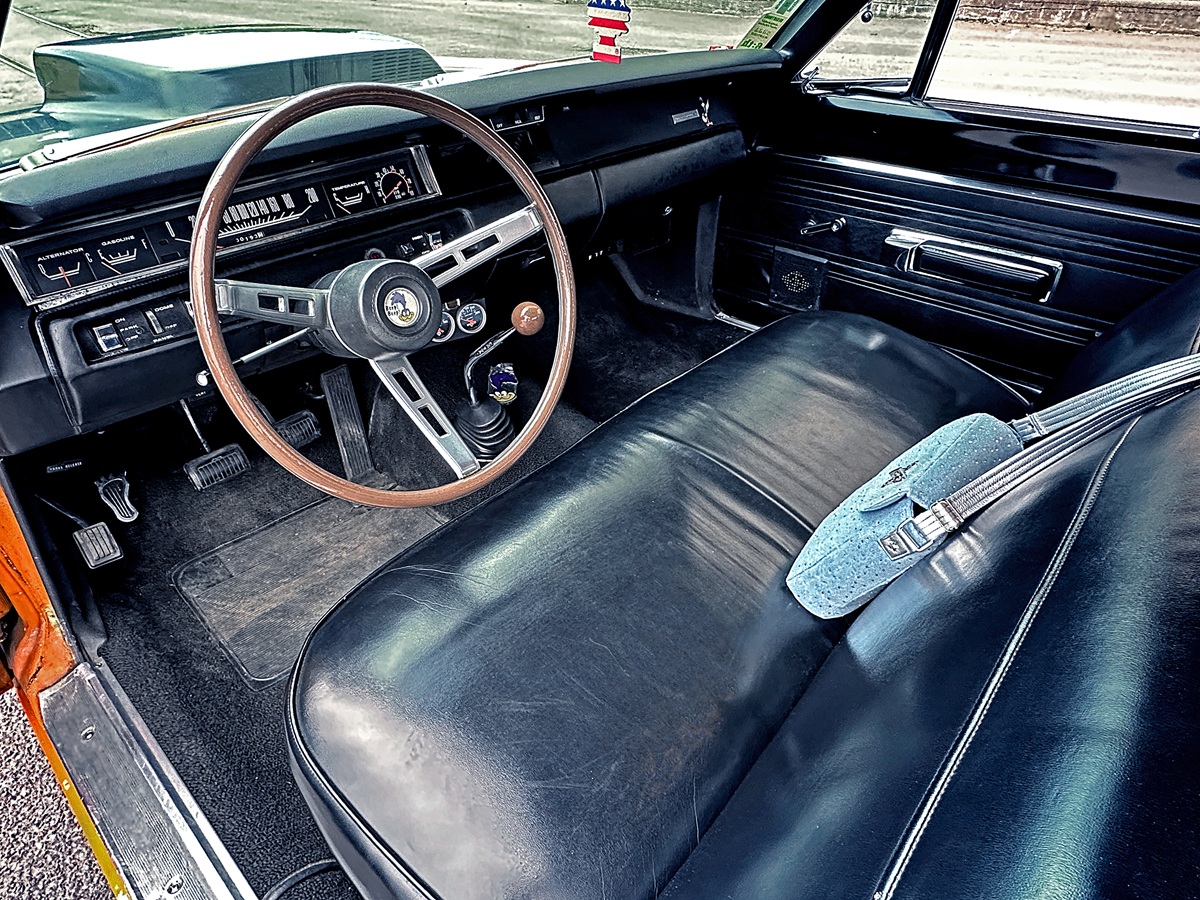
He laughs, adding that the car’s interior was also “freshened up” on a budget before that old sale – about a $30 job.
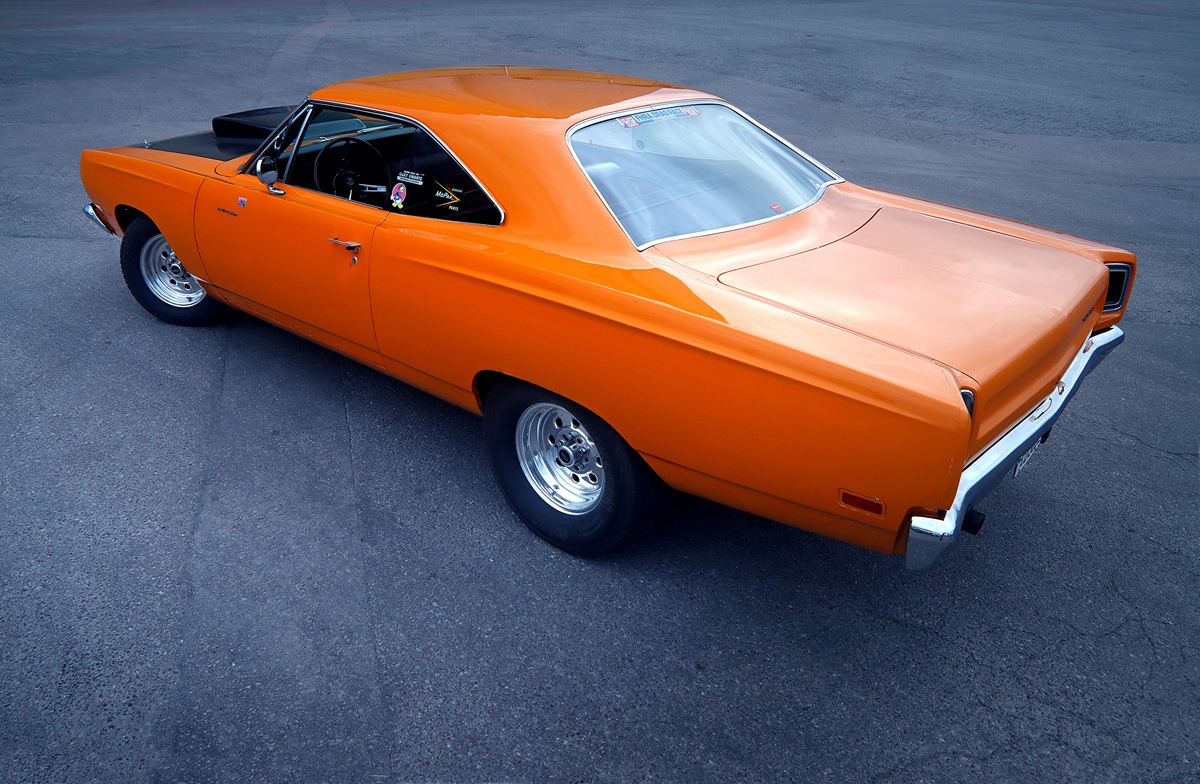
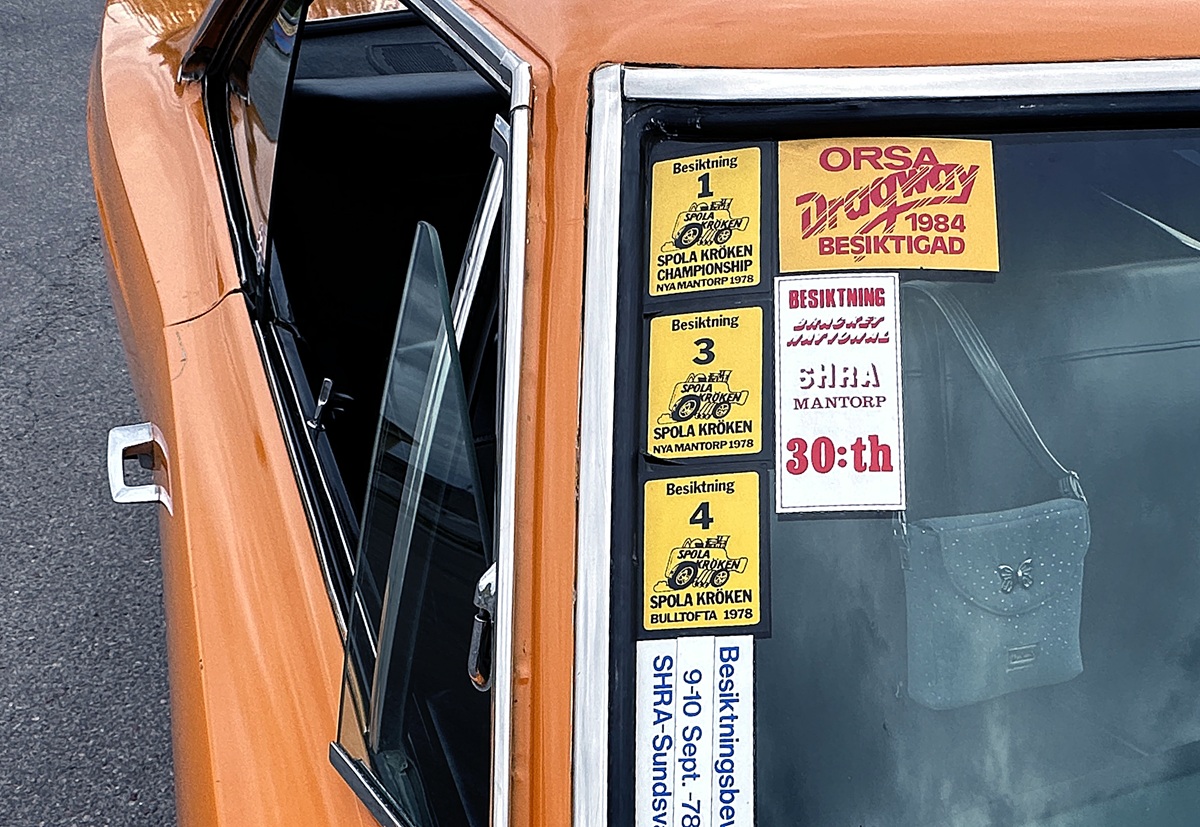
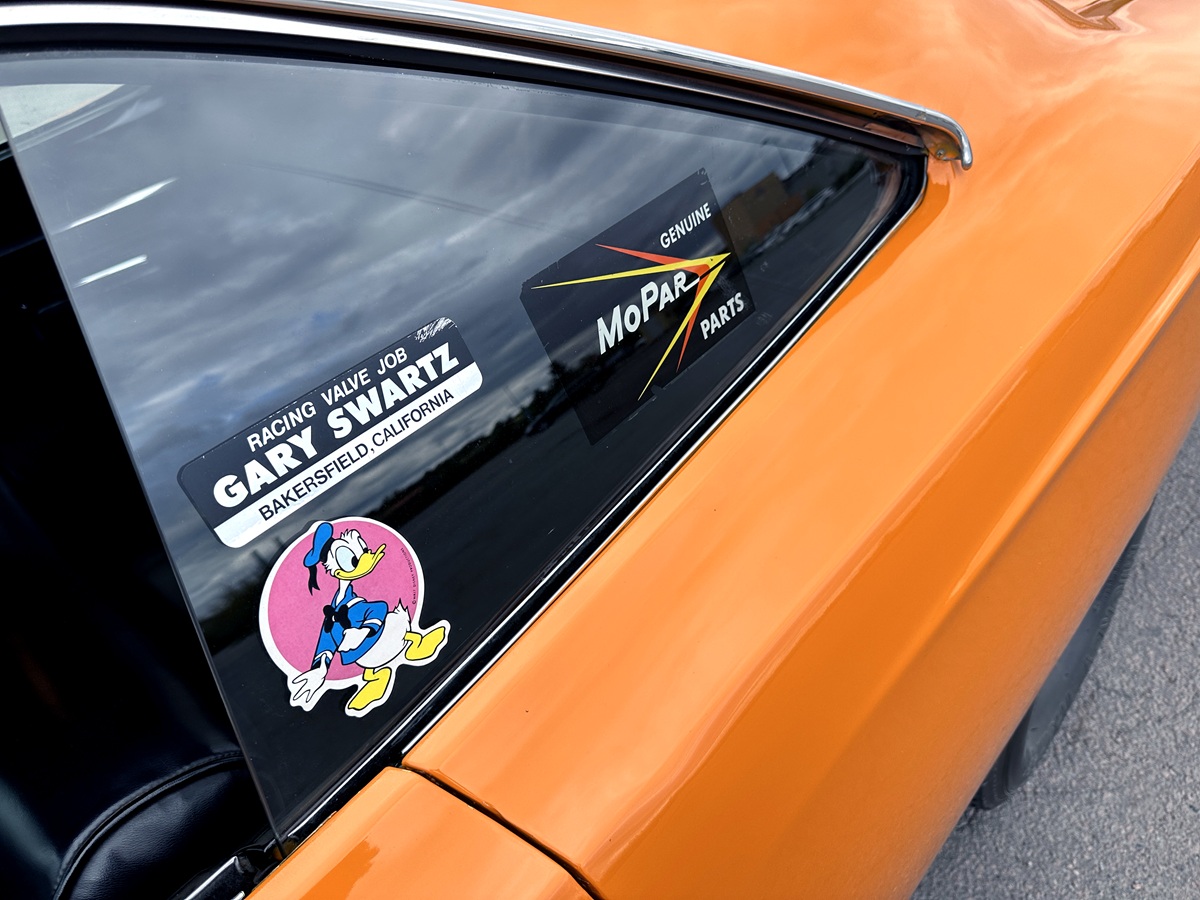
Eklund has known this particular car since 1985. Jungstedt bought it in the U.S. in 1977 and had it shipped to Sweden. He tried his hand at drag racing in Stock class, though it mostly ended up running Bracket. Eklund points to the old decals still stuck on the windows from its racing days.
“He even raced in Finland,” Eklund says. “When I cleaned out the car, I found some old time slips in it. He kept racing right up until he blew the engine.”
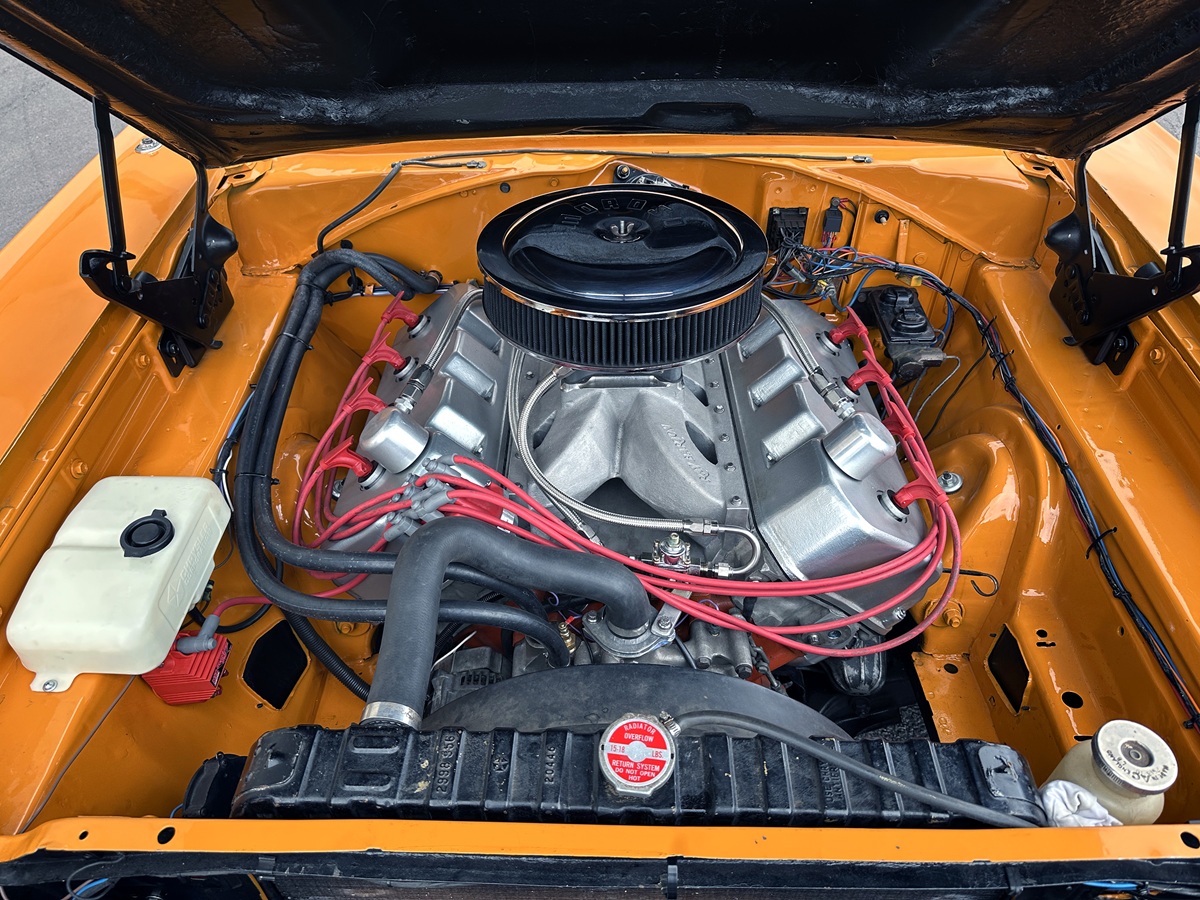
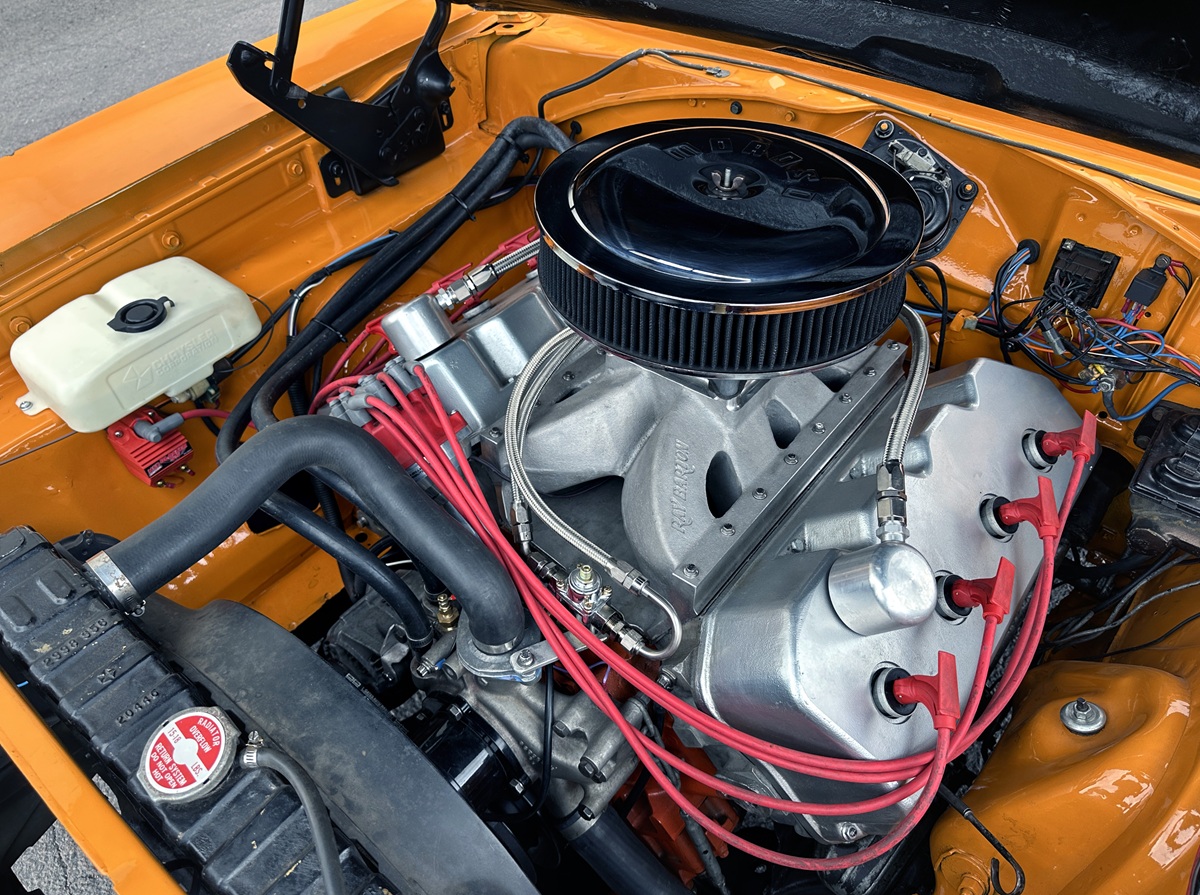
The engine that went up in smoke was a 440 Six Pack. The Road Runner was well equipped – it even had Super Stock springs and a swing-pickup oil pan, ensuring the pump always drew oil from where the g-forces pushed it.
Eklund returns to the decals – particularly one showing that the cylinder head work was once done by a Gary Swartz in Bakersfield.
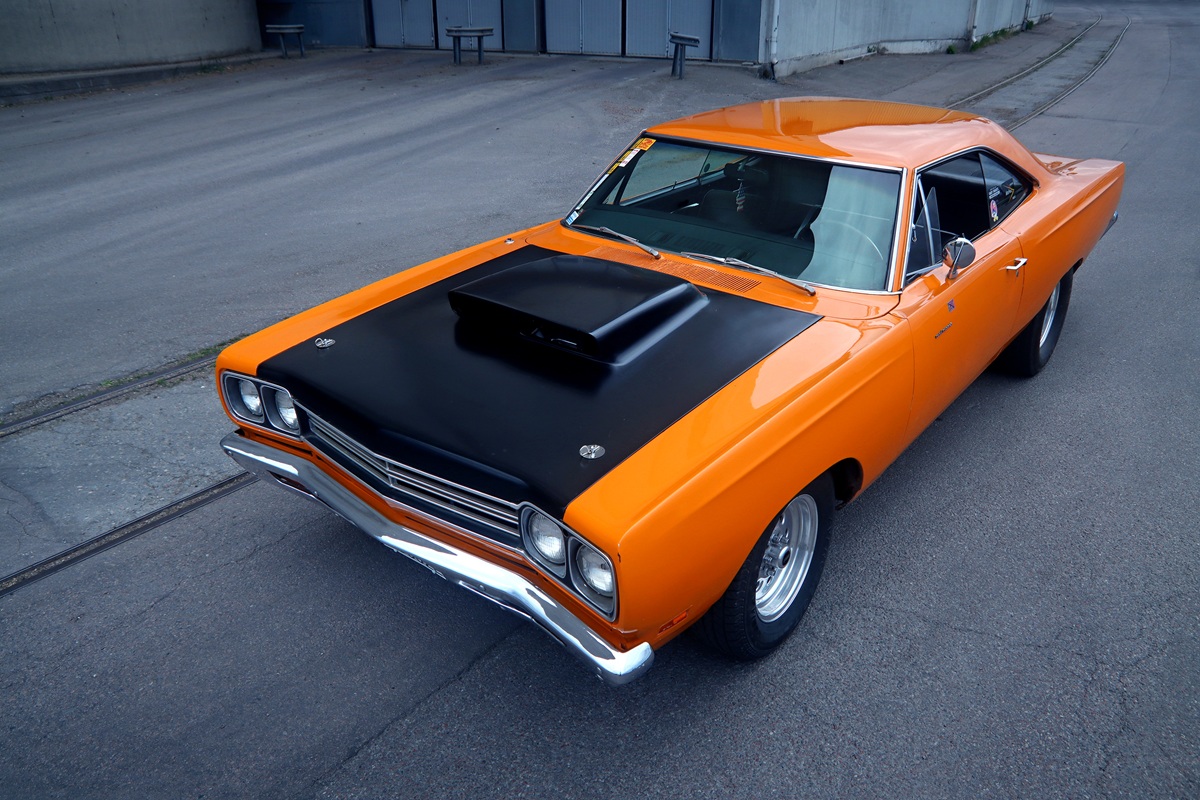
“It was raced in the U.S. before coming to Sweden. Who knows – maybe it ran at Famoso Dragstrip in Bakersfield, California, back in the day. The car definitely had a hard life up until 1977,” he says.
Aside from that engine failure and a few scrapes at the strip, the Road Runner’s life in Sweden has been gentle. It’s been garage-kept since the late 1980s. Small traces of its early years remain – and Eklund intends to preserve them, out of respect for Micke.
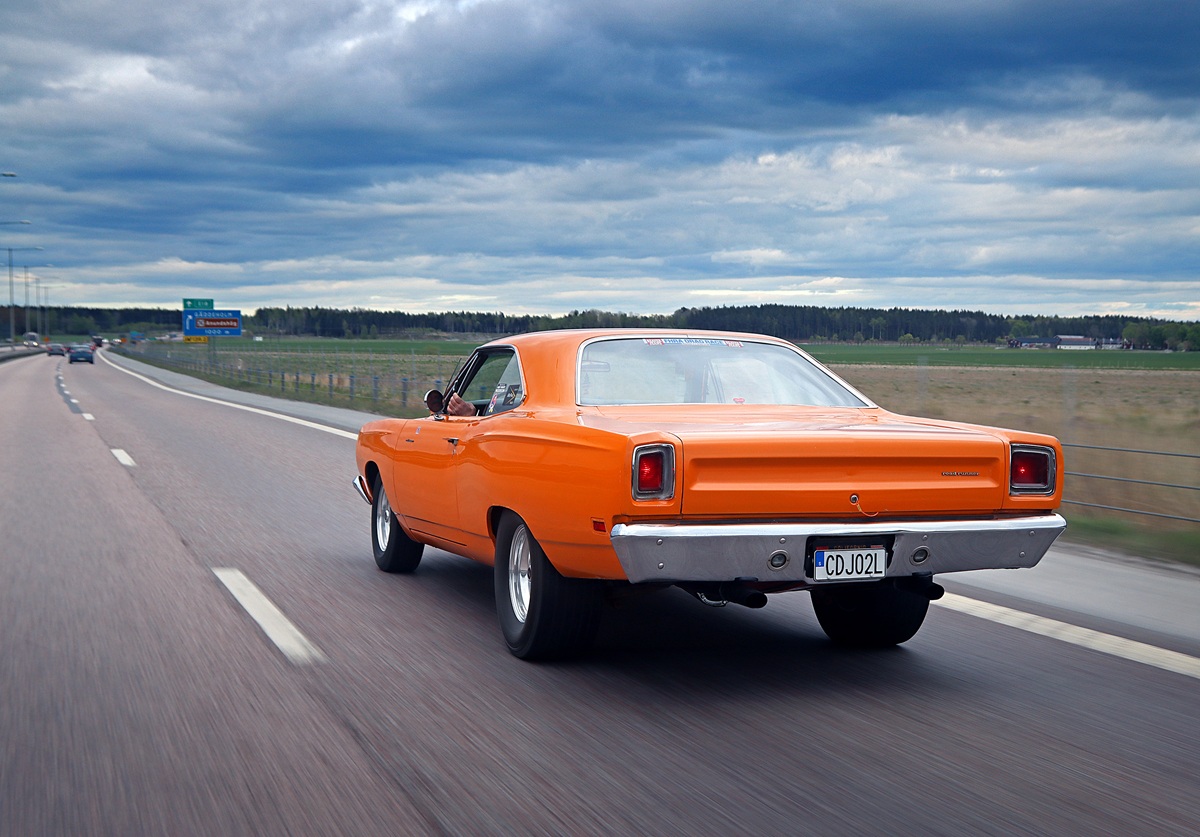
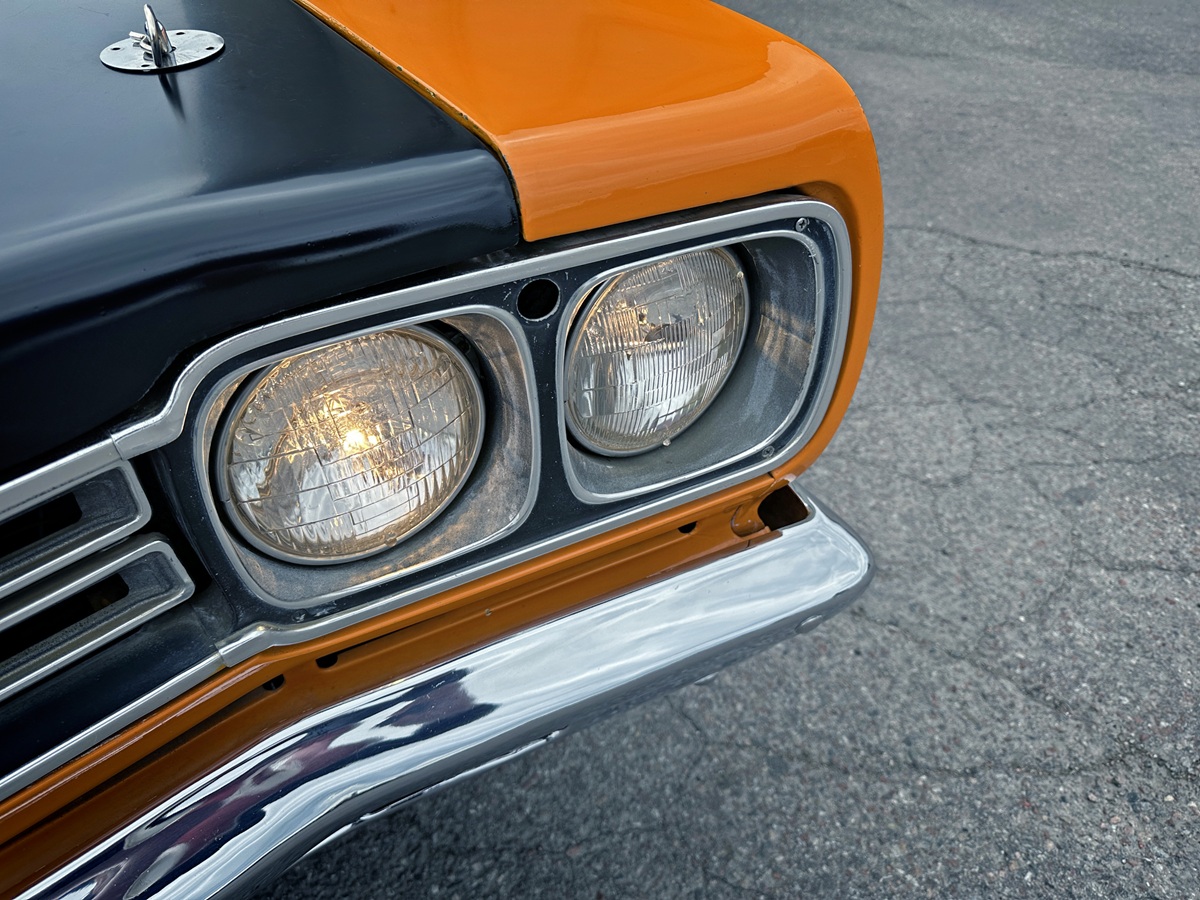
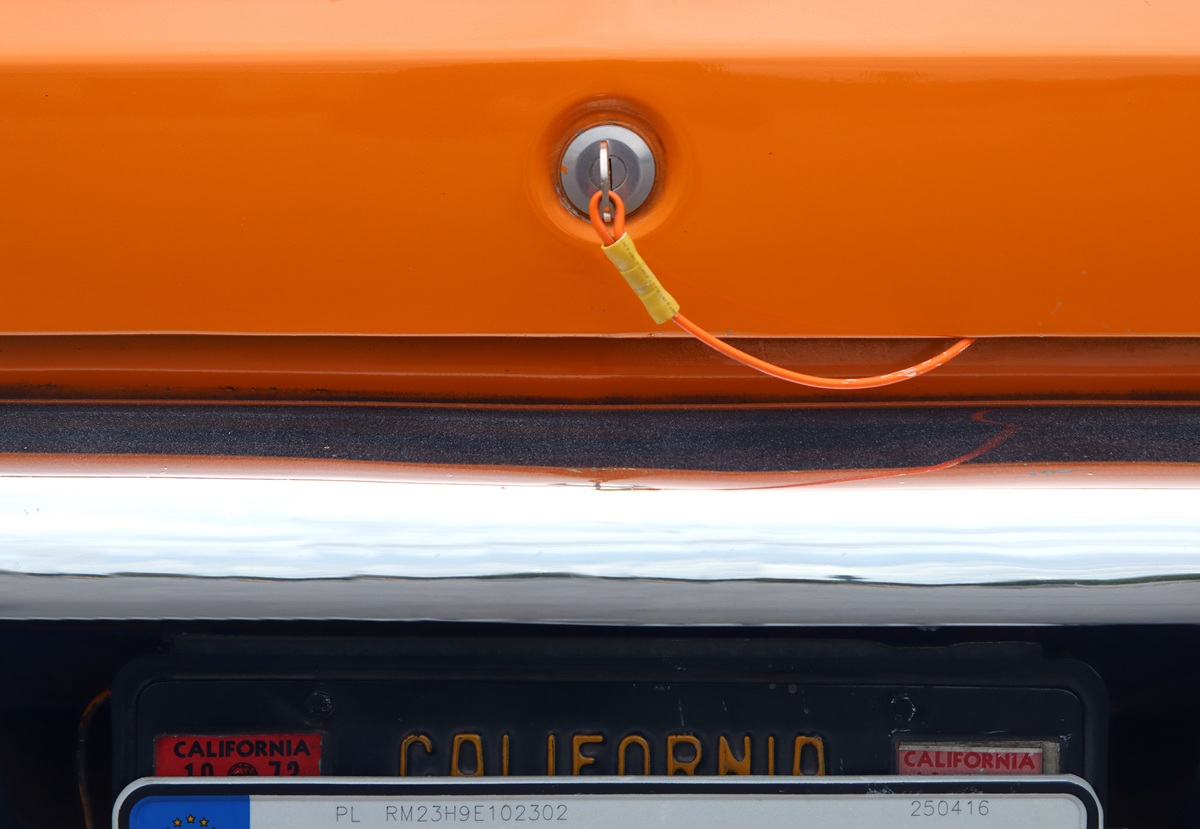
“You see the hole between the headlights on the left side? I’d guess there was once a kill switch there. When I was working on the wiring, I found two loose blue wires in the cabin, long enough to reach that hole. With an old ignition switch, you could’ve used it to cut power to the coil. These cars were high theft risks – and insurance was expensive.”
Even though he plans to keep the car’s exterior just as it is, Eklund dove right in when he acquired it earlier this year – a full inspection, new exhaust system, rebuilt brakes and waiting in the corner of his garage, a HEMI® block with a manual gearbox just begging for the right car.
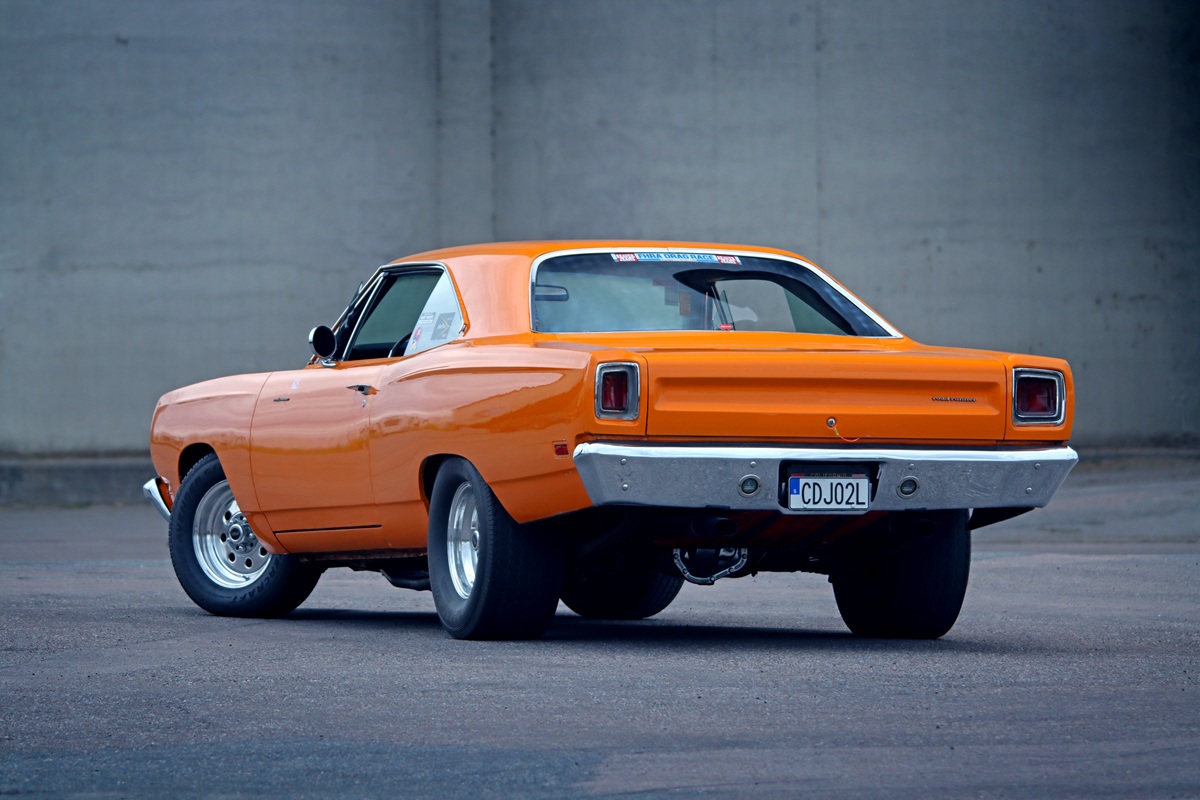
“It was my friend Micke who bought the HEMI block and transmission in the U.S. in the 1980s,” Eklund says. “They share the same ID number, so they came from the same car. Both are dated 1970. I bought them before I got the Road Runner. Since the block was empty, I had to hunt for parts. Let’s just say this – building a HEMI isn’t cheap…”
Indeed, it wasn’t. He started with JE pistons (0.005-inch overbore, a “find” on eBay), a stroker crank that ups the displacement from 426 to 472 cubic inches, and new connecting rods. Then he bought another used HEMI V8 just to salvage the cylinder heads.
“The heads are Keith Black aluminum pieces from the 1980s – probably aftermarket units sold through Direct Connection,” Eklund says. “They’ve got a seven-digit part number starting with P (4120711), which suggests that. Beautiful heads, with big intake ports and exhaust ports raised an inch.”
TTI headers designed for those raised ports fit perfectly – though he almost didn’t get them.
“TTI didn’t believe I actually had those heads,” Eklund recalls with a grin. “I had to photograph them and send proof before they’d sell to me. I guess they wanted to avoid bad publicity if a customer complained about poor fitment.”
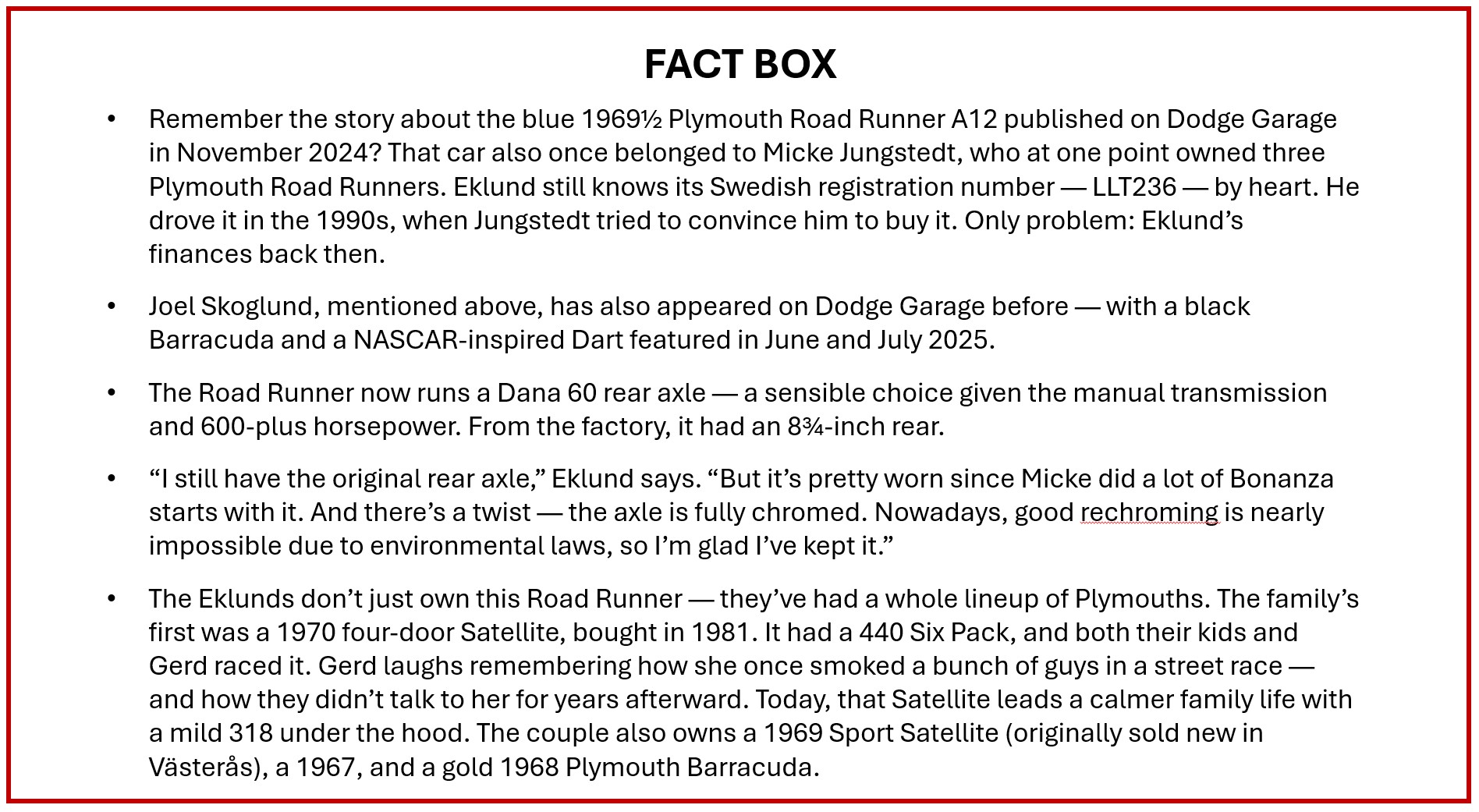
The manual gearbox – an A833, better known as the HEMI four-speed – was rebuilt by Swedish transmission guru Joel Skoglund (see fact box).
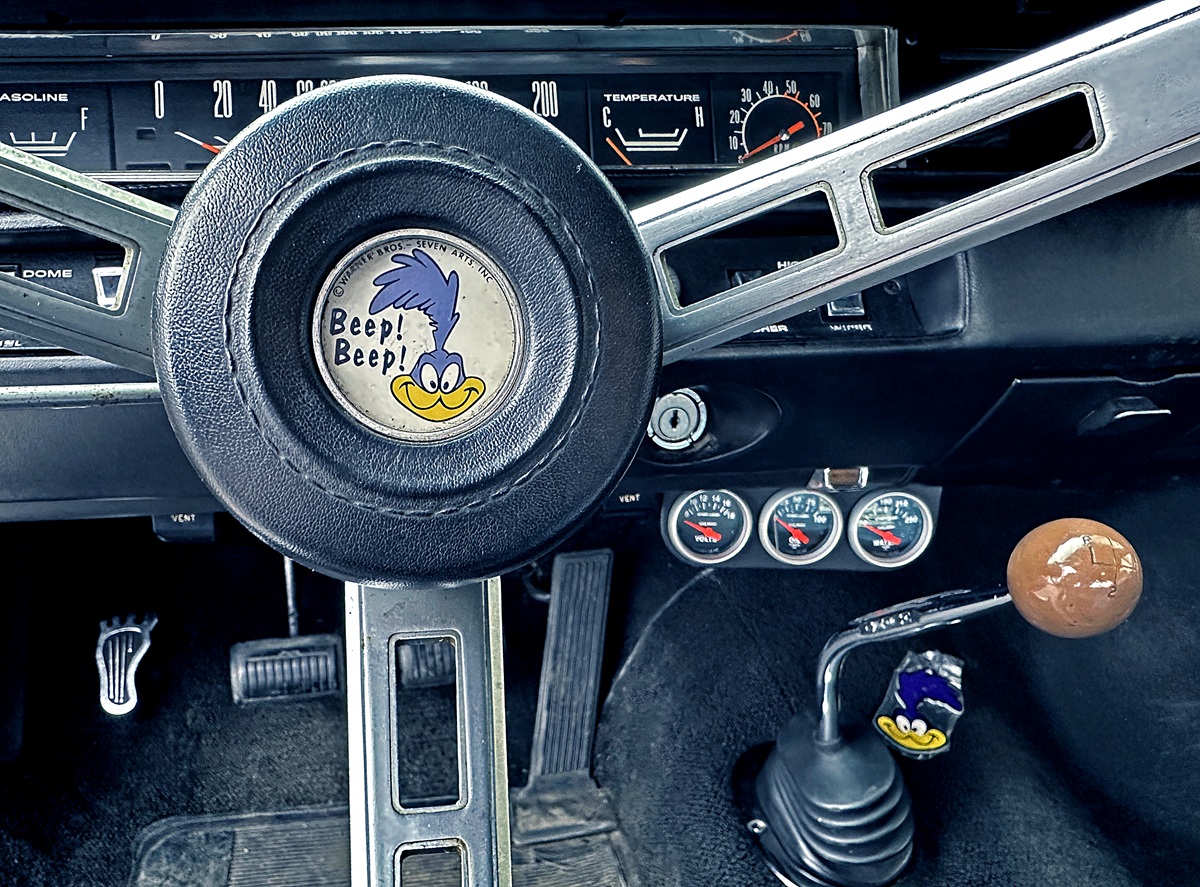
Eklund kept the pistol-grip shifter from the transmission, but since this is a ’69 Road Runner rather than a ’70, he uses a Hurst knob – just as it came from the factory in ’69.
Back to the HEMI engine. Eklund chose a single-plane intake manifold.
“I went with a Ray Barton intake – the same one they use on their 528-cubic-inch HEMIs,” he says. “They developed it together with Chrysler.”
For the camshaft, he opted for a mechanical flat-tappet – fairly mild, since he mostly drives the car on the street. The stock rocker arms? Gone.
“I called my friend Jonny – they call him Jonny Oil,” Eklund says, laughing. “He’s crazy about vintage Funny Cars. He owns two – Apocalypse Now and Tre Kronor – and runs exhibition passes with them. He had a set of Stage V roller rockers for sale. HEMI-expensive, of course. We talked for a while, and I wondered what my bank account would think. But while we were talking, Gerd had already made the bank transfer.”
If that’s not love, what is?
With the engine complete, it was time for the dyno – at JAMS, the well-known Swedish V8 specialist shop run by Jimmy.
“I’d hoped for maybe 500–550 horsepower,” Eklund says. “I was really surprised when Jimmy got 615 horsepower and 770 newton-meters of torque. The engine still has stock HEMI valve sizes, so I guess the head porting and general flow helped. I even brought an extra 850-cfm carb just in case, but Jimmy managed perfectly with a Holley 830.”
So, how’s it to drive? Fantastic. Smooth, civilized and shockingly usable. Since the HEMI was registered with the Swedish Transport Agency in April 2025, Eklund has logged about 2,500 miles. Fuel economy? Surprisingly reasonable.
“I figured it’d do about two liters per 10 kilometers, but it’s closer to 1.5 on average,” he says. “It’s really cheap to run, relatively speaking. I think the manual transmission helps with that.”
There’s one thing he grumbles about, though.
“After 2,500 miles, the RAM Clutches unit still grabs too hard,” he says. “It’ll go – replaced with a new setup, maybe a Centerforce. Probably a diaphragm clutch and different disc.”
“The rear axle has 3.54:1 gears, but I might go to 3.70:1 to smooth things out,” he adds. “But it’s not heavy at all. I sat in Stockholm traffic for 45 minutes this summer – no problem.”
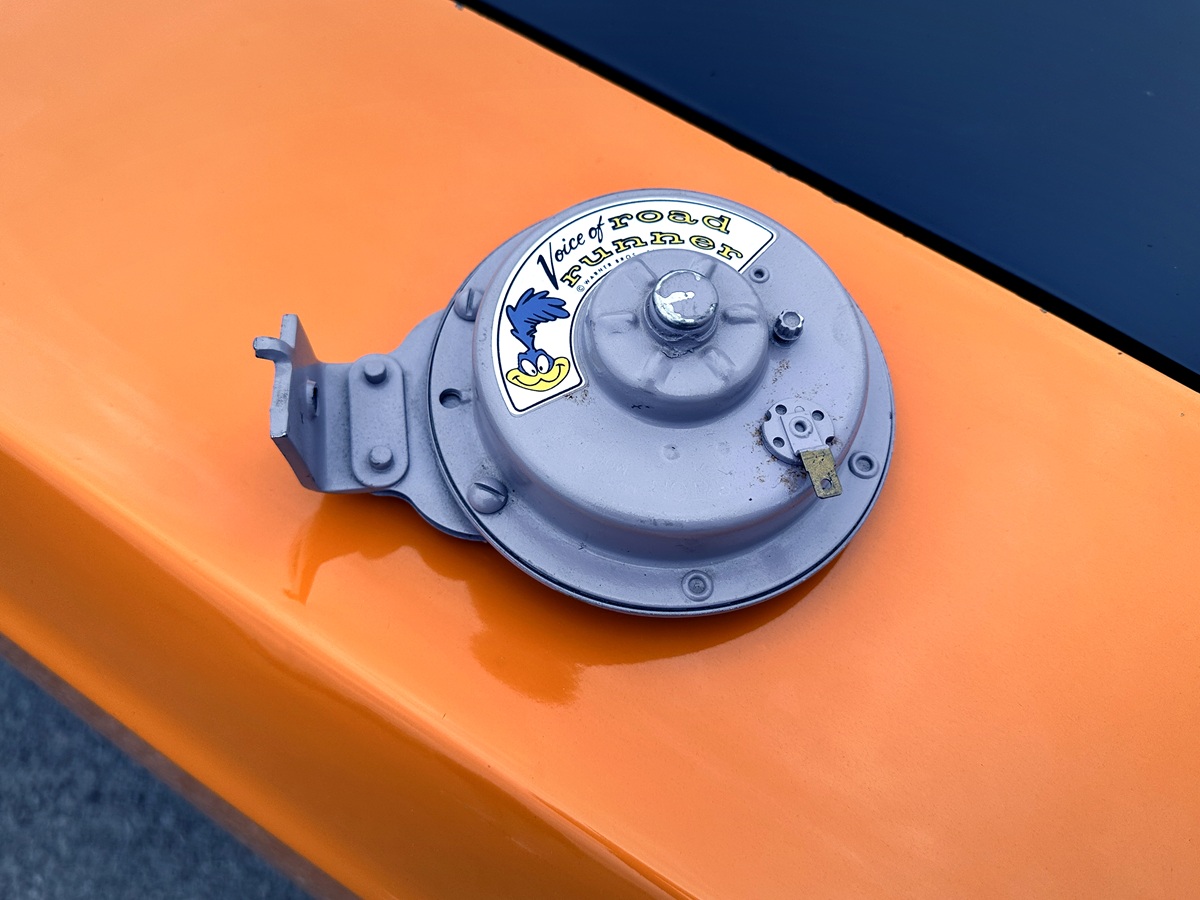
We wrap up the chat with the car’s Road Runner horn – of course it has one. The cherry on top. I assumed Ulf had owned the horn long before this car, but Gerd corrects me – as always, she knows every detail.
“I got to know a guy named Ulf from Fagersta about six or seven years ago,” Eklund says. “We’ve done a lot together since. Sadly, he also has Parkinson’s, like Micke. His Cadillac gave him some trouble, so I helped him out. One day, he gave me the horn as thanks – brand new, still in the box. And yes – it’s mounted now. And yes, it’s been honked,” he laughs.
0 Comments