1970 ’Cudas
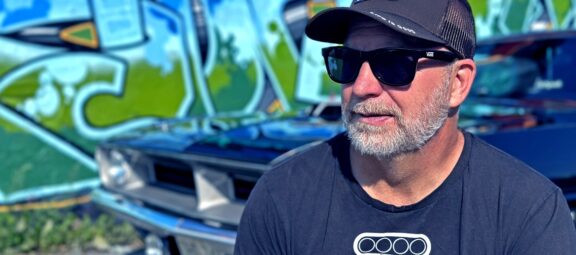
At first glance, it might look as though Andy Hägglund has a rather narrow interest. After all, his garage houses two Plymouth ’Cudas – both from 1970. In fact, they were built just two months apart. But look again and you’ll quickly realize that Andy’s world is far broader than that.
Born in Tanzania, raised in Burträsk in northern Sweden, a teenager in Ottawa, Canada, with time spent in Berlin, Germany, and now living in Huddinge just south of Stockholm, Sweden’s capital – Andy Hägglund has lived in many places and seen quite a bit. With education beyond compulsory school and a career in the male-dominated construction industry, he has experienced both highs and lows in working life.
Perhaps that’s why his automotive interests turned out the way they did. Andy’s garage contains more than just Plymouths. There’s a special 1957 Volvo PV, along with a handful of two-wheelers, both motorized and not. We’re talking Mustangs as well as Monarchs.
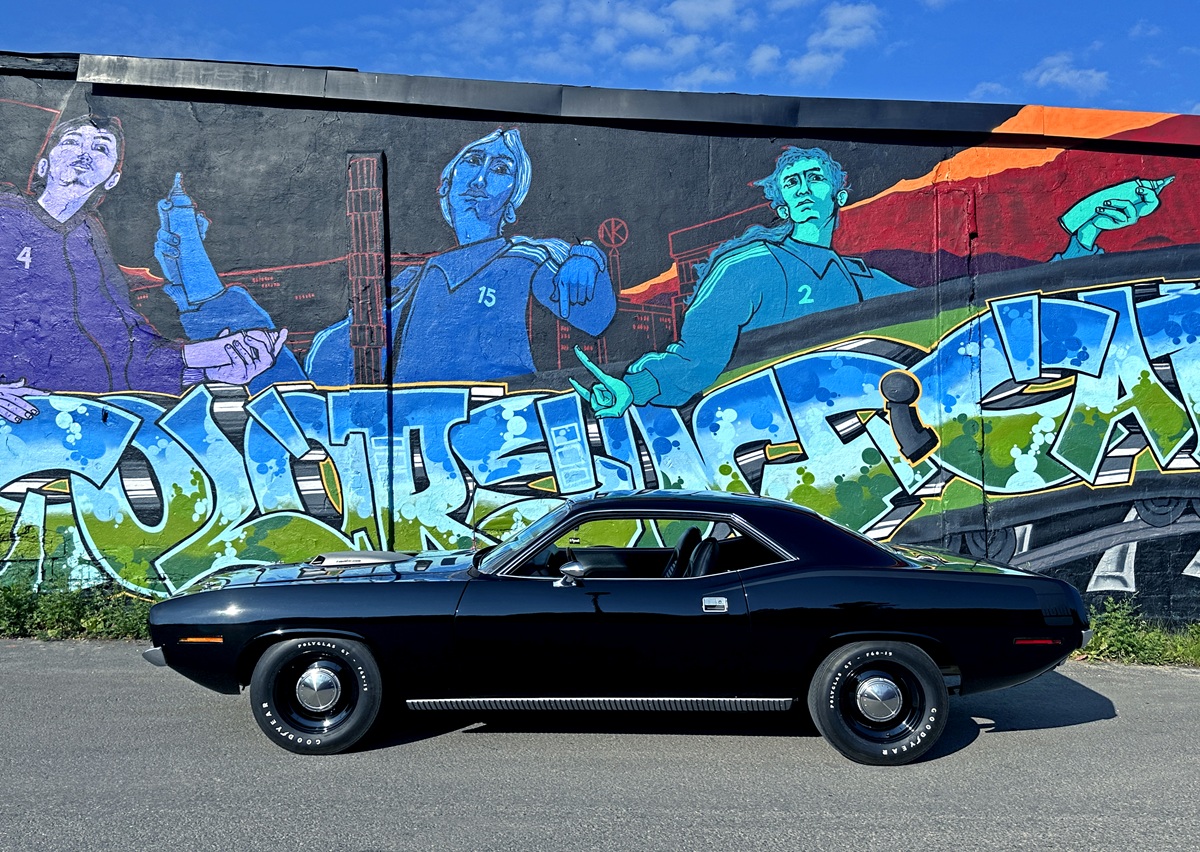
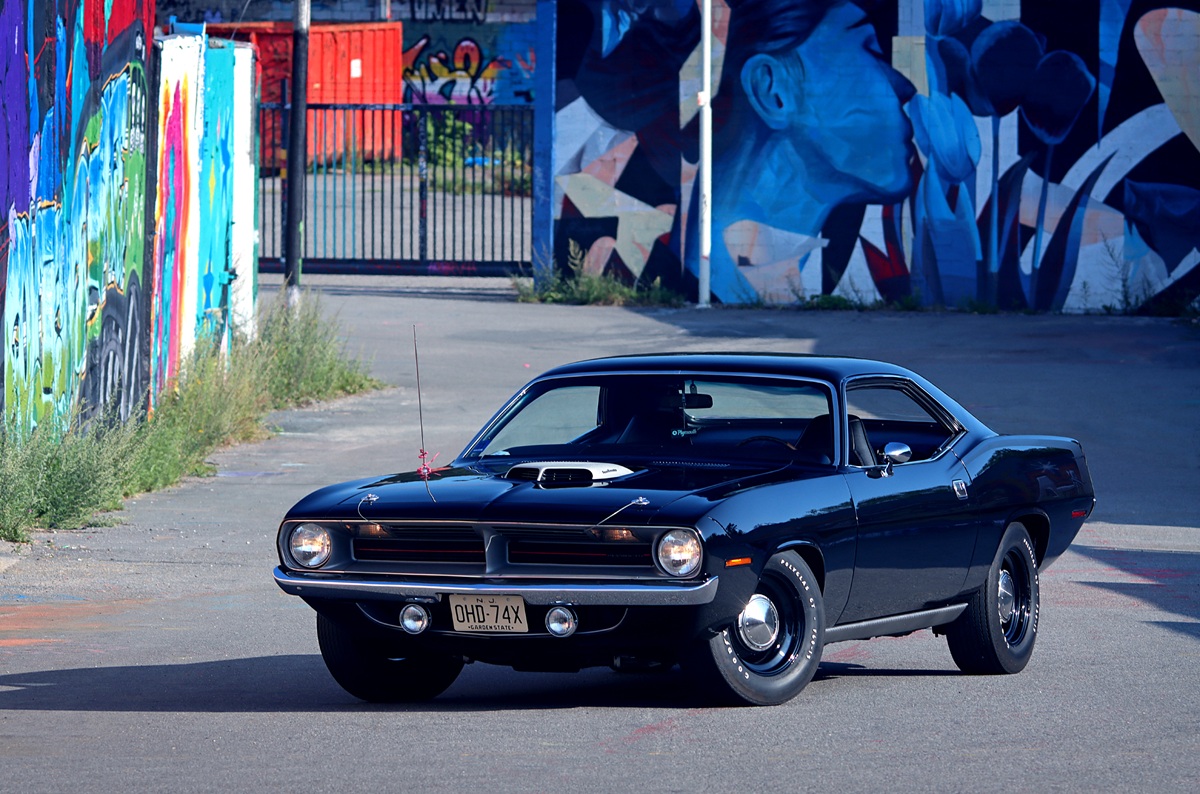
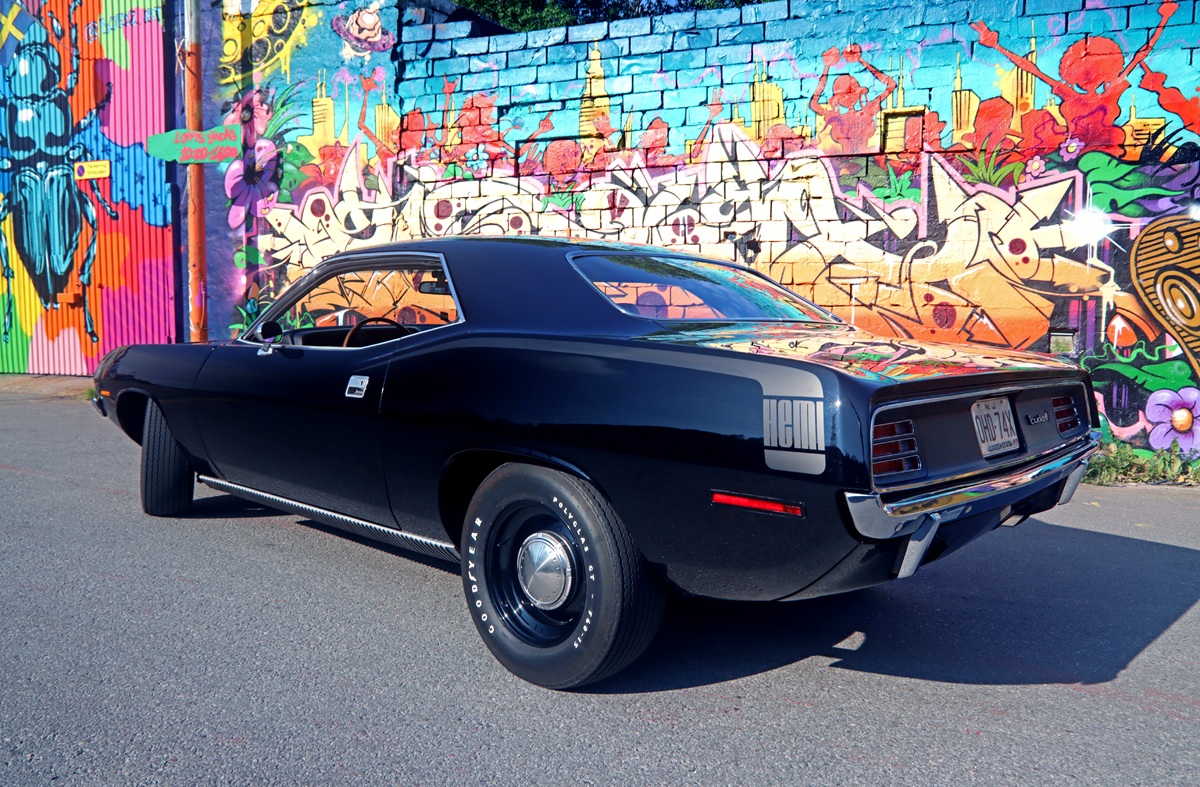
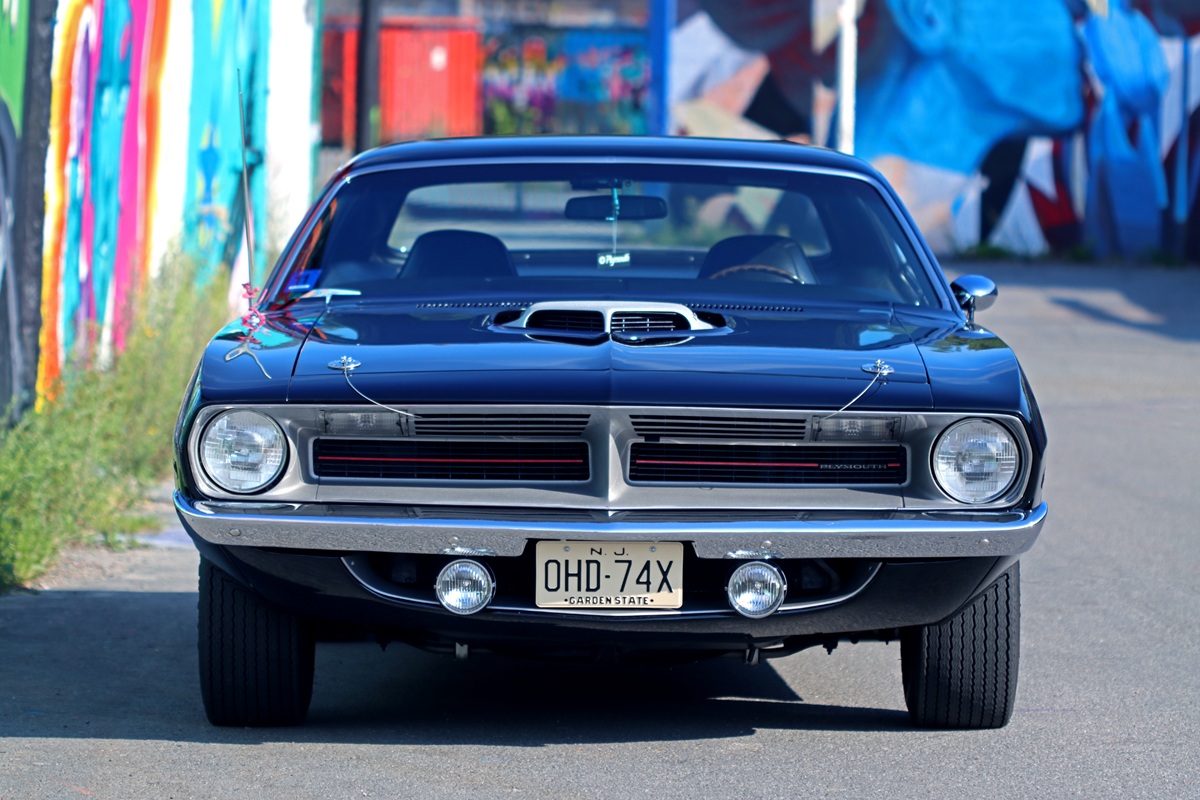
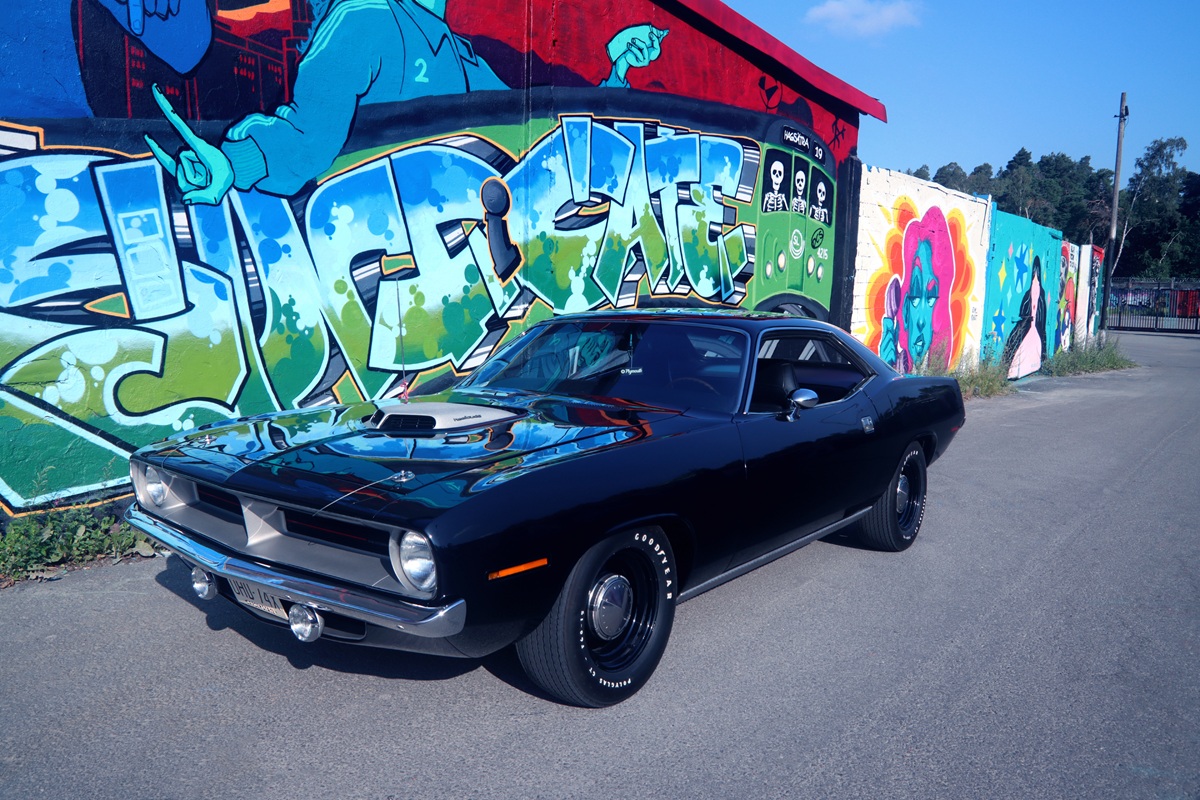
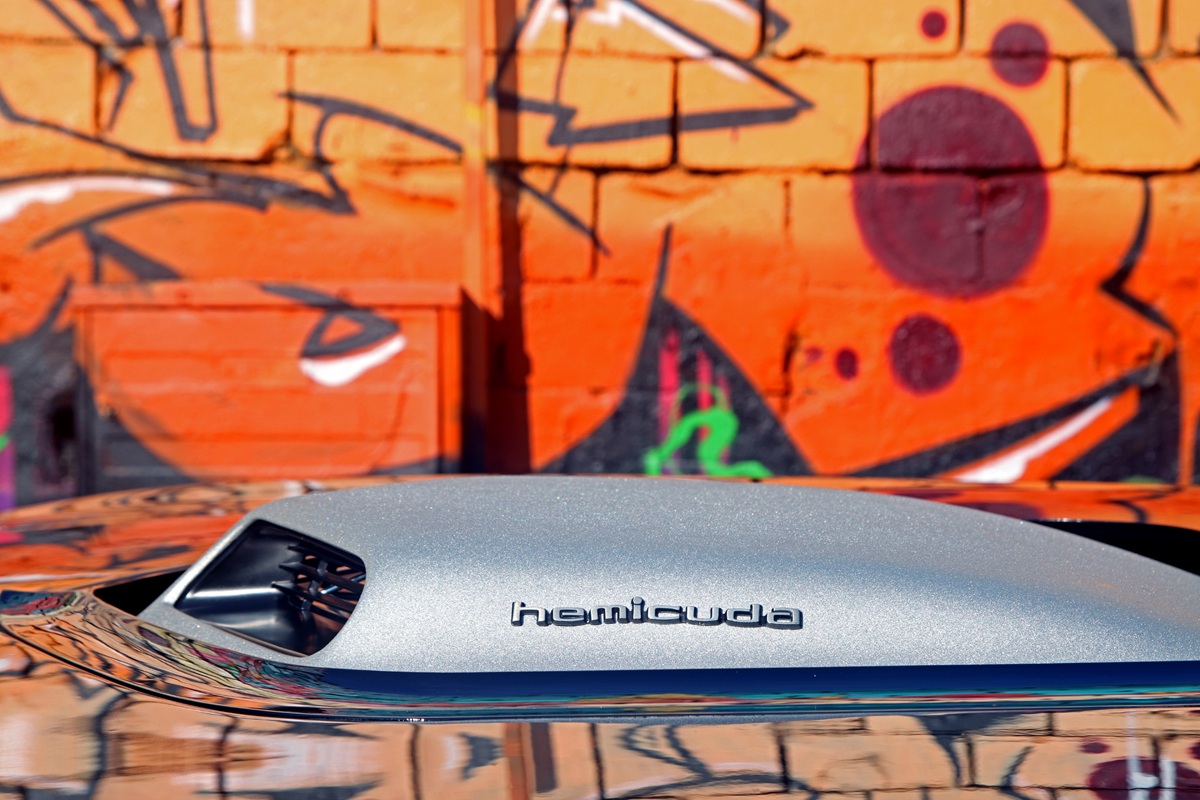
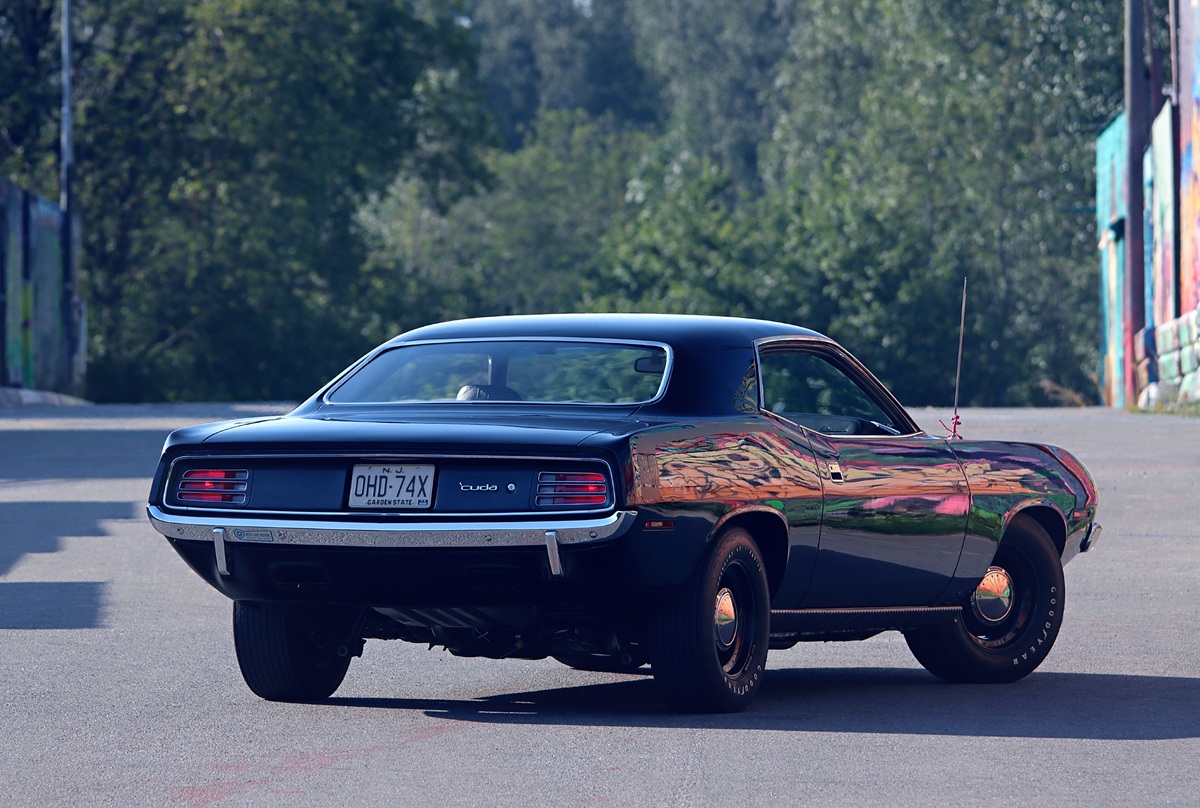
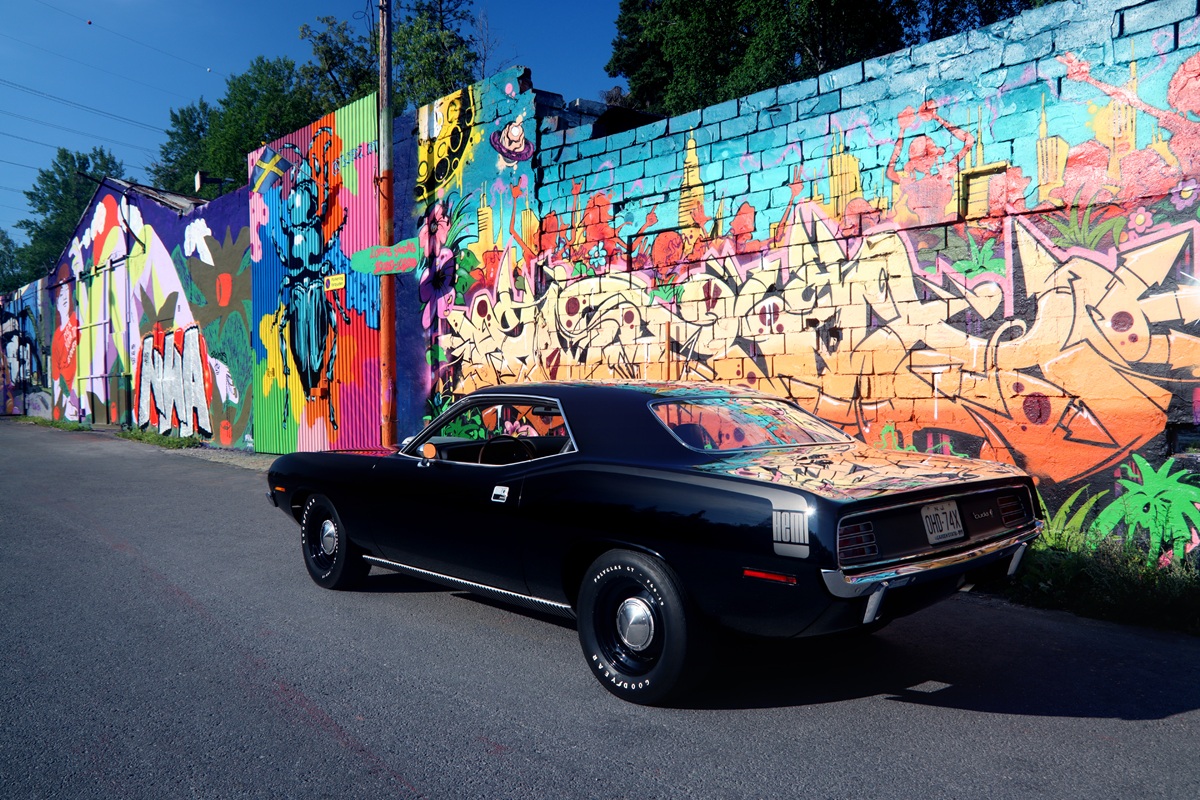
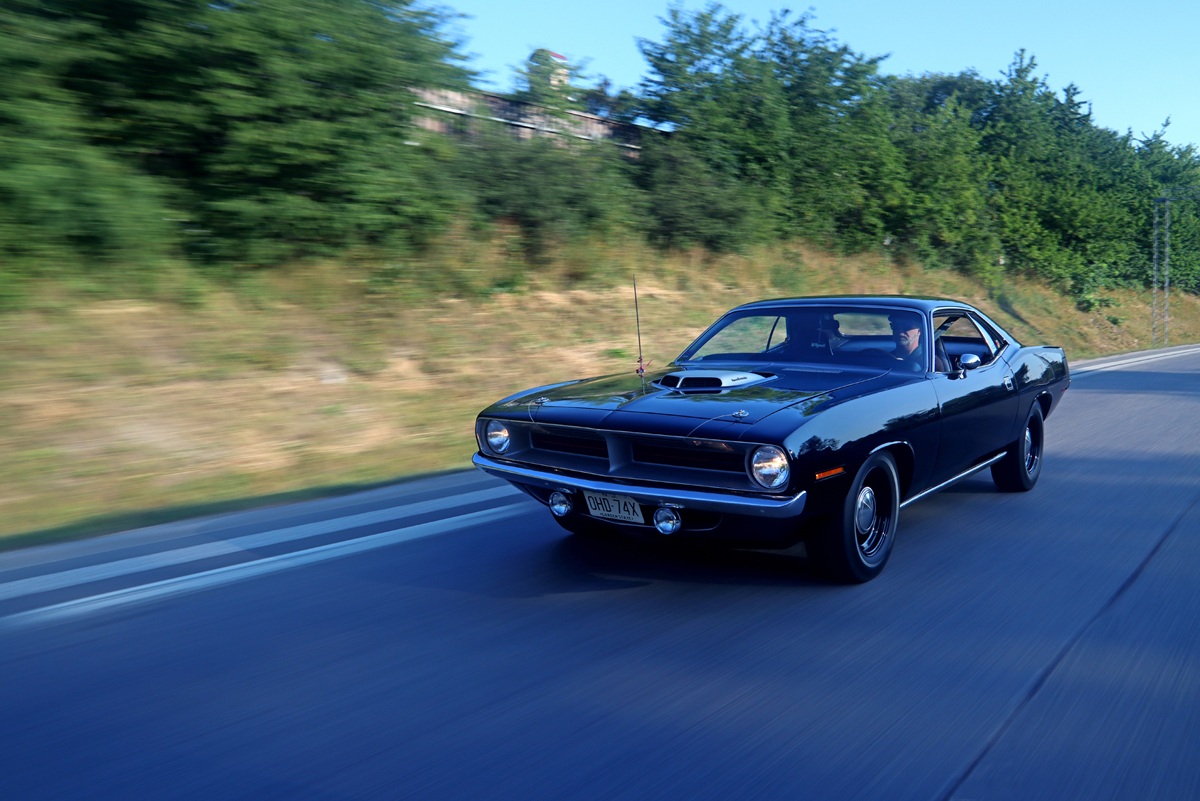
But the focus is Mopar®. A jet-black, mirror-gloss 1970 HEMI® ’Cuda and a dark blue 1970 AAR ’Cuda – two of the wildest E-bodies of that model year.
“It would take more than 30 years from the first time I ever saw a 1970 ’Cuda until I finally had the chance to own a genuine HEMI ’Cuda. It’s a car that’s lived in my dreams for nearly 40 years,” Hägglund says.
The dream of owning a ’Cuda – albeit a slightly more “ordinary” one – had already taken hold 30 years ago. But first, the story of how Andy’s Mopar passion was born, cultivated and refined.
“How did the Mopar interest start? It was 1988, when I was 14 and hanging out at the bus station in Burträsk. There was a video game there – Out Run – that swallowed all our soda money. That summer, there was also a pinball machine standing outdoors by the station. Someone figured out that if you wiggled the power plug in the outlet, you’d get free games. So we stood there night after night until the owners discovered the scam,” Hägglund says, laughing.
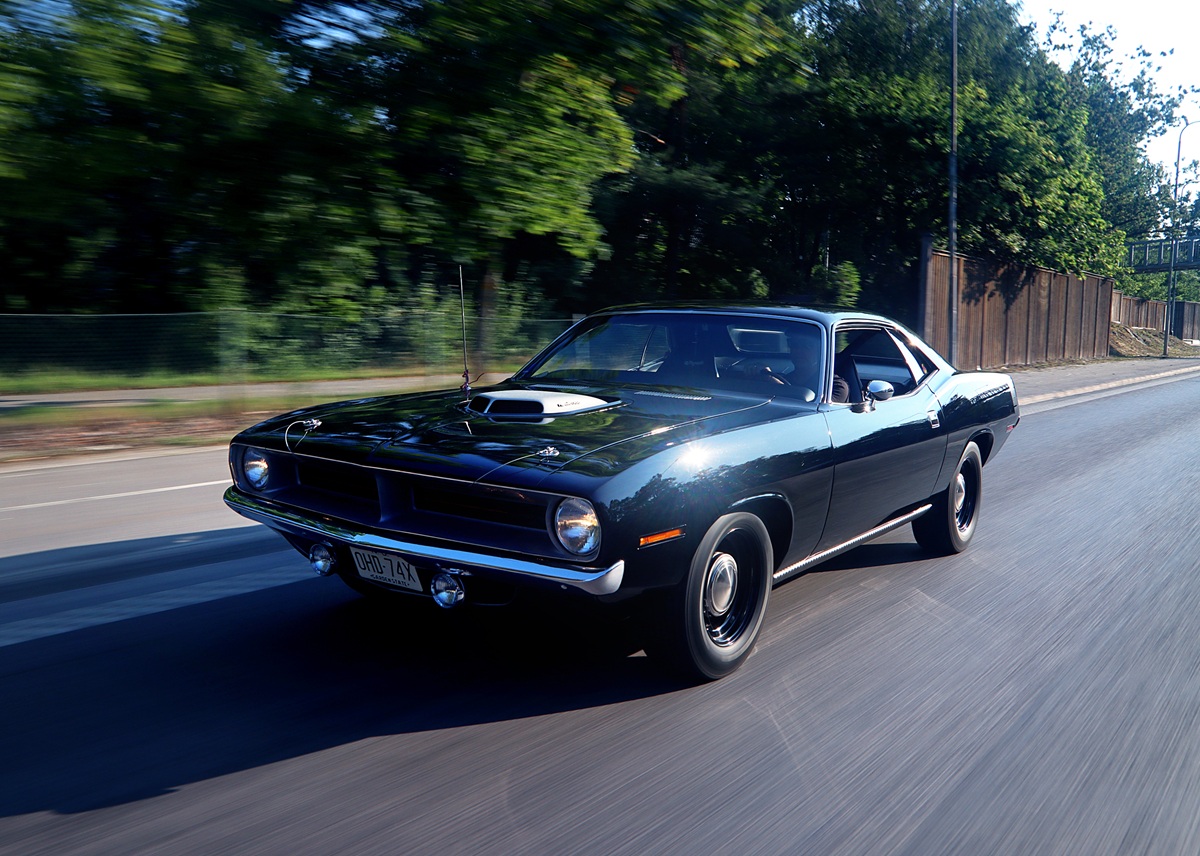
Andy and his friends stood there playing. Every now and then, cars would cruise by on the official raggarrunda – a loop that included the bus station, the kiosk downtown and the church curve, complete with a mandatory burnout on the downhill stretch toward the swimming area. You can imagine Hägglund’s wide-eyed reaction when a 1970 ’Cuda slowly rolled past the bus station.
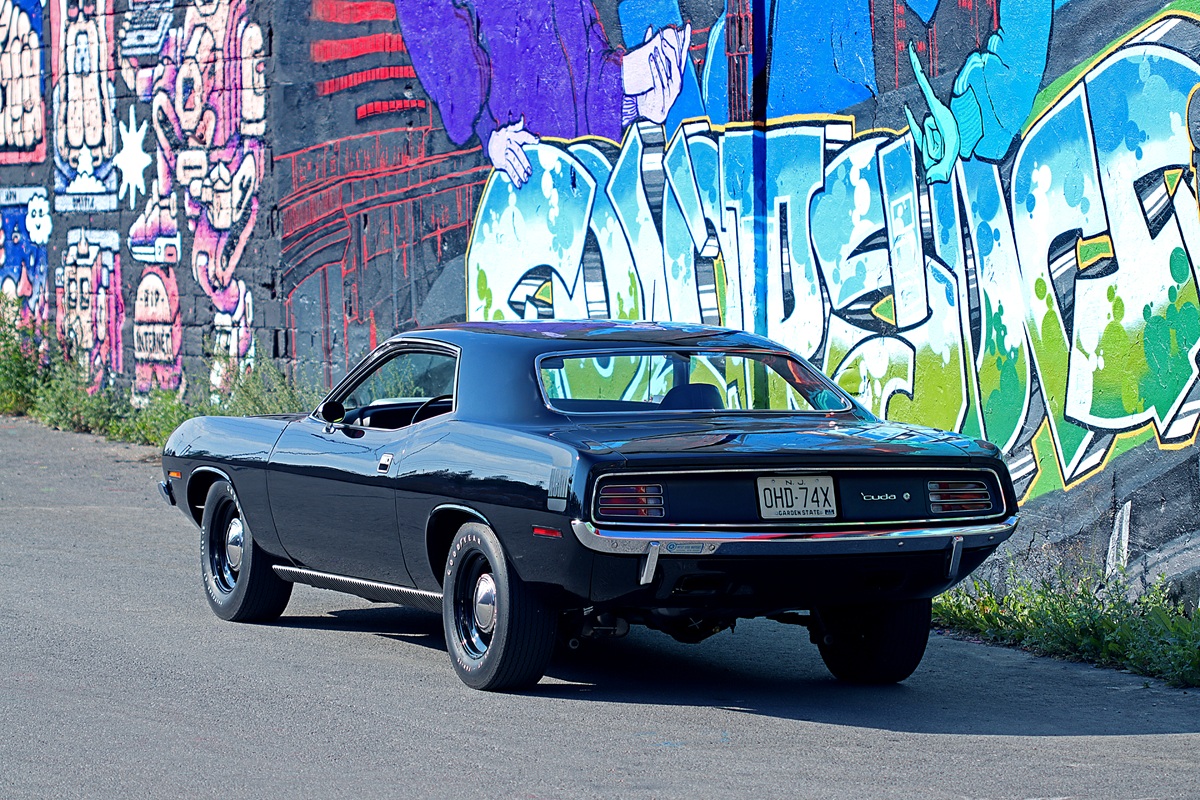
“The car’s distinctive taillights – kind of like those on a ’70s Peugeot 504, or even a shaver socket, but on the ’Cuda they actually look good – really did it for me. Along with the lines, the grille, the colors and the sound. I knew right then: I’m going to own one,” Hägglund says.
At the time, Burträsk had plenty of American cars in general, and Mopar vehicles in particular. For a while, the town even had two Top Fuel dragsters – Thomas Lundström’s and Danne Söderberg/Monica Öberg’s. The Kroko Demon, then owned by Thomas Uddberg, was another well-known drag car, as was Dunderklumpen, owned by Per Widmark.
“I looked up to the tough guys and girls, and I studied the black stripes on the straight roads around town,” Hägglund recalls.
Fast-forward to 1995. Andy had been fortunate enough to work on a construction site in Berlin, Germany. Long hours and low expenses created a savings cushion, and that same year – after returning home – he placed ads in Wheels and Bilsport: “’Cuda wanted!”
“I got three responses. One was a black 1971 ’Cuda in Piteå that had actually been in Burträsk years earlier (now owned by Maria ‘Myran’ Öhlin), another was a white 1971 383 ’Cuda convertible, and the third was a B5 Blue 340 ’Cuda – minus engine – in Karlskoga. The blue one appealed to me the most, and I made a deal with the seller to come take a look,” Hägglund says.
So sometime in mid-May 1995, Andy loaded two friends into his 1975 Mercedes-Benz 220D, hooked up a car trailer and headed south. The journey was slow – very slow. And that was before the trailer was even loaded.
When they arrived in Karlskoga, the seller didn’t show up until an hour after the agreed time – and he was in rough shape after the previous night.
“Unfortunately, the ’Cuda was in worse condition than expected. The described condition didn’t match my impression of the car – there were no digital photos back then – so the deal fell through. The seller, who at least had a conscience, felt sorry for me after the 900-kilometer one-way trip and tipped me off about an acquaintance in Karlskoga who had just restored an AAR ’Cuda and was willing to sell it. We went to see it, and there stood a fully assembled AAR ’Cuda. The price was high, and I was hesitant. There was also another AAR ’Cuda in Karlskoga – a yellow one – that I wanted to check out, but my friends refused. They just wanted to go home. So the AAR stayed put and we drove home empty-handed. Probably for the best – otherwise the Mercedes might still be stuck halfway up Skuleberget,” Hägglund says with a smile.
The following week, both the craving and the determination grew. By Wednesday, Andy had agreed on a price with the AAR ’Cuda’s owner – minus the Centerline wheels and tires. Conveniently, it was Ascension Day weekend, so on Wednesday evening, Andy stood in Ånäset with his thumb out. Driving the Mercedes again wasn’t an option, and he couldn’t convince any friends to join him – understandably.
Once the deal was done, the plan was to drive the ’Cuda home to Burträsk.
Andy got lucky. Before long, he caught a ride with a student heading to Uppsala. The next morning, he hitched a ride with a group of guys going diving, and from Västerås he rode all the way to Karlskoga in a milk truck.
The seller had promised to arrange wheels and tires – or rather, a set of old Volvo Amazon wheels with studless winter tires for the drive back to northern Sweden.
“When I showed up, that detail wasn’t sorted out, so we drove around half of Karlskoga hunting for wheels. The deal was completed, and in all the stress I forgot to bring the fender tags that were lying loose in the garage. At the very first fuel stop, I bought earplugs. The rear axle had a 4.56:1 gear ratio with a damaged ring gear. And the transmission bearings? They were screaming,” Hägglund says with a grin.
At the next stop in Uppsala, Andy sensed something was wrong when the car didn’t start right away. By the time he reached Harmånger on the E4, the ’Cuda suddenly and ominously died – something Andy is reminded of every time he passes that spot.
“I had to walk to the nearest farm and call the seller for advice. ‘Pump the gas a couple of times and try starting it,’ he said. Sure enough, it fired back up. But the ordeal continued. Just before Sundsvall, it happened again, and this time the car wouldn’t start at all. A foreign-registered motorhome took pity on me and towed the car to a Statoil station in southern Sundsvall. After half a night of wrenching, we concluded that the alternator wasn’t charging properly. No matter what I tried – even with help from a few local cruisers who stopped – I eventually had to buy a new battery just to keep going,” Hägglund says.
Crossing the Sandö Bridge, Andy felt the steering wheel develop more and more play. He barely made it across before it came loose completely – the nuts had vibrated off and were lying on the floor in front of him. With the headlights off, he rolled into Örnsköldsvik early Friday morning and stopped on the downhill stretch near the ski-jump hill. He needed an hour of sleep. After that, he push-started the ’Cuda and aimed to be back in Burträsk before lunch. His friends were heading to a party in Luleå, and he didn’t want to miss it.
“Happy and exhausted, I showed up just in time to head north again. Oh, and the fender tags? The seller mailed them up later,” Hägglund says, smiling.
The first years with the AAR ’Cuda were mostly filled with problems. Not long after the trip home, the distributor failed. Andy lost the clutch once in Skellefteå. The rear axle ratio was changed, and after a test drive with forgotten hood pins, he no longer had a hood. A local police officer, out walking his dog that evening, witnessed the hood gracefully lift off and flutter into the ditch. Stopping wasn’t really an option at that point.
“That same officer had chased me and my friends when we were illegally riding mopeds at age 14, so I wasn’t exactly in his good graces to begin with,” Hägglund says. “The grille was bad, and the electrical system was even worse. After yet another test drive – this time with a loose battery in the trunk that tipped over and made an outward dent in the rear quarter – I’d had enough. Either I sell it, or I restore it completely. I chose the latter.”
In the summer of 1999, Andy built a rotisserie and stripped the entire car. With studies underway, progress was slow. After moving to Stockholm, it slowed even further.
With a fair amount of luck, Andy managed to secure workspace in Finntorp, Nacka, where the restoration gained momentum. Through good contacts, he received plenty of help, and after a couple of years, the car was moved to a garage in Sätra. There, his network grew even more, and Andy found a skilled painter who truly brought out the best in the ’Cuda.
Andy had been collecting parts ever since buying the car, but it wasn’t until his first trip to the Chrysler Nationals in Carlisle in 2005 that the hunt really paid off. More finds followed in 2006 and 2008. Along the way, Andy also got to know many people in the hobby – Swedes, Canadians and Americans alike.
“In the summer of 2008, I got the ’Cuda back from the painter and could finally start reassembling it. After a few weeks, I was able to drive it to Mopars at the Strip in Orsa. During the first year after the restoration, there were a few minor issues to sort out. One was an oil-pressure problem that resulted in no lubrication to the rocker arms. The engine needed attention, and new cam bearings were installed with good results. Essentially, the ’Cuda has been trouble-free since 2009 and is driven extensively around the country. The most epic trip, however, was in 2022 – to the U.S.,” Hägglund says.
After one of many visits to Carlisle – this one in 2018 – Andy began wondering whether it might be possible to take his own AAR ’Cuda to the U.S. A dream shared by many. He explored the options and interviewed other Swedes who had done the same. The plan was set for the summer of 2020, when a major 50th-anniversary celebration for 1970-model cars was scheduled at Carlisle.
“In my job as a production manager at a large construction company, I planned the timeline of ‘my’ building project with the trip in mind. These projects are demanding, and taking a long vacation at the end is rarely an option. Final inspection of the property was scheduled for July 1, 2020 – just days before I was supposed to travel,” Hägglund says.
Arrangements with shipping and insurance companies were in place before the pandemic hit. For obvious reasons, the trip didn’t happen in 2020 – or 2021.
In early 2022, Andy checked back with the shipping company to see if a summer 2022 trip might be possible. They were optimistic, and planning resumed. In early June 2022, Andy drove the AAR ’Cuda down to Gothenburg to be loaded onto a RoRo vessel. On June 21, the ’Cuda began its journey aboard the car carrier Morning Lena, arriving in New York in early July – just days before Andy and his travel companions flew over.
“After a nervous wait and the usual customs hassle, I was finally able to drive my own ’Cuda out of the Port of Newark, through Manhattan, and to the hotel in Brooklyn where we were staying. I had memorized the route via Google Maps, and the feeling of driving under the Hudson River, out of the Holland Tunnel, and onto Manhattan was indescribable,” Hägglund says.
A couple of days later, the whole family headed to Carlisle to attend the event. Andy had been invited by show director Ed Buczeskie to display in the premier exhibition hall and received a warm welcome upon arrival. The days at Carlisle were fantastic, and Andy met several well-known figures from the hobby: Nick from Nick’s Garage, Mopar personality Jeff Bangert, restorer Mike Ross, racing legend Paul Rossi and others.
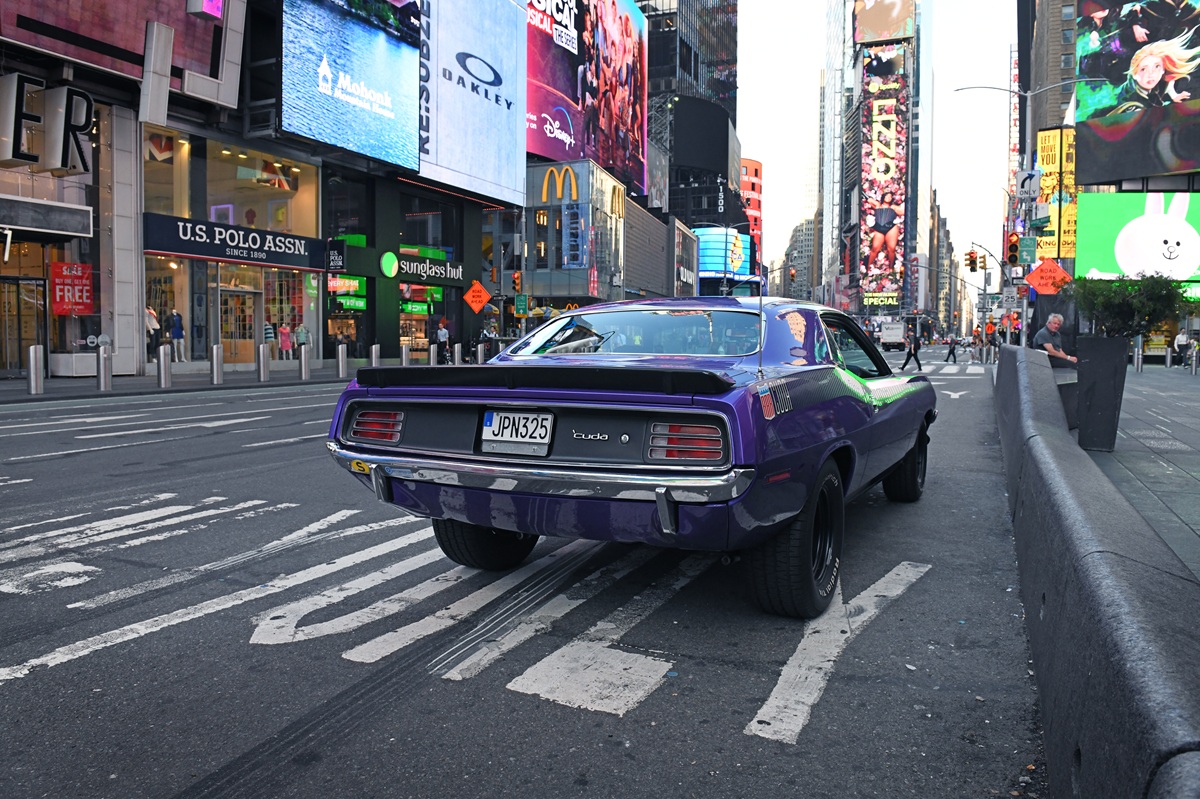
After Carlisle, the family returned to New York and continued their vacation for a few days. On the final day, the ’Cuda had to be returned to the port, and before that Andy and his friend Benny Älvenstrand took one last drive through Manhattan. In perfect weather, they passed Wall Street, the Chrysler Building, Macy’s and Times Square. They even managed to park in Times Square for about 15 minutes just to take photos and soak in the atmosphere – a powerful moment in life.
The ’Cuda reappeared in Gothenburg in September, back on Swedish soil, after yet another nerve-racking wait.
And the black HEMI ’Cuda? The one featured in this story. Just over 30 years after Andy first saw a 1970 ’Cuda in real life, he finally got the chance to own a genuine HEMI ’Cuda from the same year – the ’Cuda of all ’Cudas. A car that, as mentioned earlier, had lived only in Andy’s dreams since the mid-1980s.
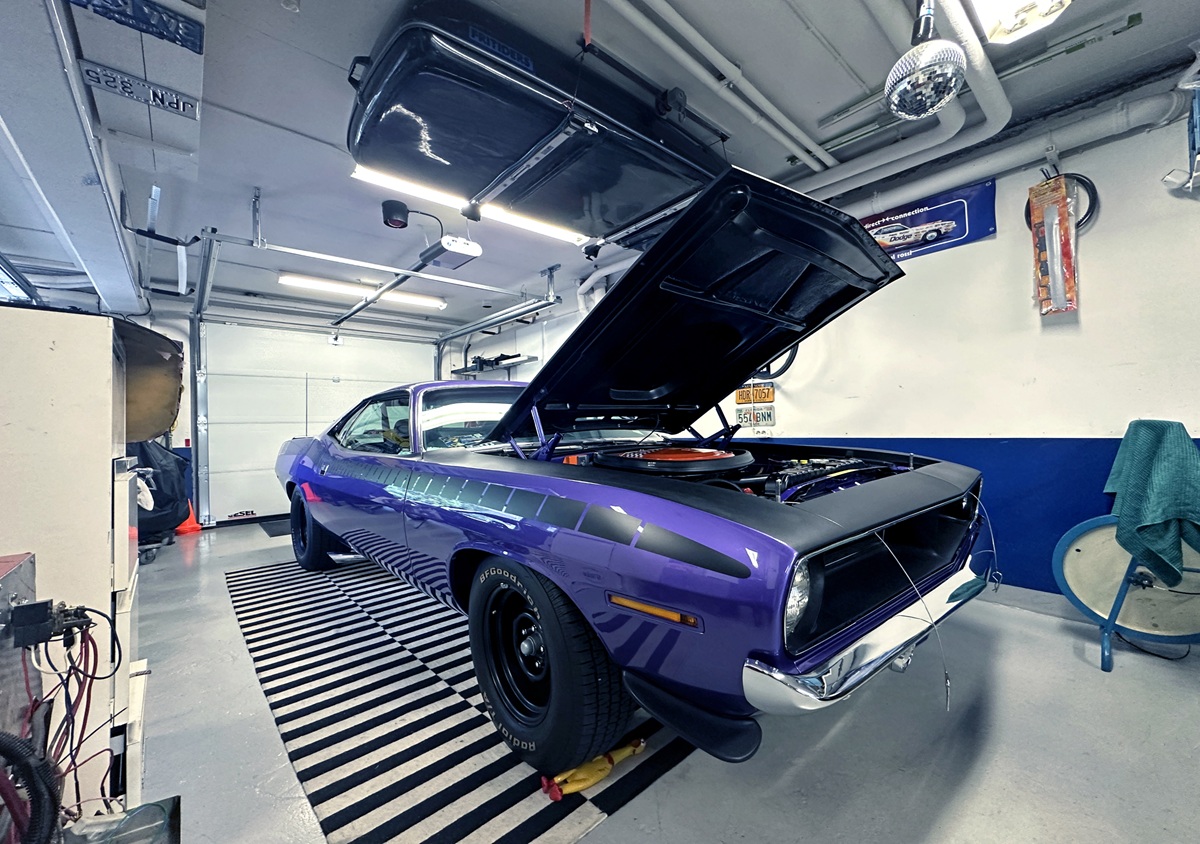
Here’s how it happened. As the pandemic reached Sweden in the spring of 2020, an ad appeared for a black HEMI ’Cuda for sale in northern Finland. As so many times before when HEMI cars surfaced, Andy assumed the opportunity was out of reach. How would it even work – during a pandemic? He pushed the car out of his mind for a few days, but couldn’t forget it entirely.
“A few weeks later, I contacted the seller anyway and learned more about the car. It was originally sold new somewhere in the Midwest, but already in the early 1970s it ended up in New Jersey. The first owner ran it at the strip, and the original engine eventually found its way into a Pro Stock car. After the move to New Jersey, the car was driven less and eventually put away. In the early 2000s, the owner restored it, repainted it and made it roadworthy again. Records say the owner was named Mark Branin. The car was used sparingly once more and was sold by Branin’s heirs after he passed away in the mid-2010s. In 2014, it was sold to Finland, where my seller made further improvements,” Hägglund says.
Back to the spring of 2020. Andy had offered a restoration project – a 1971 Dodge Challenger 440 Six Pack – as partial payment and arranged financing to cover the remaining cost. But Finland had closed its borders to nonessential travel. Would that kill the deal? With some creative thinking, Andy ultimately managed to get to Finland with the project car on a trailer and return with a HEMI ’Cuda in its place. After all, traveling to buy a HEMI engine-powered vehicle can hardly be considered nonessential – right?
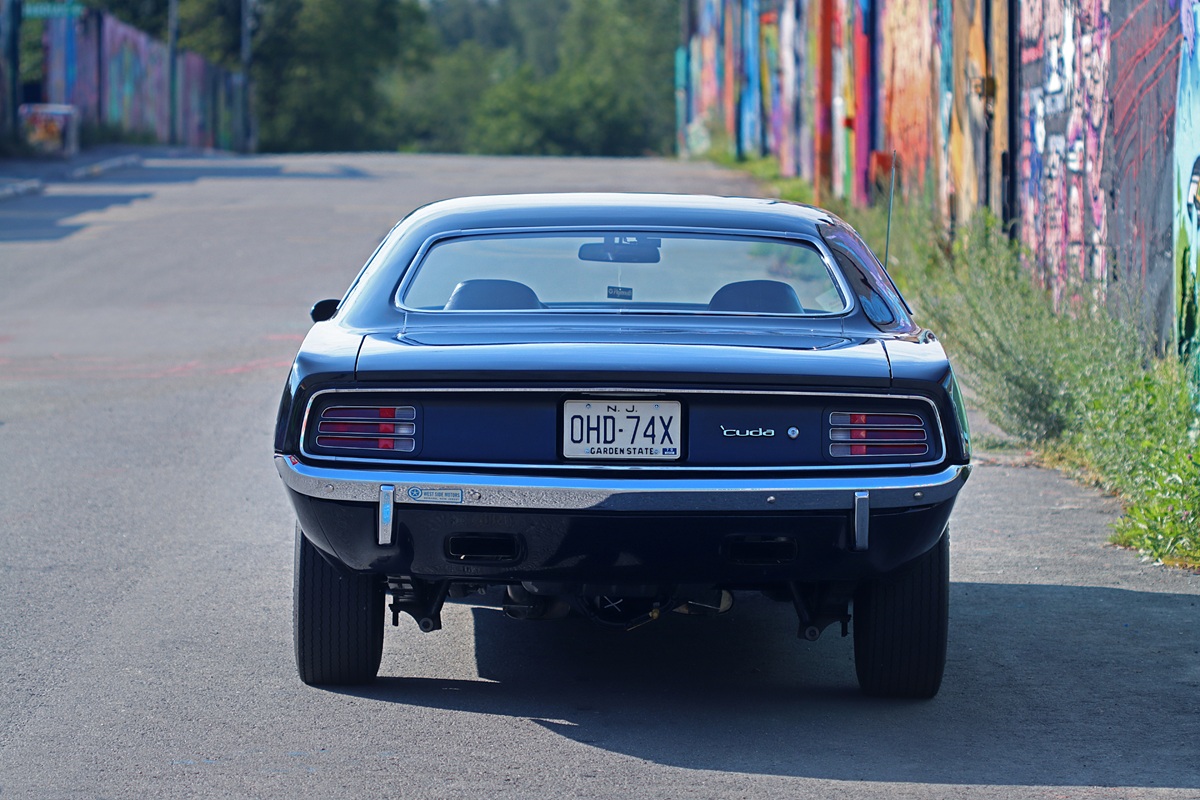
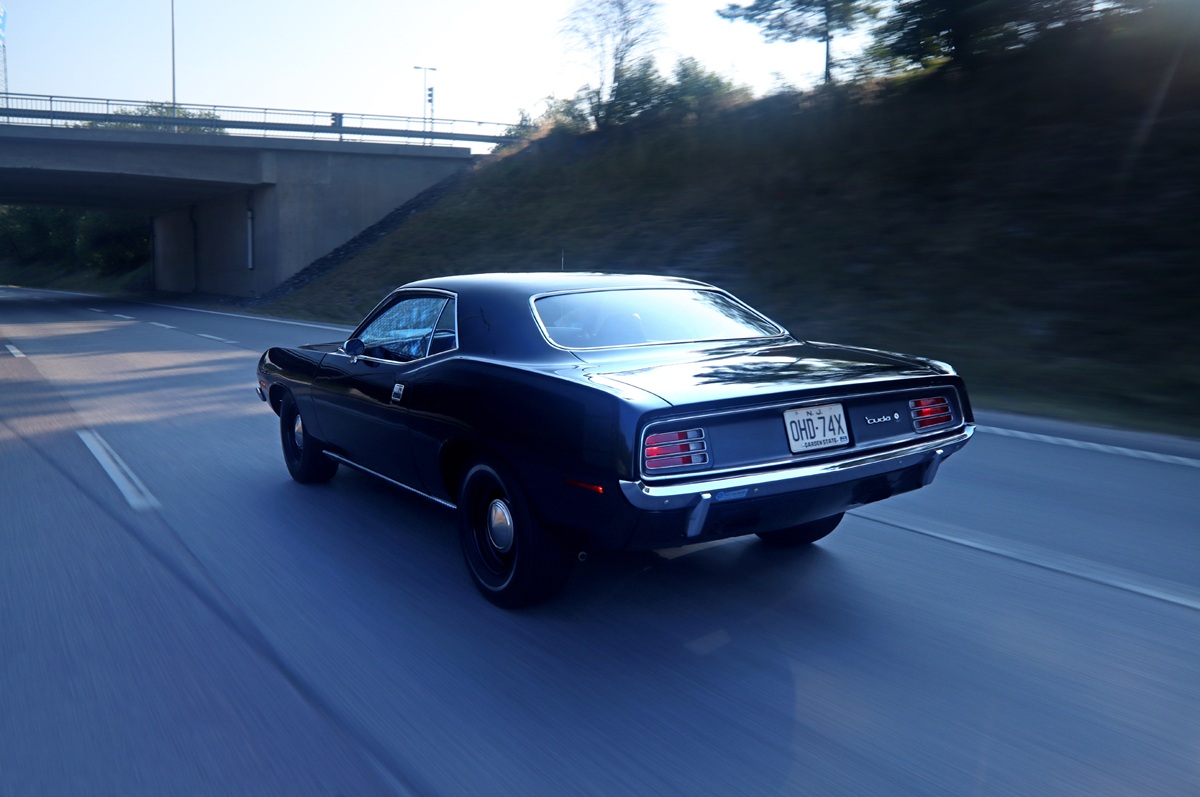
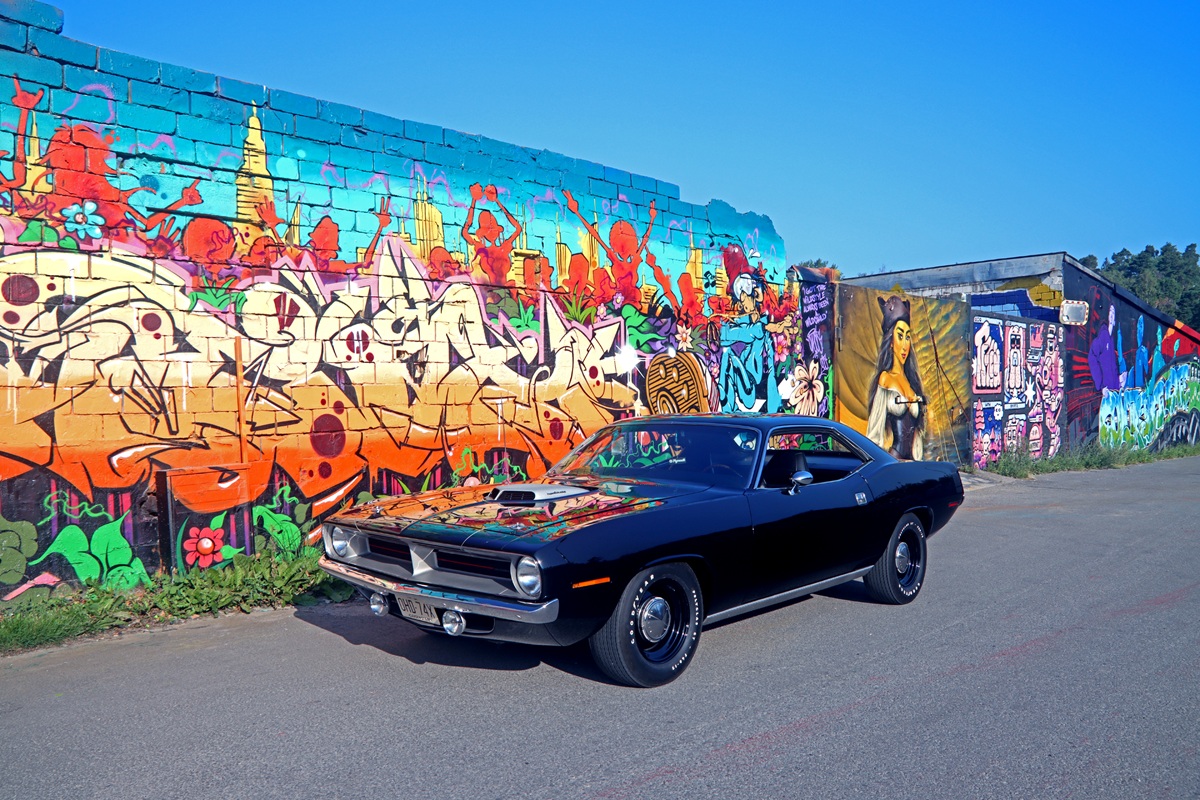
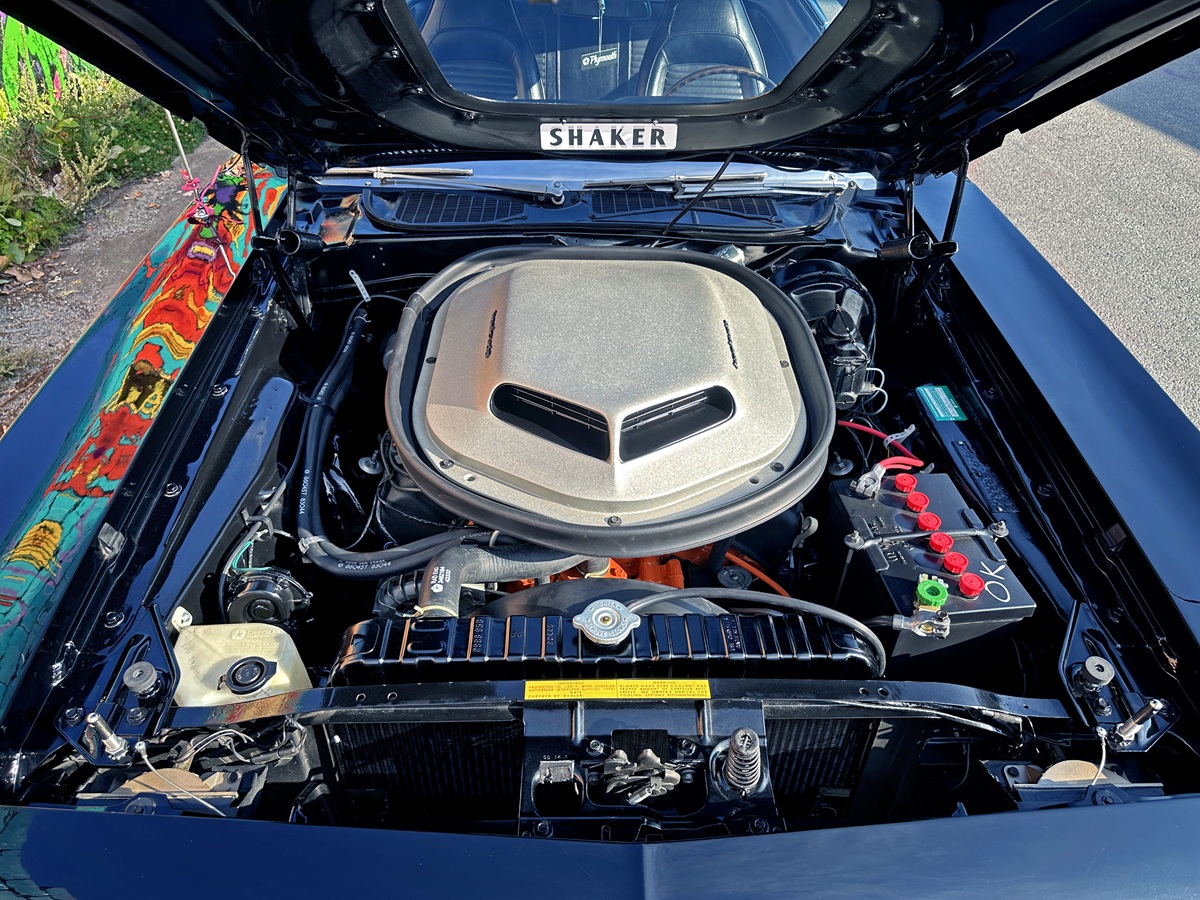
The ’Cuda is equipped with a 426 HEMI engine and a numbers-matching 727 automatic transmission, along with a Dana 60 rear axle with 4.10:1 gears. Finished in TX9 black without a vinyl top and riding on black 15×7 steel wheels, it features a black vinyl interior with standard instrumentation – perfectly completing the car’s sleeper look, Andy says.
During the first few years, no major changes were made. A couple of things did bother Andy, though. The starter struggled during hot starts, and the ’Cuda always left a sizable oil puddle after every stop. After discussions with Per-Erik Alvin in Nyköping, they decided to pull the engine to fix a leaking rear main seal. Per-Erik went through the engine during the winter of 2023-2024, replacing several service parts.
“At the same time, I did some detailing work on the exterior of the engine and transmission. When the front suspension was apart, bushings were replaced and the components refinished. To make the car more comfortable on the road, I swapped the gearing to 3.23:1 using parts from Doctor Diff. With the drivetrain out, I also did some painting in the undercarriage and engine bay. Inside, the rear seat upholstery was replaced and new carpet installed. I added a few period-correct Sunpro gauges and hooked up a Sun tach. No further changes are planned – maybe some minor paint improvements in the coming years. I like being able to take the ’Cuda out for a drive. Cars are meant to be used,” Hägglund says.
That makes sense. Muscle cars aren’t stamp collections on wheels- made of sugar.
0 Comments