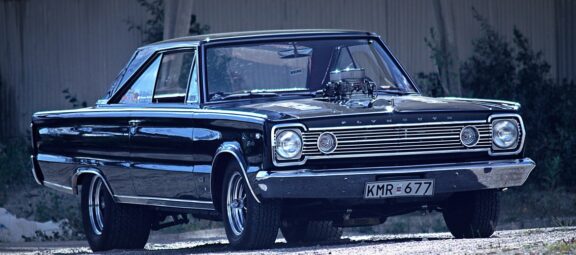
Stable Satellite With a Humble HEMI®
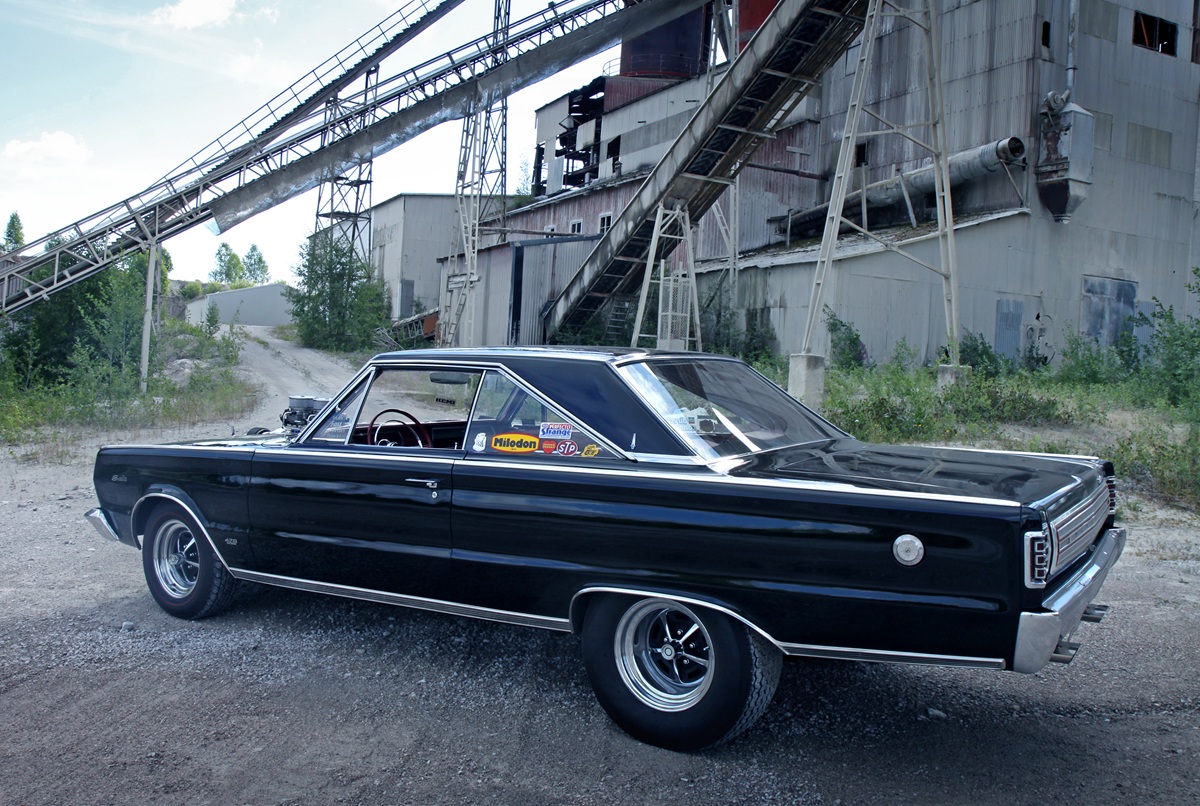
So… I headed for Dalarna and the Orsa Drag Fest. But the sight of muscle cars lifting their rear ends and the smell of burnt rubber weren’t the only memories I brought home. A visit to local Mopar® enthusiast Urban “Ubbe” Lindström in Vikarbyn revealed another muscle car in Dalarna worth a closer look – a 1966 Plymouth Satellite, as reliable as it is raw.
Sound familiar?
Longtime DodgeGarage readers may recognize the name. Ubbe’s wild Dodge Coronet build, Lucifer’s Ride, was featured here a few months ago – a car that’s an intense experience whether you’re behind the wheel or in the passenger seat.
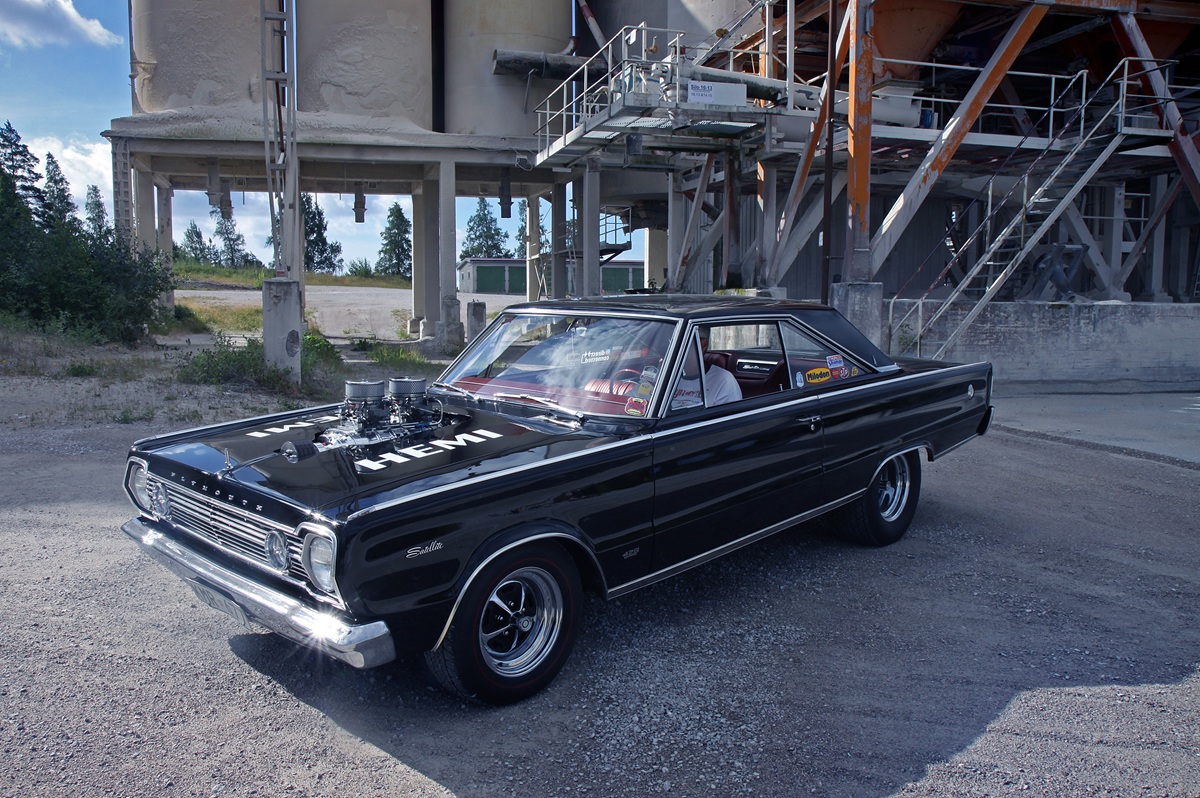
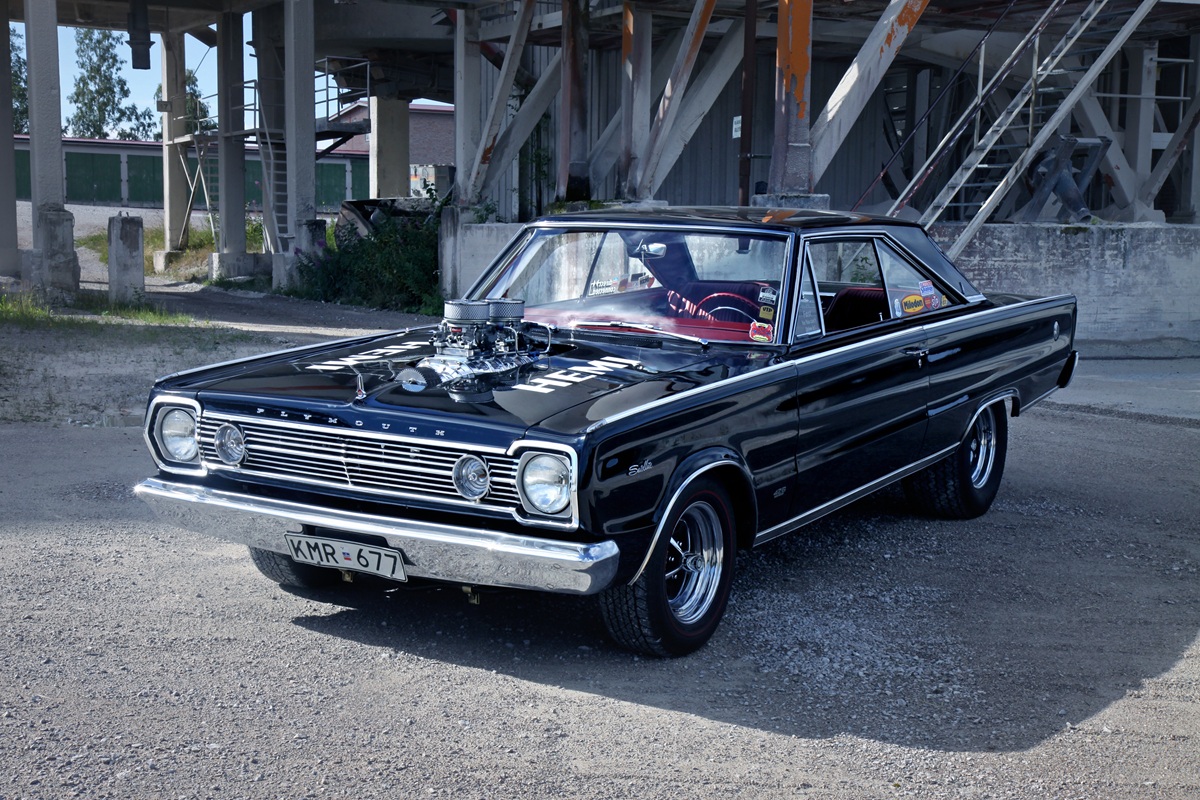
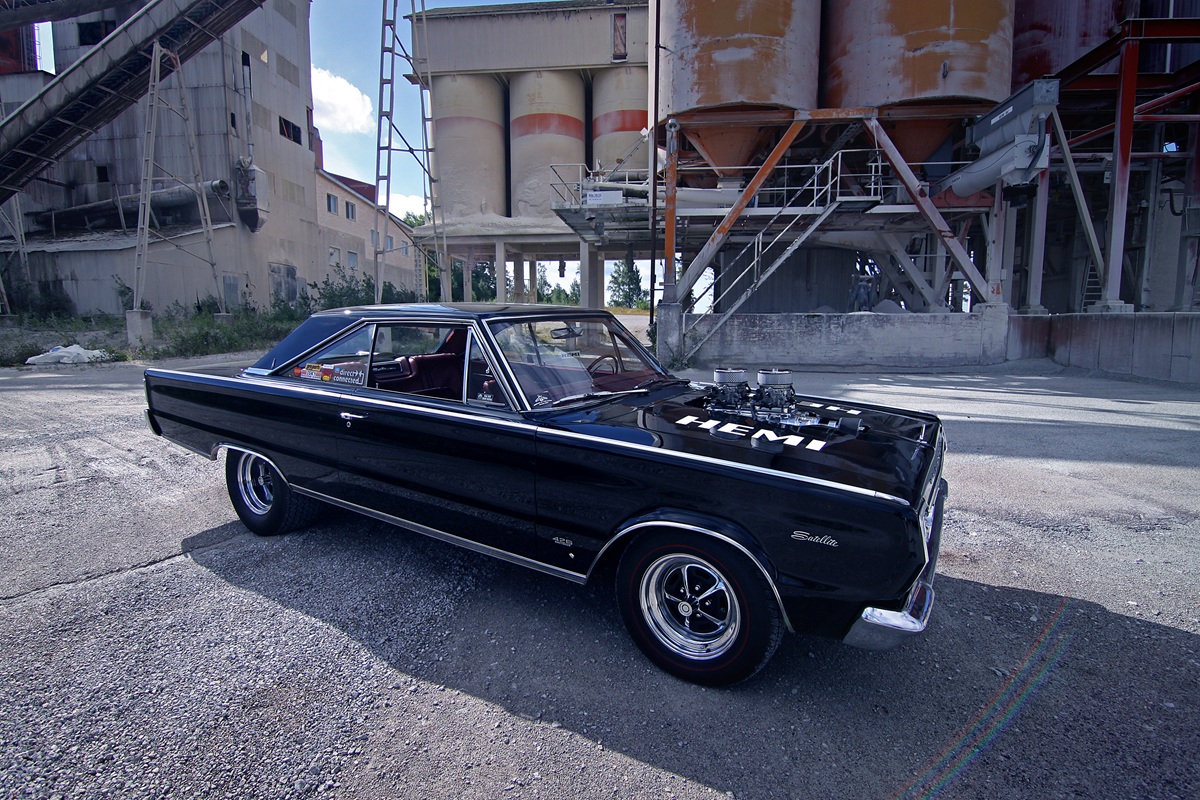
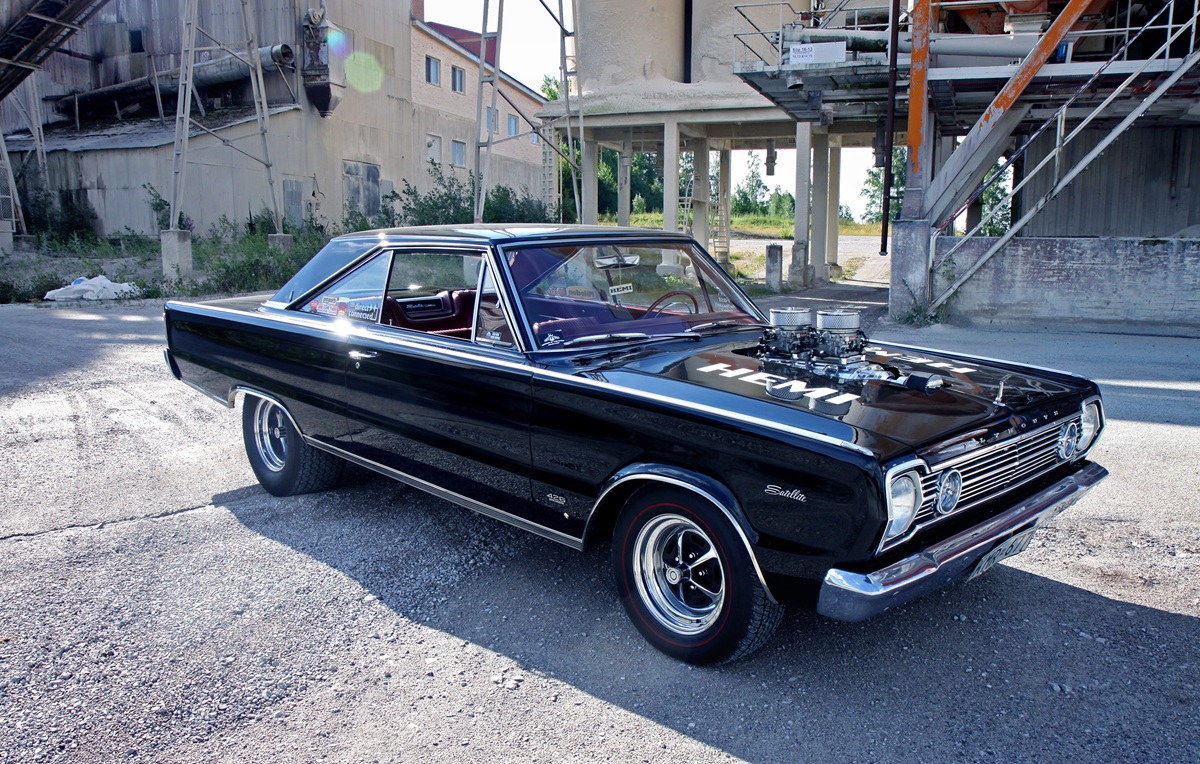
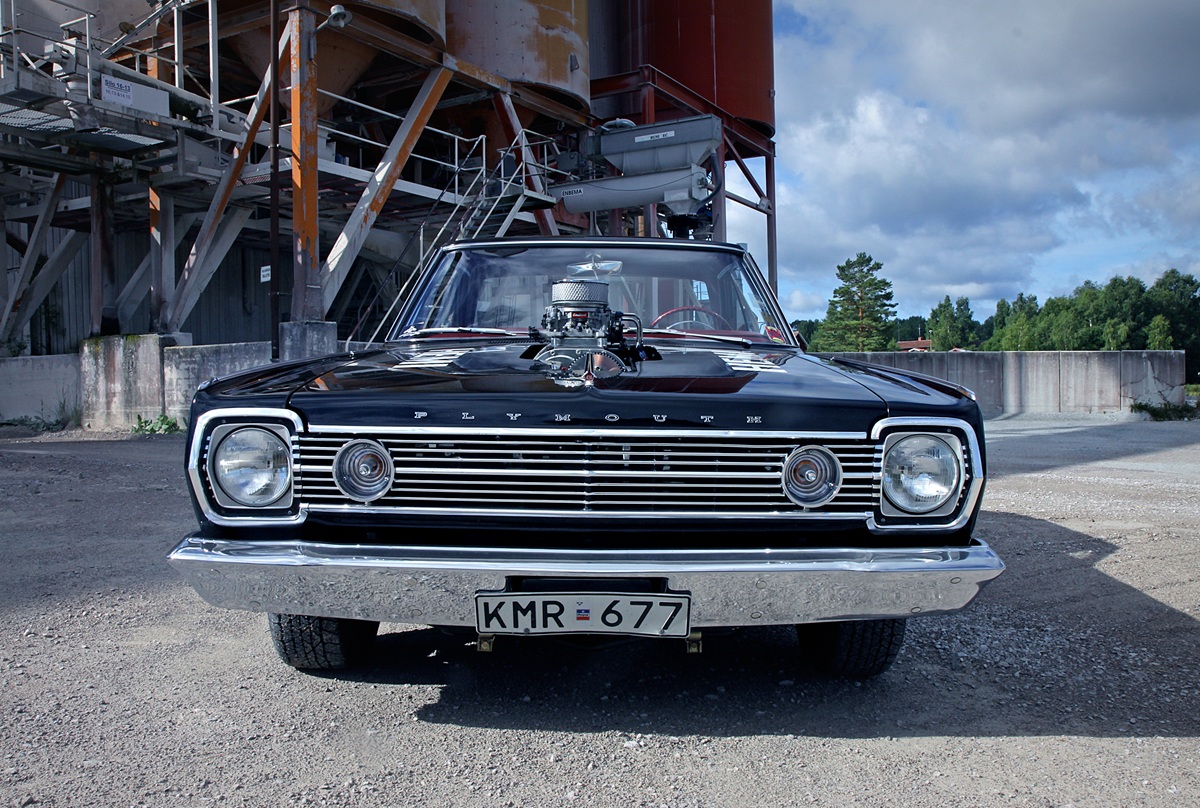
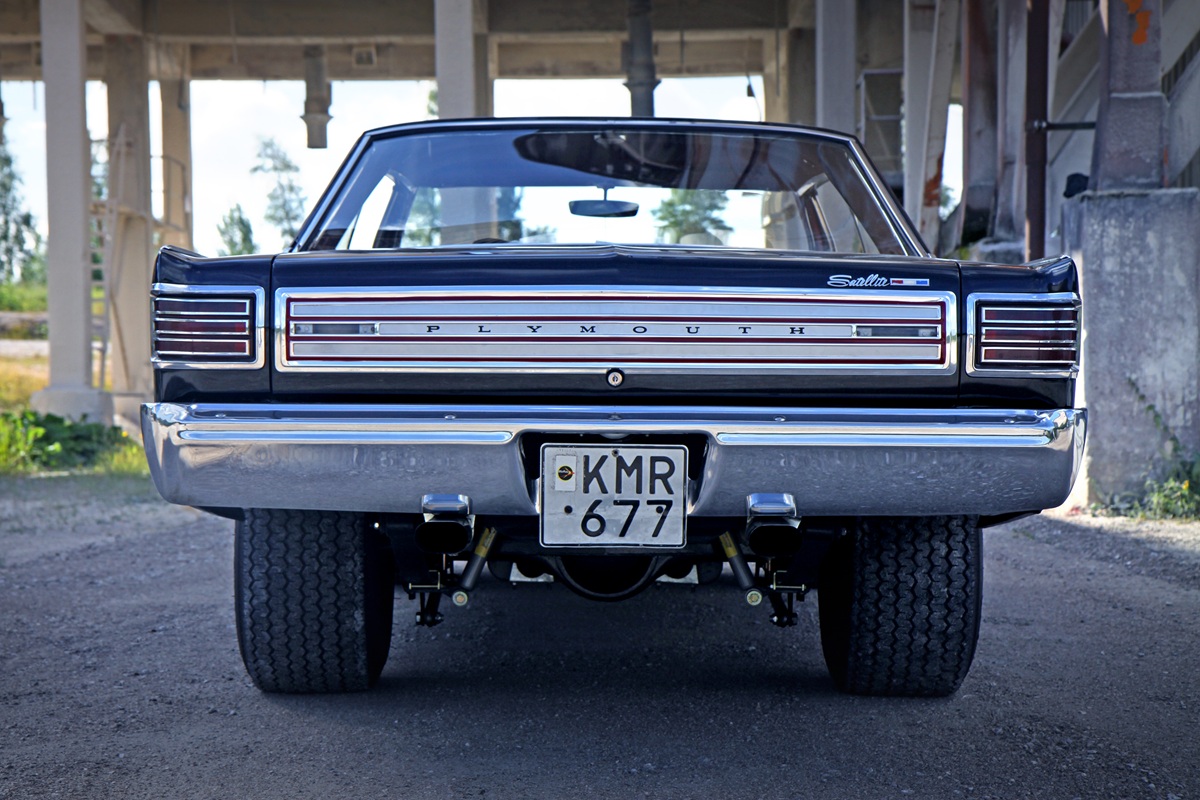
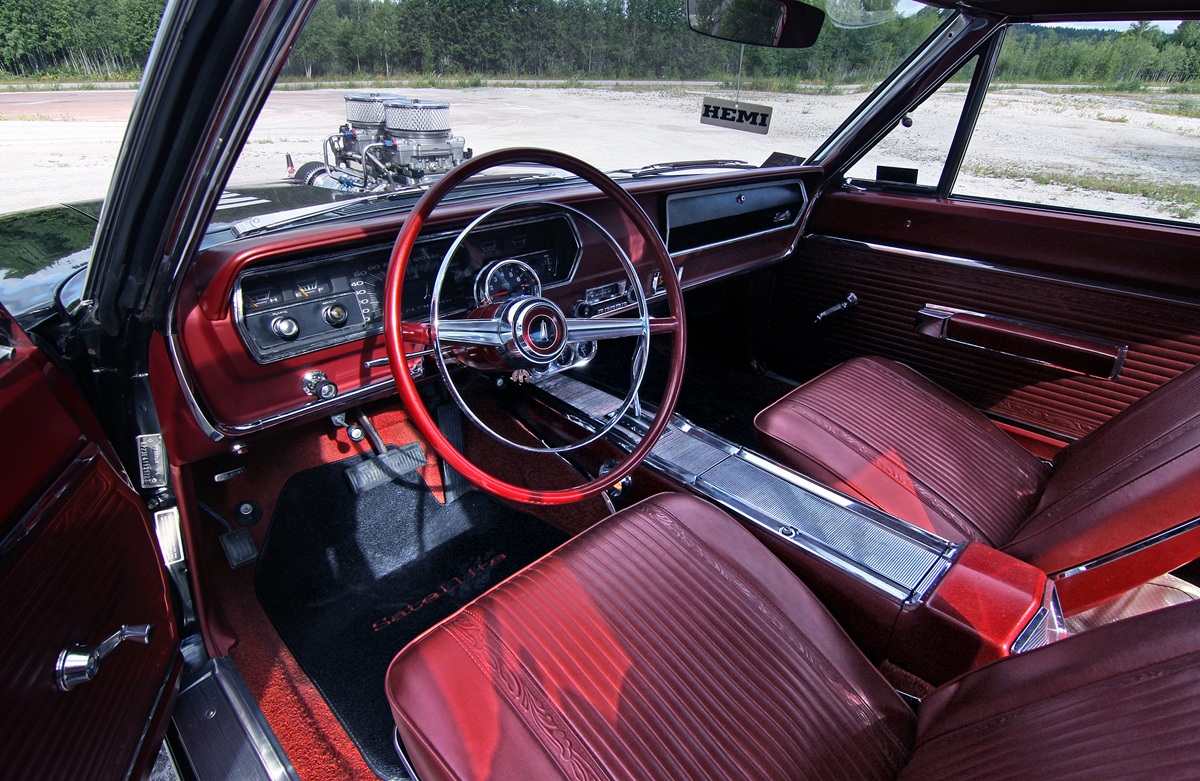
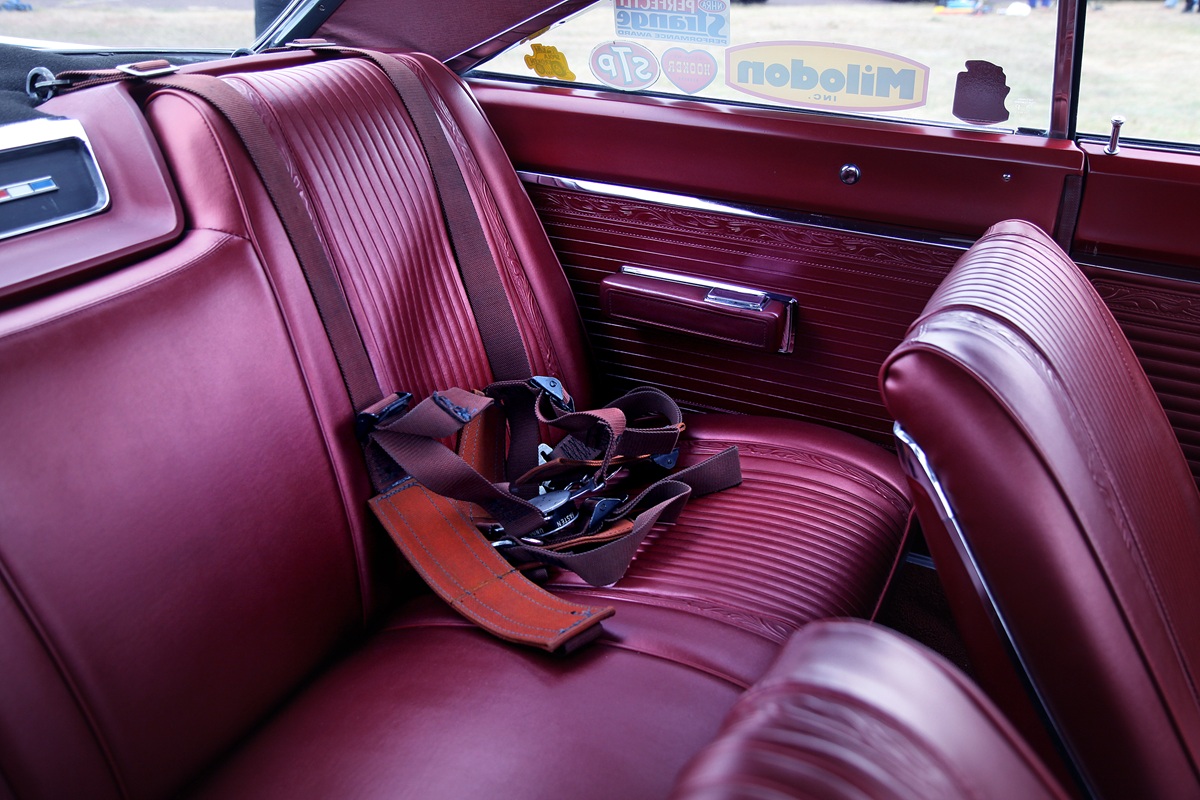
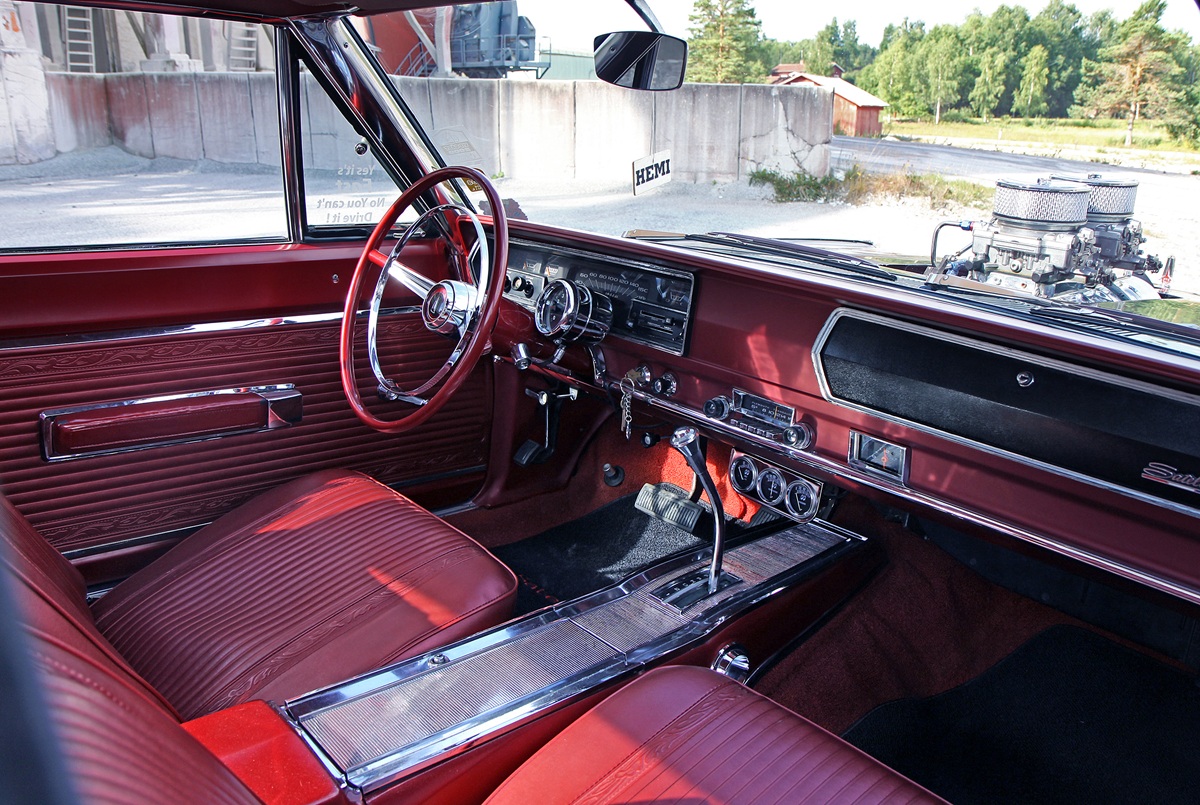
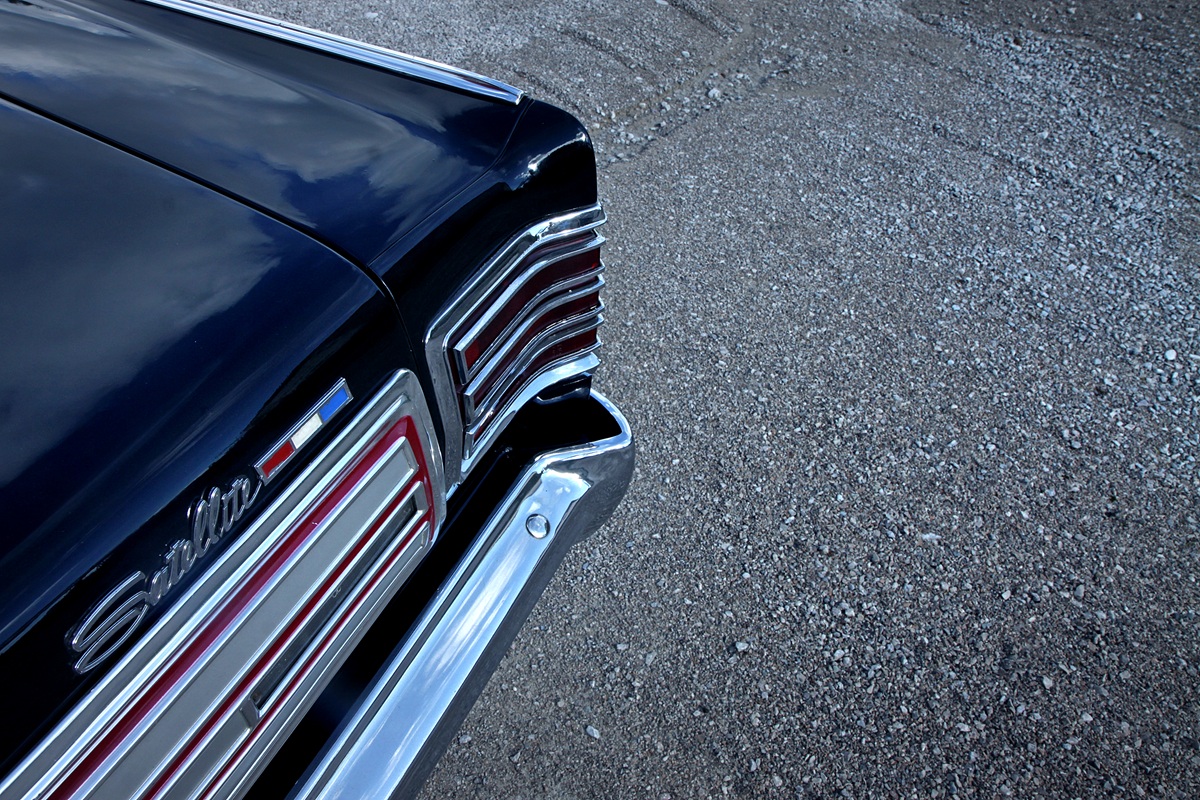
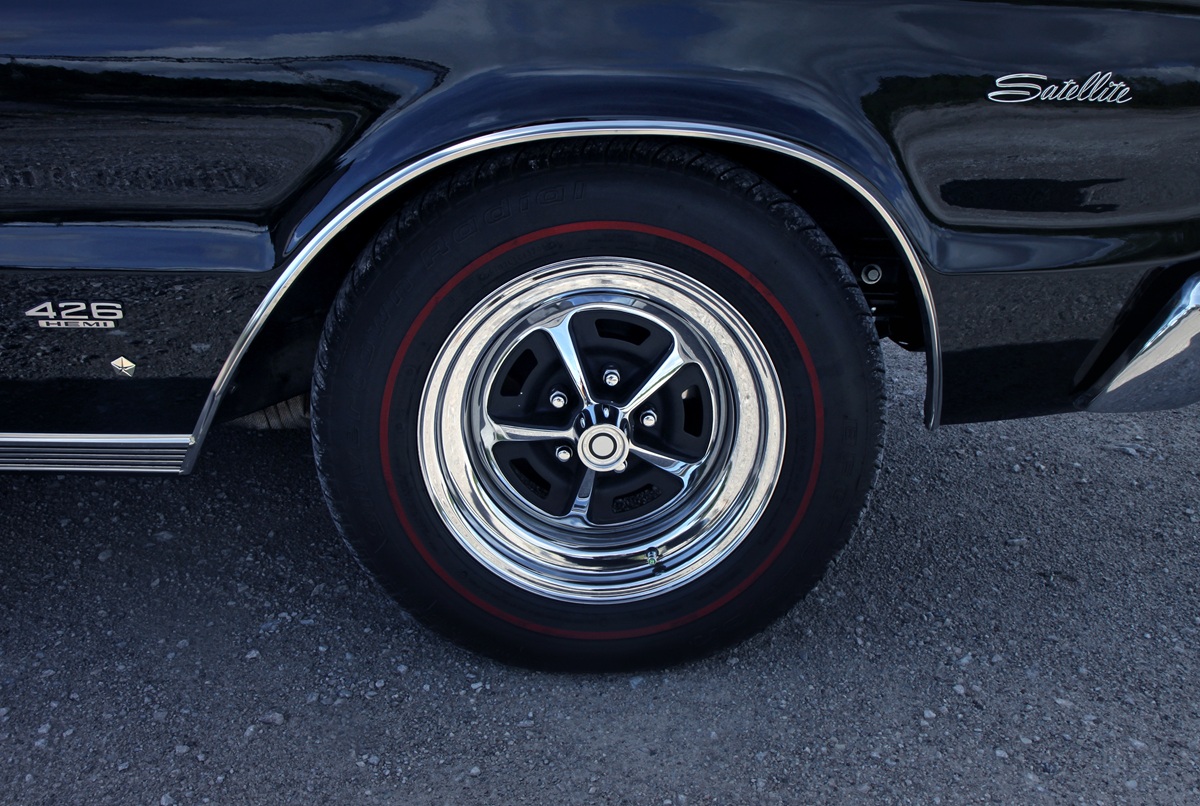
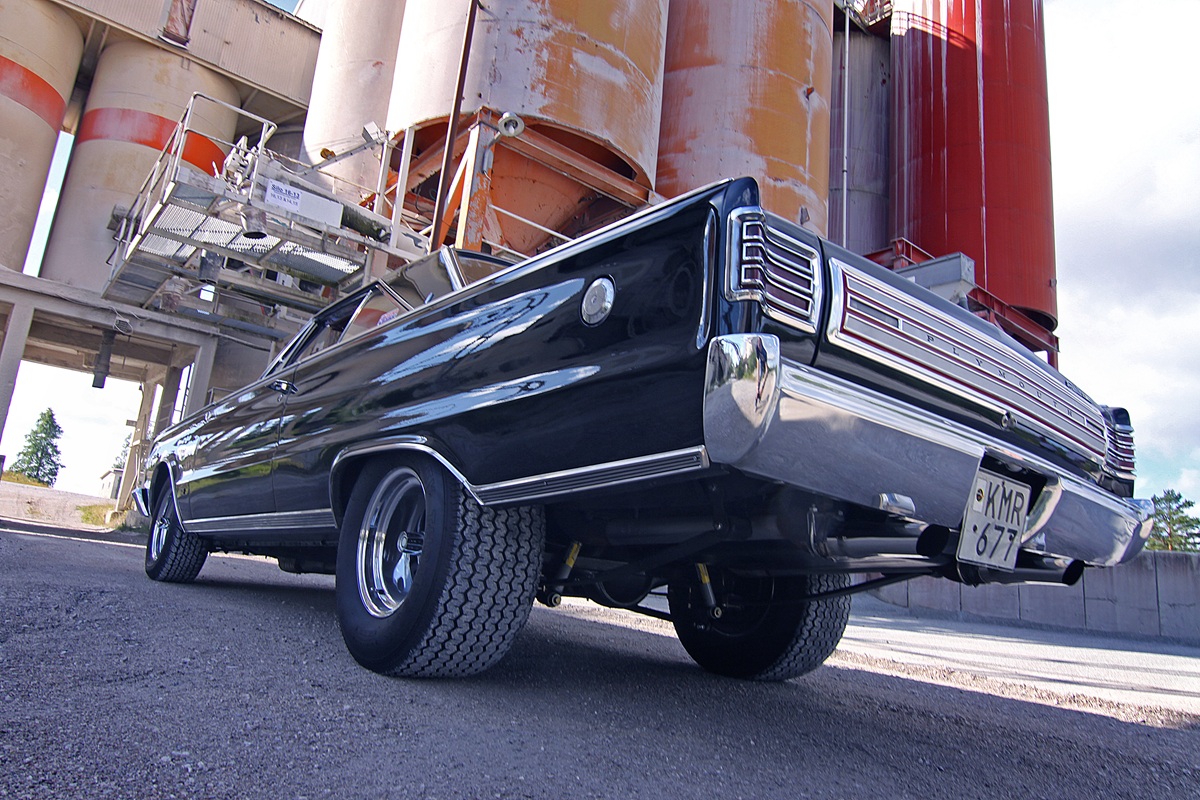
But the ’66 Satellite, built by Ubbe before Lucifer’s Ride, is something completely different. We’re talking about a wolf in sheep’s clothing. Sure, two two-barrel carbs poke through the hood, and the white lettering across that hood announces that a HEMI® lurks beneath – but that’s about it. The Plymouth is deep black, without comically wide tires in back, and the interior – original red – radiates the personality of a refined owner.
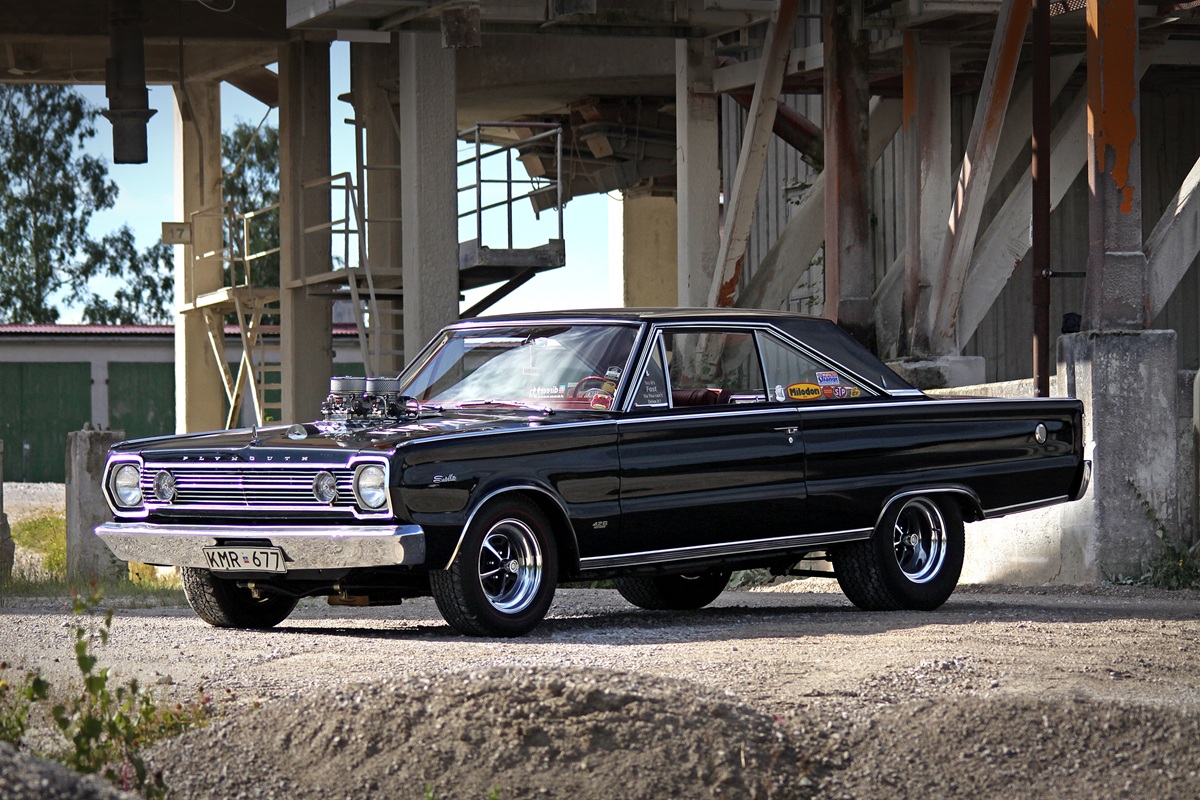
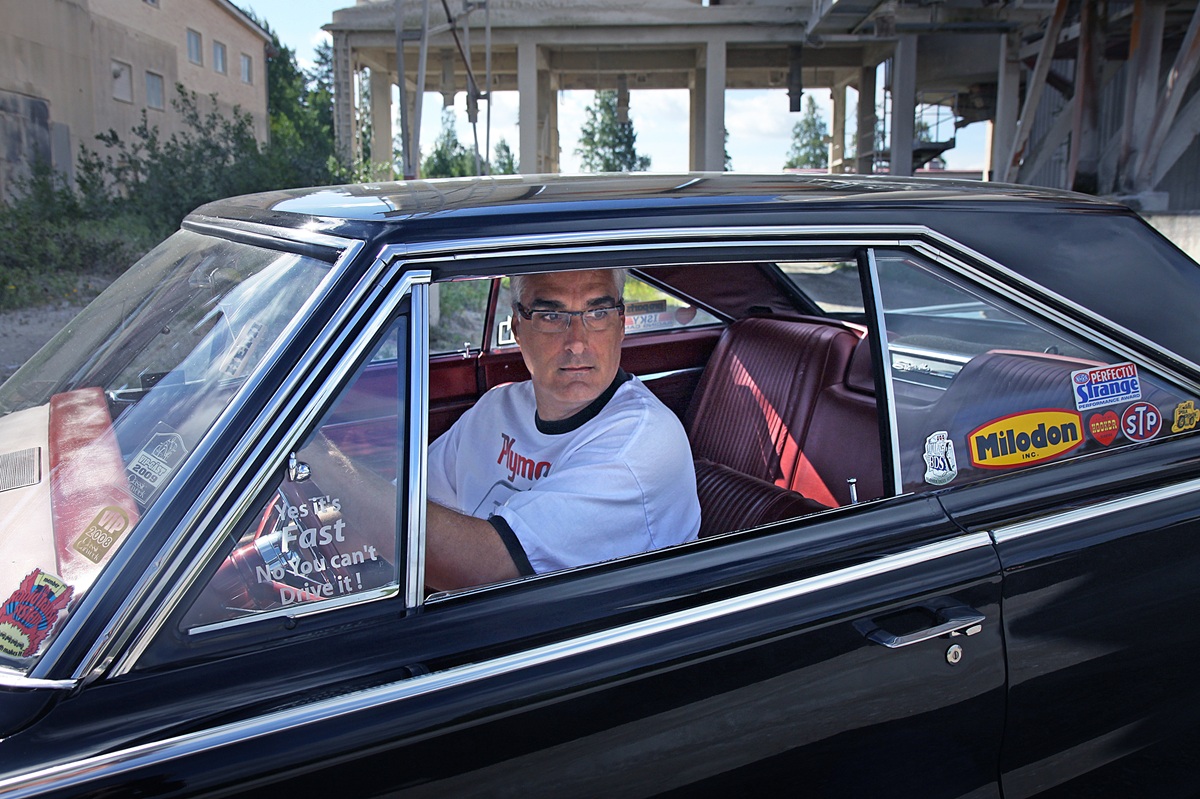
It’s only when I ask the equally refined owner, Thomas Mark, to start it up – despite lively protests from his wife in the back seat – that I realize what kind of beast hides under the hood of this gentleman’s ride.
Ubbe, proud as a rooster the day before, told me the Plymouth performed impressively at Orsa Drag Fest’s rolling-road dyno, which made me even more curious.
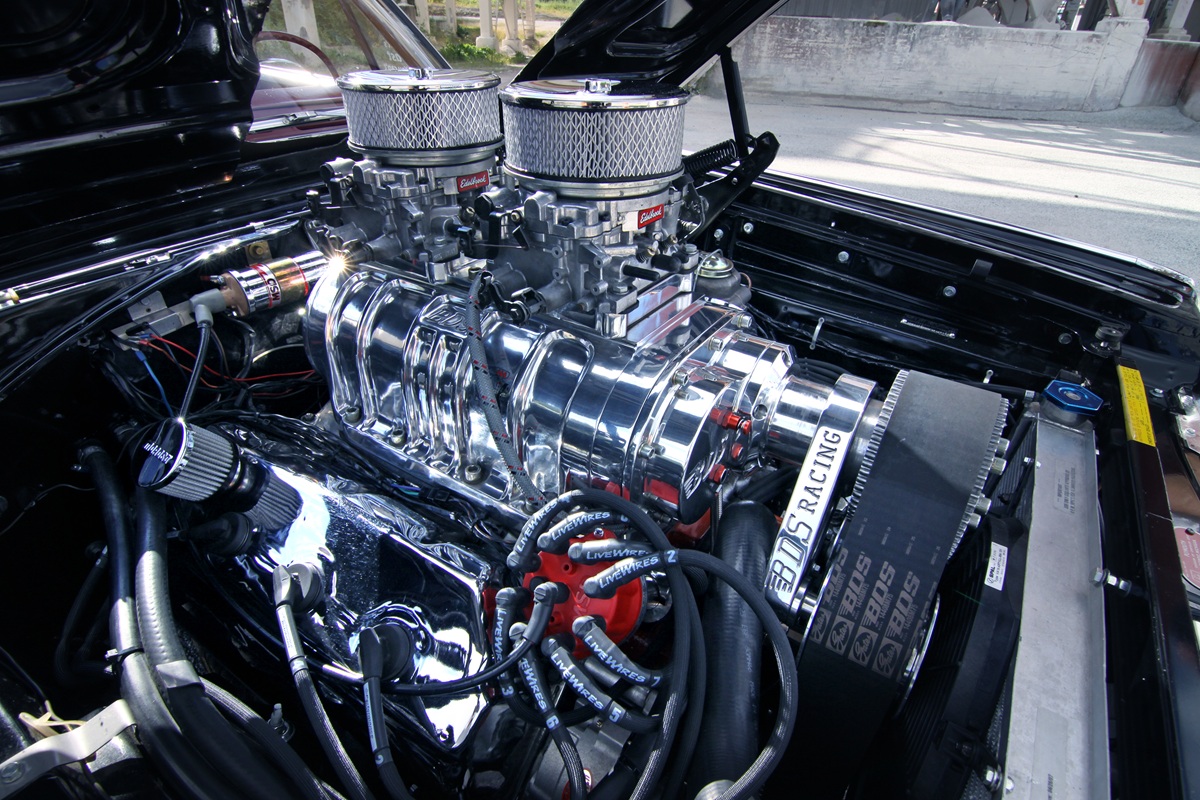
“It made 586 horsepower at the rear wheels,” Ubbe says with an unmistakable grin. “That’s not bad after 25,000 kilometers on the street. 586 at the wheels means close to 800 horsepower at the crank.”
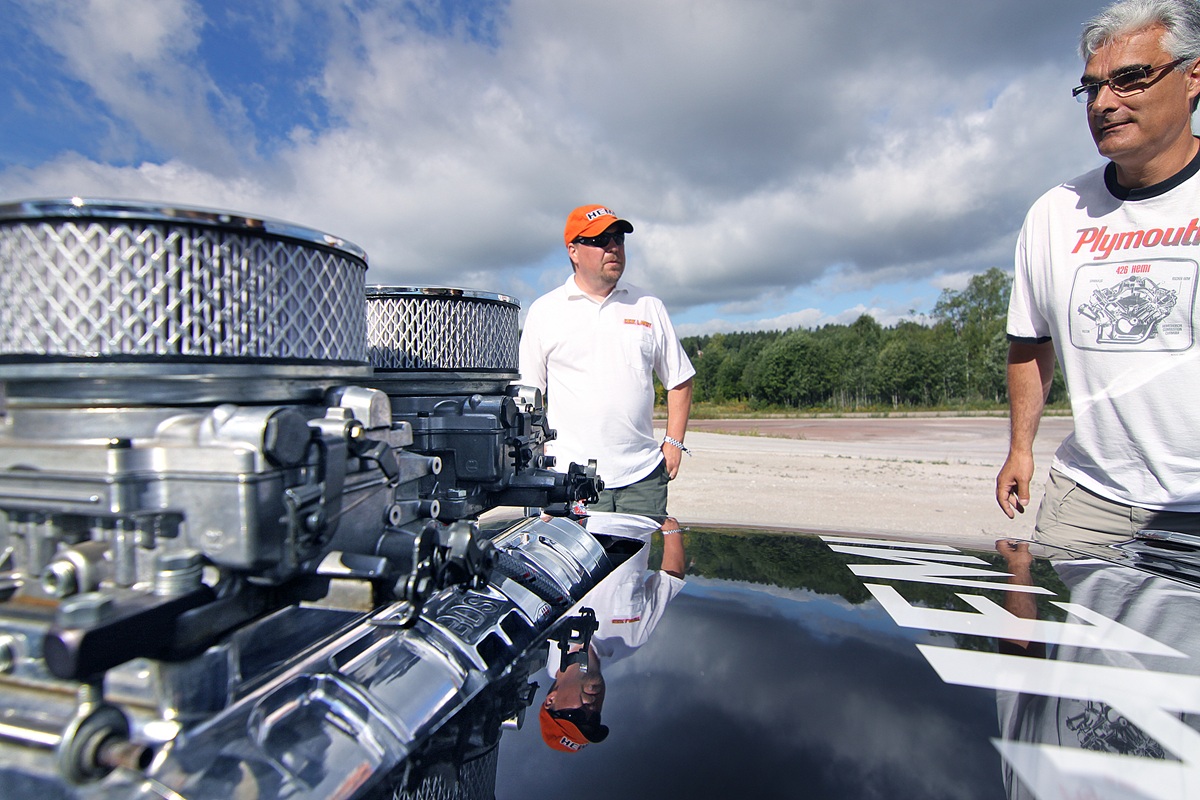
And of course – a blown HEMI engine is always a blown HEMI engine. Mopar fans (and plenty of others) get misty-eyed just hearing the words.
Ubbe bought the car in Hallstahammar in October 2004. It had been in Sweden since 1978 – and looked the part. Patched and repaired, with new rust in the old repair panels. The interior was completely shot.
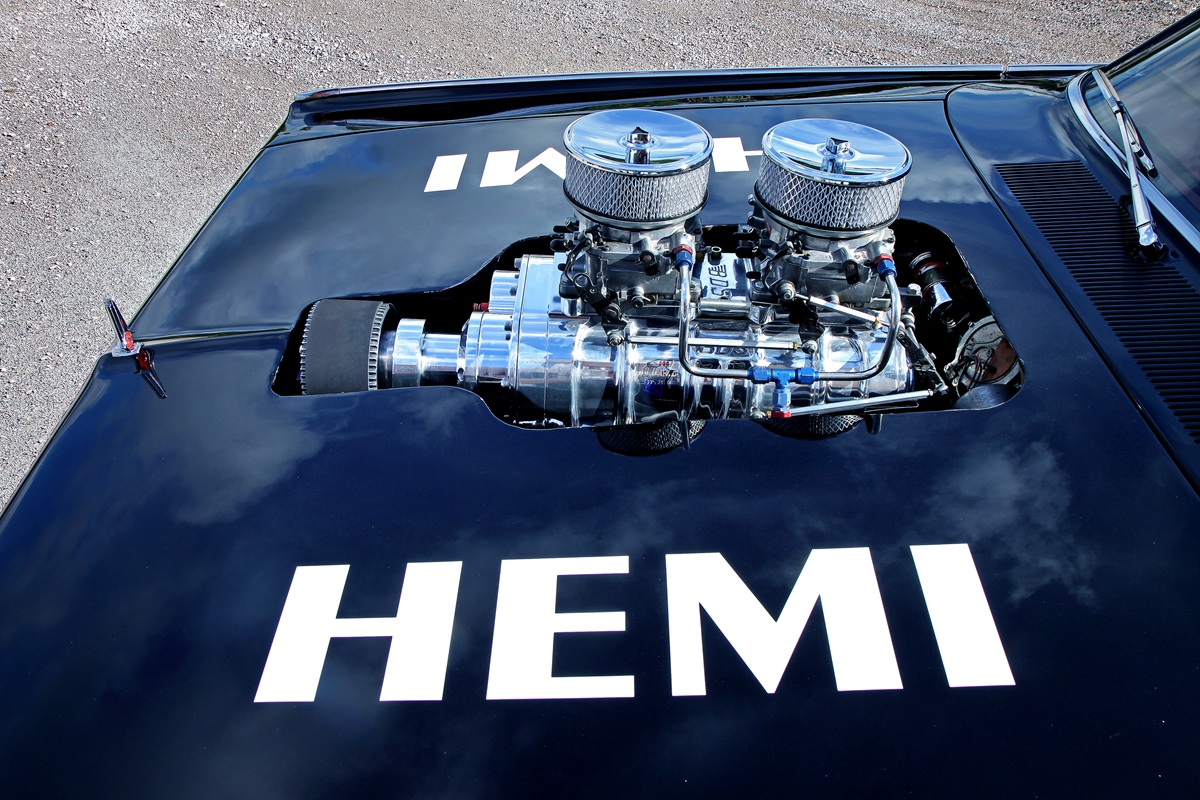
“It had a 440 in it then – a 1972 HP-version 440, low compression but with a wild cam. Not a great combo,” Ubbe says. “I swapped in higher-compression pistons, but the new pistons were machined wrong and seized at the wrist pins after five seconds. So I replaced them with low-compression ones again and added a blower. Then it ran okay, but I sold it to a friend in Bollnäs a year later.”
Soon enough, though, Ubbe stumbled onto something far more exciting to drop under the hood – a HEMI engine.
“A guy had found the block in a dumpster outside a repair shop in California,” Ubbe says. “It had been sitting there since the ’70s. The block had been lightened by five kilos, the sides milled smooth and holes drilled wherever possible. Someone had probably run Super Stock with it back in the day. One cylinder wall had a crack that didn’t clean up even with a .060 overbore, so the block was just left there – custom pistons for odd diameters were expensive back then.”
He continues:
“There’s still plenty of material in a HEMI block even after you’ve milled it. A .070 overbore isn’t a problem. That’s what we did with this one. The crank came from 440 Source, locked down by vintage Keith Black aluminum main caps – the same kind they made in the late ’60s when Keith Black first started producing them.”
Rumor had it the HEMI engine once belonged to Dick Landy, the legendary Mopar drag racer.
“When I went to the U.S. after buying the block, I asked Dick’s late brother Mike if that was true,” Ubbe says. “He told me, ‘We never lightened our blocks that much,’ so I guess Dick never ran it.”
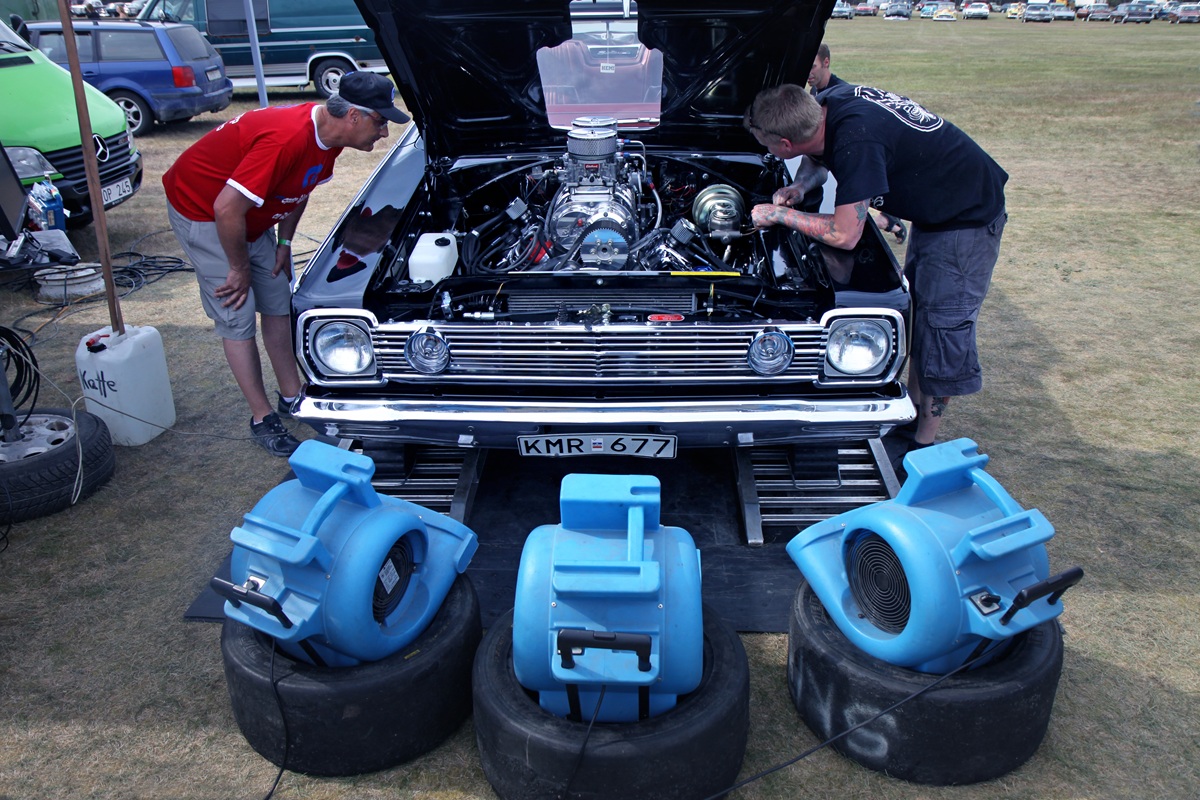
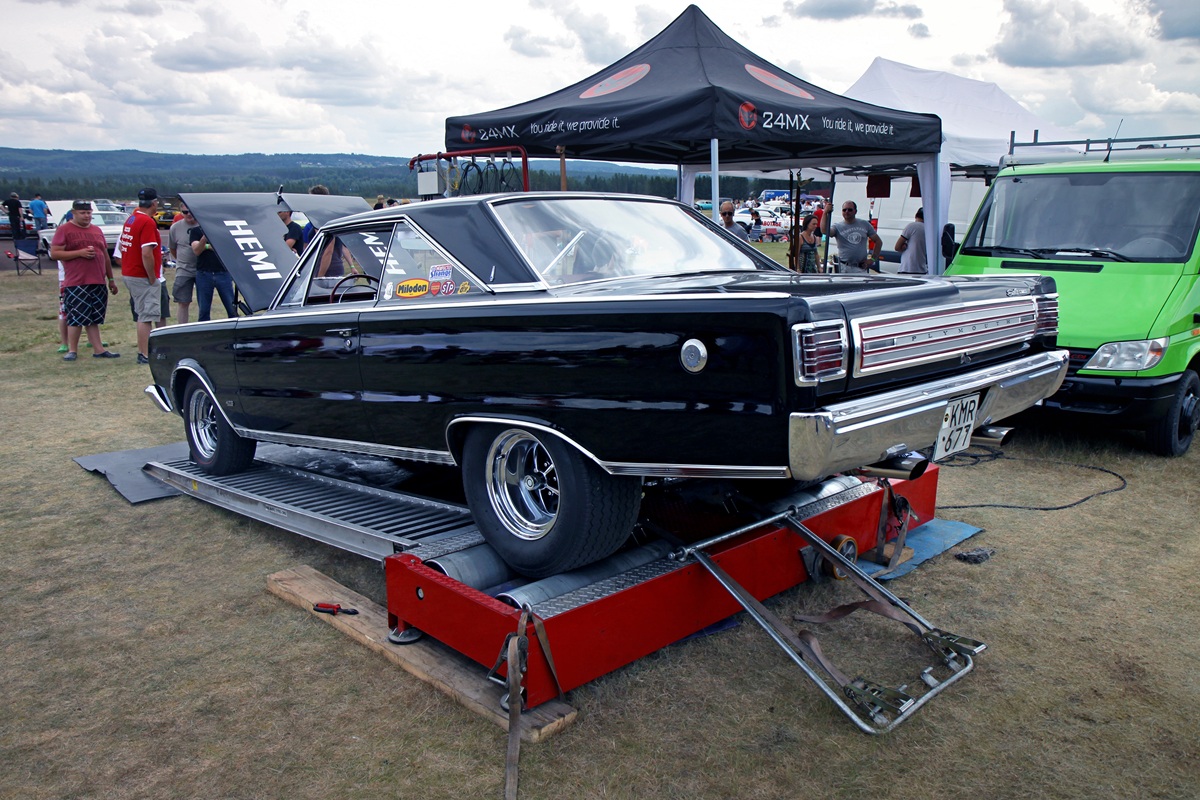
Still, Mike’s verdict was positive. If you can lighten a block that much and still have it survive a .070 overbore, a blower and nearly 800 horsepower – that’s one well-built engine. Right at the edge, exactly where it should be.
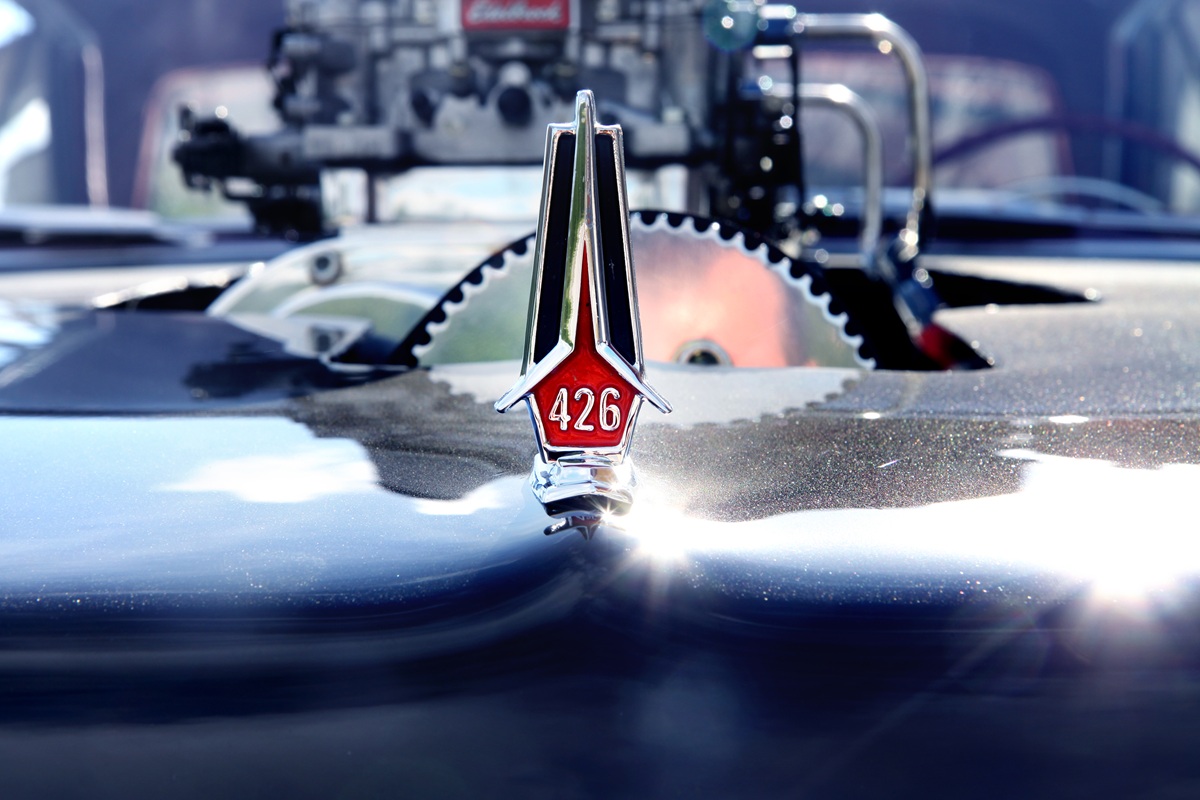
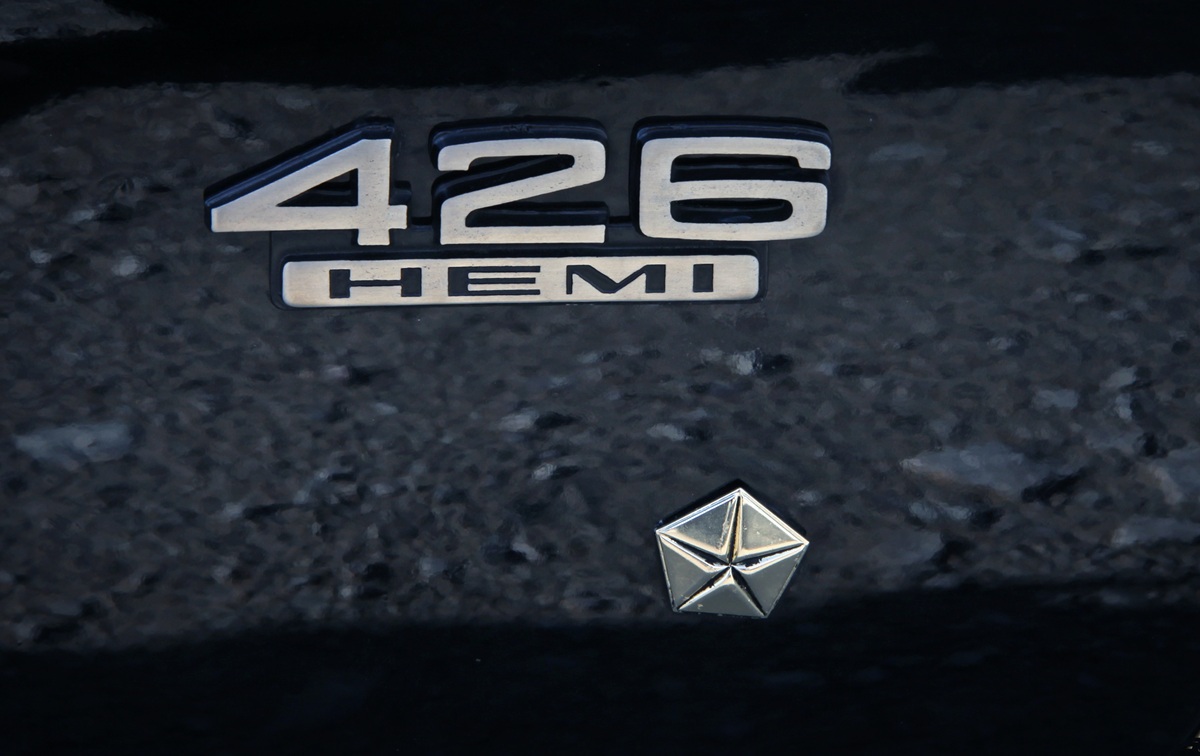
Speaking of classic parts, the HEMI engine also runs vintage Dart heads from the early 1970s.
“They’ve got Chrysler casting numbers, so they were legal for Super Stock,” Ubbe explains.
All in all – with the rods and crank from 440 Source and that .070 overbore – the HEMI engine displaces a bit more than the classic 426. Precisely 487 cubic inches. Inside are custom Ross pistons, a very mild BDS hydraulic camshaft ground by Isky for blower use, and – unsurprisingly – a BDS 8-71 supercharger.
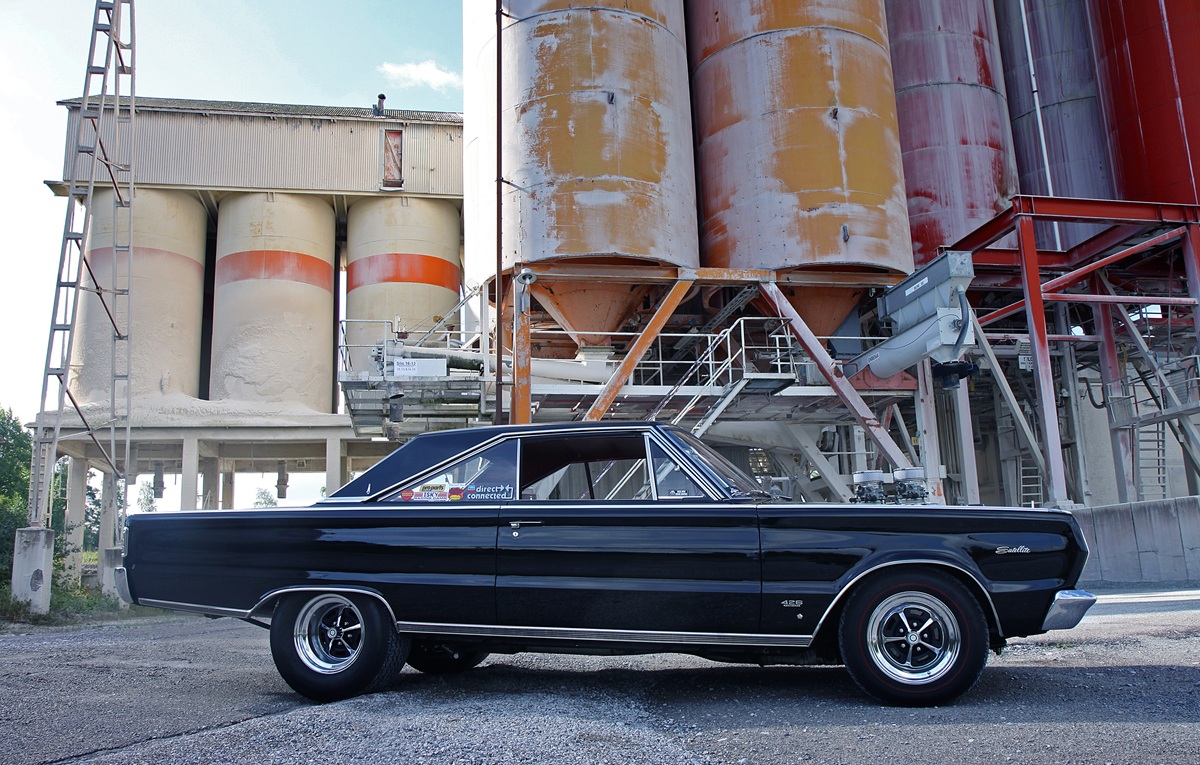
“The blower’s underdriven by 10 percent. Why? Because the Satellite’s a cruiser,” Ubbe laughs. “And really – how many blown cars do you see that have run 25,000 kilometers?”
That’s exactly what this Satellite has done – 25,000 trouble-free kilometers, making 586 rear-wheel horsepower all the while.
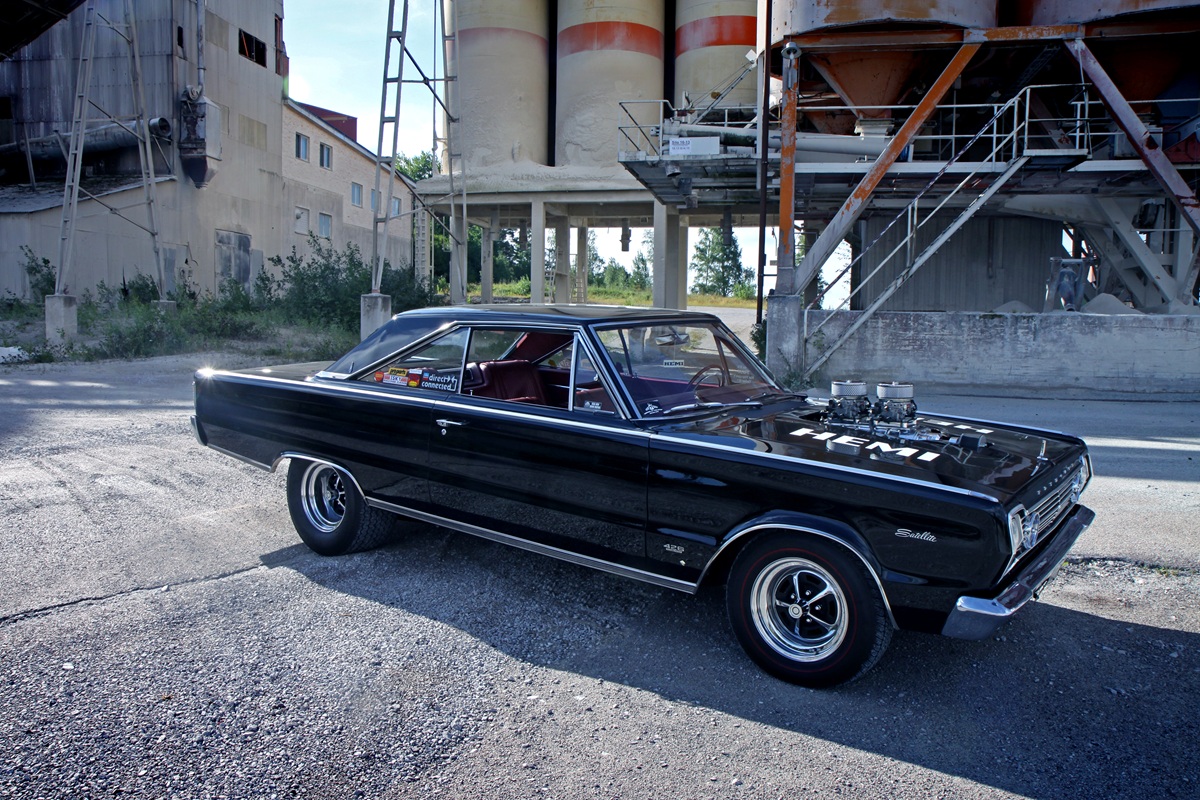
What’s the secret to building a blown motor that just runs and runs – even on regular 95-octane pump gas?
“It’s all about using the right parts and making sure they work together,” Ubbe says. “Don’t cheap out. The ignition curve is crucial. I didn’t tune it on a dyno – I tested it on the street, pulling the distributor out 50 times, listening for knock until I got it right. The engine has never seen 98-octane. Hardly anyone around here in Dalarna uses it, so it’s often old fuel that’s lost a point or two by the time it hits the tank,” he laughs.
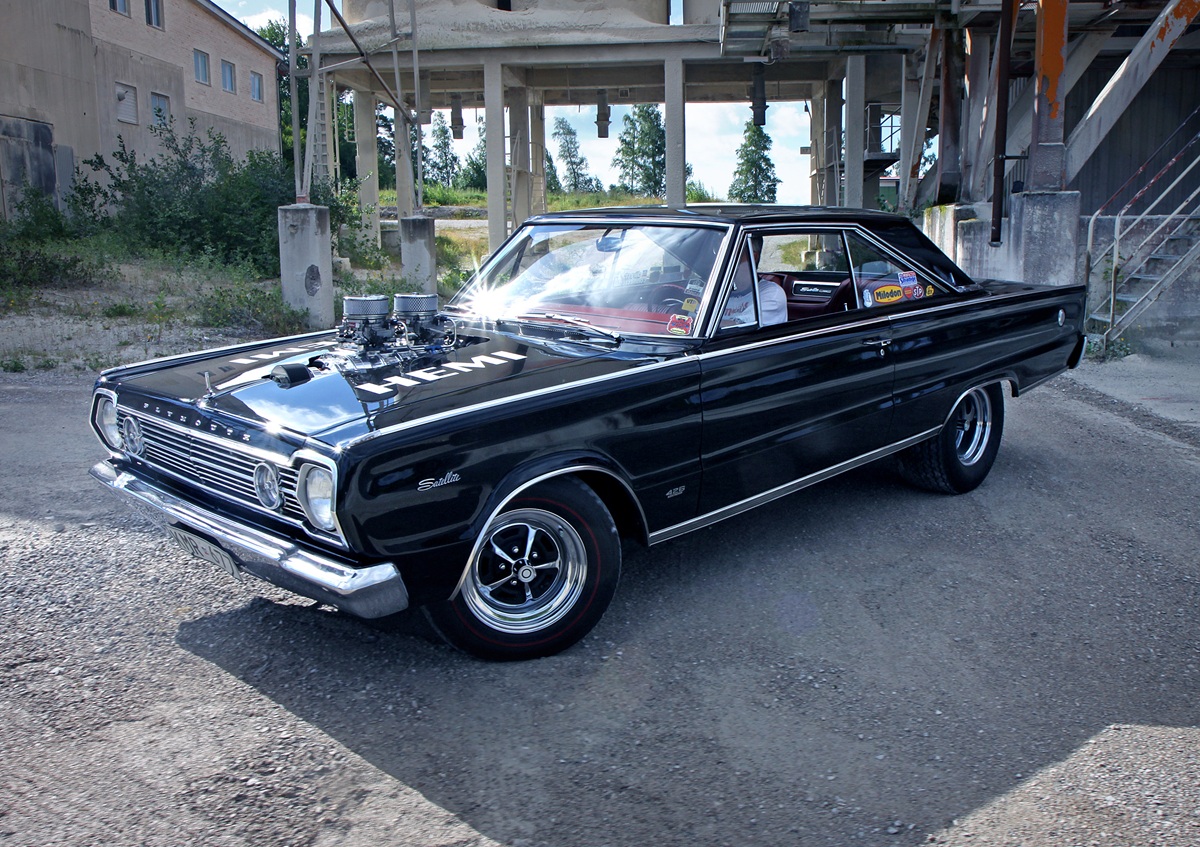
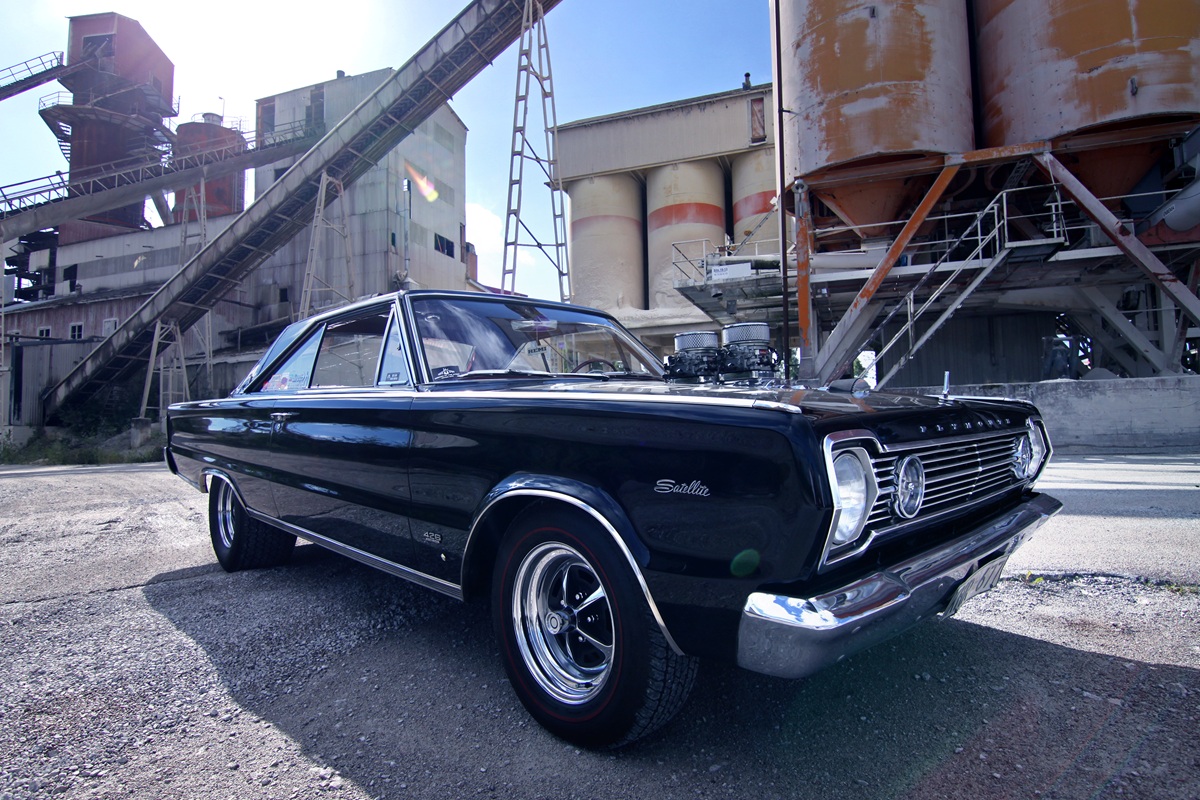
He adds that the Satellite runs an MSD 6BTM ignition box, which allows him to adjust timing from inside the cabin to prevent detonation.
So that’s the engine – what about the rest of the drivetrain?
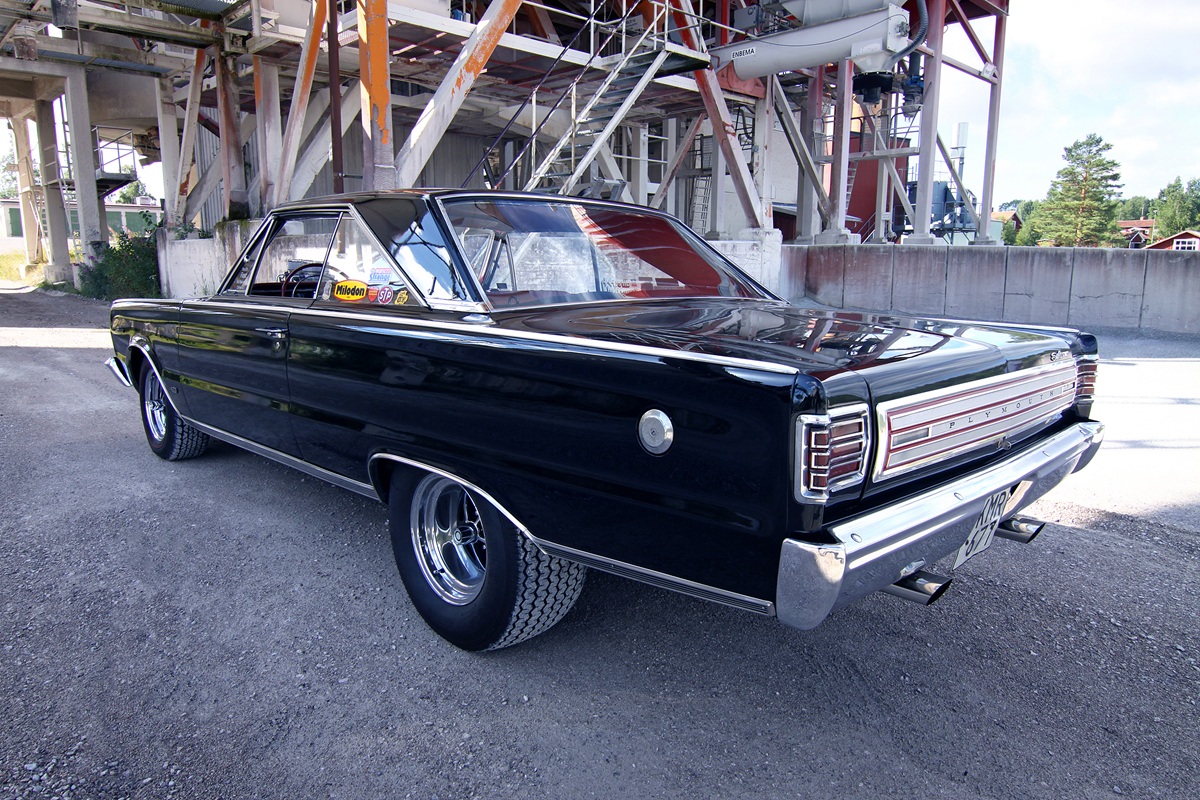
The rear end is a shortened 8¾-inch with a Sure Grip differential and 4.30:1 gears. The housing is reinforced and mounted with CalTracs and split monoleaf springs. In between sits a 727 automatic, untouched since 1977 except for a Cheetah manual valve body.
“The transmission came from a motorhome,” Ubbe says. “It’s never been opened or rebuilt. It screams like a stuck pig on the strip – but it holds. I honestly thought it would die when we ran the Satellite on the dyno at Orsa Drag Fest. It got hammered in third gear, which you’re not supposed to do, but it survived,” he laughs.
Maybe that’s because the later 727s were better built – fewer weak points than the early ones.
Still, that tough old 727 has blown a few converters – literally.
“Yeah, I’ve ballooned a couple,” Ubbe says. “Tried MIG-welding one back together on a farm once – that was doomed to fail, of course. Ended up buying a new one – expensive, but it’s got about a 4,400–4,700 stall and flashes at 4,700.”
“It actually pulls well from 2,000 rpm,” he continues. “Sure, it slips up to 4,000, so it’s not exactly fuel-efficient, but if I drive gently, it still does about 10–12 mpg.”
The Satellite was Ubbe’s first Mopar build – but far from his last. Since then, he’s built a GTX convertible, the 1965 Coronet Lucifer’s Ride, and he’s currently working on a Road Runner A12. And yes – he’s got his eye on new projects.
“I wouldn’t mind finding a ’64 Polara or a ’63 Sport Fury to cut and weld on,” he says. “Actually, I’m building something else right now – but it’s probably not Dodge Garage material.”
What might that be?
“A Volvo Duett,” Ubbe says with a grin. “A real Swedish EPA build – single-speed gearbox, solid rear axle. I’m putting in a beefier front suspension from a Volvo 142 and a V8. Just for fun.”
Sweden’s coolest EPA, built just because. That’s Ubbe in a nutshell.
0 Comments