
Brutal, Blaze-Orange Street Bruiser
Right in the middle of planning the feature season, it hits me… Keijo Hokkanen in Eskilstuna has built a filthy nice, seriously cool 1966 Dodge Coronet. Why on earth haven’t I thought of that earlier? I reach out immediately – only to get the answer: “I sold it a few days ago.”
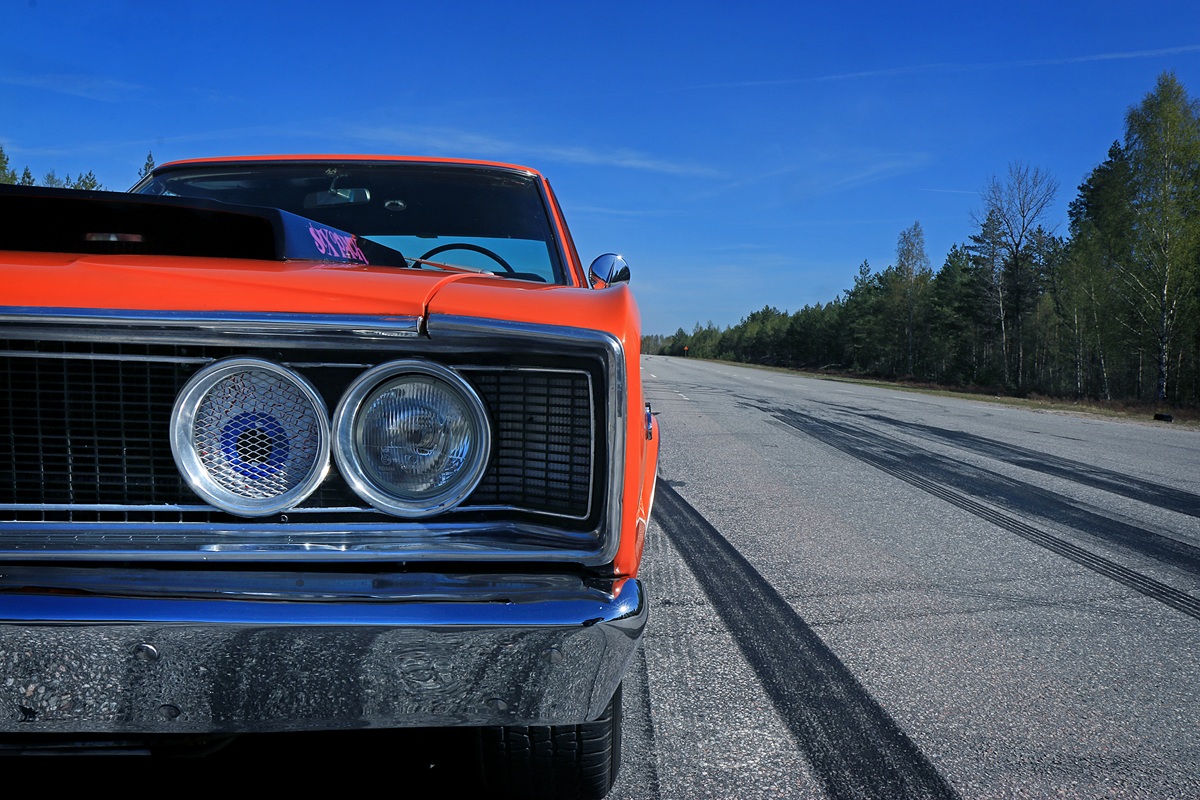
I’ve got a soft spot for Chrysler’s 1965-67 B-body cars. That’s why, over the years as a car writer, I’ve done no fewer than three ’65 Dodge Coronets and two ’66s. This one becomes the third ’66 – and it keeps going, especially if I count all the features on Satellites and Chargers from the same era.
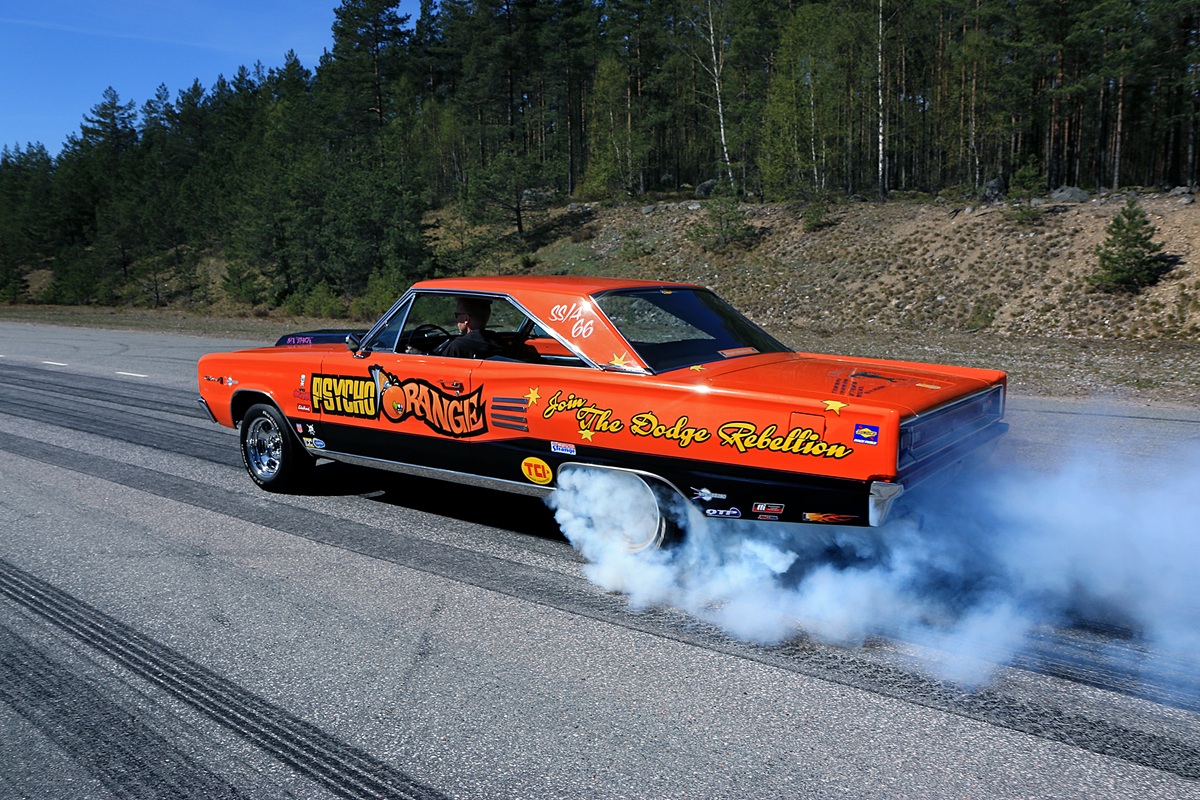
These cars are satisfyingly boxy, pleasantly old-man-ish and in factory trim they’re nicely understated. At the same time, you can fill them with rock ’n roll and whip them into anything from Super Stock-style racers to NASCAR tributes. A Corvette or a ’Cuda is what it is – an unapologetic car with ONE mission. A Coronet can take on any character, shape and color the builder wants.
So where did Hokkanen’s Coronet go? Some village in inland Norrland? Germany? Shipped back to its homeland? Thankfully, no. The buyer is Jouni “Jonta” Hänninen – and he lives straight across the road from Hokkanen in Eskilstuna. The fact that Jonta is also a good friend of Hokkanen’s doesn’t hurt, either.
I exhale when the news reaches me. Lucky as hell – that’s what you need sometimes.
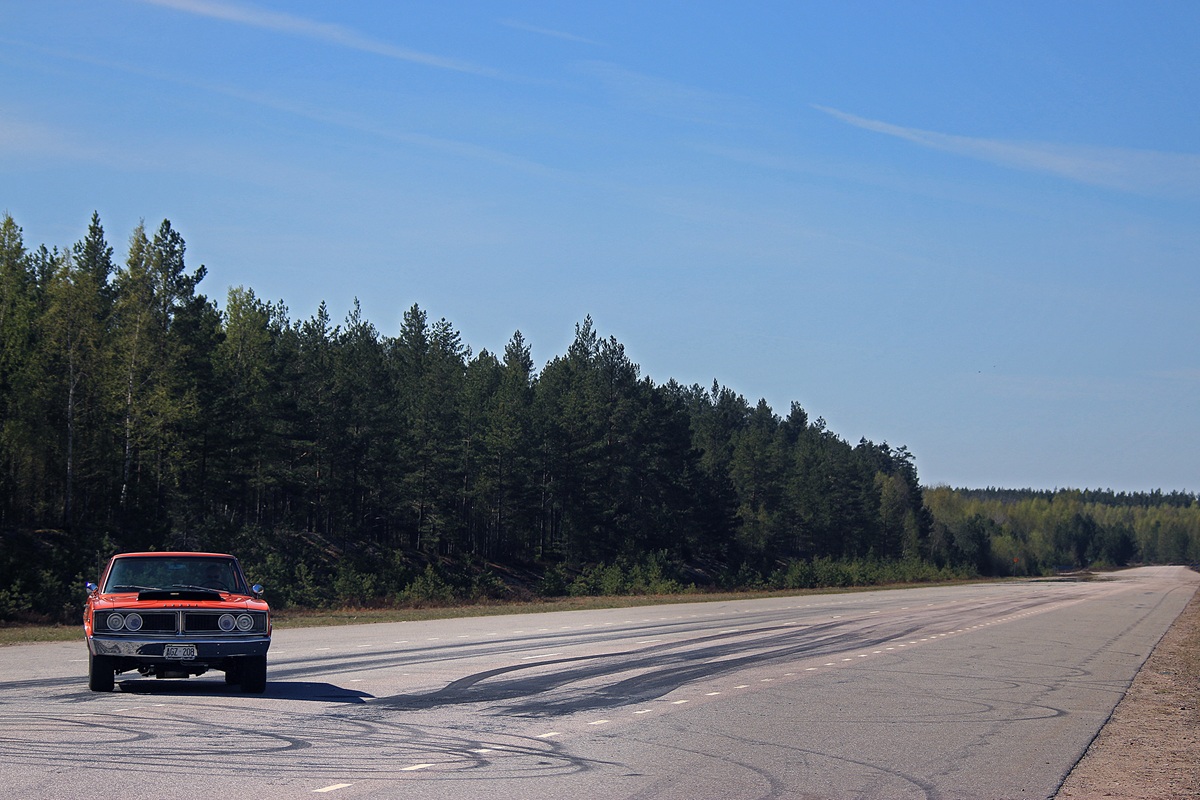
In fact, two days after I talk to Hokkanen about the Coronet, I head to Tampere, Finland, to check out the Hot Rod & Rock Show. Guess who shows up at the ferry? Psycho Orange and Jonta. We swap numbers, and two weeks later I’m photographing the Coronet in Eskilstuna.
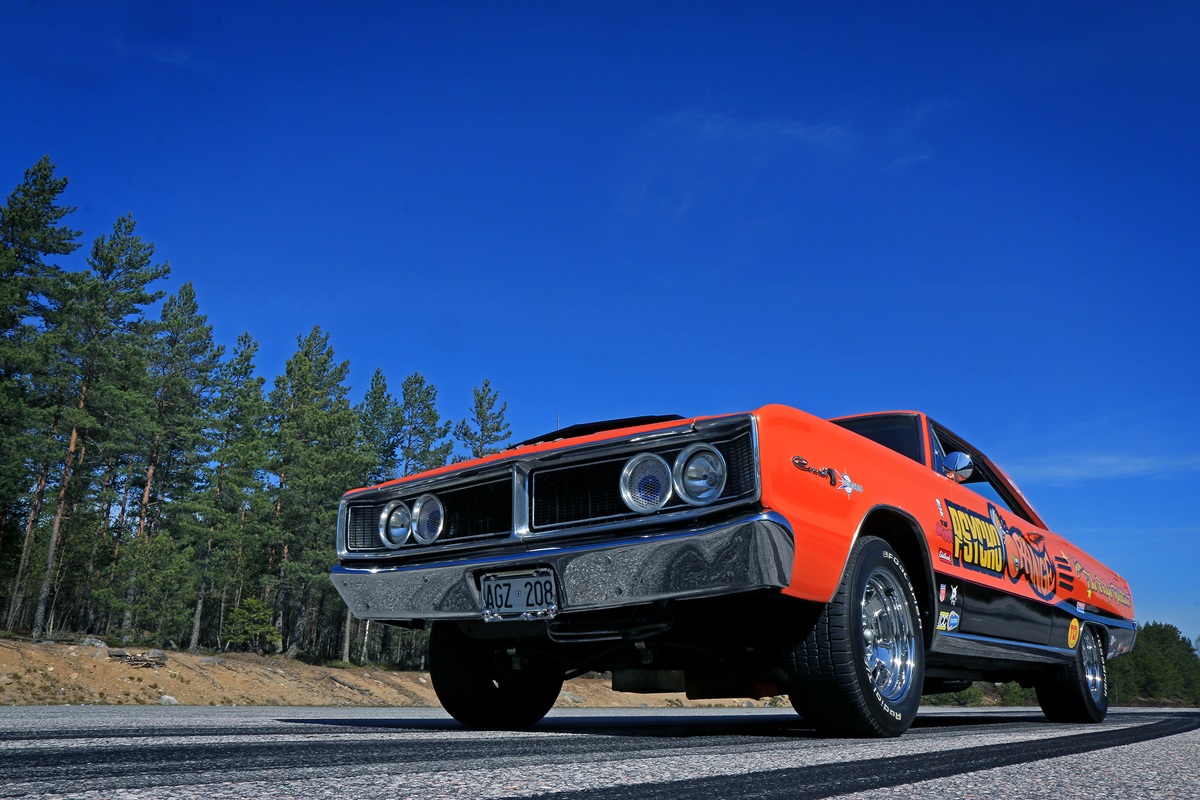
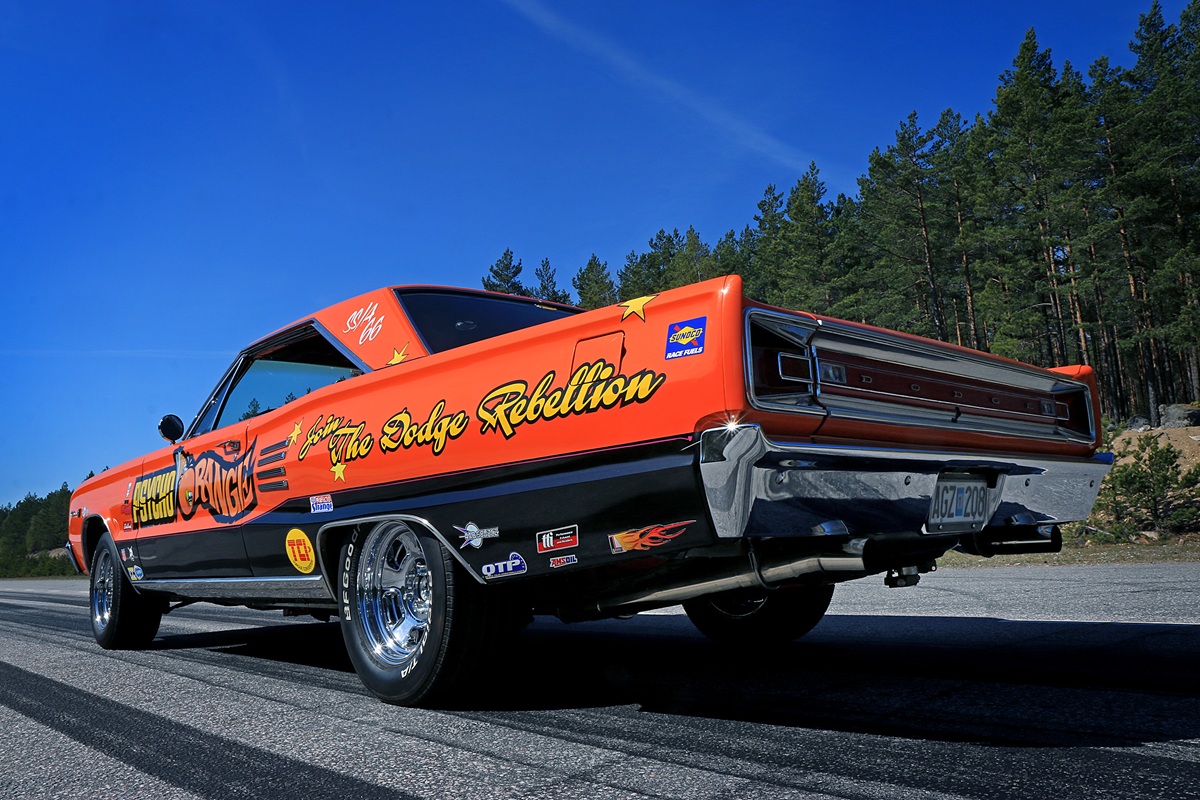
Once the photos are organized and delivered, it’s time to call the builder, Hokkanen, to learn more about the Dodge. He says the car came to Sweden in 2007, imported by Kent Jönsson at Dreamcars in Ystad. Other than the Dodge almost certainly having run around California before landing in Skåne – the blue plates give it away – there isn’t much background history.
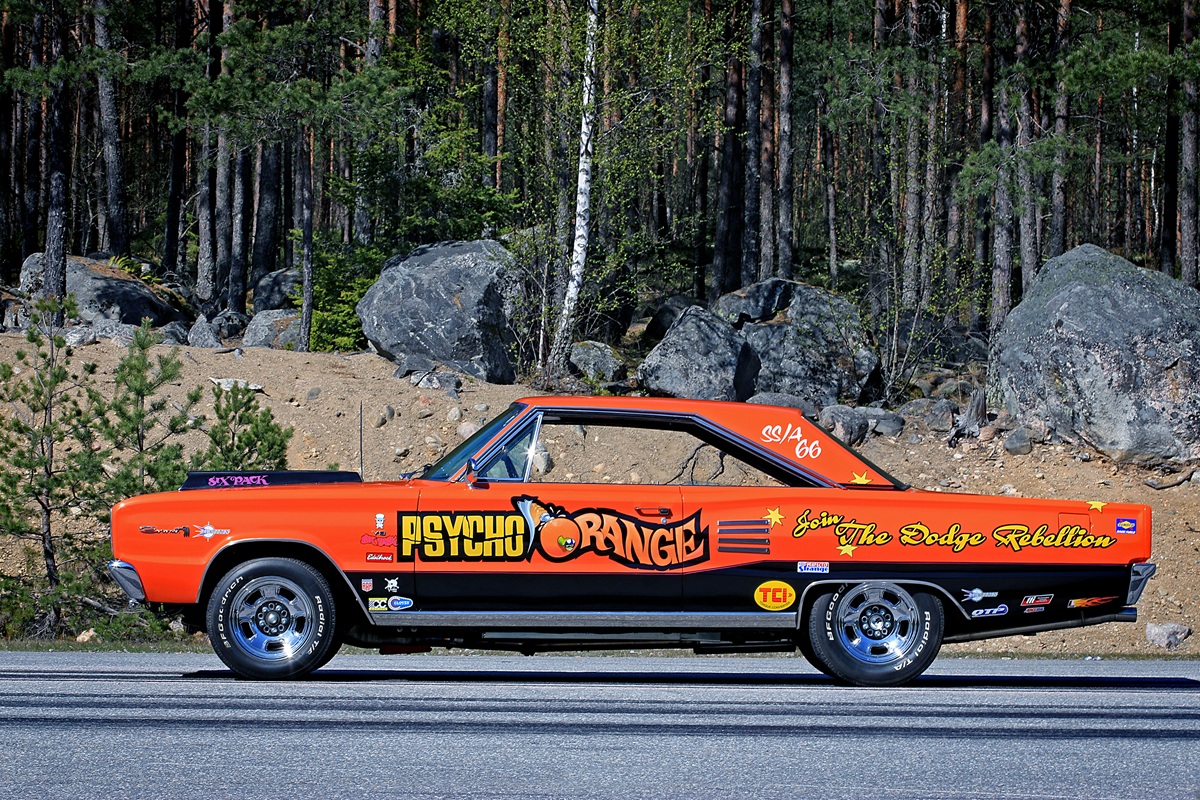
“What I do know is that the Coronet was originally painted Pale Yellow, a fairly washed-out shade. Somewhere along the line, it was repainted Omaha Orange. It’s a real 383 car, but unfortunately it was registered as a 318, which is what the paperwork still says today. It came with power steering, and it had drums all around,” Hokkanen says.
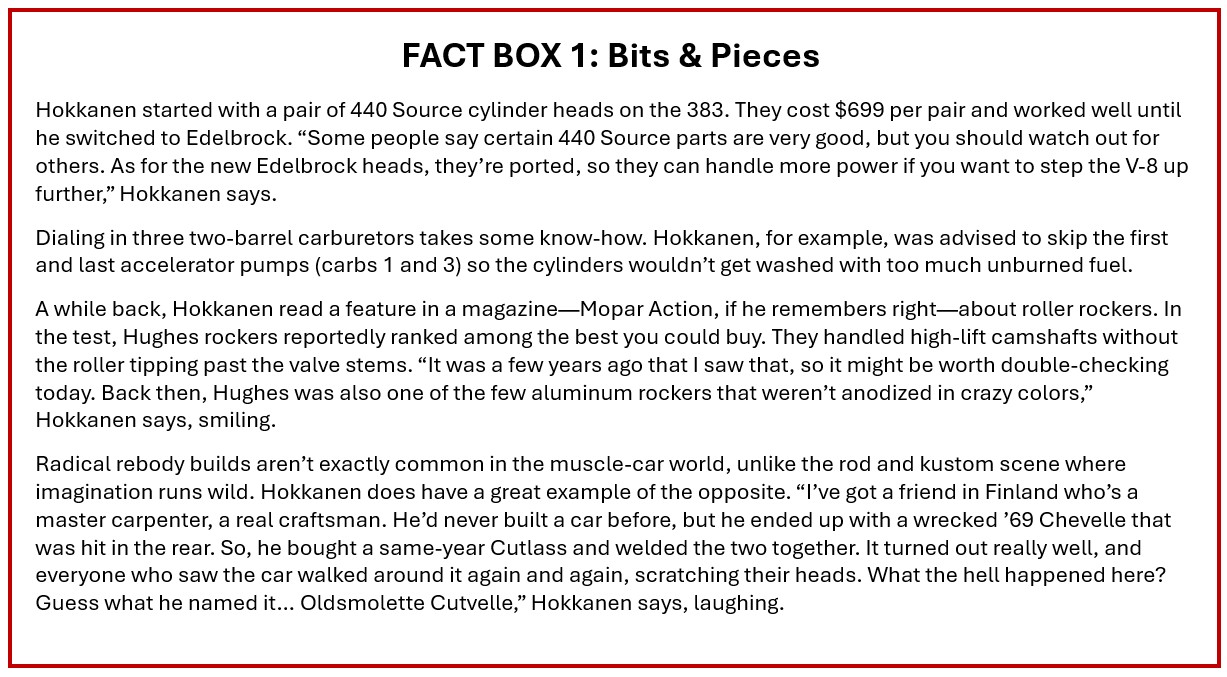
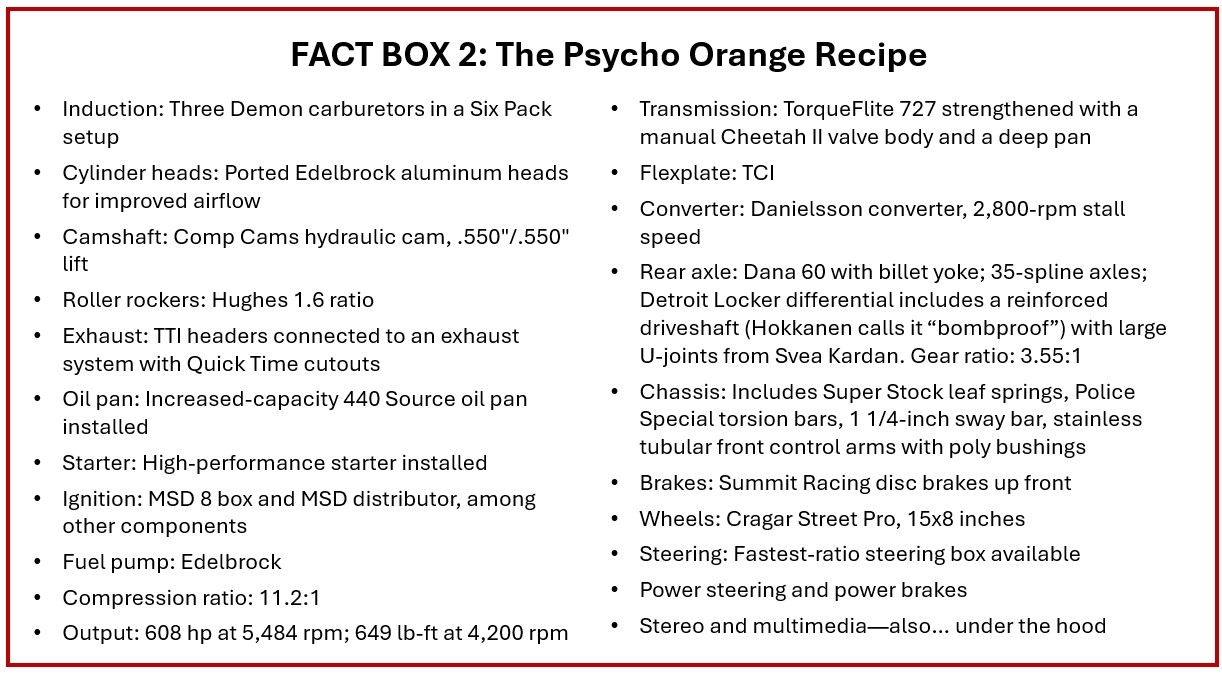
Those drum brakes got attention early on, and Hokkanen picked up Summit Racing disc brakes for the front – something he initially regretted a bit.
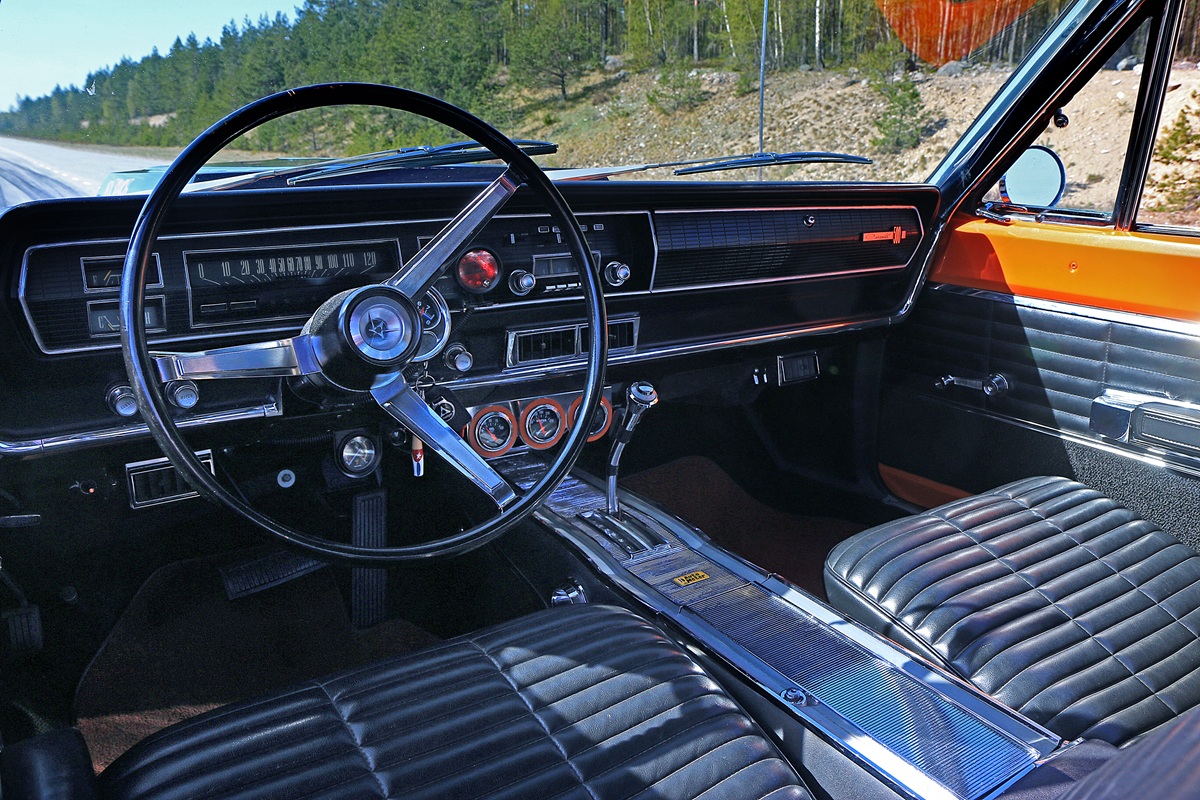
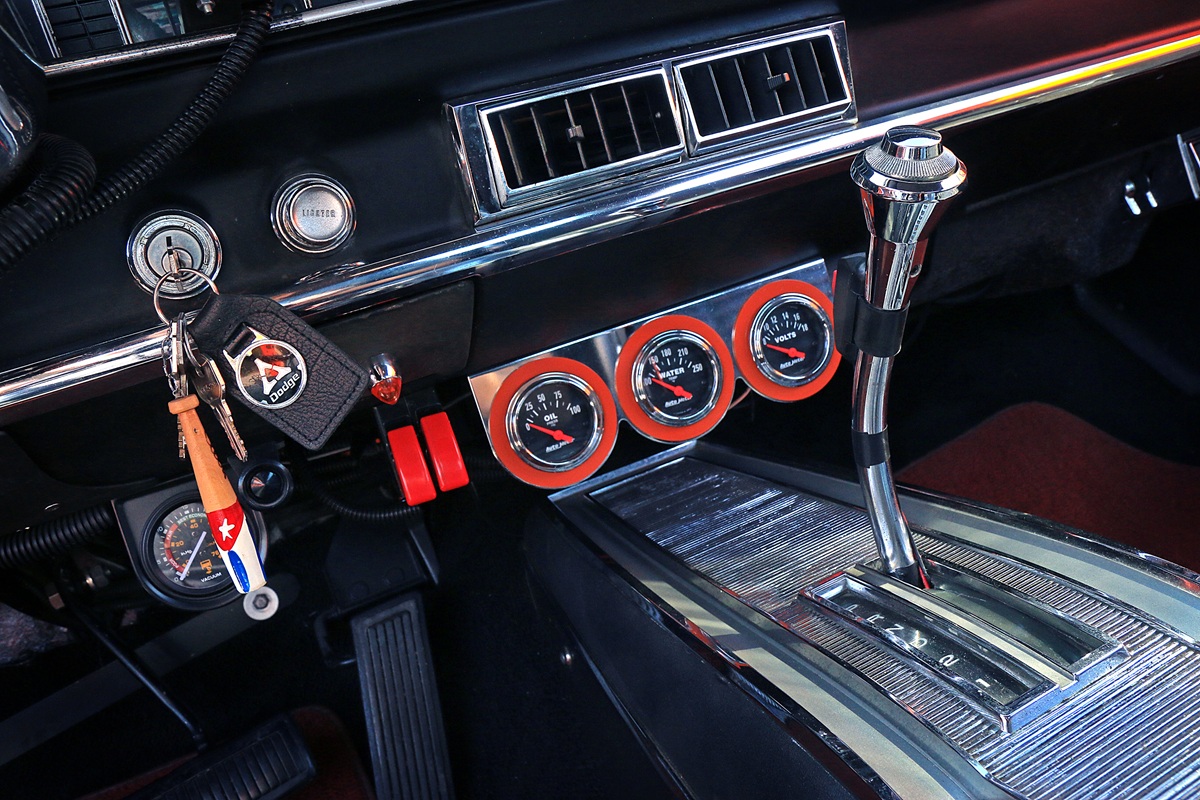
“I don’t know what the current owner Jonta thinks of the discs – he’s probably sorted them out. Personally, I don’t think it was a good swap. They have this ABS-like feel, and I couldn’t get the front brakes to lock up properly. I probably should’ve kept the drums,” Hokkanen says with a smile.
After a serious slide in spring gravel a few years back, Hokkanen realized it wasn’t only brakes that mattered for staying on the asphalt. With a slim but huge factory steering wheel and a tired steering box with slow ratio… it took a lot of steering input.
“I found a standard steering box – ’70s Mopar® style – on RockAuto. I think it was about $300. It nearly cut the lock-to-lock turns in half,” Hokkanen says, pleased.
He’s also happy with PG Classic Restoration Parts in Canada, which reproduces a lot of oddball parts for the 1966 Coronet 500 – very useful, since the model doesn’t share everything with earlier or later years.
“The parts fit really well. I’ve ordered things like the front fender emblems from them. Really nice pieces, and they’ve often shipped them as samples. Yeah, I love that company and I’m happy to give them a shout-out,” Hokkanen says with a grin.
Otherwise, he hasn’t had to do all that much – aside from some rust holes in the rear quarters and doors. Most of the rest was nice. The bumpers were re-chromed in the U.S. The interior was generally well-preserved and clean.
“Yeah, it was a solid original car when I bought the Coronet. Sure, it smoked a bit, so if I’d kept it stock, a basic ‘cruiser rebuild’ of the V8 would’ve done the trick,” Hokkanen says.
But the project grew bigger than that, he adds – smiling again.
“It was nice not having to dump a ton of money into the Dodge’s body and chassis, because the V8 cost an arm and a leg. Well – more like the underwear, too. There wasn’t unlimited money left for the rest of the car,” Hokkanen says.
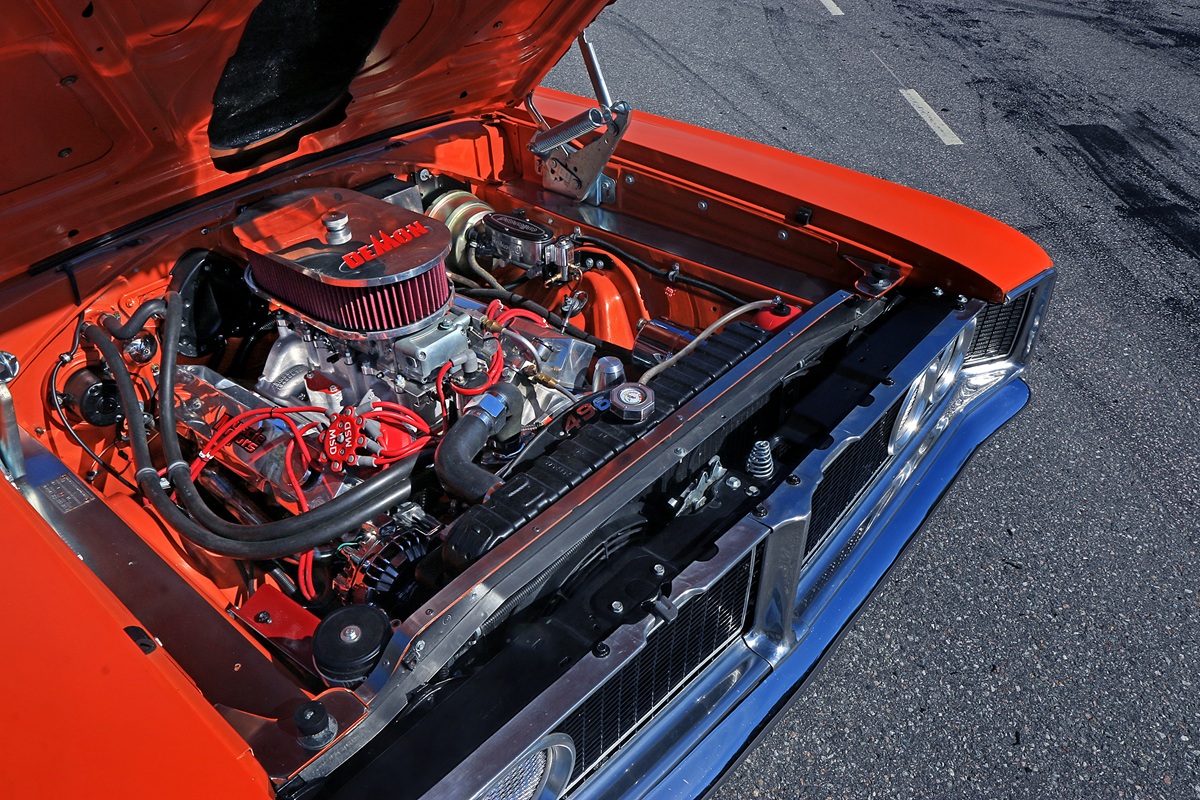
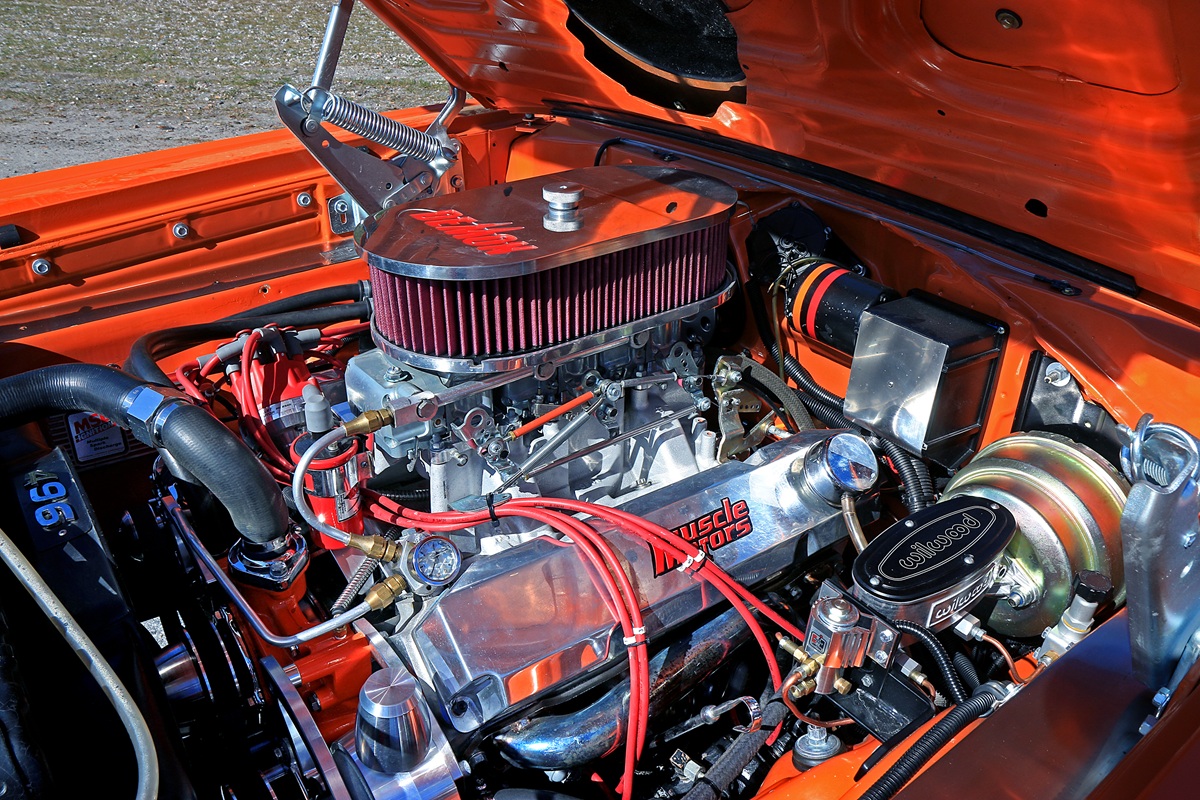
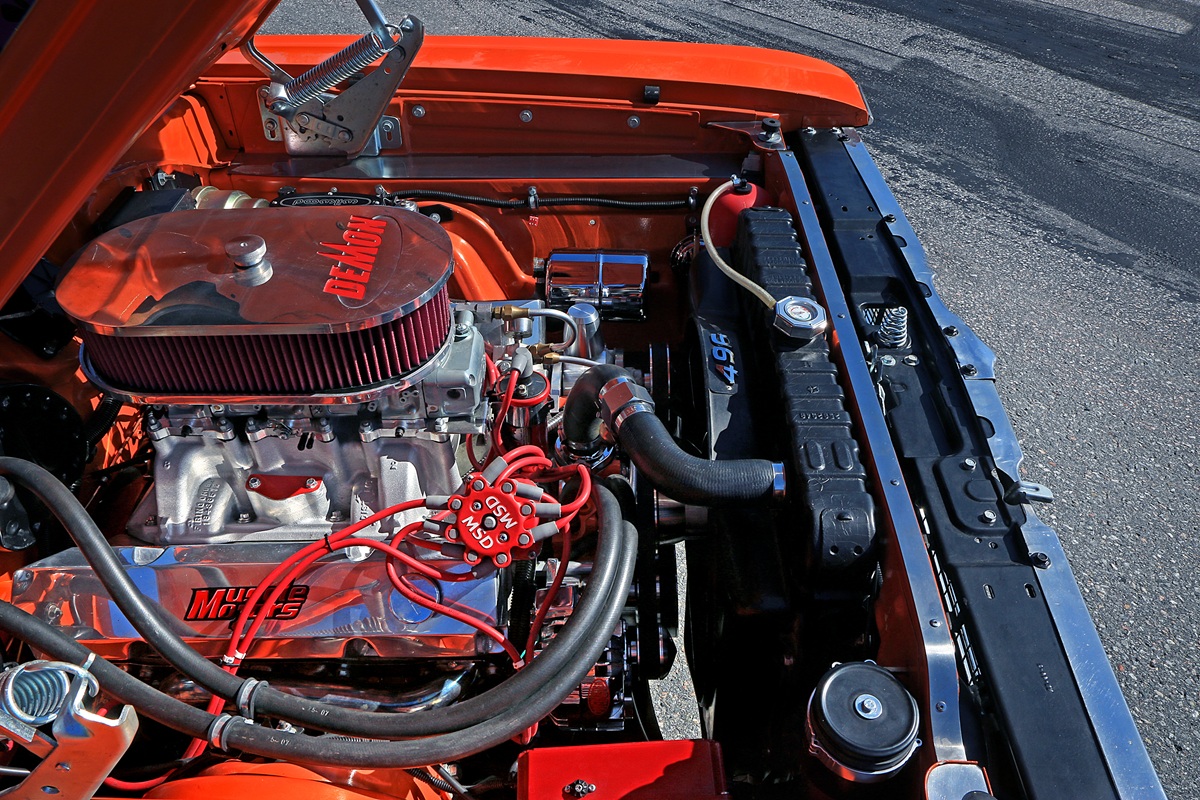
The engine – a 383 – was sourced in its original form from “Krippa” at Rod & Custom in Bålsta. The V8 had been ordered by a guy who never showed up to pay when the job was done. Krippa eventually got fed up, and Hokkanen ended up taking the engine home instead.
Hokkanen got help with the engine build and dyno work from Håkan Nordström in Falun, competent owner of a certain not-exactly-unknown 1971 HEMI® ’Cuda.
To get the most out of the stroked 383 – now 496 cubic inches thanks to a 440 Source stroker kit, Håkan recommended a stout Dominator carburetor.
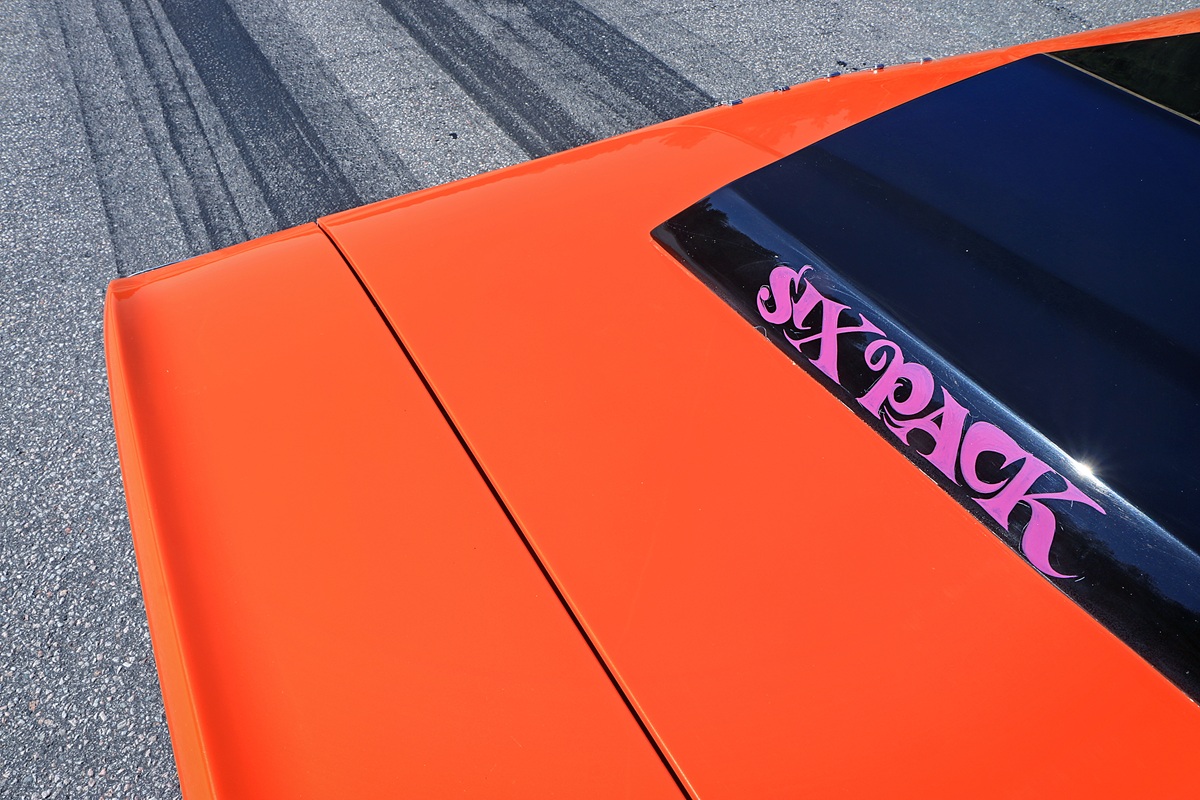
Hokkanen, however, had been eyeing a Six Pack for the sheer cool factor, and that’s the route he took. A few horses were sacrificed on the altar of style – but a bit over 608 horsepower at 5,484 rpm and 649 lb-ft at 4,200 rpm is nothing to be ashamed of.
One part of the drivetrain that did embarrass itself was the original transmission.
“It was a 1966 automatic, and that was the year the input shaft only had 19 splines. Not exactly a super-strong solution, and it also limits you because there are fewer converters available,” Hokkanen says.
So it was updated to a stronger, newer 727, along with a converter from Danielssons on Ekerö, custom-matched to the engine’s character.
Speaking of the transmission: the headers – TTI pieces – run very tight to the automatic. One of the few header sets that fit at all, Hokkanen says. They’re pricey, but they fit – and they work.
Hokkanen says people love to accuse Mopar engines of running hot all the time. There’s a reason for that.
“Mopar generally had very efficient water pumps. But a lot of people rarely – or never – change the coolant, and after a while, you get problems because the pumps push all the junk to the back and down into the engine block. You need ultrasonic cleaning or a ton of caustic solution to get rid of those deposits. A proper cleaning so it’s truly clean. If you don’t do that, then yeah, a 50-year-old engine can give you problems,” Hokkanen says.
So why a 1966 Dodge Coronet – what does Hokkanen like so much?
“If I’m being honest, this year is a milestone in the design evolution, and it’s the first year with that Coca-Cola-bottle shape. The ’65s were dead straight. And I like the ’66 front end – ’67 is too full-size for me. I should add that I’m an omnivore, I’ll eat everything between sausage and salad. I like cars to be a bit odd, but maybe not AMC Pacer-odd. When everyone talked Mustang, I bought a Cougar. But above all, it has to be cars with potential. Mopar is a bit more rock ’n roll than many other brands. If you compare my Buick Riviera – ‘the gentleman’s muscle car,’ which I also own, to the Coronet, there are differences. Just look at the door panels. Mopar has a small strip of vinyl and the rest is sheet metal, while Buick often has padded door panels,” Hokkanen says.
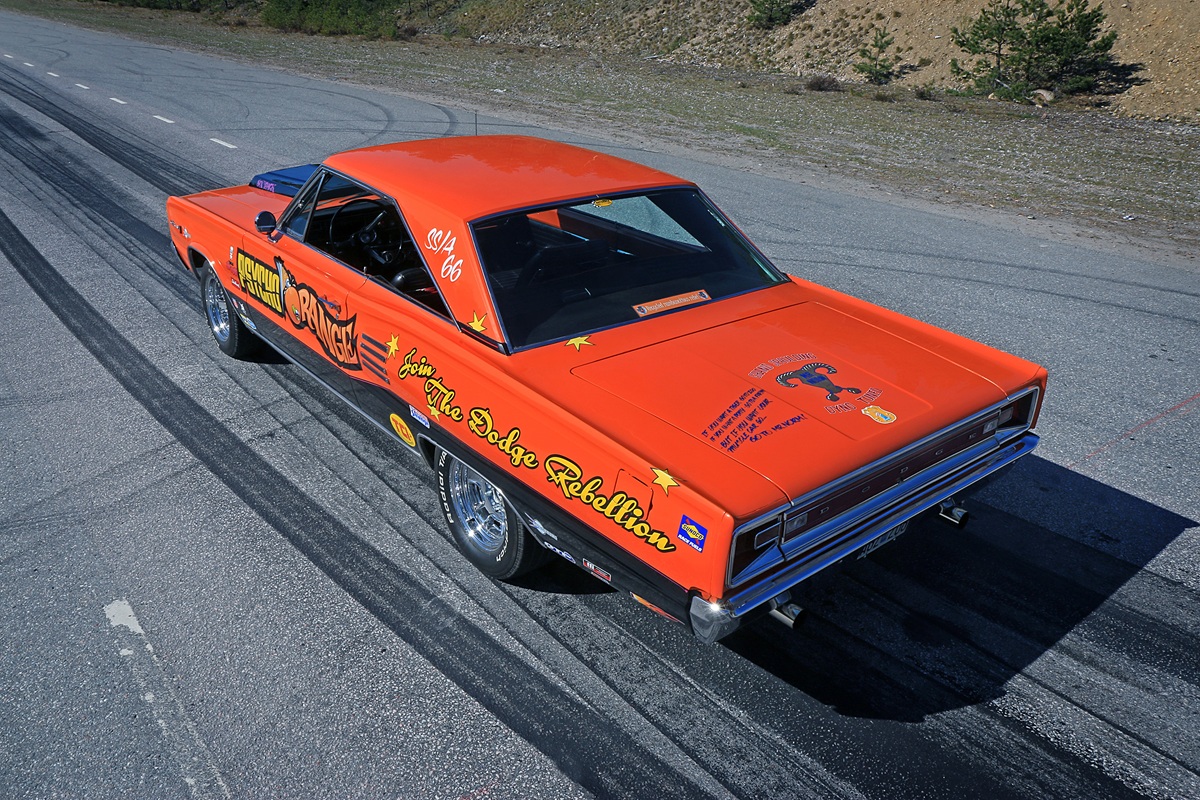
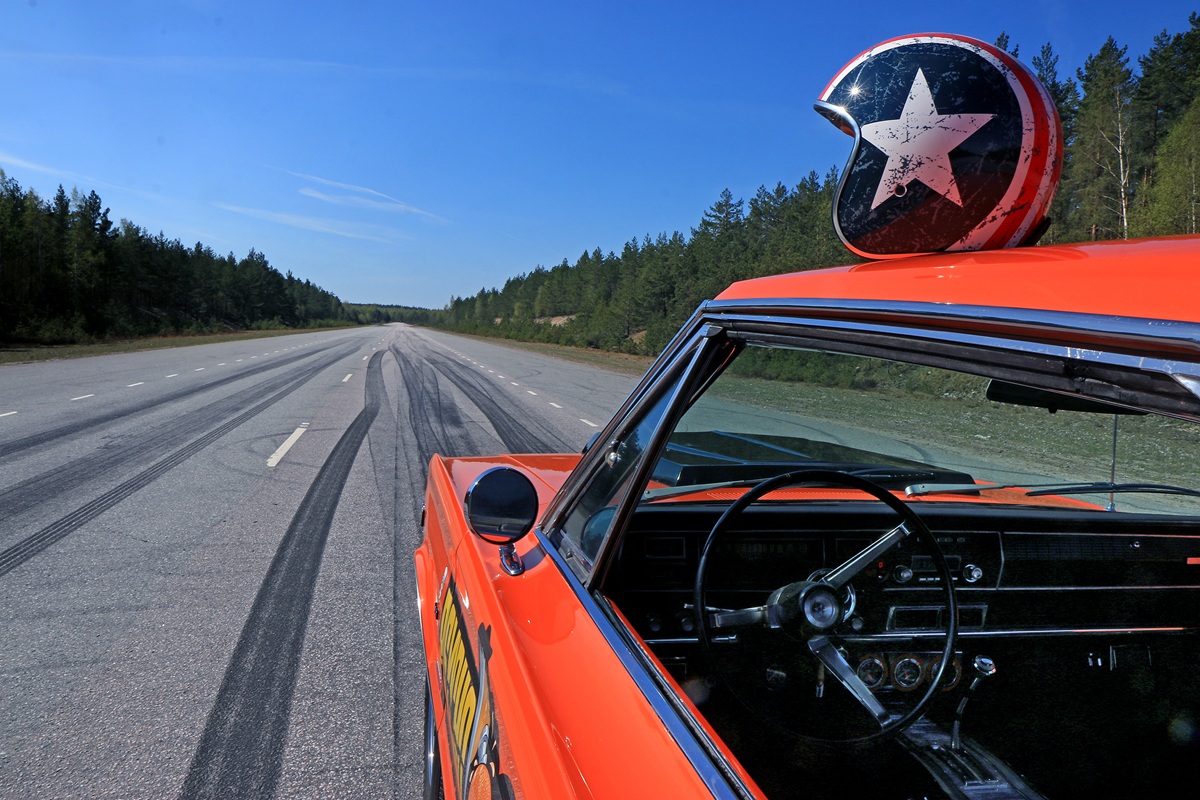
He spends a lot of time on the details – even if he doesn’t always do every bit of hands-on work himself. Psycho Orange proves that every day of the week: countless small, self-invented touches that can make you lose your way just looking at them.

And that leads to two things Hokkanen really can’t stand – details, again. Maybe because those choices signal a lack of imagination.
“Ha-ha. You could call it a fixation. But completely raw, unpainted wheelhouses, and that accordion hose between radiator and engine, they just look terrible,” Hokkanen says when I visit him in Eskilstuna.
A bit later, we walk around Hokkanen’s garden, a place filled with a lot of… well, “installations,” I guess. Artworks is another good word. A GMC pickup, for example, sits like a monument in front of the house – and next to it, a cactus.
A cactus that has no problem with a proper Swedish winter – because it’s made of sheet metal. Roffe Wikström would be proud. A lot of things at Hokkanen’s place are made from sheet metal.
“It took 500 pop rivets for cactus spikes, and then my thumb started hurting. When I was going to continue, the cactus somehow ended up way down on ‘Priority List 1,000.’ Because there are always new things and ideas being added to the list,” Hokkanen says, laughing.
As you can tell, Hokkanen’s eye for details is as broad as his imagination. Yeah, he jokes, a few helpers to assist him in bringing everything to life wouldn’t hurt.
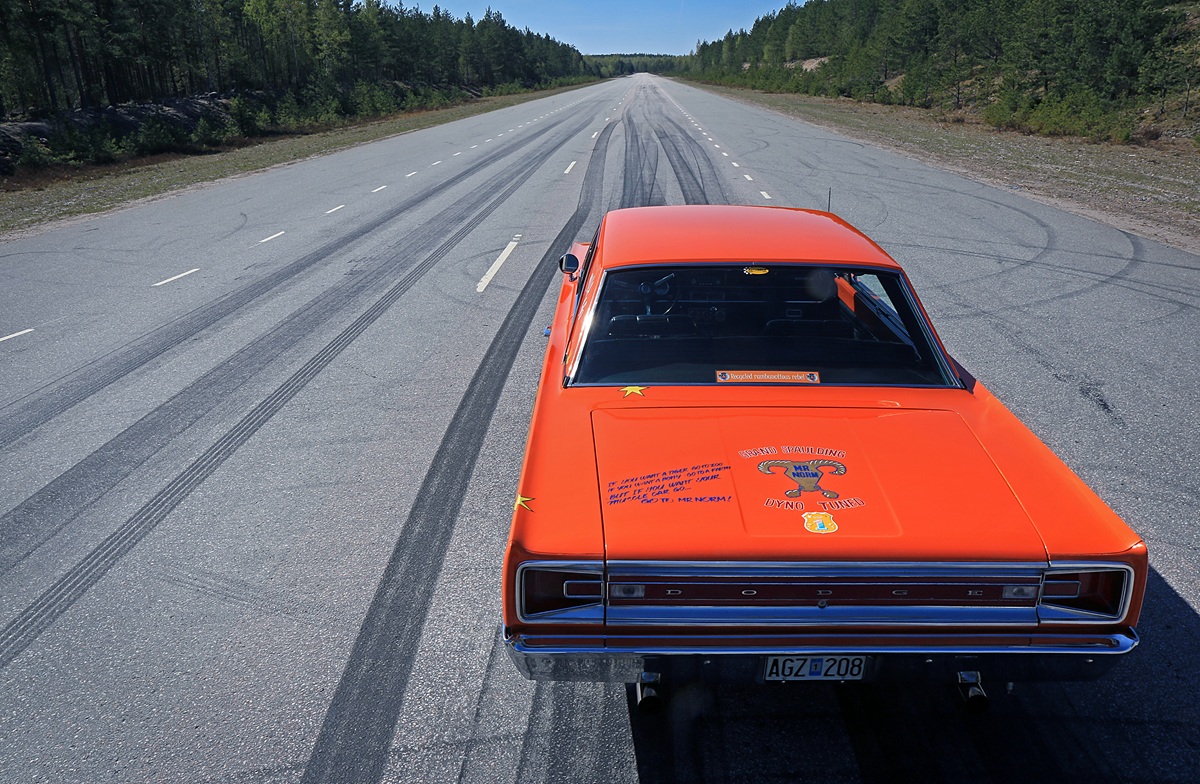
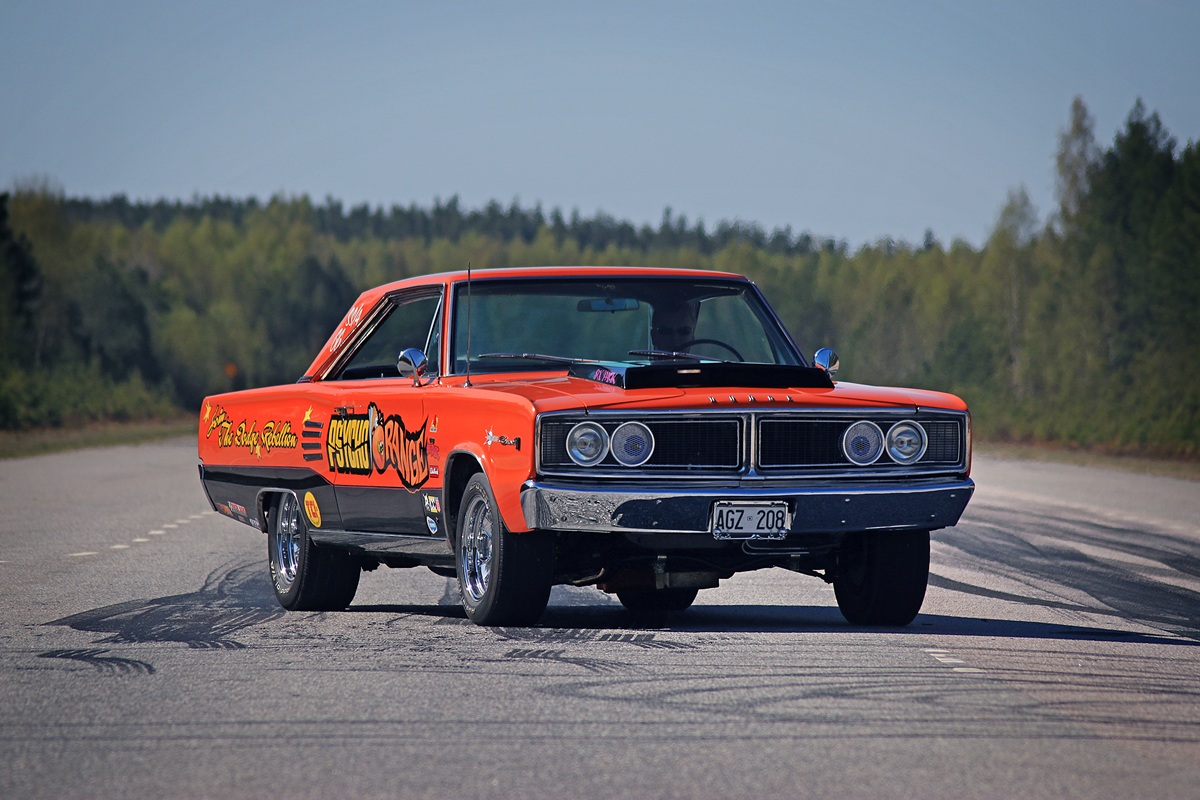
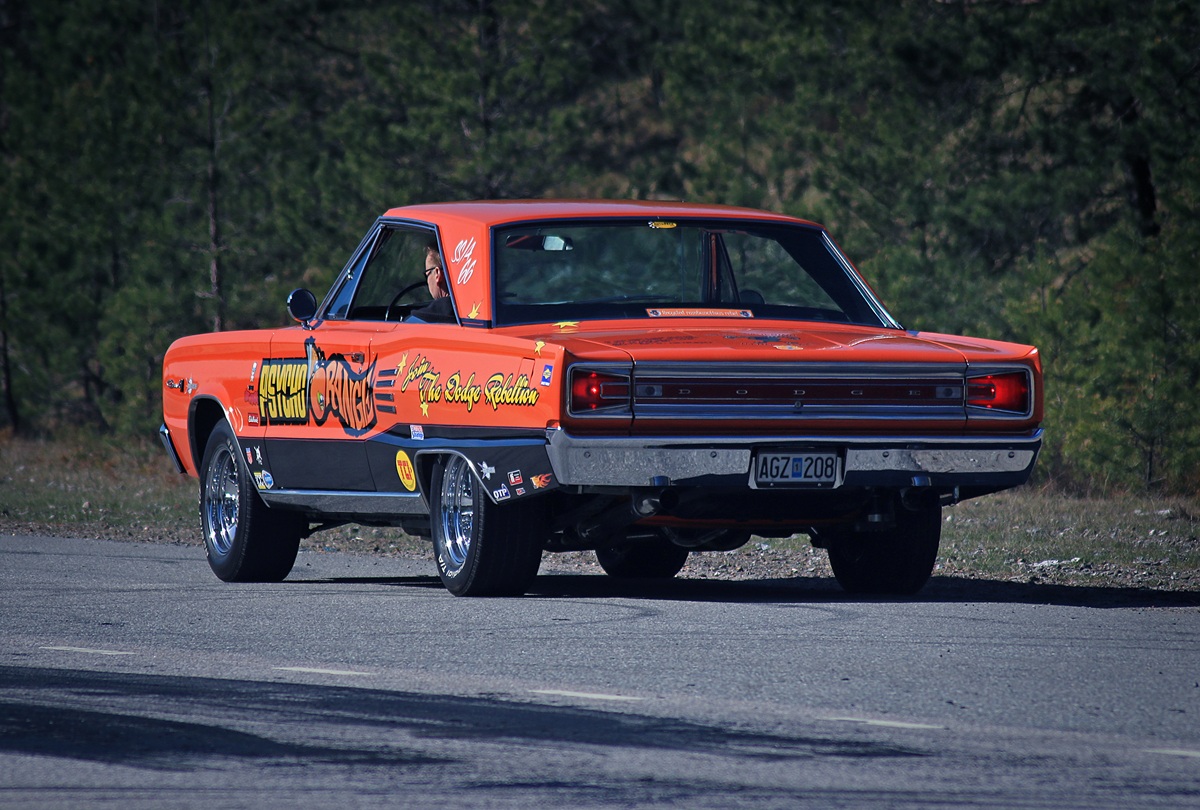
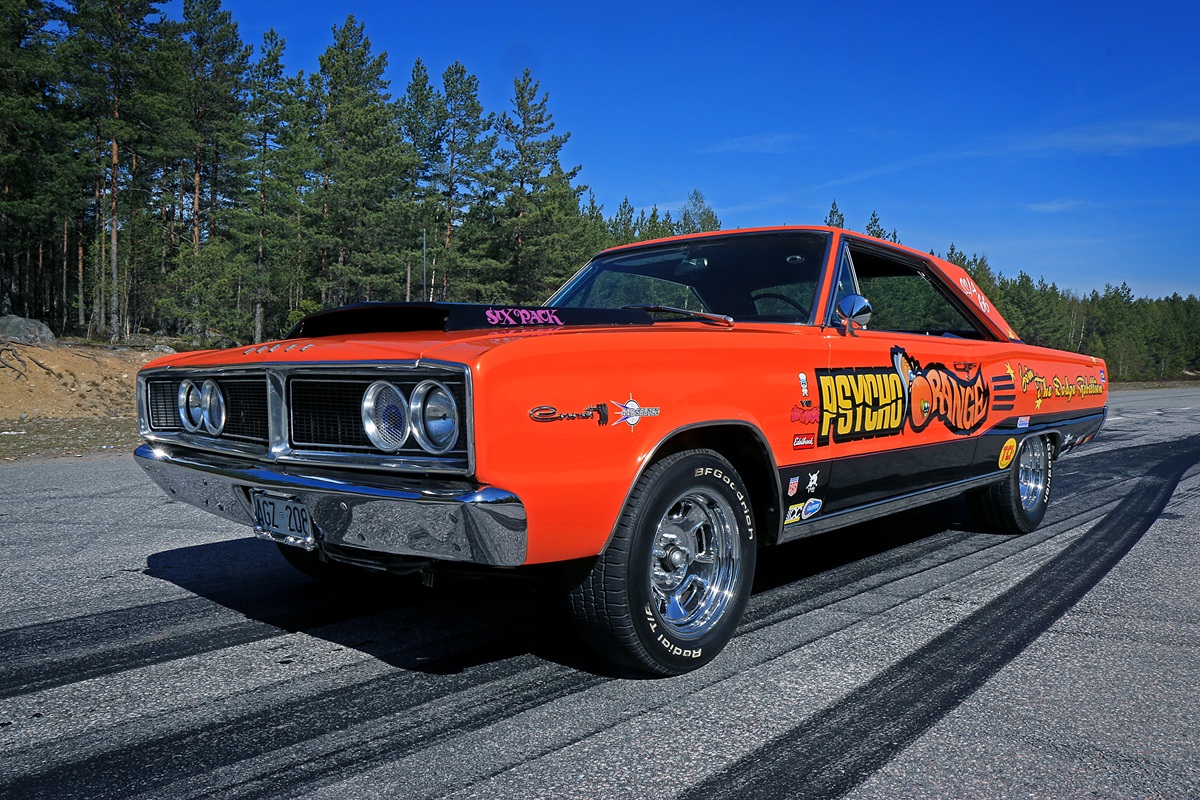
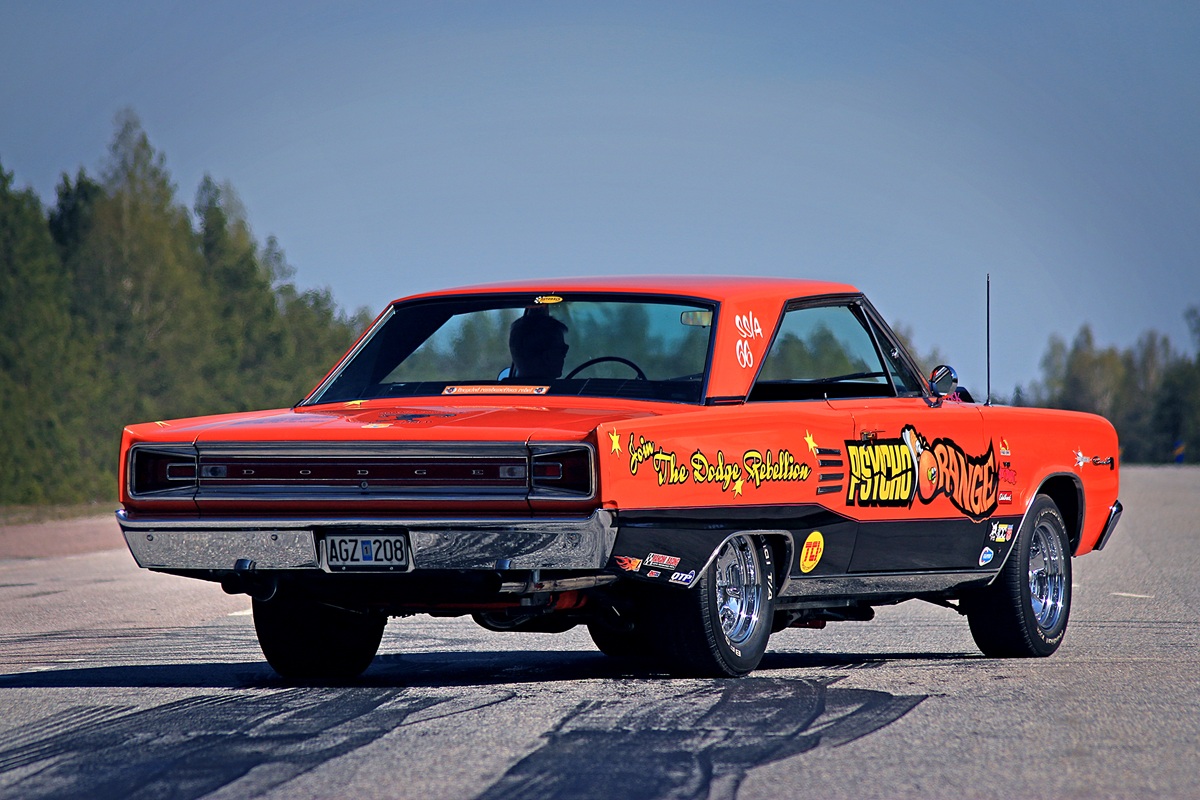
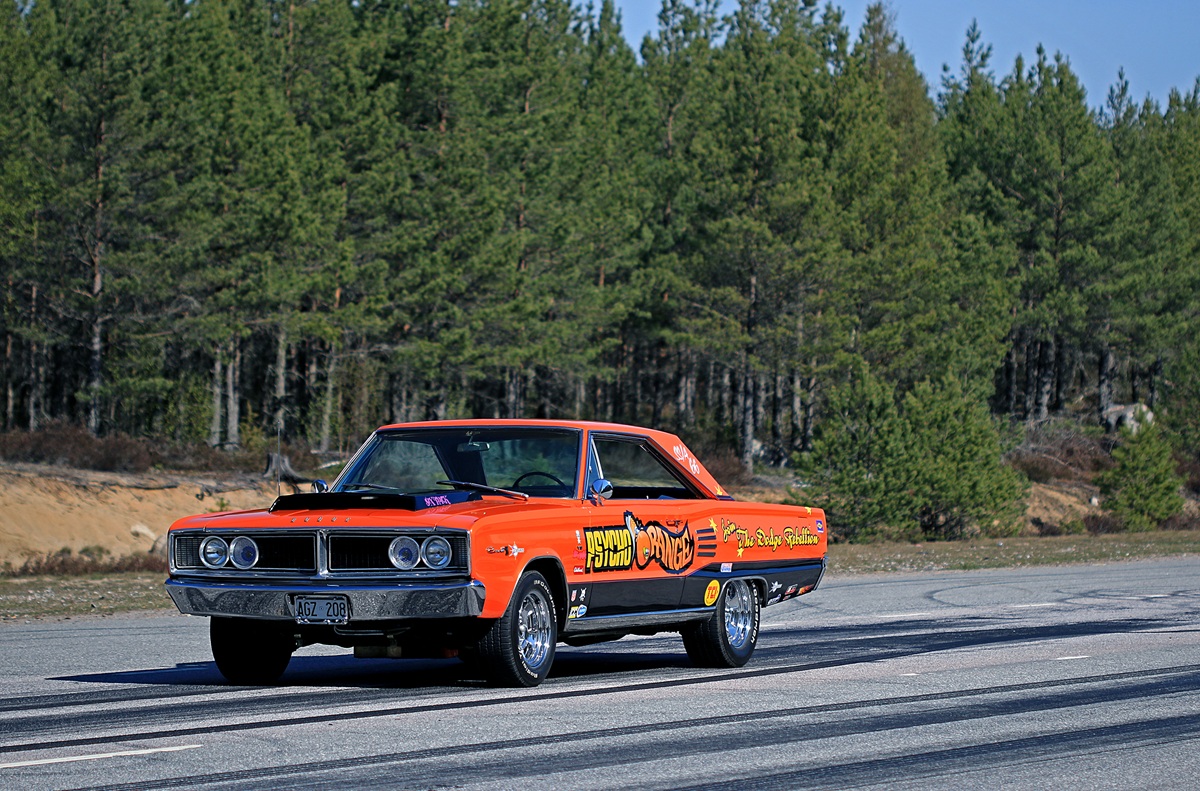
Then he gets serious – because I ask about the concept behind the Coronet build: Pekka “Wizzz” Mannermaa’s great paintings on the car, including the eyes where the headlights used to sit. The name Psycho Orange. And so on.
“The name partly came from the movie Psycho and the shower scene – hence the curtain. But instead of a woman, it became an orange. The car is orange, and orange means… well, you know. The knife got swapped for a camshaft, and a worm crawls out of the orange and…”
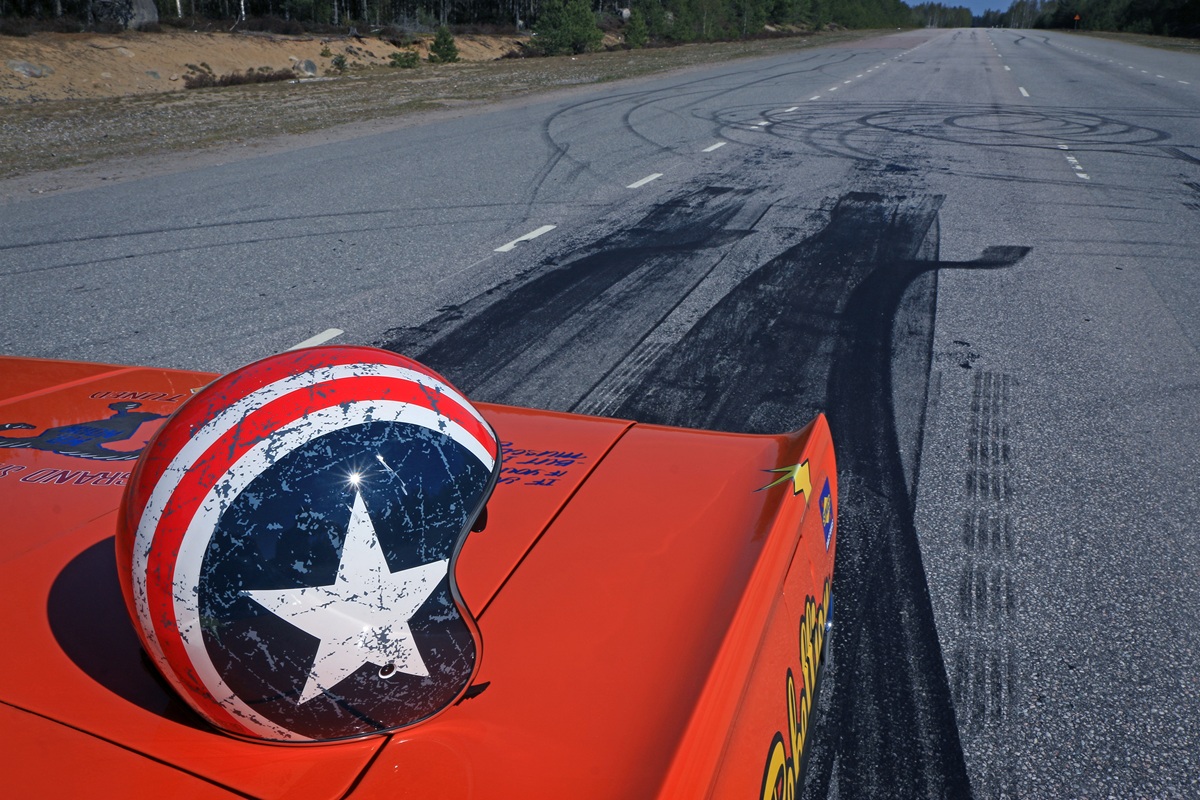
Right about here, I completely lose track in Hokkanen’s name explanation, so I ask him instead about the overall styling choice.
“I like mixing things up. More than anything, it’s a feeling I want the car to communicate, and every single detail doesn’t have to be 100% period-correct. It’s not like some people where even the oil in the engine and the air in the tires have to be from, say, 1955,” Hokkanen says, smiling.
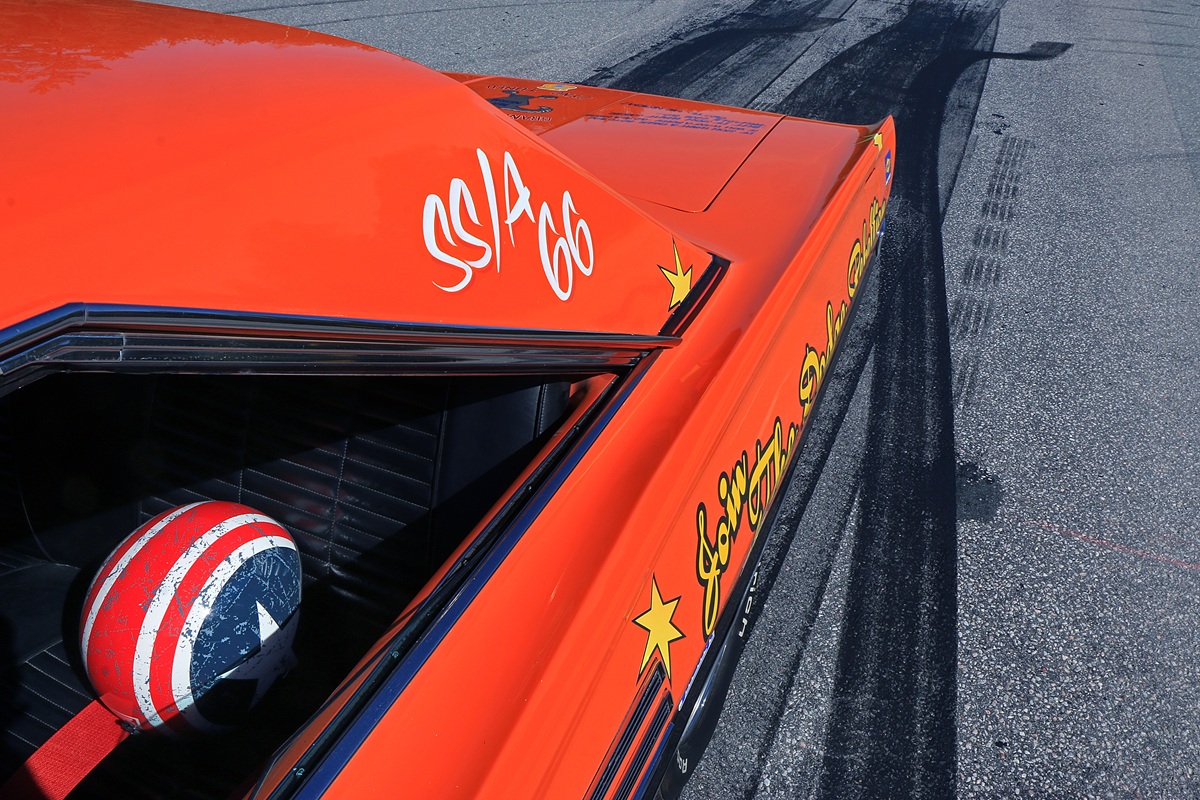
He adds that when he started the Coronet build, Sweden had plenty of decal-trimmed muscle cars – but not that many painted ones. That’s one reason Hokkanen prefers brushwork over stickers.
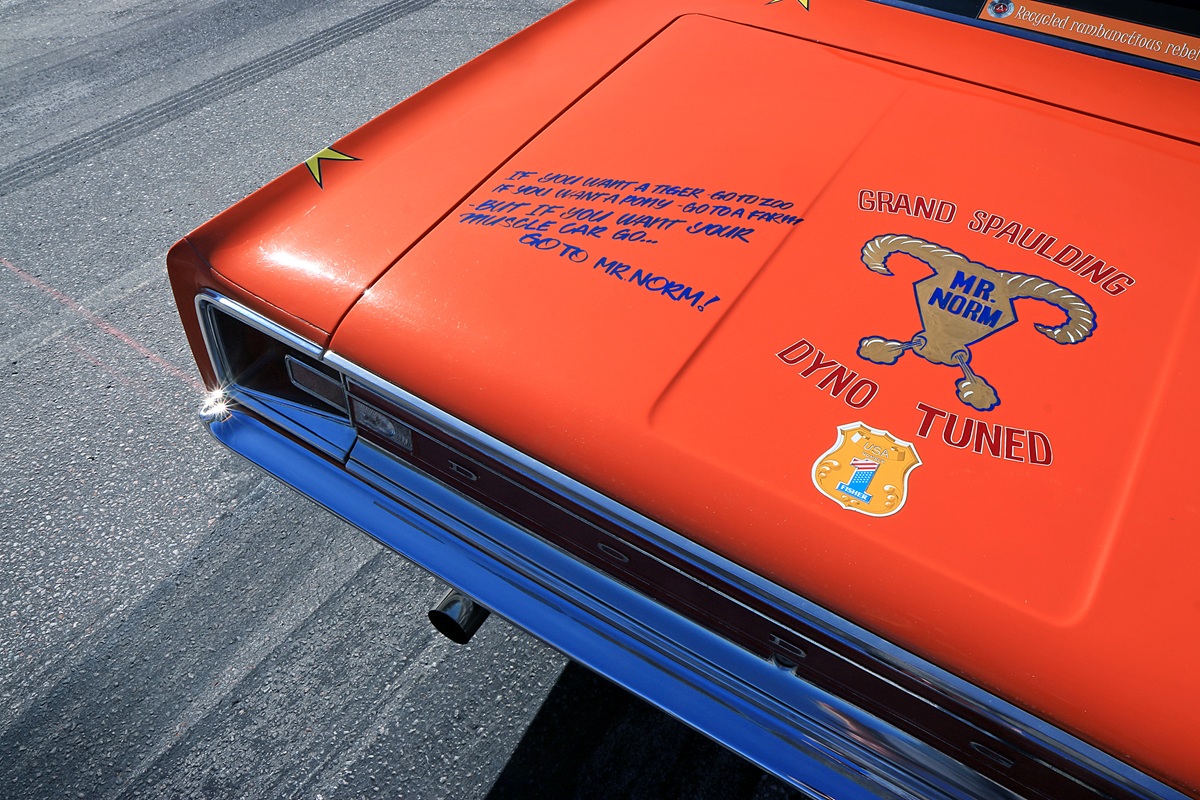
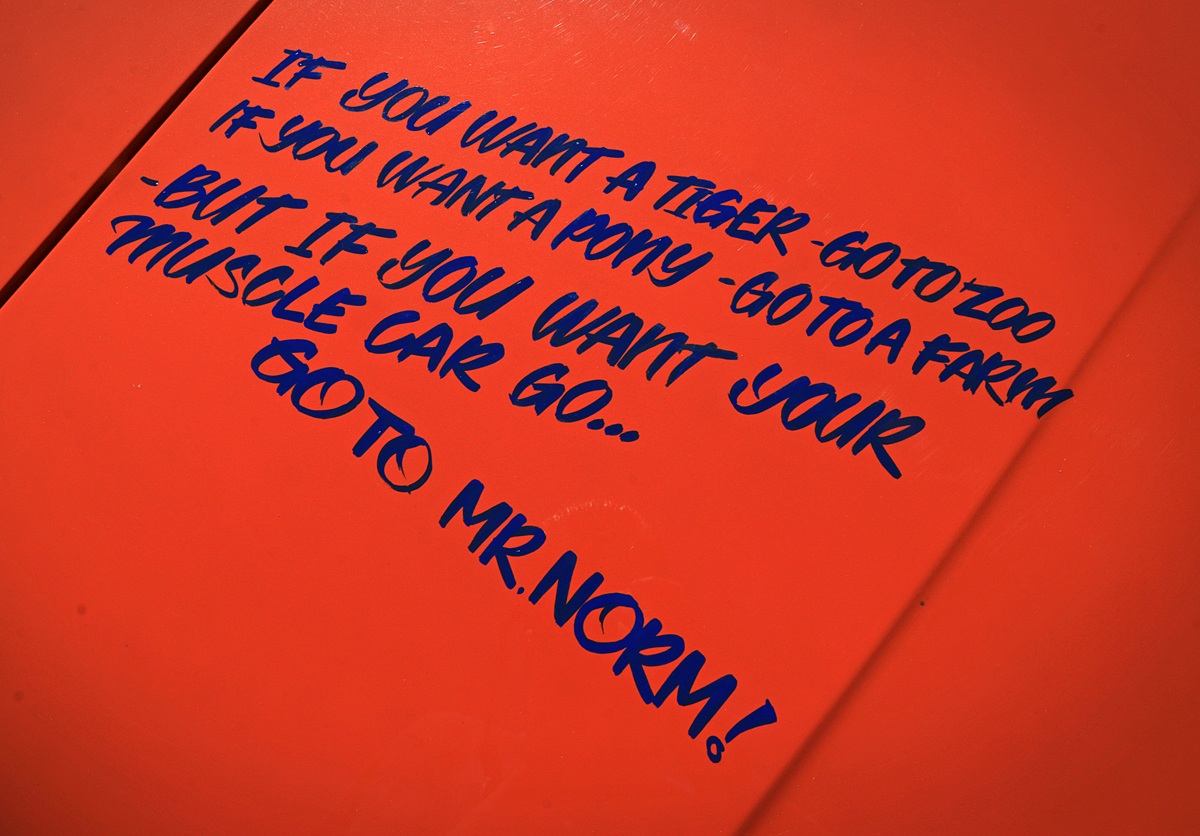
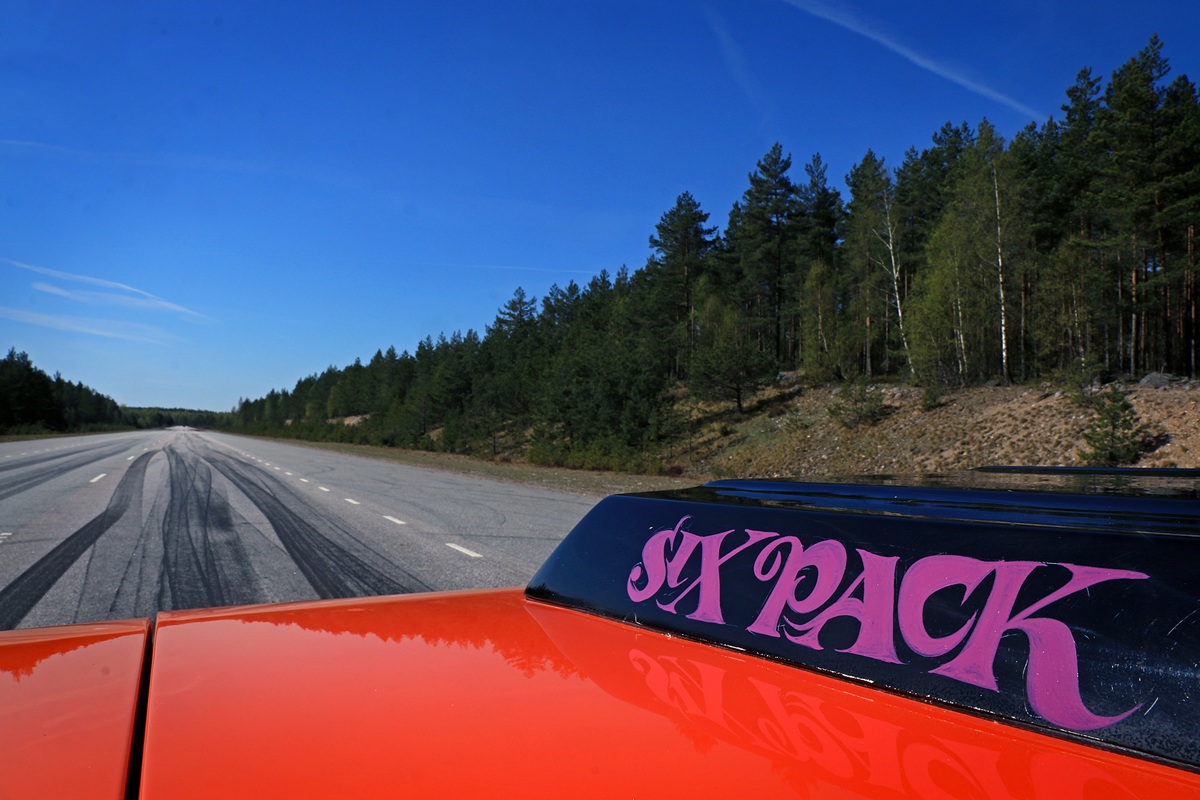
The Mr. Norm ad on the trunk is one example, along with “Psycho Orange” and “Six Pack.” Mr. Norm, by the way, was an established Dodge dealer at the time – a man who went all-in on performance Mopar vehicles.
“That’s actually a pretty interesting story. Mr. Norm started early with radio advertising, and because he had access to a powerful transmitter, you could hear his ads across several states. That helped him sell a lot of muscle cars,” Hokkanen says.
Lightly inspired by Mr. Norm’s success nearly 50 years ago, Hokkanen built himself a sweet Super Stock-style car – packed with correct details, but also with a few departures, like the Edelbrock aluminum cylinder heads.
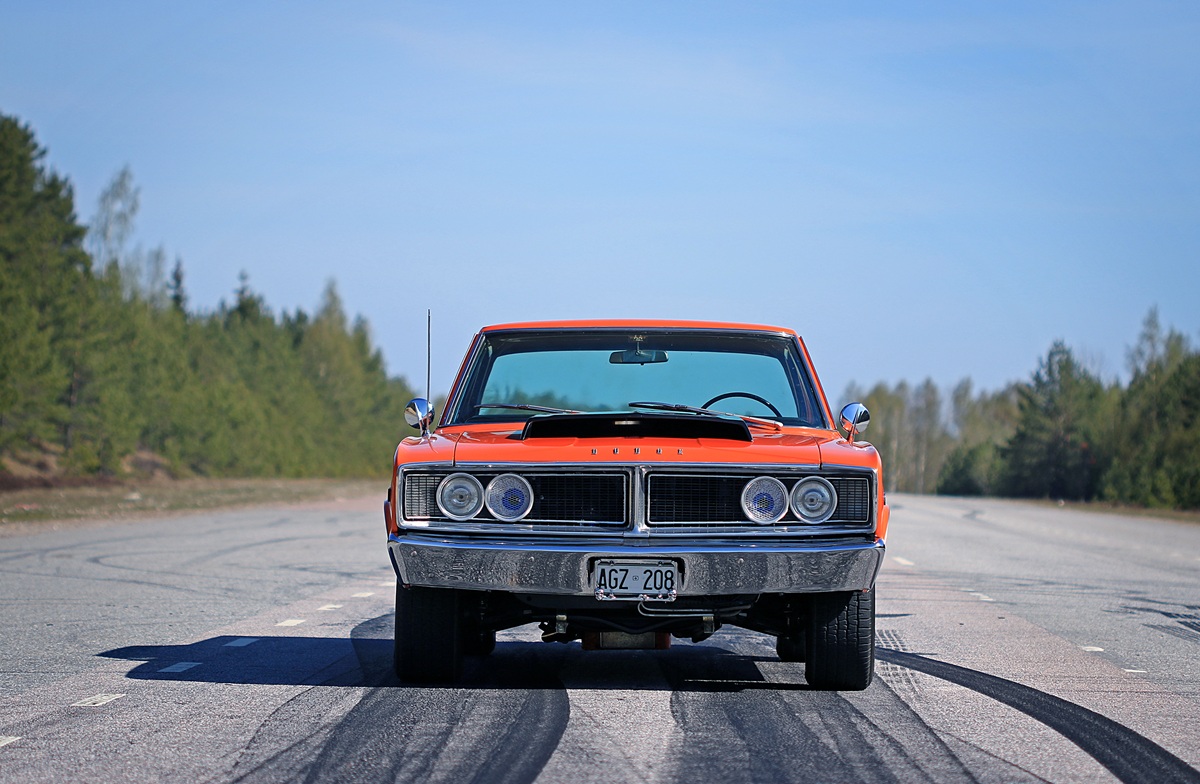
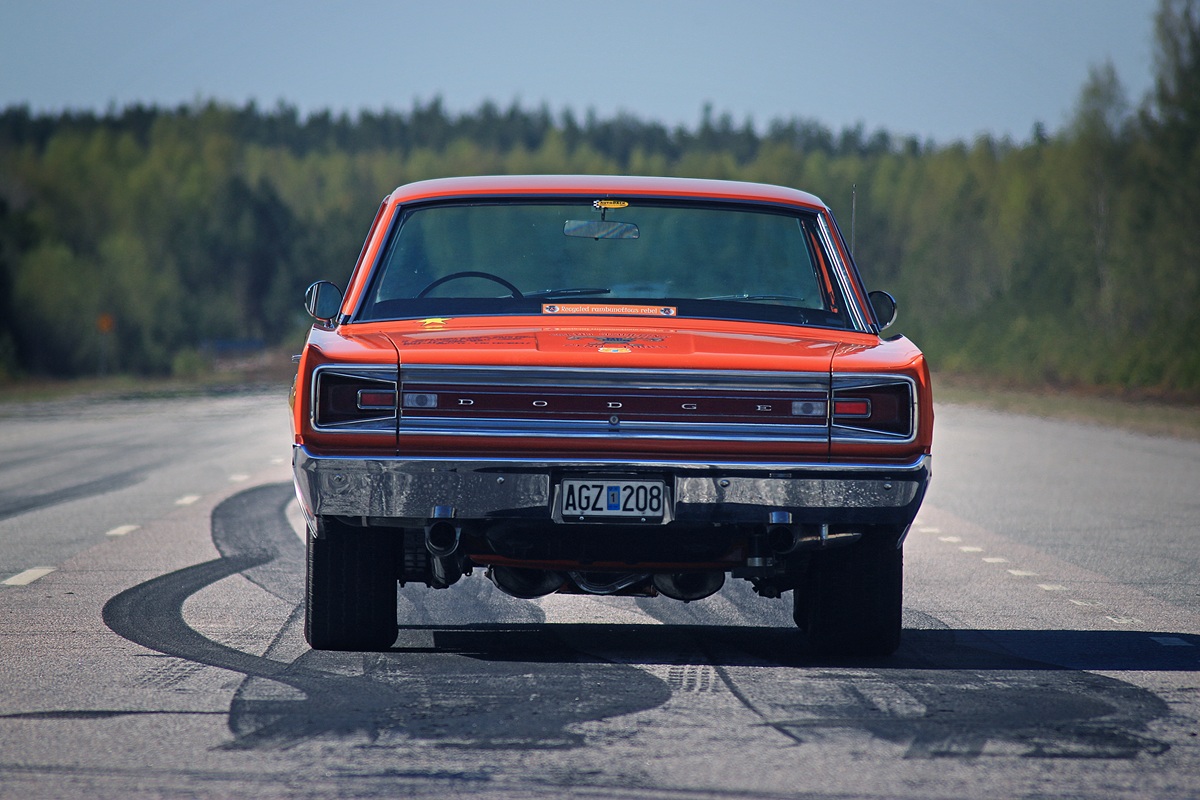
So – strip time? He built a Super Stock tribute, so it should run.
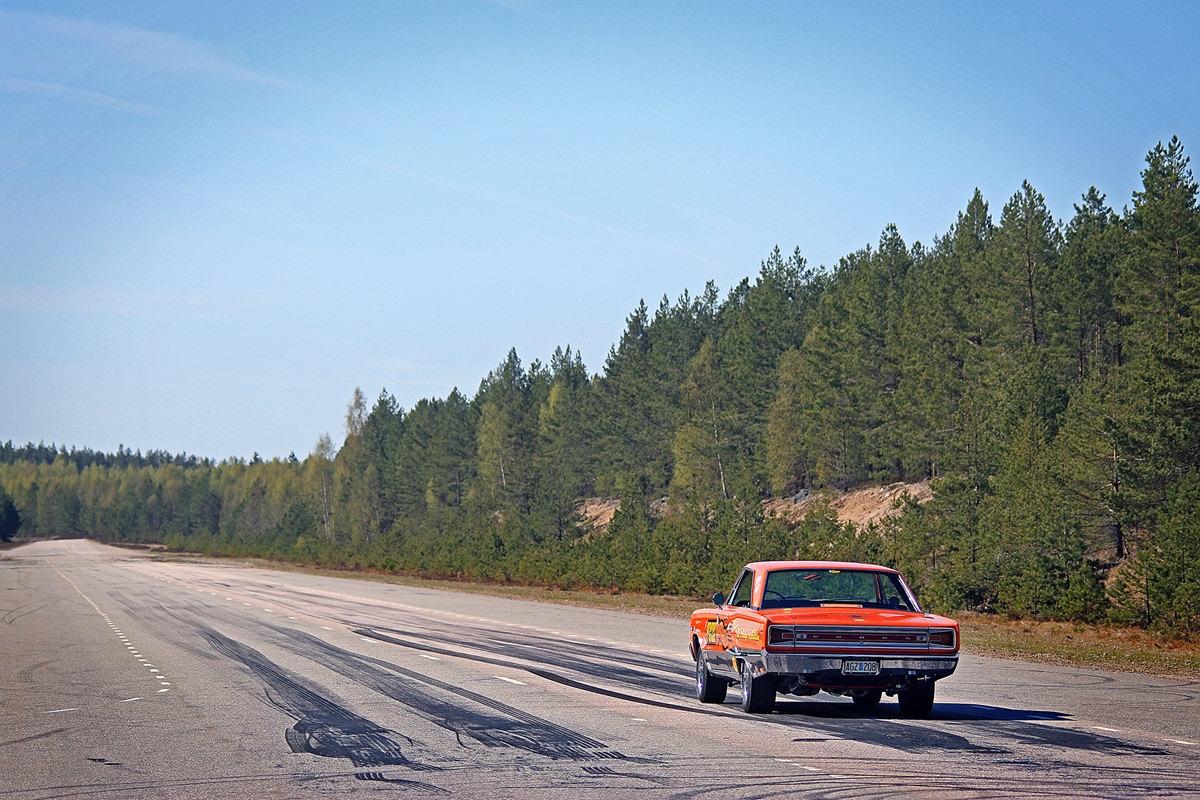
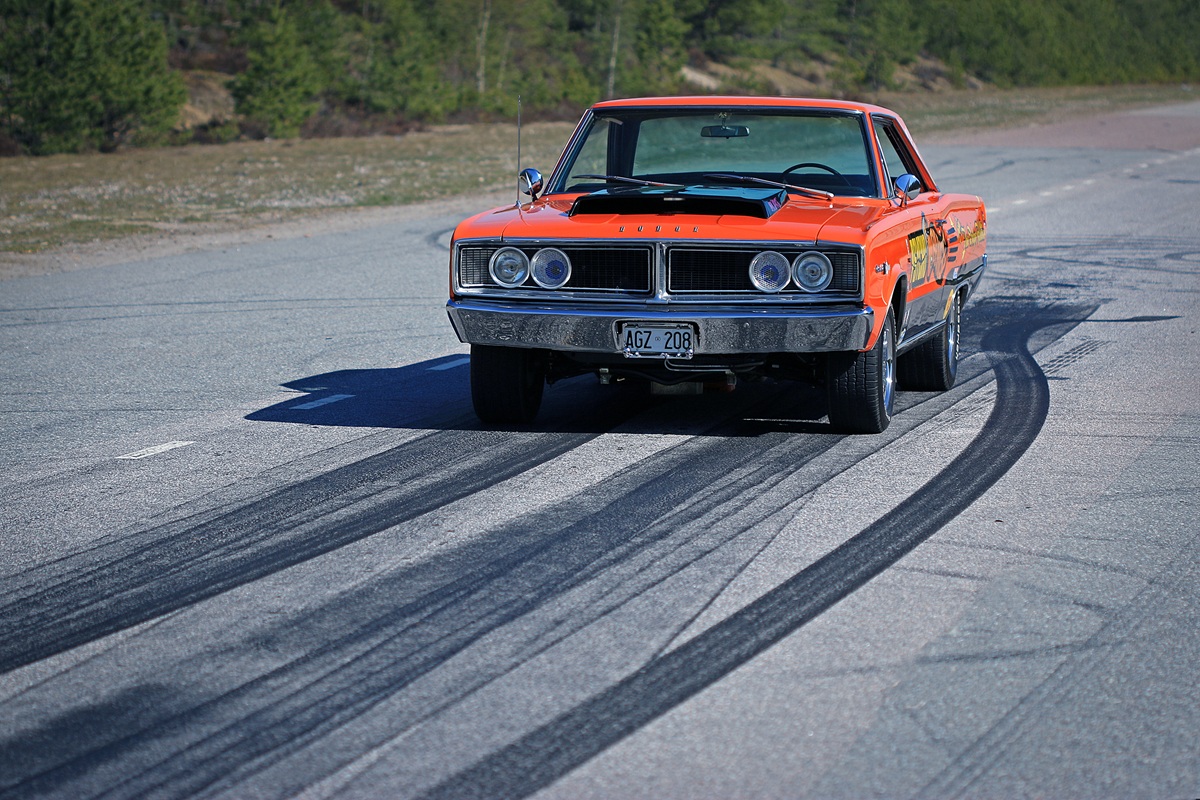
“8.3 seconds over 201 meters, if I remember correctly. That was a few years ago at Eskilstuna Shootout, a landracing event. They didn’t have timing equipment to measure reaction time, so I don’t know what was elapsed time versus reaction. And it was 201 meters, plus with the current rear gear it shifts from second to third right before the finish. Not ideal. These days, the transmission has been changed, so it’s tighter, and it has a manual valve body. With a new rear gear, it should be possible to drop a second or so,” Hokkanen says.
0 Comments